Protecting peace in Northern Ireland is a “priority” for all sides in Washington and politicians in Stormont should restore the Assembly and Executive.
That was the message delivered by US President Joe Biden during his keynote speech in Ulster University on Wednesday afternoon.
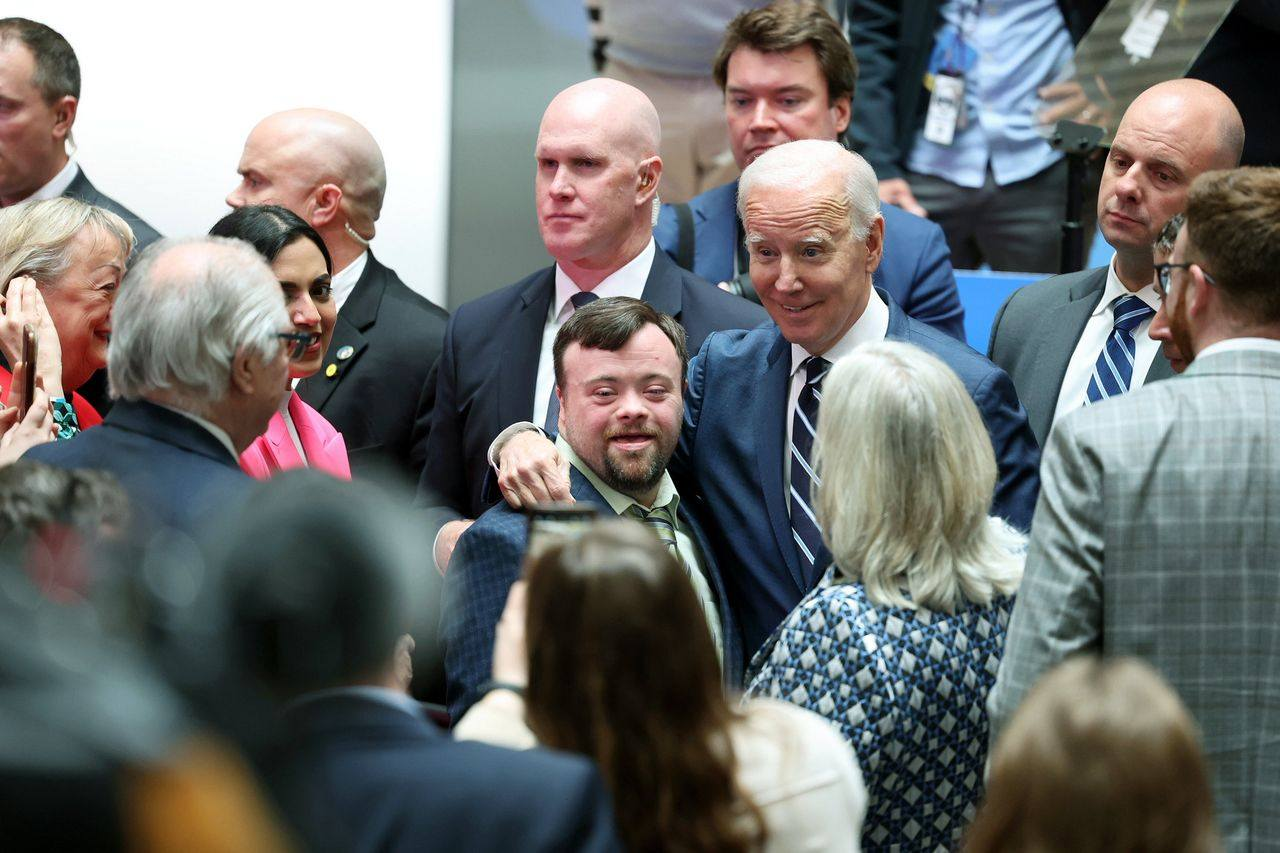
In the speech, Mr Biden touched on the benefits peace has brought to the country, delivered a direct message to the political leaders gathered in the room and in a light-hearted moment, triggered huge applause when he referenced An Irish Goodbye Oscar winning actor James Martin.
Mr Biden said the “dividends of peace are all around us”, as he addressed a gathering.
“This very campus is situated at an intersection where conflict and bloodshed once held a terrible sway,” he said.
“The idea to have a glass building here when I was here in ’91 was highly unlikely.
“Where barbed wire once sliced up the city, today we find a cathedral of learning built of glass and let the light shine in and out.
“This has a profound impact for someone who has come back to see it.
“Its an incredible testament to the power and the possibilities of peace.”
“Your history is our history, but even more important your future is America’s future,” the US president added.
“Today’s Belfast is the beating heart of Northern Ireland and is poised to drive unprecedented economic opportunity and investment, from communities across the UK, across Ireland, across the United States. The simple truth is that peace and economic opportunity go together.
“The 25 years since the Good Friday Agreement, Northern Ireland’s gross domestic product has literally doubled.”
The president said that figure would only improve if “things continue to move in the right direction”.
“There are scores of major American corporations wanting to come here, wanting to invest. Many have already made homes in Northern Ireland.”
One of the key moments in the speech by the President came around the restoration of powersharing at Stormont.
He said: “I believe the democratic institution established in the Good Friday Agreement remain critical to the future of Northern Ireland.
“It’s a decision for you to make, not for me to make.”
But he said “an effective, devolved government that reflects the people of Northern Ireland and is accountable to them, a government that works to find ways through hard problems together” would help draw “even greater opportunity” to the region.
“I hope the assembly and the executive will soon be restored,” he said.
“That’s a judgment for you to make, not me.
“I hope it happens, along with the institutions that help facilitate north-south and east-west relations, all of which are vital pieces of the Good Friday Agreement.”
Earlier he held an informal meeting with Prime Minister Rishi Sunak over tea in the Grand Central Hotel in Belfast.
The US president has told reporters he is “here to listen” as he met Mr Sunak.
Mr Biden faced a volley of questions from reporters, including whether he had a message for Northern Irish parties and why he was not discussing a trade deal while on his visit to the UK.
Mr Biden, meeting the Prime Minister on the upper floors of the Grand Central Hotel, said: “Heck of a view out there.”
Mr Sunak, smiling, sat at a table with the US president as the pair met over cups of tea.
A number of Northern Ireland politicians were at Ulster University for Mr Biden’s speech to officially open the city centre campus.
Mr Biden was greeted by Mr Sunak shortly after he touched down at 9.20pm on Tuesday, before heading to a city centre hotel amid a flurry of armoured cars.
Mr Biden is undertaking a four-day visit to the island of Ireland to mark the 25th anniversary of the Good Friday Agreement.
It is with deep sorrow that I inform you of the death of Joan Healey. Joan died yesterday, April 5th, 2023 after a long illness.
Joan was a Degree’d member of LAOH Div. 19 in Gerritsen Beach for over 30 years; she is survived by her husband, AOH Member Jim Healey and is predeceased by her daughter, Mary.
Please stop and say a prayer for Joan and her family.
As Joan goes off to Tir N’ anOg. Tir N’anOg is the place of the Blessed. There is no pain. There is no sorrow. There is only great joy. Weep but briefly for your loved one, for by now Joan has obtained a pleasure that is unattainable on this Earthly Realm. For by now our Sister Joan has seen the face of God. She is at peace.
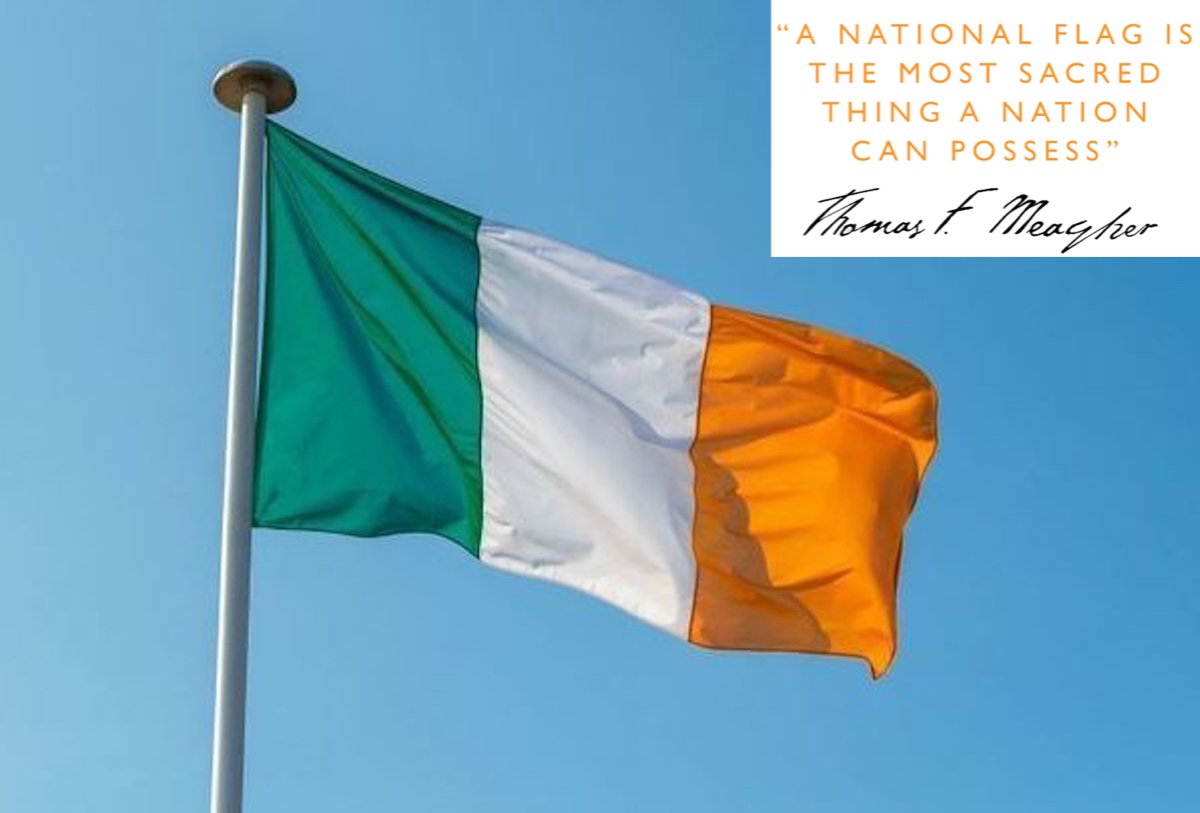
The National Flag of Ireland, often referred to as the tricolour, was first flown 175 years ago this week.
The Irish national flag is a flag of union. Its origin is to be sought in the history of the early nineteenth century and it is emblematic of the fusion of the older elements, represented by the green, with the newer elements, represented by the orange.
The combination of both colours in the tricolour, with the white between in token of brotherhood, symbolises the union of the different stocks in a common nationality.
A green flag with harp was an older symbol used by Irish nationalists, going back at least to Confederate Ireland and Owen Roe O’Neill in the 1640s. It was also widely adopted by the Irish Volunteers in the 1780s and especially by the United Irishmen in the 1798 rebellion.
A rival organisation, the Orange Order, which was exclusively Protestant, was founded in 1795 in memory of King William of Orange and the ‘Glorious Revolution’ of 1689. Following the 1798 Rebellion, the ideal of a later Nationalist generation in the mid-nineteenth century was to make peace between them and, if possible, to found a self-governing Ireland on such peace and union.
Irish tricolours were mentioned in 1830 and 1844, but widespread recognition was not accorded to the flag until 1848. From March of that year, Irish tricolours appeared side by side with French ones at meetings held all over the country to celebrate the revolution that had just taken place in France. On 7 March 1848, Thomas Francis Meagher, the Young Ireland leader, flew a tricolour from 33 The Mall in Waterford, where it flew continuously for a week until removed by the authorities. On the same day, a tricolour was reported to have been carried in a parade to Vinegar Hill, Enniscorthy, Co Wexford. In April, Meagher brought a tricolour from Paris, presented it to a Dublin meeting and outlined the significance of the colours:
“The white in the centre signifies a lasting truce between Orange and Green and I trust that beneath its folds the hands of Irish Protestants and Irish Catholics may be clasped in generous and heroic brotherhood.”
John Mitchel, also a member of the Young Ireland Movement, said: “I hope to see that flag one day waving as our national banner.”
Although the tricolour was not forgotten as a symbol of hoped-for union and a banner associated with the Young Irelanders and revolution, it was little used between 1848 and 1916. Even up to the eve of the Rising in 1916, the green flag with harp held undisputed sway.
The arrangement of the early tricolours was not standardised. All of the 1848 tricolours showed green, white and orange, but orange was sometimes put next to the staff, and in at least one flag the order was orange, green and white. In 1850 a flag of green for the Catholics, orange for the Protestants of the Established Church and blue for the Presbyterians was proposed. In 1883 a Parnellite tricolour of yellow, white and green, arranged horizontally, is recorded.
Down to modern times yellow or gold has occasionally been used instead of orange, but this substitution destroys the symbolism of the National Flag.
The Irish Tricolour flag was flown over the General Post Office on Easter Monday, 1916, along with a large green flag inscribed with the words “Irish Republic”. The Citizen Army Flag flew on the Imperial Hotel on O’Connell St. during the Rising. This flag shows a stylised representation of a plough with a representation of the constellation Ursa Major superimposed on it, all on a green field bordered by a gilt fringe.
Capturing the national imagination as the banner of the new revolutionary Ireland, the tricolour came to be accepted as the National Flag. It continued to be used officially during the period 1922-1937, and in the latter year its position as the National Flag was formally confirmed by the 1937 Constitution, Article 7 of which states: “The national flag is the tricolour of green, white and orange.”