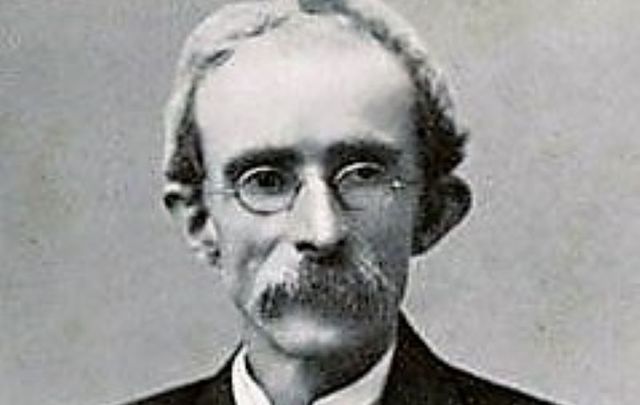
Thomas J Clarke: an incorrigible Irish revolutionary. PUBLIC DOMAIN
Thomas Clarke, a key member of the Irish revolutionary and a leader of the 1916 Easter Rising. was among the rebel leaders executed on May 3, 1916.
Thomas J. Clarke was born in 1858 on the Isle of Wight but grew up in County Tyrone.
At age 20 he joined the Irish Republican Brotherhood (IRB) and his career as an indefatigable Irish revolutionary began. After a skirmish with police, he was forced to flee to America where he became a citizen of the United States in the City of Brooklyn in 1883. (He was the only American citizen involved in the 1916 Rising executed by the British.)
In that same year, he heeded the call of Jeremiah O’Donovan Rossa and returned to England on a secret mission – to blow up London Bridge. He was apprehended and spent the next 15 years in British prisons.
At Millbank Prison, he was Prisoner J464 and was treated brutally:
“I remembered with what relentless savagery the English Government had always dealt with the Irishman it gets into its clutches, and the future appeared as black and appalling as imagination could picture it.”
Upon his release, he returned to New York. There he married Kathleen Daly – of the radically Republican Daly family of Limerick – in 1901. John MacBride was his best man and John Devoy, who Pearse called “the greatest of the Fenians,” was also in the wedding party. The Clarkes lived all over New York City and Long Island as Tom was employed at various jobs, including working for Devoy on the Gaelic American newspaper.
In 1907 he decided, with unrest between the European superpowers becoming apparent, it was time to return to Ireland. He opened several newsagent stores, the most prominent one being on the corner of Sackville (now O’Connell) and Great Britain (now Parnell) Streets, directly across from the Parnell Monument. It became a prime meeting place for every prominent Fenian leader of the coming revolution.
Clarke became the Fenian pied-piper and brought such young men as Seán MacDiarmada, Padraig Pearse, Joseph Mary Plunkett, and Thomas MacDonagh into his Fenian sphere of influence. He even influenced the young Michael Collins.
“It was in 1914, just before the declaration of war, that the chance came to take passage to New York,” Collins is quoted in Hayden Talbot’s “Michael Collins‘ Own Story.” Collins went on to state that “…when I laid the scheme before Tom Clarke…he advised me not to go. His reason satisfied me. He said there was going to be something doing in Ireland within a year. That was good enough for me. I changed my mind about going to America, and plodded along in my uncongenial job [in London].”
Britain’s entry into the Great War in 1914 presented a unique opportunity for Clarke and the radical IRB. With the advent of war, John Redmond of the Irish Parliamentary Party had urged Irishmen to join the fight for Britain. This had caused a split in the Irish Volunteers and Clarke and his group of young revolutionaries moved in to fill the void.
By 1915 planning for a rebellion was underway. Sir Roger Casement and Plunkett traveled to Germany to try and raise arms for the rebellion. Early in 1916 James Connolly and his Irish Citizen Army were brought into the conspiracy.
Love Irish history? Share your favorite stories with other history buffs in the IrishCentral History Facebook group.
The Rising was initially set for Easter Sunday 1916, but things went wrong from the start. Eoin MacNeill, the nominal leader of the Volunteers, was kept in the dark about what was happening, and when he learned that the “maneuvers” were actually a march to insurrection he countermanded the order. The Rising was then moved to Easter Monday, but the revolt had been stripped of much of its impact.
On Easter Monday Clarke’s name was the top signature on the Proclamation and, as a mark of admiration and honor, he was the first to march into the GPO to take over the building. On Friday, with the GPO engulfed in flame, Clarke led his men out across Henry Street and into buildings on Moore Street where the rebels made their last stand.
After the surrender, Clarke was bivouacked for the night with the rest of the rebels in the garden of the Rotunda Maternity Hospital. There, according to reports, he was stripped naked by Captain Percival Lea Wilson and beaten. (Michael Collins witnessed this and had Wilson shot dead in Gorey, County Wexford, three years later.) From there, Clarke was transported to Richmond Barracks for court-martial, found guilty, and transported to Kilmainham Gaol for execution.
Unlike Pearse and MacDonagh whose families could not visit in time, Clarke was able to say goodbye to his wife, Kathleen. According to her autobiography, “Revolutionary Woman,” he told her his trial had been a “farce.” He then told her, “I suppose you know I am to be shot in the morning. I am glad I am getting a soldier’s death.” Kathleen wrote, “he faced death with a clear and happy conscience.”
But the old Fenian wasn’t finished yet. He railed against Eoin MacNeill who had countermanded the maneuvers for Easter Sunday. “To send out countermanding orders secretly,” Clarke told his wife, “giving us no hint of what he was doing, was despicable, and to my mind dishonorable.” Just hours before he was executed Clarke gave this command to his wife: “I want you to see to it that our people know of his treachery to us. He must never be allowed back into the National life of the country, for so sure as he is, so sure will he act treacherously in a crisis. He is a weak man, but I know every effort will be made to whitewash him.”
This article was originally published in Ireland of the Welcomes magazine. Subscribe now!
Kathleen Clarke may have suffered more than any other survivor of the Rising. She not only lost her husband, but also her brother, Ned Daly, the commandant in charge of the Four Courts.
In addition, she was pregnant at the time of the Rising. “A baby was coming to us,” wrote Kathleen, “but [Tom] did not know. I had not told him before the Rising, fearing to add to his anxieties, and considered if I could tell him then but left without doing so.” Her final tragedy of 1916 was to miscarry that baby. Besides his widow, Clarke was survived by sons Emmet, John Daly, and Tom Jr.
Kathleen Clarke was to carve out a Republican reputation of her own. In 1917 she appointed the young rebel her husband had persuaded not to go to America – Michael Collins – as director of the National Aid and Volunteers Dependents Fund, a charity for indigent survivors of the Rising. Starting with that position Collins was to go on and strike fear into the hearts of the British establishment. During the War of Independence, she served as a judge in the Republican courts and was elected to the Dáil.
In 1939 she became the first woman to become Lord Mayor of Dublin. One of her first official acts was to remove a portrait of Queen Victoria. She died in 1972 at the age of 94. She outlived her husband by 56 years.
* Dermot McEvoy is the author of “The 13th Apostle: A Novel of a Dublin Family, Michael Collins, and the Irish Uprising and Irish Miscellany” (Skyhorse Publishing). He may be reached at dermotmcevoy50@gmail.com. Follow him at www.dermotmcevoy.com.
Easter Rising leader Padraig Pearse was ultimately put to death for his involvement in the uprising. Here we take an in-depth look at the life of Pearse and his contribution to Irish history.
May 03, 2023
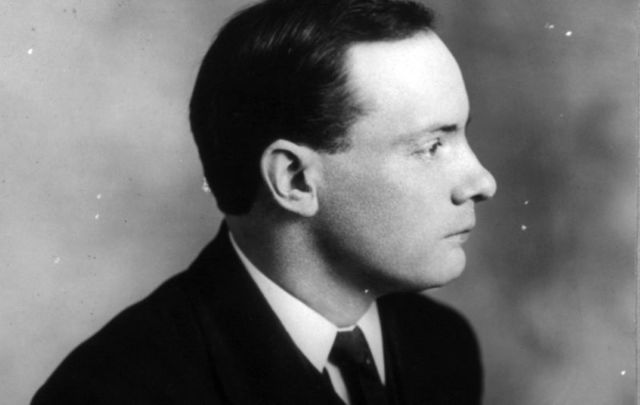
Padraig Pearse, at his court martial, said “I went down on my knees as a child and told God that I would work all my life to gain the freedom of Ireland.” PUBLIC DOMAIN / US LIBRARY OF CONGRESS
Easter Rising leader Padraig Pearse was ultimately put to death for his involvement in the uprising. Here we take an in-depth look at the life of Pearse and his contribution to Irish history.
Editor’s Note: The 1916 Easter Rising, the rebellion which took place over the course of five days in Dublin and forever changed the course of Irish history, may have led to the execution of its leaders but, now more than ever, we remember those heroes who put their lives on the line for Irish independence. Below, Dermot McEvoy takes an in-depth look at the life of Pearse and his contribution to Irish history.
Padraig Pearse
Patrick (Padraig) Pearse was born on November 10, 1879, at 27 Great Brunswick (now Pearse) Street. (The building is still there and has been repaired to the way it looked in Pearse’s youth.) His father James was English and his mother Margaret (née Brady) Irish. The father’s stonemason business, also at #27 Brunswick, specialized in ecclesiastic monuments. Pearse was baptized around the corner at St. Andrew’s and educated at the Christian Brothers School at Westland Row. He received his B.A. from Royal University and a law degree from the King’s Inn in 1901 (his law career consisted of one case, which he lost).
From all indications Pearse as a boy was a solitary figure—he prefers reading a book to playing with other children—with his brother Willie his closest friend. His reticence may have been caused by a cast in his right eye which was the reason he was almost always photographed in profile. This may also explain his extreme shyness where women were concerned.
His mother’s family were Irish speakers from County Meath and at 16 he joined the Gaelic League, eventually becoming the editor of its newspaper. According to Richard Ellmann, he was the Irish teacher to a young man by the name of James Joyce. (Imagine, in one room, Ireland’s ultimate ascetic and its greatest satyr!) Showing no interest in the law, Pearse, with his love of the Irish language, turned his attention to education. He was a critic of the education system in Ireland which he believed taught Irish children how to be good Englishmen (he called it “The Murder Machine”).
Thus he started Scoil Éanna (St. Enda’s School) in 1908, eventually settling at the Hermitage in Rathfarnham, which is today the location of the Pearse Museum. The school was a family affair—besides Thomas MacDonagh who served as assistant headmaster, the faculty included his brother Willie, his sisters Mary Brigid and Margaret, and his mother acted as housekeeper. It focused on a bilingual (Irish/English) curriculum and was a success academically, but put tremendous financial stress on Pearse. In 1914 this forced Pearse to go to America on a speaking tour to raise money. There he met John Devoy who he referred to as “the greatest of the Fenians.” The trip raised a much-needed £1,000 for St. Edna’s. He even got time to play tourist, visiting the just-opened Woolworth Building which was then the tallest building in the world.
Pearse’s early politics were moderate: he was in favor of the Irish Parliamentary Party and Home Rule. But the IPP’s failure to bring Home Rule home turned Pearse more militant. He joined the Irish Volunteers in November 1913. At first, Tom Clarke—the puppeteer who was orchestrating this new Irish militancy—was initially suspicious of Pearse because of his previous moderate political views. Clarke needed a frontman for the movement. He and Seán MacDiarmada, the two guys pushing the envelope, couldn’t be the face of the movement because of their jail records and their penchant for inciting havoc against the British. MacDiarmada urged Clarke to let Pearse give the oration at the Wolfe Tone Commemoration in 1913 and Clarke was so impressed with Pearse he exclaimed, “I never thought there was such stuff in Pearse!” Clarke had found his perfect frontman.
Perhaps Pearse foresaw this future role in a poem he wrote called “The Rebel”:
I am come of the seed of the people, the people that sorrow
That have no treasure but hope,
No riches laid up but a memory
Of an Ancient glory.
My mother bore me in bondage, in bondage my mother was born,
I am of the blood of serfs;
The children with whom I have played, the men and women with whom I have eaten,
Have had masters over them, have been under the lash of masters,
And, though gentle, have served churls…
… And I say to my people’s masters: Beware,
Beware of the thing that is coming, beware of the risen people,
Who shall take what ye would not give.
Did ye think to conquer the people,
Or that Law is stronger than life and than men’s desire to be free?
We will try it out with you, ye that have harried and held,
Ye that have bullied and bribed, tyrants, hypocrites, liars!
Pearse shot into prominence with his oration at the grave of the old Fenian Jeremiah O’Donovan Rossa in Glasnevin Cemetery on August 1, 1915. Standing next to John MacBride and Tom Clarke—all three would be shot the first week of May 1916—he concluded his funeral oration with a warning to the British:
“…The defenders of this realm have worked well in secret and in the open. They think that they have pacified Ireland. They think that they have purchased half of us, and intimidated the other half. They think that they have foreseen everything. They think that they have provided against everything; but the fools, the fools, the fools! they have left us our Fenian dead, and while Ireland holds these graves, Ireland unfree shall never be at peace.”
In the months ahead Pearse would work with Clarke, MacDiarmada, Plunkett and Connolly in planning the Rising. By Easter Monday he was named President of the Provisional Government and as Commandant-General was Commander-in-Chief of the Irish Volunteers. At noon on Easter Monday, April 24, 1916, he stood in front of the GPO and read the Irish Declaration of Independence, which he had written:
POBLACHT NA hÉIREANN
THE PROVISIONAL GOVERNMENT OF THE IRISH REPUBLIC
TO THE PEOPLE OF IRELAND
IRISHMEN AND IRISHWOMEN:
In the name of God and of the dead generations from which she receives her old tradition of nationhood, Ireland, through us, summons her children to her flag and strikes for her freedom…
We declare the right of the people of Ireland to the ownership of Ireland and to the unfettered control of Irish destinies, to be sovereign and indefeasible. The long usurpation of that right by a foreign people and government has not extinguished the right, nor can it ever be extinguished except by the destruction of the Irish people. In every generation the Irish people have asserted their right to national freedom and sovereignty; six times during the past three hundred years they have asserted it in arms. Standing on that fundamental right and again asserting it in arms in the face of the world, we hereby proclaim the Irish Republic as a Sovereign Independent State, and we pledge our lives and the lives of our comrades in arms to the cause of its freedom, of its welfare, and of its exaltation among the nations…
We place the cause of the Irish Republic under the protection of the Most High God, Whose blessing we invoke upon our arms, and we pray that no one who serves that cause will dishonor it by cowardice, inhumanity, or rapine. In this supreme hour, the Irish nation must, by its valor and discipline, and by the readiness of its children to sacrifice themselves for the common good, prove itself worthy of the august destiny to which it is called.
In the GPO, Pearse was his usual distant self and most of the military decision-making was left up to Connolly. He did interact with all the Volunteers and gave a few little speeches that lifted the spirits of the men and women. By Friday he left the blazing GPO for Moore Street with the rest of the leadership. It was there that he decided to surrender to General Lowe. In captivity in Richmond Barracks before being moved to Kilmainham for execution, Piaras Beaslai remembers how Pearse “sat on the floor, deep in his own thought, so full of them that he noticed nothing around him.” His distant demeanor recalled what Pearse had once written about himself: “I don’t like that gloomy Pearse. He gives me the shivers.”
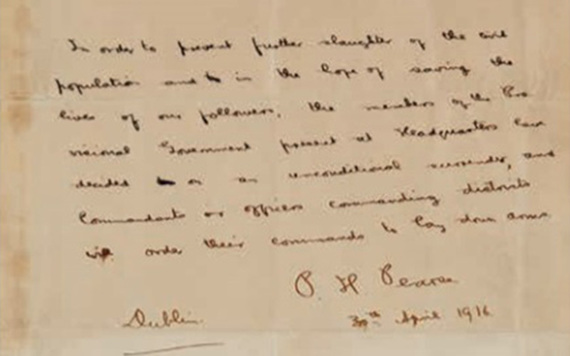
At his court-martial, Pearse stated: “My sole object in surrendering unconditionally was to save the slaughter of the civil population and to save the lives of our followers who had been led into this thing by us. It is my hope that the British Government who has shown its strength will also be magnanimous and spare the lives and give an amnesty to my followers, as I am one of the persons chiefly responsible, have acted as C-in-C and president of the provisional government, I am prepared to take the consequences of my act, but I should like my followers to receive an amnesty. I went down on my knees as a child and told God that I would work all my life to gain the freedom of Ireland. I have deemed it my duty as an Irishman to fight for the freedom of my country.”
He was the first of the 1916 rebels to be executed at 3:45 a.m. Fifteen more would follow.
2
Pearse’s surrender letter. NLI
*Dermot McEvoy is the author of “The 13th Apostle: A Novel of a Dublin Family, Michael Collins, and the Irish Uprising and Irish Miscellany” (Skyhorse Publishing). He may be reached at dermotmcevoy50@gmail.com. Follow him on his website and Facebook page.
Friday April 14th was a day to remember. Ireland hosted current and former US Presidents and Secretaries of State. As President Biden and Secretary Blinken were making their way to Mayo, Bill and Hilary Clinton were landing in Belfast.
Meanwhile, I was cutting work early and heading out for “lunch” with a visitor from the US. Don’t tell Mary Lou. My friend, while lacking a drop of Irish blood, has spent a lifetime in politics in the US and knows Irish Politics inside and out.
A visitor casts a new light on an old town. We stopped off in “the Gravediggers” for lunch. It was a recommendation from another US friend. I’d driven past the street every day heading into Dublin, but never took the detour. I’m glad we decided to start there.
So began a safari to find the best pint and pub in Dublin. We didn’t get far. It was great to revisit old haunts in good company. Pints were downed, stories told, and the world put to rights.
We were back in the house in time to watch Biden take the stage in Mayo to the sound of, “Shipping up to Boston” by the Dropkick Murphys.
Then it was back to business, attending the events at Queens University Belfast to mark the 25th Anniversary of the Good Friday Agreement. There I met up with a wide range of Irish American friends who continue to promote the politics of peace.
The leadership of the LAOH attended. That had produced a booklet with Relatives for Justice on women’s reflections on the peace process. Like the AOH, they put their money where their mouth is, dispersing grants to civic bodies to promote peace, justice, and unity.
I can’t think of another nationality in the US that gives so much time, resources, and support. The connection between Irish America and Ireland is one of kinship forged over generations. The relationship between Ireland and the US is special.
Margaret Thatcher would boast about the “special relationship” with the US. It was a convenient strategic alliance, Reagan would stroke Britain’s ego while Britain would promote US interests in the EU. Brexit ended that alliance.
The Tory party and the press don’t understand the relationship between our two nations, long dismissing Ireland with an arrogance bourne out of colonialism. They think it is all naive sentimentality and Tammany Hall politics. With more than a whiff of British casual racism, it was an allegation directed at President Biden but not President Clinton.
President Biden is a proud Irish American, but no US president is naive and Tammany is long gone. Post Brexit, the strategic US alliance is now with the EU and not Britain. In a world of conflict, the Irish Peace process succeeds. It is an American foreign policy success. The relationship with Ireland endures.
Irish-America has been key. This is not an issue of romanticism. Sentimentality would not survive two days of Irish weather. Irish Americans are proud of their family histories and see the potential in Ireland. The identity straddles two nations and centuries.
It is living, breathing, and evolving. The Dropkick Murphys, the walk-on band of choice for President Biden, merge garage rock, punk, and Irish Balladry into something new. It is Irish-American and is rightly celebrated. It’s reach is beyond Irish America to embrace all in the US and beyond.
Have a great weekend, Ciarán
Ciarán Quinn is the Sinn Féin Representative to North America
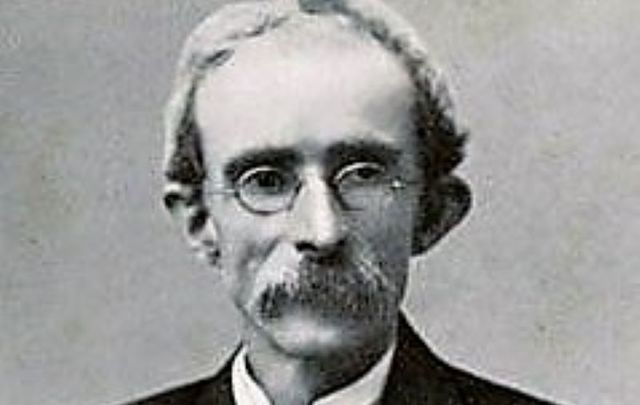
The moments that defined Thomas Clarke’s life and why he is such an important figure in Irish history
Thomas Clarke, a key member of the Irish revolutionary and a leader of the 1916 Easter Rising. was among the rebel leaders executed on May 3, 1916.
Thomas J. Clarke was born in 1858 on the Isle of Wight but grew up in County Tyrone.
At age 20 he joined the Irish Republican Brotherhood (IRB) and his career as an indefatigable Irish revolutionary began. After a skirmish with police, he was forced to flee to America where he became a citizen of the United States in the City of Brooklyn in 1883. (He was the only American citizen involved in the 1916 Rising executed by the British.)
In that same year, he heeded the call of Jeremiah O’Donovan Rossa and returned to England on a secret mission – to blow up London Bridge. He was apprehended and spent the next 15 years in British prisons.
At Millbank Prison, he was Prisoner J464 and was treated brutally:
“I remembered with what relentless savagery the English Government had always dealt with the Irishman it gets into its clutches, and the future appeared as black and appalling as imagination could picture it.”
Upon his release, he returned to New York. There he married Kathleen Daly – of the radically Republican Daly family of Limerick – in 1901. John MacBride was his best man and John Devoy, who Pearse called “the greatest of the Fenians,” was also in the wedding party. The Clarkes lived all over New York City and Long Island as Tom was employed at various jobs, including working for Devoy on the Gaelic American newspaper.
In 1907 he decided, with unrest between the European superpowers becoming apparent, it was time to return to Ireland. He opened several newsagent stores, the most prominent one being on the corner of Sackville (now O’Connell) and Great Britain (now Parnell) Streets, directly across from the Parnell Monument. It became a prime meeting place for every prominent Fenian leader of the coming revolution.
Clarke became the Fenian pied-piper and brought such young men as Seán MacDiarmada, Padraig Pearse, Joseph Mary Plunkett, and Thomas MacDonagh into his Fenian sphere of influence. He even influenced the young Michael Collins.
“It was in 1914, just before the declaration of war, that the chance came to take passage to New York,” Collins is quoted in Hayden Talbot’s “Michael Collins’ Own Story.” Collins went on to state that “…when I laid the scheme before Tom Clarke…he advised me not to go. His reason satisfied me. He said there was going to be something doing in Ireland within a year. That was good enough for me. I changed my mind about going to America, and plodded along in my uncongenial job [in London].”
Britain’s entry into the Great War in 1914 presented a unique opportunity for Clarke and the radical IRB. With the advent of war, John Redmond of the Irish Parliamentary Party had urged Irishmen to join the fight for Britain. This had caused a split in the Irish Volunteers and Clarke and his group of young revolutionaries moved in to fill the void.
By 1915 planning for a rebellion was underway. Sir Roger Casement and Plunkett traveled to Germany to try and raise arms for the rebellion. Early in 1916 James Connolly and his Irish Citizen Army were brought into the conspiracy.
The Rising was initially set for Easter Sunday 1916, but things went wrong from the start. Eoin MacNeill, the nominal leader of the Volunteers, was kept in the dark about what was happening, and when he learned that the “maneuvers” were actually a march to insurrection he countermanded the order. The Rising was then moved to Easter Monday, but the revolt had been stripped of much of its impact.
On Easter Monday Clarke’s name was the top signature on the Proclamation and, as a mark of admiration and honor, he was the first to march into the GPO to take over the building. On Friday, with the GPO engulfed in flame, Clarke led his men out across Henry Street and into buildings on Moore Street where the rebels made their last stand.
After the surrender, Clarke was bivouacked for the night with the rest of the rebels in the garden of the Rotunda Maternity Hospital. There, according to reports, he was stripped naked by Captain Percival Lea Wilson and beaten. (Michael Collins witnessed this and had Wilson shot dead in Gorey, County Wexford, three years later.) From there, Clarke was transported to Richmond Barracks for court-martial, found guilty, and transported to Kilmainham Gaol for execution.
Unlike Pearse and MacDonagh whose families could not visit in time, Clarke was able to say goodbye to his wife, Kathleen. According to her autobiography, “Revolutionary Woman,” he told her his trial had been a “farce.” He then told her, “I suppose you know I am to be shot in the morning. I am glad I am getting a soldier’s death.” Kathleen wrote, “he faced death with a clear and happy conscience.”
But the old Fenian wasn’t finished yet. He railed against Eoin MacNeill who had countermanded the maneuvers for Easter Sunday. “To send out countermanding orders secretly,” Clarke told his wife, “giving us no hint of what he was doing, was despicable, and to my mind dishonorable.” Just hours before he was executed Clarke gave this command to his wife: “I want you to see to it that our people know of his treachery to us. He must never be allowed back into the National life of the country, for so sure as he is, so sure will he act treacherously in a crisis. He is a weak man, but I know every effort will be made to whitewash him.”
Kathleen Clarke may have suffered more than any other survivor of the Rising. She not only lost her husband, but also her brother, Ned Daly, the commandant in charge of the Four Courts.
In addition, she was pregnant at the time of the Rising. “A baby was coming to us,” wrote Kathleen, “but [Tom] did not know. I had not told him before the Rising, fearing to add to his anxieties, and considered if I could tell him then but left without doing so.” Her final tragedy of 1916 was to miscarry that baby. Besides his widow, Clarke was survived by sons Emmet, John Daly, and Tom Jr.
Kathleen Clarke was to carve out a Republican reputation of her own. In 1917 she appointed the young rebel her husband had persuaded not to go to America – Michael Collins – as director of the National Aid and Volunteers Dependents Fund, a charity for indigent survivors of the Rising. Starting with that position Collins was to go on and strike fear into the hearts of the British establishment. During the War of Independence, she served as a judge in the Republican courts and was elected to the Dáil.
In 1939 she became the first woman to become Lord Mayor of Dublin. One of her first official acts was to remove a portrait of Queen Victoria. She died in 1972 at the age of 94. She outlived her husband by 56 years.
~~~~~
* Dermot McEvoy is the author of “The 13th Apostle: A Novel of a Dublin Family, Michael Collins, and the Irish Uprising and Irish Miscellany” (Skyhorse Publishing). He may be reached at dermotmcevoy50@gmail.com.