With the dust almost settled after a tumultuous election that turned many red areas a deep green, it’s time to look at the impact of some key points. This local election was fraught with disinterest, a lack of media coverage, and a general apathy amongst the public for electoral drama. It’s hard to blame them, with a second Assembly collapse in the space of six years, and the damage done by Brexit, the electorate can hardly be held responsible for being more or less switched off from the polls.
This was the first electoral test of the DUP and wider Unionism following the Assembly stalemate, brought on by the DUP’s objection to the NI Protocol and the Windsor Framework. Whilst they didn’t technically lose any seats overall (Any seats they lost were cancelled out by gains elsewhere), they didn’t break through and gain anywhere that wasn’t already expected. The total Unionist vote has shrunk significantly from 49.1% in 2017 to 39.35% in the recent local elections. If that was, as Sir Jeffrey Donaldson put it, a mandate to continue their Stormont boycott, then it could hardly be seen as a ringing endorsement. Unionism overall suffered significant setbacks, with Alliance and Sinn Fein snapping at the DUP and UUP’s heels everywhere from Belfast, to North Down and Ards, to Derry and Strabane.
Alliance maintained their place as the second largest party on North Down and Ards council, picking up two seats at the expense of the Greens in Bangor Central, and an Independent in Bangor West/Donaghadee. In an area that was dominated by Green politics for so long, their vote has more or less collapsed in North Down from 10.2% in 2019 to 5.9% this election cycle. Their vote seems to have collapsed province wide, with former leader Clare Bailey losing her Assembly seat in last year’s election, and current leader Mal O’Hara being beaten out for a seat on Belfast City Council by the SDLP, who clung on despite a resurgent Sinn Fein in Castle DEA. I personally feel that the Greens’ real problem this election was that they failed to hammer through the message of why they matter in local politics. Their visibility was completely eclipsed by Alliance and Sinn Fein, both of whom are usually transfer friendly to the Greens. The management of both Alliance and Sinn Fein’s vote put the Greens on the ropes in every single constituency and DEA, as was seen last year with both Clare Bailey and Rachel Woods losing out to a second Alliance candidate in their respective constituencies.
Their platform has been rather diminished, and the Greens failed to connect with middle ground voters. A missed opportunity to capitalise and compound on their 2019 victories has resulted in their influence being greatly undermined. Whether Mal O’Hara stays on as leader remains to be seen, but my money would be on Cllr Rachel Woods, former Green Party MLA for North Down, being coronated unchallenged in the next few months.
The UUP continued their descent into electoral oblivion, losing twenty one councillors across Northern Ireland. Considering just twenty years ago they were the largest party in local government with one hundred and fifty four seats, to drop to only fifty four across all eleven councils is quite the sea change. There were a few glimmers of hope for the UUP with them picking up a handful of seats that had otherwise been in contention for them, however overall their electoral machinery has completely fallen apart. Current leader Doug Beattie’s inability to draw clear blue water between the Ulster Unionists and the DUP, as well as allowing the UUP to expand within Belfast and the larger population centres will result in the party dwindling into “Independents/Others” territory in future election results. I would hazard a guess that in any future Assembly election they could see their number of MLAs drop to less than five, with Doug Beattie’s seat also up for grabs. It’s not looking good for the UUP, even with talented new comers in their ranks like former PUP Cllr Julie Anne Corr, and seasoned defectors like Carole Howard from Alliance, their problem is branding and message. It didn’t take long after the election for several Unionists to make the case for Unionist unity.
The TUV also failed to make significant inroads into the DUP base, managing to gain only three seats with one in Court DEA at the expense of the PUP leader Billy Hutchinson. Rather than the Unionist base growing, it has begun to devour itself at the expense of growing room for smaller Unionist parties who are competing for the last seats in several DEAs. With only one MLA and now nine Councillors, the TUV have outperformed the Greens for the first time in terms of elected representation, but whether this can be sustained and translated into Assembly seats is doubtful. Unlike Alliance, Sinn Fein and the DUP, the TUV has a talent problem. The party, by and large, remains a vehicle for the personal politics of Jim Allister KC MLA, and their only other personality, Cllr Timothy Gaston, failing to gain any traction in the media in the shadow of his party leader. It would be hard to see how the TUV would continue as an electoral force should Jim Allister retire, or lose his seat. The No Sea Border campaign, which has bedecked Loyalist areas up and down Northern Ireland, failed to translate into any meaningful surge in TUV support, but it is highly unlikely they will change tack and adopt a softer approach. The TUV appeals to a certain section of anti-agreement Unionism and that isn’t likely to go away any time soon, but an inability to coalesce that energy into a movement outside of Jim Allister’s cult of personality is what will continue to hinder them from any significant electoral inroads.
The PUP are all but finished as an electoral force in Northern Ireland, their last hurrah having been their small resurgence off the back of the flag protests in 2012. With the defection of Dr John Kyle to the UUP, the loss of Julie Anne Corr’s seat, and now the TUV taking Billy Hutchinson out of local politics, it’s hard to see how they can, if at all, come back from this. Their sole remaining elected representative, Cllr Russell Watton on Causeway Coast and Glens district council will likely become leader if the party decides to continue in its current form. It’s safe to say the party of the late David Ervine is all but finished.
Similarly to the PUP and UUP, People Before Profit were more or less engulfed by the Sinn Fein electoral wave that swept the board in last week’s election. PBP seats that would have been considered safe only a few years ago are now in the hands of Sinn Fein, from Belfast, to and Derry and Strabane. Maeve O’Neill losing her seat in the Moor, and Fiona Ferguson in Oldpark was a shock personally, as I was convinced they would hold onto those seats. However the PBP vote has largely been absorbed into Sinn Fein’s messaging, with the latter adopting many of PBP’s political imagery and managing to eat into their base. With a drop to only over four thousand first preference votes across the entire city, it is becoming abundantly clear that for both Unionists and Nationalists, smaller parties are now being cannibalised by their larger, and more well funded peers. Money wins elections, and without funding and grass roots support it’s impossible to get the vote out. Gerry Caroll MLA will be sweating with any upcoming Assembly election as Sinn Fein will be eager to snap up a full house in West Belfast.
The Alliance surge, often talked about, seemed to have hit a speed bump as a yellow wave didn’t materialise west of the Bann. Alliance lost both Cllrs they had gained on Derry and Strabane City Council which will be a huge blow to activists in the city, however at one point during the count they were pegged to be the largest party on LCCC where they are but one seat behind the DUP. Alliance did, however, have one bright spot outside of their usual urban base with the election of Eddie Roof in Enniskillen at the expense of the SDLP’s Paul Blake. Alliance also broke through in Balmoral with the election of Tara Brooks and Micky Murray, with the DUP’s Gareth Spratt losing out in the process.
Sinn Fein managed to make headlines by electing two Cllrs in Castlereagh South, and taking a seat off long term Alliance stalwart, and former Mayor, Stephen Martin. It was a casualty of war that many, including myself, did not see coming and Alliance will be licking their wounds after the loss of such a capable and well respected Councillor, however Sinn Fein will be delighted that they have elected representation in what was once considered a DUP heartland.
It was a similar story in Ballymena with Bréanainn Lyness taking a seat, again with the SDLP incumbent losing out. On a council that has been riddled with controversy and rumours of scandal, and dominated by Unionist control, the election of an extra two Sinn Fein Cllrs will definitely upset the apple cart.
It’s becoming clear that politics in Northern Ireland is coalescing around three main parties – Sinn Fein, DUP and Alliance. I’m not going to go into the minutae of the scale of the Sinn Fein victory, or now the DUP managed to defy expectations and hold onto their current number of seats, but looking at the electoral map after this election it’s obvious that Sinn Fein has managed to expand into the base of moderate as well as radical Republicans and Nationalists, cutting into the base of the SDLP, People Before Profit, Aointu and independent Republicans and even Alliance in Derry and Strabane City Council. Alliance likewise has been able to dig into the UUP, Green and SDLP vote in Belfast, North Down and beyond, however they failed to make any significant electoral breakthrough, though they did increase their seats on Causeway Coast and Glens at the cost of the SDLP and UUP. This was a recurring pattern across the province with the two former political heavyweights taking the brunt of either Alliance or Sinn Fein victories. The main victims of this election were the smaller parties, and that’s not necessarily good for local communities or democracy. The election of smaller parties allows for the scrutiny and challenging of larger parties who may dominate. Whether this trend continues remains to be seen.
Died May 21st, 1981 A determined and courageous Derryman
Twenty-three-year-old Patsy O’Hara from Derry city, was the former leader of the Irish National Liberation Army prisoners in the H-Blocks, and joined IRA Volunteer Raymond McCreesh on hunger strike on March 22nd, three weeks after Bobby Sands and one week after Francis Hughes.
Patsy O’Hara was born on July 11th, 1957 at Bishop Street in Derry city.
His parents owned a small public house and grocery shop above which the family lived. His eldest brother, Sean Seamus, was interned in Long Kesh for almost four years. The second eldest in the family, Tony, was imprisoned in the H-Blocks – throughout Patsy’s hunger strike – for five years before being released in August of this year, having served his full five-year sentence with no remission.
The youngest in the O’Hara family is twenty-one-year-old Elizabeth.
Before ‘the troubles’ destroyed the family life of the O’Haras, and the overwhelming influence of being an oppressed youth concerned about his country drove Patsy to militant republicanism, there is the interesting history of his near antecedents which must have produced delight in Patsy’s young heart.
GRANDFATHER
Patsy’s maternal grandfather, James McCluskey, joined the British army as a young man and went off to fight in the First World War. He received nine shrapnel wounds at Ypres and was retired on a full pension.
However, on returning to Ireland his patriotism was set alight by Irish resistance and the terror of British rule. He duly threw out his pension book, did not draw any more money and joined the Republican Movement. He transported men and weapons along the Foyle into Derry in the ‘twenties.
He inherited a public house and bookmakers, in Foyle Street, and was a great friend of Derry republican Sean Keenan’s father, also named Sean.
Mrs. Peggy O’Hara can recall ‘old’ Sean Keenan being arrested just before the out break of the Second World War. Her father’s serious illness resulted in him escaping internment and he died shortly afterwards in 1939.
Mrs. O’Hara’s aunt was married to John Mulhern, a Roscommon man, who was in the RIC up until its disbandment in 1921.
“When my father died in 1939 – says Mrs O’Hara, – “John Mulhern, who was living in Bishop Street, and owned a bar and a grocery shop, took us in to look after us. I remember him telling us that he didn’t just go and join the RIC, but it was because there were so many in the family and times were hard.
“My father was a known IRA man and my uncle reared me, and I was often slagged about this. Patsy used to hear this as a child, but Patsy was a very, very straight young fellow and he was a wee bit bigoted about my uncle being a policeman.
“But a number of years ago Patsy came in to me after speaking to an old republican from Corrigans in Donegal, and Patsy says to me, ‘You’ve nothing to be ashamed of, your uncle being a policeman, because that man was telling me that even though he was an RIC man, he was very, very helpful to the IRA!”
FAMILY
The trait of courage which Patsy was to show in later years was in him from the start, says Mr. O’Hara. “No matter who got into trouble in the street outside, Patsy was the boy to go out and do all the fighting for him. He was the fighting man about the area and didn’t care how big they were. He would tackle them. I even saw him fighting men, and in no way could they stop him. He would keep at them. He was like a wee bull terrier!”
Apparently, up until he was about twelve years of age, Patsy was fat and small, “a wee barrel” says his mother. Then suddenly he shot up to grow to over six foot two inches.
Elizabeth, his sister, recalls Patsy: “He was a mad hatter. When we were young he used to always play tricks on me, mother and father. We used to play a game of cards and whoever lost had to do all the things that everybody told them.
“We all won a card game once and made Patsy crawl up the stairs and ‘miaow’ like a cat at my mother’s bedroom door. She woke up the next day and said, ‘am I going mad? I think I heard a cat last night’ and we all started to laugh.”
The O’Haras’ house was open to all their children’s friends, and again to scores of the volunteers who descended on Derry from all corners of Ireland when the RUC invaded in 1969. But before that transformation in people’s politics came, Mrs. O’Hara still lived for her family alone.
She was especially proud of her eldest son, Sean Seamus who had passed his eleven plus and went to college.
PROTESTS
When Sean was in his early teens he joined the housing action group, around 1967, Mrs. O’Hara’s conception of which was Sean helping to get people homes.
“But one day, someone came into me when I was working in the bar, and said, ‘Your son is down in the Guildhall marching up and down with a placard!
“I went down and stood and looked and Finbarr O’Doherty was standing at the side and wee fellows were going up and down. I went over to Sean and said, ‘Who gave you that? He said, Finbarr!’ I took the placard off Sean and went over to Finbarr, put it in his hand, and hit him with my umbrella.’
Mrs. O’Hara laughs when she recalls this incident, as shortly afterwards she was to have her eyes opened.
“After that, I went to protests wherever Sean was, thinking that I could protect him! I remember the October 1968 march because my husband’s brother, Sean, had just been buried.
“We went to the peaceful march over at the Waterside station and saw the people being beaten into the ground. That was the first time that I ever saw water cannons, they were like something from outer space.
“We thought we had to watch Sean, but to my astonishment Patsy and Tony had slipped away, and Patsy was astonished and startled by what he saw.”
INCIDENT
Later, Patsy was to write about this incident: “The mood of the crowd was one of solidarity. People believed they were right and that a great injustice had been done to them. The crowds came in their thousands from every part of the city and as they moved down Duke Street chanting slogans, ‘One man, one vote’ and singing ‘We shall overcome’ I had the feeling that a people united and on the move, were unstoppable.”
IRSP
Shortly after his release in April 1975, Patsy joined the ranks of the fledgling Irish Republican Socialist Party, which the ‘Sticks’, using murder, had attempted to strangle at birth. He was free only about two months when he was stopped at the permanent check-point on the Letterkenny Road whilst driving his father’s car from Buncrana in County Donegal.
The Brits planted a stick of gelignite in the car (such practice was commonplace) and he was charged with possession of explosives. He was remanded in custody for six months, the first trial being stopped due to unusual RUC ineptitude at framing him. At the end of the second trial he was acquitted and released after spending six months in jail.
In 1976, Patsy had to stay out of the house for fear of constant arrest. That year, also, his brother, Tony, was charged with an armed raid, and on the sole evidence of an alleged verbal statement was sentenced to five years in the H-Blocks.
Despite being ‘on the run’ Patsy was still fond of his creature comforts!
His father recalls: “Sean Seamus came in late one night and though the whole place was in darkness he didn’t put the lights on. He went to sit down and fell on the floor. He ran up the stairs and said: ‘I went to sit down and there was nothing there’
“Patsy had taken the sofa on top of a red Rover down to his billet in the Brandywell. Then before we would get up in the morning he would have it back up again. When we saw it sitting there in the morning we said to Sean: ‘Are you going off your head or what? and he was really puzzled.”
IMPRISONED
In September 1976, he was again arrested in the North and along with four others charged with possession of a weapon. During the remand hearings he protested against the withdrawal of political status.
The charge was withdrawn after four months, indicating how the law is twisted to intern people by remanding them in custody and dropping the charges before the case comes to trial.
In June 1977, he was imprisoned for the fourth time. On this occasion, after a seven-day detention in Dublin’s Bridewell, he was charged with holding a garda at gunpoint. He was released on bail six weeks later and was eventually acquitted In January 1978.
Whilst living in the Free State, Patsy was elected to the ard chomhairle of the IRSP, was active in the Bray area, and campaigned against the special courts.
In January 1979, he moved back to Derry but was arrested on May 14th, 1979 and was charged with possessing a hand-grenade.
In January 1980, he was sentenced to eight years in jail and went on the blanket.
HUNGER STRIKE
What were Mrs. O’Hara’s feelings when Patsy told her he was going on hunger strike?
“My feelings at the start, when he went on hunger strike, were that I thought that they would get their just demands, because it is not very much that they are asking for. There is no use in saying that I was very vexed and all the rest of it. There is no use me sitting back in the wings and letting someone else’s son go. Someone’s sons have to go on it and I just happen to be the mother of that son.”
PRINCIPLES
Writing shortly before the hunger strike began, Patsy O’Hara grimly declared: “We stand for the freedom of the Irish nation so that future generations will enjoy the prosperity they rightly deserve, free from foreign interference, oppression and exploitation. The real criminals are the British imperialists who have thrived on the blood and sweat of generations of Irish men.
“They have maintained control of Ireland through force of arms and there is only one way to end it. I would rather die than rot in this concrete tomb for years to come.
Patsy witnessed the baton charges and said: “The people were sandwiched in another street and with the Specials coming from both sides, swinging their truncheons at anything that moved. It was a terrifying experience and one which I shall always remember.”
Mr. and Mrs. O’Hara believe that it was this incident when Patsy was aged eleven, followed by the riots in January 1969 and the ‘Battle of the Bogside’ in August 1969 that aroused passionate feelings of nationalism, and then republicanism, in their son. “Every day he saw something different happening,” says his father. “People getting beaten up, raids and coffins coming out. This was his environment.”
JOINED
In 1970, Patsy joined na Fianna Eireann, drilled and trained in Celtic Park.
Early in 1971, and though he was very young, he joined the Patrick Pearse Sinn Fein cumann in the Bogside, selling Easter lilies and newspapers. Internment, introduced in August 1971, hit the O’Hara family particularly severely with the arrest of Sean Seamus in October. “We never had a proper Christmas since then” says Elizabeth. “When Sean Seamus was interned we never put up decorations and our family has been split-up ever since then.”
Shortly after Sean’s arrest Patsy, one night, went over to a friend’s house in Southway where there were barricades. But coming out of the house, British soldiers opened fire, for no apparent reason, and shot Patsy in the leg. He was only fourteen years of age and spent several weeks in hospital and then several more weeks on crutches.
BLOODY SUNDAY
On January 30th, 1972, his father took him to watch the big anti-internment march as it wound its way down from the Creggan. “I struggled across a banking but was unable to go any further. I watched the march go up into the Brandywell. I could see that it was massive. The rest of my friends went to meet it but I could only go back to my mother’s house and listen to it on the radio,” said Patsy.
Asked about her feelings over Patsy be coming involved in the struggle, Mrs. O’Hara said: “After October 1968, I thought that that was the right thing to do. I am proud of him, proud of them all”.
Mr O’Hara said: “Personally speaking, I knew he would get involved. It was in his nature. He hated bullies al his life, and he saw big bullies in uniform and he would tackle them as well.
Shortly after Bloody Sunday, Patsy joined the ‘Republican Clubs’ and was active until 1973, “when it became apparent that they were firmly on the path to reformism and had abandoned the national question”.
INTERNED
From this time onwards he was continually harassed, taken in for interrogation and assaulted.
One day, he and a friend were arrested on the Briemoor Road. Two saracens screeched to a halt beside them. Patsy later described this arrest: “We were thrown onto the floor and as they were bringing us to the arrest centre, we were given a beating with their batons and rifles. When we arrived and were getting out of the vehicles we were tripped and fell on our faces”.
Three months later, after his seventeenth birthday, he was taken to the notorious interrogation centre at Ballykelly. He was interrogated for three days and then interned with three others who had been held for nine days.
“Long Kesh had been burned the week previously” said Patsy, “and as we flew above the camp in a British army helicopter we could see the complete devastation. When we arrived, we were given two blankets and mattresses and put into one of the cages.
“For the next two months we were on a starvation diet, no facilities of any” kind, and most men lying out open to the elements…
“That December a ceasefire was announced, then internment was phased out.” Merlyn Rees also announced at the same time that special category status would be withdrawn on March 1st, 1976. I did not know then how much that change of policy would effect me in less than three years”.
Patsy O’Hara died at 11.29 p.m. on Thursday, May 21st – on the same day as Raymond McCreesh with whom he had embarked on the hunger-strike sixty-one days earlier.
Even in death his torturers would not let him rest. When the O’Hara family been broken and his corpse bore several burn marks inflicted after his death.
Sinn Fein president Mary Lou McDonald and vice president Michelle O’Neill launch manifesto in Newry.
Brett Campbell
Michelle O’Neill says next week’s local government election is a chance for voters to “re-endorse” the outcome of the Assembly poll.
She was speaking as Sinn Fein launched its manifesto at the Canal Court Hotel in Newry on Tuesday.
The 16-page document includes a pledge to set a date for a referendum on unity.
Other key promises include promoting power-sharing and partnership in local government, supporting small local businesses, strengthening workers’ rights to protect against low pay and improving active travel infrastructure including across the border.
Sinn Fein is running 162 candidates which marks the highest number in a local election.
In 2019 the party won 105 seats making it the second largest party in local government.
Ms O’Neill, the party’s vice president and First Minister designate, said the council election allows voters to send a message against the DUP’s Stormont boycott.
Last year it became the biggest political party at Stormont, however it has been unable to govern because the DUP has refused to re-enter the power-sharing executive in protest against the post-Brexit trading arrangements in Northern Ireland.
“I think that for us, this election is an opportunity for people to re-endorse the position which they voted for last May, for the executive to work, for politics to work, for us all to be around the executive table together,” she said.
“So I think people will, and certainly my experience on the ground, engaging with people going door-to-door in the community, speaking to the local business community, they know this is where we all should be.
“So for me, this election is a huge opportunity again, for the public to re-endorse positive leadership, someone who’s determined to try for a better future, someone who’s going to fight back against Tory austerity, someone who’s going to work and make politics work.”
At the launch, Ms O’Neill also said attending the King’s coronation was “the right thing to do”, adding that differing political aspirations should be respected.
“I believe that if we’re going to build a better society, and look towards the future, and a better future for our children and our grandchildren, then we have to have the confidence in ourselves and who we are, and to respect our differences,” she said.
“And we all have equally legitimate political aspirations and outlooks, and that’s OK. But let’s be comfortable enough to be respectful of each other. Let’s be comfortable enough to build that better future.
“And let’s keep our eyes on the next 25 years, and we’ve just celebrated 25 years of the Good Friday Agreement, and what’s been achieved is amazing, despite all the political ups and downs, what’s been achieved is amazing.
“And I’m focused on the future, and we’ve talked about change and the changing political landscape, and where we want things to go in the future – let’s make sure that everybody feels comfortable, and feels valued and is treated equally in our society, because then we’d have the recipe for something better for everybody.”
Sinn Fein president Mary Lou McDonald said that Ms O’Neill’s representation of the party at the coronation was a show of respect for unionists.
“I just wanted to say very clearly that Michelle’s attendance, Sinn Fein’s attendance at the coronation, was a mark of recognition and respect for our unionist citizens, for British people who are British now in a partitioned Ireland, and who will be British in the United Ireland, and it’s an explicit recognition of that,” she said.
She added: “We all live here together, for goodness’s sake, when there is an act of, of respect, kindness, inclusion, let’s take that. That’s what I think we should do for each other.”
Ms McDonald said the council election marks “a time for hope, for positivity and for optimism”.
“Real change is happening before our eyes,” she said.
“A generation moving forward to build a new and better future for all. A new Ireland, a United Ireland delivering for every person, for every family, for every community.”
Ms McDonald said people want to see politics that works by providing the best health service, childcare, education and strong local services.
“They want economic opportunities realised so that our young people can have a good future,” she added.
“They want the Executive working, they want government for all and they want Michelle O’ Neill to lead the Executive as First Minister working for all, delivering for all,” she continued.
“We are now 12 months on from the Assembly election with the DUP continuing to block a new Executive being formed while Tory austerity is devastating public services and progress is stalled.
“This puts an even greater importance on the council election on May 18.”
Ms McDonald called on the Irish and UK governments to work to “navigate and manage” a border poll which requires “clarity” around a potential date.
“We shouldn’t be waiting for a date, we should be having those conversations now,” she said.
Bobby Sands died on 5 May, 1981, 40 years ago this week. This article for IRIS recounts how he became inspired to join the Irish republican struggle and to lead the 1981 hunger strike against the criminalisation of political prisoners.Bobby Sands was born in 1954 in Rathcoole, a predominantly loyalist district of north Belfast. His twenty-seventh birthday fell on the ninth day of his 66-day hunger strike. His sisters Marcella, one year younger, and Bernadette, were born in April 1955 and November 1958, respectively. All three lived their early years at Abbots Cross in the Newtownabbey area of north Belfast. A second son, John, now nineteen, was born to their parents John and Rosaleen, now both aged 57, in June 1962.The sectarian realities of ghetto life materialised early in Bobby’s life when at the age of ten his family were forced to move home owing to loyalist intimidation even as early as 1962. Bobby recalled his mother speaking of the troubled times which occurred during her childhood: “Although I never really under stood what internment was or who the ‘Specials’ were, I grew to regard them as symbols of evil”.Of this time Bobby himself later wrote: “I was only a working-class boy from a Nationalist ghetto, but it is repression that creates the revolutionary spirit of freedom. I shall not settle until I achieve liberation of my country, until Ireland becomes a sovereign, independent socialist republic.”When Bobby was sixteen years old he started work as an apprentice coach builder and joined the National Union of Vehicle Builders and the ATGWU. In an article printed in An Phoblacht/Republican News on April 4th, 1981, Bobby recalled: “Starting work, although frightening at first became alright, especially with the reward at the end of the week. Dances and clothes, girls and a few shillings to spend, opened up a whole new world to me.”Bobby’s background, experiences and ambitions did not differ greatly from that of the average ghetto youth. Then came 1968 and the events which were to change his life. Bobby had served two years of his apprenticeship when he was intimidated out of his job. His sister Bernadette recalls: “Bobby went to work one morning and these fellows were standing there cleaning guns. One fellow said to him, ‘Do you see these here, well if you don’t go you’ll get this’ then Bobby also found a note in his lunch-box telling him to get out.”In June 1972, the family were intimidated out of their home in Doonbeg Drive, Rathcoole and moved into the newly built Twinbrook estate on the fringe of nationalist West Belfast. Bernadette again recalled: We had suffered intimidation for about eighteen months before we were actually put out. We had always been used to having Protestant friends. Bobby had gone around with Catholics and Protestants, but it ended up when everything erupted, that the friends he went about with for years were the same ones who helped to put his family out of their home.As well as being intimidated out of his job and his home being under threat Bobby also suffered personal attacks from the loyalists.At eighteen Bobby joined the Republican Movement. Bernadette says: “…he was just at the age when he was beginning to become aware of things happening around him. He more or less just said right, this is where I’m going to take up. A couple of his cousins had been arrested and interned. Booby felt that he should get involved and start doing something.”Bobby himself wrote. “My life now centered around sleepless nights and stand-bys dodging the Brits and calming nerves to go out on operations. But the people stood by us. The people not only opened the doors of their homes to lend us a hand but they opened their hearts to us. I learned that without the people we could not survive and I knew that I owed them everything.”In October 1972, he was arrested. Four handguns were found in a house he was staying in and he was charged with possession. He spent the next three years in the cages of Long Kesh where he had political prisoner status. During this time Bobby read widely and taught himself Irish which he was later to teach the other blanket men in the H-Blocks.Released in 1976 Bobby returned to his family in Twinbrook. He reported back to his local unit and straight back into the continuing struggle: “Quite a lot of things had changed some parts of the ghettos had completely disappeared and others were in the process of being removed. The war was still forging ahead although tactics and strategy had changed. The British government was now seeking to ‘Ulsterise’ the war which included the attempted criminalisation of the IRA and attempted normalisation of the war situation.”Bobby set himself to work tackling the social issues which affected the Twinbrook area. Here he became a community activist. According to Bernadette, “When he got out of jail that first time our estate had no Green Cross, no Sinn Féin, nor anything like that. He was involved in the Tenants’ Association… He got the black taxis to run to Twinbrook because the bus service at that time was inadequate. It got to the stage where people were coming to the door looking for Bobby to put up ramps on the roads in case cars were going too fast and would knock the children down.”Within six months Bobby was arrested again. There had been a bomb attack on the Balmoral Furniture Company at Dunmurry, followed by a gun-battle in which two men were wounded. Bobby was in a car near the scene with three other young men. The RUC captured them and found a revolver in the car.The six men were taken to Castlereagh and were subjected to brutal interrogations for six days. Bobby refused to answer any questions during his interrogation, except his name, age and address.In a ninety-six verse poem written in 1980, entitled ‘The Crime of Castlereagh’, Bobby tells of his experiences in Castlereagh and his fears and thoughts at the time.They came and came their job the same In relays N’er they stopped. ‘Just sign the line!’ They shrieked each time And beat me ‘till I dropped. They tortured me quite viciously They threw me through the air. It got so bad it seemed I had Been beat beyond repair. The days expired and no one tired, Except of course the prey, And knew they well that time would tell Each dirty trick they laid on thick For no one heard or saw, Who dares to say in Castlereagh The ‘police’ would break the law!He was held on remand for eleven months until his trial in September 1977. As at his previous trial he refused to recognise the court.The judge admitted there was no evidence to link Bobby, or the other three young men with him, to the bombing. So the four of them were sentenced to fourteen years each for possession of the one revolver.Bobby spent the first twenty-two days of his sentence in solitary confinement, ‘on the boards’ in Crumlin Road jail. For fifteen of those days he was completely naked. He was moved to the H-Blocks and joined the blanket protest. He began to write for Republican News and then after February 1979 for the newly-merged An Phoblacht/Republican News under the pen-name, ‘Marcella’, his sister’s name. His articles and letters, in minute handwriting, like all communications from the H-Blocks, were smuggled out on tiny pieces of toilet paper.He wrote: “The days were long and lonely. The sudden and total deprivation of such basic human necessities as exercise and fresh air, association with other people, my own clothes and things like newspapers, radio, cigarettes books and a host of other things, made my life very hard.”Bobby became PRO for the blanket men and was in constant confrontation with the prison authorities which resulted in several spells of solitary confinement. In the H-Blocks, beatings, long periods in the punishment cells, starvation diets and torture were commonplace as the prison authorities, with the full knowledge and consent of the British administration, imposed a harsh and brutal regime on the prisoners in their attempts to break the prisoners’ resistance to criminalisation.The H-Blocks became the battlefield in which the republican spirit of resistance met head-on all the inhumanities that the British could perpetrate. The republican spirit prevailed and in April 1978 in protest against systematic ill-treatment when they went to the toilets or got showered, the H-Block prisoners refused to wash or slop-out. They were joined in this no-wash protest by the women in Armagh jail in February 1980 when they were subjected to similar harassment.On October 27th, 1980, following the breakdown of talks between British direct ruler in the North, Humphrey Atkins, and Cardinal O Fiaich, the Irish Catholic primate, seven prisoners in the H-Blocks began a hunger strike. Bobby volunteered for the fast but instead he succeeded, as O/C, Brendan Hughes, who went on hunger-strike.During the hunger-strike he was given political recognition by the prison authorities. The day after a senior British official visited the hunger-strikers, Bobby was brought half a mile in a prison van from H3 to the prison hospital to visit them. Subsequently he was allowed several meetings with Brendan Hughes. He was not involved in the decision to end the hunger-strike which was taken by the seven men alone. But later that night he was taken to meet them and was allowed to visit republican prison leaders in H-Blocks 4, 5 and 6.On December 19th, 1980, Bobby issued a statement that the prisoners would not wear prison-issue clothing nor do prison work. He then began negotiations with the prison governor, Stanley Hilditch, for a step-by-step de-escalation of the protest.But the prisoners’ efforts were rebuffed by the authorities: “We discovered that our good will and flexibility were in vain,” wrote Bobby. “It was made abundantly clear during one of my ‘co-operation’ meetings with prison officials that strict conformity was required, which in essence meant acceptance of criminal status.”In the H-Blocks the British saw the opportunity to defeat the IRA by criminalising Irish freedom fighters but the blanketmen, perhaps more than those on the outside, appreciated before anyone else the grave repercussions, and so they fought.Bobby volunteered to lead the new hunger strike. He saw it as a microcosm of the way the Brits were treating Ireland historically and presently, Bobby realised that someone would have to die to win political status.He insisted on starting two weeks in front of the others so that perhaps his death could secure the five demands and save their lives. For the first seventeen days of the hunger strike Bobby kept a secret diary in which he wrote his thoughts and views, mostly in English but occasionally breaking into Gaelic. He had no fear of death and saw the hunger-strike as something much larger than the five demands and as having major repercussions for British rule in Ireland. The diary was written on toilet paper in biro pen and had to be hidden, mostly carried inside Bobby’s own body. During those first seventeen days Bobby lost a total of sixteen pounds weight and on Monday, March 23rd, he was moved to the prison hospital.On March 30th, he was nominated as candidate for the Fermanagh and South Tyrone by-election caused by the sudden death of Frank Maguire, an independent MP who supported the prisoners’ cause.The next morning, day thirty-one, of his hunger-strike, he was visited by Owen Carron who acted as his election agent. Owen told of that first visit: “Instead of meeting that young man of the poster with long hair and a fresh face, even at that time when Bobby wasn’t too bad he was radically changed. He was very thin and bony and his hair was cut short.”Bobby had no illusions with regard to his election victory. His reaction was not one of over-optimism. After the result was announced Owen visited Bobby: “He had already heard the result on the radio. He was in good form alright but he always used to keep saying, ‘In my position you can’t afford to be optimistic.’ In other words, he didn’t take it that because he’d won an election that his life would be saved. He thought that the Brits would need their pound of flesh. I think he was always working on the premise that he would have to die.”At 1.17 a.m. on Tuesday, May 5th, having completed sixty-five days on hunger-strike, Bobby Sands MP, died in the H-Block prison hospital at Long Kesh. Bobby was a truly unique person whose loss is great and immeasurable. He never gave himself a moment to spare. He lived his life energetically, dedicated to his people and to the republican cause, eventually offering up his life in a conscious effort to further that cause and the cause of those with whom he had shared almost eight years of his adult life. In his own words: “Of course I can be murdered but I remain what I am, a political POW and no-one, not even the British, can change that.”
Forty years ago today, Bobby Sands began his hunger strike. In order to fight Thatcher’s policy of criminalisation and secure their status as Irish political prisoners, he and his comrades were willing to fast until death. In doing so, they changed the course of Irish history.He recorded his thoughts for the first seventeen days, setting them down for as long his mind was clear. This is his hunger strike diary.
Sunday 1st
I am standing on the threshold of another trembling world. May God have mercy on my soul.
My heart is very sore because I know that I have broken my poor mother’s heart, and my home is struck with unbearable anxiety. But I have considered all the arguments and tried every means to avoid what has become the unavoidable: it has been forced upon me and my comrades by four-and-a-half years of stark inhumanity.
I am a political prisoner. I am a political prisoner because I am a casualty of a perennial war that is being fought between the oppressed Irish people and an alien, oppressive, unwanted regime that refuses to withdraw from our land.
I believe and stand by the God-given right of the Irish nation to sovereign independence, and the right of any Irishman or woman to assert this right in armed revolution. That is why I am incarcerated, naked and tortured.
Foremost in my tortured mind is the thought that there can never be peace in Ireland until the foreign, oppressive British presence is removed, leaving all the Irish people as a unit to control their own affairs and determine their own destinies as a sovereign people, free in mind and body, separate and distinct physically, culturally and economically.
I believe I am but another of those wretched Irishmen born of a risen generation with a deeply rooted and unquenchable desire for freedom. I am dying not just to attempt to end the barbarity of H-Block, or to gain the rightful recognition of a political prisoner, but primarily because what is lost in here is lost for the Republic and those wretched oppressed whom I am deeply proud to know as the ‘risen people’.
There is no sensation today, no novelty that October 27th brought. [The starting date of the original seven man hunger-strike] The usual Screws were not working. The slobbers and would-be despots no doubt will be back again tomorrow, bright and early.
I wrote some more notes to the girls in Armagh today. There is so much I would like to say about them, about their courage, determination and unquenchable spirit of resistance. They are to be what Countess Markievicz, Anne Devlin, Mary Ann McCracken, Marie MacSwiney, Betsy Gray, and those other Irish heroines are to us all. And, of course, I think of Ann Parker, Laura Crawford, Rosemary Bleakeley, and I’m ashamed to say I cannot remember all their sacred names.
Mass was solemn, the lads as ever brilliant. I ate the statutory weekly bit of fruit last night. As fate had it, it was an orange, and the final irony, it was bitter. The food is being left at the door. My portions, as expected, are quite larger than usual, or those which my cell-mate Malachy is getting.Monday 2nd
Much to the distaste of the Screws we ended the no-wash protest this morning. We moved to ‘B’ wing, which was allegedly clean.
We have shown considerable tolerance today. Men are being searched coming back from the toilet. At one point men were waiting three hours to get out to the toilet, and only four or five got washed, which typifies the eagerness (sic) of the Screws to have us off the no-wash. There is a lot of petty vindictiveness from them.
I saw the doctor and I’m 64 kgs. I’ve no problems.
The priest, Fr John Murphy, was in tonight. We had a short talk. I heard that my mother spoke at a parade in Belfast yesterday and that Marcella cried. It gave me heart. I’m not worried about the numbers of the crowds. I was very annoyed last night when I heard Bishop Daly’s statement [issued on Sunday, condemning the hunger-strike]. Again he is applying his double set of moral standards. He seems to forget that the people who murdered those innocent Irishmen on Derry’s Bloody Sunday are still as ever among us; and he knows perhaps better than anyone what has and is taking place in H-Block.
He understands why men are being tortured here — the reason for criminalisation. What makes it so disgusting, I believe, is that he agrees with that underlying reason. Only once has he spoken out, of the beatings and inhumanity that are commonplace in H-Block.
I once read an editorial, in late ’78, following the then Archbishop O Fiaich’s ‘sewer pipes of Calcutta’ statement. It said it was to the everlasting shame of the Irish people that the archbishop had to, and I paraphrase, stir the moral conscience of the people on the H-Block issue. A lot of time has passed since then, a lot of torture, in fact the following year was the worst we experienced.
Now I wonder who will stir the Cardinal’s moral conscience…
Bear witness to both right and wrong, stand up and speak out. But don’t we know that what has to be said is ‘political’, and it’s not that these people don’t want to become involved in politics, it’s simply that their politics are different, that is, British.
My dear friend Tomboy’s father died today. I was terribly annoyed, and it has upset me.
I received several notes from my family and friends. I have only read the one from my mother — it was what I needed. She has regained her fighting spirit — I am happy now.
My old friend Seanna [Walsh, a fellow blanket man] has also written.
I have an idea for a poem, perhaps tomorrow I will try to put it together.
Every time I feel down I think of Armagh, and James Connolly. They can never take those thoughts away from me.
Tuesday 3rd
I’m feeling exceptionally well today. (It’s only the third day, I know, but all the same I’m feeling great.) I had a visit this morning with two reporters, David Beresford of The Guardian and Brendan O Cathaoir of The Irish Times. Couldn’t quite get my flow of thoughts together. I could have said more in a better fashion.
63 kgs today, so what?
A priest was in. Feel he’s weighing me up psychologically for a later date. If I’m wrong I’m sorry — but I think he is. So I tried to defuse any notion of that tonight. I think he may have taken the point. But whether he accepts it, will be seen. He could not defend my onslaught on Bishop Daly — or at least he did not try.
I wrote some notes to my mother and to Mary Doyle in Armagh; and will write more tomorrow. The boys are now all washed. But I didn’t get washed today. They were still trying to get men their first wash.
I smoked some ‘bog-rolled blows’ today, the luxury of the Block!
They put a table in my cell and are now placing my food on it in front of my eyes. I honestly couldn’t give a damn if they placed it on my knee. They still keep asking me silly questions like, ‘Are you still not eating?’
I never got started on my poem today, but I’ll maybe do it tomorrow. The trouble is I now have more ideas.
Got papers and a book today. The book was Kipling’s Short Stories with an introduction of some length by W. Somerset Maugham. I took an instant dislike to the latter on reading his comment on the Irish people during Kipling’s prime as a writer: ‘It is true that the Irish were making a nuisance of themselves.’ Damned too bad, I thought, and bigger the pity it wasn’t a bigger nuisance! Kipling I know of, and his Ulster connection. I’ll read his stories tomorrow.
Ag rá an phaidrín faoi dhó achan lá atá na buachaillí anois. Níl aon rud eile agam anocht. Sin sin. [The boys are now saying the rosary twice every day. I have nothing else tonight. That’s all.]Wednesday 4th
Fr Murphy was in tonight. I have not felt too bad today, although I notice the energy beginning to drain. But it is quite early yet. I got showered today and had my hair cut, which made me feel quite good. Ten years younger, the boys joke, but I feel twenty years older, the inevitable consequence of eight years of torture and imprisonment.
I am abreast with the news and view with utter disgust and anger the Reagan/Thatcher plot. It seems quite clear that they intend to counteract Russian expansionism with imperialist expansionism, to protect their vital interests they say.
What they mean is they covet other nations’ resources. They want to steal what they haven’t got and to do so (as the future may unfortunately prove) they will murder oppressed people and deny them their sovereignty as nations. No doubt Mr Haughey will toe the line in Ireland when Thatcher so demands.
Noticed a rarity today: jam with the tea, and by the way the Screws are glaring at the food. They seem more in need of it than my good self.Thursday 5th
The Welfare sent for me today to inform me of my father being taken ill to hospital. Tried to get me to crawl for a special visit with my family. I was distressed about my father’s illness but relieved that he has been released from hospital. No matter what, I must continue.
I had a threatening toothache today which worried me, but it is gone now.
I’ve read Atkins’ statement in the Commons, Mar dheá! [Atkins pledged that the British government would not budge an inch on its intransigent position.] It does not annoy me because my mind was prepared for such things and I know I can expect more of such, right to the bitter end.
I came across some verse in Kipling’s short stories; the extracts of verses before the stories are quite good. The one that I thought very good went like this:
The earth gave up her dead that tide, Into our camp he came, And said his say, and went his way, And left our hearts aflame.
Keep tally on the gun butt score, The vengeance we must take, When God shall bring full reckoning, For our dead comrade’s sake.
‘I hope not,’ said I to myself. But that hope was not even a hope, but a mere figure of speech. I have hope, indeed. All men must have hope and never lose heart. But my hope lies in the ultimate victory for my poor people. Is there any hope greater than that?
I’m saying prayers — crawler! (and a last minute one, some would say). But I believe in God, and I’ll be presumptuous and say he and I are getting on well this weather.
I can ignore the presence of food staring me straight in the face all the time. But I have this desire for brown wholemeal bread, butter, Dutch cheese and honey. Ha!! It is not damaging me, because, I think, ‘Well, human food can never keep a man alive forever,’ and I console myself with the fact that I’ll get a great feed up above (if I’m worthy).
But then I’m struck by this awful thought that they don’t eat food up there. But if there’s something better than brown wholemeal bread, cheese and honey, etcetera, then it can’t be bad.
The March winds are getting angry tonight, which reminds me that I’m twenty-seven on Monday. I must go, the road is just beginning, and tomorrow is another day. I am now 62 kgs and, in general, mentally and physically, I feel very good.
Friday 6th
There was no priest in last night or tonight. They stopped me from seeing my solicitor tonight, as another part of the isolation process, which, as time goes by, they will ruthlessly implement. I expect they may move me sooner than expected to an empty wing. I will be sorry to leave the boys, but I know the road is a hard one and everything must be conquered.
I have felt the loss of energy twice today, and I am feeling slightly weak.
They (the Screws) are unembarrassed by the enormous amount of food they are putting into the cell and I know they have every bean and chip counted or weighed. The damned fools don’t realise that the doctor does tests for traces of any food eaten. Regardless, I have no intention of sampling their tempting morsels.
I am sleeping well at night so far, as I avoid sleeping during the day. I am even having pleasant dreams and so far no headaches. Is that a tribute to my psychological frame of mind or will I pay for that tomorrow or later! I wonder how long I will be able to keep these scribbles going?
My friend Jennifer got twenty years. I am greatly distressed. [Twenty-one-year-old Jennifer McCann, from Belfast’s Twinbrook estate, was sentenced to twenty years’ imprisonment for shooting at an RUC man].
I have no doubts or regrets about what I am doing for I know what I have faced for eight years, and in particular for the last four and-a-half years, others will face, young lads and girls still at school, or young Gerard or Kevin [Bobby’s son and nephew, respectively] and thousands of others.
They will not criminalise us, rob us of our true identity, steal our individualism, depoliticise us, churn us out as systemised, institutionalised, decent law-abiding robots. Never will they label our liberation struggle as criminal.
I am (even after all the torture) amazed at British logic. Never in eight centuries have they succeeded in breaking the spirit of one man who refused to be broken. They have not dispirited, conquered, nor demoralised my people, nor will they ever.
I may be a sinner, but I stand — and if it so be, will die — happy knowing that I do not have to answer for what these people have done to our ancient nation.
Thomas Clarke is in my thoughts, and MacSwiney, Stagg, Gaughan, Thomas Ashe, McCaughey. Dear God, we have so many that another one to those knaves means nothing, or so they say, for some day they’ll pay.
When I am thinking of Clarke, I thought of the time I spent in ‘B’ wing in Crumlin Road jail in September and October ’77. I realised just what was facing me then. I’ve no need to record it all, some of my comrades experienced it too, so they know I have been thinking that some people (maybe many people) blame me for this hunger-strike, but I have tried everything possible to avert it short of surrender.
I pity those who say that, because they do not know the British and I feel more the pity for them because they don’t even know their poor selves. But didn’t we have people like that who sought to accuse Tone, Emmet, Pearse, Connolly, Mellowes: that unfortunate attitude is perennial also…
I can hear the curlew passing overhead. Such a lonely cell, such a lonely struggle. But, my friend, this road is well trod and he, whoever he was, who first passed this way, deserves the salute of the nation. I am but a mere follower and I must say Oíche Mhaith.Saturday 7th
I received a most welcome note tonight from Bernie, my sister. old Bernie. I love her and think she’s the greatest.
I am now convinced that the authorities intend to implement strict isolation soon, as I am having trouble in seeing my solicitor. I hope I’m wrong about the isolation, but we’ll see.
It’s only that I’d like to remain with the boys for as long as possible for many reasons. If I’m isolated, I will simply conquer it.
A priest was in today, somewhat pleasant, and told me about Brendan O Cathaoir’s article in The Irish Times during the week, which I saw. We had a bit of discussion on certain points, which, of course, were to him contentious. He was cordial in his own practised way, purely tactical, of course, and at the same time he was most likely boiling over inside, thinking of the reference to this week’s AP/RN [February 28th issue] calling him a collaborating middle-class nationalist, or appropriate words to that effect.
He is too, says I, and I sympathise with those unfortunate sons of God who find themselves battling against the poverty, disease, corruption, death and inhumanities of the missions…
I am 61 kgs today, going down. I’m not troubled by hunger pangs, nor paranoiac about anything pertaining to food, but, by God, the food has improved here. I thought I noticed that during the last hunger-strike. Well, there is a lot at stake here.
I got the Irish News today, but there’s nothing in it, that’s why I got it.
I’m looking forward to seeing the comrades at Mass tomorrow, all the younger looking faces, minus the beards, moustaches, long rambling untamed hair matted in thick clumps.
One thing is sure, that awful stage, of the piercing or glazed eyes, the tell-tale sign of the rigours of torture, won’t be gone – if it is ever removed. I wonder is it even conceivable that it could be erased from the mind?
We got a new comrade during the week. Isn’t it inspiring the comrades who keep joining us? I read what Jennifer said in court. [On being sentenced, Jennifer McCann said: ‘I am a Republican prisoner of war and at the moment my comrade Bobby Sands is on hunger-strike to defend my rights as a political prisoner.’] I was touched and proud, she is my comrade.
I’ve been thinking of Mary Doyle and Ellen McGuigan and all the rest of the girls in Armagh. How can I forget them?
The Screws are staring at me perplexed. Many of them hope (if their eyes tell the truth) that I will die. If need be, I’ll oblige them, but my God they are fools. Oscar Wilde did not do justice to them for I believe they are lower than even he thought. And I may add there is only one thing lower than a Screw and that is a Governor. And in my experience the higher one goes up that disgusting ladder they call rank, or position, the lower one gets…
It’s raining. I’m not cold, my spirits are well, and I’m still getting some smokes — decadence, well sort of, but who’s perfect. Bad for your health. Mar dheas anois, Oíche Mhaith.Sunday 8th
In a few hours time I shall be twenty-seven grand years of age. Paradoxically it will be a happy enough birthday; perhaps that’s because I am free in spirit. I can offer no other reason.
I was at Mass today, and saw all the lads minus their beards, etc. An American priest said Mass and I went to Communion. One of the lads collapsed before Mass, but he’s all right now. Another was taken out to Musgrave military hospital. These are regular occurrences.
I am 60.8 kgs today, and have no medical complaints.
I received another note from my sister Bernie and her boyfriend. It does my heart good to hear from her. I got the Irish News today, which carried some adverts in support of the hunger-strike.
There is a stand-by doctor who examined me at the weekend, a young man whose name I did not know up until now. Little friendly Dr Ross has been the doctor. He was also the doctor during the last hunger-strike.
Dr Emerson is, they say, down with the ‘flu… Dr Ross, although friendly, is in my opinion also an examiner of people’s minds. Which reminds me, they haven’t asked me to see a psychiatrist yet. No doubt they will yet, but I won’t see him for I am mentally stable, probably more so than he.
I read some wild-life articles in various papers, which indeed brought back memories of the once-upon-a-time budding ornithologist! It was a bright pleasant afternoon today and it is a calm evening. It is surprising what even the confined eyes and ears can discover.
I am awaiting the lark, for spring is all but upon us. How I listened to that lark when I was in H-5, and watched a pair of chaffinches which arrived in February. Now lying on what indeed is my death bed, I still listen even to the black crows.
Monday 9th
I have left this rather late tonight and it is cold. The priest Fr Murphy was in. I had a discussion with him on the situation. He said he enjoyed our talk and was somewhat enlightened, when he was leaving.
On the subject of priests, I received a small note from a Fr S. C. from Tralee, Kerry, and some holy pictures of Our Lady. The thought touched me. If it is the same man, I recall him giving a lecture to us in Cage 11 some years ago on the right to lift arms in defence of the freedom of one’s occupied and oppressed nation. Preaching to the converted he was, but it all helps.
It is my birthday and the boys are having a sing-song for me, bless their hearts. I braved it to the door, at their request, to make a bit of a speech, for what it was worth. I wrote to several friends today including Bernie and my mother. I feel all right and my weight is 60 kgs.
I always keep thinking of James Connolly, and the great calm and dignity that he showed right to his very end, his courage and resolve. Perhaps I am biased, because there have been thousands like him but Connolly has always been the man that I looked up to.
I always have tremendous feeling for Liam Mellowes as well; and for the present leadership of the Republican Movement, and a confidence in them that they will always remain undaunted and unchanged. And again, dare I forget the Irish people of today, and the risen people of the past, they too hold a special place in my heart.
Well, I have gotten by twenty-seven years, so that is something. I may die, but the Republic of 1916 will never die. Onward to the Republic and liberation of our people.Tuesday 10th
It has been a fairly normal day in my present circumstances. My weight is 59. 3 kgs. and I have no medical problems. I have seen some birthday greetings from relatives and friends in yesterday’s paper which I got today. Also I received a bag of toiletries today.
There is no priest in tonight, but the chief medical officer dropped in, took my pulse, and left. I suppose that makes him feel pretty important.
From what I have read in the newspapers I am becoming increasingly worried and wary of the fact that there could quite well be an attempt at a later date to pull the carpet from under our feet and undermine us — if not defeat this hunger-strike — with the concession bid in the form of ‘our own clothes as a right’.
This, of course, would solve nothing. But if allowed birth could, with the voice of the Catholic hierarchy, seriously damage our position. It is my opinion that under no circumstances do they wish to see the prisoners gain political status, or facilities that resemble, or afford us with the contents of, political status.
The reasons for this are many and varied, primarily motivated by the wish to see the revolutionary struggle of the people brought to an end. The criminalisation of Republican prisoners would help to furnish this end.
It is the declared wish of these people to see humane and better conditions in these Blocks. But the issue at stake is not ‘humanitarian’, nor about better or improved living conditions. It is purely political and only a political solution will solve it. This in no way makes us prisoners elite nor do we (nor have we at any time) purport to be elite.
We wish to be treated ‘not as ordinary prisoners’ for we are not criminals. We admit no crime unless, that is, the love of one’s people and country is a crime.
Would Englishmen allow Germans to occupy their nation or Frenchmen allow Dutchmen to do likewise? We Republican prisoners understand better than anyone the plight of all prisoners who are deprived of their liberty. We do not deny ordinary prisoners the benefit of anything that we gain that may improve and make easier their plight. Indeed, in the past, all prisoners have gained from the resistance of Republican jail struggles.
I recall the Fenians and Tom Clarke, who indeed were most instrumental in highlighting by their unflinching resistance the ‘terrible silent system’ in the Victorian period in English prisons. In every decade there has been ample evidence of such gains to all prisoners due to Republican prisoners’ resistance.
Unfortunately, the years, the decades, and centuries, have not seen an end to Republican resistance in English hell-holes, because the struggle in the prisons goes hand-in-hand with the continuous freedom struggle in Ireland. Many Irishmen have given their lives in pursuit of this freedom and I know that more will, myself included, until such times as that freedom is achieved.
I am still awaiting some sort of move from my cell to an empty wing and total isolation. The last strikers were ten days in the wings with the boys, before they were moved. But then they were on the no-wash protest and in filthy cells. My cell is far from clean but tolerable. The water is always cold. I can’t risk the chance of cold or ‘flu. It is six days since I’ve had a bath, perhaps longer. No matter.
Tomorrow is the eleventh day and there is a long way to go. Someone should write a poem of the tribulations of a hunger-striker. I would like to, but how could I finish it.
Caithfidh mé a dul mar tá tuirseach ag eirí ormsa. [Must go as I’m getting tired.]Wednesday 11th
I received a large amount of birthday cards today. Some from people I do not know. In particular a Mass bouquet with fifty Masses on it from Mrs Burns from Sevastopol Street. We all know of her, she never forgets us and we shan’t forget her, bless her dear heart.
I also received a card from reporter Brendan O Cathaoir, which indeed was thoughtful. I received a letter from a friend, and from a student in America whom I don’t know, but again it’s good to know that people are thinking of you. There were some smuggled letters as well from my friends and comrades.
I am the same weight today and have no complaints medically. Now and again I am struck by the natural desire to eat but the desire to see an end to my comrades’ plight and the liberation of my people is overwhelmingly greater.
The doctor will be taking a blood test tomorrow. It seems that Dr Ross has disappeared and Dr Emerson is back…
Again, there has been nothing outstanding today except that I took a bath this morning. I have also been thinking of my family and hoping that they are not suffering too much.
I was trying to piece together a quote from James Connolly today which I’m ashamed that I did not succeed in doing but I’ll paraphrase the meagre few lines I can remember.
They go something like this: a man who is bubbling over with enthusiasm (or patriotism) for his country, who walks through the streets among his people, their degradation, poverty, and suffering, and who (for want of the right words) does nothing, is, in my mind, a fraud; for Ireland distinct from its people is but a mass of chemical elements.
Perhaps the stark poverty of Dublin in 1913 does not exist today, but then again, in modern day comparison to living standards in other places through the world, it could indeed be said to be the same if not worse both North and South. Indeed, one thing has not changed, that is the economic, cultural and physical oppression of the same Irish people…
Even should there not be 100,000 unemployed in the North, their pittance of a wage would look shame in the company of those whose wage and profit is enormous, the privileged and capitalist class who sleep upon the people’s wounds, and sweat, and toils.
Total equality and fraternity cannot and never will be gained whilst these parasites dominate and rule the lives of a nation. There is no equality in a society that stands upon the economic and political bog if only the strongest make it good or survive. Compare the lives, comforts, habits, wealth of all those political conmen (who allegedly are concerned for us, the people) with that of the wretchedly deprived and oppressed.
Compare it in any decade in history, compare it tomorrow, in the future, and it will mock you. Yet our perennial blindness continues. There are no luxuries in the H-Blocks. But there is true concern for the Irish people.
Thursday 12th
Fr Toner was in tonight, and brought me in some religious magazines.
My weight is 58.75 kgs. They did not take a blood sample because they want to incorporate other tests with it. So the doctor says they’ll do it next week.
Physically I have felt very tired today, between dinner time and later afternoon. I know I’m getting physically weaker. It is only to be expected. But I’m okay. I’m still getting the papers all right, but there’s nothing heartening in them. But again I expect that also and therefore I must depend entirely upon my own heart and resolve, which I will do.
I received three notes from the comrades in Armagh, God bless them again.
I heard of today’s announcement that Frank Hughes will be joining me on hunger-strike on Sunday. I have the greatest respect, admiration and confidence in Frank and I know that I am not alone. How could I ever be with comrades like those around me, in Armagh and outside.
I’ve been thinking of the comrades in Portlaoise, the visiting facilities there are inhuman. No doubt that hell-hole will also eventually explode in due time. I hope not, but Haughey’s compassion for the prisoners down there is no different from that of the Brits towards prisoners in the North and in English gaols.
I have come to understand, and with each passing day I understand increasingly more and in the most sad way, that awful fate and torture endured to the very bitter end by Frank Stagg and Michael Gaughan. Perhaps, — indeed yes! — I am more fortunate because those poor comrades were without comrades or a friendly face. They had not even the final consolation of dying in their own land. Irishmen alone and at the unmerciful ugly hands of a vindictive heartless enemy. Dear God, but I am so lucky in comparison.
I have poems in my mind, mediocre no doubt, poems of hunger strike and MacSwiney, and everything that this hunger-strike has stirred up in my heart and in my mind, but the weariness is slowly creeping in, and my heart is willing but my body wants to be lazy, so I have decided to mass all my energy and thoughts into consolidating my resistance.
That is most important. Nothing else seems to matter except that lingering constant reminding thought, ‘Never give up’. No matter how bad, how black, how painful, how heart-breaking, ‘Never give up’, ‘Never despair’, ‘Never lose hope’. Let them bastards laugh at you all they want, let them grin and jibe, allow them to persist in their humiliation, brutality, deprivations, vindictiveness, petty harassments, let them laugh now, because all of that is no longer important or worth a response.
I am making my last response to the whole vicious inhuman atrocity they call H-Block. But, unlike their laughs and jibes, our laughter will be the joy of victory and the joy of the people, our revenge will be the liberation of all and the final defeat of the oppressors of our aged nation.Friday 13th
I’m not superstitious, and it was an uneventful day today. I feel all right, and my weight is 58.5 kgs.
I was not so tired today, but my back gets sore now and again sitting in the bed. I didn’t get the Irish News, which makes me think there is probably something in it that they don’t wish me to see, but who cares. Fr Murphy was in tonight for a few minutes.
The Screws had a quick look around my cell today when I was out getting water. They are always snooping. I heard reports of men beaten up during a wing shift …
Nothing changes here.
Sean McKenna [the former hunger-striker] is back in H-4, apparently still a bit shaky but alive and still recovering, and hopefully he will do so to the full.
Mhúscail mé leis an gealbháin ar maidin agus an t-aon smaointe amháin i mo cheann – seo chugat lá eile a Roibeard. Cuireann é sin amhran a scríobh mé; bhfad ó shin i ndúil domsa.
Seo é cibé ar bith.
D’éirigh mé ar maidin mar a tháinig an coimheádóir, Bhuail sé mo dhoras go trom’s gan labhairt. Dhearc mé ar na ballaí, ‘S shíl mé nach raibh mé beo, Tchítear nach n-imeoidh an t-iffrean seo go deo. D’oscail an doras ‘s níor druideadh é go ciúin, Ach ba chuma ar bith mar nach raibheamar inár suan.
Chuala mé éan ‘s ni fhaca mé geal an lae, Is mian mór liom go raibh me go doimhin foai, Ca bhfuil mo smaointi ar laethe a chuaigh romhainn, ’S cá bhfuil an tsaol a smaoin mé abhí sa domhain, Ni chluintear mo bhéic, ‘s ní fheictear mar a rith mo dheor, Nuair a thigeann ar lá aithíocfaidh mé iad go mor.
Canaim é sin leis an phort Siún Ní Dhuibhir.
[I awoke with the sparrows this morning and the only thought in my head was: here comes another day, Bobby — reminding me of a song I once wrote a long time ago.
This is it anyway:
I arose this morning as the Screw came, He thumped my door heavily without speaking, I stared at the walls, and thought I was dead, It seems that this hell will never depart. The door opened and it wasn’t closed gently, But it didn’t really matter, we weren’t asleep.
I heard a bird and yet didn’t see the dawn of day, Would that I were deep in the earth. Where are my thoughts of days gone by, And where is the life I once thought was in the world. My cry is unheard and my tears flowing unseen, When our day comes I shall repay them dearly.
I sing this to the tune Siún Ní Dhuibhir.]
Bhí na héiníní ag ceiliúracht inniú. Chaith ceann de na buachaillí arán amach as an fhuinneog, ar a leghad bhí duine éigin ag ithe. Uaigneach abhí mé ar feadh tamaill ar tráthnóna beag inniú ag éisteacht leis na préacháin ag screadáil agus ag teacht abhaile daobhtha. Dá gcluinfinn an fhuiseog álainn, brisfeadh sí mo chroí.
Anois mar a scríobhaim tá an corrcrothar ag caoineadh mar a théann siad tharam. Is maith liom na heiníní.
Bhuel caithfidh mé a dul mar má scríobhain níos mó ar na heiníní seo beidh mo dheora ag rith ‘s rachaidh mo smaointi ar ais chuig, an t-am nuair abhí mé ógánach, b’iad na laennta agus iad imithe go deo anois, ach thaitin siad liom agus ar a laghad níl dearmad deánta agam orthu, ta siad i mo chroí — oíche mhaith anois.
[The birds were singing today. One of the boys threw bread out of the window. At least somebody was eating!
I was lonely for a while this evening, listening to the crows caw as they returned home. Should I hear the beautiful lark, she would rent my heart. Now, as I write, the odd curlew mournfully calls as they fly over. I like the birds.
Well, I must leave off, for if I write more about the birds my tears will fall and my thoughts return to the days of my youth.
They were the days, and gone forever now. But I enjoyed them. They are in my heart — good night, now.]Saturday 14th
Again, another uneventful somewhat boring day. My weight is 58.25 kgs, and no medical complaints. I read the papers, which are full of trash.
Tonight’s tea was pie and beans, and although hunger may fuel my imagination (it looked a powerful-sized meal), I don’t exaggerate: the beans were nearly falling off the plate. If I said this all the time to the lads, they would worry about me, but I’m all right.
It was inviting (I’m human too) and I was glad to see it leave the cell. Never would I have touched it, but it was a starving nuisance. Ha! My God, if it had have attacked, I’d have fled.
I was going to write about a few things I had in my head but they’ll wait. I am looking forward to the brief company of all the lads at Mass tomorrow. You never know when it could be the last time that you may ever see them again.
I smoked some cigarettes today. We still defeat them in this sphere. If the Screws only knew the half of it; the ingenuity of the POW is something amazing. The worse the situation the greater the ingenuity. Someday it may all be revealed.
On a personal note, Liam Og [the pseudonym for Bobby Sands’ Republican Movement contact on the outside], I just thought I’d take this opportunity tonight of saying to your good hard-working self that I admire you all out there and the unselfish work that you all do and have done in the past, not just for the H-Blocks and Armagh, but for the struggle in general.
I have always taken a lesson from something that was told me by a sound man, that is, that everyone, Republican or otherwise, has his own particular part to play. No part is too great or too small, no one is too old or too young to do something.
There is that much to be done that no select or small portion of people can do, only the greater mass of the Irish nation will ensure the achievement of the Socialist Republic, and that can only be done by hard work and sacrifice.
So, mo chara, for what it’s worth, I would like to thank you all for what you have done and I hope many others follow your example, and I’m deeply proud to have known you all and prouder still to call you comrades and friends.
On a closing note, I’ve noticed the Screws have been really slamming the cell doors today, in particular my own. Perhaps a good indication of the mentality of these people, always vindictive, always full of hate. I’m glad to say that I am not like that.
Well, I must go to rest up as I found it tiring trying to comb my hair today after a bath.
So venceremos, beidh bua againn lá éigin. Sealadaigh abú [we will be victorious someday. Up the Provos].
Sunday 15th
Frank has now joined me on the hunger-strike. I saw the boys at Mass today which I enjoyed. Fr Toner said Mass.
Again it was a pretty boring day. I had a bit of trouble to get slopped out tonight and to get water.
I have a visit tomorrow and it will be good to see my family. I am also looking forward to the walk in the fresh air, it will tire me out, but I hope the weather is good. I must go.Monday 16th
I had a wonderful visit today with my mother, father and Marcella. Wonderful, considering the circumstances and the strain which indeed they are surely under.
As I expected, I received a lot of verbal flak from Screws going and coming from the actual visit. Their warped sense of humour was evident in their childish taunts, etcetera.
I wrapped myself up well to keep me from the cold. My weight is 58.25 kgs today, but I burnt up more energy today with the visit. I’ve no complaints of any nature.
I’ve noticed the orderlies are substituting slices of bread for bits of cake, etcetera — stealing the sweet things (which are rare anyway) for themselves. I don’t know whether it’s a case of ‘How low can you get?’ or ‘Well, could you blame them?’ But they take their choice and fill of the food always, so it’s the former.
They left my supper in tonight when the priest [Fr Murphy] was in. There were two bites out of the small doughy bun. I ask you!
I got the Sunday World newspaper; papers have been scarce for the past few days.
There is a certain Screw here who has taken it upon himself to harass me to the very end and in a very vindictive childish manner. It does not worry me, the harassment, but his attitude aggravates me occasionally. It is one thing to torture, but quite a different thing to exact enjoyment from it, that’s his type.
There was no mirror search going out to visits today — a pleasant change. Apparently, with the ending of the no-wash protest, the mercenary Screws have lost all their mercenary bonuses, etcetera, notwithstanding that they are also losing overtime and so on. So, not to be outdone, they aren’t going to carry out the mirror search any more, and its accompanying brutality, degradation, humiliation, etcetera.
Why! Because they aren’t being paid for it!
I’m continually wrapped up in blankets, but find it hard to keep my feet warm. It doesn’t help my body temperature, drinking pints of cold water. I’m still able to take the salt and five or six pints of water per day without too much discomfort.
The books that are available to me are trash. I’m going to ask for a dictionary tomorrow. I’d just sit and flick through that and learn, much more preferable to reading rubbish.
The English rag newspapers I barely read, perhaps flick through them and hope that no one opens the door. A copy of last week’s AP/RN was smuggled in and was read out last night (ingenuity of POWs again). I enjoyed listening to its contents (faultless – get off them ! – good lad Danny [Morrison]). I truly hope that the people read, take in and understand at least some of the truths that are to be regularly found in it. I see Paddy Devlin is at his usual tricks, and won’t come out and support the prisoners…
Well, that’s it for tonight. I must go. Oíche Mhaith.Tuesday 17th
Lá Pádraig inniú ‘s mar is gnách níor thárla aon rud suntasach, bhí mé ar aifreann agus mo chuid gruaige gearrtha agam níos gaire, agus é i bhfad níos fearr freisin. Sagart nach raibh ar mo aithne abhí ag rá ran aifreann.
Bhí na giollaí ag tabhairt an bhia amach do chách abhí ag teacht ar ais ón aifreann. Rinneadh iarracht chun tabhairt pláta bidh domhsa. Cuireadh ós cómhair m’aghaidh ach shiúl mé ar mo shlí mar is nach raibh aon duine ann.
Fuair mé cúpla nuachtán inniú agus mar shaghas malairt bhí an Nuacht na hEireann ann. Táim ag fáil pé an scéal atá le fáil óna buachaillí cibé ar bith.
Choniac mé ceann dona dochtúirí ar maidun agus é gan béasaí. Cuireann sé tuirse ormsa. Bhí mo chuid meachain 57.50 kgs. Ní raibh aon ghearán agam.
Bhí oifigcach isteach liom agus thug sé beagán íde béil domhsa. Arsa sé ‘tchim go bhfuil tú ag léigheadh leabhar gairid. Rudmaith nach leabhar fada é mar ní chrlochnóidh tú é’.
Sin an saghas daoine atá iontu. Ploid orthu. Is cuma liom. Lá fadálach ab ea é. Bhí mé ag smaoineamh inniú ar an chéalacán seo. Deireann daoine a lán faoin chorp ach ní chuireann muinín sa chorp ar bith. Measaim ceart go leor go bhfuil saghas troda.
An dtús ní ghlacann leis an chorp an easpaidh bidh, is fulaingíonn sé ón chathú bith, is greithe airithe eile a bhíonn ag síorchlipeadh an choirp. Troideann an corp ar ais ceart go leor, ach deireadh an lae; téann achan rud ar ais chuig an phríomhrud, is é sin an mheabhair.
Is é an mheabhair an rud is tábhachtaí. Mura bhfuil meabhair láidir agat chun cur in aghaidh le achan rud, ní mhairfidh. Ní bheadh aon sprid troda agat. Is ansin cen áit as a dtigeann an mheabhair cheart seo. B’fhéidir as an fhonn saoirse.
Ní hé cinnte gurb é an áit as a dtigeann sé. Mura bhfuil siad in inmhe an fonn saoirse a scriosadh, ní bheadh siad in inmhe tú féin a bhriseadh. Ní bhrisfidh siad mé mar tá an fonn saoirse, agus saoirse mhuintir na hEireann i mo chroí.
Tiocfaidh lá éigin nuair a bheidh an fonn saoirse seo le taispeáint ag daoine go léir na hEireann ansin tchífidh muid éirí na gealaí.
[St Patrick’s Day today and, as usual, nothing noticeable. I was at Mass, my hair cut shorter and much better also. I didn’t know the priest who said Mass.
The orderlies were giving out food to all who were returning from Mass. They tried to give me a plate of food. It was put in front of my face but I continued on my way as though nobody was there.
I got a couple of papers today, and as a kind of change the Irish News was there. I’m getting any news from the boys anyway.
I saw one of the doctors this morning, an ill-mannered sort. It tries me. My weight was 57.70 kgs. I had no complaints.
An official was in with me and gave me some lip. He said, ‘I see you’re reading a short book. It’s a good thing it isn’t a long one for you won’t finish it.’
That’s the sort of people they are. Curse them! I don’t care. It’s been a long day.
I was thinking today about the hunger-strike. People say a lot about the body, but don’t trust it. I consider that there is a kind of fight indeed. Firstly the body doesn’t accept the lack of food, and it suffers from the temptation of food, and from other aspects which gnaw at it perpetually.
The body fights back sure enough, but at the end of the day everything returns to the primary consideration, that is, the mind. The mind is the most important.
But then where does this proper mentality stem from? Perhaps from one’s desire for freedom. It isn’t certain that that’s where it comes from.
If they aren’t able to destroy the desire for freedom, they won’t break you. They won’t break me because the desire for freedom, and the freedom of the Irish people, is in my heart. The day will dawn when all the people of Ireland will have the desire for freedom to show.
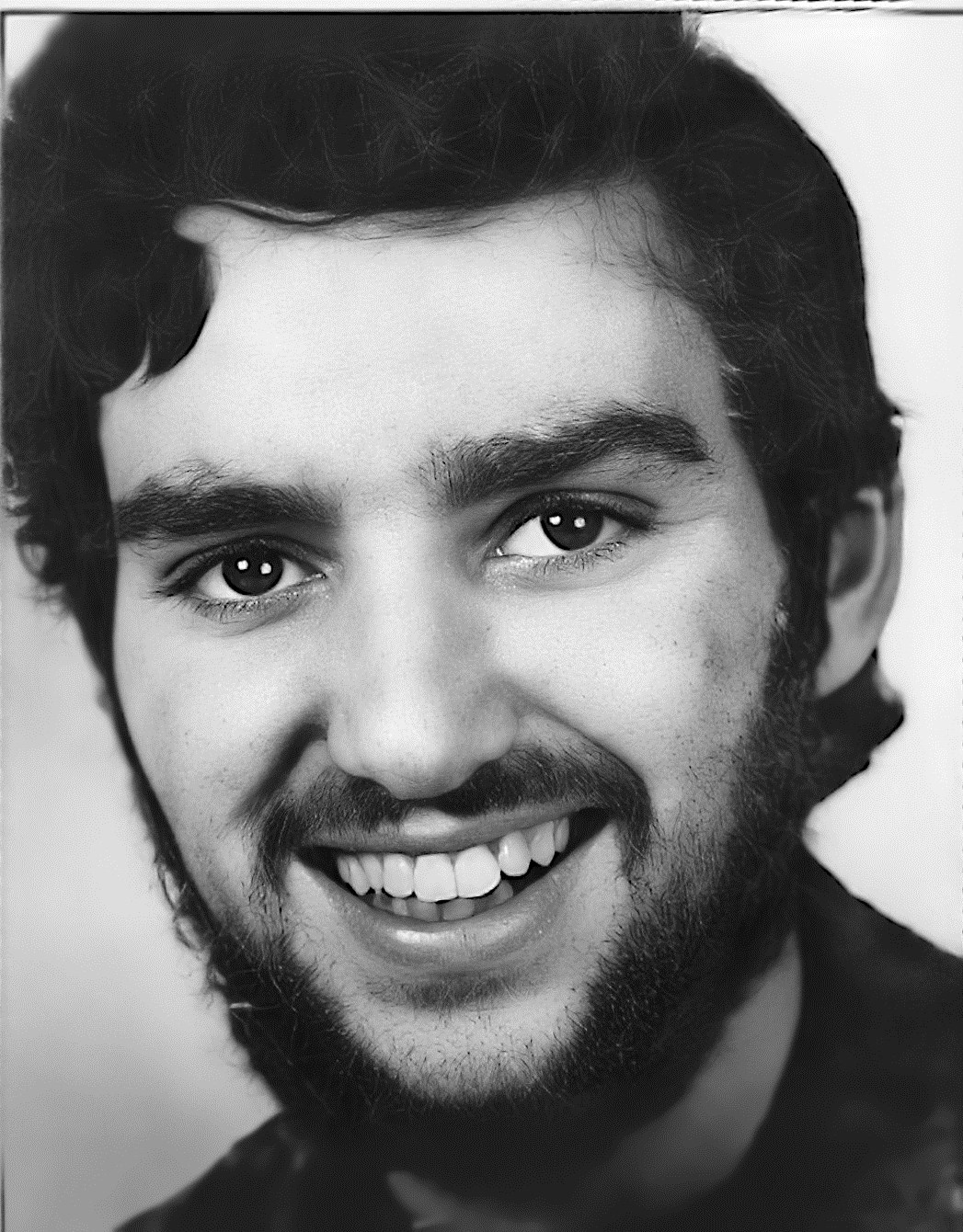

 Bobby Sands died on 5 May, 1981, 40 years ago this week. This article for IRIS recounts how he became inspired to join the Irish republican struggle and to lead the 1981 hunger strike against the criminalisation of political prisoners. Bobby Sands was born in 1954 in Rathcoole, a predominantly loyalist district of north Belfast. His twenty-seventh birthday fell on the ninth day of his 66-day hunger strike. His sisters Marcella, one year younger, and Bernadette, were born in April 1955 and November 1958, respectively. All three lived their early years at Abbots Cross in the Newtownabbey area of north Belfast. A second son, John, now nineteen, was born to their parents John and Rosaleen, now both aged 57, in June 1962.The sectarian realities of ghetto life materialised early in Bobby’s life when at the age of ten his family were forced to move home owing to loyalist intimidation even as early as 1962. Bobby recalled his mother speaking of the troubled times which occurred during her childhood: “Although I never really under stood what internment was or who the ‘Specials’ were, I grew to regard them as symbols of evil”.Of this time Bobby himself later wrote: “I was only a working-class boy from a Nationalist ghetto, but it is repression that creates the revolutionary spirit of freedom. I shall not settle until I achieve liberation of my country, until Ireland becomes a sovereign, independent socialist republic.”When Bobby was sixteen years old he started work as an apprentice coach builder and joined the National Union of Vehicle Builders and the ATGWU. In an article printed in An Phoblacht/Republican News on April 4th, 1981, Bobby recalled: “Starting work, although frightening at first became alright, especially with the reward at the end of the week. Dances and clothes, girls and a few shillings to spend, opened up a whole new world to me.”Bobby’s background, experiences and ambitions did not differ greatly from that of the average ghetto youth. Then came 1968 and the events which were to change his life. Bobby had served two years of his apprenticeship when he was intimidated out of his job. His sister Bernadette recalls: “Bobby went to work one morning and these fellows were standing there cleaning guns. One fellow said to him, ‘Do you see these here, well if you don’t go you’ll get this’ then Bobby also found a note in his lunch-box telling him to get out.”In June 1972, the family were intimidated out of their home in Doonbeg Drive, Rathcoole and moved into the newly built Twinbrook estate on the fringe of nationalist West Belfast. Bernadette again recalled: We had suffered intimidation for about eighteen months before we were actually put out. We had always been used to having Protestant friends. Bobby had gone around with Catholics and Protestants, but it ended up when everything erupted, that the friends he went about with for years were the same ones who helped to put his family out of their home.As well as being intimidated out of his job and his home being under threat Bobby also suffered personal attacks from the loyalists.At eighteen Bobby joined the Republican Movement. Bernadette says: “…he was just at the age when he was beginning to become aware of things happening around him. He more or less just said right, this is where I’m going to take up. A couple of his cousins had been arrested and interned. Booby felt that he should get involved and start doing something.”Bobby himself wrote. “My life now centered around sleepless nights and stand-bys dodging the Brits and calming nerves to go out on operations. But the people stood by us. The people not only opened the doors of their homes to lend us a hand but they opened their hearts to us. I learned that without the people we could not survive and I knew that I owed them everything.”In October 1972, he was arrested. Four handguns were found in a house he was staying in and he was charged with possession. He spent the next three years in the cages of Long Kesh where he had political prisoner status. During this time Bobby read widely and taught himself Irish which he was later to teach the other blanket men in the H-Blocks.Released in 1976 Bobby returned to his family in Twinbrook. He reported back to his local unit and straight back into the continuing struggle: “Quite a lot of things had changed some parts of the ghettos had completely disappeared and others were in the process of being removed. The war was still forging ahead although tactics and strategy had changed. The British government was now seeking to ‘Ulsterise’ the war which included the attempted criminalisation of the IRA and attempted normalisation of the war situation.”Bobby set himself to work tackling the social issues which affected the Twinbrook area. Here he became a community activist. According to Bernadette, “When he got out of jail that first time our estate had no Green Cross, no Sinn Féin, nor anything like that. He was involved in the Tenants’ Association… He got the black taxis to run to Twinbrook because the bus service at that time was inadequate. It got to the stage where people were coming to the door looking for Bobby to put up ramps on the roads in case cars were going too fast and would knock the children down.”Within six months Bobby was arrested again. There had been a bomb attack on the Balmoral Furniture Company at Dunmurry, followed by a gun-battle in which two men were wounded. Bobby was in a car near the scene with three other young men. The RUC captured them and found a revolver in the car.The six men were taken to Castlereagh and were subjected to brutal interrogations for six days. Bobby refused to answer any questions during his interrogation, except his name, age and address.In a ninety-six verse poem written in 1980, entitled ‘The Crime of Castlereagh’, Bobby tells of his experiences in Castlereagh and his fears and thoughts at the time.They came and came their job the same In relays N’er they stopped. ‘Just sign the line!’ They shrieked each time And beat me ‘till I dropped. They tortured me quite viciously They threw me through the air. It got so bad it seemed I had Been beat beyond repair. The days expired and no one tired, Except of course the prey, And knew they well that time would tell Each dirty trick they laid on thick For no one heard or saw, Who dares to say in Castlereagh The ‘police’ would break the law!He was held on remand for eleven months until his trial in September 1977. As at his previous trial he refused to recognise the court.The judge admitted there was no evidence to link Bobby, or the other three young men with him, to the bombing. So the four of them were sentenced to fourteen years each for possession of the one revolver.Bobby spent the first twenty-two days of his sentence in solitary confinement, ‘on the boards’ in Crumlin Road jail. For fifteen of those days he was completely naked. He was moved to the H-Blocks and joined the blanket protest. He began to write for Republican News and then after February 1979 for the newly-merged An Phoblacht/Republican News under the pen-name, ‘Marcella’, his sister’s name. His articles and letters, in minute handwriting, like all communications from the H-Blocks, were smuggled out on tiny pieces of toilet paper.He wrote: “The days were long and lonely. The sudden and total deprivation of such basic human necessities as exercise and fresh air, association with other people, my own clothes and things like newspapers, radio, cigarettes books and a host of other things, made my life very hard.”Bobby became PRO for the blanket men and was in constant confrontation with the prison authorities which resulted in several spells of solitary confinement. In the H-Blocks, beatings, long periods in the punishment cells, starvation diets and torture were commonplace as the prison authorities, with the full knowledge and consent of the British administration, imposed a harsh and brutal regime on the prisoners in their attempts to break the prisoners’ resistance to criminalisation.The H-Blocks became the battlefield in which the republican spirit of resistance met head-on all the inhumanities that the British could perpetrate. The republican spirit prevailed and in April 1978 in protest against systematic ill-treatment when they went to the toilets or got showered, the H-Block prisoners refused to wash or slop-out. They were joined in this no-wash protest by the women in Armagh jail in February 1980 when they were subjected to similar harassment.On October 27th, 1980, following the breakdown of talks between British direct ruler in the North, Humphrey Atkins, and Cardinal O Fiaich, the Irish Catholic primate, seven prisoners in the H-Blocks began a hunger strike. Bobby volunteered for the fast but instead he succeeded, as O/C, Brendan Hughes, who went on hunger-strike.During the hunger-strike he was given political recognition by the prison authorities. The day after a senior British official visited the hunger-strikers, Bobby was brought half a mile in a prison van from H3 to the prison hospital to visit them. Subsequently he was allowed several meetings with Brendan Hughes. He was not involved in the decision to end the hunger-strike which was taken by the seven men alone. But later that night he was taken to meet them and was allowed to visit republican prison leaders in H-Blocks 4, 5 and 6.On December 19th, 1980, Bobby issued a statement that the prisoners would not wear prison-issue clothing nor do prison work. He then began negotiations with the prison governor, Stanley Hilditch, for a step-by-step de-escalation of the protest.But the prisoners’ efforts were rebuffed by the authorities: “We discovered that our good will and flexibility were in vain,” wrote Bobby. “It was made abundantly clear during one of my ‘co-operation’ meetings with prison officials that strict conformity was required, which in essence meant acceptance of criminal status.”In the H-Blocks the British saw the opportunity to defeat the IRA by criminalising Irish freedom fighters but the blanketmen, perhaps more than those on the outside, appreciated before anyone else the grave repercussions, and so they fought.Bobby volunteered to lead the new hunger strike. He saw it as a microcosm of the way the Brits were treating Ireland historically and presently, Bobby realised that someone would have to die to win political status.He insisted on starting two weeks in front of the others so that perhaps his death could secure the five demands and save their lives. For the first seventeen days of the hunger strike Bobby kept a secret diary in which he wrote his thoughts and views, mostly in English but occasionally breaking into Gaelic. He had no fear of death and saw the hunger-strike as something much larger than the five demands and as having major repercussions for British rule in Ireland. The diary was written on toilet paper in biro pen and had to be hidden, mostly carried inside Bobby’s own body. During those first seventeen days Bobby lost a total of sixteen pounds weight and on Monday, March 23rd, he was moved to the prison hospital.On March 30th, he was nominated as candidate for the Fermanagh and South Tyrone by-election caused by the sudden death of Frank Maguire, an independent MP who supported the prisoners’ cause.The next morning, day thirty-one, of his hunger-strike, he was visited by Owen Carron who acted as his election agent. Owen told of that first visit: “Instead of meeting that young man of the poster with long hair and a fresh face, even at that time when Bobby wasn’t too bad he was radically changed. He was very thin and bony and his hair was cut short.”Bobby had no illusions with regard to his election victory. His reaction was not one of over-optimism. After the result was announced Owen visited Bobby: “He had already heard the result on the radio. He was in good form alright but he always used to keep saying, ‘In my position you can’t afford to be optimistic.’ In other words, he didn’t take it that because he’d won an election that his life would be saved. He thought that the Brits would need their pound of flesh. I think he was always working on the premise that he would have to die.”At 1.17 a.m. on Tuesday, May 5th, having completed sixty-five days on hunger-strike, Bobby Sands MP, died in the H-Block prison hospital at Long Kesh. Bobby was a truly unique person whose loss is great and immeasurable. He never gave himself a moment to spare. He lived his life energetically, dedicated to his people and to the republican cause, eventually offering up his life in a conscious effort to further that cause and the cause of those with whom he had shared almost eight years of his adult life. In his own words: “Of course I can be murdered but I remain what I am, a political POW and no-one, not even the British, can change that.”