subscribe to the RSS Feed

Sunday, August 30, 2026

Francis Hughes – Died May 12th, 1981

Posted by Jim on May 12, 2025
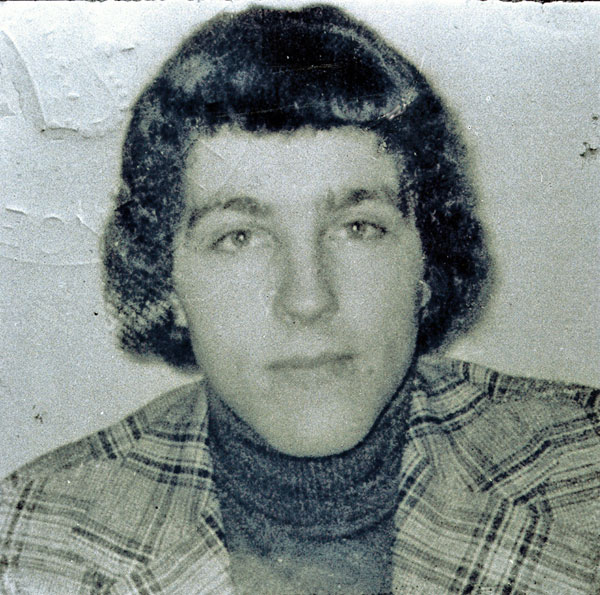
A determined and totally fearless soldier

THE SECOND republican to join the H-Block hunger-strike for political status – a fortnight after Bobby Sands – was twenty-five-year-old Francis Hughes, from Bellaghy in South Derry: a determined, committed and totally fearless IRA Volunteer who organised a spectacularly successful series of military operations before his capture, and was once described by the RUC as their ‘most wanted man’ in the North.

Eluding for several years the relentless efforts of the British army, UDR and RUC to track him down, Francis operated boldly throughout parts of Tyrone and north and south Antrim, but particularly in his native South Derry, with a combination of brilliant organisation and extreme daring – until his capture after a shoot-out with the SAS – which earned him widespread popular renown, and won general support for the republican cause, as well as giving him an undisputed reputation as a natural-born soldier and leader.

ROOTED

Francis Hughes was born on February 28th, 1956, the youngest son amongst ten children, into a staunchly republican family which has been solidly rooted, for most of this century, in the townland of Tamlaghtduff, or Scribe Road, as it is otherwise called.

His parents who married in 1939, are Patrick Joseph Hughes, aged 72, a retired small cattle farmer born in the neighbouring town land of Ballymacpeake, and Margaret, aged 68, whose maiden name is McElwee, and who was born in Tamlaghtduff.

A quarter-of-a-mile away from the Hughes’ bungalow, on the other side of the Scribe Road is the home of Thomas and Benedict McElwee – first cousins of Francis. Benedict is currently serving a sentence in the H-Blocks. Thomas – the eldest – embarked on hunger strike on June 8th, and died sixty-two days later on August 8th.

In Tamlaghtduff, as throughout the rest of Bellaghy, sympathy as well as active support for the republican cause runs at a very high level, a fact testified to by the approximately twenty prisoners-of-war from around Bellaghy alone.

Francis was an extremely popular person, both to his family and to his republican colleagues and supporters.

His father recalls that as a boy he was always whistling, joking and singing: a trait which he carried over into his arduous and perilous days as a republican, when he was able to transmit his enthusiasm and optimism both to Volunteers under his command and to Sympathisers who offered them – at great personal risk, food and shelter

It was qualities like these, of uncomplaining tirelessness, of consideration for the morale of those around him, and his ruling wish to lead by example, that have made Francis Hughes one of the most outstanding Irish revolutionary soldiers this war has produced and a man who was enormously respected in his native countryside.

BOY

As a boy, Francis went first to St. Mary’s primary school in Bellaghy, and from there to Clady intermediate school three miles away.

He enjoyed school and was a fairly good student whose favourite subjects were history and woodwork. He was not particularly interested in sport, but was very much a lively, outdoor person, who enjoyed messing around on bikes, and later on, in cars.

He enjoyed dancing and regularly went to ceilidh as a young man, even while ‘on the run’, although after ‘wanted’ posters of him appeared his opportunities became less frequent.

His parents recall that Francis was always extremely helpful around the house, and that he was a “good tractor man”.

DECORATOR

Leaving school at sixteen, Francis got a job with his sister Vera’s husband, as an apprentice painter and decorator, completing his apprenticeship shortly before ‘going on the run’.

In later days, Francis would often do a spot of decorating for the people whose house he was staying in

On one occasion, shortly after the ‘wanted’ posters of him had been posted up all over South Derry, Francis was painting window frames at the front of the house he was staying in when two jeep-loads of British soldiers drove past. While the other occupants of the house froze in apprehension, Francis waved and smiled at the curious Brits as they passed by, and continued painting.

It was such utter fearlessness, and the ability to brazen his way through, that saved him time and time again during his relatively long career as an active service Volunteer.

On one such occasion, when stopped along with two other Volunteers as they crossed a field, Francis told a Brit patrol that they didn’t feel safe walking the roads, as the IRA were so active in the area. The Brits allowed the trio to walk on, but after a few yards Francis ran back to the enemy patrol to scrounge a cigarette and a match from one of the British soldiers.

A turning point for Francis, in terms of his personal involvement in the struggle, occurred at the age of seventeen, when he and a friend were stopped by British soldiers at Ardboe, in County Tyrone, as they returned from a dance one night.

The pair were taken out of their car and so badly kicked that Francis was bed-ridden for several days. Rejecting advice to make a complaint to the RUC, Francis said it would be a waste of time, but pledged instead to get even with those who had done it, “or with their friends.”

Notwithstanding such a bitter personal experience of British thuggery, and the mental and physical scars it left, Francis’ subsequent involvement in the Irish Republican Army was not based on a motive of revenge but on a clear and abiding belief in his country’s right to national freedom.

INVOLVEMENT

During the early part of ‘the troubles’, the ‘Officials’ were relatively strong in the South Derry area and Francis’ first involvement was with them.

However, disillusioned, as were many others, with the ‘Sticks’ unilateral ceasefire in 1972, he left to set up and command an ‘independent’ military unit in the Bellaghy area. About the end of 1973 the entire unit – including Francis – was formally recruited into the IRA.

Francis’ involvement brought him increasingly to the attention of the British army and RUC and he was regularly held for a few hours in Magherafelt barracks and stopped on the road by British patrols; and on one occasion he was held for two days at Ballykelly camp.

As the 1975 IRA/British army truce came to an end Francis, fearing his imminent arrest, went ‘on the run’. From that time on, he led a life perpetually on the move, often moving on foot up to twenty miles during one night then sleeping during the day – either in fields and ditches or in safe houses; a soldierly sight in his black beret and combat uniform, and openly carrying his rifle, a handgun and several grenades as well as food rations.

The enemy reacted with up to fifty early morning raids on Francis’ home, and raids on the homes of those suspected of harbouring him. Often, houses would be staked out for days on end in the hope of capturing Francis. Often, it was only his sheer nerve and courage which saved him. One night, Francis was followed to a ‘safe house’ and looked out to see the Brits surrounding the place and closing in. Without hesitating, the uniformed Francis stepped outside the door, clutching his rifle, and in the darkness crept gradually through their lines, occasionally mumbling a few short words to British soldiers he passed, who, on seeing the shadowy uniformed figure, mistook him for one of themselves.

On numerous occasions, Francis and his comrades were stopped at checkpoints along the country roads while moving weapons from one locality to another but always calmly talked their way through. Once, a UDR soldier actually recognised Francis and his fellow Volunteers in a car but, fully aware that Francis would not be taken without a shoot-out, he waved their car on.

ACTIVE

The years before Francis’ capture were extremely active ones in the South Derry and surrounding areas with the commercial centres of towns and villages like Bellaghy, Maghera, Toome, Magherafelt and Castledawson being blitzed by car bombs on several occasions, and numerous shooting attacks being carried out as well.

Among the Volunteers under his command Francis had a reputation of being a strict disciplinarian and perfectionist who could not tolerate people taking their republican duties less seriously, and selflessly, than was necessary. He also, however, inspired fellow Volunteers by his example and by always being in the thick of things, and he thrived on pressure.

During one night-time operation, a weapon was missing and Francis gave away his own weapon to another Volunteer, taking only a torch himself which he used to its maximum effect by shining it at an oncoming enemy vehicle, which had its headlights off, to enable the other Volunteers to direct their fire.

Francis’ good-humoured audacity also showed itself in his republican activity. At the height of his ‘notoriety’ he would set up road-blocks, hoping to lure the Brits into an ambush (which by hard experience they learned to avoid), or he would ring up the Brits and give them his whereabouts!

Such joking, however, did not extend only to the enemy. One day, lying out in the fields, he spied one of his uncles cycling down a country road. Taking careful aim with his rifle he shot away the bike’s rear wheel. His uncle ran alarmed, into a nearby house shouting that loyalists had just tried to assassinate him!

BATTLE

The determination of the British army and RUC to capture Francis Hughes came to a head in April 1977. In that month, on Good Friday, a car containing three IRA Volunteers was overtaken and flagged down on the Moneymore Road at Dunronan, in County Derry, by a carload of RUC men.

The Volunteers attempted to make a U-turn but their car got stuck in a ditch as the armed RUC men approached. Jumping from the car, the Volunteers opened fire, killing two RUC men and injuring another before driving off. A hundred yards further up the road a second gun battle ensued but the Volunteers escaped safely.

Subsequently, the RUC issued a ‘wanted’ poster of Francis Hughes and two fellow republicans, Dominic McGlinchey and Ian Milne, in which Francis was named as the ‘most wanted man’ in the North.

When his eventual capture came, it was just as he had always said it would be: “I’ll get a few of them before they get me.”

STAKE-OUT

At 8.00 p.m. on March 16th, 1978, two SAS soldiers took up a stake-out position opposite a farm, on the south side of the Ronaghan road, about two miles west of Maghera, in the townland of Ballyknock.

At 9.15 p.m. they saw two men in military uniform and carrying rifles, walking in single file along the hedgeline of the field towards them. Using their ‘night sights’ in the darkness, the SAS men observed the military behaviour of the two on-comers and having challenged them, heard the men mumble a few words to each other in Irish accents and assumed that the pair were UDR soldiers.

One of the pair, in fact, was Francis Hughes, the other a fellow Volunteer, and with only a second’s hesitation both Volunteers cocked their rifles and opened fire. One SAS man fell fatally wounded but the other – though shot in the stomach – managed to fire a long burst from his sterling sub-machine gun at the retreating figures, and to make radio contact with his base.

Within three minutes, nearby Brit patrols were on the scene and the area was entirely sealed off. The following morning hundreds of Brits took part in a massive search operation.

Fifteen hours after the shooting, at around 12.15 p.m. the next day, they found Francis Hughes sitting in the middle of a gorse bush in a field three hundred yards away, bleeding profusely from a bullet wound which had shattered his left thigh. As he was taken away on a stretcher he yelled defiantly, through his considerable pain: “Up the Provies”.

His comrade, though also wounded, slightly, managed to evade the dragnet and to escape.

SURVIVED

How he survived the night of the shooting, possibly the coldest night of that year, bears eloquent testimony to Francis’ grim determination to evade capture. After being shot, he dragged himself – unable to walk – across the Ronaghan road and across two fields without a sound, before burying himself in a thick clump of gorse bushes.

At one point, en-route, Francis fell down a sharp drop between fields, and his left leg – the muscle and bone completely disintegrated – came up over his shoulder; but Francis worked it carefully down before continuing to crawl on his way. In his hiding place, he lay through the night, motionless and soundless, till his capture.

When he was found, unable to move through the cold, pain and stiffness, Francis, knowing that both Brits and RUC were on instructions to shoot him on sight, gave his name as Eamonn Laverty and his address as Letterkenny, County Donegal.

Francis was taken to Magherafelt hospital and from there to Musgrave Park military hospital in Belfast, and it was only then that his true identity was revealed. He spent ten months in Musgrave Park where his leg was operated on, reducing his thigh bone by an inch-and-a-half and leaving him dependent on a crutch to walk.

CASTLEREAGH

On Wednesday, January 24th, 1979, Francis was taken from Musgrave Park hospital to Castlereagh interrogation centre where he spent six days before being charged on January 29th. For more than four days Francis refused food and drink, fearing that it might have been drugged to make him talk.

His behaviour in Castlereagh was typical of the fiercely determined and courageous republican Volunteer that he was. His frustrated interrogators later described him as “totally uncooperative”.

Nevertheless, at his trial in Belfast in February 1980, after a year on remand in Crumlin Road jail, Francis was found ‘guilty’ on all charges.

He received a life sentence for killing the SAS soldier, and fourteen years for attempting to kill the other SAS man. He also received fifty-five years on three other charges.

H-BLOCK

In the H-Blocks, Francis immediately went on the protest for political status and, despite the severe disability of his wounded leg, displayed the same courage and determination that had been his hallmark before his capture.

And, just as always wanting to be in the thick of things and wanting to shoulder responsibility for other political prisoners as he had earlier looked after the morale of fellow Volunteers, Francis was one of those to volunteer for the hunger strike which began on October 27th, 1980. He was not one of the first seven hunger strikers selected but was among the thirty men who joined the hunger strike in its closing stages as Sean McKenna’s condition became critical.

That utter selflessness and courage came to its tragic conclusion on Tuesday, May 12th, when Francis died at 5.43 p.m. after fifty-nine days on hunger strike.


Ancient Order of Hibernians

Posted by Jim on May 11, 2025

May 4 at 11:05 AM  · 

May be an image of 1 person and text that says 'Donald DonaldJ.Trump J. Trump @realDonaldTrump ラー 분이'

Ancient Order of Hibernians in America

May 3 at 6:41 PM  · 

The Ancient Order of Hibernians (AOH) strongly objects to President Donald J. Trump’s recent offensive social media post depicting himself in papal vestments, seated on the Chair of St. Peter, via an AI-generated image. Releasing this during the sacred period of mourning for Pope Francis is not only grossly inappropriate, it is a blatant affront to Catholics and an attack on their belief in the sanctity of the Papacy.

That the President of the United States would digitally insert himself into the role of the Vicar of Christ while millions of faithful mourn a pope who embodied humility, compassion, and quiet strength is behavior beneath the dignity of the U.S. Presidency. We would expect this kind of juvenile humor from the Cartoon Network, not the Oval Office.

We remind the President that the United States has a long and shameful history of anti-Catholicism, from the Know Nothings to the Ku Klux Klan. We should not be enhancing the defamatory images of Thomas Nast with 21st-century technology. This incident comes amid a troubling climate for American Catholics, who have endured a surge in attacks on churches and sacred spaces—over 400 incidents in the past year alone—and were subject to FBI surveillance in their places of worship. At a time when Catholics feel increasingly under cultural, physical, and institutional attack, the last thing they need is to see their sacred beliefs defamed and exploited for political theater.

We note and commend that this administration has been vocal in condemning antisemitism. We doubt the White House would ever publish an AI-generated image of the President dressed as an Orthodox Rabbi at the Wailing Wall. Catholics and their faith deserve the same respect.

As Catholics, we are called to believe in the forgiveness of sin and the redemption of ignorance. However, forgiveness begins with sincere confession and repentance. As the largest Irish Catholic organization in America, the Ancient Order of Hibernians calls on President Trump to issue a direct and unqualified apology to the Catholic community.

Sean Pender

National President

Ancient Order of Hibernians

Irish Mother’s Day

Posted by Jim on

Celebrating the enduring bond between mothers and daughters

Decades ago, a wise Irish cousin summed up motherhood with an adage: “Enjoy them, they’re only on loan to you.” I have come to see the wisdom and the universality of that.

Maureen Mitchell

@IrishCentral

May 11, 2025

My younger daughter, Megan, recently sent me a text which said “thanks for being my Mom.” I quickly and instinctively texted back, “It’s the greatest privilege of my life.”

A privilege, but not an easy one. Being a mother is the hardest thing I’ve ever done; there’s a lifetime constancy required of it that I never understood — not, that is until it was staring me down. It sounds trite but there really is no script, no roadmap.

Read more

For me, learning to be a mother was more akin to crawling around in the dark looking for something… than what I had been led to expect from the reassuring words in the parenting books.

It’s as a mother that I have been challenged the most; challenged to learn, to stretch, to grow, to forgive, to be patient.

And perhaps the most difficult part: to accept, accept that I no longer have control, that my children have to make their own decisions — and their own mistakes, as obvious as they may appear to me. (If I am honest with myself, my own mistakes haven’t always been obvious to me, either.)

As I responded to Megan, my thoughts turned to my own mother, Mary Raftery, an Irish immigrant, who passed away several years ago. While our lives were profoundly different — as different as my daughters’ are from mine — I was struck by how similar were the tugs and pulls, the inherited life lessons, across three generations of women.

In 1947, my mother boarded a plane at Shannon, at the time an airstrip nestled in hayfields, to fly to New York City, where, as so many Irish girls had done before and since, she became a nanny. While it may seem simple today, even a cliché, hers was an act of tremendous courage.

Despite a few years working in England, my mother was a simple farm girl, with at best an eighth-grade education, and only distant cousins in NYC to welcome her. (She would not go home again for 25 years — by which time her father had died, her siblings were adults, and much of the Ireland she’d known had changed beyond recognition.)

My mother’s life was defined not by warmth or nostalgia, but rather by grit, raw intellect, and her own brand of determination. Her philosophy was simple: if you had enough to eat, a warm bed, and clothes to wear — some of which she’d lacked in her early life — you had it made. Her motto was simple: “No one died, how bad could it be? Keep going.”

There was little tolerance for complaining. One of her more memorable lines erupted while admonishing the publicist for Frank McCourt’s Angela’s Ashes — “What was he complaining about, he had shoes!”

Read more

It’s fair to say that my mother’s unsentimental, instinctive nature profoundly influenced my ambitions, career, and life choices. Now I see how they have in turn shaped my millennial children’s lives, ambitions, and decisions — filtered by my own reactions, and amplified by my own actions — in that eternal generational play of mothers and daughters.

Looking back now, my memories of motherhood are many and mixed. There are the very sweet memories that I cherish: falling head over heels in love with each of them for the first time, taking them to Paris, Sunday-evening picnics in front of the TV, and so many others.

But I was often exhausted, confused, anxious as well as disorganized, with the ever-present feeling of flying by the seat of my pants. Being a mostly single mother, with complete financial responsibility, did not make it any easier.

Read more

My mother was present in their lives, holidays, school events, birthdays, and occasional babysitting. Age mellowed her somewhat, and she enjoyed being a grandmother. But what shaped her was never far, and there was little tolerance for any sense of entitlement.

My girls give me much to be proud of and grateful for: they are healthy, with good careers and great relationships. They have life-long friendships (something which speaks volumes) and are passionate about their work and families. They are busy building their lives.

Perhaps best of all, I am a newly minted grandmother. And I want to see and know my granddaughter. I want her to know me, in the way that my girls knew my mother — and beyond. Despite the 3,000 miles that separate us physically, I am determined to be a constant presence in her (and in her future siblings’) life.

Decades ago, a wise Irish cousin summed up motherhood with an adage: “Enjoy them — they’re only on loan to you”! I have come to see the wisdom and the universality of that. Life is fleeting, we are all only on loan to one another.

This is a lesson that I am sure my daughters, and their own present and future sons and daughters, will come to learn — more easily, hopefully, than it was for a simple Irish farm girl who arrived on these shores so long ago.

First Minister Michelle O’Neill defends decision to attend Bobby Sands statue unveiling

Posted by Jim on May 8, 2025

First Minister Michelle O’Neill defends decision to attend Bobby Sands statue unveiling | UTV | ITV News

  • Thursday 8 May 2025 at 3:51pm

The First Minister has defended her decision to attend the unveiling of a statue that marked the 44th anniversary of the death of IRA hunger striker and MP Bobby Sands.

Michelle O’Neill and other Sinn Féin members were among those who visited the memorial garden in west Belfast over the weekend, a move that has been criticised by the DUP.

Belfast City Council has subsequently revealed it is investigating whether the statue was built without planning permission, after saying it did not receive an application for it.

In response, Ms O’Neill has said that the matter is an issue for those who erected the statue.

She said: “Firstly, I was very content and very happy actually to attend the unveiling and to be there and to see the statue.

“Bobby Sands is a huge figure, a huge iconic figure in terms of republicans here in Ireland, but also in terms of the whole historical political journey that we have been on.

“The hunger strikes marked a pivotal time in our history, so I was very honored to be there and to be part of the ceremony on Sunday.

“A First Minister for all looks like exactly what Sunday looked like for me.

“I attended the Bobby Sands unveiling. And then I went on to attend the service at Saint Anne’s Cathedral to mark the end of WW2.

“That’s a First Minister for all and actually demonstrating in actions that I would fulfill that promise.”

Sands died on May 5 during the 1981 hunger strike, aged 27.

The father-of-one had been elected an MP for Fermanagh and South Tyrone less than a month before his death.

‘Not a shred of evidence’ Martin McGuinness was British agent, claims ex-soldier

Posted by Jim on May 6, 2025

“There was suspicion among some of the volunteers I spoke to,” Jonathan Trigg said

Martin McGuinness
Martin McGuinness

Today at 07:40

Martin McGuinness never worked as an agent for the British state – that’s the view of a former British soldier who has written a book on the Sinn Féin chief.

In his latest book Death In Derry, author and historian Jonathan Trigg said there is “not a shred of evidence” that the former Deputy First Minister was a state agent.

Rumour and suspicion have swirled round McGuinness for decades amid speculation that the British had a “superspy’’ at the top of the republican movement.

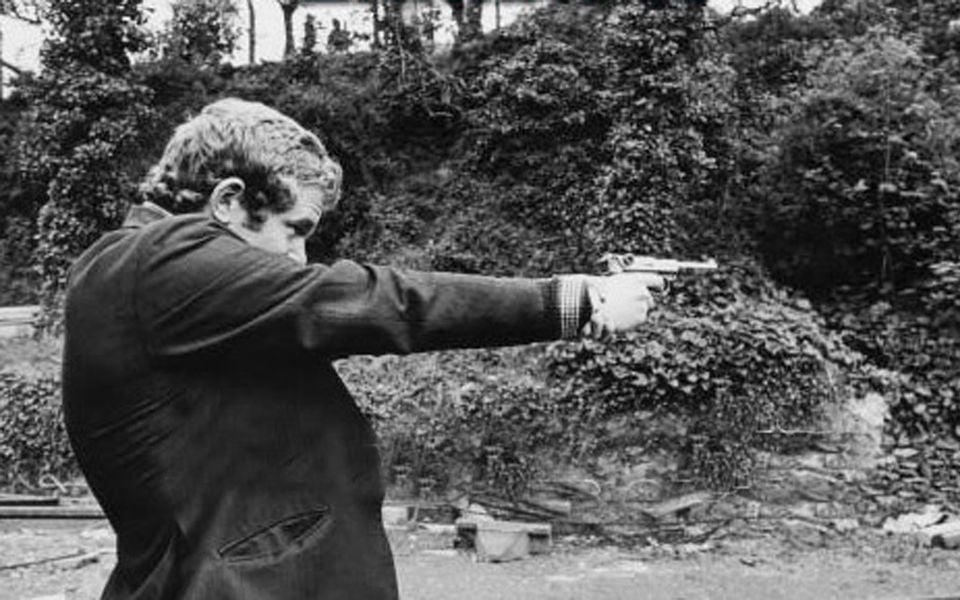
Martin McGuinness takes aim – he was the driving force behind the IRA campaign in Derry

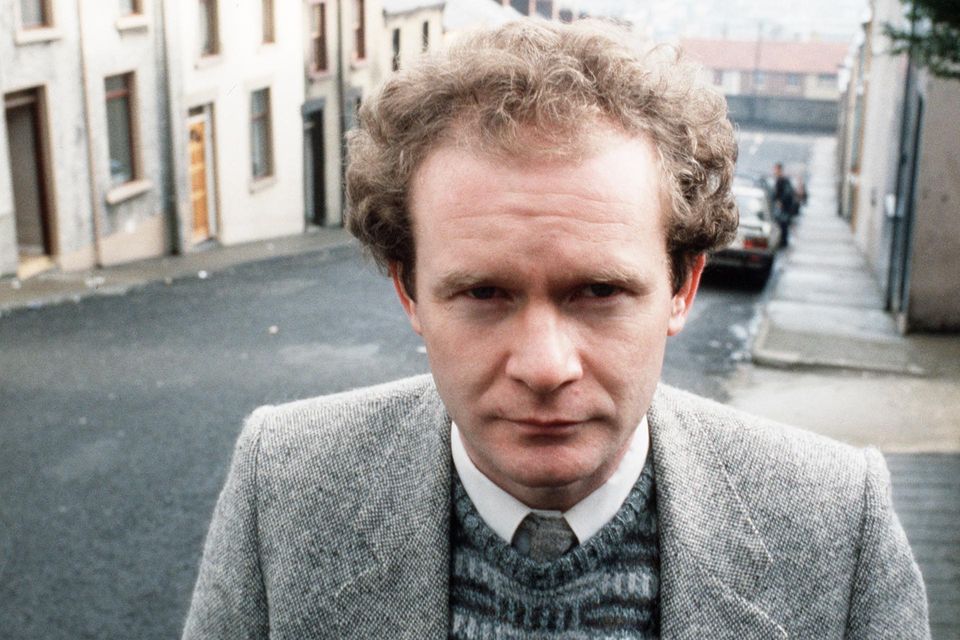
For Trigg, McGuinness was the ultimate urban guerilla commander, utterly dedicated to the cause, a diehard member of the IRA who eventually recognised that armed insurrection would not achieve their goals.

Trigg interviewed former IRA members and members of the security forces who fought in the streets of Derry – a campaign where McGuinness was in complete control.

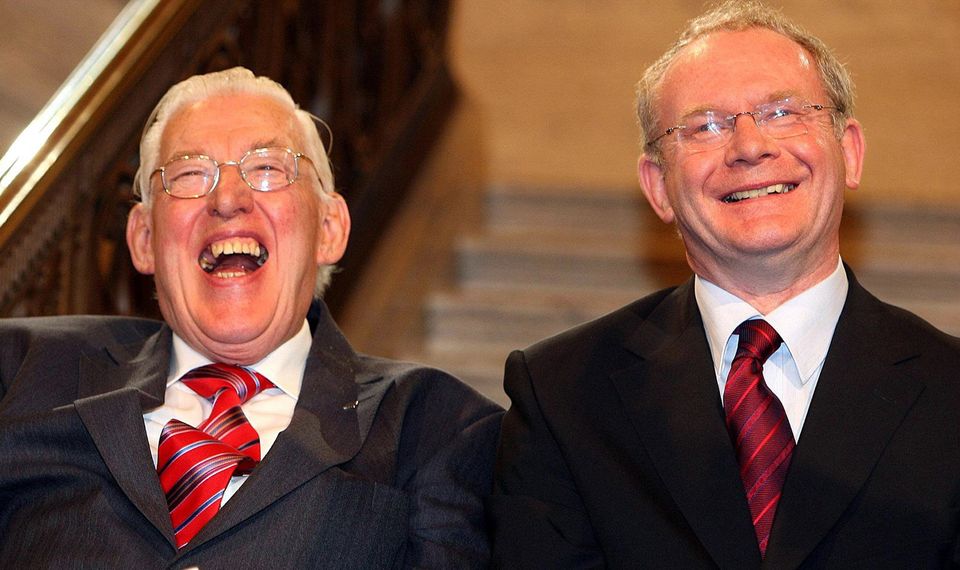
Old rivals McGuinness and Ian Paisley struck up a real friendship and were christened the Chuckle Brothers

“There was suspicion among some of the volunteers I spoke to,” he said last week. “Why was his house not being searched like mine, where are all the Libyan weapons we’ve been promised and so on, but in all my research I did not discover a single shred of evidence that would suggest he was anything other than a dedicated republican.

Learn more

https://imasdk.googleapis.com/js/core/bridge3.695.1_en.html#fid=goog_1015292714

Pause

Unmute

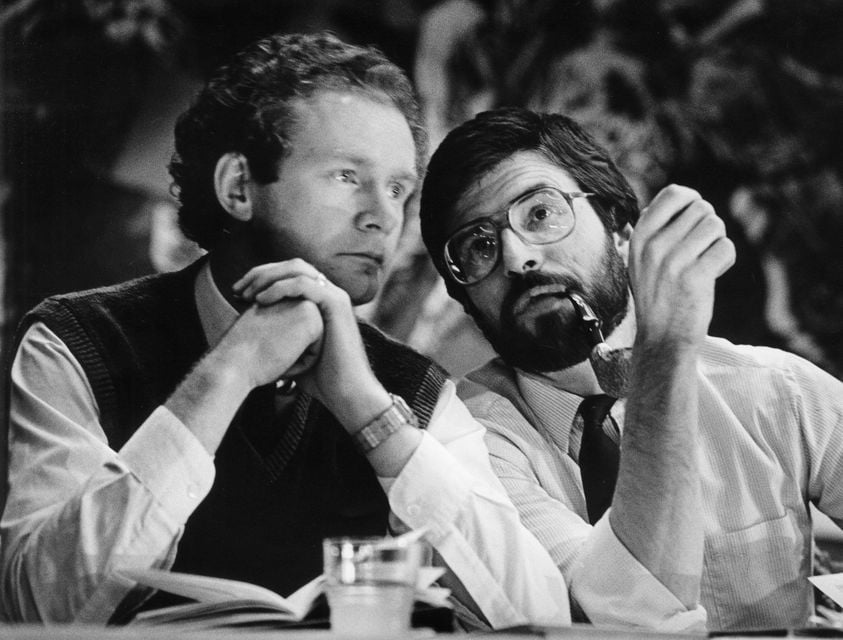
“I would describe him as flinty, tough, a hard man, ruthless even, together with (Gerry) Adams he was a formidable driving force in republicanism – one the politician, the other the army man.”

McGuiness and Gerry Adams were always aligned on strategy

The book traces Derry IRA’s war against the British through the experiences of McGuinness who became head of the Provisional’s Northern Command.

From a teenage assistant working in Doherty’s Butchers and throwing stones at the army, he rose to the top of the terror organisation and ultimately to the corridors of power at Stormont.

As OC of the IRA’s Derry Brigade he was one of the key figures in the conflict. Front and centre, he never shied away from the spotlight, proudly declaring his membership of the organisation in an Irish court when others were strenuously denying their own involvement.

His domination of the Derry Brigade was unique, with every other IRA unit of any significance led by men who came and went as death, prison or retirement took them off the stage. But not so in Derry.

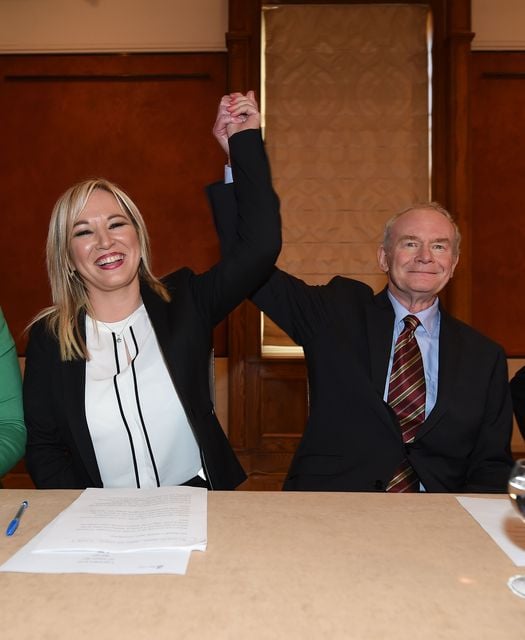
Martin McGuinness passing the SF baton to Michelle O’Neill

Trigg believes suspicion that he was an agent lay in the channels of communication between the IRA and the British which stretch back to the early seventies.

“1972 was a key year, we had Bloody Sunday and it was the worst year in terms of loss of life during the Troubles, back then the IRA called it the Year of Victory.

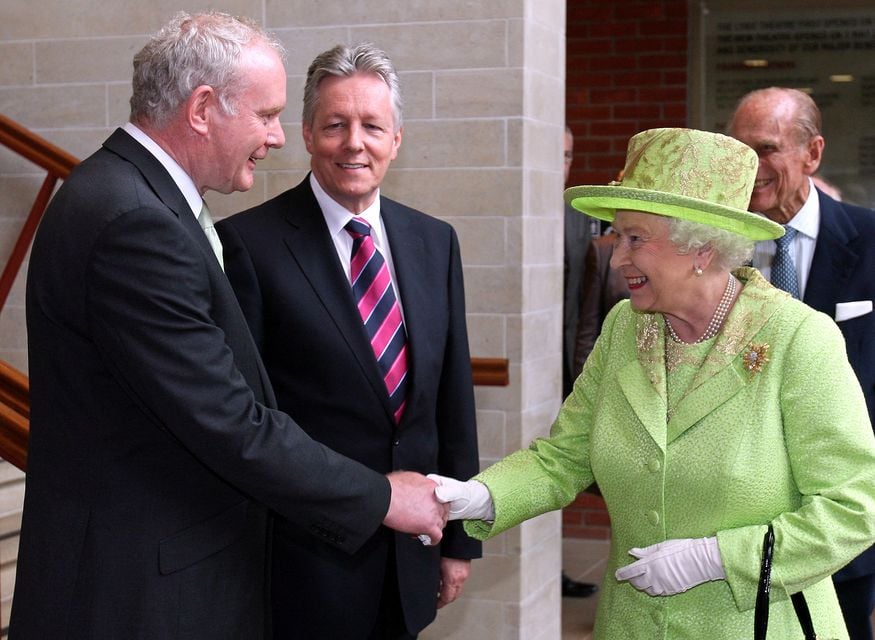
The famous handshake with Queen Elizabeth

“They thought they would drive the British into the sea, but when it didn’t happen and it was clear the British weren’t going to leave, McGuinness and others, notably Adams, realised there had to be a plan B. It was the start of what we would know as the peace process.

“Sadly it was to take decades. When you’re fighting an insurgency such as the British did with the Mau Mau rebellion in Kenya and the US in Vietnam, it takes a very long time. The British came here thinking they could quell everything quickly.”

Jonathan Trigg
Jonathan Trigg

Bloody Sunday, when British paratroopers murdered 14 unarmed civilians, was to prove the watershed moment.

“It changed everything – up to then the situation was relatively contained. The battalion I served with had been the resident battalion in Derry. I only discovered this recently because no one talks about it.

“The soldiers had been there for some time, they knew the city and they knew the players. There was a lot of what they called ‘friendly rioting’ – throwing stones and bottles – but after coming off duty, the boys would go for a pint in the Bogside Inn!”

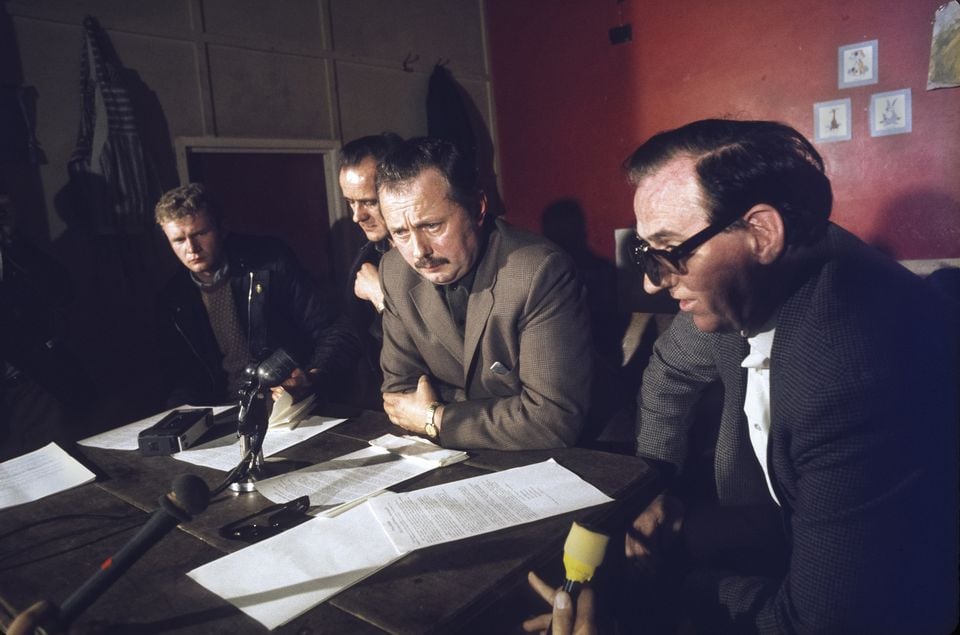
McGuinness at an IRA press conference in 1972

He said it all changed when his old battalion were ordered out of the city and the Paras were brought in.

“The command thought they were being too soft on the locals and sent in the Paras,” Trigg said.

Had the original unit been allowed to remain, he believes Bloody Sunday would not have happened.

“It rejuvenated the IRA campaign and McGuinness was in the thick of it.”

McGuinness’ strategy included a bombing campaign against commercial targets that reduced the city centre to rubble.

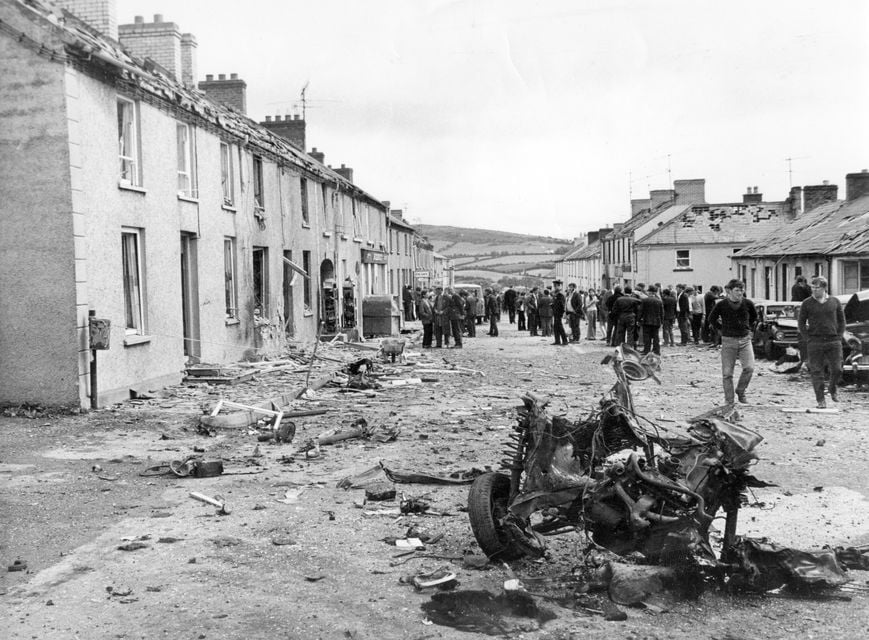
The aftermath of the car bombing in Claudy

McGuinness tried to avoid casualties – it didn’t always go to plan. In July 1972 nine people were killed when two IRA car bombs exploded in the south Derry village of Claudy. No organisation claimed responsibility but it was widely accepted to have been the work of the IRA.

Trigg says South Derry IRA had been instructed by McGuinness to mount an operation that would “take the heat off’’ the Derry Brigade.

He said even as McGuinness realised armed struggle would not win the day they had to keep the campaign going as it was the IRA’s best “bargaining chip”.

Having published a book on the IRA’s notorious East Tyrone Brigade, he said former IRA members agreed to speak to him. Some are still living with what they went through and what they did.

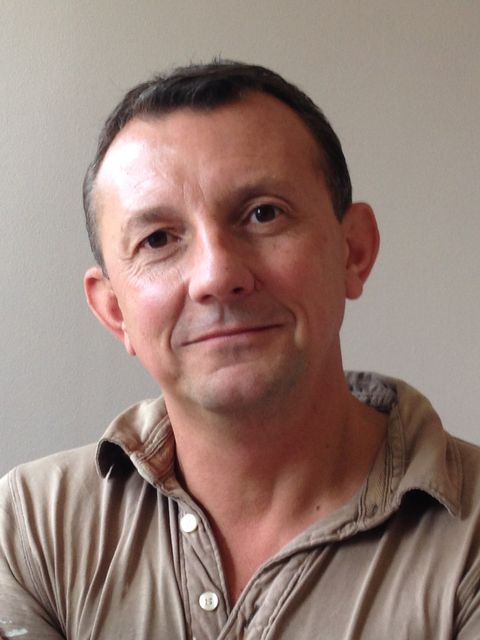
Jonathan Trigg today

“They had a relevance when the war was on, all of a sudden it stopped, they live in communities that don’t have a clue what they did or went through. In many ways I have sympathy for them,” Trigg said.

He admitted his view of the man he was writing about changed throughout the process of the book.

“Here was someone who personified everything about the IRA campaign – hard, dedicated, yet went on to compromise so many things such as dropping abstentionism which was so important to republicans.

“I think he and Adams deserve a huge amount of respect and credit, their longevity to see out an armed conflict and politics is just phenomenal.”

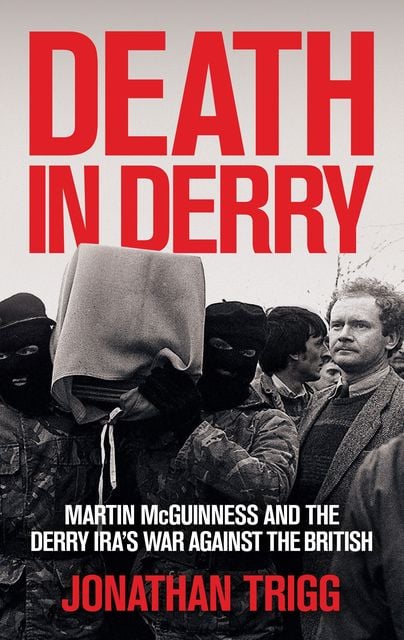
Jonathan Trigg's book about Martin McGuinness and Derry IRA’s war against the British
Jonathan Trigg’s book about Martin McGuinness and Derry IRA’s war against the British

Death In Derry: Martin McGuinness And The Derry IRA’s War Against The British is published by Merrion Press priced £17.99/€18.99.