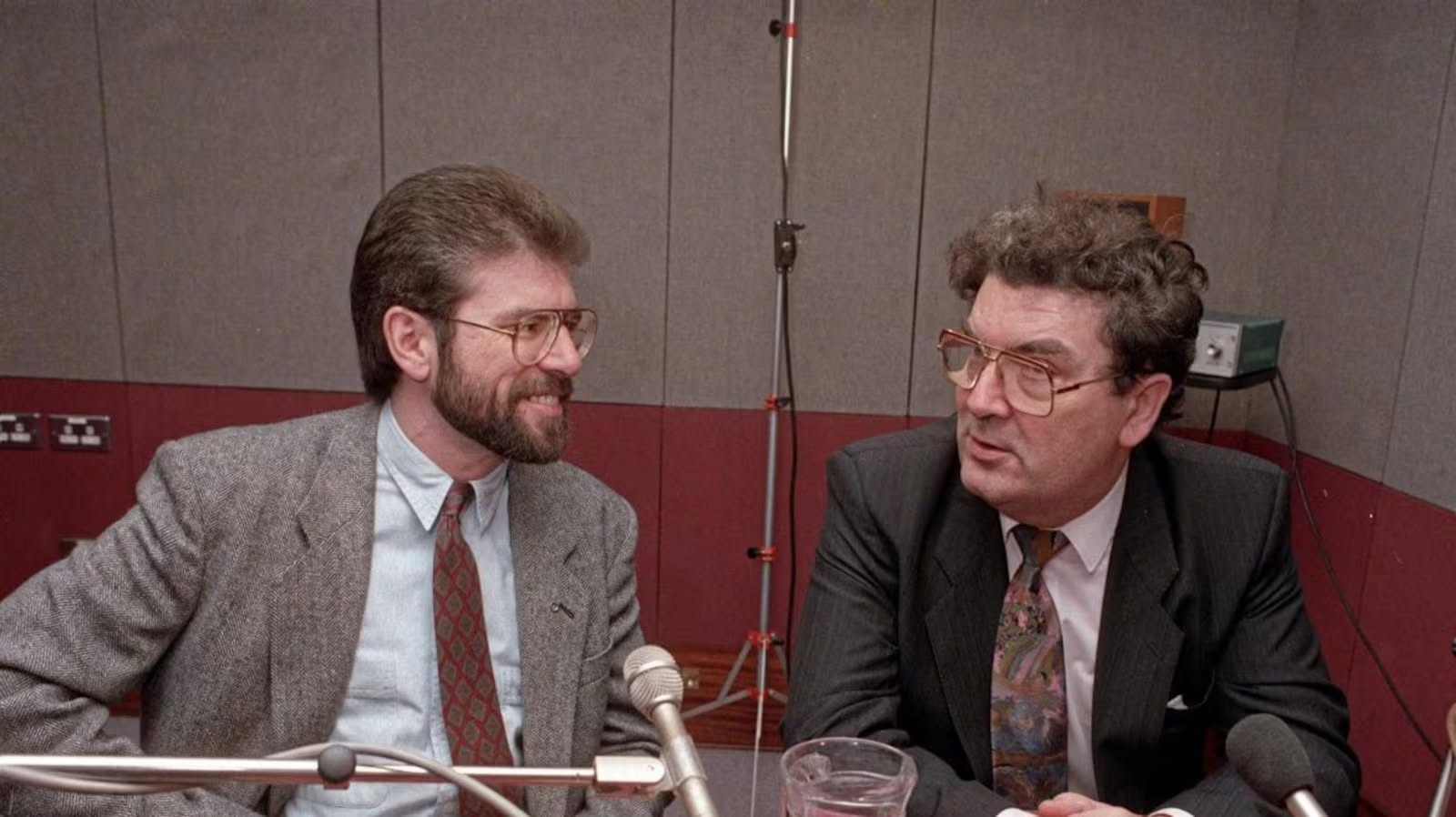
Noel Doran: John Hume, Gerry Adams and the day that reshaped northern nationalism.
John Hume’s career as the pre-eminent Irish public figure of the last century was not supposed to end in the way it effectively did 25 years ago today.
Gerry Adams’s Sinn Féin overtook John Hume’s SDLP for the first time as an electoral force 25 years ago today
By Noel Doran
June 08, 2026 at 6:00am BST
IT was on this day a quarter of a century ago that a profound change took place in northern nationalism, with the UK general election count establishing that Sinn Féin had overtaken the SDLP for the first time ever.
Although Sinn Féin had been growing steadily since the Good Friday Agreement (GFA), many commentators had felt that the opportunity for the republican party to secure an overall lead among nationalists had yet to arrive.
Some, but not all, of the SDLP front bench believed they would maintain their advantage as long as John Hume was at the helm, with tensions kept largely in the background until a new reality emerged as the ballot boxes were opened on the morning of June 8 2001, after the Westminster poll of the previous day.
While the margins were initially very tight, with Sinn Féin on 21.7 per cent (175,392 votes) and the SDLP on 21.0 per cent (169,865), the ramifications were enormous and in the following years the gap widened dramatically.
Reflections after the count focussed on Hume, the Nobel laureate who was completely justifiably regarded as the main architect of the peace process and later voted by RTÉ viewers as Ireland’s greatest ever citizen
Although almost his entire adult life had been selflessly dedicated to permanently ending violence – including his crucial but highly pressurised initiative with Gerry Adams – as the GFA breakthrough finally arrived in 1998, when he was 61, the relentless stress had taken almost a Shakespearean toll and his health was in serious decline.
Hume was not just leader of the SDLP, but, in the days when double and even triple mandates were permitted, he was simultaneously an MLA, an MP and an MEP, a workload which he insisted on undertaking but was plainly excessive.
I had known him reasonably well since I worked as a reporter in Derry 14 years previously, when he was a towering presence, but it later became clear during our occasional encounters on the fringes of the Stormont negotiations that his exceptional powers were waning significantly, as also sensitively indicated in Stephen Walker’s 2023 biography ‘John Hume The Persuader’.
The Sinn Féin leaders Gerry Adams and Martin McGuinness, who were both still in their 40s when the GFA was signed, looked sharp and focused in comparison, with a particular appeal to younger voters, and were routinely available for discussions about the latest developments.
Hume was an increasingly distant figure, as I found after becoming editor of The Irish News in April 1999, and immediately attempted to arrange a short, informal chat with him about a range of matters, proposing that I should drive to Derry on a suitable date which, despite repeated approaches, proved impossible to confirm.
I was only one journalist among many seeking his time, although The Irish News was by any standards an important outlet for him, but from my appointment to the announcement of his resignation as SDLP leader just over 30 months later, he was never available to sit down with me.
Hume was also often reluctant to engage with senior party colleagues, as an extraordinary episode from Seamus Mallon’s 2019 memoir ‘A Shared Home Place’ demonstrated.
The pair met almost by accident at an SDLP gathering at the Wellington Park hotel in Belfast, in the weeks after the overwhelming ratification of the GFA through a referendum in both parts of Ireland, when Hume said abruptly, and with no other consultation, that on medical advice he could not be deputy first minister, and Mallon would instead have to immediately take on the newly-created joint ruling office at Stormont.
That would have been an obvious stage for Hume to retire from all active politics, and perhaps become SDLP president, but he retained his post as leader, and his three other elected roles, throughout the introduction of devolution as events moved on decisively.
The SDLP had other capable representatives, but Hume was still very much the public face of the party, and his involvement in the intense debate over major issues like decommissioning and policing in the run-up to the 2001 general election was noticeably limited.
Hume had received a massive personal endorsement of his overall contribution in the 1999 European election, with over 190,000 votes, but it was in many ways a Pyrrhic victory and, the next time round, Sinn Féin comfortably captured the same seat during its wider advance.
He remained at the head of the SDLP until November 2001, as the party’s internal restructuring proved ineffective and Sinn Féin gained ground exponentially.
The legacy of Hume, who died in 2020, remains secure, but his career as the pre-eminent Irish public figure of the last century was not supposed to end in the way it effectively did 25 years ago today.
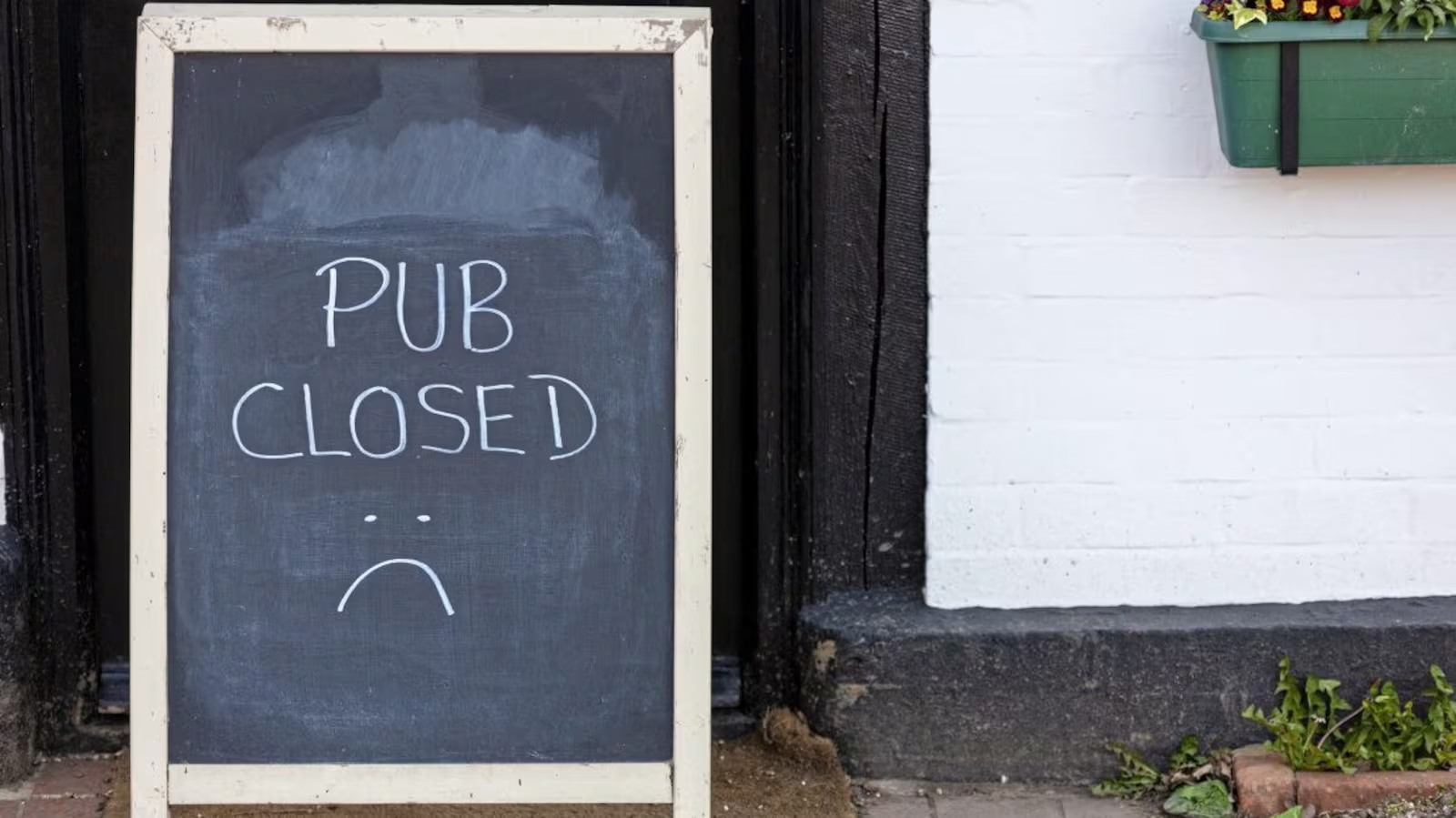
More than 200 hospitality firms have closed in Northern Ireland this year says trade group.
Food to Go Association repeats call for north to be used for a reduced VAT pilot.
A group representing the north’s takeaway industry has claimed more than 200 hospitality businesses have already closed in Northern ireland this year under financial pressure.
By Ryan McAleer
June 03, 2026 at 4:29pm BST
More than 200 hospitality businesses have closed in Northern Ireland since January, an industry body representing takeaway businesses has claimed.
Calling on the UK Government to use the north as a pilot region for a lower rate of VAT for the hospitality trade, the Northern Ireland Food to Go Association (NIFTGA) said around 40 firms a month are closing in 2026 under unprecedented cost pressures and increasing competition from across the border.
The call to lower the 20% VAT rate in Northern Ireland comes as the Republic prepares to cut VAT for hospitality from 13.5% to 9% from July 1.
Designed as a government intervention to alleviate some of the pressure on smaller firms from rising energy and staff costs, the initiative is being targeted at the Republic’s restaurants, cafés, takeaway outlets and hairdressers, but will not include alcohol or hotels.
Certain businesses across the north will benefit from a temporary cut in VAT to 5% over the summer following an announcement by Chancellor Rachel Reeves last month.
But the two month haircut will be limited to tickets for theme parks, zoos and museums.
A new report from Trade NI presented at Westminster last month proposed a five-year VAT pilot for hospitality and tourism.
Trade NI includes Hospitality Ulster, which maintains VAT is one of the most effective levers available to stimulate demand, drive footfall and protect jobs.
NIFTGA’s chief executive Michael Henderson said the case has never been stronger for using Northern Ireland as a test case for VAT reform.
He said the gulf in the rate of VAT for hospitality on the island means businesses in border areas face the added challenge of competition with their counterparts in the Republic.
“More than 200 hospitality businesses have closed their doors this year alone,” he said.
“Many of these are independent operators serving local communities, employing local people and supporting local supply chains.
“The reality is that rising labour costs, National Insurance increases, energy bills, food inflation and business rates pressures are becoming increasingly difficult for businesses to absorb.
“We cannot continue asking local businesses to compete with one hand tied behind their back.”
The Economy Minister Caoimhe Archibald is supportive of the industry’s calls.
In a joint letter to the Treasury, penned with Finance Minister John O’Dowd, she urged the Chancellor to consider a reduced VAT pilot scheme for hospitality within the north.
She said the summer reduction for tourist venues “does not address the longstanding VAT disparity faced by our broader local hospitality industry compared to the south”.
She added: “Targeted adjustments to VAT can be made when the political will is there and I urge the Chancellor to consider options for more meaningful and lasting reform.”
The foreword to the document on proposals for Stormont reform, ‘Building Better Politics/Ag Tógáil Polaitíochta Feabhsaithe’, by Sinn Féin leader Mary Lou McDonald.
In May, 2026, we witnessed seismic elections results across Scotland and Wales. We now have three pro-independence First Ministers – here in the north of Ireland, in Scotland and in Wales.
Constitutional change is very much on the political agenda. Partition has failed all of the people of this island.
While our Assembly and Ministerial team continue to do all they can to deliver for ordinary people in the here and now, Sinn Féin believes that the best option for all the people of this island is a new, united Ireland within the European Union.
The constitutional referendum set out in the Good Friday Agreement needs to happen. In cooperation and partnership with the pro-independence movements in Wales and Scotland, Sinn Féin will continue to make the realisation of that referendum a political priority in the time ahead – while also working day-in and day-out to deliver for communities, families and workers.
Delivering for people in the here and now is of course a challenge, given the unusual political structure that exists in the north of Ireland. Delivery is frustratingly slow. I understand and share that frustration. We have to do things better.
Reform of the political institutions is clearly necessary but it will, unfortunately, not resolve the fundamental problem that some parties remain opposed to power-sharing, to equality and to the principles of the Good Friday Agreement.
Reform cannot address the fundamental difficulty of underfunding and an austerity agenda imposed on us from Westmininster. But we can improve the operation of our political institutions to deliver better. As a result of the inbuilt veto over Ministerial appointments by the two biggest parties, the Executive has faced repeated collapse with progress and day-to-day government frustrated. It is our view that this is a fundamental flaw that should be addressed. Given our difficult past and our divided politics, power-sharing must, of course, be maintained and resolutely defended.
Power-sharing is a core principle of the Good Friday Agreement, but the veto over the operation of the political institutions is a corruption of that principle. The work of the Assembly and Executive Review Committee (AERC) is the established and appropriate vehicle for addressing these important issues. The Sinn Féin members of the Assembly and Executive Review Committee are fully engaged in this essential work and will engage positively on proposals, views and suggestion for properly considered and researched reform that are meaningful and effective. And, crucially, proposed reform must protect the fundamental principles of power sharing and the Good Friday Agreement.
Sinn Féin are now bringing forward important and consequential reforms, reforms that will ensure the Assembly and the Executive can continue to function even in the context of political or economic crises.
Crucially, we propose no single party should have the power to block or collapse the Assembly.
In this document, Sinn Féin has identified changes that would have an immediate stabilising and normalising impact. We are not ruling out other proposals. In fact, Sinn Féin is very open to working constructively with other parties to advance these and other credible and effective proposals that can improve the operation and effectiveness of our political institutions.
O’Sullivans in West Cork break Guinness World Record with huge clan gathering.
The June Bank Holiday reunion in Castletownbere drew O’Sullivans from around the world and set a new Guinness World Record for the largest gathering of people sharing the same surname.
Jun 03, 2026
Sullivans united at Guinness World Record event in Cork.Sullivans united at Guinness World Record event in Cork.
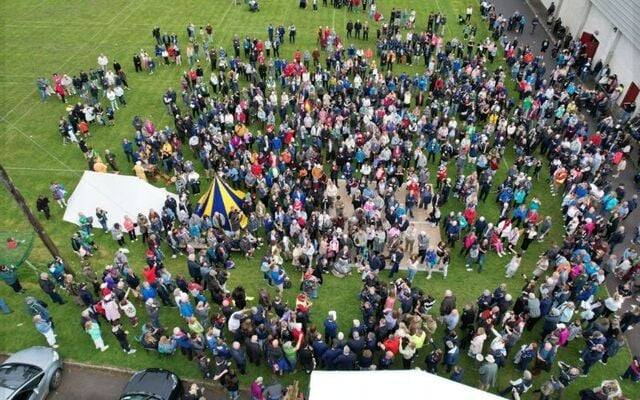
More than 1,800 O’Sullivans and Sullivans gathered in Castletownbere over the June Bank Holiday weekend, turning a long-planned clan reunion into a new Guinness World Records title. The West Cork crowd surpassed the previous mark of 1,488, set by the Gallaghers in Letterkenny, Co Donegal, in 2007.
The long-awaited event brought the O’Sullivan name back to the Beara Peninsula, which organizers describe as the ancestral home of the O’Sullivan Beare clan. What began as a world record attempt became a wider celebration of family, history, and place.
Before the final count, participants were asked to prove their connection to the surname with identification at Beara Community School and were then issued numbered cards for the tally. Guinness officials later confirmed a final total of 1,848 after more than 3,000 people had registered, with poor weather keeping some away.
Guinness World Records adjudicator Pravel Patel broke the great news from a podium on the pitch, declaring: “The current record stands at 1,488 so with a total of 1,848, you are the Guinness record title holders for the largest gathering of people with the same surname. Congratulations, you are all officially amazing.”
Organizer Jim O’Sullivan said, “It was an achievement to get people down here from all over Ireland because we are peripheral, but got people from the UK, Australia, New Zealand, and America too, so we’re very happy.
“We made it – I don’t know how long we’ll hang on to the record – we’ll get a week out of it anyway I suppose,” he told the Irish Times.
“Somebody else might take it on next year so we might have to come back and do it all again next year but we’ll enjoy the record for the moment, for sure.”
Fianna Fáil’s for Cork South West Christopher O’Sullivan expressed his pride at breaking the world record. He told the Irish Independent, “Very proud to be an O’Sullivan. Thank you to all the Ó’Shuileabháns, Ní Shúileabháns, Sullivans and O’Sullivans who made the world record possible. Huge gratitude also to the organizers. The O’Sullivan motto is ‘we stick together’. In Castletownbere it really felt like being part of one big family.”
Independent councillor Finbarr Harrington spoke about the O’Sullivans/Sullivans rich history in the Beara Peninsula.
He said “Their story is one of resilience, leadership, and a strong connection to a place, with the legacy of the O’Sullivan/Sullivan clan continuing to inspire pride both at home and across the world.”
“Breaking a world record that had been held by the Gallaghers since 2007 is an extraordinary accomplishment. It was a memorable day that will be remembered for many years to come. The gathering is a fitting tribute to the strength of family ties, the importance of heritage, and the lasting bond that unites O’Sullivans and Sullivans wherever they may live,” he added.
The weekend had been billed as more than a record bid, with lectures, guided tours, music, Irish dance, pub gatherings, and a time capsule ceremony all part of the program. IrishCentral reported ahead of the event that celebrations would also include family-friendly activities across the peninsula, and official tourism listings described the gathering as a homecoming for the clan.