A ‘New Ireland’ is now inevitable and unionism was probably always doomed, DUP founding member Wallace Thompson tells Sam McBride in an extraordinary interview
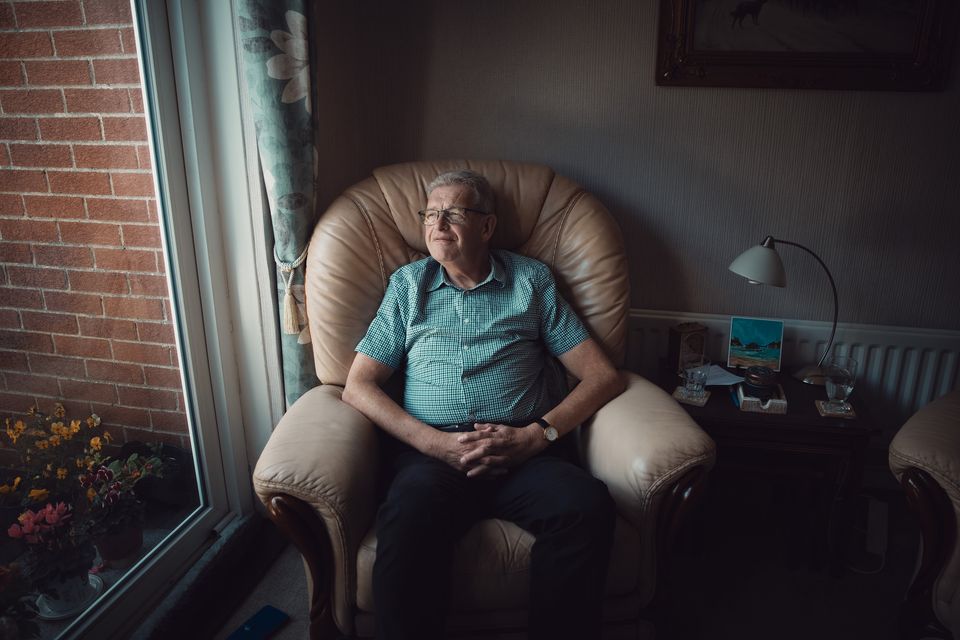
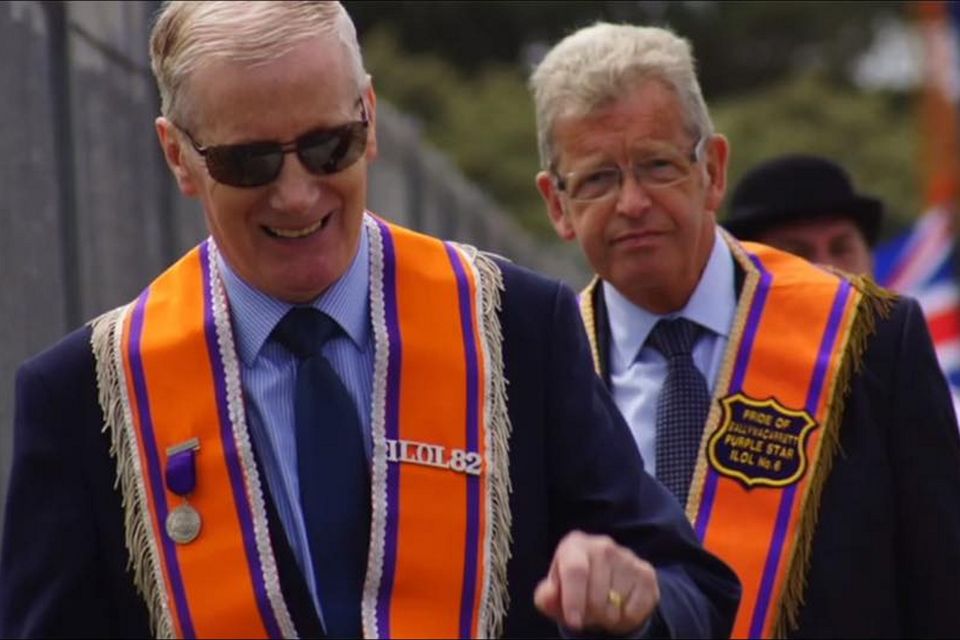
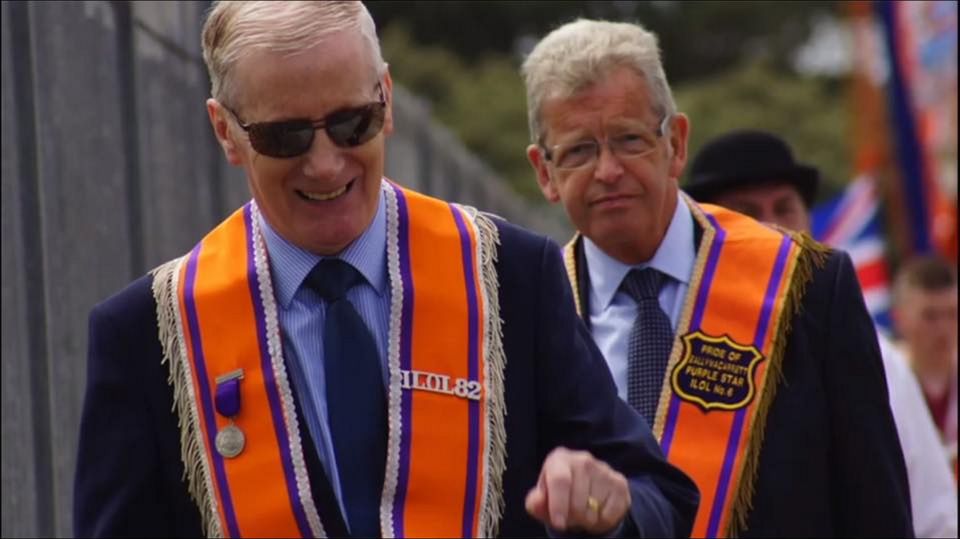
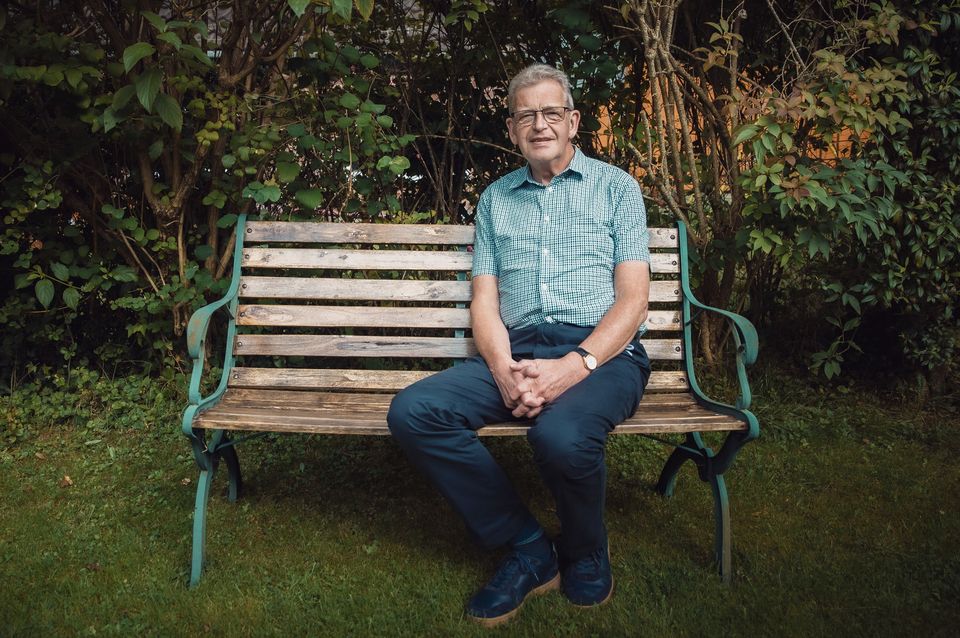
DUP founding member Wallace Thompson at his east Belfast home after being interviewed by the Belfast Telegraph. Photo: Kevin ScottDUP founding member Wallace Thompson at his east Belfast home after being interviewed by the Belfast Telegraph. Photo: Kevin ScottWallace ThompsonWallace Thompson and Gregory CampbellWallace Thompson and Jim WellsDUP founding member Wallace Thompson at his east Belfast home after being interviewed by the Belfast Telegraph. Photo: Kevin ScottDUP founding member Wallace Thompson at his east Belfast home after being interviewed by the Belfast Telegraph. Photo: Kevin Scott
Sam McBride
Today at 01:35
He’s a Paisleyite, a founding member of the DUP, a former special adviser to Nigel Dodds, and a leading evangelical Protestant, but Wallace Thompson now believes a form of Irish unity is inevitable — and he’s willing to consider it.
Thompson has had many lives. As well as having been at the heart of unionist politics and fundamentalist Christianity, he is a respected figure in the Independent Orange Order and a former NIO civil servant who drafted a key speech for the Queen.
0:53
‘New Ireland’ inevitable says DUP founding member Wallace Thompson
But the final years of the 70-year-old’s life may be the most influential. The unionist veteran is an individual of both rare honesty — honesty which has got him in trouble — and exceptional complexity. And now, after a lifetime of staunch unionism, this man who at university was part of the same circle as Sammy Wilson, Jim Allister, Edgar Graham and other leading unionists, is thinking seriously about Irish unity.
Wallace Thompson and Gregory Campbell
Looking back, he says: “Unionism as a philosophy probably was always in many ways doomed because of Ireland’s nature, the fact that the north was carved off from the south… now you’ve got a position where, do you partition again?
“Do you accept that demographic change is such that we have to run to the walls and again shut the gates? Or do we recognise that we can’t keep doing this?
“We need to recognise that there are fundamental issues that have always been there really — from centuries ago — that we need to now recognise and try to address.”
There have been unionists who have become open to considering a united Ireland, but they’ve all been moderates. Not one of them comes close to Thompson’s pedigree as a staunch traditional unionist.
Polling points to limited progress by nationalism in the years of post-Brexit chaos, and there is a danger in extrapolating too much from one example. But it is also possible that beneath the polling numbers even some of those saying they support the Union are pondering ‘Plan B’.
It’s not the first time I’ve been in Thompson’s modest semi-detached east Belfast house. I was here 12 years ago, mostly to ask him about religious controversies.
He was then a leading figure in the Caleb Foundation, a pressure group lobbying against relaxing Sunday trading restrictions, for Creationism, and against abortion. The British Centre for Science Education hyperbolically accused it of peddling “Christian fascism”.
Thompson insists Caleb is not dead, but that it is now a small group which has “faded from the limelight”.
His other organisation, the Evangelical Protestant Society, is staunchly opposed to the Catholic Church. I put it to him that many will see this as simple anti-Catholic bigotry involving the sort of people who would like to go back to discrimination.
Unsurprisingly, he rejects that. But there’s a depth of feeling to his words: “I honestly would say that I have no anti-Catholic views at all; in fact, I have many Roman Catholic friends who I hold in the highest esteem.
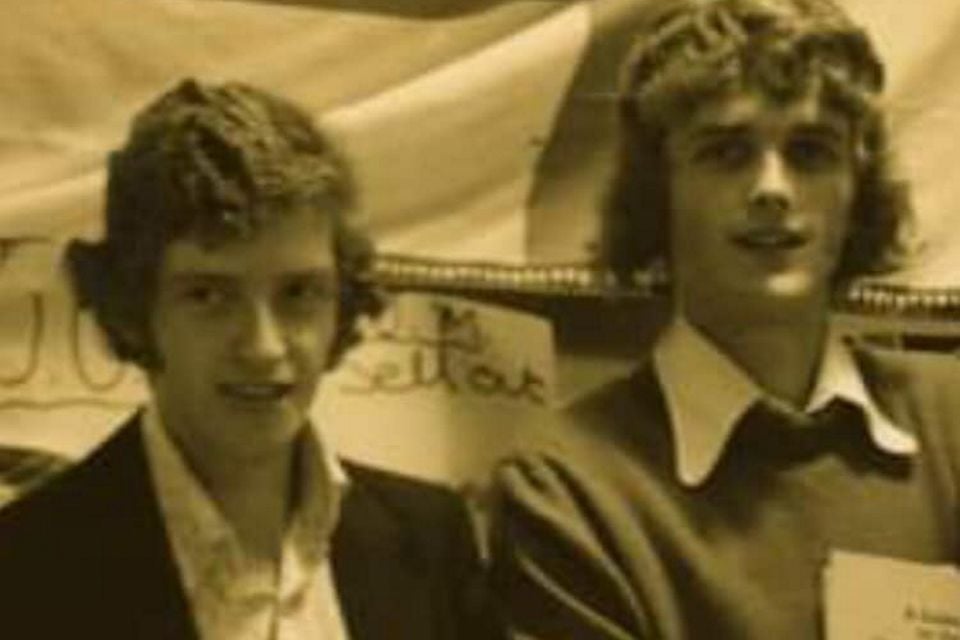
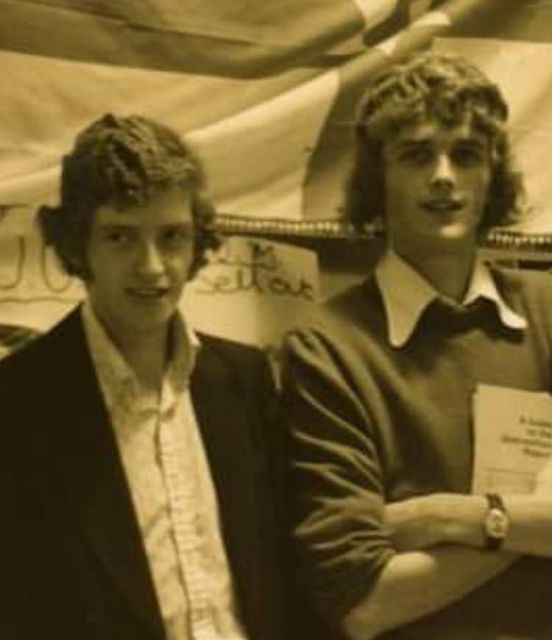
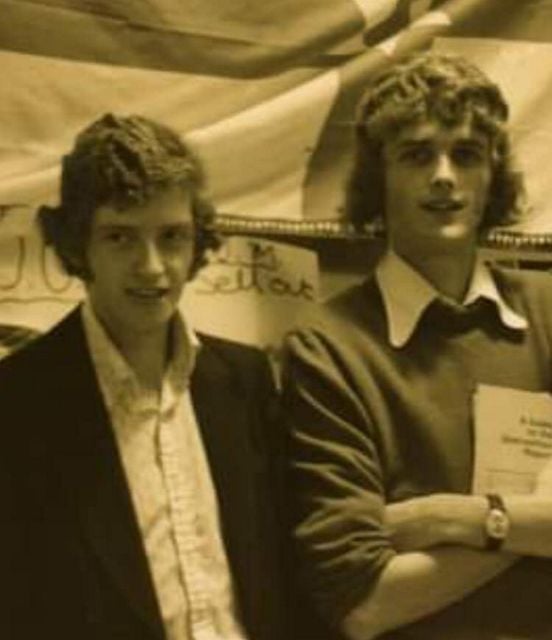
Wallace Thompson and Jim Wells at Queen’s University in 1975
“I respect their religious views; I respect their right to hold them; I disagree with them and I would discuss with them [theology]… anti-Catholicism’s a terrible thing, when you see sectarianism in its naked form as we have seen in this country. I have spoken out about that; I’ve condemned the attacks on Roman Catholic churches, I’ve condemned the sectarian singing in an Orange Hall… there’s a big difference between that and a difference of religious views.”
He adds: “Roman Catholic people shouldn’t in any way fear the likes of myself. The main danger is that naked sectarianism that’s borne by godlessness.”
He attracted intense criticism after going on Joe Duffy’s Liveline programme on RTE radio in 2008. When a caller asked if the Pope was the “prince of darkness”, he replied that he wasn’t, but he was the antichrist, something he thought was theologically correct “but it was like a red rag to a bull”.
He still believes that, but “I reprove myself a little bit because I feel the tone of what I said and the blunt way that it was said, created a degree of offence which I wouldn’t now do”.
As this man who stood by Ian Paisley’s side from the outset mellows, he worries about the abrasiveness on social media and longs for grace in public debate.
He has sought to lead from the front. When Martin McGuinness lay dying in 2017, he wrote on Facebook: “It is obvious that Martin McGuinness is seriously ill. There are those rejoicing in this and hoping that he suffers a painful and lingering death.
“I have been around a long time and I’m under no illusions about Martin McGuinness… however, if we profess to be evangelical Protestants, we need to reflect upon the words of Christ who said… ‘Love your enemies’”.
Comments like that are rarely heard from unionists — even deeply religious ones. “That came from the heart,” he says. “There’s a need for us to show compassion.”
Born in pre-Troubles Ballymoney in 1953, Thompson recalls an idyllic childhood. “We were an ordinary Protestant family,” he says, and not especially political.
As a 15-year-old, he recalls the seminal Civil Rights march in Londonderry where police attacked marchers. His view then, informed by his father’s reaction, was that “the world was collapsing around us”.
There is a fascinating glimpse of where he might have gone when Thompson recalls going to hear the reformist Stormont Prime Minister Terence O’Neill speak in the mid-1960s.
“I thought in those years before the Troubles broke out, the man was talking a lot of sense. But then when the Troubles did break out… I began to feel that this is a serious business and I was drawn towards Ian Paisley politically, initially, but just fascinated by the man… my faith was kindled in an evangelical sense through Ian Paisley.”
He moved to Belfast to go to Queen’s University, then a hotbed of unionist, nationalist and radical politics.
The modern DUP, along with Sinn Féin, is part of the Northern Ireland establishment but it wasn’t always thus. Initially Paisley’s Protestant Unionist Party and then the DUP existed to harass the Official Unionists.
“We would have been very anti-establishment,” Thompson recalls.
After working for the DUP in its early years, he joined the civil service, ending up in the NIO. Some unionists asked him: “What are you doing working for that bunch of traitors?” Only some of them were joking.
He drafted the speech given by the Queen in 2000 when she awarded the George Cross to the RUC. Some of his words, uttered by the Queen, are now in the RUC memorial garden.
Seven years later, he entered Stormont in a very different role — as adviser to DUP minister Nigel Dodds. In doing so, this traditionalist helped give credibility to Paisley’s rapprochement with Martin McGuinness.
In 2016, he voted for Brexit and “would still vote to leave”, but not if it meant an Irish Sea border. He admits Brexit went “belly-up” and “we’re in a mess”.
His late Fermanagh mother-in-law voted to remain because “she thought the border issue would be a problem”, but “I lived up here and you weren’t near the border so you didn’t think any of that through”.
Wallace Thompson and Jim Wells
He accepts “more thought should have been given to the whole thing”, with maybe a weighted majority, but still believes “an arrangement could have been made” with the EU.
In 2019, after Boris Johnson betrayed the DUP, Thompson said it was “almost enough to make me question the value of the Union”. I remember being astonished by the raw honesty of those words.
“That was from the heart. We were like the unwanted child in the house,” he says starkly.
“If anything, my view since then has been [strengthened]; I do wonder at the future of the Union and I think we need to waken up and recognise that. The emperor has no clothes.”
He says that recently at the Apprentice Boys’ parade in Derry the consensus was that the DUP should not return to Stormont until the sea border goes.
But he says: “Those who say ‘don’t go back’ need to set out: How long are we away for – 10 years, 20 years, 50 years… forever? And if that’s the case, what’s the alternative?
“Someone said going back to the stand taken by our fathers in 1912. But that involved compromise; they didn’t end up with what they wanted.”
He likened it to unionism isolating itself after the 1985 Anglo-Irish Agreement, but stressed it was far worse now because the Irish economy is stronger and unionism is weaker.
He hears unionists privately thinking radically about the future, “but there are so few people willing to say that publicly”.
Thompson unhesitatingly regards himself as both British and Irish. He is tied to Britain by nostalgia, by a “deep-seated thing in your psyche that you were born and brought up within unionism” – but above all by the religious freedom which he cherishes.
Yet he also says: “I was born an Irishman. And people in my community again say ‘oh no, no, no, we aren’t Irish’ – but we are Irishmen and it’s nonsense to believe we’re not. We need to rediscover some of that Irishness. We’ve washed our hands of it completely. A hundred years ago, our forefathers were happy to be Irish and to be seen to be Irish.”
Does he fear Irish unity in the way he did as a young man?
“No. I think it’s a different animal now,” he says. His fear then was of “Rome rule” repressing Protestantism.
He still isn’t entirely convinced that his faith and Britishness would be safe in a united Ireland and worries about it being “easy to come out with honeyed words” but then abandon pledges.
“Nationalism as a philosophy has a blind spot about how deeply held some of those things are to us… I would be concerned that we would [in a united Ireland] lose stuff; lose some of the key elements of our identity.”
He is prepared to sit down with those planning Irish unity to try to make it a more appealing idea to unionists — a highly atypical position within unionism.
“I think we are in an inevitable move towards that — when it comes, I don’t know, but there’s an inevitability in my mind that we are moving towards some form of new Ireland. Hopefully, new and not absorption… but we need to ask the questions and we need to ask for answers and we need to talk to people.
“That shouldn’t mean then you’re thinking that we’re suddenly going down that road. We might not. We might decide [based on] all the evidence that we don’t want to go down that road.
“But we’re closing our eyes and pretending there’s no problem. This is the problem with unionism — we’re in denial; constant denial.
“To talk to these groups that are calling for a new Ireland to me is not an indication of weakness; it’s an indication of strength.”
DUP founding member Wallace Thompson at his east Belfast home after being interviewed by the Belfast Telegraph. Photo: Kevin Scott
However, he says that Ireland’s Future hasn’t contacted him. He believes talking is crucial because “the history of Ireland is just a patchwork quilt of misunderstandings and misconceptions where it’s all just black and white — or orange and green — but it’s not”.
He stresses that after discussing unity, he might decide that he still supports the Union.
He says that some unionists will view him as a “Lundy” but that “when you talk to people privately… they’ll say we need to recognise that these are realities that we have to face”.
When he makes comments like these, there are people in unionist parties, the loyal orders and churches who say to him: “You’re right — but we can’t say it.”
He says that Paisley’s move to accept power-sharing with Sinn Féin was “hugely significant” in his newfound willingness to consider Irish unity.
In the broad arc of the history of Northern Ireland, it is astonishing that Ian Paisley — the firebrand scourge of every unionist leader who sought to compromise with nationalism — would play a part in persuading one of his most loyal followers to consider Irish unity.
As Thompson says, history is rarely entirely black and white.
Coming back full circle to his youth, I ask if he ever wonders if O’Neill or Faulkner had succeeded as reformists that both Northern Ireland and unionism might be in a better place.
“I do wonder at that. Sadly, O’Neill was patrician and condescending in his attitude; he was patronising and it didn’t work. Roman Catholics just thought that they were being taken for granted and treated as just those who could be turned into Protestants if you gave them a colour TV or whatever.”
He goes on: “I believe that if Brian Faulkner had been in position earlier that it might have been easier to get reforms through at an earlier stage and it would have settled things down quite a bit. But there was a certain inevitability about what happened; it just took off and continued to grow. We’ll never know, really.”
INTERVIEW with organiser of Brian Robinson memorial parade, to be held on the Shankill on Saturday afternoon.
– Tell us a bit about Brian Robinson. – Certainly. He was a family man, loved walks in country, band parades and the movies. A real gentleman who would have done anything for… – Shot an innocent Catholic dead, didn’t he? – Well, yes, but he was caught up in a conflict that came to him and… – Paddy McKenna didn’t come to him. He went to Paddy McKenna. And shot him dead. – Figure of speech, I was referring to the wider conflict, the one started by the Provos. – Not the conflict started by the UVF in 1966 when Gusty Spence shot a group of innocent Catholics and his gang started blowing things up? – No, definitely not that one. – Mr McKenna’s family live about half a mile from this parade – how do you think they feel about it every year? – Well, we understand the sensitivities involved and we try our very best to show respect and dignity at all times. – By beating drums and hammering out anti-Catholic songs that you can hear from Dublin? – What anti-Catholic songs? – The Billy Boys, The Famine Song… – You mean Marching Through Georgia and The Sloop John B? – You were on the radio giving off about the Wolfe Tones in the Falls Park a while back. – I most certainly was. – What’s your problem with that? – Well, I defend the right of anyone to sing whatever songs they want and to commemorate whoever they want to commemorate, but… – Always a but. – …but the fact is that this festival receives public funding and that is completely unacceptable. – So none of the bands involved in this parade are in receipt of public funds. – No. – No? – Well, a few quid for instruments. – For instruments? – And uniforms. – Uniforms? – Yes, uniforms. Oh, and parties for the kids. – You see the problem here, don’t you? – Not really, no. – Bands celebrating a sectarian killer received tens and tens of thousands of pounds in funding from the British Government and you think that’s fine while you complain about the Wolfe Tones. – It wasn’t government money. – Whose money was it? – The Ulster Scots Agency’s. – Who gives the money to the Ulster Scots Agency? – The National Lottery? – No, the government funds the Ulster Scots Agency. – I did not know that. – And now you do. – Plenty of flags on sale on the day? – As always. – UVF flags? – Naturally. – Ulster flags? – You betcha. – Soldier F flags? – Most certainly. –SAS flags? – Supporting our boys – it’s what we do. – Same boys who shot Brian Robinson eleven times? – Sometimes hard decisions have to be made. – The UVF said it was reviewing its position on SAS flags after Brian Robinson’s son ripped one down, remember that? – Sort of. – Any decision yet? – It’s a grey area, so they’re taking their time. – Taking their time about whether to fly flags as a tribute to the people who shot Brian Robinson? – It’s complicated.
Sharp words over Ibrox banner
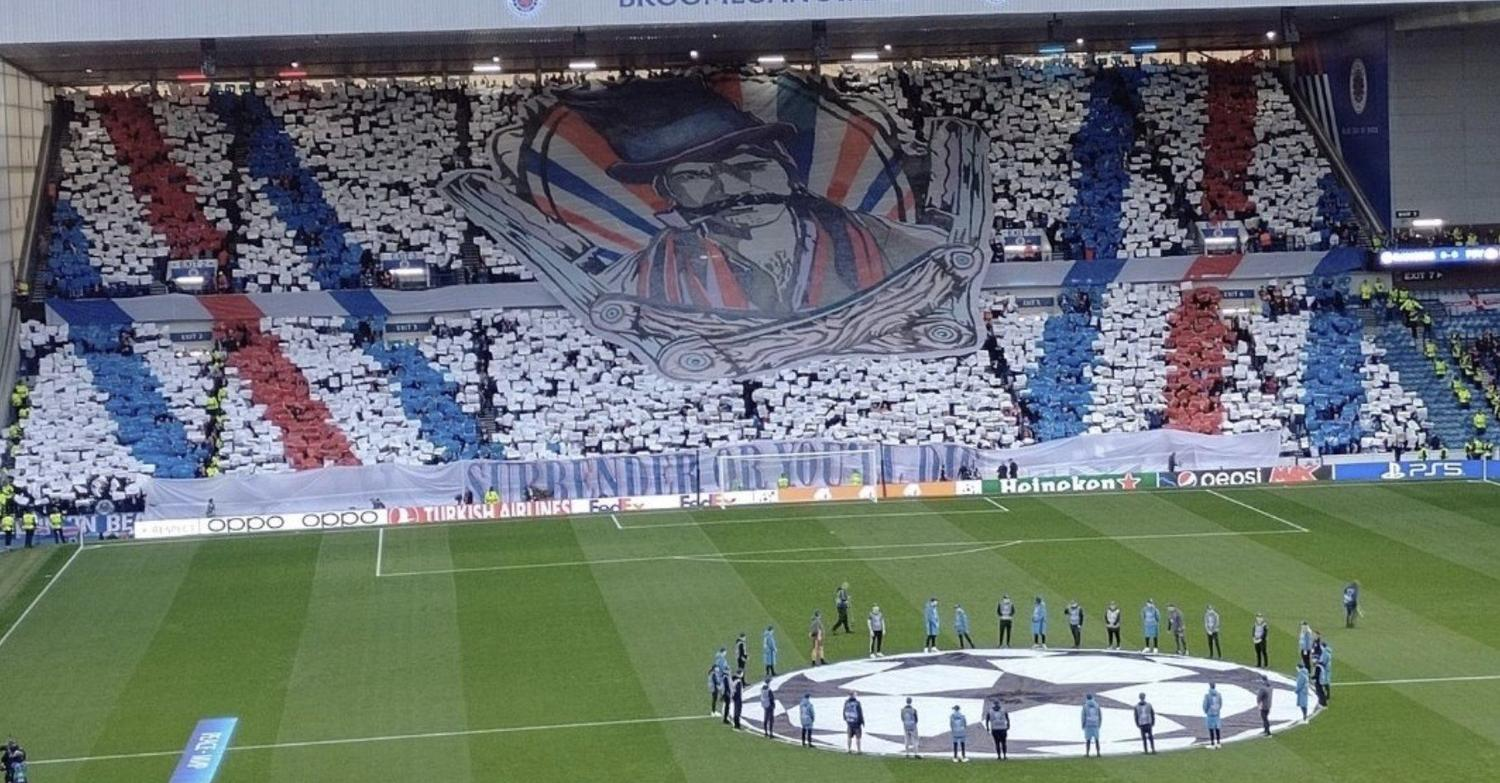
IT’S been a busy few weeks for loyal fascists. In Squinter’s life, at least. At the first leg of Rangers’ Champions League qualifier with Dutch champions PSV, two large banners were displayed by fans of the Teddy bears, different in style, but both sending out the same uncompromising – and blood-soaked – message.
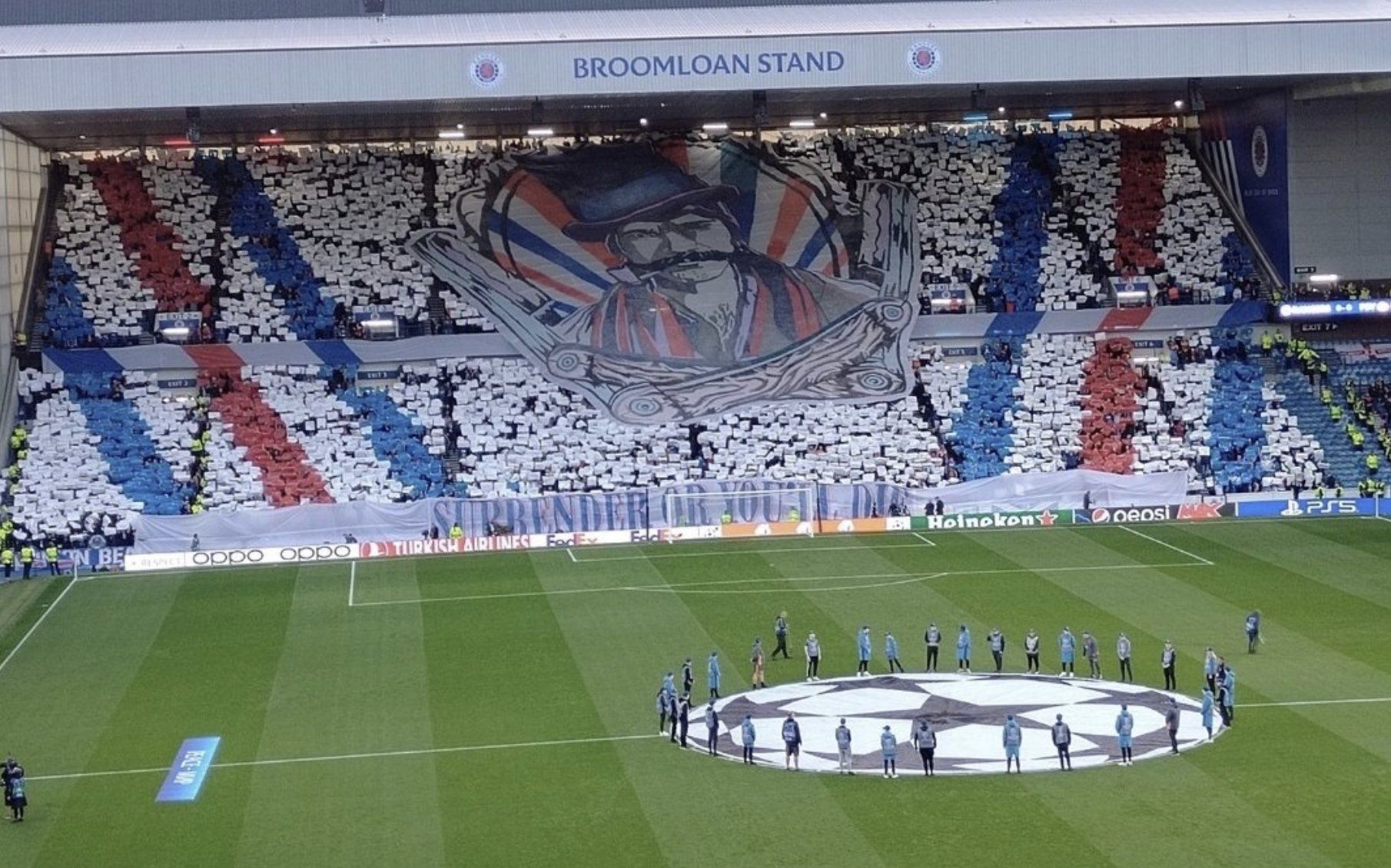
The first and biggest raised a few eyebrows in the Roddy’s where Squinter and a few McClatcheys were watching the match on TV – hoping of course the best team would win. It was an image of a man from what appeared to be the Victorian era: top hat, handlebar moustache, clay pipe. Was this Rangers’ new signing from PSG, Jack Le Ripper?
In fact it was an image of a man named William Poole, or to be more accurate, a movie representation of ‘Bill’ Poole, perhaps better known to you as ‘Bill the Butcher’, played with blood-curdling intensity by Daniel Day-Lewis in the multi-award-winning 2002 film, ‘Gangs of New York’.
Bill was a New York hard man who led a gang of anti-Catholic thugs known as the Bowery Boys, who in the mid-19th century spent their time roaming the streets of the Big Apple looking for Taigs to slice up. And since Bill was the leader of the gang and its most feared and effective knifeman, Bill the Butcher he became. (Let it be known that rival Catholic gangs weren’t exactly behind-the-door when it came to extreme sectarian violence.)
70 years later, another gang fond of carrying out amateur plastic surgery on Catholic faces was being put together, this time 5,000 miles away on the mean streets of Glasgow, where William ‘Billy’ Fullerton was the head of his own ‘razor gang’, unimaginatively titled ‘The Billy Boys’. Billy was an enthusiastic fascist, a brutal strike-breaker who formed a Glasgow branch of the British Union of Fascists just as World War II was about to break out and his friends and neighbours were heading overseas to fight Billy’s mate Adolf.
A song celebrating Fullerton and his gang – The Billy Boys – is the anthem of Rangers Football Club and its most famous line, “We’re up to our knees in Fenian blood”, is a tribute to the razorwork of Billy and his brutal band of brothers. Beneath the Bill the Butcher banner at Ibrox was a second banner containing the words ‘Surrender or you’ll die’ – another line from the song.
So here we were, at Ibrox on a big European night, with the home team celebrating not the heroics of their team but two figures from history best known for slashing Catholics with knives and razors.
On Twitter, Squinter put up a picture of the banners and wondered whether those Loyal Ulster and Rangers accounts on the social media would be as horrified by this as they so vocally were about ‘Ooh, ah, up the Ra’ in the Falls Park.
Now let’s be completely honest about this: Squinter didn’t expect a torrent of support from Rangers fans horrified that their club’s home ground had been commandeered for a massive tribute to blade-wielding sectarian thugs. But he wasn’t entirely prepared for the trip he took down the rabbit hole of extreme right-wing politics and white supremacy at the heart of so many Rangers fans online.
For those of you not familiar with Twitter, the course of a conversation is anything but linear or bilateral. A debate takes off like a Catherine wheel, spluttering and sparking in all directions, directing participants to sub-tweets and related accounts, so that at times trying to discuss is a point is a bit like trying to spot all those little points of light going on and off in your field of vision during an eyesight test.
What was most concerning was not the messages of abuse from yer actual, literal Nazi-supporting Teddy Bears, but the fact that seemingly ‘soft’ unionist accounts were more angry at Squinter for putting up the image than they were at anonymous keyboard fascists who reckoned there was absolutely nothing wrong with it.
There’s an old saying, “If you’re sitting at a table with nine fascists and you don’t get up and leave, you’re sitting at a table with ten fascists.” Squinter’s not sure he agrees completely with that ; is saying nothing about Nazis is as bad as having swastikas or confederate flags as your Twitter bio pic? Probably not, but it’s as clear as day that there’s a goodly number of unionists online who wear their poppies with pride and love their Spitfires and Vera Lynn as much as the next man but who, when it comes to a choice between an anti-fascist from West Belfast and an SS enthusiast from East Belfast will side with the guys who wanted Hitler to win for no other reason than they support the same team.
Sinn Féin Leas Uachtarán Michelle O’Neill said on Sunday that her party wants to lead government north and south and that “as support for our programme of change continues to build, there now exists the prospect of a new government without Fianna Fáil and Fine Gael for the first time in one hundred years”.
And the First Minister Designate in the north of Ireland repeated her call for the DUP to accept the democratic outcome of historic elections in the north where the people voted for change.
Speaking at the 42nd annual Hunger Strike Commemoration in Cork on Sunday, Michelle O’Neill said, “Today we are not only living through historic change. We are shaping it. A new dawn is breaking in Ireland.
“The growth in popular support for Sinn Féin and the demand for the change that we represent, here in the South and in the North, has never been greater.
“The northern State that my parents and grandparents were born into is no more.
“The contrived unionist majority is now gone.
“Sinn Féin won two historic elections.
“We are now the largest political party in the Assembly, in local government in the north, and across this island.
“Sinn Féin’s positive message of making politics work for all and getting the Executive back up and working for everyone, was endorsed by people.
“I will never treat, and I will never allow anyone to be treated the way that our parents and grandparents were treated.
“There is no contradiction in declaring and delivering on our firm commitment to power sharing with unionism and others in a Stormont Executive, while at the same time making the case and planning for constitutional change on this island.
“While the DUP continue to cause political disruption, dysfunction and chaos, the reality is that they have no credible alternative to power-sharing, and on the basis of equality.
“It is time that the DUP accepted the democratic outcome of last May’s historic Assembly election where the people voted for change.
“Their boycott is leading to misery for people who need an Executive in place to lift the cost-of-living burden, to tackle the health crisis, to attract investment, to create jobs, to deliver change, to plan for the future.”
And the Mid Ulster MLA said if controversial and cruel legacy legislation is passed in Westminster that the Irish government must confront this denial of human rights through an interstate case and international action against the British government. Michelle O’Neill said:
“The current legislation nearing completion in Westminster has one purpose, and one purpose only, to conceal the truth and protect British state forces.
“That legislation is anti-democratic, it is unjust, and it is a denial of the human rights of victims and their families who have campaigned for decades for the truth.
“The British government should withdraw this legislation.
“And if the British government do not withdraw this legislation, the Irish government should confront this denial of human rights through an interstate case and international action against the British government.”
Michelle O’Neill said that party leader Mary Lou McDonald can be the first woman Taoiseach in an Irish state failed by a century of Fine Gael/Fianna Fáil governments. She said:
“Sinn Féin wants to lead government in Belfast and Dublin.
“Mary Lou McDonald can be the first woman Taoiseach to lead Government in this State.
“The Irish people have been failed by a Fine Gael/Fianna Fáil/Green government that is tired, wedded to the past, and unable and unwilling to seize the great opportunities that exist to take Ireland to the next level.
“The story of Ireland in 2023, right across this island, is the unprecedented demand for change.
“Ordinary workers and families are looking to a new future shaped by opportunity, ambition, and equality.
“They want a political leadership with the energy and determination that matches their hopes.
“The last General Election in the South saw Sinn Féin win the popular vote.
“As support for our programme of change continues to build, there now exists the prospect of a new government without Fianna Fáil and Fine Gael for the first time in one hundred years.
Dual Irish-US citizen Morgan O’Sullivan can vote in the US, but can no longer vote in Ireland. GETTY IMAGES
As the lazy days of summer come closer to ending, and those long evenings start to fade into the distance in the rear-view mirror, things are starting to get interesting in the US Presidential election.
The campaigning is in full flow on the Republican side, with Joe Biden the presumptive nominee for Democrats, and RFK Jr. thrown in there to add an element of surprise.
For an election that will not take place until 2024, it seems like an eternity away. The key in the weeks and months ahead will be momentum, money, and survival.
But how does it all work? And how does it compare to the Irish electoral system?
Sign up to IrishCentral’s newsletter to stay up-to-date with everything Irish!Subscribe to IrishCentral
Despite the charges mounting against Trump, he remains far ahead of his nearest rival, Ron DeSantis. Trump is loved by his base, and there appears to be little chance of the party base selecting another candidate.
For Trump to win the Presidential election, he has to win two major battles. First, he has to win the race for the Republican nomination. And should he win that, he will have to beat the Democrat nominee.
With Trump clenching 57% of the Republican base, compared to DeSantis’ 18%, it is hard to see Trump losing the nomination unless the pressure of his indictments and the different charges prove too much for him, and force him to withdraw on medical grounds.
Assuming Trump wins, it will be a much harder battle for him to beat Joe Biden. The American economy is gradually moving in the right direction. US voters voted against Trump in 2020, and when it comes to Donald Trump, most have already made up their minds about him. You either love him or hate him, and that feeling has been in place for a number of years and it is hard to see many undecided voters out there.
Perhaps the real danger to Joe Biden is not Donald Trump, but the danger of a third-party candidate, who could potentially run a candidacy that would never win, but would take enough votes away from Biden to allow Trump to win. Joe Manchin, the Democrat from West Virginia is considering an Independent run.
As the eyes of the world begin to turn to the US election, the Irish political system is a world away from the United States. For a country that sees itself as modern, letting go of its past and embracing the future, Ireland is in urgent need of showing a more compassionate side to those who have left her shores.
During famine times, moving away from Ireland may have seen letters and packages arrive home every six months. Letters became more regular in the 20th century, and weekly and monthly phone calls became the norm from the ’80s.
With the internet and iPhones and modern technologies, those Irish living abroad now very often know more about what is going on at home, than all those living at home themselves.
Yet the reality that goes with living abroad pierces the very soul and sense of identity and culture that you long to share and provide with others. The moment you step onto the plane in Dublin, Shannon, or Cork, it is as if you are instantly losing your right to have any say in the country. While you will always be Irish, when it comes to voting and elections, you are essentially second-class.
I am Irish. I always will be Irish. But I am now American as well. I gained my US citizenship in 2019 and I voted in the US Presidential Primaries in 2020 and the election itself in 2020. I voted in the congressional mid-term elections in 2022. It is over 20 years since I voted in an Irish election.
In America, I am always regarded as the Irishman. In Ireland, I am regarded as the Yank. The sad reality is that those who have left the shores of Ireland long for home, will always regard Ireland as home, and yet will never have the option to exercise their sense of democratic right in an Irish capacity.
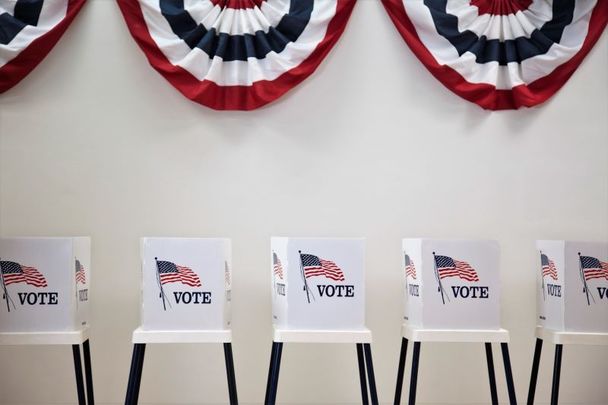
Being a dual citizen of the US and Ireland means that I will always be able to vote in a US election. I will have the option to vote by mail or at a US embassy.
For years, successive Irish governments have promised to follow through on different recommendations from different constitutional reviews. The promise of a referendum is made on a consistent basis, yet the reality is that many Irish governments fear that they could never introduce a referendum on something that would not be guaranteed to pass.
Was the marriage equality referendum guaranteed to pass? Was the abortion referendum guaranteed to pass? Were all the different votes on Europe over the years guaranteed to pass? To prevent the will of the people being heard for fear of perception if results do not go as planned is morally wrong.
Is there a fear that all of those living abroad could tip the results of an election? The reality is that those different groupings abroad have only ever asked for a say in Ireland’s Presidential election. They have never asked for representation in the day-to-day decision-making process in the country.
It is the right of every person born on the island of Ireland to call themselves an Irish citizen. Is it wrong for them to be able to have a say in who represents them as their first citizen?
While the perception is that the Irish in places like New York and Sydney and London are being denied the vote, the people of Derry and Belfast are losing out on this democratic right also.
In the US, I am happy to have registered to vote. When registering, I was presented with the option to register as Republican, Democrat, or Independent. By choosing a political party, you are free to vote in their presidential primary in the earlier part of 2024. It is a strange system as you would never register before an election as Fine Gael, Fianna Fáil, or Sinn Féin. It is almost as if people will be able to gauge how you will vote, and while no one knows how you vote when you go into a polling booth, a state with significantly more registered Democrats than Republicans will rarely put the opposite party into power. As a result, elections in the US can be largely predictable but for a few states that can go either way.
The US system is not perfect. Hillary Clinton earned more votes nationally than Donald Trump, yet still lost the election due to the electoral college system.
However, the US system does allow all of its citizens to vote. Wouldn’t it be nice of the Irish government to recognize all those Irish citizens abroad and allow them to share their voice in electing their first citizen? Surely that time has come.
This article was submitted to the IrishCentral contributors network by a member of the global Irish community.
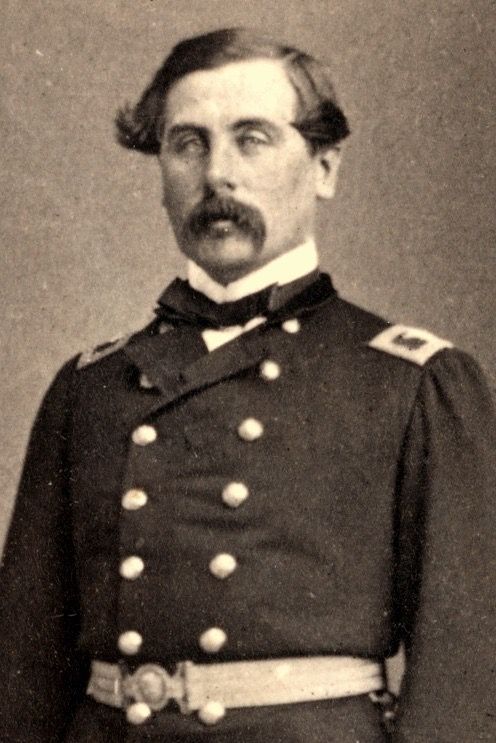
While recently in Ireland, I visited its oldest city: Waterford, whose mall is dominated by an imposing equestrian statue of Brigadier General Thomas Francis Meagher, a hero in two countries. Meagher is revered not just in his native Ireland, but also in the United States, where he valiantly led Irish troops fighting to preserve the Union in the Civil War.
Meagher rebelled against British rule in Ireland, but he was an unlikely rebel. Born into a prosperous merchant family in Waterford in 1823, the son of Waterford’s mayor, Thomas Francis came from a family that owned Waterford’s most elegant inn, the Granville Hotel, which still serves visitors just around the corner from his statue. Had young Thomas Francis not been a patriot, he could have enjoyed a life of privilege and might have followed his father into Parliament, but the blood of a rebel flowed in Thomas Francis’s veins.
Unlike many of his fellow Irishmen, Meagher’s family was wealthy enough to provide Thomas Francis with a first-class education at the renowned Jesuit Clowngowes Wood College, where he not only proved himself a fine student, but also a strong orator and powerful debater. At 16, Meager wrote a history of the school’s debating society which was presented to Daniel O’Connell during a visit. Reading the work, O’Connell made a prescient prediction: “A genius that could produce such a work is not destined to remain long in obscurity.” Meager fumed at the poverty and oppression Irish people suffered under British rule. He grew impatient with the moderation of many Irish politicians and appalled at the passivity of the Catholic Church in the face of such suffering. By the time he left Clongowes Wood, at the age of 16, he harbored a deep resentment of British rule.
Deciding to become a lawyer, he traveled to Dublin to study for the bar, but he became heavily involved in the Repeal Association, which worked to break the union between Great Britain and Ireland. Meagher became radicalized by his reading of Thomas Davis’ paper the Nation, famous for its nationalistic fervor. In 1847, the great hunger began to ravage Ireland, leading to the worst year of mass starvation and infuriating Meagher and the Young Irelanders, who railed against British indifference to the deaths of so many.
In 1848, a series of revolutions, beginning in France, swept Europe, giving hope to Meagher and the Young Irelanders that a peaceful revolution could free Ireland. The British government, fearful of an Irish revolt, passed a series of repressive, anti-sedition laws, which Meagher violated in a speech threatening revolt. Within days of the speech, Meagher was charged with sedition. Released on bail, Meagher and other Young Irelanders went to France to seek its support for an Irish uprising. Though their request for help was denied, they returned with a tricolor flag of green, white, and orange, which Meagher presented in a speech to the nation in Waterford and soon he urged his followers to prepare for war.
Alarmed by the situation in Ireland, the British government passed the Treason Felony Act, which punished “sedition” with death. Meagher and the other Young Irishmen revolted, but the rebellion was soon crushed. On August 12, of 1848 Meagher was arrested and charged with “High Treason.” Found guilty of sedition and treasonous activity, Meagher was sentenced to be hanged, drawn, and quartered. His statement before being sentenced has become legendary, “My Lord, this is our first offense, but not our last. If you will be easy with us this once, we promise on our word as gentlemen to try better next time.” Due to public outrage, his sentence was commuted to banishment for life, and Meagher was shipped to the Australian penal colony of Tasmania, where he lived for four years.
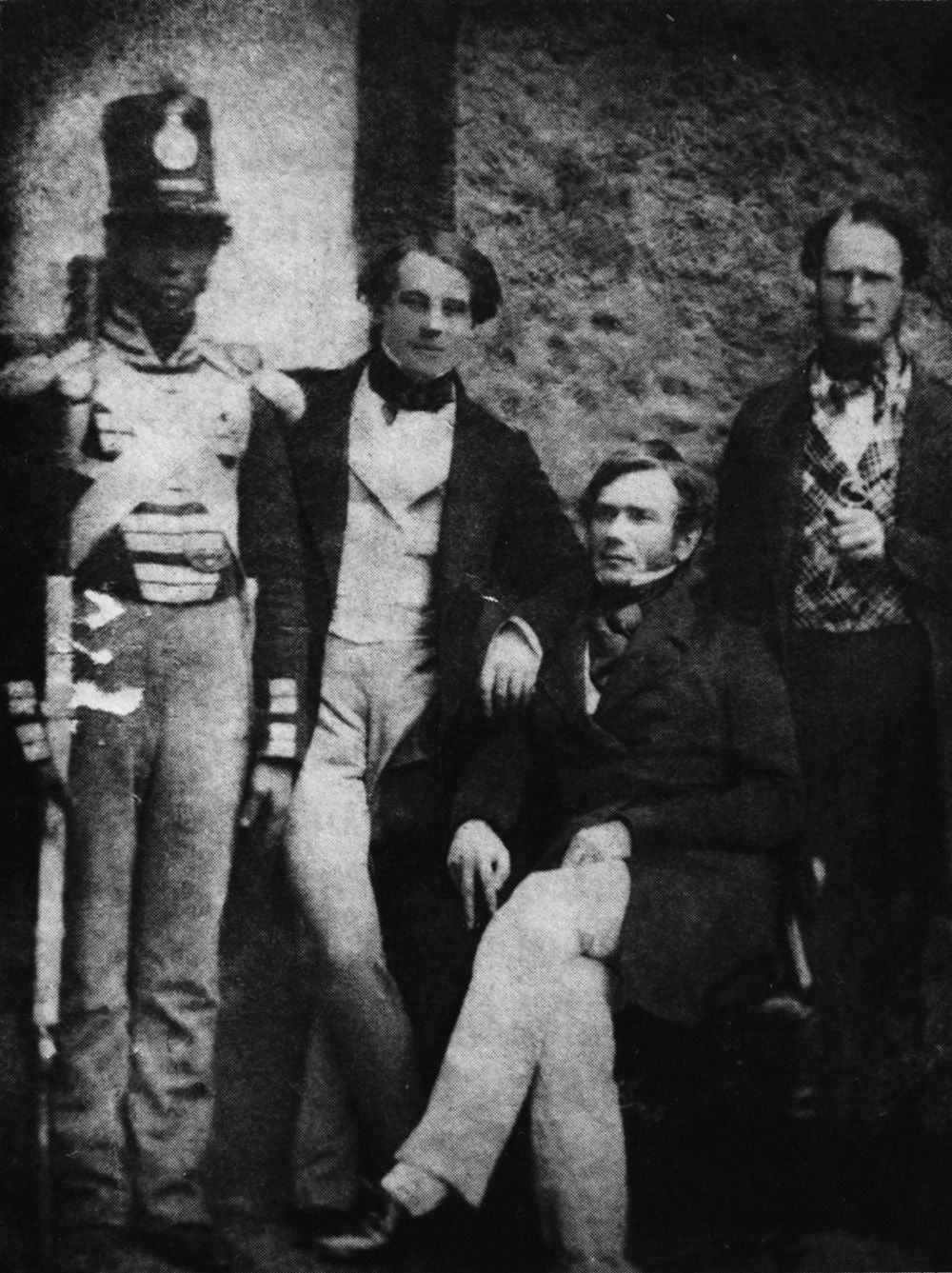
A soldier, left, Thomas Francis Meagher, William Smith O’Brien and a jailer at Kilmainham Gaol in 1848.
Aided by Irish rebels in New York, Meagher and other Irish rebels exiled in Australia managed a daring escape and arrived in New York City in 1852 to a hero’s welcome. Meagher studied American law and journalism and soon became editor of an Irish émigré paper, the Irish News. He became a U.S. citizen and was admitted to the New York bar in 1855. Meagher also became a popular speaker denouncing the British presence in Ireland.
In 1861, the Civil War broke out, but many New York Irish did not support the Union’s cause. Meagher, however, denounced the Confederacy and slavery and began recruiting men for the Union Army. One of his ads in the New York Daily Tribune read: “One hundred young Irishman—healthy, intelligent and active—wanted at once to form a Company under command of Thomas Francis Meagher.” He became an officer and his troops were placed in the New York 69th Regiment. When its captain was captured, Meager replaced him as its leader.
Meagher and his Irish troops distinguished themselves at the battle of Bull Run, where Meagher swung his sword over his head and shouted, “Come on, boys, here’s your chance at last.” The 69th charged uphill three times attacking the Confederates, but they were repulsed in very heavy fighting. One Confederate officer noted that “the Irish fought like heroes.”
Soon Meagher persuaded the government to allow him to reform the 69th as an exclusively Irish unit. Meagher succeeded in recruiting many young Irish men. The new recruits, however, were often not motivated simply by American patriotism. They considered service in the Union Army a good way to obtain military training for an eventual armed invasion of Ireland.
The troops he commanded, the “Sons of Erin,” carried distinctive green flags, embroidered in gold with a harp, shamrock and sunburst. Meagher’s Irish soldiers fought valiantly in some of the bloodiest fighting in the Civil War, charging into the fray with a half-English, half-Gaelic battle cry that rivaled the dreaded Rebel yell. They won honor at the battle of Antietam, the bloodiest day in American history, with Meagher leading them into battle; however, it was the horrible slaughter at the battle of Fredericksburg where the 69th achieved eternal glory. The 69th was ordered to make a suicidal charge up a steep hill that was defended by entrenched Confederates. Meagher’s Irishmen charged uphill into withering fire. Confederate General Robert E. Lee admiringly declared of the Irish brigade, “Never were men so brave.”
The 69th, however, had been shattered. Only 250 men of the 1,300 who had charged up the hill were present and accounted for. Almost 500 men had been killed or wounded; one company was down to three men. The 69th was further decimated at the battle of Chancellorsville. Angry about the destruction of his regiment, Meagher resigned his command on May 6, 1863. He intended to return to New York and devote all of his time to raising a fresh unit , but hearing of the decimation of their countrymen, few Irish volunteered. Meagher returned and commanded other units, but without the same elan he had shown in leading the 69th. Perhaps as a result of the horrors he had seen, he began to drink heavily and suffered from depression.
Finally, the war ended and Meagher left the military to embark on the last great adventure of his life as the new territorial governor of the Montana Territory. He was eager to help Irishmen emigrate to Montana, but he soon died in a tragic accident. Sometime in the early evening of July 1, 1867, Meagher fell overboard from the steamboat “G. A. Thompson” into the rushing waters of the Missouri River. His body was never recovered.
Today a huge equestrian statue of Meagher also graces the Montana state capitol in Helena. A 2016 book by then New York Times staff writer Timothy Egan, “The Immortal Irishman: The Irish Revolutionary Who Became an American Hero,” became a best seller. His Waterford childhood home, Derrynane House, now a museum, displays artifacts from Meagher’s life including two of Meagher’s swords and the coat he wore the day he first displayed the tricolor. Each year, New York’s Saint Patrick’s Day Parade is led by his New York 69th Regiment, a lasting tribute to this hero in two