subscribe to the RSS Feed

Thursday, July 16, 2026

Elect the Best

Posted by Jim on June 13, 2024

The Gough Barracks Raid

Posted by Jim on

gougbarracks.jpg

by Jim Doyle (seamusdubhghaill.com)

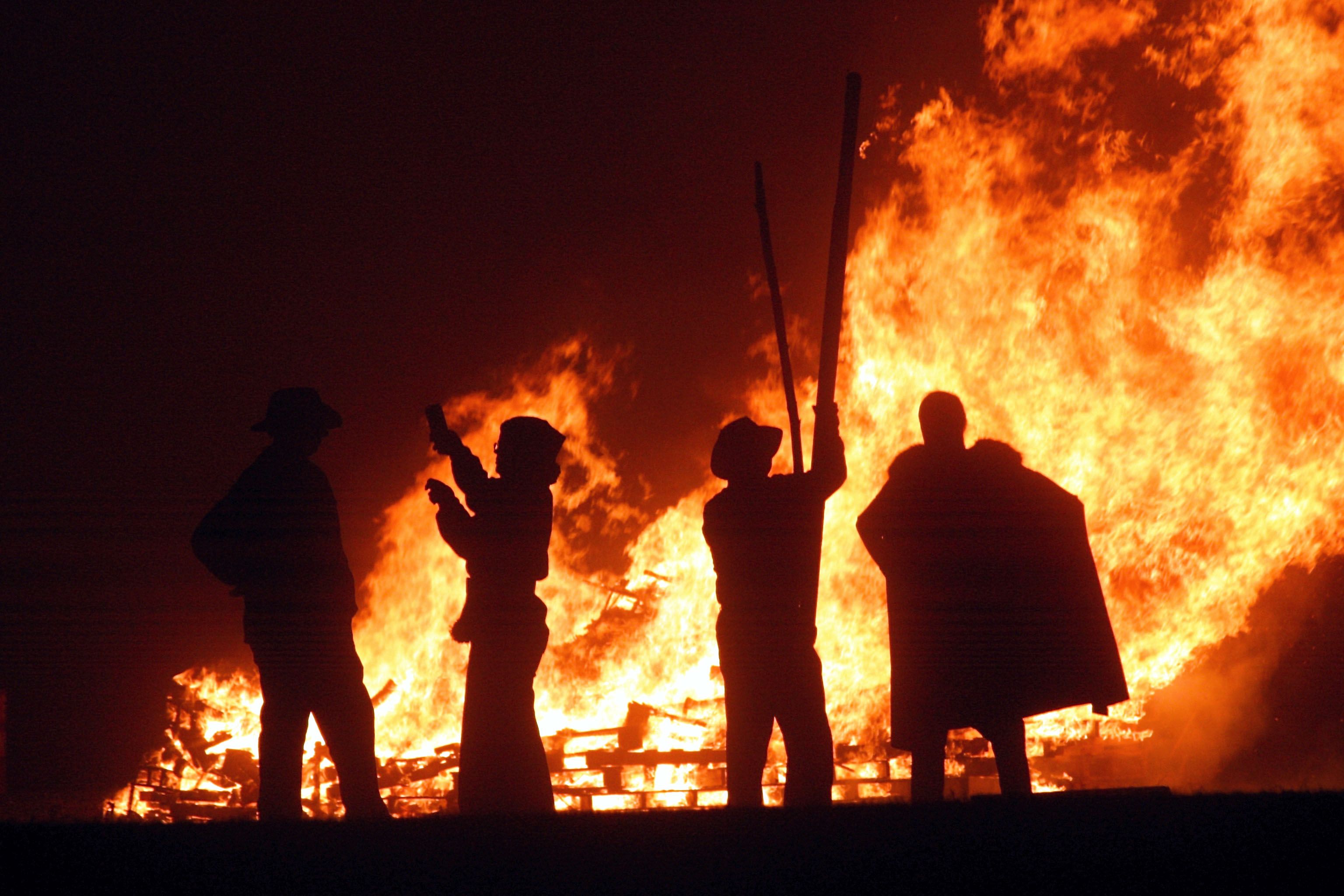
The Irish Republican Army (IRA) made an audacious raid on Gough Barracks in Armagh town on June 12, 1954, sixty years ago this week. It marked the reawakening of IRA activity in Ireland and a re-arming that leads eventually to the 1956-1962 Border Campaign.

In January 1954, Leo McCormick, the Training Officer for the Dublin Brigade of the IRA, is on a visit to Armagh. As he passes Gough Barracks, the home of the Royal Irish Fusiliers, he notices that the guard on duty outside the barracks is armed with a Sten gun without a magazine. He concludes rightly that Gough Barracks is in effect being guarded by an unarmed guard.

On his return to Dublin, McCormick informs the Dublin Brigade of his chance observation. Alas, he does not see the end result of his information, as he is arrested soon after and receives four years for possession of a document.

By April, the General Head Quarters decides that they will raid Gough Barracks for arms. But first, they need more information. Eamonn Boyce, the Intelligence Officer of the Dublin Brigade, is asked to travel to Armagh and check out the barracks. He makes several trips to Armagh and soon has a detailed account of life outside the barracks. But GHQ wants more inside details. Charlie Murphy gets over this problem by asking Seán Garland to go to Armagh and enlist in the British Army. Not long after Garland’s enlistment, a stream of maps, documents, time schedules and photographs flow into GHQ for processing.

Finally, a last intelligence coup is arranged. Using Garland’s information, the IRA gets inside the barracks to have a look around. On a Saturday night in May, Boyce and Murphy slip into the barracks as “guests” at a weekly dance. With them they bring a girl, Mae Smith, who is later to become chairperson of Sinn Féin. After a few dances, Garland takes Mae outside for what his fellow soldiers assume is an hour of light passion but is in fact a detailed tour of the entire barracks.

The operation is launched on June 12, 1954, from a farm just outside Dundalk. A large red cattle truck is commandeered at the last moment and nineteen IRA men, about half of the Dublin Brigade, climb in and are informed as to what their target is. It is almost 3:00 on a busy Saturday afternoon when the cattle truck and a car drive into Armagh.

Paddy Ford gets out of the car and walks over to the sentry and asks him about enlisting in the British Army. While the sentry is dissuading Ford of what he considers a foolish course of action, he looks down into the barrel of a .45 caliber Colt revolver in the perspective recruit’s hand. As the sentry is held at gunpoint, three IRA men pass him into the guardhouse. The sentry is then brought in after them. While the sentry is being tied up, a new IRA sentry, complete with British uniform, white webbing belt, regimental cap and sten gun with magazine steps out to stand guard over Gough Barracks.

As soon as the IRA sentry appears, the cattle truck drives through the gate and comes to a halt outside the arsenal door. After fumbling through 200 keys, Eamonn Boyce finds the right one and opens the armoury. Murphy races up the stairs and in the first room two British soldiers demand to know what a civilian wants inside the barracks. Murphy has some trouble getting his revolver out of his pocket and is further embarrassed when the two soldiers refuse to put up their hands. However, another IRA man arrives carrying a Thompson submachine gun, which quickly convinces them to do as they are told. Posting a Bren gun at the armoury window to command the barracks square, the IRA begins stripping the armoury.

During the course of the raid a woman, noticing something is wrong, stops a British officer in the street and urges him into the barracks to investigate. Once inside the gate the officer is taken under control and, protesting that he is an officer and a gentleman, refuses to be tied until a gun is put to his head.

An NCO then notices what is happening, gets into a lorry and drives for the gate, intending to block the exit. An IRA man stands at the gate brandishing a revolver and shouts “Back.” He forces the NCO to reverse the lorry. The NCO is placed under arrest in the guard room. By the end of the raid, the IRA has tied up 19 British soldiers and one civilian.

In less than 20 minutes the job is done. The truck carrying 340 rifles, 50 Sten guns, 12 Bren guns, and a number of small arms drives out of the barrack gates and rumbles through Armagh in the direction of the border. Eamonn Boyce and the group in the car follow after locking every gate and door for which they can find keys. At 3:25 PM the first alarm in the barracks is given but it is not until 5:00 that the general alarm is given and by that time the big red truck is long gone.

The raid for arms in Gough Barracks gains international attention. The IRA, which has been described by some as moribund since the ’40s campaign, has once more risen from its slumber to strike a blow against the forces of occupation. The raid awakes a calling in many to join the IRA and take part in the Border Campaign, which keeps alive the flame of republicanism through to the present time.

Back to top

How the Mater Hospital has been part of Ireland’s history thanks to caring people like you…

Posted by Jim on June 12, 2024

The Mater Hospital on Eccles Street in Dublin opened its doors in 1861. Since then it has been powered by the kindness of the people of Ireland… caring people like you and your great, great grandparents…

The Mater Hospital

The Mater Hospital MATER HOSPITAL FOUNDATION

James Sullivan shares the fascinating history of the Mater Hospital in Dublin and how the compassion that was the driving force behind this story continues today through the Mater Hospital Foundation…

Will you step back in time with me for a moment? I want to share the story of Ireland’s Mater Hospital, and how it’s been powered by kindness like yours right from the very start…

Put yourself in the crowd gathered on Eccles Street in Dublin, on a chilly late September morning in 1861.

It’s the aftermath of the Famine…

….thousands of families fleeing hunger have been forced into tenement slums.

….the death rate in Dublin is the highest in all of Europe.

But on this Tuesday morning, hope is in the air…

Because this is the day the Mater Hospital is opened.

The Mater Hospital, Dublin

The Mater Hospital, Dublin

And from the very beginning — despite having so little themselves — the Mater has been powered by the extraordinary kindness of the people of Ireland…

… by your great, great grandparents and mine.

You carry within you their same deeply-held values of compassion, concern and generosity passed down through generations of caring hearts like yours.

And it’s in honor of that same spirit of kindness that has kept the Mater strong for so many decades that I feel I can ask you this question –

Would you consider making a gift to the Mater Hospital Foundation in your Will?

The Mater Hospital, Dublin

The Mater Hospital, Dublin

Choosing the people and causes you want to remember with a special gift is a matter for your heart alone.

And, of course, your family is your first concern.

But after your loved ones are taken care of, a gift of just 1% or 2% of your estate to the Mater Hospital Foundation would see your love and compassion — the most beautiful and essential parts of yourself — live on within our centuries-old walls for hundreds of years to come.

It’s hard for us to imagine now just what the opening of the Mater Hospital meant to our great, great grandparents.

You see, before the Mater, there was hardly a person in Ireland with access to healthcare… 

The Mater Hospital, Dublin

The Mater Hospital, Dublin

And if you were poor you had no chance. Were you or your child to get sick, your chances of survival were thin. It was as simple and brutal as that.

And it was that very injustice that Sister Catherine McAuley made it her mission to fight all those years ago. The Mater threw its doors open to all. It would be a hospital for the people. 

Our hospital. Yours and mine. And nobody suffering would be denied care, no matter what. And although the modern Mater Hospital today looks very different to how it did in 1861…

…There remains one constant.

Because it was generous, resilient, and principled people like yourself who gave what little money they had so their hospital could endure for their children and grandchildren… 

… for you and me.

And it’s kindness like yours that still powers our work to this day.

On This Day: Easter Rising hero James Connolly was born in Edinburgh

Posted by Jim on June 5, 2024

James Connolly, the Edinburgh man calling the military shots from the GPO during Ireland’s 1916 Easter Rising, was born on June 5, 1868.

Dermot McEvoy

@IrishCentral

Jun 05, 2024

James Connolly was born in Edinburgh on June 5, 1868.

James Connolly was born in Edinburgh on June 5, 1868. PUBLIC DOMAIN

“The Irish people will only be free, when they own everything from the plough to the stars.” – James Connolly.

“If Pearse was the soul of the Rising,” wrote Joe Good in ‘Enchanted by Dreams,’ “James Connolly was its heart.”

Connolly was born in Edinburgh on June 5, 1868, to Irish parents. He grew up in the slums and his hardscrabble beginnings turned him into a fervent socialist.

In 1896, after working in Scotland and a stint in the British Army, he came to Dublin to work for the Dublin Socialist Society. It was his first time in Dublin and he was immediately dismayed that the Dublin working class did not have the same fire in their bellies that he had. So, as he had a family to support, he moved to America in 1903.

Sign up to IrishCentral’s newsletter to stay up-to-date with everything Irish!Subscribe to IrishCentral

Seven years later, he returned to Ireland to head up the Irish Transport and General Workers Union in Belfast. After the disastrous general strike of 1913 and Jim Larkin’s departure for America, Connolly came to Dublin to head up the local ITGWU—and its Citizen Army.

The Citizen Army became his obsession. Although only 220 in strength, he drilled them until they became, in his words, “a real revolutionary army.”

The boys at the Irish Volunteers kept a wary eye on Connolly and his army. They were drawing up plans for a Rising and were afraid that Connolly might preempt them. In January 1916, they decided to “kidnap” him. For three days, he was briefed by members of the Military Council of the IRB—men like ClarkeMacDiarmada, and Plunkett. At first, Connolly was very angry, but as details of the planned Rising were made known to him, he became an enthusiastic supporter.

On Easter Monday, he was named Vice-President of the Provisional Government and Commandant-General in the Army of the Irish Republic. He marched at the head of his Citizen Army to the GPO and, finding his inner-Teddy Roosevelt at San Juan Hill, commanded his troops: “Left turn. CHARGE!”

After Pearse read the Proclamation Connolly exclaimed, “Thanks be to God, Pearse, that we have lived to see this day.”

Pearse may have been the titular “Commander-in-Chief,” but Connolly was calling the military shots from the GPO. He was fearless, venturing out into the streets to direct his men. It was on one of these sorties to Liffey Street, far away from the GPO near the Ha’penny Bridge, that he was seriously wounded in the leg. He made his way back to the GPO and helped plan the evacuation to Moore Street. After the surrender, he was removed to Dublin Castle for treatment for his wound which had developed gangrene.

His condition was such that his trial was held at Dublin Castle. After he was found guilty and condemned to death, he made this statement: “We went out to break the connection between this country and the British Empire and to establish the Irish Republic. We believe that the call we thus issued to the people of Ireland was a nobler call in a holier cause that [sic] any call issued to them during this war having any connection with the war. We succeeded in proving that Irishmen are ready to die endeavoring to win for Ireland their national rights which the British Government has been asking them to die to win for Belgium.”

“As long as that remains the case the cause of Irish freedom is safe. Believing that the British Government has no right in Ireland, never had any right in Ireland, and never can have any right in Ireland, the presence in any one generation of even a respectable minority of Ireland ready to die to affirm that truth make sure Government forever a usurpation and a crime against human progress.

“I personally thank God that I have lived to see the day when thousands of Irishmen and boys, and hundreds of Irish women and girls, were equally ready to affirm that truth and seal it with their lives if necessary.”

IrishCentral History

Love Irish history? Share your favorite stories with other history buffs in the IrishCentral History Facebook group.

His last hours were spent with his wife Lillie and daughter Nora.

“My mother and I . . . were driven to Dublin Castle,” Nora said.

“On entering we were directed to a flight of stairs. At the top of the stairs were six soldiers with fixed bayonets, and on the floor, about a dozen more were lying on mattresses.

“We passed through the soldiers and entered an enclave where there were two soldiers with fixed bayonets. They stood aside to let us enter the door. When we entered my father was lying in the bed with his head turned to the door.”

“Well,” said Connolly to his wife, “I suppose you know what this means.”

Lillie responded, “Not that James, not that.”

Nora continued: “My father said, ‘Yes, for the first time I dropped off to sleep. And they wakened me to tell me that I was to be shot at dawn.’ ”

Lillie said, “Your life, James, your beautiful life.”

“Well, Lillie,” he answered, “hasn’t it been a full life, and isn’t this a good end?”

Nora informed him of the executions of Pearse, MacDonagh, and the others. “He was silent for a while. I think he thought that he was the first to be executed. Then he said, ‘Well, I am glad that I am going with them.’ ”

He was removed to Kilmainham. There, Father Aloysius asked him to forgive the men of the firing squad. “I do, Father,” said Connolly. “I respect every man who does his duty.”

Sign up to IrishCentral’s newsletter to stay up-to-date with everything Irish!Subscribe to IrishCentral

It is at this time that Connolly went from martyr to legend. Because his wounds were so severe he could not stand, so they tied him to the chair. Dominic Behan (brother of Brendan and nephew of Peadar Kearney, who wrote the Irish National Anthem, “Amhrán na bhFiann”) remembered Connolly in his popular ballad, “The Patriot Game.”

They told me how Connolly was shot in his chair,

His wounds from the fighting all bloody and bare.

His fine body twisted, all battered and lame

They soon made me part of the patriot game.

But it may have been much more gruesome than that. The Sacristan to the Parish of St. James had this description of the execution: “In giving a description of James Connolly’s execution Father McCarthy told me that the prisoner, who was in a bad condition, elected to stand like the rest but failed. He was then tied to a chair but slumped so much that he overbalanced. Finally, he was strapped to a stretcher and placed in a reclining position against the wall…The sight left an indelible impression on Father McCarthy.”

Perhaps the greatest tribute to Connolly came from one of his officers in the GPO during Easter Week, a young Cork rebel named Michael Collins: “Of Pearse and Connolly I admire the latter the most. Connolly was a realist, Pearse the direct opposite. There was an air of earthy directness from Connolly. It impressed me. I would have followed him through hell had such action been necessary.”

*Dermot McEvoy is the author of “The 13th Apostle: A Novel of a Dublin Family, Michael Collins, and the Irish Uprising and Irish Miscellany” (Skyhorse Publishing). He may be reached at dermotmcevoy50@gmail.com. You can check out his website here or follow The 13th Apostle on Facebook.

There are massive questions for Naomi Long over a perverse and absurd law she proposed

Posted by Jim on June 2, 2024

A judge was left to clear up a dangerous mess created by MLAs who then failed to fix it, even when they knew it was disastrous

This newspaper covered the problem extensively, as did the BBC and others. No one in power was unaware of the severity of the problem.
Justice Minister Naomi Long

Sam McBride

Yesterday at 03:00

    What unfolded in Belfast High Court yesterday morning was a devastating exposure of the failure of the Stormont system: The Executive and legislature had created a gross injustice and then failed to rectify it, leaving a judge to do so for them.

    Last September, part of a new Stormont law came into force which made it a jailable offence to identify anyone who has been investigated by police but not charged in relation to sexual offence allegations.

    An individual in that position — such as the notorious paedophile Jimmy Savile — could not be named during their lifetime, with no chance for an appeal by anyone other than the police.

    They were protected even after death for 25 years, unless the media or a victim went to a court and succeeded in getting permission.

    It was an outrageous situation, criminalising both journalists and victims of sexual abuse who chose to waive their right to anonymity.

    One MLA, Robbie Butler, to his credit, accepted that he had made an error in voting for the law, which had sailed through unanimously with scant scrutiny, and said he would bring a private member’s bill to the Assembly to have it overturned.

    The TUV and SDLP said they would support the law being changed. But neither the DUP, Sinn Fein nor Alliance committed to repealing this situation. The arithmetic of the Assembly meant that without the support of bigger parties, this law wouldn’t be changed.

    Late last year, the Belfast Telegraph began a legal challenge which was joined by The Irish News. A separate case was taken by The Times, the BBC, and other London-based media organisations.

    For a regional newspaper like this, judicially reviewing a law is virtually unheard of. It involves huge expense, and the prospects of success are scant.

    Even a very bad law is unlikely to be struck down by a judge unless it involves some glaring illegality.

    Yesterday’s culmination of the case which began before Christmas confirmed such glaring illegality.

    Legal challenge by Belfast Telegraph to sex offence suspects anonymity successfully overturns law

    It was 45 minutes into Mr Justice Humphreys’ judgment when it became fully clear that he was finding in our favour.

    In the wood-panelled surroundings of courtroom one of the Kings Bench, the judge said that Stormont’s failure to recognise the impact on public interest journalism “means that a fair balance between competing rights has not been struck”.

    In classic Stormont fashion, there was what the judge described as a lack of “contemporaneous explanations” as to why MLAs did what they did. There were arguments made in court which weren’t backed up by any record from the time. The judge found that unconvincing.

    There’s nothing in that which suggests any dark conspiracy; rather, this is how Stormont operates, with a culture of oral government where basic record keeping is either an afterthought or in some cases actively discouraged. One of the many problems with such a situation is that a department can struggle to defend itself in court.

    As the judge went on, his language became more explicit, and politely excoriating.

    The department argued that it was essentially none of the court’s business how the Assembly had come to make the law. The department, quoting from the legislation which established devolution, emphasised that the way in which MLAs went about their work “shall not be called into question in any legal proceedings”.

    Mr Justice Humphreys dismissed this, making clear he wasn’t questioning the validity of Assembly proceedings, but examining the “quality” of MLAs’ actions.

    Having done so, he found proper scrutiny was “manifestly lacking” and “clear shortcomings” in the debate.

    In essence, MLAs hadn’t even considered the serious problems of the law they were passing. What he didn’t say, but which is equally concerning in a political sense, is that four months after devolution returned, and despite being well aware of the problem, neither the Executive nor the Assembly had acted to rectify the problem.

    There was, he said, “disproportionate interference” with the human rights of journalists wishing to publish information which is in the public interest.

    That meant that what Stormont had done was “not in accordance with law” because it was contrary to the European Convention on Human Rights.

    At a time when journalism is under intense financial and political pressure, Mr Justice Humphreys delivered a refreshing defence of our right to inform you of what is happening around us, saying: “Public interest journalism serves a vital role in any democratic society. The role of the press as watchdog, and the role of journalists in facilitating and prompting police investigations is fully evidenced in these cases [such as Kincora, cited by the Belfast Telegraph in legal argument].”

    When the Belfast Telegraph first covered this problem, we discovered that both Mrs Long and her officials had misled the Assembly.

    Mrs Long said on the floor of the Assembly that what she was proposing would “implement four recommendations from Sir John Gillen’s report”. That was inaccurate, because Sir John’s report — a review of the law in this area after the high profile rugby rape trial — did not recommend what this legislation did.

    When we reported that this misled the Assembly, Mrs Long suggested she might take legal action — despite the fact it was true, despite the fact we had put the evidence to her before publication, and despite the fact we carried her response.

    She tweeted: “I refute the accusation that I misled the Assembly and the matter is now with my solicitor for review.”

    Two months later, a member of the public asked if Mrs Long had sued. Implicitly accepting that she had not, Mrs Long gave the impression she was still considering it, saying: “Yet. The key word is yet.”

    Seven months after the article was published, we have received no legal claim from Mrs Long.

    Yesterday’s judgment emphasises the accuracy of what we reported. Mr Justice Humphreys noted a claim made by the barrister representing Mrs Long that part of the provisions now ruled unlawful were necessary to implement the Gillen report.

    That, he said, was “quite wrong when one reads the Gillen Review in full”. He went on: “There is nothing in the Gillen Review which supports the contention that only the suspect or the police ought to be able to make such applications [to name a suspect during their lifetime].”

    I don’t for a second believe that Mrs Long deliberately misled MLAs. Nor do I believe that this entire episode was anything other than a catastrophic blunder. But when mistakes are pointed out, how someone responds speaks to something much deeper than the issue at hand.

    What happened yesterday is also somewhat awkward for Sir John Gillen. In emails disclosed by the Department of Justice (DoJ) under the Freedom of Information Act and given to the court in evidence, Sir John appeared dismissive when concerns about the law were raised.

    Last November, in response to this newspaper’s coverage, Sir John told the department it was “quite wrong to suggest, as has been done, that I did not recommend our new law or that Minister Long misled MLAs about my report”.

    However, he then went on to state quite clearly “I did not recommend the 25 year prohibition after death” — but he said he was happy with it nonetheless, because it was consistent with “the spirit of my report”.

    A report either makes a recommendation or it does not. We are in Kafkaesque territory if a non-existent recommendation can be used as the basis for a dangerous law based on the retrospective assessment of the individual involved that it is in “the spirit” of what they intended.

    Another email from Sir John, sent to the DoJ last December, dismissed the significance of the law for a case like that of Jimmy Savile, something raised by this newspaper and the BBC.

    He said this was a “disingenuous” example because “inevitably on his death a court would hold it in the public interest to publish his name on application of the media” and that if lots of victims had come forward during his life, “the police might have applied to the court to publish his name”.

    He claimed that “Savile would be a classic example of our legislation working perfectly”.

    That fundamentally misunderstood the situation. It is only now obvious that Savile was a prolific abuser because of media coverage.

    When the first victim came forward, that was not obvious. In circumstances where the abuser is still alive, and is a powerful figure, it is far from clear that the police who had ruled out charging the individual would then go to court to allow the media to name him.

    Mr Justice Humphreys recognised that leaving this power solely in the hands of the police was impossibly problematic.

    In cases such as Kincora or high-profile cases involving the Metropolitan Police, it is the police who are allegedly either involved in abuse or covering it up to protect agents or for some other improper reason.

    To therefore rely solely on the police to do the right thing in those circumstances is illogical and unjust.

    Mr Justice Humphreys said that while “in certain cases, the interests of the police and the media may coincide”, that argument failed to recognise that the right to freedom of expression is conferred on everyone, and is “its exercise is not to be determined by agents of the state such as the police except in clearly defined circumstances”.

    He said that in media reporting “time may be of the essence”, with the need to make an application rather than seeking to persuade someone else to do so.

    He also stressed that “there may be many cases where the interests of the media and the police do not coincide. For instance, the allegations may relate to sexual offences allegedly committed by police officers or may be suggestive of a want of proper police investigation. In such cases it would be entirely inappropriate for media outlets to be obliged to approach the police in an effort to have the prohibition removed.”

    This was a withering judgment which has dispensed with a law that should never have been anywhere near the statute book.

    What happened here is a textbook example of how good intentions can produce bad law.

    It should not have taken newspapers to spend thousands of pounds on a legal challenge in order to be able to say “Jimmy Savile was a paedophile”.

    At a time when Stormont’s budget is hopelessly short, how was it that the Department of Justice spend public money seeking to defend such a law?

    Mrs Long should now say clearly that she will not be appealing this judgment or seeking to reinstate these provisions through new legislation.

    When I asked the minister if she would commit to that, the response was a glorified ‘no comment’. Her department said it “notes the judgment” and is “carefully considering” it.

    If Mrs Long does want to appeal, that will now have to secure the approval of the Executive, because it is demonstrably controversial.

    That means she would likely need the DUP and Sinn Fein’s support. Both parties have been strikingly quiet on this issue.

    Sinn Fein said last November that the law should be “monitored and improvements brought forward where necessary” — but didn’t actually say it believed changes were necessary.

    The DUP, to the best of my knowledge, has said nothing on this at all. That’s utterly baffling in political terms.

    The DUP leader, Gavin Robinson, is facing a strong challenge from Mrs Long in next months’ General Election. Even prior to that, the DUP was losing ground to Alliance and had every incentive to highlight what was obviously a significant Alliance error.

    We took this challenge because it criminalised journalism. But we had the resources to do so; some of those hurt even more personally by this law could not do so.

    Many of those who will benefit most from yesterday’s ruling will never even realise that because it would never cross their minds that as victims of sexual crime they could have been jailed for saying so.

    An independent media and an independent judiciary are crucial to democracy. Yesterday one acted to uphold the rights of the other.