Clare Crockett, 33, was killed in an earthquake in Ecuador in April 2016.
Sister Clare Crockett died in 2016 (Home of the Mother order/PA)
By Cillian Sherlock, PA
January 12, 2025 at 9:56am GMT
A nun from Northern Ireland will be a step closer to sainthood on Sunday following a special ceremony in Spain.
Clare Crockett, 33, from Derry, was killed in an earthquake in Ecuador in April 2016. The building where she had been teaching music collapsed.
Ms Crockett, from Brandywell in Derry, was a larger-than-life character who had been an actor before choosing the religious life. She turned down a chance to present on children’s TV channel Nickelodeon to become a nun.
She said friends were in disbelief when she declared she was going to be a nun while holding a “beer in one hand and a cigarette in the other”.
Each year, we select a new history project during the winter months (a great season in Minnesota for indoor research!) and I prepare a talk for CJAC’s annual Irish Arts Week event in April. We follow with an on-site, audio-visual exhibit at Irish Fair of Minnesota in August that then moves to our exhibit hall outside the McKiernan Library reading room. Finally, I write an article for the Samhain issue of our online Celtic Junction Arts Review.
This year, we have told the story of Irish music and dance that came to Minnesota with itinerant laboring men in the late 1800s. In the logging boom years, Irish songs, tunes and steps entertained in bunkhouses, barrooms and riverbanks in the woods and small towns of outstate Minnesota. Direct imports from Ireland mixed with New World compositions, often based on Irish forms, to define a “woods music” culture that was later documented by folklorists throughout the white pine belt of North America.
This topic is personal to me. I grew up in Bemidji, a historic logging town in northern Minnesota, and fell in love with Irish music as a teenager thanks to the Winnipeg Folk Festival and the Green Linnet catalog. Naturally, links between Irish music and the north woods have long fascinated me. This led to years of enjoyable and fruitful research that predated my time at the McKiernan Library. In my blog, as a speaker and with my duo The Lost Forty (with Randy Gosa) I have spoken about this history and sang songs at over 100 venues in the Upper Midwest.
The author sings here “Kettle River,” a lumber camp song from Minnesota.
I combined my years of research with new findings for the McKiernan Library’s 2024 history piece in the CJAC Arts Review which Irish Echo readers can access online. It is titled “Into the Woods: Irish Music and Dance in Logging Era Minnesota.”
The story begins with a pre-Famine wave of Irish immigration to Canadian ports. Of the over 750,000 Irish that sailed for the New World between 1828 and 1844, New Brunswick and Quebec welcomed about 55% of all arrivals. Many Irish immigrants arriving in Canada continued on to urban centers in the United States but plenty remained closer to their port of entry (on both sides of the border) and fell into more rural patterns of life. Men took outdoor seasonal laboring jobs digging canals, building railroads or working in the lumber woods.
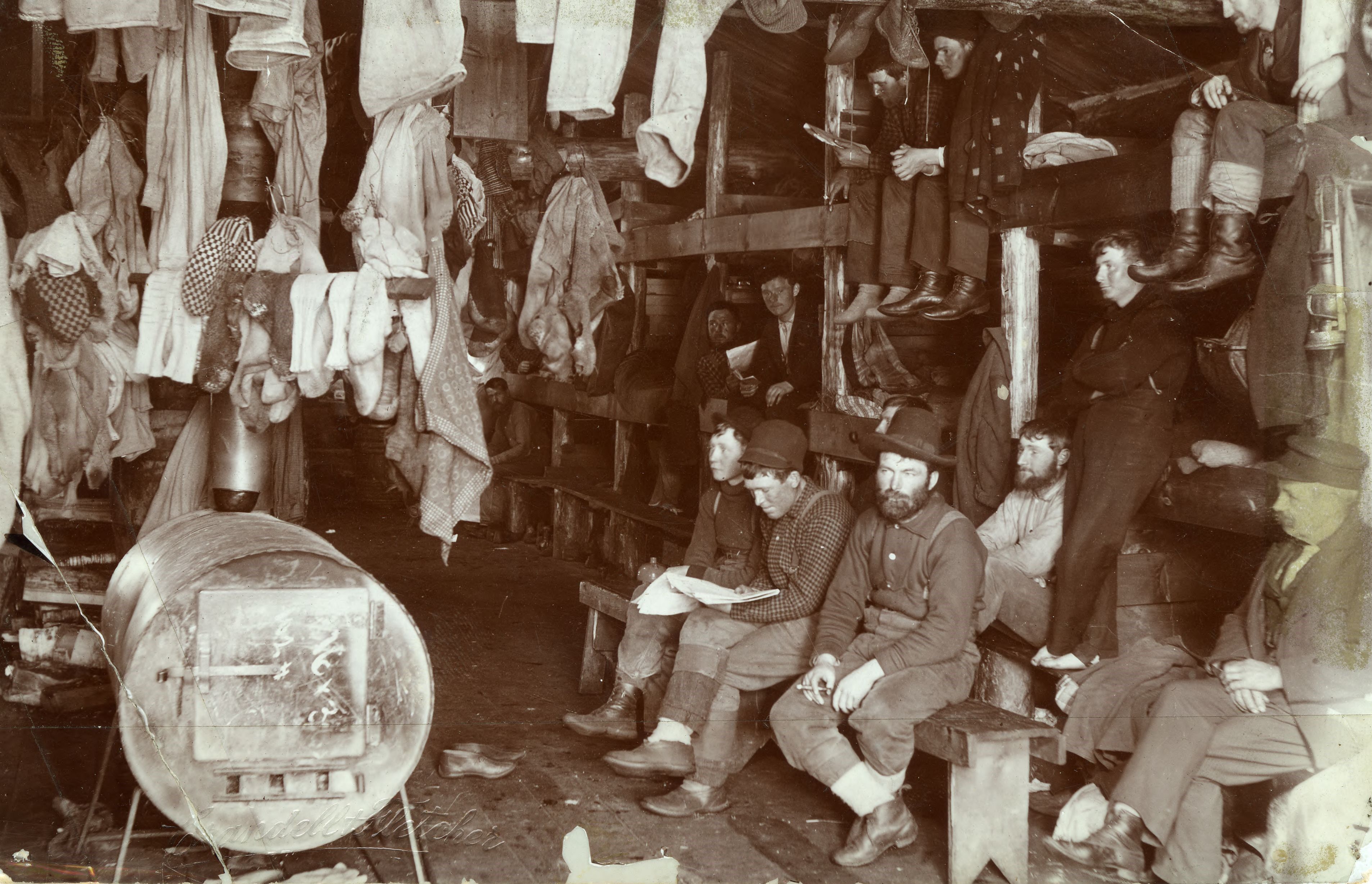
In lumber camp bunkhouses, music from the old country helped pass the time and ease loneliness on some evenings. Men sang or played the camp fiddle on the “deacon seat” that circled the stove at the base of the bunks. Soon, a distinct musical tradition evolved among laboring men in the pine woods. Sons born into north woods communities took their first job in a lumber camp at age 14 or 15 and this new generation carried lifeways and songs westward across Michigan, Wisconsin and into Minnesota.
This year’s article includes vivid stories from the lives of several second-generation loggers who came to Minnesota as well as first-hand accounts of Irish music in the Minnesota woods. I have been writing and speaking about some of these people for years but in preparation for this year’s project, some fascinating new characters came to life.
Thomas Welsh was born to Irish immigrant parents in the Upper Peninsula of Michigan in 1870. He followed logging work to northern Minnesota in 1891 and settled eventually in Walker just south of where I grew up. Welsh’s daughter Mary, an accomplished journalist, became Mary Hemingway in 1946 as the fourth and final wife of famed novelist Ernest Hemingway. Thanks to this association, Thomas Welsh’s memoir went to the JFK Library along with the Earnest and Mary Hemingway papers.
Welsh describes his early days in Minnesota where he marveled at the Irish songs and stories he heard. He remembered singers who went from camp to camp selling “hospital tickets,” an early form of workingman’s health insurance. North of Deer River, Minnesota, Welsh met Charley Melaney and Big Jack Morgan who “had fine voices and had a long list of songs and Irish ballads.” He wrote at length about another hospital ticket salesman named Jerry McCarthy:
He seemed to have in his mind all of the “Ancient Celtic Romances,” some very beautiful and thrilling, others uncanny, the most weird and ghostly stories and songs of witchcraft that were ever written. Some were spoken in his deep rich Irish brogue and you could almost see the Irish horsemen and their horses ride up from the bogs and fields, where they were slaughtered by the enemy and with long swords and voices that thundered they pursued and killed the last man of them. Many of the legends were partly spoken and partly sung, a custom that prevails in Ireland up to this day when old Irish women attend the wake of a friend.
This account from Welsh shows the breadth of Irish cultural expression present in some of these isolated logging camps beyond just songs and tunes.
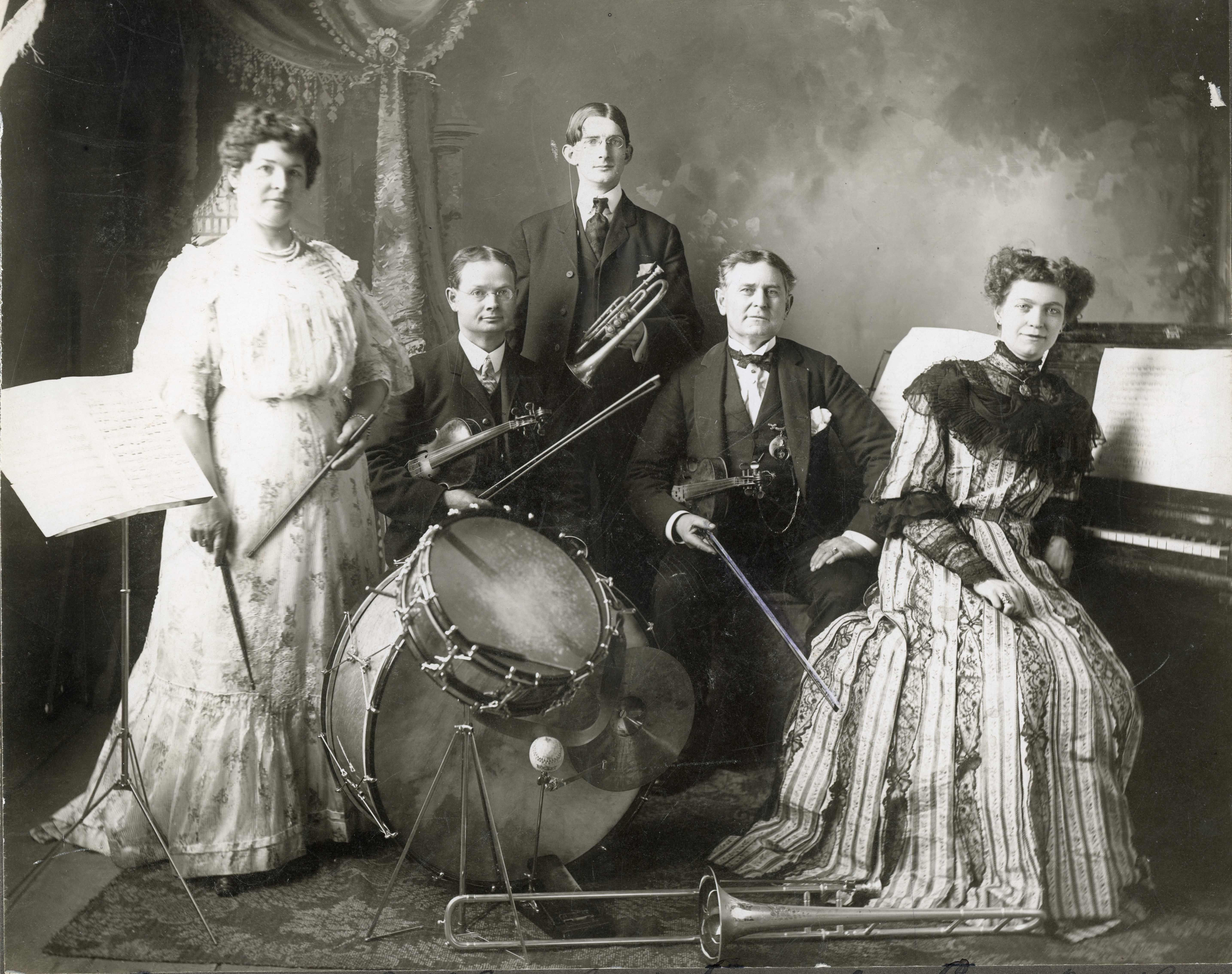
The “Into the Woods” article also covers how singing traditions moved naturally from lumber camp bunkhouses to barrooms as communities like my own hometown sprung up around the state. It explores the influence of Irish music hall hits on the north woods repertoire including a profile of a touring vaudeville group called McGinley’s Comedy Company that helped spread around the latest stage songs penned by Irish-American songsmiths like Edward Harrigan and Pat Rooney.
McGinley’s Comedy Company, c. 1906: Eva McGinley, John Shafer, Claude Woods, Robert McGinley, Miss Lizette Hoskins. (Nevada Historical Society)
Like other McKiernan Library history articles, “Into the Woods” includes striking historical photos and sound clips of songs. I encourage anyone interested in Irish-American history to have a look at this and other historical projects the McKiernan Library has pulled together over the past several years.
Ireland’s diaspora makes a profound contribution to our country
Our diaspora fosters goodwill. It generates economic development. It cherishes and showcases our diverse and dynamic culture.
Wherever our diaspora is, it brings much pride to this country through word, thought, and deeds.
Ireland is committed to recognising and supporting our people abroad. We do this through practical engagement to make a real and lasting difference.
Ireland’s Diaspora Strategy 2020 – 2025
Recognising the need to sustain and renew a meaningful connection with our diaspora, the Government adopted a new strategic approach to supporting our citizens overseas and diaspora networks internationally.
In 2019, the Department of Foreign Affairs undertook wide-ranging public consultations on the future of Ireland’s diaspora policy. This strategy was shaped by contributions from hundreds of individuals and organisations both in Ireland, and in Irish communities around the world.
This strategy reflects the evolving circumstances and needs of the Irish abroad. It sets out a number of guiding principles and initiatives to strengthen the relationship between Ireland and our diaspora .
The influence of Ireland’s beloved poet may be felt around the world but his fame is rooted in his starting point, Queen’s University Belfast. Register now for their free online Seamus Heaney event on Nov 21.
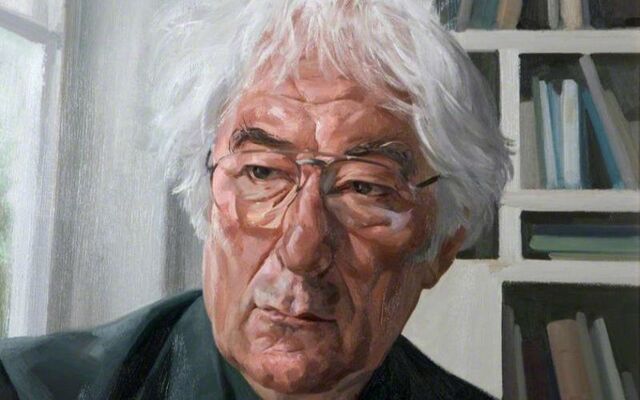
Seamus Heaney (1939-2013) by Tai Shan Schierenberg, 2004 Queen’s University Belfast Art Collection
The Seamus Heaney Centre at Queen’s University Belfast continues the beloved Irish poet’s legacy, giving new writers, critics, and poets a chance to fulfill their literary ambitions.
Each year, the Centre appoints three Seamus Heaney Fellows, writers of distinction in any genre or form. One of its first Fellows was Lisa McGee, the creator of “Derry Girls”. The stage and screenwriter was born in Derry-Londonderry and later attended Queen’s University Belfast to read Drama.
In 1959, while studying at Queen’s University Belfast, Heaney published his first poems in the student Magazines Q and Gorgon, before going on to complete a Diploma in teaching at St Joseph’s College of Education, in Belfast.
He regularly wrote poems and stories under the penname ‘Incertus’ (Latin for ‘Uncertain’). Today, the Seamus Heaney Centre holds an archive featuring the student magazines in which these early poems were published.
Heaney was part of ‘The Group’ poetry workshop, along with luminaries like Philip Hobsbaum, Michael Longley and Bernard Maclaverty. Heaney said: “When I was at Queen’s…. ‘life’ and ‘literature’ were beginning to connect.” Fast forward to 2004 – then a Nobel Prize-winning poet – at the opening of The Seamus Heaney Centre, ‘Burial at Thebes’, Heaney’s version of Sophocles, ‘Antigone’ premiered at The Abbey Theatre in Dublin.
As the University celebrates its 180th anniversary, the sense of a creative community is very much alive and at the heart of Queen’s. The Seamus Heaney Centre – part of the School of Arts, English and Languages – is home to some of the UK and Ireland’s foremost poets, novelists, scriptwriters and critics.
In 2024, the Centre moved to a new landmark building, where Bath Short Story Award winner Connor Donahue recently completed his Graduate Studies in Creative Writing. He had the opportunity to work with David Park, whose novel ‘The Truth Commissioner’ won the Christopher Ewarts-Biggs Memorial Prize, recognizing works that promote peace and reconciliation in Ireland.
Connor, originally from Kansas City, spent a year in Belfast on a Graduate Visa. He said: “The immersion in the writing culture, being surrounded by other aspiring artists as well as extremely accomplished instructors, was very impactful for me. That shared sense of purpose and of wanting to support and promote each other’s progress was especially meaningful.”
Connor added: “The atmosphere at the Seamus Heaney Centre is extremely collaborative, supportive and encouraging. Exactly the type of place where one would want to study or write. There is a pronounced sense of belonging and of shared values and goals. I lived on Mount Charles, just behind the new center, and the updated facilities are incredible.”
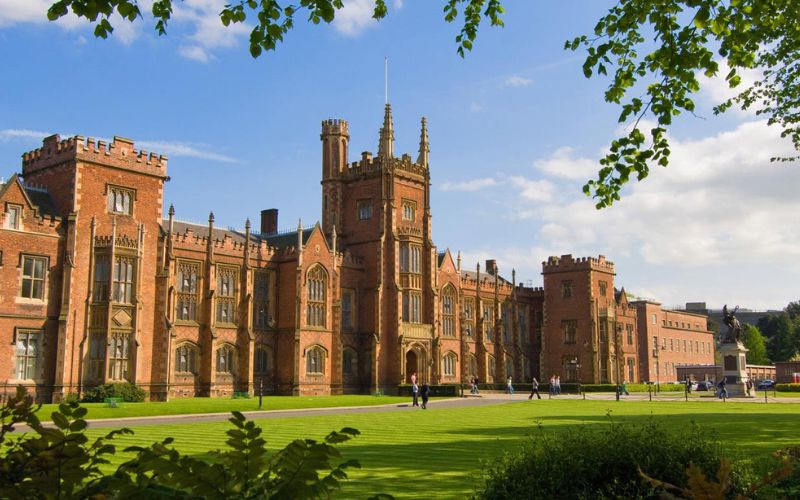
Just a short walk from Queen’s University Belfast’s iconic Lanyon building, the Seamus Heaney Centre boasts a large venue space, scriptorium, offices, and creative spaces for students and staff. There is also a public exhibition area that displays the Seamus Heaney Archive held by Queen’s.
The Seamus Heaney Centre focuses on all aspects of writing craft and criticism, feeding into the wider reach of English Literature studies at Queen’s. Postgraduate courses lead the way in creative writing, poetry, and English literary studies teaching and practice, including Graduate Studies and PhD programs in English Literature, Poetry, and Creative Writing.
The Centre benefits from being part of a wider interdisciplinary school, bringing together studies in drama, film, music, and languages. Part of a worldwide network of writers and critics, the Centre supports the development of creative and interdisciplinary collaborations and hosts readings and performances throughout the year. Most of all, it’s a place for writers and poets to flourish alongside a global network of alumni and friends.
As part of the Centre’s ongoing commitment to engagement, join us for a one-off, free online event that will feature performed readings from Seamus O’Hara, a Queen’s University Belfast Drama graduate, and star of the Academy Award-winning short film “An Irish Goodbye”.
This event is an ideal opportunity for those interested in Graduate Studies in English or other programs offered at Queen’s University Belfast, or for those who would like to become more connected to the Centre and join a global network of Alumni and friends, including Seamus Heaney Centre events in the US. Register for this free event here.
for Women with Ambition Entrepreneur Expo in New York this weekend
Shop an incredible range of Irish and American female-led brands, learn about their stories, and support small female enterprises at the Women with Ambition event in NYC this Saturday, November 16.
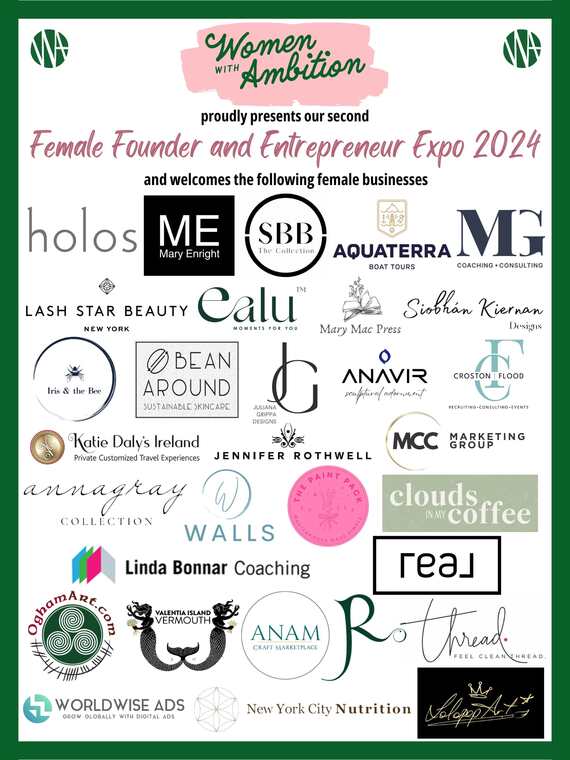
The Women with Ambition Female Founder & Entrepreneur Expo returns to NYC on Saturday, November 16. Women with Ambition
Don’t miss the Women with Ambition Female Founder & Entrepreneur Expo this Saturday in New York City!
Following a hugely successful first-ever event last year, Women with Ambition are returning with their second annual Female Founder & Entrepreneur Expo this Saturday, November 16 in the Bryant Park Hotel, overlooking the famous Bryant Park and Winter Village Christmas Market.
With over 30 female-led brands attending, browse and shop their products and services, learn about their brand and mission, and support small female enterprises. You will have a diverse range of brands to explore – ranging from clothing and jewelry to beauty and professional services, and so much more!
Included in your ticket is access to both floors of the WWA Expo, exclusive discounts, specials, and mini consultations from our female founders, and a gift bag for the first 100 tickets sold thanks to Cloud 10 Beauty!
Tickets for the event will be time staggered to enable crowd control and to let you enjoy the best experience possible during this curated shopping event.
3
WWA Female Entrepreneurs & Founders Expo 2024
Here are just SOME of the brands that will be there on the day…
Valentia Island Vermouth: Anna and Orla O’Carroll are the wife and wife team, proudly making Ireland’s first vermouth on Valentia Island off the coast of Co. Kerry. This award-winning, handcrafted vermouth uses twenty botanicals including gorse from the island.
Katie Daly’s Ireland: An Ireland destination specialist that captures Ireland, its people, and its experiences, in carefully hand-crafted, custom-made unique tours for individuals and small groups.
OghamArt.com: Owners Christopher and Colleen Conway create unique Irish gifts featuring the ancient Irish alphabet of Ogham.
Anam Craft Marketplace: A trusted Celtic Wholesale Marketplace where USA and Canadian retailers can connect with authentic Celtic artisan from Ireland, Scotland, and the Celtic Nations.
Siobhán Kiernan Designs: Inspired by nature, history, travel, and film, Siobhán Kiernan creates unique handmade jewelry and we are pleased to share her passion for art and jewelry with you.
SBB Collection: Created by Caroline Wilkins from Cork, SBB The Collection pieces are developed from scratch starting with a block of wax, sheets of metal, or metal wire. Molded to create stories around different subjects such as social issues, the female body, sensuality, sexuality, mental health, and connection, each with their own unique meaning.
Aqua Terra Boat Tours: Co-founded by Elizabeth McCooey, and set against the stunning backdrop of Valentia Island on the iconic Ring of Kerry, Aqua Terra redefines luxury boating with exclusive and bespoke adventures. Aqua Terra’s meticulously crafted tours unveil the enchanting coastline and captivating Skellig Coast. With state of the art custom built boats, Aqua Terra prioritizes sustainability to protect Ireland’s breathtaking ecosystems and wildlife.
… and many more!https://www.instagram.com/p/DBuxMfsMZ2J/embed/captioned/?cr=1&v=14&wp=537&rd=https%3A%2F%2Fwww.irishcentral.com&rp=%2Fevents%2Fwomen-with-ambition-event-tickets-new-york#%7B%22ci%22%3A0%2C%22os%22%3A1543.2999999998137%2C%22ls%22%3A307.89999999990687%2C%22le%22%3A708.8999999999069%7D
Who is Women with Ambition?
Women with Ambition is a professional network of Irish and Irish-American women working and living in New York and the Tri-State area.
They provide a space for women of all industries to huddle together to connect more deeply, form a meaningful network, and take some time to focus on intentional self-development—all while supporting and celebrating each other as we strive for our individual career goals, successes, and ambitions.
Their offerings include an intimate six-month peer mentorship program, large networking events with panels of speakers from diverse industries, and opportunities to learn from expert guest speakers through their special “Speaker Series” workshops and unique “Education Series” workshops.
This year’s Women with Ambition Female Founder & Entrepreneur Expo is proudly sponsored by Options Technology with generous funding from the Irish Government’s Emigrant Support Programme for Irish Diaspora and support from Invest Northern Ireland and Bank of Ireland.
3
WWA Female Entrepreneurs & Founders Expo 2024.
IrishCentral is a proud media partner with Women with Ambition. To find out more information about Women with Ambition, click here. You can also follow them on Facebook.