‘New Ireland’ is now inevitable, says DUP founding member
Posted by Jim on September 4, 2023
A ‘New Ireland’ is now inevitable and unionism was probably always doomed, DUP founding member Wallace Thompson tells Sam McBride in an extraordinary interview

Sam McBride
Today at 01:35
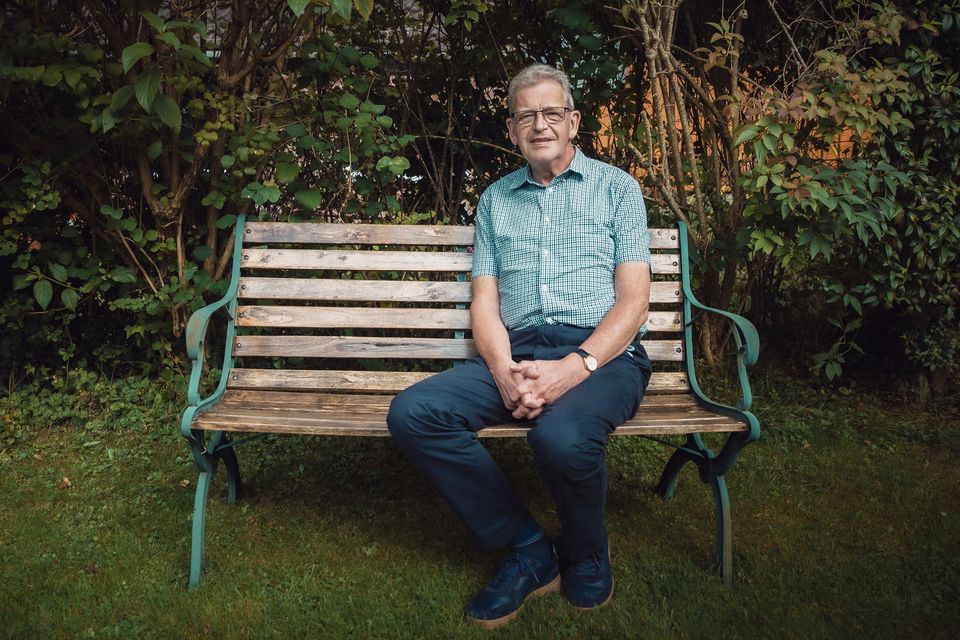
He’s a Paisleyite, a founding member of the DUP, a former special adviser to Nigel Dodds, and a leading evangelical Protestant, but Wallace Thompson now believes a form of Irish unity is inevitable — and he’s willing to consider it.
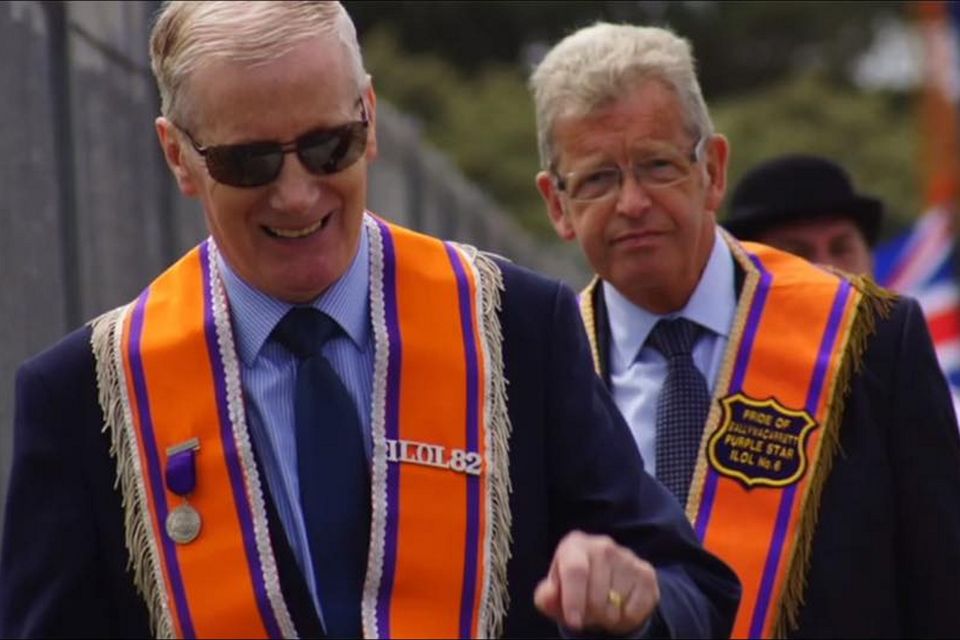
Thompson has had many lives. As well as having been at the heart of unionist politics and fundamentalist Christianity, he is a respected figure in the Independent Orange Order and a former NIO civil servant who drafted a key speech for the Queen.
0:53
‘New Ireland’ inevitable says DUP founding member Wallace Thompson
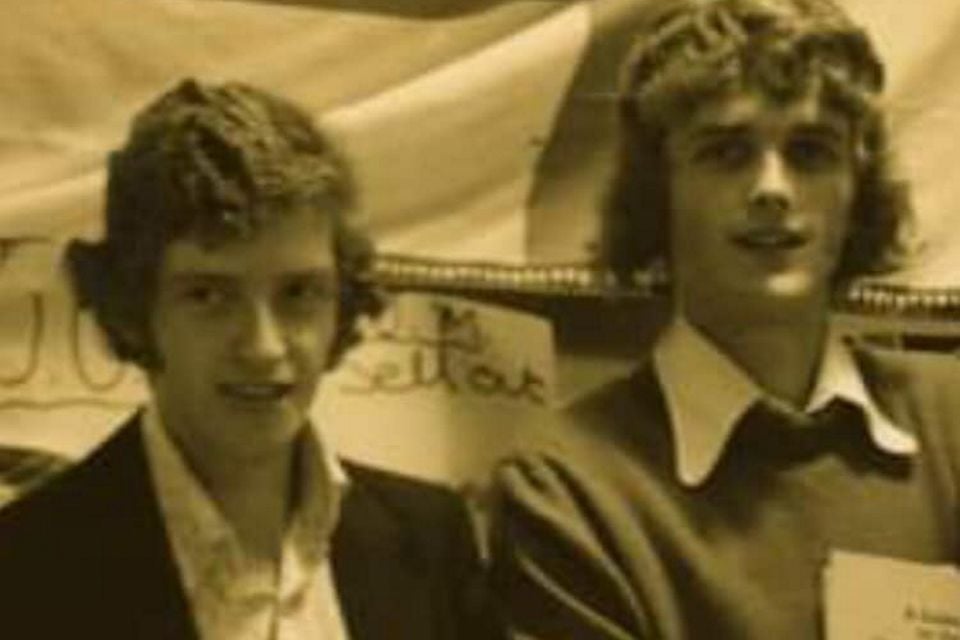
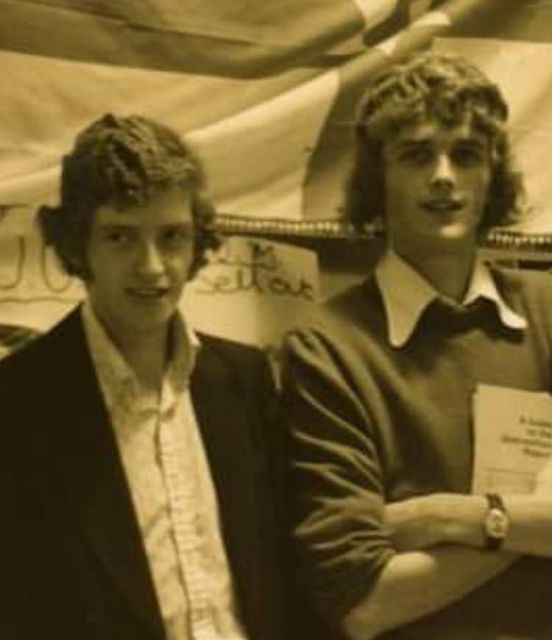
But the final years of the 70-year-old’s life may be the most influential. The unionist veteran is an individual of both rare honesty — honesty which has got him in trouble — and exceptional complexity. And now, after a lifetime of staunch unionism, this man who at university was part of the same circle as Sammy Wilson, Jim Allister, Edgar Graham and other leading unionists, is thinking seriously about Irish unity.
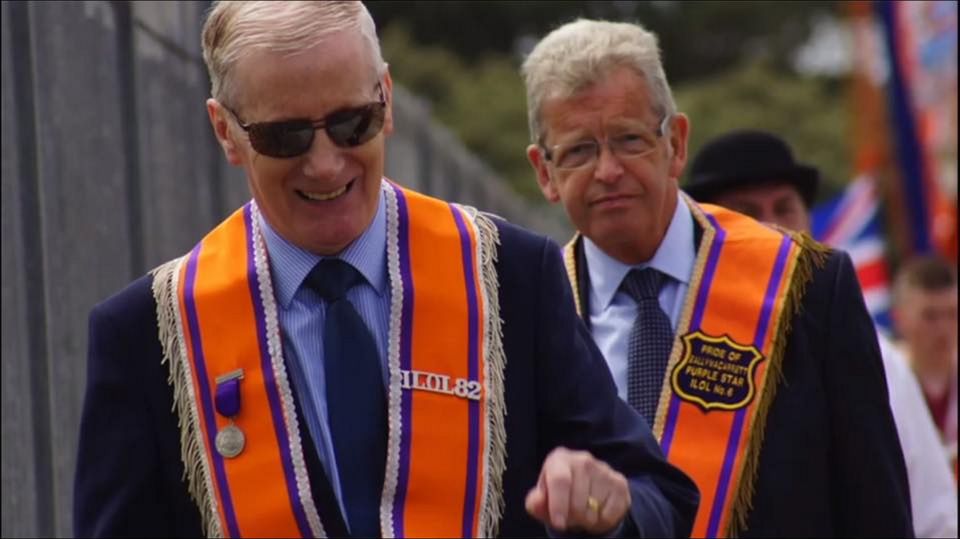
Looking back, he says: “Unionism as a philosophy probably was always in many ways doomed because of Ireland’s nature, the fact that the north was carved off from the south… now you’ve got a position where, do you partition again?
“Do you accept that demographic change is such that we have to run to the walls and again shut the gates? Or do we recognise that we can’t keep doing this?
“We need to recognise that there are fundamental issues that have always been there really — from centuries ago — that we need to now recognise and try to address.”
There have been unionists who have become open to considering a united Ireland, but they’ve all been moderates. Not one of them comes close to Thompson’s pedigree as a staunch traditional unionist.
Polling points to limited progress by nationalism in the years of post-Brexit chaos, and there is a danger in extrapolating too much from one example. But it is also possible that beneath the polling numbers even some of those saying they support the Union are pondering ‘Plan B’.
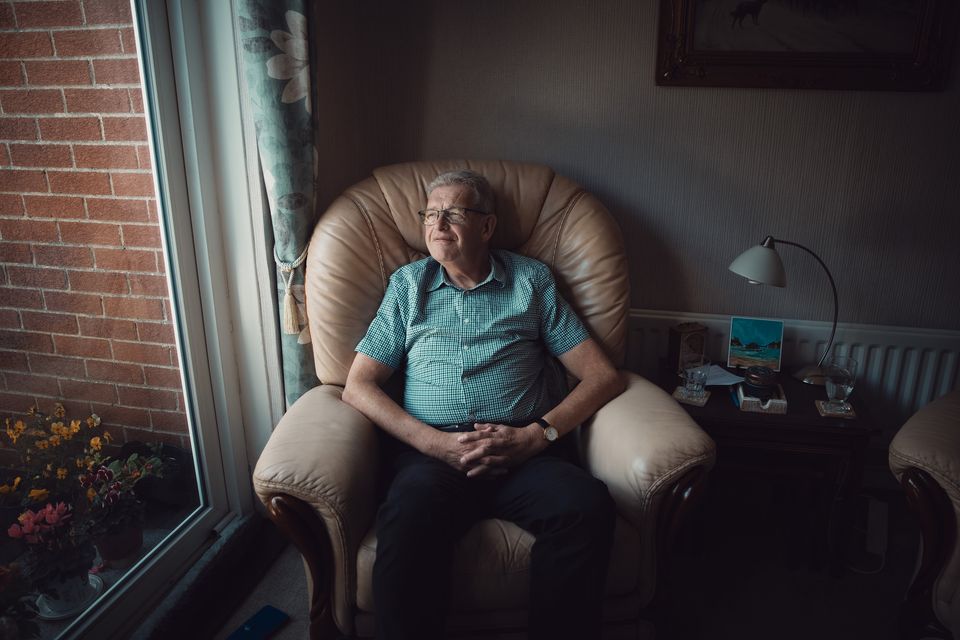
It’s not the first time I’ve been in Thompson’s modest semi-detached east Belfast house. I was here 12 years ago, mostly to ask him about religious controversies.
He was then a leading figure in the Caleb Foundation, a pressure group lobbying against relaxing Sunday trading restrictions, for Creationism, and against abortion. The British Centre for Science Education hyperbolically accused it of peddling “Christian fascism”.
Thompson insists Caleb is not dead, but that it is now a small group which has “faded from the limelight”.
His other organisation, the Evangelical Protestant Society, is staunchly opposed to the Catholic Church. I put it to him that many will see this as simple anti-Catholic bigotry involving the sort of people who would like to go back to discrimination.
Unsurprisingly, he rejects that. But there’s a depth of feeling to his words: “I honestly would say that I have no anti-Catholic views at all; in fact, I have many Roman Catholic friends who I hold in the highest esteem.
“I respect their religious views; I respect their right to hold them; I disagree with them and I would discuss with them [theology]… anti-Catholicism’s a terrible thing, when you see sectarianism in its naked form as we have seen in this country. I have spoken out about that; I’ve condemned the attacks on Roman Catholic churches, I’ve condemned the sectarian singing in an Orange Hall… there’s a big difference between that and a difference of religious views.”
He adds: “Roman Catholic people shouldn’t in any way fear the likes of myself. The main danger is that naked sectarianism that’s borne by godlessness.”
He attracted intense criticism after going on Joe Duffy’s Liveline programme on RTE radio in 2008. When a caller asked if the Pope was the “prince of darkness”, he replied that he wasn’t, but he was the antichrist, something he thought was theologically correct “but it was like a red rag to a bull”.
He still believes that, but “I reprove myself a little bit because I feel the tone of what I said and the blunt way that it was said, created a degree of offence which I wouldn’t now do”.
As this man who stood by Ian Paisley’s side from the outset mellows, he worries about the abrasiveness on social media and longs for grace in public debate.
He has sought to lead from the front. When Martin McGuinness lay dying in 2017, he wrote on Facebook: “It is obvious that Martin McGuinness is seriously ill. There are those rejoicing in this and hoping that he suffers a painful and lingering death.
“I have been around a long time and I’m under no illusions about Martin McGuinness… however, if we profess to be evangelical Protestants, we need to reflect upon the words of Christ who said… ‘Love your enemies’”.
Comments like that are rarely heard from unionists — even deeply religious ones. “That came from the heart,” he says. “There’s a need for us to show compassion.”
Born in pre-Troubles Ballymoney in 1953, Thompson recalls an idyllic childhood. “We were an ordinary Protestant family,” he says, and not especially political.
As a 15-year-old, he recalls the seminal Civil Rights march in Londonderry where police attacked marchers. His view then, informed by his father’s reaction, was that “the world was collapsing around us”.
There is a fascinating glimpse of where he might have gone when Thompson recalls going to hear the reformist Stormont Prime Minister Terence O’Neill speak in the mid-1960s.
“I thought in those years before the Troubles broke out, the man was talking a lot of sense. But then when the Troubles did break out… I began to feel that this is a serious business and I was drawn towards Ian Paisley politically, initially, but just fascinated by the man… my faith was kindled in an evangelical sense through Ian Paisley.”
He moved to Belfast to go to Queen’s University, then a hotbed of unionist, nationalist and radical politics.
The modern DUP, along with Sinn Féin, is part of the Northern Ireland establishment but it wasn’t always thus. Initially Paisley’s Protestant Unionist Party and then the DUP existed to harass the Official Unionists.
“We would have been very anti-establishment,” Thompson recalls.
After working for the DUP in its early years, he joined the civil service, ending up in the NIO. Some unionists asked him: “What are you doing working for that bunch of traitors?” Only some of them were joking.
He drafted the speech given by the Queen in 2000 when she awarded the George Cross to the RUC. Some of his words, uttered by the Queen, are now in the RUC memorial garden.
Seven years later, he entered Stormont in a very different role — as adviser to DUP minister Nigel Dodds. In doing so, this traditionalist helped give credibility to Paisley’s rapprochement with Martin McGuinness.
In 2016, he voted for Brexit and “would still vote to leave”, but not if it meant an Irish Sea border. He admits Brexit went “belly-up” and “we’re in a mess”.
His late Fermanagh mother-in-law voted to remain because “she thought the border issue would be a problem”, but “I lived up here and you weren’t near the border so you didn’t think any of that through”.
He accepts “more thought should have been given to the whole thing”, with maybe a weighted majority, but still believes “an arrangement could have been made” with the EU.
In 2019, after Boris Johnson betrayed the DUP, Thompson said it was “almost enough to make me question the value of the Union”. I remember being astonished by the raw honesty of those words.
“That was from the heart. We were like the unwanted child in the house,” he says starkly.
“If anything, my view since then has been [strengthened]; I do wonder at the future of the Union and I think we need to waken up and recognise that. The emperor has no clothes.”
He says that recently at the Apprentice Boys’ parade in Derry the consensus was that the DUP should not return to Stormont until the sea border goes.
But he says: “Those who say ‘don’t go back’ need to set out: How long are we away for – 10 years, 20 years, 50 years… forever? And if that’s the case, what’s the alternative?
“Someone said going back to the stand taken by our fathers in 1912. But that involved compromise; they didn’t end up with what they wanted.”
He likened it to unionism isolating itself after the 1985 Anglo-Irish Agreement, but stressed it was far worse now because the Irish economy is stronger and unionism is weaker.
He hears unionists privately thinking radically about the future, “but there are so few people willing to say that publicly”.
Thompson unhesitatingly regards himself as both British and Irish. He is tied to Britain by nostalgia, by a “deep-seated thing in your psyche that you were born and brought up within unionism” – but above all by the religious freedom which he cherishes.
Yet he also says: “I was born an Irishman. And people in my community again say ‘oh no, no, no, we aren’t Irish’ – but we are Irishmen and it’s nonsense to believe we’re not. We need to rediscover some of that Irishness. We’ve washed our hands of it completely. A hundred years ago, our forefathers were happy to be Irish and to be seen to be Irish.”
Does he fear Irish unity in the way he did as a young man?
“No. I think it’s a different animal now,” he says. His fear then was of “Rome rule” repressing Protestantism.
He still isn’t entirely convinced that his faith and Britishness would be safe in a united Ireland and worries about it being “easy to come out with honeyed words” but then abandon pledges.
“Nationalism as a philosophy has a blind spot about how deeply held some of those things are to us… I would be concerned that we would [in a united Ireland] lose stuff; lose some of the key elements of our identity.”
He is prepared to sit down with those planning Irish unity to try to make it a more appealing idea to unionists — a highly atypical position within unionism.
“I think we are in an inevitable move towards that — when it comes, I don’t know, but there’s an inevitability in my mind that we are moving towards some form of new Ireland. Hopefully, new and not absorption… but we need to ask the questions and we need to ask for answers and we need to talk to people.
“That shouldn’t mean then you’re thinking that we’re suddenly going down that road. We might not. We might decide [based on] all the evidence that we don’t want to go down that road.
“But we’re closing our eyes and pretending there’s no problem. This is the problem with unionism — we’re in denial; constant denial.
“To talk to these groups that are calling for a new Ireland to me is not an indication of weakness; it’s an indication of strength.”
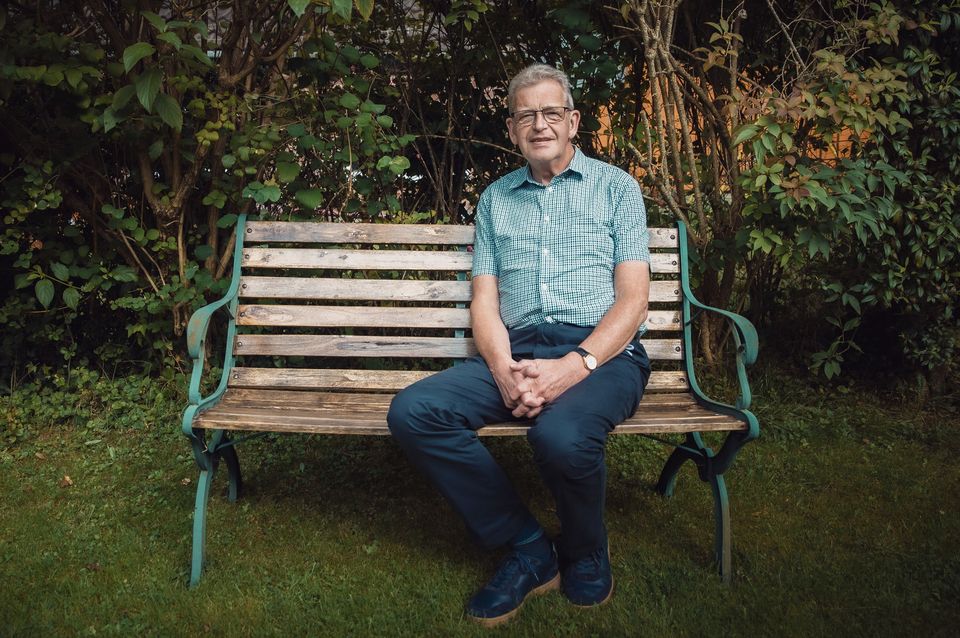
However, he says that Ireland’s Future hasn’t contacted him. He believes talking is crucial because “the history of Ireland is just a patchwork quilt of misunderstandings and misconceptions where it’s all just black and white — or orange and green — but it’s not”.
He stresses that after discussing unity, he might decide that he still supports the Union.
He says that some unionists will view him as a “Lundy” but that “when you talk to people privately… they’ll say we need to recognise that these are realities that we have to face”.
When he makes comments like these, there are people in unionist parties, the loyal orders and churches who say to him: “You’re right — but we can’t say it.”
He says that Paisley’s move to accept power-sharing with Sinn Féin was “hugely significant” in his newfound willingness to consider Irish unity.
In the broad arc of the history of Northern Ireland, it is astonishing that Ian Paisley — the firebrand scourge of every unionist leader who sought to compromise with nationalism — would play a part in persuading one of his most loyal followers to consider Irish unity.
As Thompson says, history is rarely entirely black and white.
Coming back full circle to his youth, I ask if he ever wonders if O’Neill or Faulkner had succeeded as reformists that both Northern Ireland and unionism might be in a better place.
“I do wonder at that. Sadly, O’Neill was patrician and condescending in his attitude; he was patronising and it didn’t work. Roman Catholics just thought that they were being taken for granted and treated as just those who could be turned into Protestants if you gave them a colour TV or whatever.”
He goes on: “I believe that if Brian Faulkner had been in position earlier that it might have been easier to get reforms through at an earlier stage and it would have settled things down quite a bit. But there was a certain inevitability about what happened; it just took off and continued to grow. We’ll never know, really.”