Sinn Féin Leas Uachtarán Michelle O’Neill said on Sunday that her party wants to lead government north and south and that “as support for our programme of change continues to build, there now exists the prospect of a new government without Fianna Fáil and Fine Gael for the first time in one hundred years”.
And the First Minister Designate in the north of Ireland repeated her call for the DUP to accept the democratic outcome of historic elections in the north where the people voted for change.
Speaking at the 42nd annual Hunger Strike Commemoration in Cork on Sunday, Michelle O’Neill said, “Today we are not only living through historic change. We are shaping it. A new dawn is breaking in Ireland.
“The growth in popular support for Sinn Féin and the demand for the change that we represent, here in the South and in the North, has never been greater.
“The northern State that my parents and grandparents were born into is no more.
“The contrived unionist majority is now gone.
“Sinn Féin won two historic elections.
“We are now the largest political party in the Assembly, in local government in the north, and across this island.
“Sinn Féin’s positive message of making politics work for all and getting the Executive back up and working for everyone, was endorsed by people.
“I will never treat, and I will never allow anyone to be treated the way that our parents and grandparents were treated.
“There is no contradiction in declaring and delivering on our firm commitment to power sharing with unionism and others in a Stormont Executive, while at the same time making the case and planning for constitutional change on this island.
“While the DUP continue to cause political disruption, dysfunction and chaos, the reality is that they have no credible alternative to power-sharing, and on the basis of equality.
“It is time that the DUP accepted the democratic outcome of last May’s historic Assembly election where the people voted for change.
“Their boycott is leading to misery for people who need an Executive in place to lift the cost-of-living burden, to tackle the health crisis, to attract investment, to create jobs, to deliver change, to plan for the future.”
And the Mid Ulster MLA said if controversial and cruel legacy legislation is passed in Westminster that the Irish government must confront this denial of human rights through an interstate case and international action against the British government. Michelle O’Neill said:
“The current legislation nearing completion in Westminster has one purpose, and one purpose only, to conceal the truth and protect British state forces.
“That legislation is anti-democratic, it is unjust, and it is a denial of the human rights of victims and their families who have campaigned for decades for the truth.
“The British government should withdraw this legislation.
“And if the British government do not withdraw this legislation, the Irish government should confront this denial of human rights through an interstate case and international action against the British government.”
Michelle O’Neill said that party leader Mary Lou McDonald can be the first woman Taoiseach in an Irish state failed by a century of Fine Gael/Fianna Fáil governments. She said:
“Sinn Féin wants to lead government in Belfast and Dublin.
“Mary Lou McDonald can be the first woman Taoiseach to lead Government in this State.
“The Irish people have been failed by a Fine Gael/Fianna Fáil/Green government that is tired, wedded to the past, and unable and unwilling to seize the great opportunities that exist to take Ireland to the next level.
“The story of Ireland in 2023, right across this island, is the unprecedented demand for change.
“Ordinary workers and families are looking to a new future shaped by opportunity, ambition, and equality.
“They want a political leadership with the energy and determination that matches their hopes.
“The last General Election in the South saw Sinn Féin win the popular vote.
“As support for our programme of change continues to build, there now exists the prospect of a new government without Fianna Fáil and Fine Gael for the first time in one hundred years.
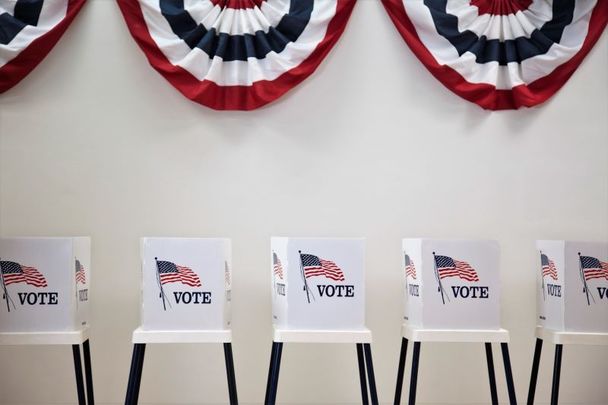
Dual Irish-US citizen Morgan O’Sullivan can vote in the US, but can no longer vote in Ireland. GETTY IMAGES
As the lazy days of summer come closer to ending, and those long evenings start to fade into the distance in the rear-view mirror, things are starting to get interesting in the US Presidential election.
The campaigning is in full flow on the Republican side, with Joe Biden the presumptive nominee for Democrats, and RFK Jr. thrown in there to add an element of surprise.
For an election that will not take place until 2024, it seems like an eternity away. The key in the weeks and months ahead will be momentum, money, and survival.
But how does it all work? And how does it compare to the Irish electoral system?
Sign up to IrishCentral’s newsletter to stay up-to-date with everything Irish!Subscribe to IrishCentral
Despite the charges mounting against Trump, he remains far ahead of his nearest rival, Ron DeSantis. Trump is loved by his base, and there appears to be little chance of the party base selecting another candidate.
For Trump to win the Presidential election, he has to win two major battles. First, he has to win the race for the Republican nomination. And should he win that, he will have to beat the Democrat nominee.
With Trump clenching 57% of the Republican base, compared to DeSantis’ 18%, it is hard to see Trump losing the nomination unless the pressure of his indictments and the different charges prove too much for him, and force him to withdraw on medical grounds.
Assuming Trump wins, it will be a much harder battle for him to beat Joe Biden. The American economy is gradually moving in the right direction. US voters voted against Trump in 2020, and when it comes to Donald Trump, most have already made up their minds about him. You either love him or hate him, and that feeling has been in place for a number of years and it is hard to see many undecided voters out there.
Perhaps the real danger to Joe Biden is not Donald Trump, but the danger of a third-party candidate, who could potentially run a candidacy that would never win, but would take enough votes away from Biden to allow Trump to win. Joe Manchin, the Democrat from West Virginia is considering an Independent run.
As the eyes of the world begin to turn to the US election, the Irish political system is a world away from the United States. For a country that sees itself as modern, letting go of its past and embracing the future, Ireland is in urgent need of showing a more compassionate side to those who have left her shores.
During famine times, moving away from Ireland may have seen letters and packages arrive home every six months. Letters became more regular in the 20th century, and weekly and monthly phone calls became the norm from the ’80s.
With the internet and iPhones and modern technologies, those Irish living abroad now very often know more about what is going on at home, than all those living at home themselves.
Yet the reality that goes with living abroad pierces the very soul and sense of identity and culture that you long to share and provide with others. The moment you step onto the plane in Dublin, Shannon, or Cork, it is as if you are instantly losing your right to have any say in the country. While you will always be Irish, when it comes to voting and elections, you are essentially second-class.
I am Irish. I always will be Irish. But I am now American as well. I gained my US citizenship in 2019 and I voted in the US Presidential Primaries in 2020 and the election itself in 2020. I voted in the congressional mid-term elections in 2022. It is over 20 years since I voted in an Irish election.
In America, I am always regarded as the Irishman. In Ireland, I am regarded as the Yank. The sad reality is that those who have left the shores of Ireland long for home, will always regard Ireland as home, and yet will never have the option to exercise their sense of democratic right in an Irish capacity.
Being a dual citizen of the US and Ireland means that I will always be able to vote in a US election. I will have the option to vote by mail or at a US embassy.
For years, successive Irish governments have promised to follow through on different recommendations from different constitutional reviews. The promise of a referendum is made on a consistent basis, yet the reality is that many Irish governments fear that they could never introduce a referendum on something that would not be guaranteed to pass.
Was the marriage equality referendum guaranteed to pass? Was the abortion referendum guaranteed to pass? Were all the different votes on Europe over the years guaranteed to pass? To prevent the will of the people being heard for fear of perception if results do not go as planned is morally wrong.
Is there a fear that all of those living abroad could tip the results of an election? The reality is that those different groupings abroad have only ever asked for a say in Ireland’s Presidential election. They have never asked for representation in the day-to-day decision-making process in the country.
It is the right of every person born on the island of Ireland to call themselves an Irish citizen. Is it wrong for them to be able to have a say in who represents them as their first citizen?
While the perception is that the Irish in places like New York and Sydney and London are being denied the vote, the people of Derry and Belfast are losing out on this democratic right also.
In the US, I am happy to have registered to vote. When registering, I was presented with the option to register as Republican, Democrat, or Independent. By choosing a political party, you are free to vote in their presidential primary in the earlier part of 2024. It is a strange system as you would never register before an election as Fine Gael, Fianna Fáil, or Sinn Féin. It is almost as if people will be able to gauge how you will vote, and while no one knows how you vote when you go into a polling booth, a state with significantly more registered Democrats than Republicans will rarely put the opposite party into power. As a result, elections in the US can be largely predictable but for a few states that can go either way.
The US system is not perfect. Hillary Clinton earned more votes nationally than Donald Trump, yet still lost the election due to the electoral college system.
However, the US system does allow all of its citizens to vote. Wouldn’t it be nice of the Irish government to recognize all those Irish citizens abroad and allow them to share their voice in electing their first citizen? Surely that time has come.
This article was submitted to the IrishCentral contributors network by a member of the global Irish community.
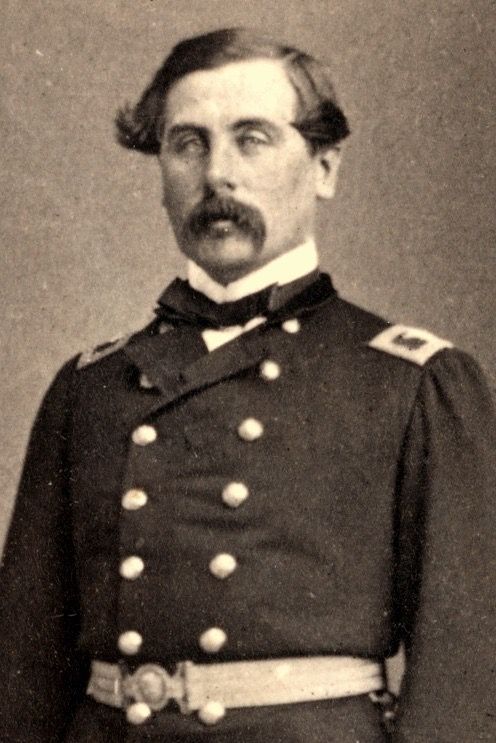
While recently in Ireland, I visited its oldest city: Waterford, whose mall is dominated by an imposing equestrian statue of Brigadier General Thomas Francis Meagher, a hero in two countries. Meagher is revered not just in his native Ireland, but also in the United States, where he valiantly led Irish troops fighting to preserve the Union in the Civil War.
Meagher rebelled against British rule in Ireland, but he was an unlikely rebel. Born into a prosperous merchant family in Waterford in 1823, the son of Waterford’s mayor, Thomas Francis came from a family that owned Waterford’s most elegant inn, the Granville Hotel, which still serves visitors just around the corner from his statue. Had young Thomas Francis not been a patriot, he could have enjoyed a life of privilege and might have followed his father into Parliament, but the blood of a rebel flowed in Thomas Francis’s veins.
Unlike many of his fellow Irishmen, Meagher’s family was wealthy enough to provide Thomas Francis with a first-class education at the renowned Jesuit Clowngowes Wood College, where he not only proved himself a fine student, but also a strong orator and powerful debater. At 16, Meager wrote a history of the school’s debating society which was presented to Daniel O’Connell during a visit. Reading the work, O’Connell made a prescient prediction: “A genius that could produce such a work is not destined to remain long in obscurity.” Meager fumed at the poverty and oppression Irish people suffered under British rule. He grew impatient with the moderation of many Irish politicians and appalled at the passivity of the Catholic Church in the face of such suffering. By the time he left Clongowes Wood, at the age of 16, he harbored a deep resentment of British rule.
Deciding to become a lawyer, he traveled to Dublin to study for the bar, but he became heavily involved in the Repeal Association, which worked to break the union between Great Britain and Ireland. Meagher became radicalized by his reading of Thomas Davis’ paper the Nation, famous for its nationalistic fervor. In 1847, the great hunger began to ravage Ireland, leading to the worst year of mass starvation and infuriating Meagher and the Young Irelanders, who railed against British indifference to the deaths of so many.
In 1848, a series of revolutions, beginning in France, swept Europe, giving hope to Meagher and the Young Irelanders that a peaceful revolution could free Ireland. The British government, fearful of an Irish revolt, passed a series of repressive, anti-sedition laws, which Meagher violated in a speech threatening revolt. Within days of the speech, Meagher was charged with sedition. Released on bail, Meagher and other Young Irelanders went to France to seek its support for an Irish uprising. Though their request for help was denied, they returned with a tricolor flag of green, white, and orange, which Meagher presented in a speech to the nation in Waterford and soon he urged his followers to prepare for war.
Alarmed by the situation in Ireland, the British government passed the Treason Felony Act, which punished “sedition” with death. Meagher and the other Young Irishmen revolted, but the rebellion was soon crushed. On August 12, of 1848 Meagher was arrested and charged with “High Treason.” Found guilty of sedition and treasonous activity, Meagher was sentenced to be hanged, drawn, and quartered. His statement before being sentenced has become legendary, “My Lord, this is our first offense, but not our last. If you will be easy with us this once, we promise on our word as gentlemen to try better next time.” Due to public outrage, his sentence was commuted to banishment for life, and Meagher was shipped to the Australian penal colony of Tasmania, where he lived for four years.
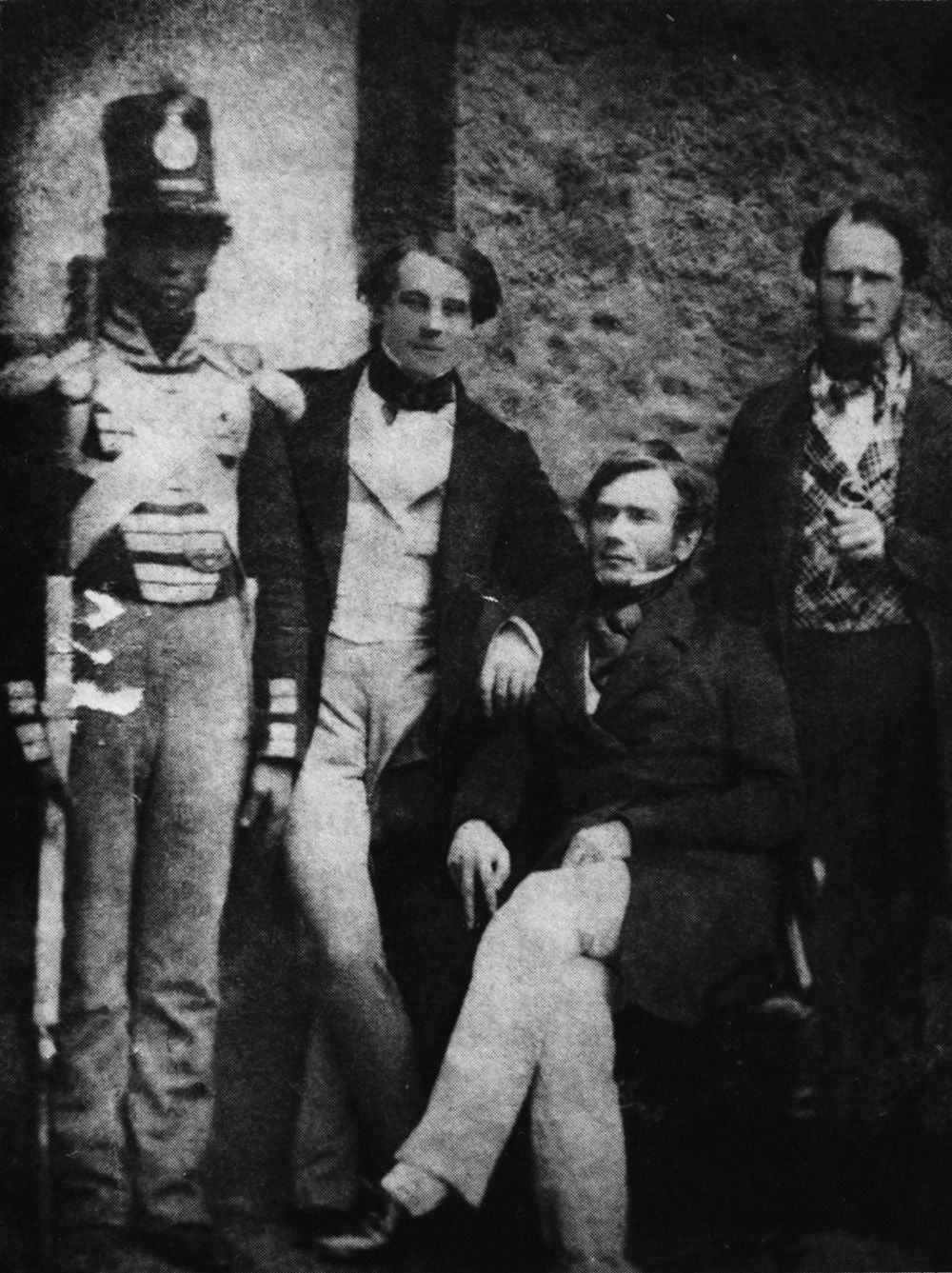
A soldier, left, Thomas Francis Meagher, William Smith O’Brien and a jailer at Kilmainham Gaol in 1848.
Aided by Irish rebels in New York, Meagher and other Irish rebels exiled in Australia managed a daring escape and arrived in New York City in 1852 to a hero’s welcome. Meagher studied American law and journalism and soon became editor of an Irish émigré paper, the Irish News. He became a U.S. citizen and was admitted to the New York bar in 1855. Meagher also became a popular speaker denouncing the British presence in Ireland.
In 1861, the Civil War broke out, but many New York Irish did not support the Union’s cause. Meagher, however, denounced the Confederacy and slavery and began recruiting men for the Union Army. One of his ads in the New York Daily Tribune read: “One hundred young Irishman—healthy, intelligent and active—wanted at once to form a Company under command of Thomas Francis Meagher.” He became an officer and his troops were placed in the New York 69th Regiment. When its captain was captured, Meager replaced him as its leader.
Meagher and his Irish troops distinguished themselves at the battle of Bull Run, where Meagher swung his sword over his head and shouted, “Come on, boys, here’s your chance at last.” The 69th charged uphill three times attacking the Confederates, but they were repulsed in very heavy fighting. One Confederate officer noted that “the Irish fought like heroes.”
Soon Meagher persuaded the government to allow him to reform the 69th as an exclusively Irish unit. Meagher succeeded in recruiting many young Irish men. The new recruits, however, were often not motivated simply by American patriotism. They considered service in the Union Army a good way to obtain military training for an eventual armed invasion of Ireland.
The troops he commanded, the “Sons of Erin,” carried distinctive green flags, embroidered in gold with a harp, shamrock and sunburst. Meagher’s Irish soldiers fought valiantly in some of the bloodiest fighting in the Civil War, charging into the fray with a half-English, half-Gaelic battle cry that rivaled the dreaded Rebel yell. They won honor at the battle of Antietam, the bloodiest day in American history, with Meagher leading them into battle; however, it was the horrible slaughter at the battle of Fredericksburg where the 69th achieved eternal glory. The 69th was ordered to make a suicidal charge up a steep hill that was defended by entrenched Confederates. Meagher’s Irishmen charged uphill into withering fire. Confederate General Robert E. Lee admiringly declared of the Irish brigade, “Never were men so brave.”
The 69th, however, had been shattered. Only 250 men of the 1,300 who had charged up the hill were present and accounted for. Almost 500 men had been killed or wounded; one company was down to three men. The 69th was further decimated at the battle of Chancellorsville. Angry about the destruction of his regiment, Meagher resigned his command on May 6, 1863. He intended to return to New York and devote all of his time to raising a fresh unit , but hearing of the decimation of their countrymen, few Irish volunteered. Meagher returned and commanded other units, but without the same elan he had shown in leading the 69th. Perhaps as a result of the horrors he had seen, he began to drink heavily and suffered from depression.
Finally, the war ended and Meagher left the military to embark on the last great adventure of his life as the new territorial governor of the Montana Territory. He was eager to help Irishmen emigrate to Montana, but he soon died in a tragic accident. Sometime in the early evening of July 1, 1867, Meagher fell overboard from the steamboat “G. A. Thompson” into the rushing waters of the Missouri River. His body was never recovered.
Today a huge equestrian statue of Meagher also graces the Montana state capitol in Helena. A 2016 book by then New York Times staff writer Timothy Egan, “The Immortal Irishman: The Irish Revolutionary Who Became an American Hero,” became a best seller. His Waterford childhood home, Derrynane House, now a museum, displays artifacts from Meagher’s life including two of Meagher’s swords and the coat he wore the day he first displayed the tricolor. Each year, New York’s Saint Patrick’s Day Parade is led by his New York 69th Regiment, a lasting tribute to this hero in two
Chris Heaton-Harris claims Britain is pushing its Northern Ireland Troubles (Legacy and Reconciliation) Bill “to achieve better outcomes” in legacy cases. Certainly the British will expect to achieve better outcomes from their appointed commission than those they get at inquests like Ballymurphy, Ombudsman investigations such as Operation Achille, civil cases like the Miami Showband lawsuit, or criminal trials like the McAnespie verdict.
One can only imagine how bad the outcomes might get if Britain ever allowed a genuine Historical Investigations Unit, along lines prescribed in European Court cases and promised in the Stormont House Agreement.
There is no mystery why so little progress has been made in erasing the legacy backlog, 25 years after Good Friday Agreement promises to honour victims by vindicating the human rights of all. If the British government wanted legacy truth, it would not need inquests to uncover whether British troopers had opened fire without justification at Springhill, or New Lodge. They would not need an Ombudsman investigation to tell them where payments were made to British agents and informers involved in collusion murders. It would not need a Barnard Review to discover if out of bounds notices were given to clear crown patrols so that the Glenanne killers could carry out murder and escape.
Victims’ relatives have persisted because they are confident their claims are true. The British government fought them at every turn. Deny the truth, until the truth becomes undeniable. Delay legacy inquests, ombudsman reports or other legal paths to justice, until no further delays are possible. Wait for survivors, eyewitnesses or close family members to die, and hope others lose heart. Block progress in legacy cases, and then claim the lack of progress proves no progress can be made.
Meanwhile British officials keep repeating that crown forces were responsible for only 10 per cent of the north’s killings, washing their hands of joint enterprise complicity in collusion murders by paid agents. Whenever justice breaks through, these officials lament with hollow words like “vexatious prosecutions” or “rewriting history,” as if it were annoying or unfair that victims, like those of the Ballymurphy Massacre, be exonerated from the smears used to justify their murder.
The Northern Ireland Troubles (Legacy and Reconciliation) Bill should be understood as Britain’s admission of guilt. British officials know the facts and are afraid to face the verdicts of their own courts, inquests, Ombudsmen etc. They must change the rules, so Britain can get better outcomes in spite of the facts.
Albert Einstein is believed to have said that “insanity is doing the same thing over and over and expecting different results”.
It does not take a genius to see it would be crazy for victims’ relatives to give up their rights to every legal channel that has worked for them, and trust a commission set up by the same British government that has tried to deny them truth at every turn.
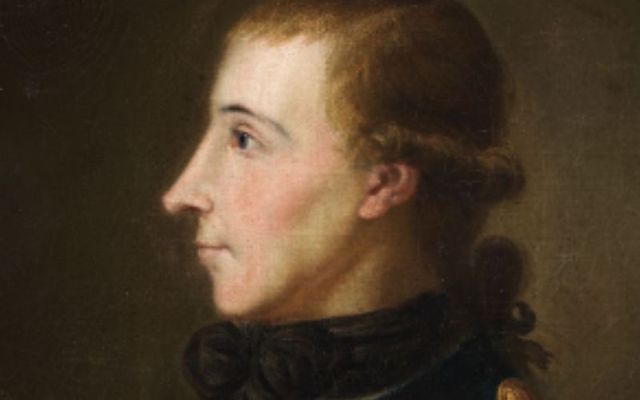
Portrait of Theobald Wolfe Tone, brother to William Henry Tone. PUBLIC DOMAIN
In an earlier article for IrishCentral, this author has written about the fascinating life of Irishman George Thomas, who went on to create his Kingdom in the Indian state of Haryana.
Thomas was one amongst many European military adventurers who wanted to avail the increasing opportunities offered by the military labour market of Maratha Empire in South Asia.
Marathas, cognisant of the rising political ambitions of the Europeans in general and the British in particular on the horizon, were on a mission to modernise their army.
In order to Europeanise their army, Marathas recruited several Europeans, amongst them was Irishman William Henry Tone, who not just became a warrior of Maratha Empire but also a scholar.
Tone’s “Illustrations of some Institutions of the Mahratta People,” published in Calcutta in 1818, has frequently been quoted by writers on Indian matters, notably by Grant Duff, who, in his great “History of the Mahrattas,” refers appreciatively to the work of Tone: “I have examined minutely all which this intelligent gentle man wrote respecting the Mahrattas. What he saw may be relied upon…”
Let’s learn more about the life of this Irishman.
Sign up to IrishCentral’s newsletter to stay up-to-date with everything Irish!Subscribe to IrishCentral
Irishman Tone
William Henry Tone, born in August 1764, was the brother of Theobold Wolfe Tone, an Irish republican and revolutionary who sought to overthrow English rule in Ireland and led a French military force to Ireland during the insurrection of 1798.
ADVERTISING
William’s grandfather happened to be a respectable farmer near Naas, in County Kildare, and his father a coach-maker, who was ruined by litigation over the family property.
Tone was intended for a commercial life and bound apprentice at the age of 14 to an eminent bookseller. This enabled him to indulge his passion for reading, and he perused every book of voyages and travels that he could find, and also some of military history and adventure. The books he read inspired him for a life of adventure.
He wanted to go to India, so he ran away to London to join the English East India Company which had a presence in India. Instead of being sent to India, he was sent to St. Helena for garrison duty, but even there he read.
When he met his brother Wolfe Tone after a gap of eight years, his brother was surprised by his gentlemanly mannerisms and knowledge of the best parts of English literature. When Wolfe got to know about William’s wish to go to India he did not stop him. It is said where this is will there is a way, William in the year 1792 reached Madras in India.
ADVERTISING
In India
From Madras, William went to Calcutta, and from there, he went to serve the Nizam of Hyderabad, King of a successor Turkic state to the Mughal Empire. Nizam’s Kingdom was located in the Deccan region of India.
Later, in 1796, William, aged 32, was given a colonel’s commission in the corps commanded by an American adventurer named Boyd thanks to the recommendation of Major Palmer, resident at the court of Prime Minster (Peshwa) of the Maratha Empire in Poona.
Two years later, he was selected by Amrat Rao, the Peshwa’s brother, to command a proposed brigade of regular infantry, all the officers of which were to be British subjects, but the idea was abandoned.
William later fought for a man named Lakwa Dada against Scindia Maratha in 1802 at the defence of Soundra, but was defeated by Scindia’s French commander Perron.
As per Herbert Crompton, Scindia’s commander Frenchman Perron acted very kindly with William and supplied him and his officers a handsome camp equipage, such as tents, camels, horses, etc. To Colonel Tone, he offered a commission in Scindia’s army, which offer was courteously declined. Scindia then enabled him to retire to Holkar’s capital, there to remain, and furnished him with 10,000 rupees for his expenses and to enable him and his companions to recover their shattered fortunes. Holkar was a member of Maratha Empire like Scindia, both Scindia and Holkar had fought for Marathas as comrade-in-arms but also fought against each other to establish their supremacy within the Maratha Empire, which was one of the reasons for the fall of this mighty edifice.
Serving under Holkar, William was killed in 1802 by a bullet in the right temple in the storming of a fort near Choli Maheshwar (now in Madhya Pradesh state). He was buried just outside Poona in a small Christian graveyard for officers in the Peshwa’s service.
William observed Maratha Empire keenly and wrote down about it as mentioned before. The term “Military Republic” was used for it by him. As per Surendranath Sen in his book “Administrative System of The Marathas,” this is true only in one sense that the meanest soldier, if he had ability, could logically expect to be a Sardar of the empire.
About the capital of Maratha Empire Satara, William wrote, “The country circumjacent to Sattarah (The descendant of Chatrapati Shivaji Maharaja founder of Maratha Empire, lived here) enjoys an exemption from military depredations of all kinds; and whenever any chief enters this district, all the ensigns of royalty are laid aside, and the nagara (Kind of a drum) or the great drum of the empire ceases to beat.”
The Metropolitan Police at Poona became a model body during the administration of the last of the Peshwas. The efficiency and honesty of this body had extorted the applause of critics like Elphinstone and William Henry Tone.
As per Sen, Tone says, “It is little remarkable for anything but its excellent Police which alone employs thousand men.
“After the firing of the gun, which takes place at ten at night, no person can appear in the streets without being taken up by the Patroles, and detained prisoner until dismissed in the morning by the Kotwal.
“So strict is the discipline observed that the Peshwa himself had been kept prisoner a whole night for being out at improper hours.”
William mentioned about Scindia’s firelocks: “His are very excellent ones far superior to the ordinary European arms to be met with in the Bazars.”
The author of this article works as a consultant with Scindia Marathas. Maharaja Mahadji Scindia was the pioneer amongst the Marathas in the modernisation and Europeanisation of his army.
The people-to-people connection between India and Ireland is very old and deep, all the ambassadors of friendship between these two countries need to study it more indeed, especially when Taoiseach Leo Varadkar is a man of Indo-Irish ancestry.