What makes a former British soldier advocate for Irish unity? Glenn Bradley tells Political Correspondent John Manley about his journey from a loyalist heartland to joining civic nationalist group Ireland’s Future
John Manley
04 December, 2022 19:00
Former British soldier Glenn Bradley. Picture by Mal McCann
GLENN Bradley arguably has more reason than most to have an aversion to republicanism.
In 1972, aged five, he was on his way to Sunday school at Woodvale Methodist Church in west Belfast when an IRA car bomb exploded some 300 yards away, causing minor injures but leaving a lasting impact.
Fast forward nine years to the day, Bobby Sands died after 66 days on hunger strike and he remembers vividly the petrol bombing of his school bus by a mob as it passed Ardoyne.
“I literally got off that bus, saying I want to hit back,” he recalls.
An intervention by his uncle and later Belfast lord mayor Hugh Smyth prevented the teenager joining the ranks of the UVF, so he instead signed up for the British Army.
“I naively joined the British Army to get the best training possible as a thought I’d come back and take the fight to the IRA,” he told The Irish News.
“Obviously, the army had different ambitions for me – my first posting wasn’t even back here.”
Glen Bradley pictured on duty as a British soldier
The 55-year-old spent eight years with the Royal Irish Rangers, including five tours in the north.
In September 1990, while stationed at Gough Barracks in Armagh, his battalion attended a scene on the border where a booby-trapped body had been dumped near the village of Belleeks in south Armagh.
It turned out to be the remains of his uncle, 42-year-old RUC detective constable Louis Robinson, who two days earlier had been returning from a fishing trip in Kerry when he was abducted and tortured by an IRA gang of up to 10, who’d intercepted his car on the main Dublin-Belfast road. A statement later claimed the victim had been “executed” after questioning.
“With the benefit of hindsight, I shouldn’t have been anywhere near that operation… it was too personal,” he says.
“But I was, and it haunts me to this day… obviously it was me that identified his body on the roadside.”
Mr Bradley left the army in 1994, though he continued to serve as a reservist. He joined the Ulster Unionist Party, becoming its constituency chairman in west Belfast and a party officer.
“I was involved in the talks that led to the Good Friday Agreement, but I wasn’t part of the negotiating team,” he says.
“I stand by the Good Friday Agreement that was negotiated. I think a lot of our problems today are because it hasn’t been implemented.”
It could easily be assumed from his back story that Glenn Bradley would be a staunch unionist with a deep hostility towards republicanism. However, the retired businessman is among a growing number of what has been termed ‘cultural unionists’ who are now receptive to the idea of constitutional change.
Former British soldier Glen Bradley with Irish News political correspondent John Manley. Picture by Mal McCann
The grandfather-of-two recently joined others raised in a Protestant tradition on the stage of the Ulster Hall at Ireland’s Future’s ‘Belongs to You’ event.
His involvement with the civic nationalist group dates back several years, with the UK’s departure from the EU acting as a “catalyst” when it came to transforming his political perspective.
“I’m a democrat,” he responds when asked to explain what appears to have been a Damascene conversion to the cause of Irish unity.
“I’ve always been a democrat – being a unionist is not something that’s injected into someone’s DNA, it’s a political choice.”
He’s a critic of Westminster’s first past the post system, which has “led to a dominance by English MPs”.
“For me Brexit totally tore apart any illusion that we were in a union of equals – Scotland and Northern Ireland forced out of Europe against their will,” he said, arguing that such an outcome was “morally reprehensible”.
The former soldier also rejects claims about the NHS being the “best in the world”.
“My father has vascular dementia; my mother and sister died recently in 2017 and 2018; I’ve seen what the NHS can do first hand and all credit to the workers but it is not the best service in the world.”
Mr Bradley describes the notion that the union provides what is best for its citizens as “utter delusion”.
Former British soldier Glen Bradley. Picture by Mal McCann
“As a democrat, as someone who cherishes my grandchildren and thinks about what my legacy for them is going to be – particularly given the socio-economic political basket case that I was born into – I want to make sure that they have the best opportunities in their lives.
“It would therefore be irresponsible of me not to consider other things beyond the status quo, and therefore, yes, I’m looking at Irish unity – and yes, I accept that at the minute there isn’t the plan but there’s nothing wrong with discussion.”
And what about unionism’s response to to the Ireland’s Future project?
“I think political unionism is burying its head in the sand, and I think it’s a consequence of the recent changes that have been ongoing in this place,” he said.
“There’s this realisation that they don’t dominate the political landscape no more, that they are a minority and I think there’s swathes of political unionism are having real trouble coming to terms with that – and it’s evident and what’s going on in our local politics at the moment.”
Michelle O’Neill has called for urgent action to address the Stormont stalemate (Brian Lawless/PA)
Jonathan McCambridge, PA
03 December, 2023 12:02
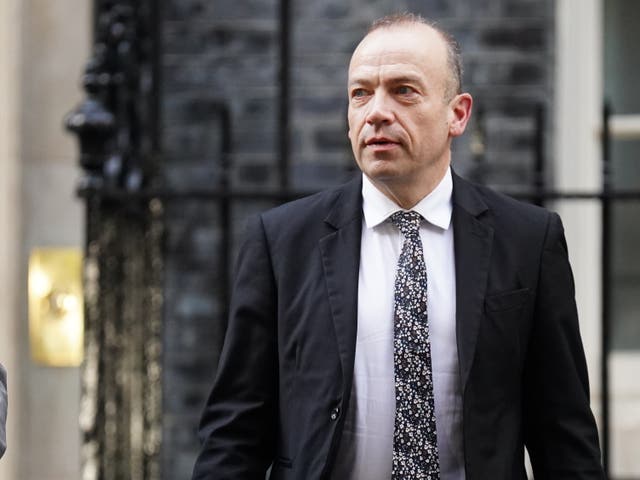
Northern Ireland Secretary Chris Heaton-Harris has said negotiations with the DUP are in their final stages (James Manning/PA)
Sinn Fein’s Stormont leader Michelle O’Neill has called for “immediate action” from the UK Government to address the political stalemate in Northern Ireland.
The PA news agency understands that Ms O’Neill wrote to Northern Ireland Secretary Chris Heaton-Harris in recent days stating that the patience of the public had been tested “beyond all reasonable limits” by the ongoing impasse.
The powersharing institutions at Stormont have been suspended for more than 18 months due to a protest by the DUP over post-Brexit trading arrangements.
The unionist party has been involved in negotiations with the Government about the Windsor Framework, which reformed the Northern Ireland Protocol, and is seeking further assurances, by way of legislation, over Northern Ireland’s place in the UK internal market.
Northern Ireland Secretary Chris Heaton-Harris has said negotiations with the DUP are in their final stages (James Manning/PA)
Mr Heaton-Harris has said that the negotiations are nearing a conclusion, stating last week that they were in the “final, final stages”.
In her letter, Ms O’Neill called for “immediate action to address the political stalemate”.
She said that despite elements of the Windsor Framework being operational since October, negotiations between the UK Government and the DUP “have not delivered a successful outcome to date”.
Ms O’Neill said this was despite repeated assurances from both the Secretary of State and DUP leader Sir Jeffrey Donaldson that they are almost at a close.
She said “ample space and time” had been afforded for all parties involved to engage constructively.
The Sinn Fein Stormont leader also emphasised the “urgency on the Government to conclude these negotiations”, stating that the “patience of the public and all those concerned has been tested beyond reasonable limits”.
Ms O’Neill urged the Northern Ireland Secretary to respond swiftly to her to “address the gravity of the situation”.
The Northern Ireland Office has been approached for comment.
‘Highly likely’ 2 Derry men died from gunshots wounds to the head Inquest told
The inquest into the deaths of two Derry men shot dead by the SAS in the grounds of Gransha Hospital on December 6, 1984 has heard that it was ‘highly likely’ both men died from gunshot wounds to the head.
By Staff reporter
Published 1st Dec 2023, 16:02 GMT
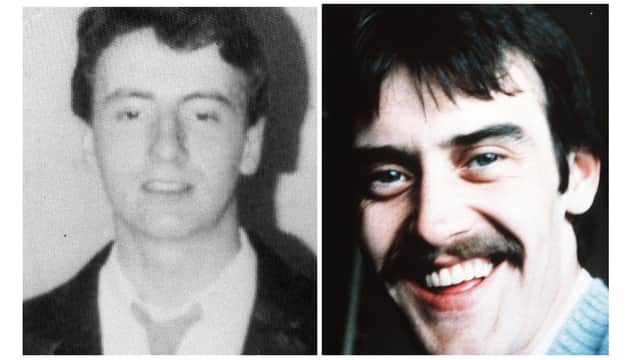
William Fleming and Daniel Doherty.
The evidence was being given to the inquest into the deaths of William Fleming (19) from the Waterside and Daniel Doherty (23) from Creggan.
During Friday’s hearing, two pathologists gave evidence with regards to the injuries sustained by each of the deceased men.
This included two bullets to the head, 12 to his back, three to his forearm and two to his leg.
The hearing was told that it was not possible to determine in what order the wounds were received, but that the two wounds to the head would have been ‘rapidly fatal’.
The court heard that some of the body wounds would also have been fatal, but not as rapidly as the head wounds.
It was said that Mr Doherty had a crash helmet in his possession at the time of the shooting but was either not wearing it, or not wearing it properly when he was shot.
As regards William Fleming, the hearing was told that he had sustained at least five bullet wounds.
One of those wounds was to the head, three were to the trunk and one was to the leg.
The court also heard that Mr Fleming had a leg injury that would have been caused by ‘blunt force trauma’.
The pathologists further stated that Mr Fleming had up to 50 other wounds, and that these were believed to have been caused by fragmenting bullets.
Both pathogists disagreed with earlier findings, and concluded that Mr Fleming’s wounds were inflicted while he was lying on the ground.
An earlier report had suggested the Derry man may have been sitting up when he was shot. However Friday’s hearing was told the angle of the wounds made it more likely that he was shot while on the ground.
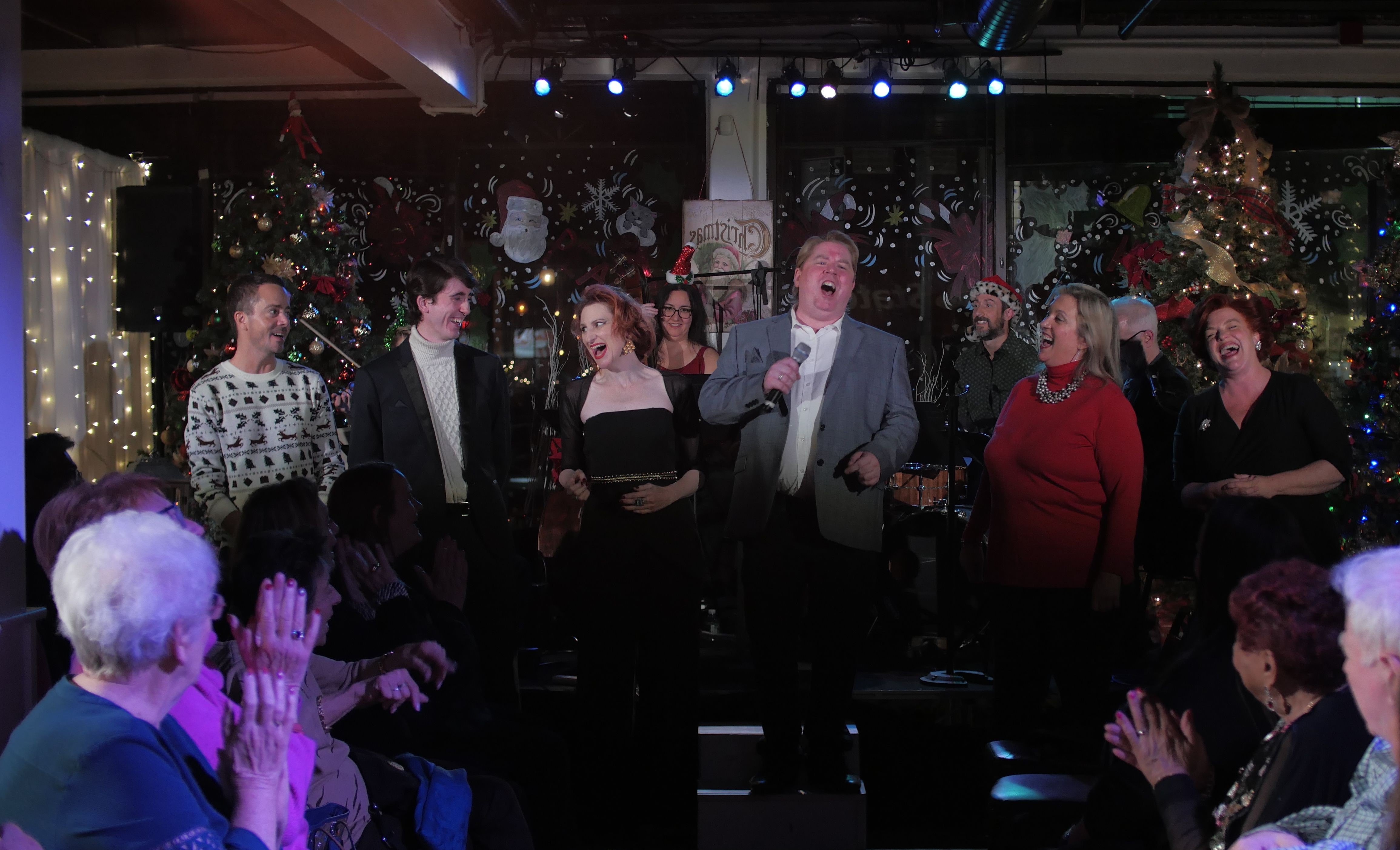
“New York Croons for Christmas” will take place on Friday, Dec. 8. [Photo by Rory Duffy].
November 30, 2023 by Irish Echo Staff
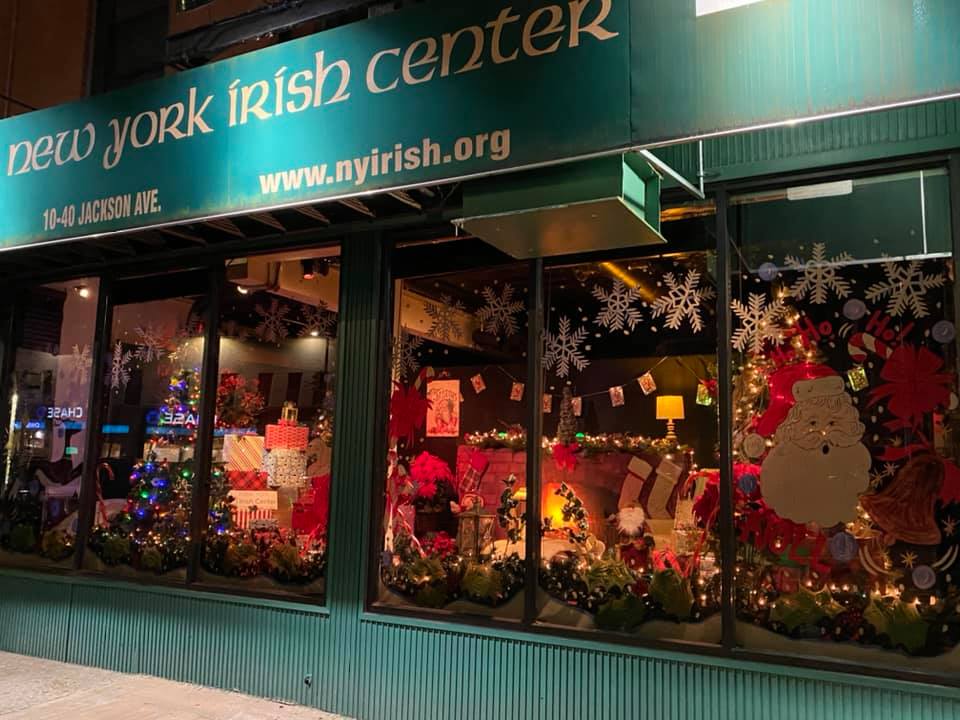
The New York Irish Center presents its annual holiday concert, “New York Croons for Christmas,” on Friday, Dec. 8 at 7pm.
The event — a fundraiser to support all the cultural and social programs of the Center – is staged immersively in the storefront theater Reilly Room.
Tickets, which are $60 (includes complimentary holiday refreshments starting at 6pm), can be purchased at www.newyorkirishcenter.org. The NYIC is located at 1040 Jackson Ave. in Long Island City (just three minutes on the 7 train from Grand Central).
Hosted by Colm Reilly, “New York Croons for Christmas,” feature Carolyn Montgomery, Wendy Lane Bailey and Kathy Kaefer; singer-songwriter Jeanne MacDonald; and the guitarist Sean Harkness leading the Life of Reilly Band. Bandmembers include Jennifer Vincent (bass), Rob Mitzner (percussion), Sara Caswell (violin/fiddle), and Sean Harkness (guitar).
A two-time MAC Award-winner, host Colm Reilly is a frequent performer and host at the Center, who has also appeared and headlined at The Town Hall, Symphony Space, The Iridium Jazz Club, Birdland, Feinstein’s/54 Below and at Carnegie Hall. He has also toured with the Cross Border Orchestra of Ireland, and in theatre productions across the U.S., including “Forever Plaid, “Brigadoon, and “Hello Dolly!” One of his two MAC Awards was for Best Male Vocalist. The Reilly Room is named for his father, the NYIC’s late co-founder Paddy Reilly.
And there are two other notable Christmas and holiday-related events at NYIC
Annual Toy Drive (Saturday, Dec. 2, 1 p.m.)
As the annual Holiday Toy Drive returns for its 11th year, NYIC invites you to support our drive to deliver 500 gifts to 500 children across our communities. On Saturday, December 2 dozens of volunteer elves transform the Center into a gift-wrapping workshop, with the goal of wrapping over 500 individual gifts! This year we are supporting local charities Hour Children, Woodside on the Move, and Habitat for Humanity, among others.
Santa Visits from the North Pole (Sunday, Dec. 10, 2 p.m. $5, please register ahead)
On this special day, the Center opens its doors to welcome local children from across our diverse community, and throughout the five boroughs, for a chance to meet Santa Claus ahead of the Big Day. Friends from all over marvel at St Nick’s distinctly Irish brogue. Who knew? Tea, coffee, and snacks will be on hand! Plus: each child who walks through the door receives a free gift!