A Letter from America a Chairde, Ciarán is away from the office for a few days searching for a little sunshine, hopefully digging through crates of vinyl records, and figuring out how to make the GAAGO app work. My name is Greg O’Loughlin, and starting on August 1st, I’ll be the new, full-time Executive Director of Friends of Sinn Féin USA. I have been working part time for Friends of Sinn Féin for the last two years, helping with newsletters, social media, and delegation support, and I am looking forward to being able to bring more capacity to the work. Twenty five years ago, I worked closely with Rita O’Hare in our Washington, DC office. For nearly seven years, I did similar work for her and the party, and I feel grateful for the opportunity to return to the effort. For the last 15 years or so, I’ve been in the classroom as an English teacher and a primary school teacher. About seven years ago, I founded a nonprofit that supports teacher collaboration and middle leadership development. In the coming months, I am looking forward to getting to know more of you, increasing our points of contact in Washington, D.C., and state-level governments, and organizing and facilitating more events across the country. We are all sharing an extraordinary moment in the history of Ireland. Irish America has an opportunity to continue to play an essential role in the future of a new and united Ireland. There is a great deal of work to do. I am eager to keep building on the work that’s been done and growing our network of support and connection to ensure Sinn Féin can create an Ireland that works for all. Ciarán will be back next week and we’ll return to our regularly scheduled programming. You can reach me at greg@friendsofsinnfein.com if you have questions, want more information, or want to say hello. Have a great weekend, Greg O’LoughlinExecutive Director, Friends of Sinn Féin
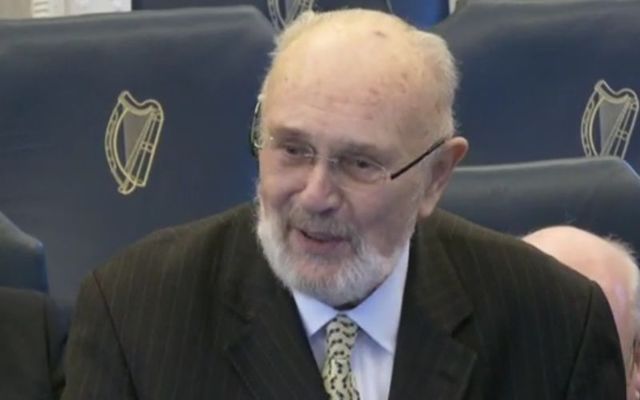
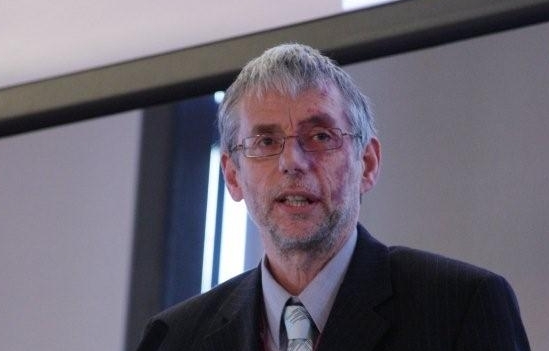
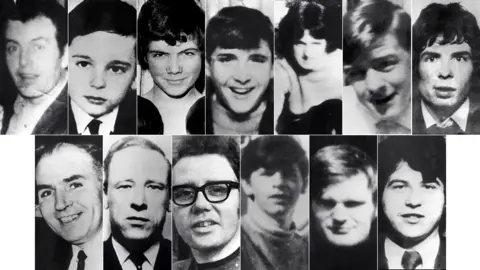
Tory MPs have once again voted to disregard the opposition of people in both parts of Ireland to further advance an overarching cover-up of British war crimes in the Six Counties.By 292 votes to 200, the House of Commons voted this week to reinstall a clause offering immunity from prosecution to those who co-operate with a bogus ‘truth recovery body’.Although failing to make irt into law before the summer recess this week, the legislation is still on track to pass through Westminster by September. All investigations, inquests and civil cases are then set to come to an end by May next year.It is opposed by every political party in the Six Counties and by victims campaigns across the political divide. The London government has also failed to reply to a highly critical United Nations letter on the legacy bill sent to London more than a year ago. No reply was ever received despite a claim blaming an administrative error on the delay.SDLP leader Colum Eastwood described the bill as “a license for impunity” which signalled that “you can murder your own citizens and get away with it”.He added: “Mostly it’s a piece of legislation written in very dark corners of the British establishment to ensure light is not shone into those corners.”British Direct Ruler Chris Heaton-Harris (pictured, left) claimed families could use the Legacy Bill to get information which would boost reconciliation, but this was rejected as “disgusting and disingenuous disinformation” by victims’ support group Relatives for Justice.“This Bill will not bring reconciliation,” they said.” This Bill will harm, hurt and devastate those most hurt. It will undermine the rule of law and the Good Friday Agreement. There is time to withdraw it. There is time to do the right thing.”The real agenda behind the cover-up agenda was hinted at by DUP MP Ian Paisley who, protected by Westminster privilege, disgracefully attacked a lawyer who represents the bereaved families of victims as “vindictive” and “a snake oil salesman”.Michael O’Hare, whose 12-year-old sister Majella O’Hare (pictured, right) was killed by British Army in 1976, said victims deserved the right to justice. Majella was shot in the back on her way to church in Whitecross, County Armagh. The nurse who tried to help Majella told the child’s lifeless body was “lifted like a piece of meat” by British soldiers and thrown into a helicopter “to get rid of her”.Mr O’Hare said: “MPs need to pause and put themselves in my shoes. If your sister was shot and killed, you’d want the truth to come out and you’d rightly expect justice.“My sister Majella’s life mattered, she was taken from us in the most horrific way. This Bill betrays her, my family and every victim still waiting for the accountability we’re all entitled to.”Recent protests against the legacy Bill have called on the Dublin government to take an interstate case against London to the international court of the Council of Europe should the Bill pass, which Taoiseach Leo Varadkar has said he would consider.Serious concern has also been expressed in the US, across Europe and by international human rights groups. Grainne Teggart of Amnesty said London was setting a “dangerous international precedent”.She said: “It is disgraceful that a Bill universally opposed, and which betrays victims in the most cruel and contemptuous way possible, continues to be pushed through by the UK Government.“The call to abandon this shameful Bill has never been more urgent.”She added: “The stakes for victims could not be higher and we must not lose sight of the fact that there is a better, previously agreed, human rights-compliant and victim-centred way forward to deal with the legacy of the conflict.”
The Irish News view: Brexit showed how the Conservatives’ head thinks about Northern Ireland. Its Troubles legislation reveals the moral emptiness of its heart
Troubles victims’ families have consistently rejected the British government’s legacy legislation
The Irish News
18 July, 2023 19:25
Even as it limps towards the next general election and its likely eviction from Number 10, this Conservative government – mired in scandal, having made families poorer and bereft of a positive vision – still shows no signs that it understands the legitimate concerns of all the people in Northern Ireland.
Brexit has, of course, been a particular tragedy. Not content with wrenching the north out of the EU despite a clear majority wishing to remain, the Tories pursued a hard Brexit, shamefully and shamelessly aided by the DUP.
The charlatan Boris Johnson inevitably betrayed the DUP, leading to a chain of events that has left us without a power-sharing executive for almost 18 months and plunging our public services into crisis.
If its attitude to Brexit says much for how the Conservatives’ ideological head regards Northern Ireland, then its approach to legacy issues reveals the moral emptiness of its heart.
Undaunted by near-universal opposition, this British government is pressing ahead with its thoroughly ill conceived Troubles legislation, of which the most troubling aspects are an effective amnesty for perpetrators and the ending of victims’ hopes of seeing their cases being investigated to a criminal standard and dealt with by the courts.
In a remarkably tin-eared attempt to justify the government’s approach, secretary of state Chris Heaton-Harris continues to insist that the Northern Ireland Troubles (Legacy and Reconciliation) Bill will “finally provide answers” to the very many families, victims and survivors who have “been left without justice or information” for decades.
One might observe that in many cases it has been the British government and the security forces who, through foot-dragging and obfuscation, have denied those same families, victims and survivors that information they sought about their loved ones. Mr Heaton-Harris, in a lengthy article for the Belfast Telegraph, failed to address this significant aspect of legacy cases, which rather gives the impression the British government had only a passing involvement in the Troubles.
In addition, the idea that even with the promise of ‘conditional immunity’, paramilitaries involved in the most heinous crimes are somehow lining up to present themselves to the new so-called Independent Commission for Information Recovery and Reconciliation – headed up by former Lord Chief Justice Sir Declan Morgan – may kindly be described as far-fetched.
By pushing through its proposals, the government is not only offering protection to murderers but also extinguishing those flames of hope carried by victims’ families, however faintly they may glow.
The legislation betrays them and their lost loved ones. There is still time for the government to find a moral compass and reassert the primacy of truth and justice.
Bill Breathnach is Writer and TV researcher based in Connemara. Interested in economics, politics and all things cultural…
A tale of flags, flutes, and an unexpected night out in Sandy Row
Taking the Enterprise train from Dublin to Belfast on the 11th of July was a strange experience. As I gazed out of my carriage window, I sensed a slight degree of trepidation seeing the Union Jacks, bunting and the odd UVF flag adorning some of the lampposts we passed. The train itself was a little eery, far quieter than I have ever experienced it. Myself and my friend Conor, two Free State boys, were heading up for the Twelfth.
So why on earth were we heading up for the Twelfth? As it happens, we are both making an application to make an Irish-language documentary about the Orange Order. In preparation, we decided to go to the parade in Belfast to capture some stock footage and conduct a few “vox pop” interviews with attendees.
As we got off at Botanic railway station at about 6pm, I was struck by how relaxed the atmosphere was. People of all creeds and colours seemed to be enjoying the pleasant mid-summer evening as they sat outside bars, restaurants, and cafés. Later, when we had checked in to our accommodation, we went for another quiet stroll around the vicinity. The atmosphere remained peaceful as we passed by a group of middle-aged Turkish gentlemen enjoying a game of backgammon outside a shisha bar. It felt somewhat surreal therefore to look across the street and see a large bonfire structure adorned with a singular Irish tricolour, ready to be torched.
The following morning, we made our way down to City Hall to view the parade. The crowd seemed cheerful and relaxed as many were enjoying a few drinks. The attendance was far smaller than I was expecting, and we had no trouble making our way up the street. We were initially quite anxious about approaching attendees to conduct vox pops, given our accents. In all honesty though, everyone we met turned out to be welcoming, hospitable, and quite bemused to see a pair of Free Staters at the parade.
While we intentionally avoided talking about politics, we did not experience any hostility or animosity. We even heard a few good wisecracks; “Don’t be putting those videos up on any sexy websites!” one lively East Belfast woman screamed out to us as we descended into fits of laughter. Many were keen to insist that they were not hateful and that they merely wanted to enjoy a pleasant day. Others expressed regret that the attendance was “getting smaller and smaller every year”. I suspected that the high proportion of Scots we met indicated a decline in interest in the event locally in Northern Ireland.
Admittedly, I found the parade to be quite entertaining. I was impressed with how well-coordinated the bands were as they played many traditional Irish melodies such as Brennan on the Moore, God Save Ireland, and The Battle Cry of Munster. For the life of me though, I couldn’t understand why a procession designed to express loyalty to the crown would display a banner depicting a notorious republican such as Oliver Cromwell. Perhaps they were trying to imbue the event with a cross-community ethos?
As the parade dispersed, Conor and I went for lunch as Belfast quickly became a ghost town for the afternoon. I had never seen the city so quiet. Conor needed to head back to Galway that evening, so I soon said my goodbyes and headed back to my accommodation.
As I returned to the house, I could see through the window a small group of men and women in their mid-twenties bedecked with Union Jacks, Ulster Banners and orange bucket hats dancing fervidly to songs cursing the Pope and the IRA. I never expected to find myself witnessing a loyalist house party in my own kitchen. As I awkwardly greeted some of them through the doorway, one fellow in a Rangers jersey called out in a thick Scottish accent “Where are you from pal?”. Somewhat apprehensively, I replied that I was from “a place called Wexford, down South”.
“Aw man, I can’t believe you’re from Wexford!” he excitedly roared, to my surprise. He explained how he had recently heard of Wexford in an episode of Father Ted. “Ted was saying how he missed the bright lights of the big city, and the Cuban priest just replies; ‘You were in Wexford, weren’t you?’… Aw that was so funny”.
Despite my initial apprehension about walking in on the party, everyone there turned out to be extremely amiable, good-humoured, and welcoming. I was promptly offered pizza and whiskey and one of the lads even connected his phone to the speaker to play songs by the renowned Dublin band Thin Lizzy. I got chatting to a girl from Larne who seemed quite intrigued about how I had ended up attending a Twelfth in Belfast. “I’m sorry for saying ‘F*ck the Pope’” she said. “We really weren’t trying to be offensive. I actually think it’s great to have someone like you here”. Sensing an opportunity to do my bit for cross-border relations, I replied, “If you think saying ‘F*ck the Pope’ is bad, you should hear some of the jokes we have about Catholic priests down South”. This turned out to be a great source of entertainment for everyone present.
A young Magherafelt man wearing a Northern Ireland football top soon joined us and sat at the kitchen table with both myself, and the Scottish Rangers supporter who had initially greeted me. Talk soon turned to politics. While I was initially hesitant to pursue the subject, I found the conversation to be intelligent, open-minded, and respectful. Despite certain areas of agreement and disagreement, the atmosphere remained cordial as we discussed a wide range of subjects including sectarianism, the Irish language, flute bands, grammar schools, and Freddie Scappaticci of all things.
I mentioned that there was a fife and drum band near where I live in Wexford. In fact, one of my neighbours who plays in it recently informed me that much of their repertoire is identical to that played by the loyalist bands up North. Indeed, the Fleadh Cheoil, Ireland’s largest traditional music festival, facilitates competitions for flute, accordion, and pipe bands like those we had observed at the parade. While such bands in the Republic do not generally have any political connotations, they very much exist on the margins of traditional music. In truth, such bands probably haven’t been promoted outside of an Orange context as much as they could have been due their association with unionism.
And herein lies one of the great tragedies of sectarianism. We often associate certain traditional cultural practices with identity. In most cases this is reasonably innocuous, however in a context where identity is weaponised, it breeds a deeply damaging sense of cultural alienation. The Magherafelt man revealed that his granny had in fact been an Irish speaker, but she never spoke a word of it once the Troubles broke out. He also expressed regret that unionists had been estranged from the language but pointed to the work of Linda Ervine and the Turas programme in East Belfast as an example of how things were improving.
We both agreed that much of the perceived cultural divide between Catholics and Protestants had been the distorted product of political circumstances over the years. The Irish language that I speak is as much part of his culture as it is part of mine. The band music that he enjoys every year on the Twelfth is as much part of my culture as it is part of his. This is true regardless of what forms of culture are promoted or ignored in our respective local communities. That is not to say however that our cultural identities must be identical, or indeed that cultural identity should necessarily dictate or validate one’s political worldview.
Both the Magherafelt man and the Scottish Rangers fan insisted that the Twelfth meant little to them politically and that they simply enjoyed the opportunity to have a few drinks and enjoy the festivities. “I don’t see it as politics, I just see it as football banter” the Rangers man said. “When we joke about Fenians or whatever, we don’t mean you, we just mean Celtic fans. I think the sectarianism in Northern Ireland is awful. I did a tour of the Shankill and the Falls, and I hated seeing two working class communities divided like that”. He explained that he came from a small mining town in Lanarkshire and that he identified politically with the local Labour tradition there far more than the loyalism associated with the Rangers football club.
The time had come to hit the town. I was unsure about heading out but was eventually convinced by my new acquaintances that an unexpected night out in Sandy Row would be fun. “You’ll be fine, just stay with us. We’ll even call you King Billy for the night!” one of them quipped. Our first stop was The Royal, a loyalist bar bedecked with Union Jacks and a Confederate flag. As we walked through the door, a big burly middle-aged man confronted us. “IDs lads” he grumbled. I felt a chill run down my spine as I frantically searched my wallet in vain for a form of ID that wouldn’t blow my Fenian cover. Someone behind me then shouted, “Hey f*ck off, you do this every year!”, and the group burst into laughter. I felt relieved that I had merely been duped by a practical joke.
The pub itself had the appearance of a shabby, run-down sports bar. Apart from the omnipresent union-jack bunting and various footballing trinkets adorning the walls, the place reminded me of various GAA clubhouses and Gaelic League bars I had frequented as an adolescent. In my experience, the semi-dilapidated state of some of these establishments was often conducive to fostering a sense of informality, intimacy and community. Surprisingly, the pub was remarkably calm as patrons appeared happy to drink their pints quietly. I was informed that most of them had been out all afternoon and the previous night, so they were probably exhausted.
We soon moved down the street and up an alleyway to an even dingier establishment, which may or may not have been a licenced premises. There were no signs on the wall, merely a hand-painted red, white and blue bollard on the footpath adjacent saying; “All Welcome Here”. I decided to take them at their word. However, this place was a bit more raucous and as we entered, we were greeted by most of the clientele partaking in a drunken, boisterous rendition of “The Billy Boys”. While I wasn’t sure how friendly the introductory refrain of “Hello, hello” was, I felt it was probably for the best to be making my own refrain of “Goodbye, goodbye” and headed home soon after.
I’m still not sure what to make of the Twelfth. There are obvious issues with it such as the flag burning, display of paramilitary paraphernalia and a litany of health and safety issues. With proper leadership and organisation however, I don’t feel that any of these problems are insurmountable. Dismissing the entire event as a “hate fest” for knuckle-dragging, bigoted ignoramuses is unfair, damaging and degrading. I can honestly say that despite my thick Southern accent, I experienced no hostility or hatred. If anything, I found people to be welcoming, kind, and good-humoured.
To me, the Twelfth draws attention to the cultural alienation that still exists on this island. Some unionists guardedly defend the event as a demonstration of Protestant culture. While there is nothing wrong with that per se, it is unfortunate that perceptions of Protestant culture are often limited to bonfires, parades, and oath-bound religious fraternities. Language, history, geography, songs, stories, folklore, food, music, dance, literature, sport, traditional crafts, and all other forms culture from this island are just as Protestant as they are Catholic, regardless of how sectarianism has siloed, segregated, and estranged people in how they relate to such things. I can’t help but feel that Northern Protestants are perhaps the ones who have lost the most from this perverse cultural siloing.
I did not find seeing my flag on top of a bonfire pleasant. However, I can’t honestly say that I felt truly victimised or oppressed by it either. I suspect that the humiliation, demonisation, and estrangement generated by such flag burning is actually felt most acutely in working class Protestant communities, and it is this that I find most tragic about it. While it is wrong to burn flags, it is also wrong to degrade, humiliate and ostracise an entire community. The people I met during the Twelfth in Belfast were just as decent, kind and deserving of respect as any other group of people on this island.
Paddy McMenaminis a native of Belfast, a former internee and IRA prisoner and even a one time fan of Glentoran football club. He lives in Galway these days but recently received an invitation he never expected to receive and could not refuse.
I was about eight years of age and living in the Annadale estate in south Belfast, we had moved there from Mountcoyller in Tigers Bay down the Shore Road, my parents being Catholic from Tyrone and Donegal weren’t great at the old geography at national school! There were four blocks of flats at Annandale and it was 90% protestant with just a few catholic families, but back in 1962 it didn’t really matter a lot especially to my young friends who were all protestant and I, we just had fun on the streets as you could in those far off days, for the adults well maybe Yuri Gagarin being the first man in space, or the Yanks fiasco at the Bay of Pigs in Cuba; the latest IRA Border campaign coming to an end; Chubby Checker, Neil Sedaka and the gyrating sensation Elvis were top of the charts; in sport Brazil were in the middle of two World Cups with a 17 year old genius Pele; Down were the first northern team to bring Sam Maguire across the border in ’60 & ’61, not that there was any talk of that in our house as my Dad wasn’t a football man and Annandale wouldn’t be a hotbed for the GAA!
Those innocent days of youth were filled with street games; kick the tin, rounder’s, tag, hide and seek, Batman and Superman comics, but in my last summer in Annadale we went up to the bonfire that had been built nearby on waste ground, as I approached the giant pile of wood of all description I was met by a big lad of about 15, ‘fuci off you fenian bastxxd’! My wee friends said to just slip away quietly and as I walked down the hill I couldn’t help thinking to myself, ‘what’s a fenian bastxxd’? That was my only experience of sectarian bigotry at that stage; our family then moved across the city to West Belfast and the new catholic estate of Turf Lodge, it was the reverse of Annadale with only a few protestant families. The next few years were spent with new little friends but interestingly around ’65 we started going across the city to the Oval to follow Glentoran and for the next few years there we were about a dozen ‘fenian bastxxds’ in the midst of a 90% protestant fanbase but not once did we ever have a problem except ironically when we would join in the occasional battle with rival Linfield fans, sure we couldn’t support the ‘Blues’?
August ‘69 and the beginning of conflict marked a change for everyone in our society, the Falls burning, British troops on our streets, Curfew, Internment, Bloody Sunday, Bloody Friday, our lives would never be the same again. Leaving school prematurely in ’69 at 15 wasn’t the greatest idea I ever had but it led to working in a trendy city centre bar. On the 12th July ‘70 I was walking past the City Hall to get to work and the Orange parade was passing through, it was and still is the only time I’ve ever seen an Orange parade in the flesh, I stood for a few minutes as the parade passed but as it paused I took a chance to cross the road without getting hit across the head by one of those big sticks. I recall a banner with an elegant gay guy (can you say that nowadays?) with long hair on the back of a white horse, apparently he was called William King something or just Billy to his friends, I would learn later he was the cause of all our problems nearly 300 years earlier in a bit of a skirmish down by a river in Meath, nowadays you just use the Toll Bridge and 3.20euro to get across!
The 70’s took on a life of their own after that, sectarian violence, armed struggle, political stagnation, Long Kesh, death, destruction, hunger strikes before peace prevailed as politicians prevaricated until Good Friday became more than the day Jesus was crucified. Like many I became involved in the conflict and spent many years in Long Kesh, in the Cages I became friends with a UVF prisoner ‘Plum’ Smith, we used to talk across the wire, he would be the only protestant I ever met or talked to over many years. When we burned the place down in ’74 the loyalists gave us logistical support and in Cage 19 they hung a flag up with a green hand and red hand clasped with the legend, ‘united we stand, divided we fall’! On the 12th every year we would watch on as they had their parade in the Cages with home-made sashes and other regalia, not sure if Gusty Spence wore a bowler hat but they would as well turned out as we would on Easter Sunday with our berets and dark glasses commemorating 1916 and the loyalists in turn would watch on.
We all received our political education within those Cages in Long Kesh, as has been said many times it was a University of intrigue, as the working class flotsam of the conflict we gained an education we never got outside and used it to create a better future. One major thing I discovered in Long Kesh was that sectarianism is evil and should be eradicated. I would imagine that most born in Belfast have that sectarianism as part of their DNA to some degree, it’s unfortunate but you have to work hard to get it out of your system, thankfully I achieved that and to this day find the whole experience of sectarianism disgusting. When I left the prison camp I talked to young IRA Vols. about sectarianism and how it was evil, it was an open door as sectarian bigotry is not part of the republican ethos. For some within loyalism there is a big job to be done to try and eradicate bigotry from their lives, it appears as part of the culture yet it is as evil as racism. We have been unfortunate in Ireland that the national question has overlapped the religious divide, that it has been fostered by centuries of British rule is often overlooked.
My life went off on a tangent and new direction in the 80’s, I was domiciled in Donegal for 30 years and the one little bit of ‘Norn Irn’ that prevailed was the annual Orange march at Rossnowlagh, every year 10,000 Orangemen would march at the seaside village wedged between Ballyshannon/Bundoran and while we would be aware of it we were never inclined to travel through Barnesmore Gap to either cheer or jeer, sure it really was a sideshow with wee farmers from Fermanagh joining Donegal chain smoking bog men for their annual day out and a ’99 by the sea as some Grand Master blessed the poor locals left stranded under the ‘grey skies of the Irish Republic’.
The new Millenium brought a further change in my life as I took redundancy and went back to University as a mature student in a distinguished education establishment on the west coast, five years later I graduated as a Secondary school Teacher, that education gained in those damned Cages in the 70’s was never wasted! In the last decade through a mutual friend in Belfast I got to know a former RUC member during the conflict, a protestant, an entrepreneur, a cross border community worker, a man I now class as a good friend. The three of us have interesting discussions through the various channels on social media indeed we should have a Podcast it gets so heated. But while we have wined and dined and drank Gunpowder Gin on a disused bridge on the Leitrim/Fermanagh border he really took my breath away recently when he asked me would I be interested in joining him to attend a 12th July Orange parade in Fermanagh?
Now this was an invitation I never expected? I’ve seen and shared a lot in life, made great friends in Belfast, Donegal and Galway, and shot the breeze in many places but Wednesday 12th in a small town in Fermanagh is going to be an experience and a half? The Orange Order to me was always something strange? A secret society, a funny handshake, oh no that’s the Masons, are they the same? Every year in the middle of the holiday season when the whole of nationalist West Belfast head for the sunny beaches in Downings and Portsalon, 100,000 Orangemen walk the walk from Roaring Hanna’s statue to Finaghy in the old days, a roasting hot day and they are dressed in the Sunday best, bowler hats and sashes whereas the fenians are in shorts and bikinis drinking pina coladas by the sea in Dunfanaghy; oh no that’s where the rich Prods head off to, no marching for them just golf by Marble Hill? What does it all mean to us disaffected fenians who reject the statelet and are now in the majority; maybe soon the Belfast ones will be holidaying in Bang-gor!
We grew up with distaste for the ‘Orange’? It represented sectarianism and bigotry, bonfires on the 11th night, parades through streets they weren’t welcome the next day. A celebration of two foreign Kings fighting a battle across an Irish river with Irish soldiers on both sides slaughtered to gain a throne in England. A Protestant King blessed by the Pope against a Catholic King who wasn’t pushed and was back in Paris before the first shot was fired. And here we are over 330 years later having a piss up and winding up our neighbours, bit like BBC showing England winning the World Cup in ’66 every Xmas! The BEEB & Sky just announced the coverage live this year but nobody watches it, the Orange are on shanks mare and the fenians are in Donegal, Ryan Tubridy didn’t get such easy money!
But maybe things are changing? Derry Minor footballers won the All Ireland title last week and as they were passing through Moneymore the local Orange Order delayed their parade till the Derry team had passed through and some even applauded. Now isn’t that the way it should be? Cut out all the nonsense, the anti catholic bigotry, make it what they say it should be, a festival for all to enjoy?
So after giving it a lot of thought I agreed that I would go along on to watch the parade amongst the dreary steeples of Fermanagh, he’s promised me a good Ulster t-bone steak after the parade and a ’99, you know what, I’m looking forward to the day, and my impressions of the day will follow after the Gunpowder gin!
Well that was the day that was? We headed off from Galway at 7.30am and made it to Cavan around 10, coffee en route. 15 minutes later we met Keith at Belturbet, funny I mixed it up with Clontibret where Peter Robinson once led an advance force to invade the Republic! 30 mins later we arrive at the Clinton centre in Enniskillen where Keith is the Director, the building itself is just beside the monument where an IRA bomb killed 11 civilians in 1988. I meet up with a few of the International students who spend time at the centre every summer, one from Afghanistan and another from Libya, two from Switzerland and Ruben from Zaragoza in Spain. We then make the short 10 minute journey to the small village of Ballinamallard where the Fermanagh county 12th parade was being held this year; Ballinamallard is an almost totally protestant/loyalist/unionist village and the roads leading to it are bedecked with Union flags.
We park up and walk the last half mile to the starting point which is Ballinamallard United’s football club pitch. It’s funny but my only memory of Ballinamallard is once when my son was playing for a Finn Harps team against them, Johnny Speake from Sion Mills (45 minutes away) was Manager of Harps; apparently in the changing rooms he told the guys to get ready and Kevin pulled off his jacket and revealed a Celtic top, Speake had palpitations; ‘ffs take that off you’ll get us killed here’! Another little observation, the day previously I was golfing and a golf buddy originally from Omagh wasn’t too impressed when I informed him where I was going; ‘not too sure about that’? Like myself he’s domiciled in the Republic for 40+ years but that’s just the way things were in the 70’s, territorial boundaries prevailed.
Anyway the parade started up and away they went must have been 100 bands if there was one, I suppose you could say if you’ve seen one well….? But they each represented their local lodge and there was a pride in their manner as they stepped out, I’ve seen it before in Malta in a different context. In summer amid 40o heat each village had their ‘traditional’ parade but instead of a Sash and a big drum and ‘fleg’ the locals in Marsaskala and Ta Xbiex would be carrying a statue of Our Lady, Malta being a totally conservative and catholic country despite the British being there for 160 years! So the Orange parade yesterday reminded me of that, here we were in this tiny hamlet in Fermanagh and the locals, the in-laws and outlaws, ex ‘B’ Specials, UDR, RUC & British Army, mostly old white men as the Swiss girl observed, but this was their annual day out, did they really think about King Billy on his white stallion crossing the Boyne or were they wondering would it rain before they got the hay in?
There was a kaleidoscope of colour, red, white & blue of course, Union Jacks, Ulster flags, Orange & Purple Orange Order flags, some young ones with Rangers tops; there was bands from Donegal, Cavan & Monaghan, lots of Orange lodges in these border counties still; the bands entertained as they passed, the music was fairly muted with an arrangement of songs which wouldn’t offend, there were no ‘Kick the Pope’ bands here or guys with bigger bellies than Lambeg drums battering them like there was no tomorrow!
I found the day interesting and not in the least threatening, saying that with my fedora hat and Lanzarote tan I think I looked more like a visiting Yank rather than a West Belfast fenian. Keith introduced me to a few people at random, one older guy bedecked in a variety of badges on his Sash explained what each stood for; 60 years membership of the Order; former ‘B’ Special, RUC & UDR man and their respective lodges, his wife from Ballintra; I’m sure he felt he did his bit to defend the border from those jihad IRA men crossing from ‘Afghanistan’ as a Unionist MP referred to Donegal during the Boundary Commission in ’25?
We watched the parade set off for the ‘field’ it probably took two hours to pass us, a few times we crossed the road to Kitty O’Shea’s food van for coffee, no-one objected here as we crossed unlike in 80% catholic Ballycastle where a nationalist in his own town was attacked for breaking ranks and the jeering cheering crowds were ‘up to their knees in fenian blood’; now that’s the aggression and the other side of the 12th July? In my humble opinion there would be no noise or concern if the loyal institutions marched where they are welcome and that’s not in nationalist areas like Derry and Ballycastle where they pulled down tricolours in the morning and replaced them with Union Jacks? This didn’t happen in Ballinamallard because nobody objects there and that’s ‘grand’ as the Swiss guy said to me, ‘nobody in the English speaking world uses ‘grand’ like the Irish do? The young guy from Zaragoza queried, ‘but these people say they are British not Irish’? ‘Wait until we play England in the rugby or Rory wins the Open at St Andrews’ then see how they feel’?
Of course it’s a difficult subject, didn’t we have 30 years of conflict over the very issue? I grew up in this place, well in the urban expanse of nationalist West Belfast, we didn’t have Orange parades but the other side of the city did; it’s supposed to be a festival but in reality it’s an orgy of sectarian hatred, we see it every year yet it’s tolerated; bonfires with effigies of Michelle O’Neill, would be First Minister if the DUP allowed it? Posters of the leaders of Irish nationalism and the Pope, even this year the new presenter of the Late Late Show Co. Down comedian Paddy Kielty, they all adorned the unlit bonfire before the 11th night, then a display of drunken scantily clad women and would be UDA hard men engage in a display of disgusting sectarian behaviour not replicated anywhere in the real world except in Glasgow, that’s what it looks like to people everywhere, even in England, can you imagine what it looks like in the Republic where I’m domiciled now? As we’re in the period of looking at a possible referendum in the near future isn’t it ironic that it’s not the voting patterns in the 6 counties that will count but how the Republic will vote, the obscene nature of 12th celebrations in certain areas in the ‘north’ leave a lot to be desired and need both communities to sit down and try and come to an agreement where the sectarian nonsense is ended once and for all and then let the parades become what they should be, akin to Feile an Phobail every year in August in West Belfast, the largest community festival in Ireland!
So that’s the negative side of things as I reflect back on the day that was in it on Wednesday? Did I enjoy the day, maybe I could find another adjective? It was interesting and different, I was among people who I never mixed with much in my lifetime, I knew there were people who had been in the hated ‘B’ Specials, UDR, British Army, loyalist paramilitaries, Orange Order, Black Perceptory et al; no-one had any problem with my presence but then 99.9% didn’t know I was a fenian from West Belfast, a former IRA prisoner of war in Long Kesh, maybe if I’d swapped my fedora & umbrella for my Irish passport and Galway golf club logo I mightn’t have received a cead mile failte in Ulster Scots? Would I go back next year, I don’t know, to be honest it was pretty boring as the Scots pipe band strung up Dolly’s Brae, just as boring as the parades in Marsaaxlokk by the Mediterranean with statues of religion, isn’t that what it’s all about, religion?
My introduction to this world of Ulster loyalism for the day was mein host extraordinaire Keith. As a former RUC man in the 80’s he had been stationed in Ballinamallard when times were bad, this made the whole thing even more poignant, there was a son of a Shankill Road ‘doggie’ man who won Irish titles with sleek greyhounds and a mammy from Fermanagh still going strong in her 90’s who finds her son cavorting with a former IRA man turned Teacher and Writer as strange as big Ian & Martin chuckling in Stormont with Tony Blair and Bill Clinton? Keith’s a Brexiteer and I’m a golfer (of sorts), I find his thoughts on Britain’s role in Ireland and the EU as perverse as he finds my interest in hitting a little white projectile 400 metres and tapping it into a 6’’ hole for a birdie?
But maybe, just maybe, that’s the crux of the whole matter? As Paddy Kielty quoted recently the Down Captain after becoming the first northern team to win the All Ireland in 1960 and bring Sam Maguire across the border said to his team before the game; ‘whether we win or not the Mountains of Mourne will still be standing when we return’? I turn 70 soon, all those years ago the Orange walked down our street in Tigers Bay just as they did yesterday in Fermanagh; I’m as Irish now as I was then and so are they if even with a British tinge? We live in this shared but divided island and always will do, when the Fermanagh brethren visit England or the Republic they are as Irish as me, they aren’t like those in old colonial outposts like Malta, Gibraltar, Cyprus or the Falklands, the Med and South Atlantic are far from Ballinamallard? If we are to have a safe shared future for our grandchildren then we need to come together and pave a way ahead. We could do it back in the mid 60’s going over to the Oval for the football or when talking to ‘Plum’ Smith in the Cages. I spent a week at the Somme & Ypres post millennium in the company of ex UDR, UVF, British Army, Sinn Fein, IRA, poets, writers, thinkers and dreamers, the trip organised by Glen Barr (RIP) was an amazing week, the conflict was over and we could sit and talk and drink fine French vino without rancour, like Wednesday that was a week to remember!