subscribe to the RSS Feed

Wednesday, September 16, 2026

Bill of Rights for the North is essential to the peace process – Martin Ferris TD

Posted by Jim on October 26, 2015

Speaking today at the Joint Oireachtas Committee on the Implementation of the Good Friday Agreement, discussing the subject of advancing a Bill of Rights for the North, Martin Ferris TD said:

“In a post conflict situation, human rights are even more important and a bill of rights is essential to building confidence in any peace process.

“It appears quite clear that the public has bought into the idea of a bill of rights, but there is not enough political will from the British government which seems intent on producing a British Bill of Rights, as opposed to implementing one based on the European Convention on Human Rights.

“It takes political support to bring the progress for a Bill of Rights forward.

“We have to create a situation where the demand comes from the people and leaders in civil society so their politicians are forced to support them. That is the way forward to what is an essential factor in the peace process.”

Deputy Ferris also welcomed the Joint Oireachtas Committee Chairman’s Frank Feighan TD comments when he welcomed the return of DUP ministers to the Northern Assembly and his call on all parties to engage positively together to address outstanding issue around the implementation of the Stormont House Agreement, related legacy issues, and the impact of paramilitarism.

Petition launched to officially re-name Irish Famine “The Great Hunger”

Posted by Jim on October 24, 2015

Close to 7,000 people from all over the world pledge to change to way we view the hunger and poverty in Ireland in the 1840s.

An online petition aiming to officially rename the Irish “Great Famine” the “Great Hunger” has attracted over 6,600 signatures.

“When genocide became ‘famine’: Ireland, 1845 – 1850” seeks support for a campaign to permanently change the manner in which we speak of the hunger and poverty in Ireland in the 1840s that caused the death of one million and the immigration of another million.

In order to do this, the petitioners aim to persuade authors, editors and writers who wrote, write or will write about the period to forgo using the word “famine” and use “The Great Hunger” or the Irish-language version “An tOcras Mór” in its stead.

They also call on the Irish Government and its politicians to make the same change, asking anybody “who wants the truth about Ireland’s history to be faced and justly discussed” to join their campaign.

There has long been debate as to the term that should be used to describe this event in Irish history with some claiming that the version of events used by the education system and in media worldwide is not a truly accurate portrayal of what happened.

The pain and poverty suffered by the Irish people in this time is often blamed on their reliance on the potato crop that was ruined
by blight throughout these years, leaving the Irish people hungry.

Others argue that the blight was not the cause of the lack of food experienced by the population at the time as plenty of other food types were being produced in the country – more than enough to feed the starving. They argue, however, that it was the choices made by the English government to export this food from Ireland instead of feeding the hungry that caused the disaster. On these terms, they feel that “genocide” is a more suitable way to describe the tragedy.

 Started by the group “Irish Holocaust – Not Famine. The Push to educate in Facts,” the campaign believes: “History books, text books and websites around the world still repeat and give life to the idea that the ‘Great Famine’ of 1845 – 1850 was a severe and prolonged food shortage arising purely from the effects of potato blight. This grossly distorts the truth: ‘famine’ implies that the food shortages arose simply from natural causes.

“In fact, armed British troops seized Ireland’s agricultural produce and exported it to Britain – while the Irish people were dying from starvation. There was no food shortage to blame on potato blight; exports of all food products from Ireland increased during the worst years of the ‘Famine’. Ireland actually produced sufficient food to feed its population twice over. Also, British troops and government officials blocked many attempts at relief from entering Ireland.”

According to their campaign site, the group feel that an increasing number of people worldwide are becoming aware of the facts surrounding the Great Hunger and are calling for the truth to no longer be concealed, slamming those that use the historic event as a tourist attraction.

“Increasing numbers of people worldwide want what they feel is a deliberate attempt to inflict genocide on the people of Ireland discussed and exposed and if true described as a crime against the people,” they write.

“People are now learning the knowledge that was withheld from them at school and questioning why our education system treats the subject as something not to be spoken of.”

“Britain failed miserably and the question is, did they do it deliberately? The signatories of this petition seem to think so. They feel that sites using this tragedy in our country as a present day tourist attractions and persist in using the word famine are wrong and are misleading.”

Since the petition was started on January 7, 2014, it has been slowly gaining momentum with 6,634 signatures at time of writing from 4,063 different towns, villages and cities across the world.

The majority of signatories come from Ireland, England, the US, Canada, and Australia, the main ports of immigration for Irish people both now and back in Great Hunger times.

A Great Hunger Memorial in Rhode Island remembers those Irish who escaped from hunger and poverty.

A Great Hunger Memorial in Rhode Island remembers those Irish who escaped from hunger and poverty.

The largest number of signatures comes from Dublin where 398 people (6% of all participants) have signed, followed by Glasgow, Belfast, and London (all at 2.5%). The first US city comes in 9th place with 48 New Yorkers joining the campaign.

Many of those signing have also left their own ancestral stories or thoughts on the campaign site, expressing their support and their reason for signing.

“My mother-in-law told me of her great grandparents travels walking on foot from Monaghan to Belfast at the time of the genocide, coming across starving families laying by the lanes and roads murdered by the British government by their acts and laws of oppression,” said one.

“I signed this petition because I want the truth to be recognized; that the ‘Great Hunger’ was caused by greed, bigotry, and British Imperial Ideology!” wrote another.

Despite the growing support for the campaign, not everybody will agree with their aims. Earlier this month, a leading Irish academic, Liam Kennedy, and journalist Ruth Dudley Edward revealed that they did not believe the tragedy could be called a genocide.

“What caused the Famine was the potato blight, not the English government. Get over it,” Dudley Edwards wrote in the Sunday Independent.

“It was your social status, not your religion or ethnicity, that determined your fate in Ireland in the second half of the 1840s.”

“So here’s the simple truth. The British government handled the catastrophe incompetently, and for doctrinaire but not ill-intentioned reasons changed policy to non-interference after two years, but there was no deliberate cruelty and no intention to kill anyone.

“In these days of sophisticated infrastructure and brilliant communications, western democracies still fail to save hungry or endangered people in many parts of the world, but that is not because we want them dead. It’s because we are incapable of dealing with most catastrophes.”

If you wish to sign the petition or to find more information, you can visit http://www.petitions24.com/when_famine_became_genocide_ireland_1845_-_1850.
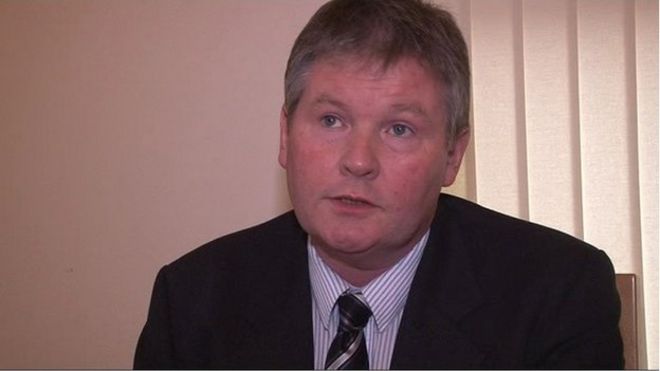
Gerry McGeough: Supreme Court rejects IRA evidence appeal

Posted by Jim on

BBC – Northern Ireland

Gerry McGeough
Image caption Gerry McGeough was released after serving less than two years of his 20-year sentence

An appeal by a man jailed for the 1981 attempted murder of an off-duty Ulster Defence Regiment soldier has been rejected by the UK Supreme Court.

Gerry McGeough, from Dungannon, County Tyrone, was jailed in 2011 for 20 years for shooting Samuel Brush.

He argued that a trial judge was wrong to take into account evidence about his IRA membership in the 1970s and 1980s.

However, a panel of five judges at the UK’s highest court of appeal dismissed his claim.

Mr Brush, who is now a DUP councillor, was shot in an IRA gun attack in Aughnacloy, County Tyrone, in 1981.

McGeough was given a 20-year prison term but served less than two, under the terms of the Good Friday Agreement.

The Supreme Court was asked to rule on whether admissions of IRA membership made by McGeough during a Swedish asylum application should have been relied upon during his 2011 trial.

At his trial in Belfast, the judge had decided that he could take that information into account when making decisions on McGeough’s guilt or innocence.

McGeough claimed that the judge had acted unfairly.

He suggested that information he had given to Swedish authorities was confidential and said its use as evidence against him offended a “rule against self-incrimination”.

But the Supreme Court backed the trial judge’s decision and said he had rightly taken what McGeough had said to Swedish authorities into account.

Appeal judges had earlier also ruled against McGeough.

PSNI ‘attempting to put RNU out of business’

Posted by Jim on October 23, 2015

The chairperson of Republican Network for Unity has been arrested and
charged with ‘directing terrorism’, while another member of the RNU
leadership, Paul Crawford, was also arrested on IRA charges.

Despite facing a potentially lengthy internment at Maghaberry, Carl
Reilly smiled and acknowledged friends and supporters packed into the
public gallery at Belfast Magistrates’ Court.

The PSNI claimed he had attended in a hotel in County Louth which had
been bugged by the Gardai police south of the border. He was refused
bail.

Republican Network for Unity spokesperson Cait Nic Shomhairle has
condemned the PSNI and judiciary’s attempt to put the party “out of
business”.

“It comes as no surprise that after years of trying, the state has moved
to quell legitimate political opposition to the six county internal
settlement once and for all,” she said.

“The PSNI in cooperation with the judiciary have decided to arrest and
charge two members of Republican Network for Unity’s Ard Chomhairle
using evidence that simply isn’t fit for purpose.

“This has been shown up exactly for what it is; an attempt to remove the
party from the political scene.”

She said the party’s collective leadership would respond to the
political policing “in its most blatant form” with the “only appropriate
response; hard work and continued determination to achieve the party’s
goals”.

“The PSNI, like their predecessors are pursuing a strategy underpinned
by redundant tactics that will result in utter failure. Naturally we
demand the immediate release of the two men and call for an end to the
PSNI’s political persecution of the Republican community.”

The Irish Republican Socialist Party has also condemned the use of
repressive actions by the PSNI, including the arrest and detention of
party members, the searching of homes and sinister approaches to young
party activists.

They distributed leaflets in the Divis area of west Belfast which read,
in part: “The PSNI can never be accepted as a legitimate police service
because they exist to protect partition and to serve the ruling elite…
we must never forget that this is what that uniform stands for.”

Last week there was a mass ‘mobilisation’ and march in north Belfast,
also in protest at political policing, organised by the Greater Ardoyne
Residents Collective.

Victims’ group gives cautious welcome to DPP’s request for massive ‘Stakeknife’ probe

Posted by Jim on October 22, 2015

By Francesca Ryan

V ICTIMS’ group Relatives For Justice have cautiously welcomed an announcement that allegations of security force collusion in 24 murders in the north by an army intelligence agent known as ‘Stakeknife’ are to be investigated by police.

Yesterday, the Director of Public Prosecutions, Barra McGrory QC, announced that he has requested that the Chief Constable investigate a range of offences which relate to the activities of Stakeknife. West Belfast man Freddie Scappaticci was named as the British army agent within the IRA. He denies the allegation.

The Director has requested two new investigations – one to examine the full range of offences alleged to have been committed by Stakeknife and another to look at any criminal activity that may have been carried out by security service personnel.

RFJ Director Mark Thompson said only an international figure can be trusted to investigate the matter.

“The families we represent welcome the statement made by the Director of Public Prosecutions made today,” he said. “However, they have no confidence in the PSNI conducting any investigation.

“We are supporting a number of families affected by this and have been for at least eight years and they are all of the same view that this is about accountability, accountability that goes to the highest level of the intelligence services, MI5 and the RUC Special Branch.

“We are talking about accountability for actions that could have saved lives and we need to reflect on how far up the chain this goes.

“We also believe that although 20 to 24 murders are being talked about, we think it is upwards of 40 murders and that the culpability for those lies at the door of Downing Street and Whitehall.”

Announcing the double investigation, Mr McGrory said: “I have been made aware of the scope and range of possible offences that may have been carried out by this individual and also members of intelligence agencies.

“This information has been provided to me by the office of the Police Ombudsman, Dr Michael Maguire, which is now concluding a painstaking review of all available material. A common link across a significant number of potential crimes, including murder, was the alleged involvement of an agent of military intelligence codenamed ‘Stakeknife’.

“In addition, the Attorney General of Northern Ireland John Larkin QC, has recently contacted me about a murder case to enquire about any action the Public Prosecution Service may be considering. This is a case in which the same agent is potentially implicated.

“Having reviewed all of the available evidence I consider that the original decision did not take into account relevant considerations and also took into account irrelevant factors.

“I have concluded that the original decision was not within the range of decisions that could reasonably be taken in the circumstances. This decision has been set aside.

“In accordance with our Code for Prosecutors, I have asked the Chief Constable to provide further materials so that the matter may be reconsidered.”