Chris Donnelly: Amidst the darkness and hate, here’s to hope and a better 2026.
In the words of the 19th century abolitionist Theodore Parker, “The arc of the moral universe is long, but it bends towards justice”.
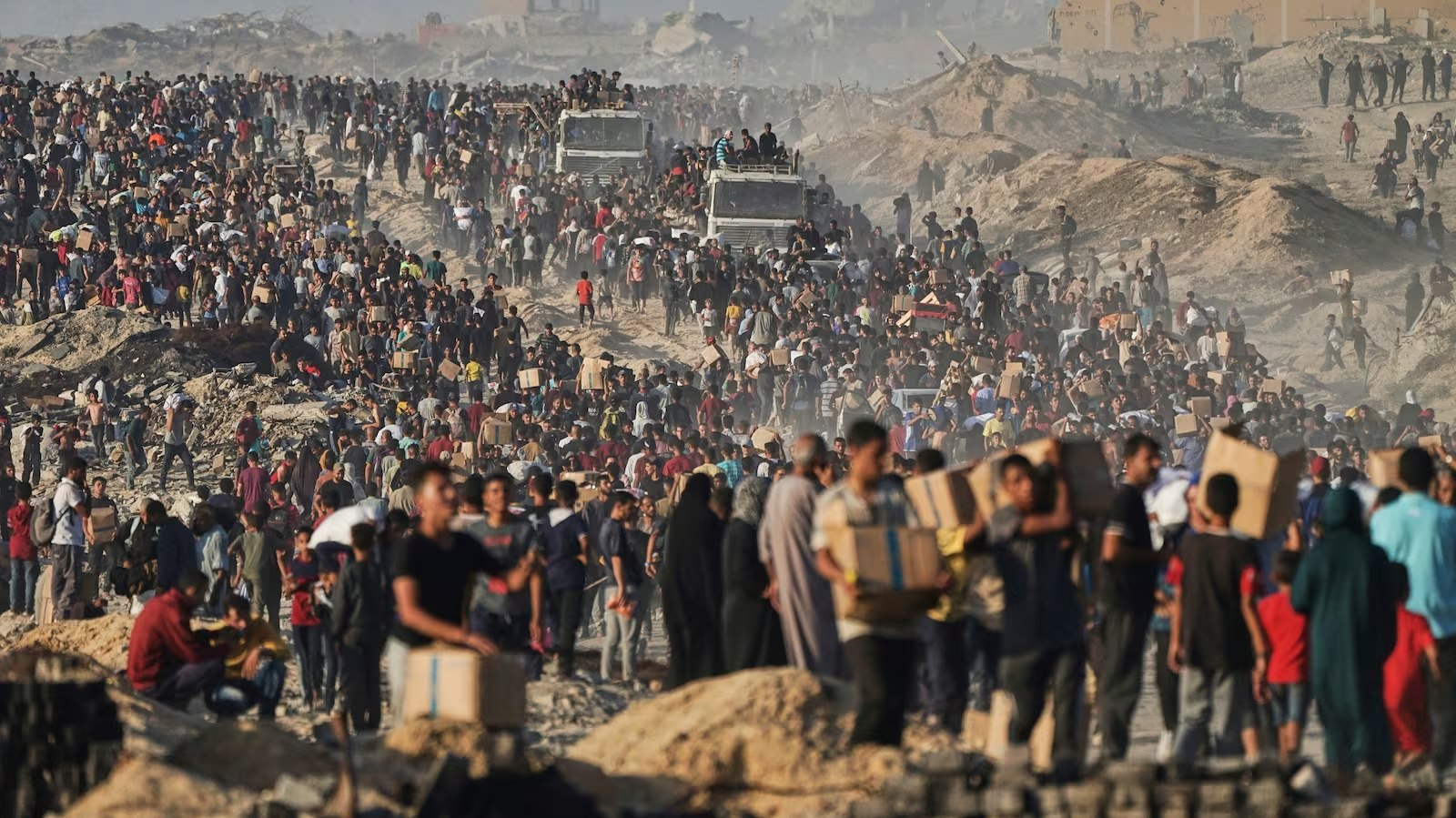
People carrying bags and boxes of food and humanitarian aid that was unloaded from a World Food Programme convoy that had been heading to Gaza City in the northern Gaza Strip
By Chris Donnelly
December 19, 2025 at 6:00am GMT
With less than two weeks left of the Year of our Lord 2025, it seems appropriate to reflect on the 50 that have come and gone since the apple fell and fireworks lit up the sky to mark the new year.
The late Pope Francis declared 2025 a Jubilee Year, themed ‘Pilgrims of Hope’, but on the international stage, darkness continues to crowd out both hope and light.
The brutal genocidal campaign waged by Israel against the Gazan population led to more than 60,000 being killed in a vicious two-year onslaught. The truce that came into effect in October has not prevented Israel from killing almost 400 Palestinians in Gaza since the ceasefire.
Peace and justice will continue to be cruelly denied the Palestinian people, just as it was for generations prior to October 7, 2023.
Violence against Christians in Nigeria and the Sahel region of Africa by Islamic extremists has led to thousands being killed and village communities destroyed, illustrating how intolerance of minority faith communities is a worryingly persistent theme across the globe, as the Bondi Beach atrocity demonstrated.
This was a year in which the Nobel Peace Prize was sullied (not for the first time) by being given to Maria Corina Machado.
The US government is breaking international law by killing people off the coast of Venezuela and is shamelessly engaged in an attempt to overthrow a government to put in place a new regime that will be more amenable to serving its interest, ie: stealing Venezuela’s oil.
That has been the American way since the Monroe Doctrine two centuries ago threatened European nations away from the Americas as the US declared there was to be only one bully in its back yard.
Perhaps Vladimir should have declared a Putin Doctrine to justify military intervention in Ukraine, if only to expose the utter hypocrisy of it all.
FIFA, world football’s governing body, debased the sport by creating a peace award for the sole purpose of giving it to Donald Trump at the draw for the 2026 tournament scheduled for next summer in the States.
Many who would have considered attending that event will have several reasons to think twice.
The extortionate price of game tickets – even after organisers made a concession for a token number to be sold at reasonable prices – aside, there is also the small matter of the condition being considered for all foreign visitors to provide five years of social media history, clearly implying those who may be deemed to have been vocally critical of American leaders could be denied entry.
It’s a million miles away from the message delivered by US Vice President JD Vance during his visit to Munich last February, when he lectured Europeans about how they have abandoned free speech.
But then, consistency has never been the trademark of the unhinged right.
The land of the free and home of the brave continues to be led by a government – and political class – that cheerleads the Gaza genocide, gaslighting millions of its own citizens and others across the globe by smearing with the antisemite label anyone who would dare to raise their voice against the slaughter.
The President’s utterances compete on a daily basis with his actions when determining which is more outlandish.
When he’s not joking about “signing the rights of the Golan Heights” to Israel and wanting a cut of the profit Israel stands to make, he’s threatening a democratically elected government in Venezuela, denigrating and demonising people living in the poorest countries in the world, and mocking the tragic killing of a celebrated Hollywood personality and his wife at the hands of their own troubled son.
Spare a thought for those self-proclaimed people of faith obliged to perform mental contortions on a daily basis when squaring their beliefs with their professed undying love and fealty to President Trump.
Meanwhile, in Britain, the message from the new chief spook at MI6, Blaise Metreweli, is that “the frontline is everywhere” in the battle with Russia, as she starkly declared that “it will be our rediscovery of our shared humanity, our ability to listen, and our courage that will determine how our future unfolds”.
The British government has remained resolute in its support of Israel throughout the genocidal campaign in Gaza, just as it remains faithful to the American administration bullying smaller nations in the Americas. In Ireland, we know only too well of the conduct of Britain’s intelligence community.
Never mind rediscovering it, their vision of a shared humanity is one which should remain forever buried.
The message from the top in our rights-based western world order is that we must hate the Russians because they are coming for us. Even the residents of sleepy Fivemiletown are not safe. Don’t you know they even fly drones over Dublin?
Hate the Chinese too, because those people simply aren’t to be trusted – just please don’t waste your time reading about the Opium Wars. Staying ignorant is an essential part of their plan.
Hate the Muslims as well, except for the very wealthy ones whose financial footprints are all over London.
Amidst the gloom, hope can still be found.
It is in the bravery and defiance of the Palestinian rights protestors, raising their voices in determination and ignoring the shameless gaslighting from officialdom.
It is in the volunteers who work in the People’s Kitchen in Belfast amongst the city’s homeless, giving their time to those on the margins for whom despair is the overwhelming emotion.
It is present on the stages of the nativity plays being performed by our youngest school kids in front of their loving parents and grandparents.
It is in the beautiful jubilee ‘Pilgrims of Hope’ logo which symbolises global solidarity, faith and resilience on a cross-shaped anchor amidst the turbulent sea of today’s world.
In the words of the 19th century abolitionist Theodore Parker, made popular by Martin Luther King Jr, “The arc of the moral universe is long, but it bends towards justice.”
Here’s to a better 2026.
If you have an opinion on the issues raised in this article and would like to submit a Letter to the Editor to be considered for publication
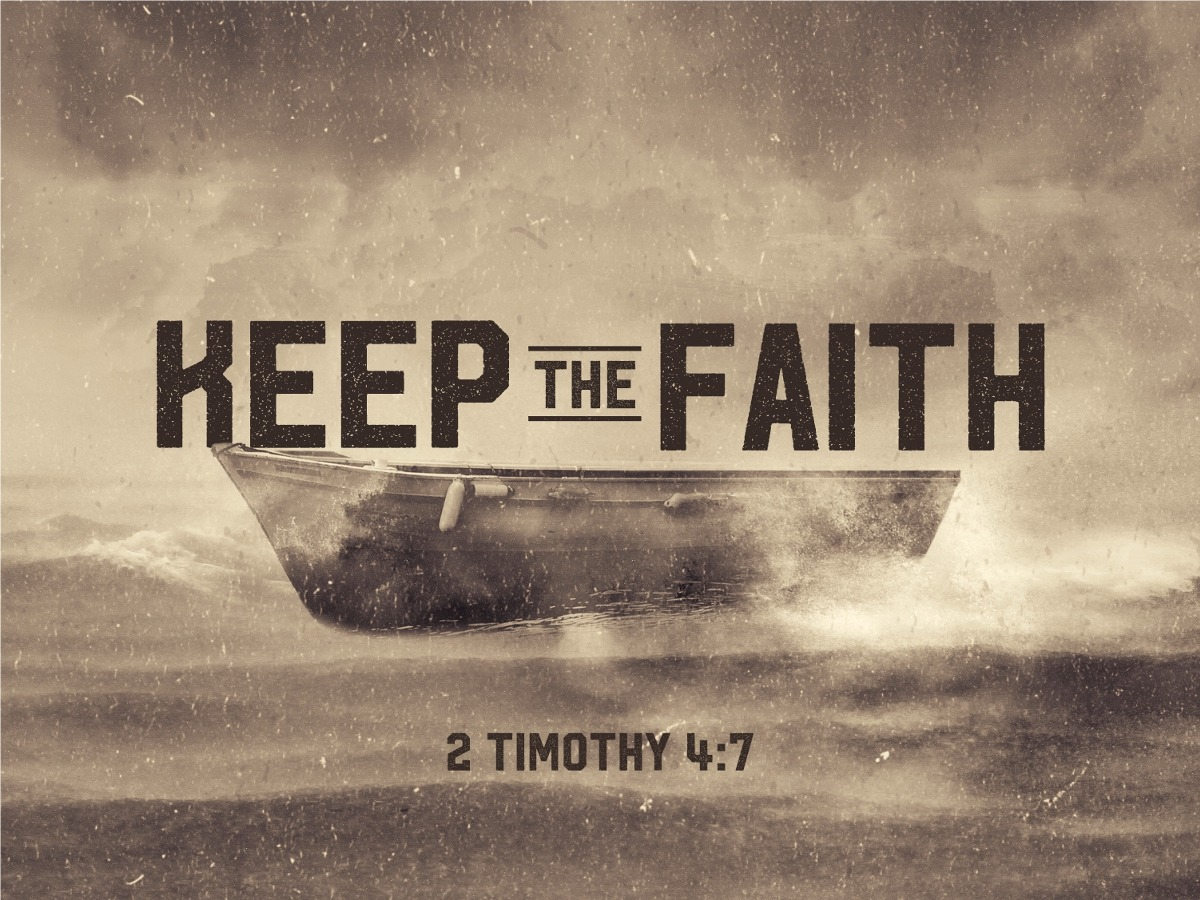
2 Timothy 4:7 states, “I have fought the good fight, I have finished the race, I have kept the faith.” This verse reflects Paul’s declaration of faithfulness and perseverance in his service to Christ, emphasizing the importance of remaining steadfast in the face of challenges. It serves as a timeless reminder for believers to continue their spiritual journey with dedication and commitment, especially as Paul wrote this during his final days before martyrdom. Overall, it encapsulates the essence of the Christian journey—a noble struggle and unwavering commitment to faith.
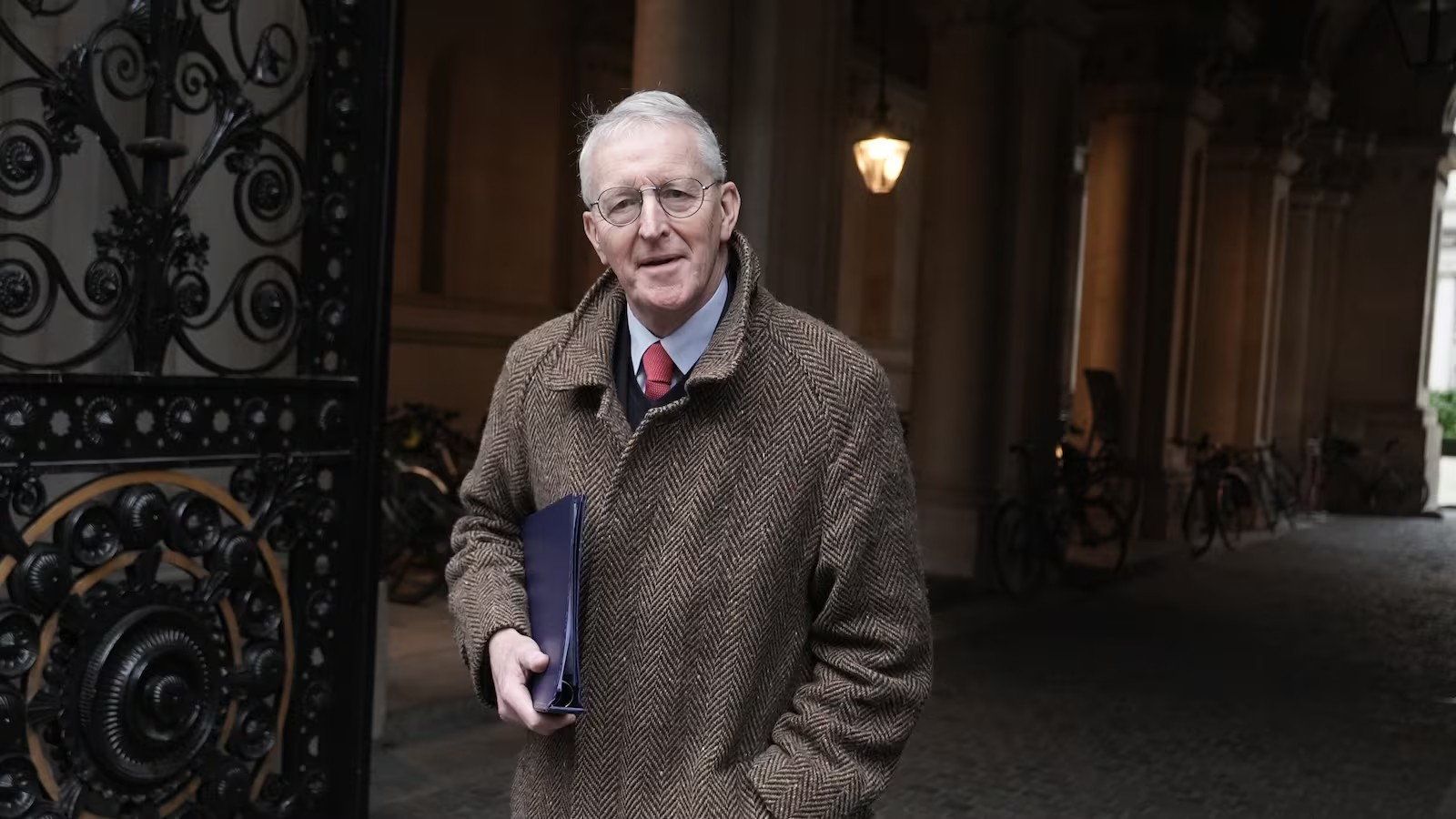
Northern Ireland Secretary Hilary Benn said the ruling on Wednesday had ‘wide-ranging implications’.
Northern Ireland Secretary Hilary Benn has welcomed a Supreme Court ruling on a Troubles case
By Jonathan McCambridge, Press Association
December 17, 2025 at 1:49pm GMT
The Government has said it will consider how a Supreme Court ruling over a Troubles death is relevant to calls for it to reveal the identity of the agent Stakeknife.
Northern Ireland Secretary Hilary Benn said the ruling on Wednesday had “wide-ranging implications”.
The final Operation Kenova report last week urged the Government to name Stakeknife, who operated as an Army spy within the IRA during the Troubles.
Mr Benn said at the time he would respond after the Supreme Court ruled in a government appeal over a coroner’s decision to disclose some sensitive material in the inquest into a 1994 murder in Belfast.
The court has now ruled that the coroner should not release the information around the murder of Liam Paul Thompson in Belfast in 1994, and said the responsibility lies with the Northern Ireland Secretary over assessing risks to national security.
Mr Benn said: “The Government welcomes the unanimous judgment handed down by the Supreme Court.
“This is a highly complex case with wide-ranging implications.
“The Government will therefore take time to fully consider all aspects of this judgment, including those relevant to the request made by Operation Kenova for the Government to name Stakeknife.
“I will return to the House on this as soon as the Government has come to a final view.”
Last week’s Kenova report looked at the actions of Stakeknife, the Army’s top spy in the Provisional IRA’s internal security unit during the Troubles.
The agent has been linked to at least 14 murders and 15 abductions.
He was widely believed to be west Belfast man Freddie Scappaticci, who was 77 when he died in 2023.
The Kenova report also called for the UK Government to publicly reveal the identity of Stakeknife.
The Government has resisted previous calls to do this, arguing that departing from its policy of Neither Confirm Nor Deny (NCND) in regard to officially confirming the identity of agents would have implications for national security.
In his judgment in the Thompson case, Lord Stephens said one of the issues for the coroner to consider had been the fact that the Ministry of Defence and PSNI held documents which were relevant to the issue of whether the security forces had received information from a covert human intelligence source in connection with the death.
He said the Government considered that “disclosing those documents would be contrary to the public interest in protecting national security, in particular because it would be contrary to the policy of neither confirming nor denying the use of informers or other secret source”.
If you confined judgement on the Trump administration’s immigration policy to the Immigration and Customs Enforcement website you would likely be cheering.
The website features a veritable rogues gallery of “criminal aliens” who have been detained and in some cases deported. The photos make the FBI’s most wanted list look like a beauty pageant lineup.
Few would object to the apprehension of serious criminals who have entered the United States illegally and have continued their criminal activities in our midst.
The initial understanding of ICE’s enhanced role in going after people illegally in the country was that it would be primarily focused on serious criminals and gang members.
But, as we all have seen, it has gone well beyond this.
The young woman in the photograph is 19-year-old Any Lucia Lopez Belloza.
She is from Honduras but had lived in the U.S. since the age of seven. She was about to board a flight at Boston’s Logan Airport heading for Austin, Texas where her parents live. She would surprise them for Thanksgiving. Lopez Belloza, however, was pulled aside and would end up in shackles and handcuffs.
She is a student at Babson College outside Boston. Babson’s business school is one of the top rated in the country. This young woman had a bright future and would in all likelihood have contributed significantly to the only country she knew as home, the United States.
She was deported to Honduras despite her attorney securing a court order preventing her removal from the U.S. Some courts matter more than others these times.
In the past couple of days the Boston Globe reported that immigration agents had appeared at Lopez Belloza’s family home in Austin. Once it gets its teeth into something ICE’s appetite is seemingly insatiable.
Lopez Belloza is Honduran. She could just as easily have been Irish.
Few would argue that the United States has a right to control its borders and to properly run its immigration system. And few would argue that individuals in the country deserve a more minimal legal consideration if they commit serious crimes.
But we have witnessed the forceful detention of legal residents and even citizens. We have witnessed families being torn apart and thousands of people being confined in detention centers, often in horrific conditions.
This newspaper is aware of one particular horror story from a detention center that would sound as if it took place in a Russian Gulag.
ICE would argue that it is carrying out the job that it is mandated to do. It’s likely the case that many ICE agents feel uncomfortable with some aspects of that job. It’s hard to judge feelings when your face is hidden by a mask. Some agents, the more zealous, likely relish their tasks.
It’s hard to know where all this will end. We are coming up to Christmas and it’s certain that more families will experience a holiday they will want to forget.
America wears its christianity, the various forms of it, very loudly on its sleeve. But said christianity is being drowned out amid the cries of people whose only crime is to reach for a chance at pursuing the American Dream.
It all comes down to politics in the end; as it always does. Congress has been a miserable failure for all too many years in the matter of comprehensive immigration reform. With an aging population you would think that an ordered immigration system would be a priority on Capitol Hill.
But of course Capitol Hill is lately very much a second tier legislative entity behind an administration that grows in power, and the desire to wield power, with every passing day.
The Statue of Liberty still stands tall in New York Harbor. But Lady Liberty is in the unemployment line. And not to forget, she is French. Hopefully she has the correct papers.