Unionists should learn the lessons from history and the AIA – The Irish News view
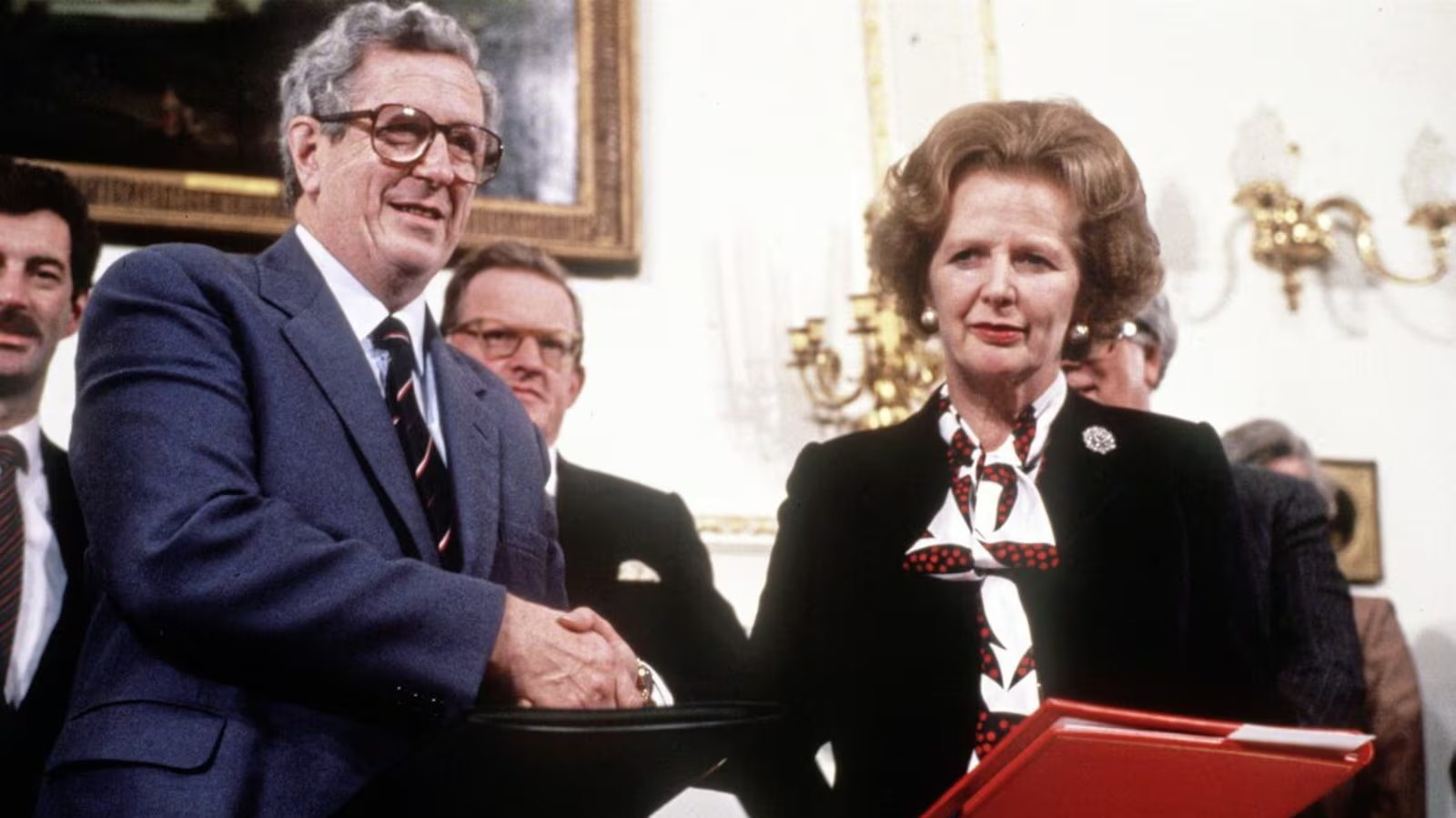
The Anglo-Irish Agreement is signed in 1985 at Hillsborough Castle by then prime minister Margaret Thatcher and taoiseach Garret FitzGerald
By The Irish News
November 17, 2025 at 6:00am GMT
The Anglo-Irish Agreement (AIA), which was signed 40 years ago at the weekend by British prime minister Margaret Thatcher and taoiseach Garret FitzGerald, was a major development in its own right, with two direct consequences which were arguably of greater significance.
They were that it paved the way for the Good Friday Agreement 13 years later, and also that it demonstrated starkly how placing faith in the British government brings even more risks for unionists than it does for nationalists.
The AIA established an intergovernmental conference which was headed by the north’s secretary of state, Tom King, and the Irish foreign minister, Peter Barry, with the British government officially accepting for the first time that it was prepared to facilitate a united Ireland if it was backed by a majority of voters.
Closer cooperation between Dublin and London, and a full acceptance of democratic principles on both sides, during a period of appalling violence across the board, should have been regarded as a positive development but unionist leaders were beside themselves with anger.
They portrayed the AIA as a shocking betrayal, but they consistently failed to acknowledge that they had entirely failed to anticipate the scale of the accord which was ratified in a ceremony at Hillsborough Castle, with James Molyneaux, the then Ulster Unionist leader, among those who were convinced that a new political initiative involving all-Ireland links was simply not going to happen.
When the AIA was nonetheless unveiled, there was also a completely misplaced belief among many unionists that they could force its abandonment by staging a repeat of the Ulster Workers Council strike which had brought down the first power-sharing executive in 1974.
The Ulster Says No campaign did bring large numbers on to the streets, starting with a massive rally at Belfast City Hall eight days after the Hillsborough ceremony, but it failed to shake the resolve of Downing Street, and it ultimately faded away as the violence surrounding the subsequent protests alienated many mainstream unionists.
Unionists failed to learn the lessons of history when in the post-Brexit period they enthusiastically supported another Conservative prime minister, Boris Johnson, in 2019, only to find that he deceived them over the Northern Ireland Protocol and the subsequent Windsor Framework.
It is verging on the astonishing that some senior unionists are now openly expressing admiration for Nigel Farage, and hoping that his Reform party heads the next British administration, even though he is at least as unreliable a figure as Mr Johnson.
The message for unionists should be that their best interests lie in working closely with nationalists at Stormont rather than engaging again in the kind of fundamental misjudgements which surrounded both Brexit and the AIA.
If you have an opinion on the issues raised in this article and would like to submit a Letter to the Editor to be considered for publication
I have been lucky in my life to have the opportunity to work with dedicated, thoughtful, and driven activists. Men and women who endured hardship, loss, and imprisonment. Experiences that would have broken most people. They continue to work day in and day out to build a new and united Ireland.
I am sure you have met similar people in your life. Those who struggled for change, respect, and justice, or to keep their families afloat and their heads above water. The true heroes in our lives.
When times were tough, a colleague would remind us that we were engaged in “struggle”, and it was called that because it was hard work! Nothing of value ever comes easy. It is the nature of struggle that we face hardships and setbacks which must be overcome. Motivation is maintained by keeping one eye on the present, one on the goal, and remembering to celebrate small victories along the way.
This week, those of us working for unity and the building of a 32-county Irish Republic had reason to celebrate: the inauguration of Catherine Connolly as Uachtarán na hÉireann (Irish President).
She was elected with a massive majority over the Irish government candidate. Sinn Féin, along with all of the opposition parties, supported her campaign.
In her inauguration speech, she reiterated the major themes of her campaign that would now be the priorities for her time in office. She sought to define a new Irish Republic of equal citizens that was united, modern, and inclusive, infused with the strength of Irish culture and experience. It was a speech for our times and stood in stark contrast to the “keep things as they are” vision of the Irish government as it lurches from crisis to crisis of its own making.
In a section on Irish Unity, she referenced Article 3 of the Constitution, which sets out the firm wish of the Irish nation to have a united Ireland and is committed to working to that end with the consent of the people north and south. Looking over her shoulder and nodding in agreement was the former leader of Fine Gael and Taoiseach, Leo Varadkar. Ministers in today’s government sat stony-faced.
The new President has an expansive view of the Irish Nation, acknowledging the role of the diaspora in sharing and celebrating Irish Culture. She recognised her own family members who had travelled home from Canada and the USA.
Irish Culture is going through a renaissance. In Ireland, our language, sports, arts, and music have never been stronger. Connolly previously shared the story of how, as an adult, she learnt Irish, and how it is central to her and the Irish identity. The promotion of the language will be a priority for her presidency.
No doubt President Connolly will face many challenges as she works alongside a government with no vision and opposing priorities and policies. But this week, we celebrate her election as we keep an eye on the bigger picture.
In the words of the new Uachtarán na hÉireann, “I believe that the President should be a unifying presence—a steady hand, yes, but also a catalyst for change reflecting our desire for a Republic that lives up to its name.”
Have a great weekend
Ciarán
Ciarán Quinn is the Sinn Féin Representative to North America
A house set ablaze in Ballymena as trouble erupted in town
Viewpoint
Wed 11 Jun 2025 at 05:00
The PSNI has been warning for months that it takes just one major incident to expose the deficit in resources to safely police Northern Ireland.
Events in Ballymena demonstrate that some policing demands simply cannot be planned for in advance.
Northern Ireland has a serious problem with violence against women and girls. That is not opinion but fact, borne out in statistics that show we have some of the worst rates of domestic abuse and femicide in Europe.
People are right to be angry when it comes to the protection of women and girls.
The issue is a societal one, a hangover from our troubled past, a symptom of a violently armed patriarchy.
Protecting women requires a shift in societal attitudes, from early years education to proper policing and justice.
It requires the promotion of positive male role models, not the Andrew Tate-style online agitators.
Two 14-year-olds have been charged, while a third is still being sought.
That the suspects are the children of migrants was revealed by court reports that confirmed that they required a Romanian interpreter.
The media is greatly restricted in what it can report in live cases, particularly those involving juveniles.
But there is no getting away from the fact that many of those who landed in Ballymena on Monday, determined to engage in violence, would not have been there only for the nationality of the suspects.
The family members who organised a protest following the weekend attack did so in good faith. But the reality is, when people are called onto the streets, the results can be unpredictable.
Within hours of the call for a peaceful protest, social media pages linked to far-right organisations were urging people to travel to the town.
The result was violence on a scale not seen there for years, with injuries to police officers and homes destroyed by fire and vandalism.
In 2018, when Britain First leader Paul Golding arrived in Ballymena making false allegations about the allocation of housing, he was sent packing by the good people of that town.
The false narrative about an ‘invasion’ of foreign migrants was, at the time, challenged by the DUP’s Paul Frew, who used facts to debunk myths.
Mr Frew produced figures from the Northern Ireland Housing Executive showing that of all the properties allocated in the preceding 12 months, 2.5% were allocated to ‘Persons from Abroad’.
Following Monday’s violence, it is for politicians to follow that lead and show leadership, to help calm rather than inflame tensions.
Captured after the failed 1798 uprising, Tone was formally sentenced on November 10 with execution set for November 12. Denied his request to die as a soldier, he later died in custody after his throat was cut in circumstances that remain debated as suicide or murder.
As one of the most influential leaders in Ireland’s struggle against British rule, Tone’s vision of a united, independent Ireland continues to resonate more than two centuries later. His life, writings, and tragic death have secured his legacy as a martyr and a national hero in the story of Ireland’s fight for self-determination.
Sign up to IrishCentral’s newsletter to stay up-to-date with everything Irish!Subscribe to IrishCentral
The father of Irish republicanism was born the son of a prosperous coach-maker in Dublin. Here we take a look at his early life. Theobald Wolfe Tone, leader of the 1798 Irish Rebellion, is probably best remembered for his tragic and gruesome death, but here we look at his early life, including a love story.
For his involvement, Wolfe Tone was arrested and said in court that he was determined “by frank and open war to procure the separation” of Ireland and England.
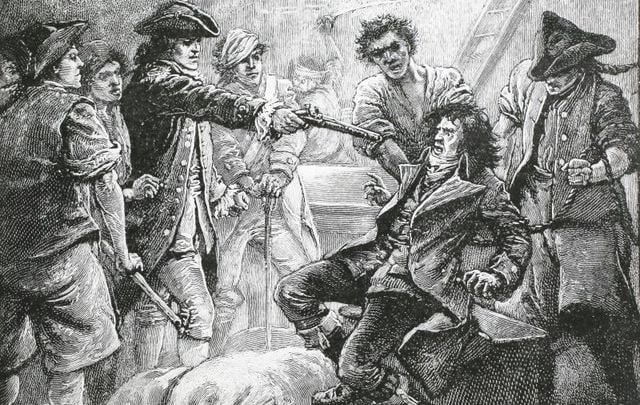
Following his conviction, Tone requested to be shot as a soldier would. He was denied, and on November 10, 1798, he was sentenced to be hanged on November 12.
However, before he could be hanged, Tone’s neck was slit either by a suicide attempt or at the hands of British soldiers; it remains unclear. The revolutionary died on November 19, 1798, and is buried in Bodenstown, County Kildare.
Below is a look at Wolfe Tone’s early life, courtesy of FindMyPast.
There’s an extraordinary love story hidden in the pages of one of Findmypast’s Irish record sets, the Dublin Registers and Records collection. A story about passion, loyalty, and patriotic sacrifice for one of Ireland’s most memorable heroes.
2
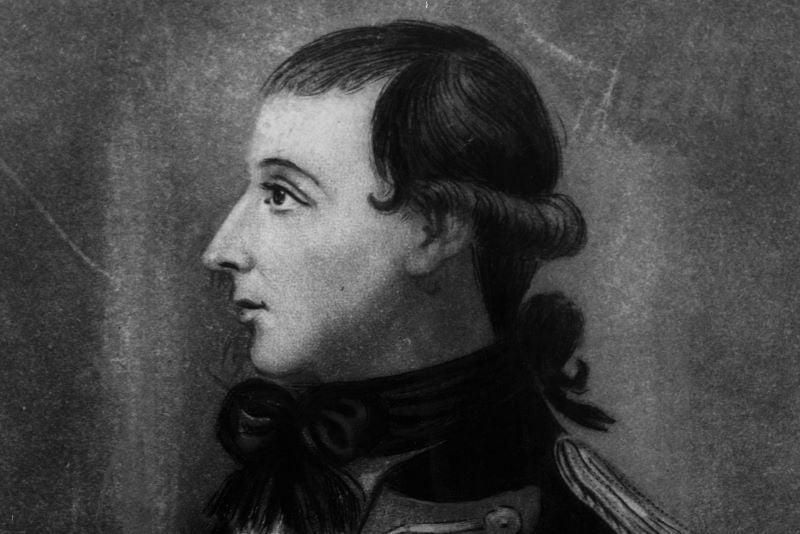
Wolfe Tone (Getty Images)
More than 260 years after his birth, he is still heralded as a leading Irish revolutionary figure and one of the founding members of the United Irishmen, as well as being a leader of the 1798 Rebellion but his own extraordinary love story is sometimes forgotten.
In the summer of 1785, the 22-year-old Theobald Wolfe Tone married a draper’s daughter, Martha Witherington. She was only 16. Theobald rechristened his wife Matilda. They were married by curate Edward Ryan on July 21 as you can see in the Marriage Entries from the Registers of the Parishes St. Andrew, St. Anne, St. Audoen, & St. Bride 1632-1800. The marriage would not be long-lived, but Matilda would make sure that her husband’s name was remembered for generations to come.
Sign up to IrishCentral’s newsletter to stay up-to-date with everything Irish!Subscribe to IrishCentral
Wolfe Tone was one of the key figures in the United Irishmen rebellion of 1798. Born in Dublin in 1763, his family was descended from French Huguenot settlers to Ireland. The son of a coach-maker who kept a farm near Sallins, County Kildare, Wolfe Tone studied law at Trinity College Dublin before going into politics.
The United Irishmen were inspired by the revolutions in France and America to fight for an Ireland free from English rule where Catholics, Protestants, and dissenters lived together in peace. Wolfe Tone appealed to the French to aid Ireland in her fight and set sail with a French fleet to bring men and arms to Ireland in 1796, but storms, indecisiveness, and poor seamanship prevented a successful landing.
The rebellion finally arrived in the summer of 1798. On May 24, rebels attempted to take Dublin and the surrounding counties but were quickly suppressed. The rebellion spread to Wicklow, Antrim, Down, Wexford, Kilkenny, and Meath but was unsuccessful. Wolfe Tone was captured in Buncrana in Donegal in October 1798. He was executed in the Provost’s Prison in Dublin not far from where he was born.
In the aftermath of the fighting, the British authorities offered compensation to those who remained loyal to the crown who had suffered damage to their property in the fighting. They also offered special terms for those who surrendered willingly. You can find a list of names of both those who applied for compensation and those who surrendered in Findmypast’s 1798 Claimants and Surrenders records.
The authorities came down hard on those who had fought against them and sometimes took great efforts to secure a conviction. You can see evidence of one attempt at stacking the deck in Findmypast’s England and Wales, Crime, Prisons and Punishment collection.
Contained in the miscellaneous criminal books of National Archives reference HO 130 is the case of Rex vs O’Cioghly and others. Father James O’Coighly was a United Irishman from Loughgall in County Armagh. The records show the selection of the jury for his trial, with panelists obviously selected based on their political sympathies. One man was rejected for being clearly sympathetic to the United Irishmen’s cause.
Matilda Tone left Ireland after her husband was executed. She was only 23 and the mother of a young son. She moved to France and then on to America. It was there, in 1826, that she saw to the publication of her husband’s autobiography and correspondence. Matilda worked to keep her husband’s legacy alive until her death in 1849.