Portions of this article were first published anonymously in ‘Republican News’, December 16th, 1978. The smuggled out article recalls how the spirit of republican defiance grew within him, and is a semi-autobiographical account.
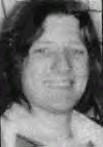
BOBBY SANDS was born in 1954 in Rathcoole, a predominantly loyalist district of north Belfast. His twenty-seventh birthday fell on the ninth day of his sixty-six-day hunger strike. His sisters Marcella, one year younger, and Bernadette, were born in April 1955 and November 1958, respectively. All three lived their early years at Abbots Cross in the Newtownabbey area of north Belfast. A second son, John, now nineteen, was born to their parents John and Rosaleen, now both aged 57, in June 1962.
The sectarian realities of ghetto life materialised early in Bobby’s life when at the age of ten his family were forced to move home owing to loyalist intimidation even as early as 1962. Bobby recalled his mother speaking of the troubled times which occurred during her childhood; ‘Although I never really under stood what internment was or who the ‘Specials’ were, I grew to regard them as symbols of evil ‘.
Of this time Bobby himself later wrote: ”I was only a working-class boy from a Nationalist ghetto, but it is repression that creates the revolutionary spirit of freedom. I shall not settle until I achieve liberation of my country, until Ireland becomes a sovereign, independent socialist republic. ”
When Bobby was sixteen years old he started work as an apprentice coach builder and joined the National Union of Vehicle Builders and the ATGWU. In an article printed in ‘An Phoblacht/Republican News’ on April 4th, 1981, Bobby recalled: ”Starting work, although frightening at first became alright, especially with the reward at the end of the week. Dances and clothes, girls and a few shillings to spend, opened up a whole new world to me.”
Bobby’s background, experiences and ambitions did not differ greatly from that of the average ghetto youth. Then came 1968 and the events which were to change his life. Bobby had served two years of his apprenticeship when he was intimidated out of his job. His sister Bernadette recalls: “Bobby went to work one morning and these fellows were standing there cleaning guns. One fellow said to him, ‘Do you see these here, well if you don’t go you’ll get this’ then Bobby also found a note in his lunch-box telling him to get out.”
In June 1972, the family were intimidated out of their home in Doonbeg Drive, Rathcoole and moved into the newly built Twinbrook estate on the fringe of nationalist West Belfast. Bernadette again recalled: We had suffered intimidation for about eighteen months before we were actually put out. We had always been used to having Protestant friends. Bobby had gone around with Catholics and Protestants, but it ended up when everything erupted, that the friends he went about with for years were the same ones who helped to put his family out of their home.
As well as being intimidated out of his job and his home being under threat Bobby also suffered personal attacks from the loyalists.
At eighteen Bobby joined the Republican Movement. Bernadette says: .. ‘he was just at the age when he was beginning to become aware of things happening around him. He more or less just said right, this is where I’m going to take up. A couple of his cousins had been arrested and interned. Booby felt that he should get involved and start doing something. ‘
Bobby himself wrote. “My life now centered around sleepless nights and stand-bys dodging the Brits and calming nerves to go out on operations. But the people stood by us. The people not only opened the doors of their homes to lend us a hand but they opened their hearts to us. I learned that without the people we could not survive and I knew that I owed them everything.
In October 1972, he was arrested. Four handguns were found in a house he was staying in and he was charged with possession. He spent the next three years in the cages of Long Kesh where he had political prisoner status. During this time Bobby read widely and taught himself Irish which he was later to teach the other blanket men in the H-Blocks.
Released in 1976 Bobby returned to his family in Twinbrook. He reported back to his local unit and straight back into the continuing struggle: ‘Quite a lot of things had changed some parts of the ghettos had completely disappeared and others were in the process of being removed. The war was still forging ahead although tactics and strategy had changed. The British government was now seeking to ‘Ulsterise’ the war which included the attempted criminalisation of the IRA and attempted normalisation of the war situation.’
Bobby set himself to work tackling the social issues which affected the Twinbrook area. Here he became a community activist. According to Bernadette, ‘When he got out of jail that first time our estate had no Green Cross, no Sinn Fein, nor anything like that. He was involved in the Tenants’ Association… He got the black taxis to run to Twinbrook because the bus service at that time was inadequate. It got to the stage where people were coming to the door looking for Bobby to put up ramps on the roads in case cars were going too fast and would knock the children down.’
Within six months Bobby was arrested again. There had been a bomb attack on the Balmoral Furniture Company at Dunmurry, followed by a gun-battle in which two men were wounded. Bobby was in a car near the scene with three other young men. The RUC captured them and found a revolver in the car.
The six men were taken to Castlereagh and were subjected to brutal interrogations for six days. Bobby refused to answer any questions during his interrogation, except his name, age and address.
In a ninety-six verse poem written in 1980, entitled ‘The Crime of Castlereagh’, Bobby tells of his experiences in Castlereagh and his fears and thoughts at the time.
They came and came their job the same
In relays N’er they stopped.
‘Just sign the line!’ They shrieked each time
And beat me ’till I dropped.
They tortured me quite viciously
They threw me through the air.
It got so bad it seemed I had
Been beat beyond repair.
The days expired and no one tired,
Except of course the prey,
And knew they well that time would tell
Each dirty trick they laid on thick
For no one heard or saw,
Who dares to say in Castlereagh
The ‘police’ would break the law!
He was held on remand for eleven months until his trial in September 1977. As at his previous trial he refused to recognise the court.
The judge admitted there was no evidence to link Bobby, or the other three young men with him, to the bombing. So the four of them were sentenced to fourteen years each for possession of the one revolver.
Bobby spent the first twenty-two days of his sentence in solitary confinement, ‘on the boards’ in Crumlin Road jail. For fifteen of those days he was completely naked. He was moved to the H-Blocks and joined the blanket protest. He began to write for Republican News and then after February 1979 for the newly-merged An Phobhacht/Republican News under the pen-name, ‘Marcella’, his sister’s name. His articles and letters, in minute handwriting, like all communications from the H-Blocks, were smuggled out on tiny pieces of toilet paper.
He wrote: ‘The days were long and lonely. The sudden and total deprivation of such basic human necessities as exercise and fresh air, association with other people, my own clothes and things like newspapers, radio, cigarettes books and a host of other things, made my life very hard.’
Bobby became PRO for the blanket men and was in constant confrontation with the prison authorities which resulted in several spells of solitary confinement. In the H-Blocks, beatings, long periods in the punishment cells, starvation diets and torture were commonplace as the prison authorities, with the full knowledge and consent of the British administration, imposed a harsh and brutal regime on the prisoners in their attempts to break the prisoners’ resistance to criminalisation.
The H-Blocks became the battlefield in which the republican spirit of resistance met head-on all the inhumanities that the British could perpetrate. The republican spirit prevailed and in April 1978 in protest against systematic ill-treatment when they went to the toilets or got showered, the H-Block prisoners refused to wash or slop-out. They were joined in this no-wash protest by the women in Armagh jail in February 1980 when they were subjected to similar harassment.
On October 27th, 1980, following the breakdown of talks between British direct ruler in the North, Humphrey Atkins, and Cardinal O Fiaich, the Irish Catholic primate, seven prisoners in the H-Blocks began a hunger strike. Bobby volunteered for the fast but instead he succeeded, as O/C, Brendan Hughes, who went on hunger-strike.
During the hunger-strike he was given political recognition by the prison authorities. The day after a senior British official visited the hunger-strikers, Bobby was brought half a mile in a prison van from H3 to the prison hospital to visit them. Subsequently he was allowed several meetings with Brendan Hughes. He was not involved in the decision to end the hunger-strike which was taken by the seven men alone. But later that night he was taken to meet them and was allowed to visit republican prison leaders in H-Blocks 4, 5 and 6.
On December 19th, 1980, Bobby issued a statement that the prisoners would not wear prison-issue clothing nor do prison work. He then began negotiations with the prison governor, Stanley Hilditch, for a step-by-step de-escalation of the protest.
But the prisoners’ efforts were rebuffed by the authorities: ‘We discovered that our good will and flexibility were in vain,’ wrote Bobby. It was made abundantly clear during one of my co-operation’ meetings with prison officials that strict conformity was required. which in essence meant acceptance of criminal status.
In the H-Blocks the British saw the opportunity to defeat the IRA by criminalising Irish freedom fighters but the blanketmen, perhaps more than those on the outside, appreciated before anyone else the grave repercussions, and so they fought.
Bobby volunteered to lead the new hunger strike. He saw it as a microcosm of the way the Brits were treating Ireland historically and presently, Bobby realised that someone would have to die to win political status.
He insisted on starting two weeks in front of the others so that perhaps his death could secure the five demands and save their lives. For the first seventeen days of the hunger strike Bobby kept a secret diary in which he wrote his thoughts and views, mostly in English but occasionally breaking into Gaelic. He had no fear of death and saw the hunger-strike as something much larger than the five demands and as having major repercussions for British rule in Ireland. The diary was written on toilet paper in biro pen and had to be hidden, mostly carried inside Bobby’s own body. During those first seventeen days Bobby lost a total of sixteen pounds weight and on Monday, March 23rd, he was moved to the prison hospital.
On March 30th, he was nominated as candidate for the Fermanagh and South Tyrone by-election caused by the sudden death of Frank Maguire, an independent MP who supported the prisoners’ cause.
The next morning, day thirty-one, of his hunger-strike, he was visited by Owen Carron who acted as his election agent. Owen told of that first visit ‘Instead of meeting that young man of the poster with long hair and a fresh face, even at that time when Bobby wasn’t too bad he was radically changed. He was very thin and bony and his hair was cut short.’
Bobby had no illusions with regard to his election victory. His reaction was not one of over-optimism. After the result was announced Owen visited Bobby. “He had already heard the result on the radio. He was in good form alright but he always used to keep saying, ‘In my position you can’t afford to be optimistic.’ In other words, he didn’t take it that because he’d won an election that his life would be saved. He thought that the Brits would need their pound of flesh. I think he was always working on the premise that he would have to die.”
At 1.17 a.m. on Tuesday, May 5th, having completed sixty-five days on hunger-strike, Bobby Sands MP, died in the H-Block prison hospital at Long Kesh. Bobby was a truly unique person whose loss is great and immeasurable. He never gave himself a moment to spare. He lived his life energetically, dedicated to his people and to the republican cause, eventually offering up his life in a conscious effort to further that cause and the cause of those with whom he had shared almost eight years of his adult life. In his own words: “of course can be murdered but I remain what I am, a political POW and no-one, not even the British, can change that.”
The following text is the oration delivered by Sinn Fein Poblachtach Ard
Cisteoir and Ard Chomhairle member Diarmuid Mac Dubhghlais, Atha Cliath
at the 37th Anniversary Hunger Strike commemoration and parade in
Bundoran, County Donegal at the weekend.
“They have chosen death, for there is an old custom, that if a man be
wronged or perceive to have been wronged, and he starve himself at the
threshold of he who had wronged him, the people for all time to come
would raise a great protest against that threshold even though it be the
Kings”
That a chairde is a quote by W.B. Yeats, and it puts into words more
succinctly than I ever could the reasoning for the Hunger Strikes here
in Ireland. We as Republicans stand here to give truth to those words.
We will stand at the threshold of Westminster, of Leinster House and of
Stormont and proclaim that each of these places has wronged the people
of Ireland.
The men who died from Thomas Aghas in 1917 to Mickey Devine in 1981 used
the only weapon they had in their fight for the sovereignty and unity of
Ireland, their own bodies. They made the ultimate sacrifice in the war
against British interference in Irish affairs.
These men were not alone in this battle, many others, men and women,
undertook hunger strikes over the years, some of those men and women had
their health broken and lives shortened due to their participation in
these hunger strikes, they also had family who stood staunchly with
them. Fathers and mothers, husbands and wives, sons and daughters gave
the hunger strikers the willpower to stay the course. As Mary Ward,
whose husband died prematurely from the after effects of his
participation in 4 hunger strikes said “To face death in the heat of
battle surrounded by one’s comrades is a heroic thing; but to face death
alone in a prison cell, surrounded only by one’s gaolers and tormentors,
takes a supreme courage,”
The hunger strikes of 1980 and 1981 were started because the POWs in
Long Kesh refused to be treated as criminals, they rightly demanded to
be treated as political prisoners. Ultimately ten men died in 1981 and a
whole generation of Irish men and women were to be politicised before
the demands were conceded. Sadly, when the Provisionals surrendered and
got their own prisoners released, they signed away that very same
Political Status. Our POWs were forced into a criminal system where they
suffered attacks at the hands of loyalist and criminal prisoners alike.
They were under threat on a daily basis and had to start afresh in the
self-same struggle for political status. The struggle within the prison
is something all Republicans should unite on irrespective of whether we
have friends or comrades incarcerated. As Martin Luther King said
“Injustice anywhere is a threat to justice everywhere”. It is clear that
that Irish Republicans cannot get justice within the judicial systems of
both states. Special laws, special non-jury courts and special
sentencing for Republicans is an everyday occurrence.
Last month in the Twenty-Six county courts several men and one woman
were found guilty of membership of the IRA, the main “evidence” against
them was what the state calls belief evidence, in other words a senior
member of the police need just say he believes someone is a member and
it is taken as enough for conviction.
I take this opportunity to send greetings to my friend Jonathan Hawthorn
who was one of those convicted on this belief evidence, Jonathan was an
extremely active member of the anti-water-tax protest in Dublin and had
been threatened by the police for months prior to his arrest I also send
solidarity greetings to Kevin Hannaway who was similarly convicted on
belief evidence. At 70 years of age, and as one of those known as The
Hooded Men who were tortured by the british state in 1971, an almost 4
year sentence on the word of a police force that has been shown to
manufacture evidence on a wholesale basis is in itself criminal. The
growing campaign to abolish the SCC must be supported by all
Republicans.
The Six County system is no better, with similar laws, similar courts
and probably a worse prison regime. Through this system two men from
Craigavon went and they found no justice. Police who lost evidence,
intimidated and arrested a witness for the defence, they paid witness
for the prosecution…the list goes on. Suffice to say another miscarriage
of justice has occurred and once again the British state refused to
acknowledge it. Like the Birmingham Six and Guildford four, they would
rather see young men’s lives wasted away behind bars than for it to be
seen that there is no justice for many Irish in the British judicial
system.
Another relic of injustice within the judicial system is internment,
while many will say it is no longer in use, the cases of Tony Taylor,
Gabriel Mackle, Marion Price and Martin Corry are but few of those who
have been interned over the past few years. Tony Taylor, a community
activist and long-term Republican has been interned since March 2016 on
the orders of the then secretary of state without reason or
justification, it is clear that this man is languishing in jail as an
example to others to refrain from involvement in community or Republican
activity.
Last year Gabrial Mackle stood here and said a few words as a recently
released Republican POW, within a few weeks he was dragged from his
house and interned. Luckily for him (if I can use that phrase that) he
was released after a few months. In his case it was acknowledged that
whatever secret evidence that was shown to the court did not justify his
internment, the inherent unreliability of secret evidence and
unchallenged nature of such evidence was in this case not accepted. I
welcome Gabriel home again and only wish a little more solidarity was
shown to him during his term of internment.
The issue of political extradition is not part of history either, Liam
Campbell and his family are still facing the threat of him being
extradited to Lithuania in a case involving MI5 and an allegation of
entrapment and stretches back 10 years. Liam has already spent years in
jail fighting extradition, both in the Occupied Six Counties and Twenty
Six County State, he is now fighting the third attempt to extradite him.
This past year saw DD Mc Loughlin extradited from the 26 county state,
luckily for DD luckily for him the case fell when the judge criticized
the 26 county police for “aggressive, oppressive, hectoring and
bullying” when interviewing the main witness against DD.
This is not the first time in recent years that someone extradited from
the Twenty Six Counties had had his trial collapse, Ryan McKenna was
freed in 2014 after being extradited from the Twenty Six Counties. These
two cases show the ease at which the Twenty Six county state will
extradite Irish Republicans, it is incumbent on all Republicans to work
together on the issues of; special laws for Republicans, SCC,
Extradition, and Internment
From Henry Joy McCraken, through Wolfe Tone, Emmet and on to Parnell,
many of the early leaders of Irish nationalism and Republicanism were of
the protestant faith, they knew that for the people of Ireland to
prosper it had to become a sovereign, independent country.
This quote from Wolfe Tone sums it up best; to break the connection with
England the never failing source of all our political evils. England
introduced sectarianism into Irish politics, they nurtured it, they
fostered it and they encourage it to today. From the gerrymandering of
constituencies to the counting of votes in terms of
pro-unionist/loyalist votes being Protestant votes and pro
nationalist/Republican votes being Catholic votes. As Republicans we
should play no part in sectarianism, racism or sexism.
We should judge people on their character and nothing else. Our goal
must be as Tone said “To unite the whole people of Ireland, to abolish
the memory of all past dissensions, and to substitute the common name of
Irishman in place of the denominations of Protestant, Catholic and
Dissenter”.
Now is the time to engage with people on the basis of a future within a
United Ireland being better for all the people of Ireland. Looking at
the exit of the UK from the EU it is clear that the politicians of
Westminster have no idea what they are doing, but we can be sure of one
thing;- whether it is, no deal, a bad deal or a good deal, the
politicians there will look after England first, Wales and Scotland
second and third. Last will be the Six Counties of Ireland, for they
know that as sure as the sun sets, Ireland will be united. Now is the
time for those who want what is best for themselves and the people of
Ireland to engage in the debate for a United Ireland.
It is interesting to see Mike Nesbitt and Peter Robinson indicate that,
the realisation is there that a United Ireland is on the horizon. As
strange as it may sound, now is the time for our Unionist brothers and
sisters to engage in dialogue with Republicans, not the so-called
republicans of Leinster house, but those who have consistently argued
for the abolition of that den of greed, we have argued for a socialist
Ireland, an Ireland of equals. For myself and those of Sinn Fein
Poblachtach, we have being arguing for a federal Ireland, an Eire Nua.
This is not, as G Adams and his cronies have said “a sop to Protestants”
but is a good basis for a way forward with equality, with fairness.
Those who developed it had only the best of hope for a United Ireland,
they were neither sectarian nor greedy unlike to politicians that now
infest the administrations in both states. It may not be a panacea for
all our troubles, but it is a sound basis towards a peaceful Ireland and
I know our leadership will be only too happy to engage in discussions
around this.
As I look at the two states we have today here in Ireland, it is clear
that it bears no semblance to the Ireland our hunger strikers died for,
nor the Ireland that the men, women and children of 1916 died for. All
died for a United Ireland, a Socialist Ireland and an Ireland of equals.
The two states we have today bear no resemblance to what was envisioned.
James Connolly. He was right when he said “if you remove the English
army tomorrow and hoist the green flag over Dublin castle, unless you
set bout organizing a socialist Republic your efforts will be in vain”
While both states differ slightly the following is true of one or both
of them;
There is no money for the poor– but plenty for the political wages
There is no money for social housing–but tax cuts for builders and
developers
Schools lack resources and funding— but travel junkets can be funded
Hospitals have ever-growing waiting lists–but political expenses and
perks continue.
A chairde, I have lost the figures, but the politicians of Stormont have
not sat and worked since 2017 yet they still collect wages, this to me
is theft. It is excused because the political elite can excuse it.
Leinster House passed a 5000 euro pay rise for themselves in the last
budget, yet delayed a 5 euro rise for pensioners for several months.
Not since the Great Hunger of the 1840’s have so many been dispossessed
of their homes by absentee landlords (in the guise of vulture/pension
funds) and all eagerly aided by an ever more vicious police. We have a
whole generation now who will grow up and not know what it is like to
have a home, they will be moving from B+B to B+B, from one temporary
hostel to another. They cannot build proper friendships or even develop
proper family relationships due to lack of kitchen facilities, play
areas etc. As the situation increases in desperation the political class
pays little more than lip-service to those suffering. Empty statements
from many calling for rent control or increased house building are
nothing more that window-dressing for their collective indifference to
the plight of the ordinary person.
This past year has seen an increase in attacks on Republicanism, an
increase in the normalization of the occupation and attempts to
encourage engagement in talks on entering the Commonwealth. In Lurgan
this Easter a peaceful assembly was attacked by the unreformed police
now known as the PSNI, there was no show of Republican strength, no
parade and no controversy. Just a simple commemoration. The one issue
was that these Republicans continually refuse to ask permission to
commemorate our patriot dead,
After this attack on a small commemoration, the police felt brave enough
to threaten the same for a planned Easter commemoration in Derry, this
time however they had fore-warned the Republicans there. A strong and
organised resistance was put up, those commemorating and parading were
protected. I commend all who ensured that this event was held and I
comment those in Lurgan who refuse to be intimidated off our streets.
In the past few weeks the Twenty Six county administration have
indicated that the new commissioner of their police will be Drew Harris
of the RUC. In less than 100 years of partial independence the state
has reintroduced British led policing in the state. This man is linked
through his positions within both the Six County police and MI5 to the
murders of the innocent in the six Counties, shoot to kill and in the
collusion to cover-up state involvement in the murders of people in
Dublin and Monaghan. For any self-respecting state to put a senior
member of another states secret services is unheard of. It is clear
that the present day FG party is only following in the footsteps of
Collins, when he too orders from London to open up on Republicans who
were defending the Republic.
At Easter this year in Derry I said it was not a Republican act to enter
Leinster house and it was an act of betrayal to actually administer
British administration in the Occupied Six Counties yet claim to be a
Republican. Well a chairde that betrayal was confirmed when the leader
of the Provisionals suggested a United Ireland within the commonwealth
was an option her party would consider. The years of struggle were not
about unity, we had that right up to 1922. The struggle is for
sovereignty, for independence.
The continual trips from members of British aristocracy is being
propagated as “the maturing as a nation” and just “normalization of
relations”, there can be no normalization for as long as an abnormal
border crosses Ireland, and Ireland matured when we proclaimed our
independence under arms in 1916. When our country in once again united,
when it is sovereign and when outside interferences in our internal
affairs cease, then and then alone will there be normal relations
between these islands.
Comrades, we cannot rely on the EU to protect against a border here in
Ireland, we need only look at the events in Catalonia, when the people
tried to exercised their democratic right to vote only to have it
crushed by the Spanish state, the EU have no real interest in democracy,
it is an imperialist construct and has a selfish interest. The EU now
openly backs a fascist (if not Nazi) government in the Ukraine.
It is incumbent on Republicans to ensure no border, no one else will do
this.
(1) Ireland shall have the same constitutional status in the Community of Nations known as the British Empire as the Dominion of Canada, the Commonwealth of Australia, the Dominion of New Zealand and the Union of South Africa, with a Parliament having powers to make laws for the peace, order and good government of Ireland and an Executive responsible to that Parliament, and shall be styled and known as the Irish Free State.
(2) Subject to the provisions hereinafter set out the position of the Irish Free State in relation to the Imperial Parliament and Government and otherwise shall be that of the Dominion of Canada, and the law practice and constitutional usage governing the relationship of the Crown or the representative of the Crown and of the Imperial Parliament to the Dominion of Canada shall govern their relationship to the Irish Free State.
(3) The representative of the Crown in Ireland shall be appointed in like manner as the Governor-General of. Canada and in accordance with the practice observed in the making of such appointments.(
4) The oath to be taken by Members of the Parliament of the Irish Free State shall be in the following form:I …….. do solemnly swear true faith and allegiance to the Constitution of the Irish Free State as by law established and that I will be faithful to H. M. King George V, his heirs and successors by law, in virtue of the common citizenship of Ireland with Great Britain and her adherence to and membership of the group of nations forming the British Commonwealth of Nations.
(5) The Irish Free State shall assume liability for the service of the Public Debt of the United Kingdom as existing at the date hereof and towards the payment of war pensions as existing at that date in such proportion as may be fair and equitable, having regard to any just claims on the part of Ireland by way of set-off or counter-claim, the amount of such sums being determined in default of agreement by the arbitration of one or more independent persons being citizens of the British Empire.
(6) Until an arrangement has been made between the British and Irish Governments whereby the Irish Free State undertakes her own coastal defence, the defence by sea of Great Britain and Ireland shall be undertaken by His Majesty’s Imperial Forces. But this shall not prevent the construction or maintenance by the Government of the Irish Free State of such vessels as are necessary for the protection of the Revenue or the Fisheries.The foregoing provisions of this Article shall be reviewed at a Conference of Representatives of the British and Irish Governments to be held at the expiration of five years from the date hereof with a view to a share in her own coastal defence.
(7) The Government of the Irish Free State shall afford to His Majesty’s Imperial Forces:(a) In time of peace such harbour and other facilities as are indicated in the Annex hereto, or such other facilities as may from time to time be agreed between the British Government and the Government of the Irish Free State; and(b) In time of war or of strained relations with a Foreign Power such harbour and other facilities as the British Government may require for the purposes of such defence as aforesaid.
(8) With a view to securing the observance of the principle of international limitation of armaments, if the Government of the Irish Free State establishes and maintains a military defence force, the establishments thereof shall not exceed in size such proportion of the military establishments maintained in Great Britain as that which the population of Ireland bears to the population of Great Britain.
(9) The ports of Great Britain and the Irish Free State shall be freely open to the ships of the other country on payment of the customary port and other dues.
(10) The Government of the Irish Free State agrees to pay fair compensation on terms not less favourable than those accorded by the Act of 1920 to judges, officials, members of Police Forces and other Public Servants who are discharged by it or who retire in consequence of the change of Government effected in pursuance hereof.Provided that this agreement shall not apply to members of the Auxiliary Police Force or to persons recruited in Great Britain for the Royal Irish Constabulary during the two years next preceding the date hereof. The British Government will assume responsibility for such compensation or pensions as may be payable to any of these excepted persons.
(11) Until the expiration of one month from the passing of the Act of Parliament for the ratification of this instrument, the powers of the Parliament and the Government of the Irish Free State shall not be exercisable as respects Northern Ireland and the provisions of the Government of Ireland Act, 1920, shall so far as they relate to Northern Ireland remain of full force and effect, and no election shall be held for the return of members to serve in the Parliament of the Irish Free State for constituencies in Northern Ireland, unless a resolution is passed by both Houses of the Parliament of Northern Ireland in favour of the holding of such election before the end of the said month.
(12) If before the expiration of the said month, an address is presented to His Majesty by both Houses of the Parliament of Northern Ireland to that effect, the powers of the Parliament and Government of the Irish Free State shall no longer extend to Northern Ireland, and the provisions of the Government of Ireland Act., 1920 (including those relating to the Council of Ireland) shall, so far as they relate to Northern Ireland continue to be of full force and effect, and this instrument shall have effect subject to the necessary modifications. Provided that if such an address is so presented a Commission consisting of three Persons, one to be appointed by the Government of the Irish Free State, one to be appointed by the Government of Northern Ireland and one who shall be Chairman to be appointed by the British Government shall determine in accordance with the wishes of the inhabitants, so far as may be compatible with economic and geographic conditions, the boundaries between Northern Ireland and the rest of Ireland, and for the purposes of the Government of Ireland Act, 1920, and of this instrument, the boundary of Northern Ireland shall be such as may be determined by such Commission.
(13) For the purpose of the last foregoing article, the powers of the Parliament of Southern Ireland under the Government of Ireland Act, 1920, to elect members of the Council of Ireland shall after the Parliament of the Irish Free State is constituted be exercised by that Parliament.
(14) After the expiration of the said month, if no such address as is mentioned in Article 12 hereof is Presented, the Parliament and Government of Northern Ireland shall continue to exercise as respects Northern Ireland the powers conferred on them by the Government of Ireland Act, 1920, but the Parliament and Government of the Irish Free State shall in Northern Ireland have in relation to matters in respect of which the Parliament of Northern Ireland has not power to make laws under that Act (including matters which under the said Act are within the jurisdiction of the Council of Ireland) the same powers as in the rest of Ireland, subject to such other provisions as may he agreed in manner hereinafter appearing.
(15) At any time after the date hereof the Government of Northern Ireland and the provisional Government of Southern Ireland hereinafter constituted may meet for the purpose of discussing the provisions subject to which the last foregoing article is to operate in the event of no such address as is therein mentioned being presented and those provisions may include:(a) Safeguards with regard to patronage in Northern Ireland:(b) Safeguards with regard to the collection of revenue in Northern Ireland:(c) Safeguards with regard to import and export duties affecting the trade or industry of Northern Ireland:(d) Safeguards for minorities in Northern Ireland:(c) The settlement of the financial relations between Northern Ireland and the Irish Free State:(f) The establishment and powers of a local militia in Northern Ireland and the relation of the Defence Forces of the Irish Free State and of Northern Ireland respectively: and if at any such meeting provisions are agreed to, the same shall have effect as if they were included amongst the provisions subject to which the Powers of the Parliament and Government of the Irish Free State are to be exercisable in Northern Ireland under Article 14 hereof.
(16) Neither the Parliament of the Irish Free State nor the Parliament of Northern Ireland shall make any law so as either directly or indirectly to endow any religion or. prohibit or restrict the free exercise thereof or give any preference or impose any disability on account of religious belief or religious status or affect prejudicially the right of any child to attend a school receiving public money without attending religious instruction at the school or make any discrimination as respects state aid between schools under the management of different religious denominations or divert from any religious denomination. or any educational institution any of its property except for public utility purposes and on payment of compensation.
(17) By way of provisional arrangement for the administration of Southern Ireland during the interval which must elapse between the date hereof and the constitution of a Parliament and Government of the Irish Free State in accordance therewith, steps shall be taken forthwith for summoning a meeting of members of Parliament elected for constituencies in Southern Ireland since the passing of the Government of Ireland Act, 1920, and for constituting a provisional Government, and the British Government shall take the steps necessary to transfer to such provisional Government the powers and machinery requisite for the discharge of its duties, provided that every member of such provisional Government shall have signified in writing his or her acceptance of this instrument. But this arrangement shall not continue in force beyond the expiration of twelve months from the date hereof.
(18) This instrument shall be submitted forthwith by his Majesty’s Government for the approval of Parliament and by the Irish signatories to a meeting summoned for the purpose of the members elected to sit in the House of Commons of Southern Ireland, and if approved shall be ratified by the necessary legislation.On behalf of the British delegation: On behalf of the Irish delegation:Signed SignedD. Lloyd George Art Ó Gríobtha (Arthur Griffith)Austen Chamberlain Michael Ó Coiléain (Michael Collins)Birkenhead Riobárd Bartún (Robert Barton)Winston S. Churchill Eudhmonn S. Ó Dúgáin (Eamon Duggan)L. Worthington Evans Seórsa Ghabháin Uí Dhubhthaigh (George Gavan Duffy)Hamar GreenwoodGordon HewartDecember 6, 1921ANNEX(1) The following are the specific facilities required:Dockyard Port at Berehaven(a) Admiralty property and rights to be retained as at the rate hereof. Harbour defences to remain in charge of British care and maintenance parties.Queenstown(b) Harbour defences to remain in charge of British care and maintenance parties. Certain mooring buoys to be retained for use of His Majesty’s ships.Belfast Lough(c) Harbour defences to remain in charge of British care and maintenance parties.Lough Swilly(d) Harbour defences to remain in charge of British care and maintenance parties.Aviation(e) Facilities in the neighbourhood of the above Ports for coastal defence by air.Oil Fuel Storage(f) Haulbowline, Rathmullen – To be offered for sale to commercial companies under guarantee that purchasers shall maintain a certain minimum stock for Admiralty purposes.(2) A Convention shall be made between the British Government and the Government of the Irish Free State to give effect to the following conditions:(a) That submarine cables shall not be landed or wireless stations for communications with places outside Ireland be established, except by agreement with the British Government; that the existing cable landing rights and wireless concessions shall not be withdrawn except by agreement with the British Government; and that the British Government shall be entitled to land additional submarine cables or establish additional wireless stations for communication with places outside Ireland.(b) That lighthouses, buoys, beacons, and any navigational marks or navigational aids shall he maintained by the Government of the Irish Free State as at the date hereof and shall not be removed or added to except by agreement with the British Government.(c) That war signal stations shall be closed down and left in charge of care and maintenance parties, the Government of the Irish Free State being offered the option of taking them over and working them for commercial purposes subject to Admiralty inspection, and guaranteeing the upkeep of existing telegraphic communication therewith.(3) A Convention shall be made between the same Governments for the regulation of Civil Communication by Air.4 SharesLikeCommentShare
Easter is regarded across the world as a time of rebirth and renewal. For Irish republicans it is also a time when we look back to the Easter Rising and to all those who have played their part in the struggle for Irish freedom, but it is also a time when we look to the future.
Now more than ever, more and more people are talking about the future. The conversation on Irish unity is well underway across the island and involves people from all backgrounds and political viewpoints.
The imposition of Brexit by the Tories, with absolutely no regard for its impact on the north and our economy, has led to many people asking questions and considering new options and opportunities.
The onset of the Covid pandemic has also accelerated that conversation as people look to see an island-wide approach.
People are now looking beyond Brexit to a new and better future in a new Ireland.
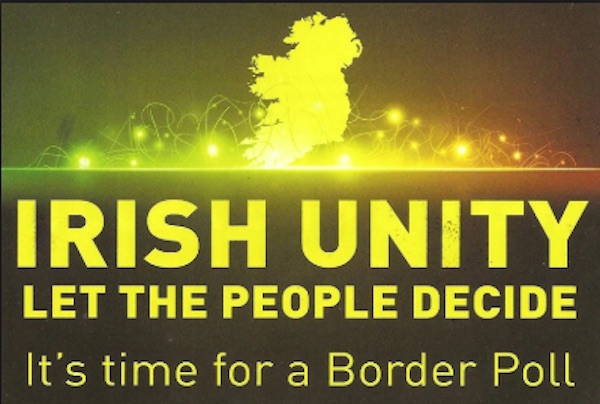
There is a democratic pathway in place in the Good Friday Agreement to allow that to happen.
It gives us a unique opportunity to shape our own future.
We have an opportunity which is unique in the modern world to build and shape a new state and a new society.
We can create a new economy to meet the needs of the 21st century and a suite of rights which reflects the diversity of the society in which we live.
We have the chance to build a new Ireland from the bottom up which serves the needs of everyone, not an elite few.
This is an unprecedented opportunity at nation building which would be the envy of anyone with a progressive view of politics or society.
And it is an opportunity we must grasp.
The conversation on a new Ireland has already begun.
So we now need to begin effective planning for it.
The British government has a responsibility under the Good Friday Agreement to hold a referendum on constitutional change, giving people the opportunity to have their say on our own future.
The British Secretary of State has a legal duty to hold such a referendum. And it is clear that society in the north is moving and the people’s views on the constitutional position of the north are changing.
Now is the time for the Secretary of State to announce the intention to hold a referendum and to begin planning.
The Irish government too has a duty to prepare for constitutional change. It now needs to establish a citizens convention, inclusive of the entire Ireland, on a new Ireland, as well as bringing forward a white paper and creating a ministerial position with responsibility for constitutional change.
This will allow for the reasoned, informed and inclusive debate which is required before any referendum.
There is a place for everyone in that debate and all views should be taken into account.
The more viewpoints included in the debate the better as it will help shape an inclusive, welcoming and pluralist Ireland.
We are already on the road towards a new Ireland and we want as many people as possible to join us on that journey.
The circumstances which have led to recent loyalist unrest are due to a failure of unionist political leadership, including from DUP leader Arlene Foster, says Christ Donnelly
12 April, 2021 01:00
Chris Donnelly
IPSEDIXITISM is a difficult enough word to say, never mind spell. It is the dogmatic assertion that something is factual without any proof to back it up, or because someone, somewhere said it.
I came across the word in a tweet from Countdown’s Susie Dent.
It immediately sprang to mind when listening to the latest attempts, by faces old and new, to explain the most recent outbreaks of loyalist violence.
On the Nolan Show last Thursday morning, a caller phoned in to complain about the size of the houses on the other side of the peace line amidst a depressingly ignorant rant which highlighted how prejudice flourishes when lives are lived in unsplendid isolation from the Other.
We live in an age of fake news, but facts stubbornly persist as a necessary corrective to those more comfortable with myths.
In its centenary year, Northern Ireland remains a place in which Catholics are considerably more likely to be poor than Protestants.
This is a statement of fact as confirmed by the regular collation of a multiple deprivation measure by the Northern Ireland Statistics and Research Agency (NISRA).
The most recent statistics (2018/19) from the Department of Education show that, in a single year, 883 poor Catholic boys and 543 poor Protestant boys left school without 5 good GCSEs, illustrating how educational underachievement and the troubles that flow from that are not the exclusive preserve of one community.
Relative poverty and dismal educational outcomes are always a factor, as evidenced by sporadic dissident republican-induced street violence in Derry and other pockets of deprivation across nationalist areas of the north, but they are not the main reason for loyalist alienation nor violence today.
Neither is apparent anger at the PSNI’s handling of a funeral nine months ago.
The setting for the first outbreak of loyalist violence in recent days was the Sandy Row district in Belfast.
Within a short distance of the rioting in the same loyalist area of the city, a leading loyal order figure in the locality was buried last September in a large funeral which clearly breached the same restrictions.
Two months earlier, large crowds gathered in the same area in breach of the Covid restrictions to celebrate the Twelfth of July.
If Arlene Foster’s current stance of righteous indignation over the Bobby Storey funeral had anything at all to do with concerns over public safety and the example set by political figures, then she would have long ago thrown Sammy Wilson out of her party.
Nor is the violence a reaction to additional layers of paperwork requiring to be completed by businesses wanting to keep trade connections open with a post-Brexit Britain.
So what is it all about?
It’s about the type of leader who meets and briefs the heads of active, illegal loyalist paramilitaries but who publicly snaps that she won’t meet with the PSNI chief constable… before caving due to public pressure.
It’s about the type of leader who, amidst developing constitutional discussions, proclaims that she will abandon hearth and home in the event of Irish unity, knowing that such a sentiment will spread alarm amongst her own grassroots.
It’s about leaders who made a succession of calls over Brexit that were spectacularly ill-judged, callous and ultimately self-defeating, demonstrating their utter disregard for the impact it would have upon everyone living on this island in the process.
It’s about leaders who take the easy option and give succour to a facile and wholly false narrative about culture to defend contentious parades and utterly destructive practices of burning wood, tyres and sofas alongside flags and emblems of the Other instead of educating people about the need to abandon aspects of traditions that are simply not worth retaining.
It’s about leaders who, 23 years later, continue to refuse to embrace the Good Friday Agreement primarily because they are fundamentally opposed to its very premise of equality and parity of esteem for all in Northern Ireland.
It’s about leaders who continue to act as if they represent a majority and not simply a minority voice in this society, stubbornly refusing to acknowledge the need for nuance and appreciation of consensus amidst the rapidly changing demographic profile of our shared home.
It’s about a political leadership choosing fury, fear and antagonism every time instead of hope, reason and co-operation.
The role of leaders includes challenging, educating and exposing absurd claims, destructive practices and prejudice-based assertions amongst one’s own supporters, not merely parroting them.
The violence is what happens when leaders fail to do what must be done.