Remember our Heroes this Day.
Posted by Jim on May 29, 2023

AOH Home of the Brooklyn Irish
Baile na nGael
Friday, August 28, 2026
Posted by Jim on May 28, 2023

A Letter from Ireland
When the people have their say, the message is clear
a Chara,
The results are in from last week’s elections in the North of Ireland. Sinn Féin secured 144 seats in local councils. A record-breaking number for any party.
It consolidated the position as the largest party with an almost 31% vote share. A lead of over 7% from their nearest rivals the Democratic Unionist party.
In another first, Pro-Irish Unity Candidates out-polled Unionists, in a state gerrymandered to maintain a unionist majority.
Almost immediately the spin went into action. One unionist claimed that the election of so many Sinn Féin candidates was undermining the democratic process! Others claimed that nationalism had not won a historic victory as unionists had just stayed at home and so the election meant nothing.
Some unionist politicians pointed out that Nationalist voting share had been constant over the past 25 years. The rise of Sinn Féin was just a realignment of votes with the SDLP. In this election, the Sinn Féin vote increased by over 7% and the SDLP fell by just over 3%. Sinn Féin brought out a new and additional vote.
Unionism is in denial that their vote has collapsed over the same period. When the Good Friday Agreement was signed twenty-five years ago Unionism had an absolute majority in votes and seats in the Assembly. Unionism no longer has an absolute majority in the assembly and only has a one-seat advantage over Irish Unity parties. Sinn Féin is the largest party of government, and Michelle O’Neill is now the First Minister Elect.
In this election, for the first time, unionism fell behind Nationalism in terms of seats and votes in local government. To quote Yeats, “All has changed and changed utterly.”
The Good Friday Agreement placed the future constitutional position in the hands of the people. If a majority, in referendums North and South, voted for unity, then Ireland would be united. It is a peaceful and democratic pathway to unity.
In another vote twenty-five years ago, 71% in the North and 95% in the South endorsed the Good Friday Agreement. It became the will of the Irish People. It set the rules for a government, rights, and referendums.
Then less than 30% of voters, led by the DUP, opposed the agreement. They did not stop progress. Today less than 30%, again led by the DUP, oppose the agreement and the institutions. They cannot be allowed to stop progress.
Some oppose Irish Unity. That is fair enough. But they cannot undermine the democratic rights of the people to have their say in referendums.
Election after election has demonstrated no absolute majority for continued partition and union with Britain. The same can be said of the pro-Irish unity position. The default cannot be the status quo. Democracy is the default. Ask the people. Have an informed and respectful debate and allow the people a vote.
As an Irish Republican, I believe in the strength of the case for unity. An Irish government planning, preparing, and advocating for unity would be a game changer.
Last week was another way marker in Irish history. It is an exciting time, ripe with opportunity. Let’s trust the people, let’s make the case for unity, and let the people have their say.
Have a great weekend.
Is mise,
Ciarán
Ciarán Quinn is the Sinn Féin Representative to North America
Posted by Jim on May 25, 2023
Stephen Donnan-Dalzell on May 25, 2023,
With the dust almost settled after a tumultuous election that turned many red areas a deep green, it’s time to look at the impact of some key points. This local election was fraught with disinterest, a lack of media coverage, and a general apathy amongst the public for electoral drama. It’s hard to blame them, with a second Assembly collapse in the space of six years, and the damage done by Brexit, the electorate can hardly be held responsible for being more or less switched off from the polls.
This was the first electoral test of the DUP and wider Unionism following the Assembly stalemate, brought on by the DUP’s objection to the NI Protocol and the Windsor Framework. Whilst they didn’t technically lose any seats overall (Any seats they lost were cancelled out by gains elsewhere), they didn’t break through and gain anywhere that wasn’t already expected. The total Unionist vote has shrunk significantly from 49.1% in 2017 to 39.35% in the recent local elections. If that was, as Sir Jeffrey Donaldson put it, a mandate to continue their Stormont boycott, then it could hardly be seen as a ringing endorsement. Unionism overall suffered significant setbacks, with Alliance and Sinn Fein snapping at the DUP and UUP’s heels everywhere from Belfast, to North Down and Ards, to Derry and Strabane.
Alliance maintained their place as the second largest party on North Down and Ards council, picking up two seats at the expense of the Greens in Bangor Central, and an Independent in Bangor West/Donaghadee. In an area that was dominated by Green politics for so long, their vote has more or less collapsed in North Down from 10.2% in 2019 to 5.9% this election cycle. Their vote seems to have collapsed province wide, with former leader Clare Bailey losing her Assembly seat in last year’s election, and current leader Mal O’Hara being beaten out for a seat on Belfast City Council by the SDLP, who clung on despite a resurgent Sinn Fein in Castle DEA. I personally feel that the Greens’ real problem this election was that they failed to hammer through the message of why they matter in local politics. Their visibility was completely eclipsed by Alliance and Sinn Fein, both of whom are usually transfer friendly to the Greens. The management of both Alliance and Sinn Fein’s vote put the Greens on the ropes in every single constituency and DEA, as was seen last year with both Clare Bailey and Rachel Woods losing out to a second Alliance candidate in their respective constituencies.
Their platform has been rather diminished, and the Greens failed to connect with middle ground voters. A missed opportunity to capitalise and compound on their 2019 victories has resulted in their influence being greatly undermined. Whether Mal O’Hara stays on as leader remains to be seen, but my money would be on Cllr Rachel Woods, former Green Party MLA for North Down, being coronated unchallenged in the next few months.
The UUP continued their descent into electoral oblivion, losing twenty one councillors across Northern Ireland. Considering just twenty years ago they were the largest party in local government with one hundred and fifty four seats, to drop to only fifty four across all eleven councils is quite the sea change. There were a few glimmers of hope for the UUP with them picking up a handful of seats that had otherwise been in contention for them, however overall their electoral machinery has completely fallen apart. Current leader Doug Beattie’s inability to draw clear blue water between the Ulster Unionists and the DUP, as well as allowing the UUP to expand within Belfast and the larger population centres will result in the party dwindling into “Independents/Others” territory in future election results. I would hazard a guess that in any future Assembly election they could see their number of MLAs drop to less than five, with Doug Beattie’s seat also up for grabs. It’s not looking good for the UUP, even with talented new comers in their ranks like former PUP Cllr Julie Anne Corr, and seasoned defectors like Carole Howard from Alliance, their problem is branding and message. It didn’t take long after the election for several Unionists to make the case for Unionist unity.
The TUV also failed to make significant inroads into the DUP base, managing to gain only three seats with one in Court DEA at the expense of the PUP leader Billy Hutchinson. Rather than the Unionist base growing, it has begun to devour itself at the expense of growing room for smaller Unionist parties who are competing for the last seats in several DEAs. With only one MLA and now nine Councillors, the TUV have outperformed the Greens for the first time in terms of elected representation, but whether this can be sustained and translated into Assembly seats is doubtful. Unlike Alliance, Sinn Fein and the DUP, the TUV has a talent problem. The party, by and large, remains a vehicle for the personal politics of Jim Allister KC MLA, and their only other personality, Cllr Timothy Gaston, failing to gain any traction in the media in the shadow of his party leader. It would be hard to see how the TUV would continue as an electoral force should Jim Allister retire, or lose his seat. The No Sea Border campaign, which has bedecked Loyalist areas up and down Northern Ireland, failed to translate into any meaningful surge in TUV support, but it is highly unlikely they will change tack and adopt a softer approach. The TUV appeals to a certain section of anti-agreement Unionism and that isn’t likely to go away any time soon, but an inability to coalesce that energy into a movement outside of Jim Allister’s cult of personality is what will continue to hinder them from any significant electoral inroads.
The PUP are all but finished as an electoral force in Northern Ireland, their last hurrah having been their small resurgence off the back of the flag protests in 2012. With the defection of Dr John Kyle to the UUP, the loss of Julie Anne Corr’s seat, and now the TUV taking Billy Hutchinson out of local politics, it’s hard to see how they can, if at all, come back from this. Their sole remaining elected representative, Cllr Russell Watton on Causeway Coast and Glens district council will likely become leader if the party decides to continue in its current form. It’s safe to say the party of the late David Ervine is all but finished.
Similarly to the PUP and UUP, People Before Profit were more or less engulfed by the Sinn Fein electoral wave that swept the board in last week’s election. PBP seats that would have been considered safe only a few years ago are now in the hands of Sinn Fein, from Belfast, to and Derry and Strabane. Maeve O’Neill losing her seat in the Moor, and Fiona Ferguson in Oldpark was a shock personally, as I was convinced they would hold onto those seats. However the PBP vote has largely been absorbed into Sinn Fein’s messaging, with the latter adopting many of PBP’s political imagery and managing to eat into their base. With a drop to only over four thousand first preference votes across the entire city, it is becoming abundantly clear that for both Unionists and Nationalists, smaller parties are now being cannibalised by their larger, and more well funded peers. Money wins elections, and without funding and grass roots support it’s impossible to get the vote out. Gerry Caroll MLA will be sweating with any upcoming Assembly election as Sinn Fein will be eager to snap up a full house in West Belfast.
The Alliance surge, often talked about, seemed to have hit a speed bump as a yellow wave didn’t materialise west of the Bann. Alliance lost both Cllrs they had gained on Derry and Strabane City Council which will be a huge blow to activists in the city, however at one point during the count they were pegged to be the largest party on LCCC where they are but one seat behind the DUP. Alliance did, however, have one bright spot outside of their usual urban base with the election of Eddie Roof in Enniskillen at the expense of the SDLP’s Paul Blake. Alliance also broke through in Balmoral with the election of Tara Brooks and Micky Murray, with the DUP’s Gareth Spratt losing out in the process.
Sinn Fein managed to make headlines by electing two Cllrs in Castlereagh South, and taking a seat off long term Alliance stalwart, and former Mayor, Stephen Martin. It was a casualty of war that many, including myself, did not see coming and Alliance will be licking their wounds after the loss of such a capable and well respected Councillor, however Sinn Fein will be delighted that they have elected representation in what was once considered a DUP heartland.
It was a similar story in Ballymena with Bréanainn Lyness taking a seat, again with the SDLP incumbent losing out. On a council that has been riddled with controversy and rumours of scandal, and dominated by Unionist control, the election of an extra two Sinn Fein Cllrs will definitely upset the apple cart.
It’s becoming clear that politics in Northern Ireland is coalescing around three main parties – Sinn Fein, DUP and Alliance. I’m not going to go into the minutae of the scale of the Sinn Fein victory, or now the DUP managed to defy expectations and hold onto their current number of seats, but looking at the electoral map after this election it’s obvious that Sinn Fein has managed to expand into the base of moderate as well as radical Republicans and Nationalists, cutting into the base of the SDLP, People Before Profit, Aointu and independent Republicans and even Alliance in Derry and Strabane City Council. Alliance likewise has been able to dig into the UUP, Green and SDLP vote in Belfast, North Down and beyond, however they failed to make any significant electoral breakthrough, though they did increase their seats on Causeway Coast and Glens at the cost of the SDLP and UUP. This was a recurring pattern across the province with the two former political heavyweights taking the brunt of either Alliance or Sinn Fein victories. The main victims of this election were the smaller parties, and that’s not necessarily good for local communities or democracy. The election of smaller parties allows for the scrutiny and challenging of larger parties who may dominate. Whether this trend continues remains to be seen.
Posted by Jim on May 21, 2023
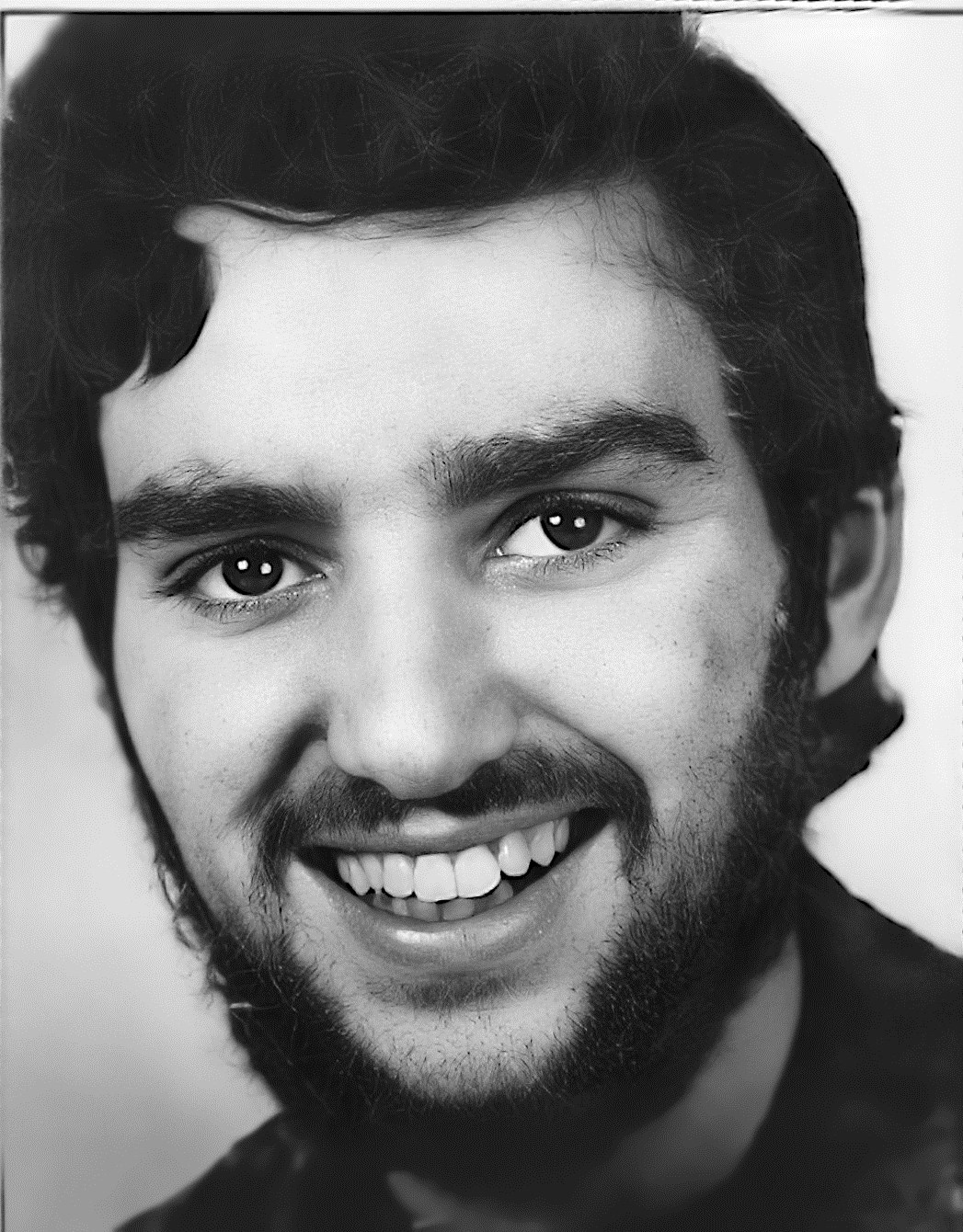
Died May 21st, 1981
A determined and courageous Derryman
Twenty-three-year-old Patsy O’Hara from Derry city, was the former leader of the Irish National Liberation Army prisoners in the H-Blocks, and joined IRA Volunteer Raymond McCreesh on hunger strike on March 22nd, three weeks after Bobby Sands and one week after Francis Hughes.
Patsy O’Hara was born on July 11th, 1957 at Bishop Street in Derry city.
His parents owned a small public house and grocery shop above which the family lived. His eldest brother, Sean Seamus, was interned in Long Kesh for almost four years. The second eldest in the family, Tony, was imprisoned in the H-Blocks – throughout Patsy’s hunger strike – for five years before being released in August of this year, having served his full five-year sentence with no remission.
The youngest in the O’Hara family is twenty-one-year-old Elizabeth.
Before ‘the troubles’ destroyed the family life of the O’Haras, and the overwhelming influence of being an oppressed youth concerned about his country drove Patsy to militant republicanism, there is the interesting history of his near antecedents which must have produced delight in Patsy’s young heart.
Patsy’s maternal grandfather, James McCluskey, joined the British army as a young man and went off to fight in the First World War. He received nine shrapnel wounds at Ypres and was retired on a full pension.
However, on returning to Ireland his patriotism was set alight by Irish resistance and the terror of British rule. He duly threw out his pension book, did not draw any more money and joined the Republican Movement. He transported men and weapons along the Foyle into Derry in the ‘twenties.
He inherited a public house and bookmakers, in Foyle Street, and was a great friend of Derry republican Sean Keenan’s father, also named Sean.
Mrs. Peggy O’Hara can recall ‘old’ Sean Keenan being arrested just before the out break of the Second World War. Her father’s serious illness resulted in him escaping internment and he died shortly afterwards in 1939.
Mrs. O’Hara’s aunt was married to John Mulhern, a Roscommon man, who was in the RIC up until its disbandment in 1921.
“When my father died in 1939 – says Mrs O’Hara, – “John Mulhern, who was living in Bishop Street, and owned a bar and a grocery shop, took us in to look after us. I remember him telling us that he didn’t just go and join the RIC, but it was because there were so many in the family and times were hard.
“My father was a known IRA man and my uncle reared me, and I was often slagged about this. Patsy used to hear this as a child, but Patsy was a very, very straight young fellow and he was a wee bit bigoted about my uncle being a policeman.
“But a number of years ago Patsy came in to me after speaking to an old republican from Corrigans in Donegal, and Patsy says to me, ‘You’ve nothing to be ashamed of, your uncle being a policeman, because that man was telling me that even though he was an RIC man, he was very, very helpful to the IRA!”
The trait of courage which Patsy was to show in later years was in him from the start, says Mr. O’Hara. “No matter who got into trouble in the street outside, Patsy was the boy to go out and do all the fighting for him. He was the fighting man about the area and didn’t care how big they were. He would tackle them. I even saw him fighting men, and in no way could they stop him. He would keep at them. He was like a wee bull terrier!”
Apparently, up until he was about twelve years of age, Patsy was fat and small, “a wee barrel” says his mother. Then suddenly he shot up to grow to over six foot two inches.
Elizabeth, his sister, recalls Patsy: “He was a mad hatter. When we were young he used to always play tricks on me, mother and father. We used to play a game of cards and whoever lost had to do all the things that everybody told them.
“We all won a card game once and made Patsy crawl up the stairs and ‘miaow’ like a cat at my mother’s bedroom door. She woke up the next day and said, ‘am I going mad? I think I heard a cat last night’ and we all started to laugh.”
The O’Haras’ house was open to all their children’s friends, and again to scores of the volunteers who descended on Derry from all corners of Ireland when the RUC invaded in 1969. But before that transformation in people’s politics came, Mrs. O’Hara still lived for her family alone.
She was especially proud of her eldest son, Sean Seamus who had passed his eleven plus and went to college.
When Sean was in his early teens he joined the housing action group, around 1967, Mrs. O’Hara’s conception of which was Sean helping to get people homes.
“But one day, someone came into me when I was working in the bar, and said, ‘Your son is down in the Guildhall marching up and down with a placard!
“I went down and stood and looked and Finbarr O’Doherty was standing at the side and wee fellows were going up and down. I went over to Sean and said, ‘Who gave you that? He said, Finbarr!’ I took the placard off Sean and went over to Finbarr, put it in his hand, and hit him with my umbrella.’
Mrs. O’Hara laughs when she recalls this incident, as shortly afterwards she was to have her eyes opened.
“After that, I went to protests wherever Sean was, thinking that I could protect him! I remember the October 1968 march because my husband’s brother, Sean, had just been buried.
“We went to the peaceful march over at the Waterside station and saw the people being beaten into the ground. That was the first time that I ever saw water cannons, they were like something from outer space.
“We thought we had to watch Sean, but to my astonishment Patsy and Tony had slipped away, and Patsy was astonished and startled by what he saw.”
Later, Patsy was to write about this incident: “The mood of the crowd was one of solidarity. People believed they were right and that a great injustice had been done to them. The crowds came in their thousands from every part of the city and as they moved down Duke Street chanting slogans, ‘One man, one vote’ and singing ‘We shall overcome’ I had the feeling that a people united and on the move, were unstoppable.”
Shortly after his release in April 1975, Patsy joined the ranks of the fledgling Irish Republican Socialist Party, which the ‘Sticks’, using murder, had attempted to strangle at birth. He was free only about two months when he was stopped at the permanent check-point on the Letterkenny Road whilst driving his father’s car from Buncrana in County Donegal.
The Brits planted a stick of gelignite in the car (such practice was commonplace) and he was charged with possession of explosives. He was remanded in custody for six months, the first trial being stopped due to unusual RUC ineptitude at framing him. At the end of the second trial he was acquitted and released after spending six months in jail.
In 1976, Patsy had to stay out of the house for fear of constant arrest. That year, also, his brother, Tony, was charged with an armed raid, and on the sole evidence of an alleged verbal statement was sentenced to five years in the H-Blocks.
Despite being ‘on the run’ Patsy was still fond of his creature comforts!
His father recalls: “Sean Seamus came in late one night and though the whole place was in darkness he didn’t put the lights on. He went to sit down and fell on the floor. He ran up the stairs and said: ‘I went to sit down and there was nothing there’
“Patsy had taken the sofa on top of a red Rover down to his billet in the Brandywell. Then before we would get up in the morning he would have it back up again. When we saw it sitting there in the morning we said to Sean: ‘Are you going off your head or what? and he was really puzzled.”
In September 1976, he was again arrested in the North and along with four others charged with possession of a weapon. During the remand hearings he protested against the withdrawal of political status.
The charge was withdrawn after four months, indicating how the law is twisted to intern people by remanding them in custody and dropping the charges before the case comes to trial.
In June 1977, he was imprisoned for the fourth time. On this occasion, after a seven-day detention in Dublin’s Bridewell, he was charged with holding a garda at gunpoint. He was released on bail six weeks later and was eventually acquitted In January 1978.
Whilst living in the Free State, Patsy was elected to the ard chomhairle of the IRSP, was active in the Bray area, and campaigned against the special courts.
In January 1979, he moved back to Derry but was arrested on May 14th, 1979 and was charged with possessing a hand-grenade.
In January 1980, he was sentenced to eight years in jail and went on the blanket.
What were Mrs. O’Hara’s feelings when Patsy told her he was going on hunger strike?
“My feelings at the start, when he went on hunger strike, were that I thought that they would get their just demands, because it is not very much that they are asking for. There is no use in saying that I was very vexed and all the rest of it. There is no use me sitting back in the wings and letting someone else’s son go. Someone’s sons have to go on it and I just happen to be the mother of that son.”
Writing shortly before the hunger strike began, Patsy O’Hara grimly declared: “We stand for the freedom of the Irish nation so that future generations will enjoy the prosperity they rightly deserve, free from foreign interference, oppression and exploitation. The real criminals are the British imperialists who have thrived on the blood and sweat of generations of Irish men.
“They have maintained control of Ireland through force of arms and there is only one way to end it. I would rather die than rot in this concrete tomb for years to come.
Patsy witnessed the baton charges and said: “The people were sandwiched in another street and with the Specials coming from both sides, swinging their truncheons at anything that moved. It was a terrifying experience and one which I shall always remember.”
Mr. and Mrs. O’Hara believe that it was this incident when Patsy was aged eleven, followed by the riots in January 1969 and the ‘Battle of the Bogside’ in August 1969 that aroused passionate feelings of nationalism, and then republicanism, in their son. “Every day he saw something different happening,” says his father. “People getting beaten up, raids and coffins coming out. This was his environment.”
In 1970, Patsy joined na Fianna Eireann, drilled and trained in Celtic Park.
Early in 1971, and though he was very young, he joined the Patrick Pearse Sinn Fein cumann in the Bogside, selling Easter lilies and newspapers. Internment, introduced in August 1971, hit the O’Hara family particularly severely with the arrest of Sean Seamus in October. “We never had a proper Christmas since then” says Elizabeth. “When Sean Seamus was interned we never put up decorations and our family has been split-up ever since then.”
Shortly after Sean’s arrest Patsy, one night, went over to a friend’s house in Southway where there were barricades. But coming out of the house, British soldiers opened fire, for no apparent reason, and shot Patsy in the leg. He was only fourteen years of age and spent several weeks in hospital and then several more weeks on crutches.
On January 30th, 1972, his father took him to watch the big anti-internment march as it wound its way down from the Creggan. “I struggled across a banking but was unable to go any further. I watched the march go up into the Brandywell. I could see that it was massive. The rest of my friends went to meet it but I could only go back to my mother’s house and listen to it on the radio,” said Patsy.
Asked about her feelings over Patsy be coming involved in the struggle, Mrs. O’Hara said: “After October 1968, I thought that that was the right thing to do. I am proud of him, proud of them all”.
Mr O’Hara said: “Personally speaking, I knew he would get involved. It was in his nature. He hated bullies al his life, and he saw big bullies in uniform and he would tackle them as well.
Shortly after Bloody Sunday, Patsy joined the ‘Republican Clubs’ and was active until 1973, “when it became apparent that they were firmly on the path to reformism and had abandoned the national question”.
From this time onwards he was continually harassed, taken in for interrogation and assaulted.
One day, he and a friend were arrested on the Briemoor Road. Two saracens screeched to a halt beside them. Patsy later described this arrest: “We were thrown onto the floor and as they were bringing us to the arrest centre, we were given a beating with their batons and rifles. When we arrived and were getting out of the vehicles we were tripped and fell on our faces”.
Three months later, after his seventeenth birthday, he was taken to the notorious interrogation centre at Ballykelly. He was interrogated for three days and then interned with three others who had been held for nine days.
“Long Kesh had been burned the week previously” said Patsy, “and as we flew above the camp in a British army helicopter we could see the complete devastation. When we arrived, we were given two blankets and mattresses and put into one of the cages.
“For the next two months we were on a starvation diet, no facilities of any” kind, and most men lying out open to the elements…
“That December a ceasefire was announced, then internment was phased out.” Merlyn Rees also announced at the same time that special category status would be withdrawn on March 1st, 1976. I did not know then how much that change of policy would effect me in less than three years”.
Patsy O’Hara died at 11.29 p.m. on Thursday, May 21st – on the same day as Raymond McCreesh with whom he had embarked on the hunger-strike sixty-one days earlier.
Even in death his torturers would not let him rest. When the O’Hara family been broken and his corpse bore several burn marks inflicted after his death.
Posted by Jim on May 10, 2023

BELFAST TELEGRAPH
Sinn Fein president Mary Lou McDonald and vice president Michelle O’Neill launch manifesto in Newry.
Brett Campbell
Michelle O’Neill says next week’s local government election is a chance for voters to “re-endorse” the outcome of the Assembly poll.
She was speaking as Sinn Fein launched its manifesto at the Canal Court Hotel in Newry on Tuesday.
The 16-page document includes a pledge to set a date for a referendum on unity.
Other key promises include promoting power-sharing and partnership in local government, supporting small local businesses, strengthening workers’ rights to protect against low pay and improving active travel infrastructure including across the border.
Sinn Fein is running 162 candidates which marks the highest number in a local election.
In 2019 the party won 105 seats making it the second largest party in local government.
Ms O’Neill, the party’s vice president and First Minister designate, said the council election allows voters to send a message against the DUP’s Stormont boycott.
Last year it became the biggest political party at Stormont, however it has been unable to govern because the DUP has refused to re-enter the power-sharing executive in protest against the post-Brexit trading arrangements in Northern Ireland.
“I think that for us, this election is an opportunity for people to re-endorse the position which they voted for last May, for the executive to work, for politics to work, for us all to be around the executive table together,” she said.
“So I think people will, and certainly my experience on the ground, engaging with people going door-to-door in the community, speaking to the local business community, they know this is where we all should be.
“So for me, this election is a huge opportunity again, for the public to re-endorse positive leadership, someone who’s determined to try for a better future, someone who’s going to fight back against Tory austerity, someone who’s going to work and make politics work.”
At the launch, Ms O’Neill also said attending the King’s coronation was “the right thing to do”, adding that differing political aspirations should be respected.
“I believe that if we’re going to build a better society, and look towards the future, and a better future for our children and our grandchildren, then we have to have the confidence in ourselves and who we are, and to respect our differences,” she said.
“And we all have equally legitimate political aspirations and outlooks, and that’s OK. But let’s be comfortable enough to be respectful of each other. Let’s be comfortable enough to build that better future.
“And let’s keep our eyes on the next 25 years, and we’ve just celebrated 25 years of the Good Friday Agreement, and what’s been achieved is amazing, despite all the political ups and downs, what’s been achieved is amazing.
“And I’m focused on the future, and we’ve talked about change and the changing political landscape, and where we want things to go in the future – let’s make sure that everybody feels comfortable, and feels valued and is treated equally in our society, because then we’d have the recipe for something better for everybody.”
Sinn Fein president Mary Lou McDonald said that Ms O’Neill’s representation of the party at the coronation was a show of respect for unionists.
“I just wanted to say very clearly that Michelle’s attendance, Sinn Fein’s attendance at the coronation, was a mark of recognition and respect for our unionist citizens, for British people who are British now in a partitioned Ireland, and who will be British in the United Ireland, and it’s an explicit recognition of that,” she said.
She added: “We all live here together, for goodness’s sake, when there is an act of, of respect, kindness, inclusion, let’s take that. That’s what I think we should do for each other.”
Ms McDonald said the council election marks “a time for hope, for positivity and for optimism”.
“Real change is happening before our eyes,” she said.
“A generation moving forward to build a new and better future for all. A new Ireland, a United Ireland delivering for every person, for every family, for every community.”
Ms McDonald said people want to see politics that works by providing the best health service, childcare, education and strong local services.
“They want economic opportunities realised so that our young people can have a good future,” she added.
“They want the Executive working, they want government for all and they want Michelle O’ Neill to lead the Executive as First Minister working for all, delivering for all,” she continued.
“We are now 12 months on from the Assembly election with the DUP continuing to block a new Executive being formed while Tory austerity is devastating public services and progress is stalled.
“This puts an even greater importance on the council election on May 18.”
Ms McDonald called on the Irish and UK governments to work to “navigate and manage” a border poll which requires “clarity” around a potential date.
“We shouldn’t be waiting for a date, we should be having those conversations now,” she said.