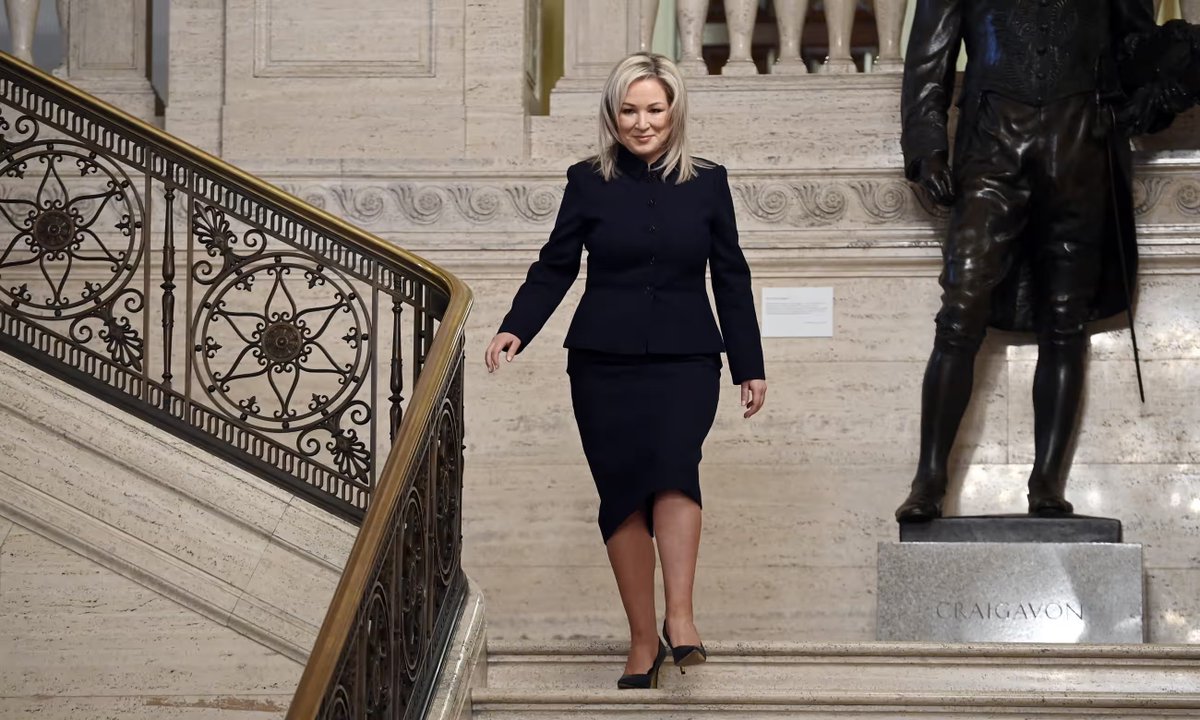
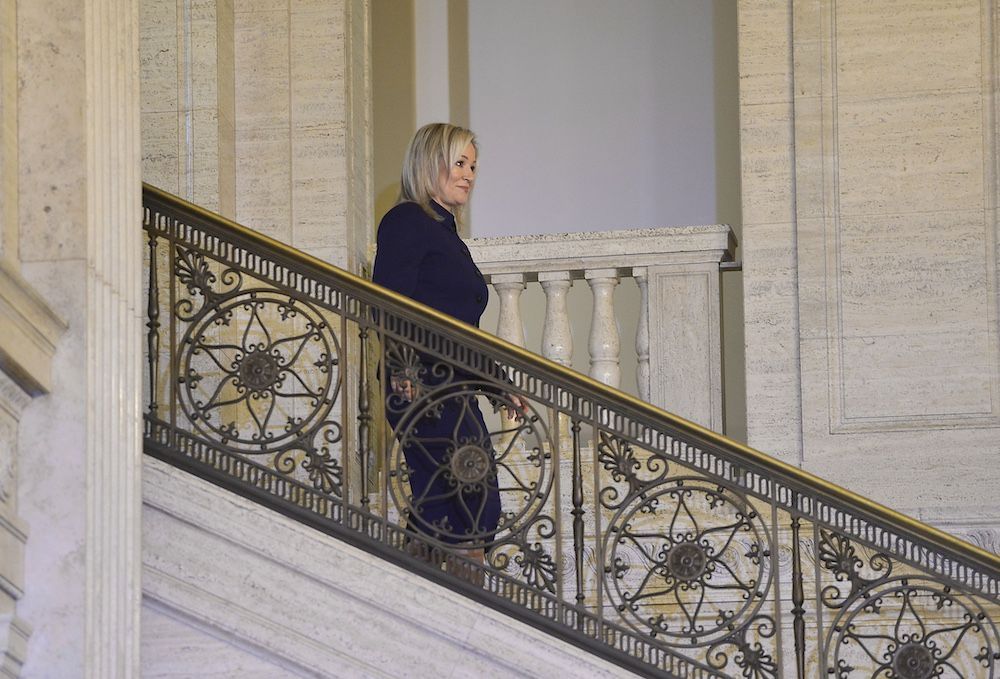
In a move no-one could have envisaged when the Good Friday Agreement resuscitated Stormont 26 years ago, Sinn Féin’s Michelle O’Neill on Saturday became the First Minister of the North of Ireland.
In an emotional address to the Assembly – where Sinn Féin is now the party with the biggest number of seats – the new First Minster urged colleagues to make power sharing work “because collectively we are charged with leading and delivering for al of our people”.
She added: “As an Irish republican, I pledge co-operation and genuine honest effort with those colleagues who are British, of a unionist tradition and who cherish the Union. This is an Assembly for all — Catholic, Protestant and dissenter. Despite our different outlooks and views on the future constitutional position, the public rightly demands the we co-operate, deliver and work together.”
Sinn Féin also took the Infrastructure, Economy and Finance portfolios while the DUP — who selected Emma Little-Pengelly as deputy First Minister — opted for Education and Communities with Justice and Agriculture going to the Alliance Party and Health returning to Robin Swann of the UUP.
Junior Ministers are West Belfast Irish speaker and former world handball champ Aisling O’Reilly of Sinn Féin and Pam Cameron of the DUP.
There was a stir in the chamber when the DUP put forward Paul Givan — whose move to sink the Líofa Irish language bursary scheme led to the collapse of the Executive in 2017 – rather than opting to fill the Finance Department role. Sinn Féin’s Caoimhe Archibald, who had been tipped for Education, was then, after a break in proceedings to allow parties to consider further options, shuffled across by Sinn Féin to take the finance brief.
Last night President Biden led plaudits from Irish American political leaders welcoming the return of the Good Friday institutions. Recalling his brief stopover in Belfast last April, the President said “a government that finds ways through hard problems together will draw even greater opportunity to Northern Ireland”.
He added: “I look forward to seeing the renewed stability of a power-sharing government that strengthens the peace dividend, restores public services and continues building on the immense progress of the last decades.”
The DUP’s corralling of the education and communities roles struck a sour note with Irish language activists who see both departments as core to the demands of the Irish language community.
“Today should have been a day full of optimism and hope for the Irish language community but the overriding emotion is one of disappointment,” said Pádraig Ó Tiarnaigh of Conradh na Gaeilge. “Outstanding commitments for Irish language rights, including the long-overdue appointment of an Irish language Commissioner, did not feature in any speech in today’s Assembly meeting. In the meantime many in the Irish language Community would have expected Sinn Féin to take either the Communities or Education portfolios, by extension in charge of Irish Medium Education or Language promotion and funding.
“With the DUP, whose track record in both of these Departments is well known, in charge of both, we now know we will face a battle a day to ensure equality and parity of esteem for the Irish language in the coming years.”
More than twenty months after her election, Sinn Féin’s Michelle O’Neill has finally been confirmed as the new First Minister in the north of Ireland, to the joy of her party and others around the world who believe it is a step-change on a pathway to Irish reunification.
Although hopes of Irish unity are not shared by hardline unionists, who believe the Brexit deal they have secured in recent weeks has actually tightened London’s grip on the north of Ireland, the historical significance of today’s events is undisputed.
As the first nationalist leader of a devolved government in Belfast, Michelle O’Neill has fulfilled the dreams of her party and reignited a belief that the Six County statelet, carved out a century ago to be forever dominated by Protestants and unionists, has changed forever.
Britain’s withdrawal from the EU introduced trade regulations between Britain and Ireland, rather than the remilitarised border across the island they had hoped for.
The new deal agreed by London, entitled ‘Safeguarding the Union’, is designed to compensate unionists for the implementation of Brexit. It controversially undermines the 1998 Good Friday Agreement by creating new laws and institutions to build new ties between England and the North of Ireland.
Sinn Féin has studiously avoided comment on the deal, but party leader Mary Lou McDonald said this morning “there is a lot of work to do, we’re all conscious of that”. But she added that the Six County “government and executive could not be in more kinder and compassionate hands than Michelle O’Neill’s”.
Although the first and deputy first ministers hold a joint office and both hold a veto over any contentious decisions, Ms O’Neill’s appointment to the top role is still a breakthrough moment for nationalists.
O’NEILL SPEECH
In her address to the Assembly following the vote that finally confirmed her election, Ms O’Neill said she would “serve everyone equally” and be a “First Minister for all”.
“To all of you who are British and unionist; Your national identity, culture and traditions are important to me. I will be both inclusive and respectful to you,” she said.
“None of us are being asked or expected to surrender who we are. Our allegiances are equally legitimate. Let’s walk this two-way street and meet one another halfway. I will be doing so with both an open hand and with heart.
“Much suffering and trauma persists as a result of the injustices and tragedies of the past. We must never forget those who have died or been injured, and their families. I am sorry for all the lives lost during the conflict. Without exception.
“As First Minister I am wholeheartedly committed to continuing the work of reconciliation between all of our people. The past cannot be changed or undone. But what we can do is build a better future. I will never ask anyone to ‘move on’, but I do hope that we can ‘move forward’.
“I want us to walk in harmony and friendship. My eyes are firmly fixed on the future. On unifying people and society.”
In the same vote, the DUP’s Emma Little-Pengelly was installed as the Deputy First Minister. She admitted it was a “historic moment”.
Deputy First Minister Emma Little-Pengelly said she grew up with conflict.
She told Stormont she is thankful that young people today “do not have to face that terror that so many of us” experienced, and said she will “never forget the fear, the hurt and the anger”.
Hardline unionist TUV leader Jim Allister launches a personal attack on Michelle O’Neill following her appointment. “We have a Sinn Féin First Minister but not in my name. I will never bow the knee,” he said.
NEW EXECUTIVE
The new Executive will share out the Ministries between four parties – Sinn Féin, the two unionist parties, DUP and UUP, and the ‘cross-community’ Alliance Party.
The nationalist SDLP will lead the opposition alongside People before Profit and the Green Party.
The d’Hondt system for divvying up Ministerial posts is set by party strengths, although there was some last-minute horse-trading.
For Sinn Fein, John O’Dowd is in line to take infrastructure, Conor Murphy is expected to become economy minister, and Caoimhe Archibald will be Education Minister.
For the DUP, Gordon Lyons will take the finance post and Paul Givan will be Communities Minister.
Alliance leader Naomi Long will be Justice Minister and the Agriculture Minister will be colleague Andrew Muir. The SDLP’s Matthew O’Toole, who is set to take up the position of leader of the opposition in the Assembly, says that his party will “ensure delivery and accountability”.
Speaking in Stormont’s Great Hall ahead of today’s events, he said that his party will be a “constructive and serious opposition”.
“The last two years NI has been in groundhog day,” he said, but he also described the appointment of Michelle O’Neill as the first nationalist First Minister as a “moment of profound significance”.
MOST UNIONISTS BACK DEAL
Other than a small meeting in Moygashel, County Tyrone organised by Jim Allister and loyalist activist Jamie Bryson, feared unionist opposition to the deal has not materialised.
In a message of acceptance, Bryson posted on social media that “today is a day of great sadness for unionism” as “the DUP will return to implement the Irish Sea border”.
He said he wishes DUP leader Sir Jeffrey Donaldson and his team well and hope it turns out many years from now “that I was wrong and he was right – because if, as I firmly believe, the opposite is true then the Union will be permanently altered at best, dismantled at worst”.
The anti-Catholic Orange Order have praised the deal, wth ‘Grandmaster’ Mervyn Gibson describing is as a victory. He said while the agreement to restore devolution wasn’t perfect, it was “a win for unionist determination and unity, and needs to be accepted as such”.
He added: “Let’s not turn a significant victory into a defeat. Had unionism not stood its ground there would be no changes.
“This deal will not only put a united Ireland out of touching distance, it will knock it out of sight.”
Unionists have also expressed hopes the deal will counter growing support for alternatives to Stormont, particularly ‘Plan B’, a joint administration with authority shared between Dublin and London.
There have also been a concerned response by nationalists and republicans.
SDLP, IRSP REJECT DEAL
The SDLP has rejected the deal as being in breach of the Good Friday Agreement (GFA).
Speaking in Westminster as legislation to give effect to deal was rushed through parliament on Thursday and Friday, Colum Eastwood said that “while it’s positive that we will have a functioning Executive and Assembly here again, the British government’s paper “falls short”.
“It has moved beyond the principles of the GFA, and it’s obviously the product of a one-sided negotiation. That can’t happen again,” he said.
The IRSP was among the republican organisations to reject it, describing it as “a British declaration of intent to remain” and that it had “smashed to pieces” Britain’s declaration over 30 years ago that it had no ‘selfish strategic or economic interest’ in the Union.
It said it had “removed any doubt whatsoever that the constitutional nationalist program for Irish unity was outflanked, out manoeuvred, and rendered impotent” by the Good Friday Agreement.
They added: “The key republican demand of the twentieth century was a British declaration of intent to withdraw from the Six Counties. Today Britain has announced their intention to remain.
“In the wake of this published deal, some will attempt to give comfort to nationalism by citing the potential for a border poll and the presence of a nationalist first minister in the Stormont Assembly.
“This deal however reminds the people of Ireland that the actual power to call a border poll lies not in the expressed wishes of the population, but in stated perceptions of a British secretary of state. A state which has today declared its intention to remain in Ireland indefinitely.”
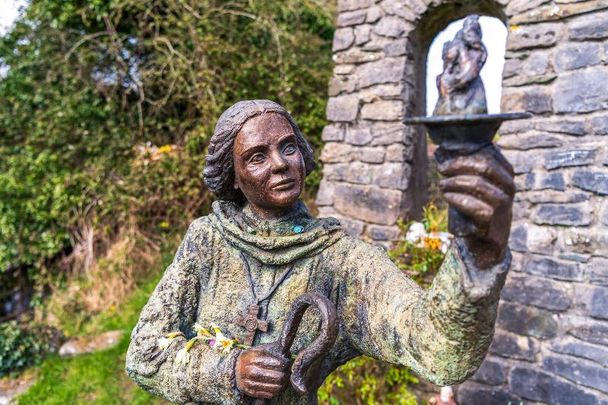
Brigid’s Holy Well in Co Kildare. IRELAND’S CONTENT POOL
The Feast of Brigid, also known as Imbolc, marks the arrival of longer, warmer days and the early signs of spring on February 1.
Imbolc is one of the four major “fire” festivals or quarter days, referred to in Irish mythology from medieval Irish texts. The other three festivals on the old Irish calendar are Beltane, Lughnasadh, and Samhain.
The word Imbolc means literally “in the belly” in the old Irish Neolithic language, referring to the pregnancy of ewes.
In ancient Irish mythology, Brigid was a fire goddess. Nowadays, her canonization is celebrated with a perpetual flame at her shrine in Co Kildare.
2
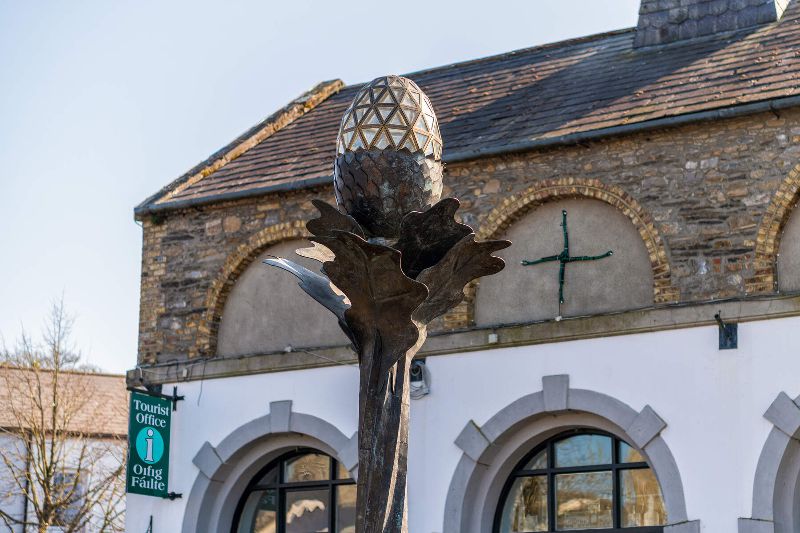
The sacred flame in Kildare Town. (Ireland’s Content Pool)
St. Brigid is the patron saint of babies, blacksmiths, boatmen, cattle farmers, children whose parents are not married, children whose mothers are mistreated by the children’s fathers, Clan Douglas, dairymaids, dairy workers, fugitives, Ireland, Leinster, mariners, midwives, milkmaids, nuns, poets, the poor, poultry farmers, poultry raisers, printing presses, sailors, scholars, travelers, and watermen. Here’s a busy saint!
St. Brigid’s Day traditions and customs
One folk tradition that continues in some homes on St. Brigid’s Day (or Imbolc) is that of the Brigid’s Bed.
The girls and young unmarried women of the household or village create a corn dolly to represent Brigid, called the Brideog (“little Brigid” or “young Brigid”), adorning it with ribbons and baubles like shells or stones. They make a bed for the Brideog to lie in.
On St. Brigid’s Eve (January 31), the girls and young women gather together in one house to stay up all night with the Brideog, and are later visited by all the young men of the community who must ask permission to enter the home, and then treat them and the corn dolly with respect.
Brigid is said to walk the earth on Imbolc eve. Before going to bed, each member of the household may leave a piece of clothing or strip of cloth outside for Brigid to bless. The head of the household will smother (or “smoor”) the fire and rake the ashes smooth.
In the morning, they look for some kind of mark on the ashes, a sign that Brigid has passed that way in the night or morning. The clothes or strips of cloth are brought inside and believed to now have powers of healing and protection.
Neopagans of diverse traditions observe this holiday in a variety of ways, celebrating Brigid’s divine femininity. As forms of neopaganism can be quite different and have very different origins, these representations can vary considerably despite the shared name.
Some celebrate in a manner as close as possible to how the ancient Celts are believed to have observed the festival, as well as how these customs have been maintained in the living Celtic cultures. Other neopagans observe the holiday with rituals taken from numerous other unrelated sources, Celtic cultures being only one of the sources used.
Imbolc is usually celebrated by modern Pagans on February 1 or 2 in the Northern Hemisphere, and August 1 or 2 in the Southern Hemisphere, or at the solar midpoint between the winter solstice and spring equinox, which now falls later in the first week or two of February.
For the first time ever, Brigid’s Day has become a Bank Holiday in Ireland in 2023. While Brigid’s Day is February 1, the Irish Bank Holiday will be observed on the
As of February 2023, Ireland will have a Bank Holiday to celebrate St. Brigid’s Day. The new Irish Bank Holiday will be observed the first Monday in every February, except where St Brigid’s Day, the 1st day of February, happens to fall on a Friday, in which case that Friday 1 February will be a public holiday.
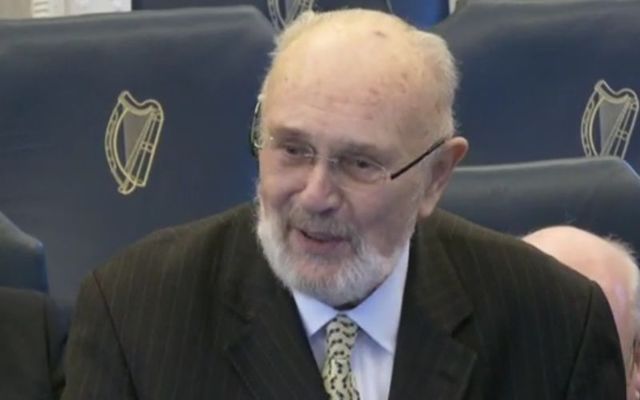
January 22, 2024: Senator David Norris delivers his final address in the Seanad Éireann. YOUTUBE
Senator David Norris, 79, delivered his final address in the Seanad Éireann today, January 22, marking the end of his 36-year run as a Senator.
After thanking his colleagues and all those who voted for him over the years, Senator Norris said: “Since this is my last opportunity to speak on the floor of this House, I would like to continue to advocate for peace in Palestine, and in particular Gaza.
“What is happening to the inhabitants of Gaza is appalling and cannot be allowed to continue.
“Man’s inhumanity to man is our greatest shame, and I have to say, also, that it goes completely against the Jewish ethic, which is ‘l’chaim,’ or ‘to life.’
“The present [Israeli] Government under Netanyahu has committed them to death instead of to life, and to death in overwhelming numbers for the unfortunate trapped citizens of Gaza. I deplore it completely.
“What is happening is appalling and cannot be allowed to continue. Man’s inhumanity to man is our greatest shame. I urge Senators to continue to push for peace in our times.
“Finally, I would like to voice my support for the forthcoming referenda on the family. It is important that they succeed, and even though I will be retired, I will be, to the best of my ability, campaigning for their success.”
Sign up to IrishCentral’s newsletter to stay up-to-date with everything Irish!Subscribe to IrishCentral
In the 1970s, Norris founded the Campaign for Homosexual Law Reform, which featured Mary Robinson and Mary McAleese, both future Presidents of Ireland, as advisors.
In 1983, Norris went to the Irish Supreme Court to challenge the constitutionality of the 1861 Offences Against the Person Act and the 1885 Criminal Law (Amendment) Act, laws which made homosexuality an offense that had been passed before Irish independence and had been since repealed in England, Wales, Scotland, and Northern Ireland. Norris was unsuccessful.
In 1987, Norris was elected to the Seanad as an Independent; he has been re-elected at each election since. Upon his resignation this month, Norris is the longest-serving member of the Seanad in the history of the Irish State.
The following year, Norris took a case to the European Court of Human Rights to argue that Irish law was incompatible with the European Convention on Human Rights. This time he was successful in his efforts, and the ECHR ruled that the criminalization of male homosexuality in the Republic of Ireland violated the right to privacy in personal affairs.
Five years later, Minister for Justice Maire Geoghegan-Quinn included decriminalization with an equal age of consent in a bill to deal with various sexual offenses. No parties in the Oireachtas opposed decriminalization.
Mary Robinson, who had represented Norris in his Supreme Court and European Court of Human Rights case, was President of Ireland and ultimately signed the act into law when it passed the Dáil in 1993.
Two days after the bill passed the Dáil, Norris wrote in the Irish Times: “When, next week, this Bill is passed by Seanad Éireann and sent to the President for signature I will, for the first time in my life, feel that I am at last a full and equal citizen in my own country.”
Norris has sponsored 34 bills throughout his tenure as a Senator. While he received several tributes in the SSeanad on Monday following his final address, he also received written tributes from Preisdent Michael D. Higgins and Taoiseach Leo Varadkar.
“Your legacy as a champion of equality and diversity will continue to inspire future generations to come,” President Higgins wrote.
An Cathaoirleach Jerry Buttimer said in the Seanad on Monday that Varadkar wrote: “In your campaigns, you showed true leadership, standing for causes that were unpopular and poorly understood but, above all, were appealing to our best instincts as human beings: kindness, compassion, tolerance and acceptance.”
The widely opposed Legacy Bill is now enacted as the Northern Ireland Troubles (Legacy and Reconciliation) Act, 2023. But it remains widely hated and the Irish government has launched inter-state proceedings against the UK administration. This is a clear and strong sign of how bad relations are between the two governments that are co-guarantors of the Good Friday Agreement.
Out of what we can now call the Legacy Act comes the Independent Commission for Reconciliation and Information Recovery. While this body – abbreviated to ICRIR – investigates past events from the Troubles, the Act limits criminal investigations, legal proceedings, inquests and police complaints.
The Act also extends the prisoner release scheme that was initially enacted in 1998. In addition, the legislation aims to provide “for experiences to be recorded and preserved and for events to be studied and memorialised”.
The Irish government’s inter-state case claims that the Legacy Act reneges on previous commitments entered into by the UK government through the Stormont House Agreement. In addition, that the legislation is not victim-centred; that it is not consistent with obligations under the European Convention on Human Rights, which is a cornerstone of the Good Friday Agreement; that it is widely opposed within Northern Ireland; that it allows for the granting of immunity; and that it closes down existing police investigations and civil actions. Ireland argues that the ICRIR investigations are not a substitute for properly resourced police investigations.
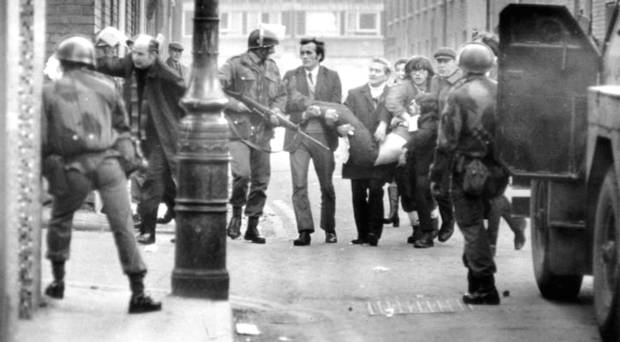
In the latest Holywell Conversations, Sara Duddy from the Pat Finucane Centre explains why it and the victims it represents will not co-operate with ICRIR. Coinciding with the establishment of ICRIR, the Centre has launched its own ‘Impunity Project’, through which families of victims of Troubles killings seek to challenge false allegations against dead relatives. In some cases – as with Bloody Sunday – the Army falsely accused the dead of being bombers or otherwise paramilitaries to ‘justify’ their killings.
Families are now seeking two types of justice – to know the truth behind killings and to correct false allegations against dead relatives.
The other interview in the latest podcast is with Peter Sheridan, a former senior officer with the RUC and PSNI who is now Commissioner for Investigations at ICRIR. He operates under the overall leadership of former Lord Chief Justice of Northern Ireland, Sir Declan Morgan, who is the Chief Commissioner.
Peter Sheridan says that ICRIR hopes to be fully operational in the middle of this year and explains how it will proceed and how relatives of those who died, and also those seriously injured, will be able to raise cases with ICRIR. He argues strongly that his police background will not undermine his credibility as lead investigator.
With such a wide array of opponents and critics of the Legacy Act – ranging from the five largest Northern Ireland parties, to the Northern Ireland Human Rights Chief Commissioner, to the departing Victims Commissioner, to victims groups and to international human rights groups – it seems implausible that ICRIR will have an easy birth.
The podcast can be listened to at the Holywell Trust website along with previous episodes.
Disclaimer: This project has received support from the Northern Ireland Community Relations Council which aims to promote a pluralist society characterised by equity, respect for diversity, and recognition of interdependence. The views expressed do not necessarily reflect those of the Community Relations Council.
![[Irish Republican News]](https://republican-news.org/graphics/title_gifs/rn.gif)
 Share
Share Tweet
Tweet![[Irish Republican News]](https://republican-news.org/graphics/title_gifs/harp.gif)