The northern economy minister (for the time being), Conor Murphy, has warned that the introduction of the Electronic Travel Authorisation (ETA) scheme for non-EU travellers to Northern Ireland from this month – and to non-Irish EU travellers from April – “will have a devastating impact on tourism in the north of Ireland”.
While the process to obtain an ETA seems straightforward and the cost of £10 per person appears not too onerous, it still is a deterrent for tourists to cross the border, one of many since the partition of Ireland in 1921.
Following partition, there was some co-operation between the two Irish jurisdictions on tourism and other matters, mainly amongst civil servants behind closed doors though.
Being on the same small island with the same climate and landscape made it difficult for the two Irish polities to diverge too much on what could be offered to tourists.
The Free State’s Irish Tourist Association (ITA) wrote in 1927: “We trust that those who visit the north will also visit the south; we trust too that those who visit the south will travel to the north… there is no boundary to beauty”.
Likewise, speaking in 1930, the Northern Ireland prime minister James Craig said “Ulster was glad to pass on her tourists” to the Free State, and he was sure the Free State was equally glad to pass hers to the Six Counties.
James Craig, first prime minister of Northern Ireland
However, the promotion of tourism by the ITA and by the Ulster Tourist Development Association (UTDA) in Northern Ireland had a strong political dimension, with both voluntary bodies reliant on government support, financially and legislatively.
While the ITA emphasised the idyllic, untarnished beauty of the Irish landscape, the UTDA sought to portray the north as modern and progressive.
The ITA invited travellers to “Ireland”, whereas the UTDA invited them to “Ulster”.
The misuse of the name Ulster did not just draw criticism from nationalists but from some unionists too, with Armar Lowry-Corry, the 5th Earl Belmore of Castle Coole in Fermanagh, saying it was “disgraceful” that the UTDA “have the impudence to call” Northern Ireland “Ulster”.
He also believed the UTDA should promote tourism to Donegal, “the chief centre for tourists”, even though the county was not in Northern Ireland.
According to JT Nugent, border-based authorities such as Newry Rural Council “threatened to withdraw their subscription until the UTDA lobbied for more approved routes into the Free State”.
The biggest obstacle to cross-border tourism came about after the Free State government introduced customs barriers in April 1923 which created a hard border in Ireland.
Donegal farmers found themselves having to wait until the new border post at Galliagh opened before they could bring their produce into Derry to sell.
Overnight, the border landscape changed to one of customs and boundary posts, to approved and unapproved routes.
Afterwards, tourists travelling by train, bus or car were subjected to long delays, the filling of complicated forms and customs checks.
Initially, cars were unable to cross the border on Sundays or public holidays, until it was agreed to remove this impediment for tourists in fear of hampering the industry.
With many in Great Britain assuming they would have to undergo customs checks in visiting any part of Ireland, the UTDA and the northern government went to great lengths to highlight that Northern Ireland was part of the UK customs union and that “the trading relationships which exist between Great Britain and Ulster are exactly the same as those which exist between, say, Lancashire and Yorkshire”.
In a foreword for the 1939 UTDA ‘Ulster: For Your Holiday’ guide, James Craig reminded people from England, Scotland or Wales that “in coming amongst us you will not have left your home country” and will not have to worry “with anything in the shape of customs formalities, passports or motor regulations”.
Tourism was central to the meetings between Seán Lemass and Terence O’Neill, which commenced this month 60 years ago.
Areas of co-operation on tourism agreed to by both men included the removal of a requirement for a triptyque pass to enter either jurisdiction and consideration of permitting the free passage of hired cars through border checkpoints.
Lemass and O’Neill also agreed that the relevant ministers in both jurisdictions, Erskine Childers and Brian Faulkner, should hold joint talks in the near future.
Captain Terence O’Neill, Prime Minister of Northern Ireland (left), pictured with Taoiseach Sean Lemass and Frank Aiken, the Republic’s Minister of External Affairs, in Dublin. Captain O’Neill was paying the first visit to Dublin by a Northern Ireland Prime Minister since May 1921, shortly after partition (PA Archive/PA)
While Childers sought co-operation between both Irish governments, as well as the British government, “especially in the lucrative American market”, he met with an “uncooperative attitude” from the northern government body, the Northern Ireland Tourism Board (NITB).
According to Michael Kennedy: “It would appear that everything the NITB did in relation to the Republic contained a political dimension and so co-operation over tourism promotion remained very unlikely.”
Despite the efforts for more cross-border tourism co-operation in the mid-1960s, the onset of the Troubles later in the decade spurned such hopes.
The Troubles severely impacted on the numbers of tourists travelling to the north, as well as to the south, with optimism only re-surfacing after the IRA ceasefire of August 1994, when once again efforts were made to increase north-south tourism co-operation.
Tourism brand Ireland allowed Irish tourism “to unify behind a single market initiative”
Tourism brand Ireland allowed Irish tourism “to unify behind a single market initiative”.
While security checkpoints remained for much of the 1990s, customs barriers were removed with the onset of the EU Single Market in January 1993. It was considerably easier for tourists (and everyone else) to cross the border from thereon in.
Distrust remained, as Eric GE Zuelow has noted, with unionist proposals for joint tourism ventures with Scotland being seen by nationalists as attempts to strengthen the union, and nationalist efforts for increased cross-border co-operation being seen by unionists as a stepping stone to a united Ireland.
Highlighting its sensitivity as an issue, tourism was not included as one of the six cross-border bodies agreed to after the Good Friday Agreement.
Instead it was included as an area of co-operation, resulting in the formation of Tourism Ireland in December 2000, which, working in tandem with Bord Fáilte and Tourism NI, is responsible for marketing the island of Ireland overseas.
With most of the impediments of the past removed, cross-border co-operation and tourism to Northern Ireland has flourished, so much so that there are now “ambitious” plans to double the tourism industry in the north by 2035.
However, as the introduction of the UK government’s ETA scheme shows – another consequence of the disastrous decision of the UK to leave the EU – as long as a border exists on the island, regardless of how seamless it may appear, so too will barriers remain to true all-island tourism.
Portadown peace wall: An important mind shift towards breaking down all our barriers – The Irish News view
Work to remove peace walls in Portadown has started
By The Irish News
January 21, 2025 at 6:00am GMT
Removing a three-metre high piece of steel fencing would not normally be regarded as newsworthy, but in Water Street, Portadown, in recent days, it has become an event of welcome political significance.
The fence was one of what are normally called peace walls, seven of which were erected in the town between 1998 and 2002 to physically separate nationalists and unionists at a time of heightened sectarian tension.
The removal of the fence is only a small step in addressing the running sore of the approximately 20 remaining miles of peace walls in our society, but it represents progress.
In 1998 when the Good Friday Agreement was signed, few would have predicted that in many urban areas 27 years later, our sectarian divide would still be so entrenched that unionists and nationalists would have to be kept apart by purpose-built walls.
In 2013, Peter Robinson and Martin McGuinness pledged to remove all peace walls by 2023. Today, two years after their deadline, there are still up to 100 physical barriers of various types reflecting a society still deeply divided by sectarianism.
The latest draft Programme for Government from the Stormont Executive has no timetable for removing peace barriers. It looks like Stormont has given up on trying to remove them.
Robinson and McGuinness expressed the view that removing the peace barriers would improve community relations. While their aim was well meant, they might have recognised that improved community relations should come before, not after, the removal of the walls.
Although the peace barriers are an eyesore, they are not the real problem. They are merely symptoms of the sectarianism which still pervades our society. The walls will remain as long as sectarianism remains.
That was the significance of the removal of the barrier in Portadown – it was carried out with the support of the local communities. If the real barriers are in the minds of people, we can safely say that the removal of the Portadown peace fence represents a mind shift among people there. They are to be congratulated for their efforts.
In the meantime, many of our physical divides have become normalised and some have even become tourist attractions, particularly in Belfast. It is odd the Executive should promote tourism here on the basis of the peace process, while the symbols of a divided society have become tourist attractions.
As long as these walls remain, we cannot claim to enjoy genuine peace. We just have an end-of-war process, in which the Stormont Executive appears to have settled for an acceptable level of division. It must do better.
It could begin by recognizing that this week, people in Portadown took a step towards the true meaning of peace.
It also reveals an Ireland that has fortunately gone, where politicians lined up to kiss the ring of visiting prelates, and sub-contracted public morality to the Catholic Church and the country’s censorship board.
Her first novel, “The Country Girls”, with its frank portrayal of female sexuality, would swiftly join the 1,600 other books banned by the state.
The book was denounced as a “slur on Irish womanhood” and described by that beacon of Catholic values, Charlie Haughey, as “filth” that had no place in any decent home.
O’Brien had earlier run away with her older lover, Ernest Gebler, which led to a farcical and ultimately unsuccessful attempt to bring her home from her hiding place on the Isle of Man by a posse that included her father, brother and a Co Clare priest.
The pair married, but he became jealous of her literary success and his overbearing misogyny is shocking to a modern audience.
Not only did he cash the cheques she earned from her books, doling her out “housekeeping” money, he also wrote notes in her personal diary, contradicting her observations.
He also claimed to have written her early novels himself, though she seemed to manage very well at the writing once she had left him.
The notoriety of her early work – copies of which were publicly burned by the parish priest – cast her in the public eye as a glamorous libertine, a scarlet woman, revelling in the attention of the rich and famous who gathered at her parties in London.
A full ‘who’s who’, from Jackie Onassis to Robert Mitchum, dropped in and out of her life, with Marlon Brando calling by and Richard Burton puzzled that he failed to seduce her.
Her later interest in the north was unusual for a writer from the south. But her novel “House of Splendid Isolation”, which engaged with the Troubles, northern republicans and the north/south divide, was criticised for romanticising the IRA.
One critic derided her as “the Barbara Cartland of long-distance republicanism”. Another Irish writer publicly shouted across a restaurant that she was “sleeping with the Provos”.
But O’Brien understood that the conflict in the north was a matter for the whole island, and understood the north’s feeling of abandonment by her fellow countrymen.
Edna O’Brien was a novelist, short-story writer, memoirist, poet and playwright
The aggrieved gunman in the novel, loosely based on Dominic McGlinchey, laments: “The south forgot us.”
The author commented: “For many in the south, the IRA were increasingly mindless hooligans, who brought shame on their fellow Catholics and a stain on the altar of the nation.”
Her subsequent interview for The New York Times with Gerry Adams, “Ulster’s Man of the Dark”, was also criticised for being too sympathetic, because she believed he was someone who could help achieve peace.
“Some spoke to me with absolute disbelief that I would show sympathy toward such people and such a cause, while others were openly intemperate, and an MP at a gathering told me he would bring back hanging for the likes of me.”
It was at a time when sections of the Dublin media were equally intemperate in their attacks on SDLP leader John Hume because of his negotiations with Gerry Adams.
In the film, O’Brien rejects charges that she condoned republican violence, but was at pains to point out that the IRA weren’t the only ones involved in the dirty war.
Anyone who doubts this should look at the campaign by the family of GAA man Sean Brown, still fighting to get an inquiry into his murder nearly 27 years later, facing the obduracy of the British state, still intent on covering up that its agents were actively involved in the killing.
By David Bell on 20 January 2025The Cost of Political AppointmentsThe recent conviction of Sinn Féin press officer Michael McMonagle for serious child sex offences has highlighted systemic flaws in Northern Ireland’s approach to political appointments. While McMonagle was briefly employed under First Minister Michelle O’Neill’s staffing allowance, subsequent revelations—including a party colleague providing an employment reference—have raised considerable concerns about vetting and accountability.This case exemplifies broader issues—opaque appointment processes, inadequate oversight, and blurred lines between party and public interests—that persist across Stormont and public bodies generally. Reforming these practices is vital to restoring public trust and ensuring adherence to the Nolan Principles of public life.The Accounting Officer for the NI Assembly Commission has now completed a review following expressions of concern about these appointments. Sinn Féin chief whip Sinéad Ennis responded that it was “essential that the use of public money is fully accountable, properly scrutinised and that processes in relation to the use of public funds are open and transparent”. SDLP chief whip Colin McGrath stated that “this situation has undermined public trust and raised questions around the use of public funds.” While the report states that “effective oversight of the use of public money does not start from an assumption of bad faith…”, the behaviour of certain individuals in public office can stretch this assumption to its limits.The scale of public money involved is significant. Between April 2021 and March 2022, MLAs claimed almost £8 million in staff expenses, and allowances for political members of public bodies can start at almost £16,000 per annum.Learning from HistoryThe UK Parliamentary Expenses Scandal of 2009 stemmed from investigations into several MPs’ claims for second homes and childcare expenses. On 27 May 2007, the Sunday Times revealed that Conservative MP Derek Conway had employed his son as a part-time research assistant in his parliamentary office from 2004 to 2007, with an annual salary of £10,000, even though he was a full-time undergraduate student at Newcastle University. Closer to home, the Sunday Telegraph reported on 10 May 2009 that five Sinn Féin MPs collectively claimed nearly £500,000 in second home allowances despite not taking their seats at Westminster because of the party’s abstentionist policy.The expenses scandal finally exposed the “gravy train” related to the employment by MPs of family members. A review by the Independent Parliamentary Standards Authority (IPSA) in 2017 noted that the practice “can be perceived as providing personal gain to MPs and their families at taxpayers’ expense.” While this was prohibited for all new MPs from that point onward, those ‘connected parties’ employed before 2017 were permitted to keep their positions. For instance, Fiona Paisley served as an administration manager for her husband, Ian Paisley, the DUP MP for North Antrim, from 2015 until he lost his seat in May 2024. In 2022, she made headlines when she received a pay rise of approximately £20,000 from parliamentary expenses for her part-time role.Current Practices and ProblemsThe current framework for political appointments attempts to balance party interests with public accountability, but significant gaps remain. In addition to ‘connected parties’ (usually family members), MLAs must declare when they hire ‘associated persons’—including party members, former elected representatives, and relatives or former employees of other MLAs. However, this information is not routinely made public through disclosure on MLAs’ register of interests. Nevertheless, a Freedom of Information Request in 2023 revealed that following the 2022 Assembly elections, more than 60% of constituency office staff recruited by MLAs were party members. All 24 new Sinn Féin staff appointees were party members, while 22 of 35 Alliance Party appointees were party-connected individuals. The DUP declared 15 associated persons out of 34 new appointments.While the case against appointing ‘connected parties’ is relatively straightforward, the issues related to employing ‘associated persons’ are more complex. The McMonagle review highlighted a fundamental challenge in oversight: the difficulty in distinguishing between constituency work, legislative work, and party-political activities. This inherent overlap between party and public service roles presents structural challenges for effective oversight. Exemptions from the provisions of Fair Employment laws present an additional complexity.Fair Employment legislation in NI exempts elected representatives when appointing staff “where the essential nature of the job requires it to be done by a person holding, or not holding, a particular political opinion”. A similar exception exists for clergymen or ministers of a religious denomination and, until recently, also held for teachers.Beyond Stormont: Public Body AppointmentsThe McMonagle case highlights issues around patronage and oversight that go beyond staffing appointments within the Assembly. In early 2021, a controversy over Sinn Féin’s appointment of an individual with serious criminal convictions to the Education Authority (EA) illustrated how political parties’ power to nominate representatives to NI’s public bodies raises similar concerns about accountability. This appointment prompted the introduction of the Political Appointments Bill, which sought, in vain, to establish new restrictions around such nominations. However, this failed to address what appear to be serious deficiencies in the rules governing the appointment of political members to the EA’s board.The Bill directly compares individuals nominated as political members of the NI Policing Board and the EA, overlooking at least one highly significant difference. Unlike the Policing Board, and indeed any other public body in NI, political members of the EA board are not required to be elected Local Government members, which has been described as a ‘democratic deficit’. Furthermore, the Bill highlights a serious deficiency common to all public body appointments made by our political parties.Accountability GapThe Minister is ultimately responsible for any appointment within their department and will always point out that these “have been made in accordance with the principles and practices of the Code of Practice of the Commissioner for Public Appointments.” This requires that all stages of the appointment process be transparent, fair, and based on merit. These values are reiterated in the Seven Principles of Public Life (also known as the Nolan Principles), which apply to anyone who holds public office. However, the Political Appointments Bill states that political members of public bodies are nominated by the nominating officers of political parties. This process is, at best, opaque and may or may not adhere to any code of conduct.ConclusionThe McMonagle case exemplifies fundamental weaknesses in managing political appointments across our institutions. At the most basic level, it exposed gaps in the vetting and oversight of constituency office staff. More broadly, it highlighted how the current system of political patronage—from staffing allowances to public body appointments—relies too heavily on the integrity of nominating officers and political parties. While the unsuccessful Political Appointments Bill sought to address issues related to criminal convictions, it failed to confront more systemic challenges regarding transparency and accountability.The issues revealed by this case persist across our institutions. If we are to uphold the Nolan Principles in public life, particularly those related to openness and accountability, we need stronger safeguards and greater transparency in how political appointments are made—whether to constituency offices or public bodies. Ministers of Government Departments must accept responsibility for ensuring that transparency, fairness, and merit are paramount at every stage of public appointments. All public officeholders must “actively promote and robustly support” these principles “and challenge poor behaviour wherever it occurs.”
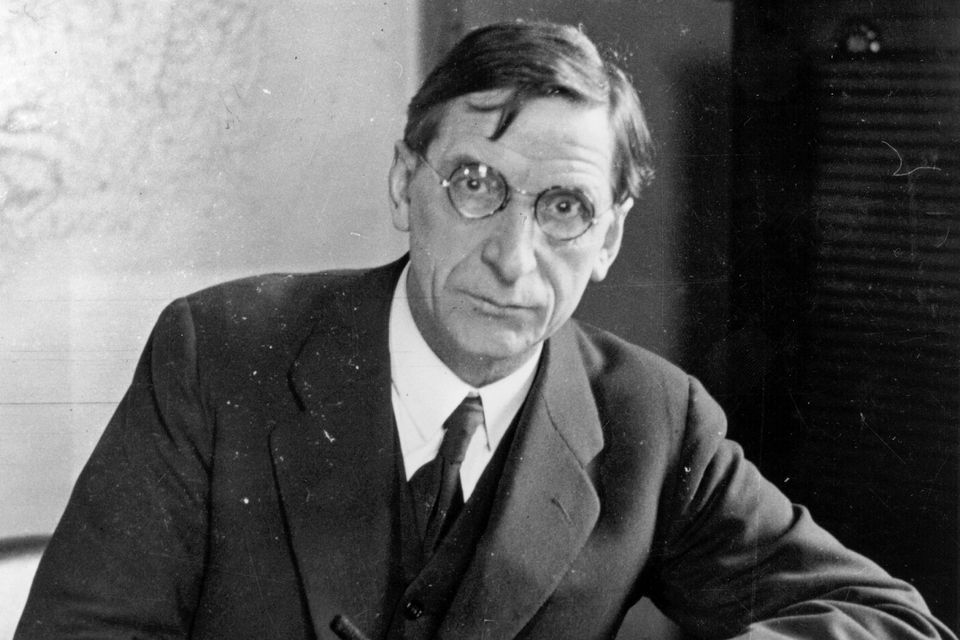
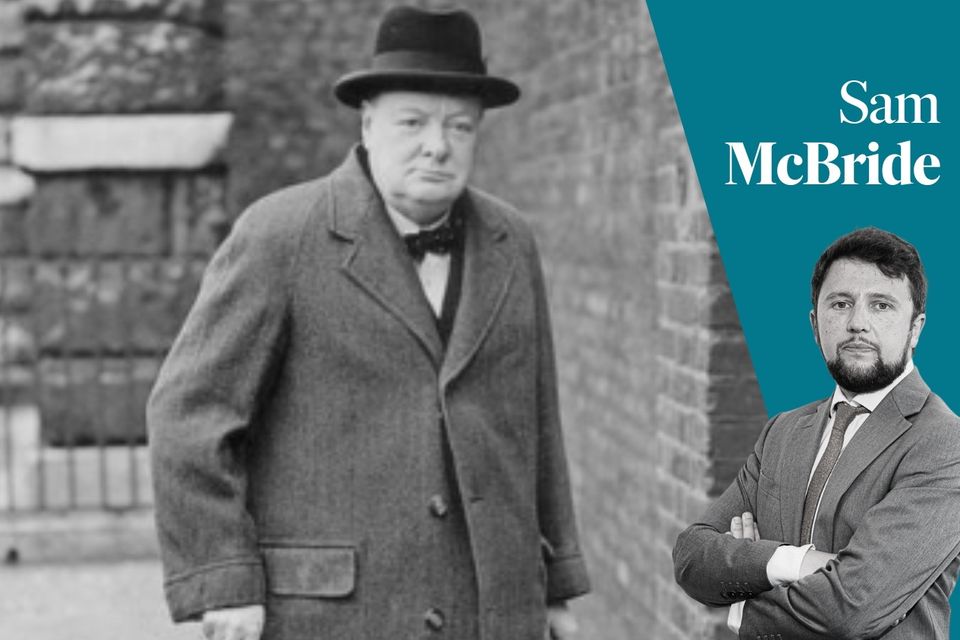
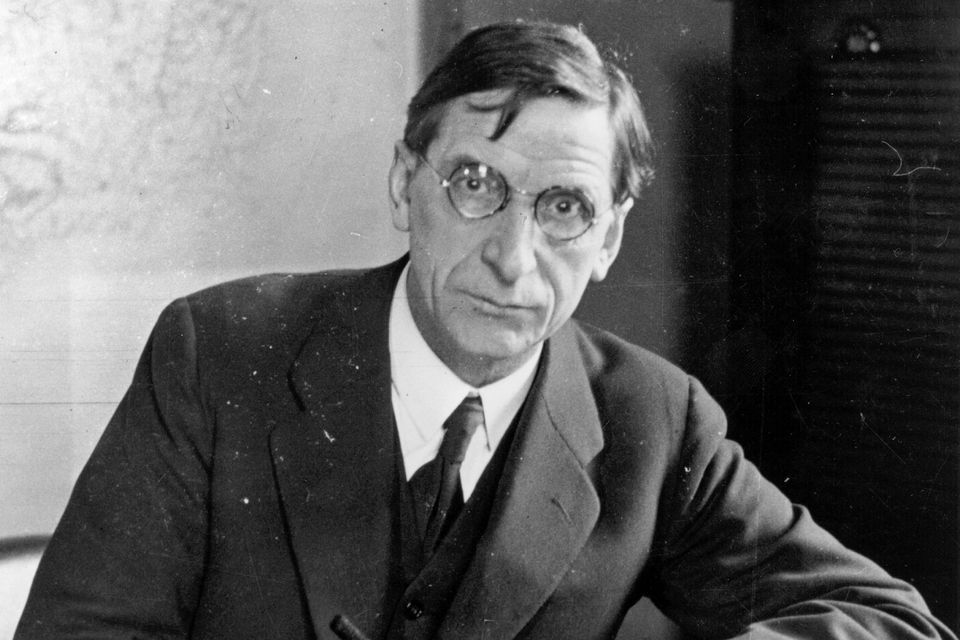
Churchill was, at times, critical of Éamon de Valera. Photo: GettyWinston Churchill. Photo: David Savill/Topical Press Agency/Getty
Sam McBride
Today at 07:17
As the quintessential embodiment of British defiance, Winston Churchill may be an unlikely inspiration for Irish nationalists. His support for Home Rule notwithstanding, Britain’s wartime leader — who died 60 years ago this week — was the antithesis of many of the values espoused by those seeking Irish self-determination.
Yet this imperialist and militarist, so uncompromising in his exterior and at times ferociously critical of Éamon de Valera’s fledgling new state, repeatedly gave advice which, if Irish nationalists had followed it, would have made Irish unity far more likely.
The crux of that advice — to kill unionists with kindness rather than threatening them — is now official Irish Government policy as expressed in the Shared Island Unit which is throwing cash at projects in Northern Ireland to build reconciliation, the Republic’s constitutional claim on the six counties now long in the past.
Indeed, so gentle is the Shared Island Unit’s approach that a critical aspect of its decision-making on projects is whether they would make sense even if the Border is never removed.
As with so many of the great political questions of his era, Churchill’s view of Ireland was open to alteration
For those who want to see both sides of the island flourish, regardless of the constitutional arrangements which pertain, this is eminently sensible. But it wasn’t always seen as common sense to lavish warmth on what were seen as recalcitrant northern unionists.
As with so many of the great political questions of his era, Churchill’s view of Ireland was open to alteration.
Writing in 1896 as a 21-year-old, the future prime minister privately said he would “never consent” to home rule for Ireland. Yet, just over a decade later he was spearheading that policy.
He would be involved not only in negotiating the Anglo-Irish Treaty but in attempting to build social relationships between James Craig and Michael Collins away from the talks.
Churchill’s ability to bombastically argue both sides of most debates provides ample material for dispute between those who say he was lacking in political principle and those who view him as someone who would abandon past positions out of sincere belief that circumstances had changed rather than out of a craven desire for personal advancement.
What is strikingly consistent, however, across shifting decades and circumstances, was Churchill’s sadness that partition had endured and his desire to see the eventual removal of the Border.
For someone who not only espoused Empire but had taken part in some of its wars, he was clear-eyed about British sins in Ireland. Writing in 1896 to his American friend Bourke Cockran — a Sligo-born lawyer to whom he later attributed his oratorical skill — he acknowledged past atrocities, saying: “I consider it unjust to arraign the deeds of earlier times before modern tribunals and to judge by modern standards. No one denies — no one has ever attempted to deny — that England has treated Ireland disgracefully in the past.
“Those were hard times; death was the punishment of every crime and the treatment of the Irish by the stronger power was in harmony with the treatment of the French peasantry, the Russian serfs and the Hugenots.”
However, by 1912 when he famously enraged Ulster unionists by coming to Belfast to defend home rule, he told an audience in Celtic Park: “History and poetry, justice and good sense alike demand that this race — gifted, virtuous and brave, which has lived so long and endured so much should not, in view of her passionate desire, be shut out of the family of nations and should not be lost forever among indiscriminate multitudes of men.”
Churchill was, at times, critical of Éamon de Valera. Photo: Getty
Although De Valera’s covert assistance to the allies is now far better understood, Irish neutrality during World War II enraged Churchill. In a 1945 victory address to the nation, he raged against “the action of Mr de Valera, so much at variance with the temper and instinct of thousands of southern Irishmen, who hastened to the battlefront to prove their ancient valour”, saying “if it had not been for the loyalty and friendship of Northern Ireland we should have been forced to come to close quarters with Mr de Valera or perish forever from the earth”.
Yet just after that flash of anger came a very different sentiment: “When I think of these days I think also of other episodes and personalities. I do not forget Lieutenant-Commander Esmonde, VC, DSO, Lance-Corporal Kenneally, VC, Captain Fegen, VC, and other Irish heroes that I could easily recite, and all bitterness by Britain for the Irish race dies in my heart. I can only pray that in years which I shall not see the shame will be forgotten and the glories will endure, and that the peoples of the British Isles and of the British Commonwealth of Nations will walk together in mutual comprehension and forgiveness.”
Three years later, he said: “It seemed to me that the passage of time might lead to the unity of Ireland itself in the only way in which that unity can be achieved, namely, by a union of Irish hearts. There can, of course, be no question of coercing Ulster, but if she were wooed and won of her own free will and consent I, personally, would regard such an event as a blessing for the whole of the British Empire and also for the civilised world.”
Yet the remarkable element of Churchill’s view about how unity might come about wasn’t that it was especially inventive or insightful but that it was so obvious
Richard Pim, an Ulsterman who was on Churchill’s personal staff as head of his map room during the war, recalled a 1942 lunch between Lloyd George, Stormont prime minister JM Andrews and Churchill in which the trio proceeded “with the assistance of wine glasses, salt and pepperpots, to discuss in detail the Irish question in 1900”. He recalled Churchill and Lloyd George said they wouldn’t under any circumstances “permit the coercion of Ulster in the future. At the same time, both made it very clear that they still entertained the hope that in the future some statesman would rise in Ulster who would feel justified in making a move towards closer harmony with the south.”
They hoped for a correspondingly farsighted southern interlocutor who could smooth “harmony with Northern Ireland”. But their reasons weren’t wholly selfless: “They believed that if such a change of heart was to be found in the North and in the south, then the North, because of the history of its ancestors, would automatically become the real controller of the new Ireland, which she would bring again fully within the folds of the British Empire.”
There are elements of this which were delusional as the Empire was fading away. Yet the remarkable element of Churchill’s view about how unity might come about wasn’t that it was especially inventive or insightful but that it was so obvious — yet so alien to the time.


 By David Bell on 20 January 2025The Cost of Political AppointmentsThe recent conviction of Sinn Féin press officer Michael McMonagle for serious child sex offences has highlighted systemic flaws in Northern Ireland’s approach to political appointments. While McMonagle was briefly employed under First Minister Michelle O’Neill’s staffing allowance, subsequent revelations—including a party colleague providing an employment reference—have raised considerable concerns about vetting and accountability.This case exemplifies broader issues—opaque appointment processes, inadequate oversight, and blurred lines between party and public interests—that persist across Stormont and public bodies generally. Reforming these practices is vital to restoring public trust and ensuring adherence to the Nolan Principles of public life.The Accounting Officer for the NI Assembly Commission has now completed a review following expressions of concern about these appointments. Sinn Féin chief whip Sinéad Ennis responded that it was “essential that the use of public money is fully accountable, properly scrutinised and that processes in relation to the use of public funds are open and transparent”. SDLP chief whip Colin McGrath stated that “this situation has undermined public trust and raised questions around the use of public funds.” While the report states that “effective oversight of the use of public money does not start from an assumption of bad faith…”, the behaviour of certain individuals in public office can stretch this assumption to its limits.The scale of public money involved is significant. Between April 2021 and March 2022, MLAs claimed almost £8 million in staff expenses, and allowances for political members of public bodies can start at almost £16,000 per annum.Learning from HistoryThe UK Parliamentary Expenses Scandal of 2009 stemmed from investigations into several MPs’ claims for second homes and childcare expenses. On 27 May 2007, the Sunday Times revealed that Conservative MP Derek Conway had employed his son as a part-time research assistant in his parliamentary office from 2004 to 2007, with an annual salary of £10,000, even though he was a full-time undergraduate student at Newcastle University. Closer to home, the Sunday Telegraph reported on 10 May 2009 that five Sinn Féin MPs collectively claimed nearly £500,000 in second home allowances despite not taking their seats at Westminster because of the party’s abstentionist policy.The expenses scandal finally exposed the “gravy train” related to the employment by MPs of family members. A review by the Independent Parliamentary Standards Authority (IPSA) in 2017 noted that the practice “can be perceived as providing personal gain to MPs and their families at taxpayers’ expense.” While this was prohibited for all new MPs from that point onward, those ‘connected parties’ employed before 2017 were permitted to keep their positions. For instance, Fiona Paisley served as an administration manager for her husband, Ian Paisley, the DUP MP for North Antrim, from 2015 until he lost his seat in May 2024. In 2022, she made headlines when she received a pay rise of approximately £20,000 from parliamentary expenses for her part-time role.Current Practices and ProblemsThe current framework for political appointments attempts to balance party interests with public accountability, but significant gaps remain. In addition to ‘connected parties’ (usually family members), MLAs must declare when they hire ‘associated persons’—including party members, former elected representatives, and relatives or former employees of other MLAs. However, this information is not routinely made public through disclosure on MLAs’ register of interests. Nevertheless, a Freedom of Information Request in 2023 revealed that following the 2022 Assembly elections, more than 60% of constituency office staff recruited by MLAs were party members. All 24 new Sinn Féin staff appointees were party members, while 22 of 35 Alliance Party appointees were party-connected individuals. The DUP declared 15 associated persons out of 34 new appointments.While the case against appointing ‘connected parties’ is relatively straightforward, the issues related to employing ‘associated persons’ are more complex. The McMonagle review highlighted a fundamental challenge in oversight: the difficulty in distinguishing between constituency work, legislative work, and party-political activities. This inherent overlap between party and public service roles presents structural challenges for effective oversight. Exemptions from the provisions of Fair Employment laws present an additional complexity.Fair Employment legislation in NI exempts elected representatives when appointing staff “where the essential nature of the job requires it to be done by a person holding, or not holding, a particular political opinion”. A similar exception exists for clergymen or ministers of a religious denomination and, until recently, also held for teachers.Beyond Stormont: Public Body AppointmentsThe McMonagle case highlights issues around patronage and oversight that go beyond staffing appointments within the Assembly. In early 2021, a controversy over Sinn Féin’s appointment of an individual with serious criminal convictions to the Education Authority (EA) illustrated how political parties’ power to nominate representatives to NI’s public bodies raises similar concerns about accountability. This appointment prompted the introduction of the Political Appointments Bill, which sought, in vain, to establish new restrictions around such nominations. However, this failed to address what appear to be serious deficiencies in the rules governing the appointment of political members to the EA’s board.The Bill directly compares individuals nominated as political members of the NI Policing Board and the EA, overlooking at least one highly significant difference. Unlike the Policing Board, and indeed any other public body in NI, political members of the EA board are not required to be elected Local Government members, which has been described as a ‘democratic deficit’. Furthermore, the Bill highlights a serious deficiency common to all public body appointments made by our political parties.Accountability GapThe Minister is ultimately responsible for any appointment within their department and will always point out that these “have been made in accordance with the principles and practices of the Code of Practice of the Commissioner for Public Appointments.”