Irish born Monsignor Edward Flanagan went on to found Boys Town in the US BoysTown.org
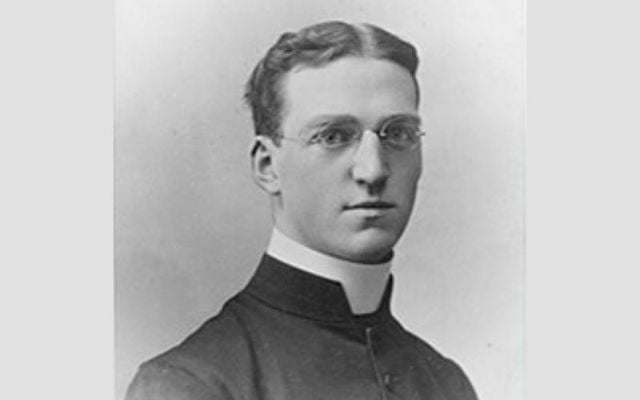
Today we remember the rebellious and kind Monsignor Edward Joseph Flanagan, founder of Boys Town, Nebraska, who was born on July 13, 1886.
Born in Co Roscommon, Monsignor Edward Joseph Flanagan, the founder of Boys Town, was a lone voice in condemning Ireland’s industrial schools back in the 1940s and the treatment afforded to orphans and those born outside marriage generally. He was viciously castigated by the Irish Church and the Irish government for doing so.
His treatment at the hands of clergy and politicians makes it very clear that both powerful arms of the state were determined to stick to secrets and lies, and cover-ups when it came to the mistreatment of youths and babies.
When he came back to America, Flanagan, addressing the Irish clergy and political leaders, said: “What you need over there is to have someone shake you loose from your smugness and satisfaction and set an example by punishing those who are guilty of cruelty, ignorance, and neglect of their duties in high places . . . I wonder what God’s judgment will be with reference to those who hold the deposit of faith and who fail in their God-given stewardship of little children.”
Sign up to IrishCentral’s newsletter to stay up-to-date with everything Irish!Subscribe to IrishCentral
However, his words fell on stony ground. He wasn’t simply ignored. He was taken to pieces by the Irish establishment. The then-Minister for Justice Gerald Boland said in the Dáil (Ireland’s parliament) that he was “not disposed to take any notice of what Monsignor Flanagan said while he was in this country because his statements were so exaggerated that I did not think people would attach any importance to them.”
Flanagan was a devout Catholic, a man who Catholics and non-Catholics worldwide had deemed a hero. He was the Mother Theresa of his day.
Flanagan was born on July 13, 1886, in the townland of Leabeg, Co Roscommon, to John (a herdsman) and Honoria Flanagan. In 1904, he immigrated to the United States.
Unlike many others, Flanagan became a priest after he had arrived in America. He was ordained in 1912. In 1917, he was living and working in Omaha, Nebraska, when he hit upon the idea of a “boy’s town,” which would offer education and a home for the poor and wayward boys of Omaha.
However, demand for the service was so great that he soon had to find bigger premises. Boys Town, built on a farm 10 miles from Omaha, was the result.
The center was open to all. There were no fences to stop the boys from leaving. Fr. Flanagan said he was “not building a prison.”
“This is a home,” he said. “You do not wall in members of your own family.”
Boys Town eventually became so well-known – and so well-respected – that Hollywood and the U.S. President came calling. Spencer Tracy and Mickey Rooney starred in the 1938 movie “Boys Town,” and it made a national hero out of Fr. Flanagan. He was internationally renowned as “the world’s most foremost expert on boys’ training and youth care.”
When World War II ended in 1945, President Truman asked Flanagan to tour Asia and Europe, to see what could be done for the many children orphaned and made homeless by the war.
Flanagan decided to return to the land of his birth in 1946 to visit his family and to visit the “so-called training schools” run by the Christian Brothers to see if they were “a success or failure.”
The success of the film “Boys Town” meant Flanagan was treated like a celebrity upon his arrival. His visit was noted by the Irish Independent, which said that Flanagan had succeeded “against overwhelming odds,” spurred on by the “simple slogan that ‘There is no such thing as a bad boy.’”
But Flanagan was unhappy with what he found in Ireland. He was dismayed at the state of Ireland’s reform schools and blasted them as “a scandal, un-Christ-like, and wrong.” And he said the Christian Brothers, founded by Edmund Rice, had lost their way.
Speaking to a large audience at a public lecture in Cork’s Savoy Cinema he said, “You are the people who permit your children and the children of your communities to go into these institutions of punishment. You can do something about it.” He called Ireland’s penal institutions “a disgrace to the nation,” and later said, “I do not believe that a child can be reformed by lock and key and bars, or that fear can ever develop a child’s character.”
Despite that, the Irish church and the Irish government felt comfortable ignoring Fr. Flanagan, ignoring the fact that he was considered to be an expert in the matter of providing for the education and upbringing of boys who were otherwise considered to be “lost causes.” Again, his efforts fell on stony ground.
What was it about the Irish church and the Irish government that made them so insular that they felt comfortable dismissing someone of Fr. Flanagan’s stature? Even though Fr. Flanagan was a popular hero to many Irish people, his words had no sway with those in authority, whether in the government or the church.
And, once those who endorsed the industrial school model survived Fr. Flanagan’s broadsides, they must have known that no one would challenge them again. They were right, for 50 years anyway.
Donegal v Meath – All-Ireland Senior Football Championship semi-final live: Updates from Croke Park as Ulster champions
The Ulster Champion Tír Chonaill men take on the Royals for a place in the All-Ireland final
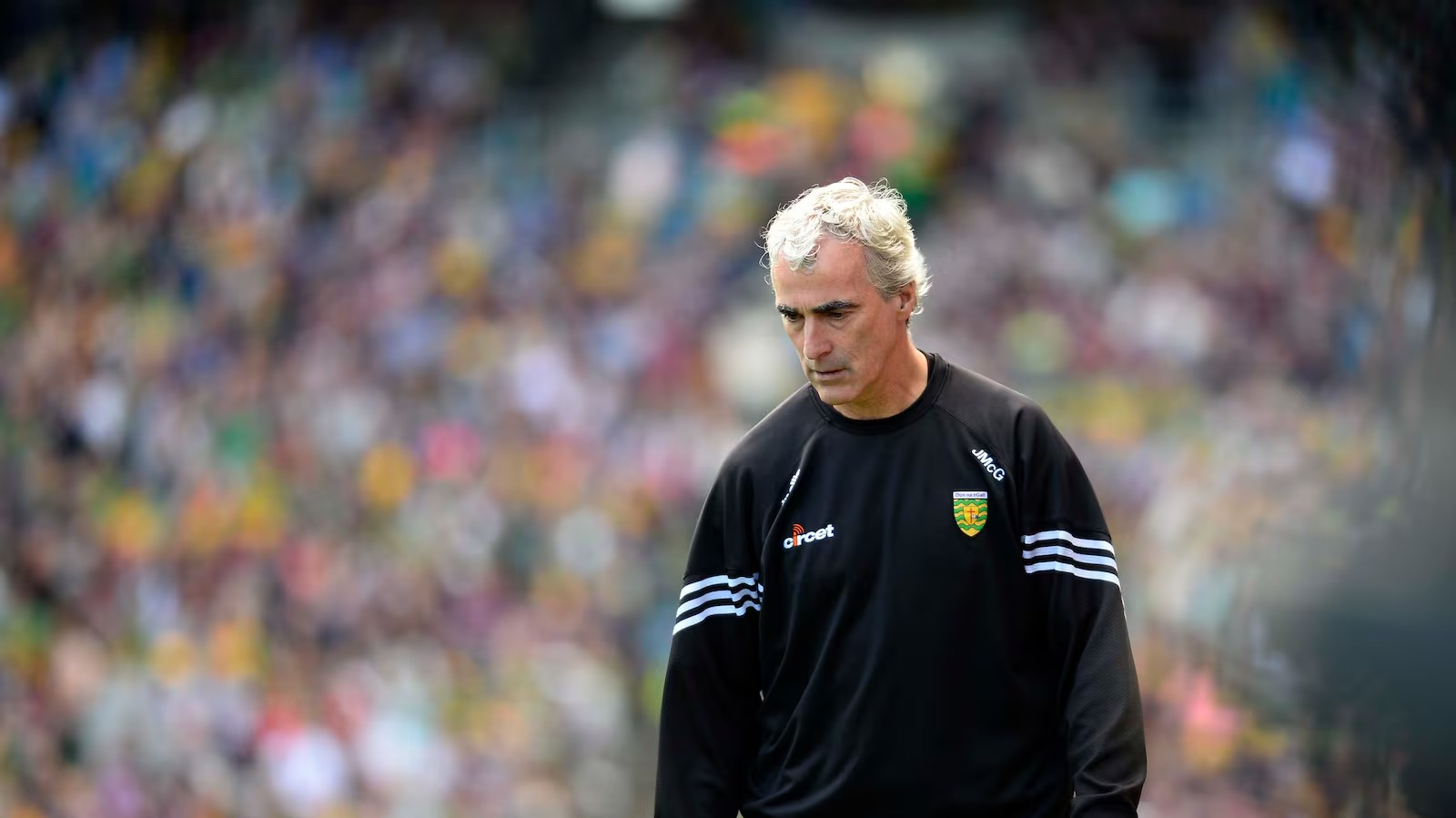
Donegal boss Jim McGuinness will be hoping he can go further than last year in the All-Ireland Senior Football Championship.
By Liam Grimley
July 13, 2025 at 2:00pm BST
DONEGAL takes on Meath in the All-Ireland Senior Football Championship semi-final at Croke Park for a place in this year’s Sam Maguire showdown.
Meath have been the surprise package in this year’s Championship, having knocked out Galway and registered wins over Kerry and Dublin earlier in the summer.
Next up for the Royals are Ulster champions Donegal, who will approach with caution, as they look to cap off their stellar season with an All-Ireland title.
Donegal won their place at Croke Park with a win over Ulster rivals Monaghan after a second-half comeback which has become the staple of Jim McGuinness’ side.
Meath came out as unlikely winners against Connacht champions Galway, with June’s Player of the Month Jordan Morris scoring 1-6 on his way to a man of the match performance.
The last time these two teams met in the Championship was in 2019 in the round robin stage, when the Tír Chonaill defeated Meath in Ballybofey.
Follow the feed below for the build-up, live updates, and analysis as Donegal and Meath face off to continue their summer for two more weeks.
Welcome
We’re bringing you live coverage of Donegal and Meath as the second All-Ireland finalist is decided at Croke Park.
Ulster champions Donegal have fought through the hard way for their spot today, suffering a loss against Tyrone to be demoted to the preliminary quarter-finals, where they beat Louth before thrashing Monaghan in the last eight.
Meath have brought the shock factor to this year’s Championship, with the Leinster finalists knocking Dublin out of the Leinster race, beating Kerry in the round robin and eliminating Galway in the last round to seal their place in the last four.
For all the build-up, live action and analysis from Croke Park, follow this feed as we complete the match-up for this year’s All-Ireland final.
Martin Hurson became the sixth republican to die on hunger strike this week in 1981. In this archive article by Connla Young for Daily Ireland, his fiancee recalls the place where the couple grew up.
To a stranger travelling through east Tyrone, the black flags and life-size posters hanging from telephone posts may arouse a mild curiosity.
To those closer to home, the images of Martin Hurson’s smiling face mask a hurt that has cloaked this close-knit community for a quarter of a century.
The area’s landscape has changed little since Hurson died on hunger strike on July 13, 1981.
A few new houses dot the rolling hills around Galbally where the Hurson family scratched a living from their modest farm. However, a new generation of young people has grown up in the district, relatively untouched by the 30-year conflict that raged during their parents’ youth.
People in their 20s and younger know Martin Hurson’s name but, for them, the events of the hunger strike are from a different time. Even so, tucked away in the belly of the rugged Tyrone countryside, a memorial to the hunger strikers tells of the place that Hurson and his nine comrades will always hold in the hearts of those who knew them.
At the time of his death, Hurson was engaged to Bernadette Donnelly from the nearby village of Pomeroy. The pair met at the wedding of Hurson’s cousin Sean Kelly and Bernadette Donnelly’s sister Mary Rose Donnelly in 1975. Within weeks, they were inseparable.
Now, 25 years later, Bernadette Donnelly has returned to the place where she and Martin Hurson grew up. She has brought with her a vast collection of personal letters sent by Hurson while he was on the blanket protest in Long Kesh. Almost 80 letters and a number of intimate poems reveal the depth of the couple’s relationship after Hurson was sentenced to 20 years in November 1977. He was arrested 12 months earlier, along with other young people from the Galbally area.
The wounds of the 1981 hunger strike remain raw for Bernadette Donnelly, while the anniversary of his death provides more cause for reflection.
“For the last few weeks, I have been looking at a lot of stuff I have.
“He wrote me a lot of letters and seven or eight love poems. I met his sisters and brothers this week and showed them what he had written. It was the first time they had seen them. It was really tough for them. We were crying and laughing,” she says.
The grief Bernadette Donnelly feels over her fiance’s passing was exacerbated by his quick demise. After 46 days on hunger strike, Hurson died more quickly than his comrades.
“He died so quickly. It was unexpected so I didn’t get to say goodbye. The last time I saw him was about seven or eight days before he went but I really didn’t think he was going to die.
“I used to write to him every week. My letters were about three pages long so he asked me to cut them down to a page. On my last visit with him, he was looking side on at me, which made me think he had double vision.
“The difference with Martin and the other men was how quickly he went. Other families got five or six days with their loved ones before they died. We didn’t get that,” she says.
Bernadette Donnelly was refused permission to visit her fiance as he slipped into the coma of his final hours. The grey steel gates of Long Kesh were slammed in her face by cold-hearted prison officials.
“Brendan Hurson and me were at a H-block march in Armagh when Malachy McCreesh, brother of Raymond, came over and said that Martin had taken bad. A Galbally man, John Campbell, drove Martin’s brother Brendan, Bernadette McAliskey and myself straight to Long Kesh. Neither Brendan nor me had ID and they were not going to allow Brendan in.
“His sister and father were already there with him but found it hard to watch him. They told Brendan that, if his father identified him, they would let him in but not me. I was engaged to get married to him but they wouldn’t let me in.
“Bernadette McAliskey pleaded with them to let me in but they wouldn’t because they said I wasn’t family. I just put my arm on Bernadette’s arm and said to her: ‘They shot you six months ago. Just leave it and I’ll get in tomorrow morning.’ They even threatened not to let Martin’s brother Francie in when he arrived,” she says.
She returned to the Hurson home in Tyrone and arranged to travel back to Long Kesh with them the following morning.
“I was at my sister’s house getting ready to go and see Martin when I put on the seven o’clock news,” she recalls.
“They just announced that he was dead. I thought I was going to see him then I found out he had died at 4.30am. His sister was driving down the road when she heard it on the news as well. That’s how we heard it.”
Hurson’s death brought a heartbreaking end to any hope of a shared life for the young couple.
“We had intended to get engaged the Christmas after he was arrested but we had to put that off. At the start, he didn’t take many visits but, as time went on into 1978, he began to take more. He used to talk about getting out and spoke of how we would go into Pomeroy and get married. He talked about how we would go to Galbally hall. ‘We wouldn’t send out any invitations. People could just come along,’ he said. There were plenty of musicians in Galbally and they would just come and play for us,” says Bernadette Donnelly.
“We were going to get engaged before he got picked up. He said that, if he had been out, we would have been engaged or married so we got engaged while he was in jail.
“I don’t think he expected to die on hunger strike. But he was very determined and I knew where he was coming from. I was behind him. I wasn’t angry. I knew why he was doing it.”
After Hurson’s death, his fiancee retreated into a period of deep grief and rarely ventured out. In 1984, she eventually decided to move to the United States to make a new life. Almost three years after Hurson’s death, Bernadette Donnelly removed her engagement ring for the first time. She has remained in contact with the Hurson family in the intervening years and is godmother to one of Martin Hurson’s nieces.
Several weeks ago, she returned to Long Kesh to finally visit the place where her young love breathed his last. This time around, the grey steel gates swung open to reveal a deserted Long Kesh. Only bitter memories and the grief of loved ones haunt the prison wing at Long Kesh today.
“If I had known Martin was going to die, I would not have left the jail that night. I would have stayed through the night to see him. I was back about six weeks ago and stood at the same gate I stood outside 25 years ago. And it didn’t matter if I got in that day or not. I saw the cell that Martin was in, and I was in the hospital wing. I sat in room seven, where he died. I stayed there on my own for a while and knelt down and prayed. I think I felt him in the room. I felt his presence there.
“I never want to see it again. Some members of the Hurson family will be down there on Thursday but I don’t want to see it again.”
The irony of being able to walk unhindered through the gates so firmly closed to her 25 years ago is not lost on Bernadette Donnelly today.
“I got into the jail after 25 years but, when I needed to be there, when Martin needed me, I could not be there. But I’m glad I was outside the night before he died, the night they didn’t let me in. If I had not been there, I may have thought there was a chance I could have got in and that would have been worse.
“But now that I have been there, I know how close I was to him. The distance between the gate and the hospital is so short. When I was there, I could not believe how close I was to him and yet, as they say, so far away.”
In the last 25 years, Bernadette Donnelly has built a new life for herself but still carries the memories of 1981.
“He sent me 78 letters and I kept them — the first to the last. It was 25 years ago but, to me, it seems like last week. I recall everything from that time. I have found it very hard this year. It has brought back a lot of memories and it has been really hard but I’m getting on with it for him.”
Revealed: Secret IRA plan to defend Garvaghy Road if Orange Order parade forced through
Details have emerged on 30th anniversary of bitter stand-off in Portadown
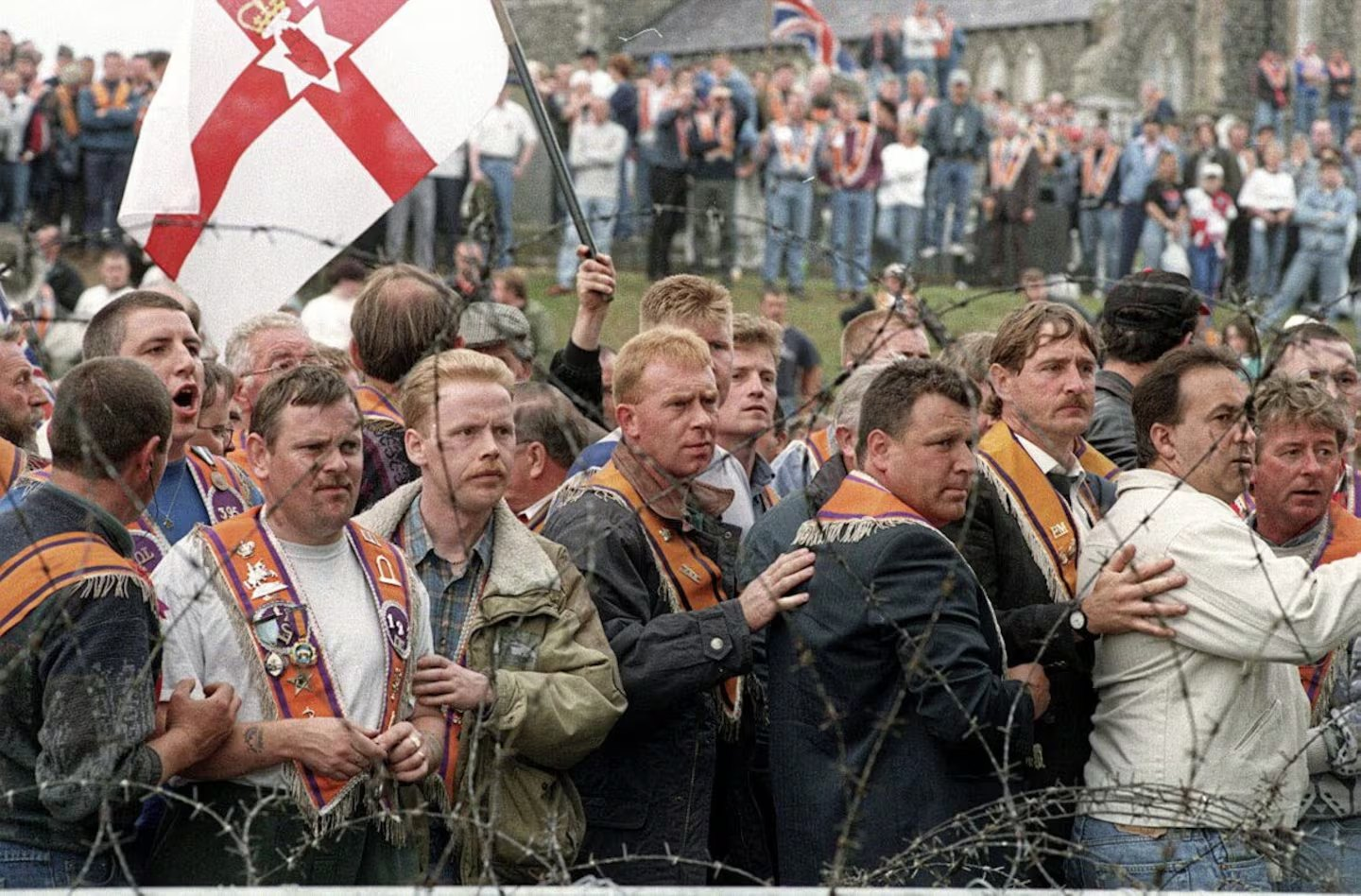
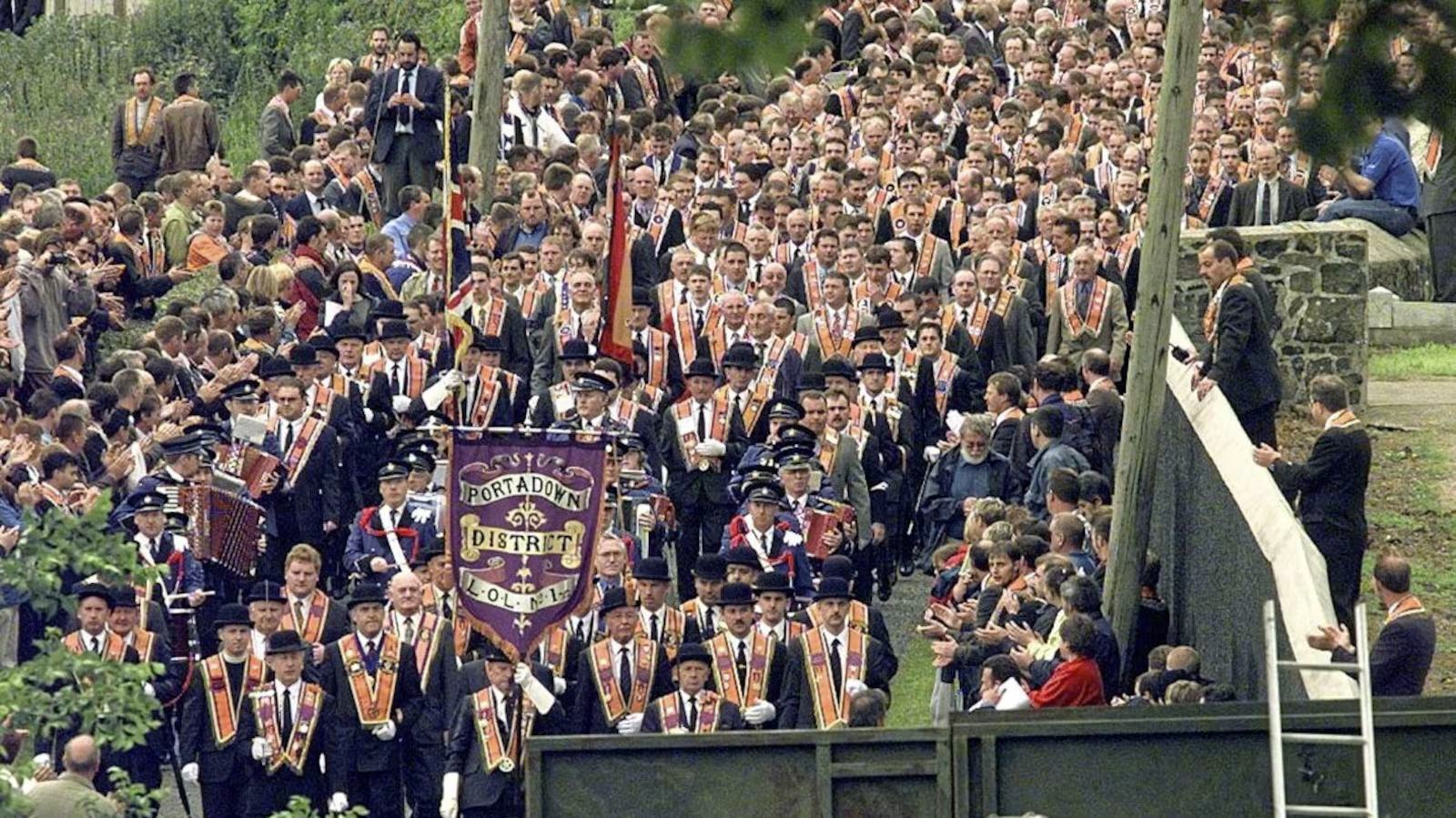
Most people will have considered the Drumcree parade dispute in Portadown – pictured here in July 1998, the first year it was banned – a relic of the past.
Orangemen pictured behind a British army barricade at Drumcree in July 1998
By Connla Young, Crime and Security Correspondent
July 09, 2025 at 6:00am BST
The IRA had a secret plan to defend Portadown’s Garvaghy Road if authorities forced through a controversial Orange Order parade almost 30 years ago.
The “doomsday” blueprint was drawn up by republican leaders after a march was allowed through the mainly nationalist district in 1997.
Details have emerged on the 30th anniversary of the start of the Drumcree dispute on July 9 1995.
Sources say the ‘defensive plan’ was devised against the backdrop of sectarian murders linked to the parade stand-off and heavy-handed RUC operations targeting nationalist protesters.
At the time, the IRA was on ceasefire and the Good Friday Agreement had been signed earlier that year.
But sources with knowledge of the plan now believe it may have been part of a “double bluff” by IRA leaders to force the British into holding firm against the Orange Order by banning it from the mainly Catholic district.
It is also suggested the IRA was aware that information about the blueprint, which included proposals to arm hundreds of local people with home-made guns, would be passed to the British by informers.
Informed sources say self-confessed agent Denis Donaldson was present when details of the plan were revealed to local IRA leaders.
It is understood Garvaghy Road residents were not aware of the IRA’s plans.
The bitter parading impasse began in the summer of 1995 when Garvaghy Road residents objected to an Orange Order march passing through the mainly nationalist district as it made its way from Drumcree Church into Portadown.
The following year, the parade was banned but after violent clashes, the decision was reversed. Nationalist protesters were forcibly removed from the Garvaghy Road to make way for the march.
At the height of the 1996 dispute, Catholic taxi driver Michael McGoldrick (31) was shot dead by renegade members of the UVF outside Lurgan.
The UVF, under the command of suspected British agent Billy Wright, also brought an armoured loading shovel to Drumcree, which was to be used to smash through RUC lines.
In 1997, the Orange Order was again allowed to march along the Garvaghy Road after the area was flooded with police in the early hours of Drumcree Sunday.
Pictures of nationalist residents hemmed into side streets by heavily armed RUC members sparked a furious backlash from nationalists across the north.
Catholic residents of the Garvaghy Road were also blocked from attending Mass, resulting in local people and priests praying in the open-air at British army lines.
Within days the IRA restored a ceasefire, which had ended in February 1996.
In 1998 the Orange Order was stopped from marching through the nationalist district, sparking several days of loyalist violence.
In the early hours of July 12, a sectarian arson attack carried out by the UVF claimed the lives of Catholic schoolboys Richard (10), Mark (9) and Jason Quinn ( in Ballymoney, Co Antrim.
The murders sent shockwaves across Ireland and made global headlines.
After the tragedy, some Orangemen continued on with their protest while others went home, resulting in the Drumcree dispute effectively coming to an end.
Well-placed sources suggest that despite being on ceasefire, IRA members regularly met to discuss the dispute in the years after it began in 1995.
Both Denis Donaldson, who it is claimed was a representative of the IRA’s ‘general headquarters’, and another veteran republican attended many of the meetings.
Sources suggest that Mr Donaldson was present at a meeting of high-ranking IRA members when the full blueprint to defend the Garvaghy Road was revealed by the veteran republican, who has since died.
It is suggested the secret IRA plan was specifically drawn up to defend the nationalist district in the event the Orange Order was once again forced through in 1998.
Sources say that in the months leading up to the annual dispute, a meeting was held involving representatives from three IRA ‘brigade’ areas, including north Armagh, south Armagh and east Tyrone.
It is said that after the events of 1997 “serious plans were made”.
Significantly, it is suggested that a large array of home-made weapons and other materials were moved into north Armagh for use in any defensive action that was to be launched.
“Preparations were being made to defend the area,” it is claimed.
Hundreds of home-made firearms known as Zip guns were manufactured and transported to various locations across north Armagh, and surrounding areas, in the months prior to the stand-off.
The single-shot weapons were designed to be used by people with no experience of handling firearms.
It is claimed the weapons, which fired shotgun cartridges, were to be handed out to local people and republican sympathisers in the event of a defensive scenario arising.
It is also claimed that the IRA moved “conventional” weapons into the area for use by its own members, who had experience of handling firearms.
Republican “back-up teams” were also going to be organized, which would attempt to move into the Garvaghy Road from several different directions in the event of conflict breaking out.
Sources believe that while the plan was being set out to those republicans attending the briefing meetings, the IRA leadership may in fact have been involved in a game of “double bluff” with the British.
It is claimed that several senior IRA members who were briefed about the plan were sceptical that it would ever be given the go-ahead.
It has also been suggested the IRA was aware that information about the plan was being passed to British intelligence.
This, it is believed, was intended to put pressure on the British government to take a hard stand against allowing Orangemen through the area in 1998.
Denis Donaldson was a familiar face on the Garvaghy Road during the years of the Drumcree dispute.
He is said to have encouraged the defensive plan when it was being discussed at IRA meetings.
Mr Donaldson was publicly exposed as an informer in 2005.
In April 2006, he was shot dead at a cottage near Glenties, Co Donegal.
The now defunct Real IRA claimed it was responsible three years later.
Martin Galvin’s arrest ‘staged at request of Martin McGuinness’
Former Noraid leader was banned from north and Britain
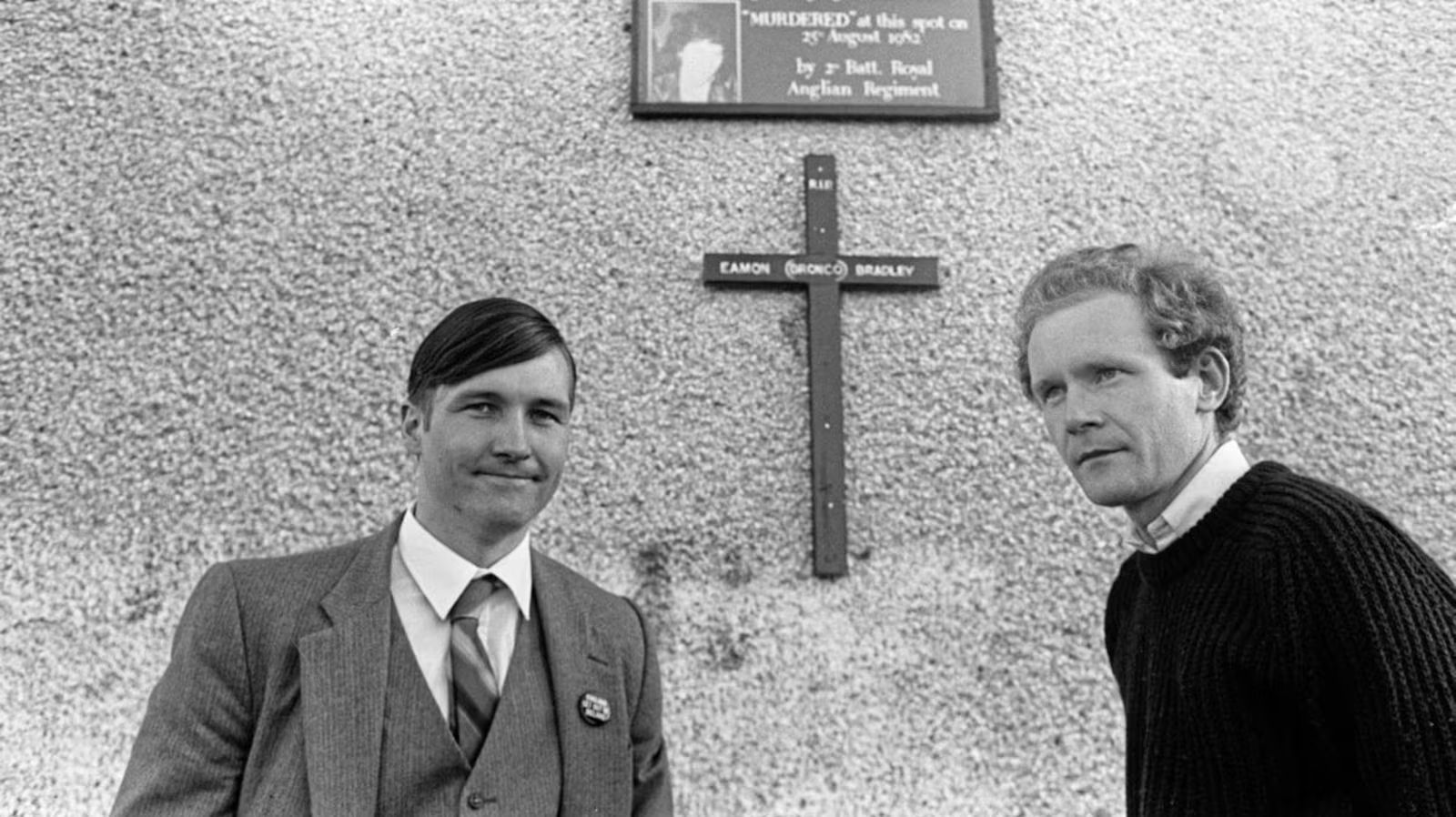
Martin Galvin with Martin McGuinness in Derry.
By Connla Young, Crime and Security Correspondent
July 09, 2025 at 6:00am BST
The arrest of Martin Galvin in 1989 was staged at the request of former Sinn Féin Deputy First Minister Martin McGuinness, it has been claimed.
The former Noraid director of publicity, who was banned from entering the north and Britain in 1984, was detained while taking part in a stage-managed tour of the Bogside area of Derry five years later.
Mr Galvin, who is now the chair of the Freedom For All Ireland committee with Ancient Order of Hibernians in the US, has recently taken part in a new documentary about the history of Irish Northern Aid, more commonly known as Noraid.
The high-profile group raised millions of dollars cash for the republican movement during the Troubles.
Mr Galvin’s profile was at its height in the mid-1980s when the British government issued an exclusion order banning the New York based lawyer from entering the north and Britain.
In 1984 the Noraid leader was secretly brought across the border by republicans and attended an anti-internment anniversary rally in west Belfast in defiance of the British ban.
As Mr Galvin took to a platform outside Sinn Féin offices in Andersonstown RUC officers moved in to arrest him.
During the police operation 22-year-old Sean Downes was struck by a plastic bullet and died, while Mr Galvin was spirited away from the area.
A year later the Noraid official appeared at the funeral of IRA man Charles English in Derry and carried his coffin along with Martin McGuinness – again in defiance of the ban.
Mr Galvin has now revealed that solicitor Pat Finucane, who was killed by loyalists in 1989, had advised him that the British ban was illegal.
Mr Galvin believes the exclusion order was intended to “undermine Irish Northern Aid” in a bid “to stop the support that was coming in from America”.
Speaking to The Irish News, the prominent Irish American said republicans told him it was necessary to defy it.
“And when the ban was announced…my people in Sinn Féin, noted republicans, they said ‘it’s very important that you not allow this to happen, it’s very important that you come to the north and defy the ban, it’s very important that we not allow the British to get away with undermining American support by a censorship ban against you,” he said.
“So, I was in a position where I felt I couldn’t hold my head up, I couldn’t go back to the north If I didn’t agree to do it.
“So, that’s how it began.”
Mr Galvin reveals he was brought across the border from Co Donegal on foot before he attended the west Belfast rally, at which self-confessed informer Denis Donaldson was a steward.
Donaldson was later sent by the leadership of the Provisional movement to the US to work with Noraid in the years before the IRA ceasefire.
“We couldn’t believe that they would attack a peaceful demonstration in the way they did in front of all the cameras of the world,” he said.
“No-one expected or believed or anticipated that.
“Denis Donaldson was a steward, he would have known that there would have been a peaceful event.”
Mr Galvin explains how he returned to the north in subsequent years.
“That was important, they came back again the next year and it was important to show the British that attacking peaceful demonstrations…would not work and eventually Martin McGuinness had me come over, get arrested and the British after that admitted that they couldn’t do anything and withdrew it (the ban) after I had spent a couple of days in Strand Road (RUC Station).
He said Mr McGuiness, who died in 2017, had asked him several times to allow himself to be captured.
“Martin McGuiness, he had actually asked me to do this for several years,” Mr Galvin said.
“He used to send Pat Doherty, who was respected a lot and who I was good friends with, and asked me to this.
“He had asked me to do this in 87 and 88 and I initially declined.”
Mr Galvin said some republicans advised him against handing himself over.
“I had people in Ireland, Tyrone particularly, telling me ‘look, your claim to fame is you can get away, the British can’t catch you, now you’re going to walk in’.
“But I gradually agreed to do it.
“We were walking around Derry, you can hear newscast ‘Martin Galvin’s now walking around the Bogside in defiance of an exclusion order with Martin McGuinness and other members of Sinn Féin’.
“The idea is Martin McGuinness’s idea, was to test the ban, I was arrested.”
The Irish American said Mr McGuiness believed that if he was arrested British authorities would have to drop the ban.
“They won’t be able to do anything and that was his attitude, and he thought it would make a point,” he said.
Mr Galvin was later taken to Strand Road RUC Station, where he sang the well-known rebel tune, The Foggy Dew, before being brought to London and flown back to the US.
“Tom Hartley had told me one time years before ‘you are a high profile republican, if you ever get caught by them act like one, don’t let us down’,” he said.
“That’s what was going through my mind, so that’s why I marched out singing The Foggy Dew.”
Noraid: Irish America and the IRA is on RTÉ One on Wednesday at 9.35pm.
 in Ballymoney, Co Antrim.