Shankill Road Defenders praise Fleadh organisers after ‘extraordinary welcome’ at City Hall performance
The west Belfast band received a rapturous welcome on arrival at the Gig Rig during Sunday’s final day of performances
Share current article via EmailShare current article via FacebookShare current article via PinterestShare current article via TwitterShare current article via LinkedIn
Members of the Shankill Road Defenders ahead of their performance at the Gig Rig at Belfast City Hall during the Fleadh
A Belfast marching band from the Shankill Road has praised the organisers of the Fleadh after they say they received an “extraordinary welcome” for their performance at Belfast City Hall on Sunday night.
Gordon Ramsey from the Shankill Road Defenders flute band told The Irish News that they and other bands from loyalist and unionist backgrounds were given a seat at the table at the largest celebration of Irish traditional music in the world, not just as a token gesture.
The Defenders were among a large group of marching bands who participated across the week of musical performance in the city, which has been hailed a roaring success ahead of Belfast hosting the event again in 2027.
The west Belfast band received a rapturous welcome on arrival at the Gig Rig during Sunday’s final day of performances, before playing a number of tunes, including ‘The Apprentice Boys’ and ‘Star of the County Down’.
“They applauded us from the moment we came out the doors at the City Hall, so I think they were initially applauding us because we were from the Shankill and we showed up,” Mr Ramsey said.
“By the end of the performance, they were definitely applauding because they were enjoying the music, you can feel when you are connecting with an audience.
“I have to say we were pleasantly surprised by just how relaxed everything was.
“We were concerned that when we were walking around the town in uniform might be a problem, but when we did it was no problem at all.
“When we performed at the City Hall we got an extraordinary welcome from the moment we stepped out of the doors.
“We were very happy with the atmosphere, we all enjoyed it much more than we thought we were going to.”
Mr Ramsey, an academic at Queen’s University who gave a lecture at the Grand Opera House on Saturday about marching bands, has been playing with the Shankill Road Defenders for over a decade.
He says there had been “scepticism and opposition” from some within their community to the decision to perform at the Fleadh, but the majority responded positively.
“The band wasn’t hard to convince because this band has really committed itself for over a decade to engaging with other communities, playing our music to anyone who wants to hear it.
“That has been a longstanding policy really driven by our chair David Thompson, with the full support of the band.
“We feel that that policy has done us good. Others within our community were not convinced, we did get scepticism and opposition from some people who felt we shouldn’t be doing that.
“But we got a lot more support than criticism, so we never really questioned our decision and we think that that decision has been fully vindicated.”
The Shankill Road Defenders are founding members of the Belfast Bands Forum, set up last year to coordinate and promote local marching band culture. The forum was represented on the organising committee of the Fleadh.
Mr Ramsey was full of praise for the organisers, Comhaltas Ceoltóirí Éireann, who he says brought loyalist bands to the table and ensured their voices were heard.
“They facilitated those connections that allowed trust to be built, and allowed us and quite a number of other bands to come on board, with some confidence that it was going to be what we wanted it to be.
“We felt that we were engaged and being listened to. When we had complaints, something was done about it and we felt that we were at the table, not at somebody else’s mercy.”
An evening dedicated to marching bands also took place at Titanic Slipways last Thursday, where ‘The Sash’ was among the songs played by bands.
Belfast Bands Forum at Titanic Slipways as part of Fleadh Cheoil na hEireann Belfast 2026. PICTURE: COLM LENAGHANBelfast Bands Forum at Titanic Slipways as part of Fleadh Cheoil na hEireann Belfast 2026. PICTURE: COLM LENAGHAN
Darren Leighton, chair of the Belfast Bands Forum, described the reception their bands and musicians received over the week of the Fleadh as “incredible” and says he hopes it is not a one-off.
“One of the most important things for us has been challenging some of the stereotypes around the marching band community,” Mr Leighton said.
“We didn’t need to argue against those stereotypes — we simply put our musicians and our culture on the stage and allowed people to experience it for themselves.
“For me, this week has shown that engagement doesn’t mean giving up who you are. You can be confident and proud of your own identity while sharing your culture with others.
“Our musicians stepped outside their comfort zones this week, performed in front of new audiences and were welcomed everywhere they went.”
Belfast can take immense pride and lessons from Fleadh Cheoil na hÉireann.
Ryan McAleer looks at what Belfast got right for the Fleadh, with some suggestions for improvement in 2027.
Irish dancers in front of Belfast City Hall as record numbers attend the Fleadh Cheoil na hÉireann 2026.
By Ryan McAleer
August 11, 2026 at 12:58pm BST
On the closing Sunday of Fleadh Cheoil na hÉireann in Wexford last August, I can still remember the slight feeling of apprehension among our northern delegation down there about the following summer.
Would the same numbers that turned out for Wexford come north for Belfast in August 2026?
Derry showed it could be done in 2013, but Belfast felt like a completely different prospect altogether.
Images of burning buses beamed across the world just two months before didn’t ease those fears.
Even in the days before the opening ceremony, there were conversations asking if Belfast had set itself up by throwing the number 800,000 around so casually for so many weeks and months.
Monday August 3rd brought a collective sigh of relief as the fear, tension and apprehension disappeared in a flood of positive stories and sheer joy.
Belfast had gone all in for the Fleadh on day one – not just for the traditional business-end of the festival, i.e. the final three days.
Businesses, the council, government departments, Translink, the PSNI… All seemed to pull together to make it work, and all with a smile on their faces.
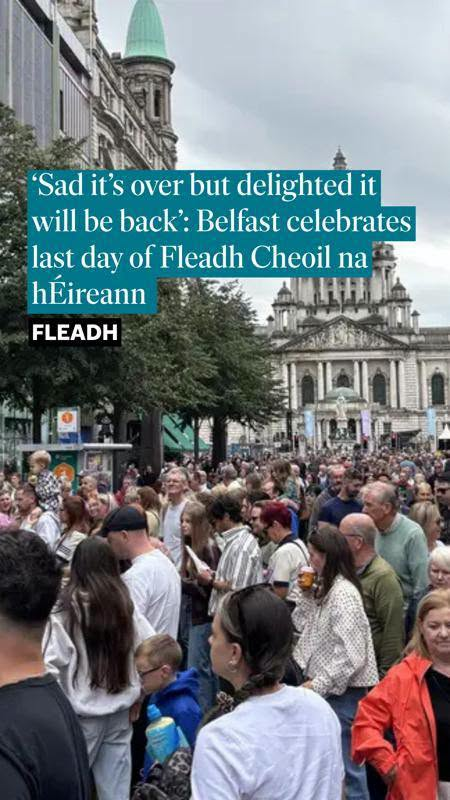
By close of play on Tuesday August 4th, half a million people had made it into the newly pedestrianised city centre, traditionally the numbers that could be expected throughout the full eight days of the world’s biggest Irish cultural festival.
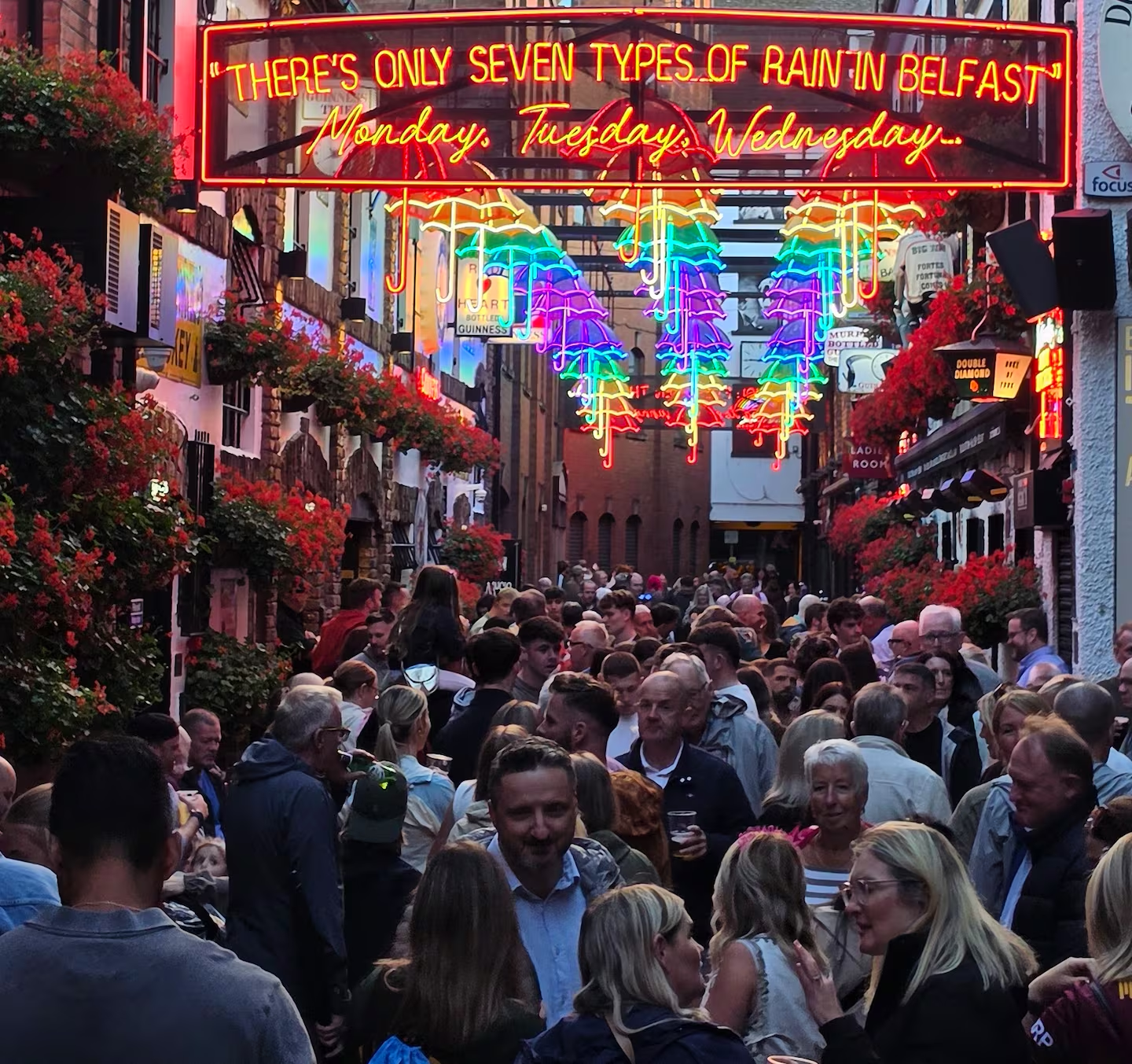
Even walking around early in the week, you could feel the positive energy humming on every street corner.
By the final Sunday, some 1.65 million had been captured on Belfast One BID’s cameras in the one square mile around the City Hall over the eight days, more than double the 800,000 forecast.
Stormont’s Department for the Economy had predicted an economic windfall of around £53 million based on 700,000 attending the Fleadh, with Visit Belfast suggesting a £60m benefit from around 800,000.
Back of the cigarette packet maths would suggest we’ve easily crossed into £100m territory.
But the Fleadh felt much more than an opportunity to turn a quick pound.
Despite investing significant sums in pop-up ventures for a week-long festival, most local hospitality operators didn’t take the hand with prices.
From Translink staff at Grand Central Station to the police on the beat, everybody seemed to have a smile on their face.
I heard tales of people from Limerick and Tipperary who had never crossed the border before sing the praises of the “friendly” people.
Northern friends who’ve played traditional music their whole lives and have travelled the length and breadth of the island for Fleadh Cheoil na hÉireann felt immense pride in what Belfast and Ards CCÉ had pulled off.
Key to the success was the combination of pedestrianisation; the decision to create a week-long itinerary of events; and businesses embracing the Fleadh for all eight days.
The hands-off approach – allowing people to walk the streets carrying plastic pint glasses – worked wonders.
The streets looked clean, the toilet provision was sufficient and there were plenty of food vendors to feed the masses.
So what can we learn for next year?
In Wexford’s first year of the Fleadh, some 650,000 people flowed through its streets. The positive stories from 2024 turned that into 800,000 the following year.
Given the incredible reach of positive stories and coverage of Belfast over the past week, it is not unrealistic for the city to prepare for two million Fleadh visitors in 2027.
That will bring added challenges for the organisers and Translink in particular.
While the park and ride facilities introduced for the Fleadh worked very well, the north’s public transport company was simply unable to cope with the numbers this year.
Whether rail, Goldliner or Metro, the capacity was not sufficient to meet the demand.
Resolving this with public resources under strain will require new thinking. Can Translink reallocate resources from elsewhere for one week, or could the private sector offer any solutions?
While Belfast City Council got so much right this year, they got the camping and caravan provision wrong.
Two sites for tents and offering a waste ground in the Titanic Quarter to families for their caravans was short-sighted.
Grass caravan sites will be needed in 2027. Most campers in Wexford last year spent the week on sports fields without any issue.
Given the number of public spaces and sports fields across Belfast, this should be an easy fix.
There are lessons for hospitality businesses as well. Scenes of hundreds of people dancing outdoors to music pumping through the streets looked incredible on social media.
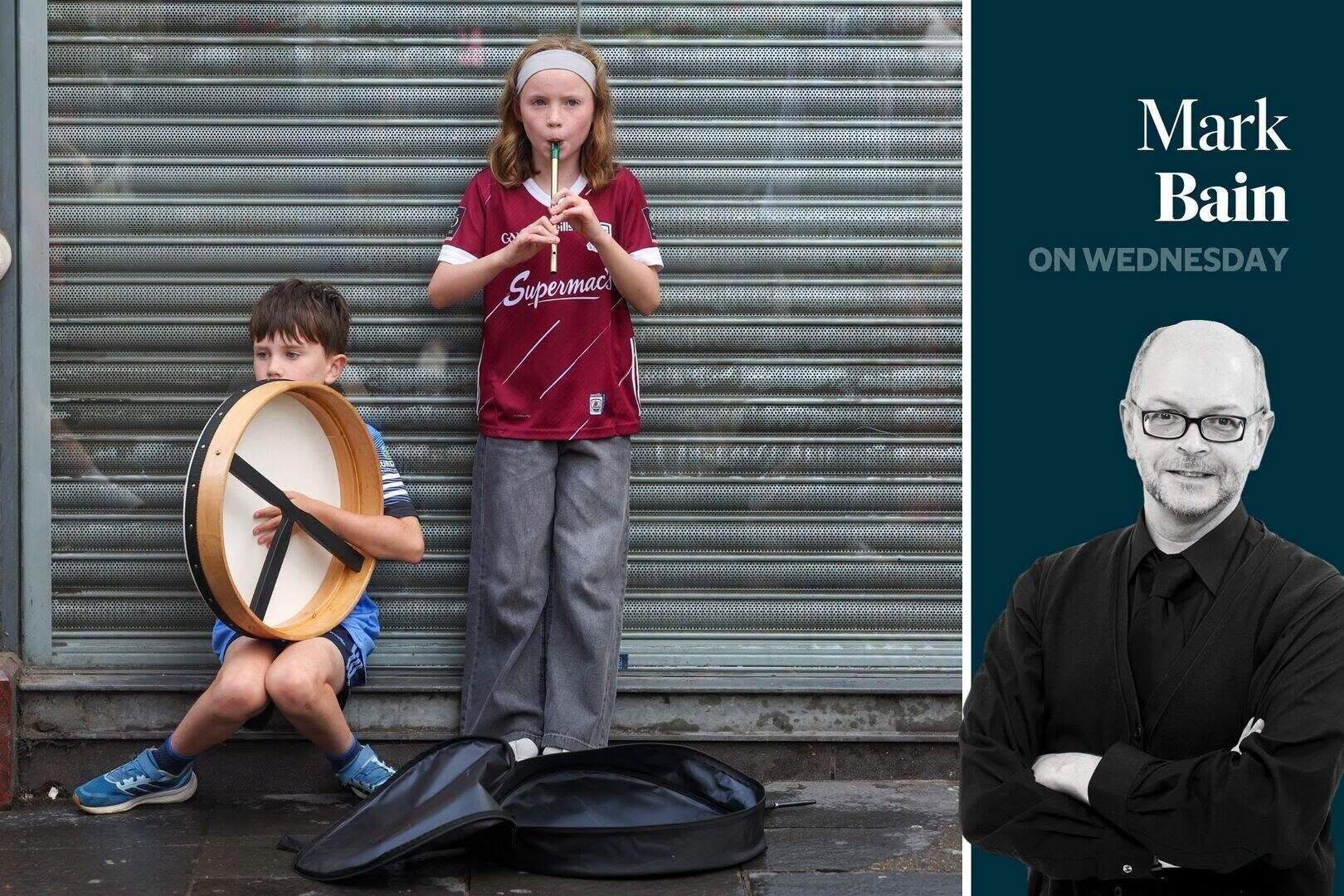
But those businesses don’t need to pump that music out during the afternoon to drown out the magical young musicians looking to play outside their venue for free.
Less amplification and more sessions next year please.
More pedestrianisation will also needed, particularly in places like Dunbar Link.
For now, we can all bask in the success of Fleadh Cheoil na hÉireann 2026. Belfast feels like a city ripe for transformation.
Even if Belfast manages to secure a third year for the Fleadh, it has demonstrated the appetite for a city centre-wide cultural celebration of music and inclusivity.
Surely other towns and cities around the north will have taken note. I’m looking in your direction Newry!
Standing on Royal Avenue on Friday at around 5pm amongst an estimated 100,000 people, it was difficult to imagine a time when traditional Irish music was considered a bit of an embarrassment.
But pre-1960s and the onset of dynamic new bands like Planxty, The Dubliners and The Clancys, traditional music was viewed by many as something best left behind. A waste of time.
Broadcaster Ciarán Mac Mathúna travelled Ireland in the 1950s seeking out traditional fiddle and flute players to record before their songs were lost forever. He told RTÉ some would arrive hiding their fiddles in case they would be seen to be traditional musicians.
Paddy Moloney of The Chieftains said it was “a complex” people had about the music that had turned them away.
If only those few hundred people who kept the music alive could’ve been in Belfast this week to see kids on every street corner playing reels, jigs and hornpipes.
I consumed the Fleadh for the first four days via social media in a small town near Bilbao where I was on holiday. As a journalist I follow all the main political parties and their members and it’s fair to say some were enjoying the festivities more than others.
The business owners I know in the city seemed more sure and the footage of heaving streets suggested the public were on board.
I was looking forward to returning to experience it myself because I have history with the Fleadh. I lived near Cavan town when it was awarded the event in 2010 for three years.
I’ll never forget visiting on day one. It was like someone had waved a magic wand over the town. Thronged streets, music everywhere, and an incredible buzz. I was hooked.
The next year I invited my Australian brother-in-law to visit. To this day he says Cavan is the best small town in Ireland he’s ever been in. I think even the most devoted son or daughter of Breffni would struggle with that description, but when your only experience of a town is when it’s Fleadh week, it makes sense.
Derelict buildings are repurposed, extra effort is put into cleaning, musicians from all walks of life break out the instruments and the welcome mat is rolled out to the world.
I missed its visit to Derry but was back in Drogheda when it hosted the Fleadh in 2018. Fears a bigger town, better able to cope with the crowds, would impact the atmosphere were unwarranted. It was like Cavan, only bigger.
But what of Belfast? Would the largest location for the Fleadh yet be able to step up? When I finally arrived in the city centre on Friday I have to say I couldn’t have been prouder of my home town. It has grabbed the opportunity the Fleadh presents with both hands.
The thousands of people milling around catching performances, both organised and impromptu, combined with a wonderful atmosphere without edge or menace — it was the Fleadh brought to the next level.
And I was to find out I wasn’t the only one who felt this way.
I ran into a politician who shall remain nameless. He’s not from a nationalist party but he said it is, in his opinion, the best thing that’s ever happened to this city. He was almost emotional.
This is what a publican I spoke to felt as well. He said as he approached the beginning of the Fleadh he was wishing it was all over because of the extra paperwork he and his fellow publicans had been subjected to.
Five days in he said there is nowhere he would rather be, such was the impact it had had both on business, and on the city. He said beyond the expected teething problems, everything had gone smoothly.
A lot of this, he said, was down to local government. He had huge praise for the Department for Communities, whose officials he said were very easy to deal with, along with their city council colleagues and the PSNI.
His experience had been that a common sense approach was applied to the week and the event was much the better for it.
I ran into old friends and colleagues and they were all buzzing. A schoolfriend who now lives in Tokyo scheduled a trip home around the Fleadh and he was in shock at the transformation of the city.
One former colleague who has no truck with things considered ‘nationalist’ even came in to see what all the fuss was about. She told me she “ticked the box”, but would probably be back next year.
I caught too many performances to mention them all, but among the best I saw was Britain’s Got Talent semi-finalist Niamh Noade, who packed out the council’s wonderful 2 Royal Avenue venue where she played a set of traditional and contemporary songs.
And the best thing of all? Every Fleadh gets better the next year when it stays in the same location because lessons are inevitably learned. So roll on 2027.
It was a week to remember on the streets of Belfast. I had one I’d like to remember for a different reason.
Not so much as a peep of a tin whistle graced my ears. And had I been anywhere close, it would have been drowned out by the sound of coughing, spluttering and sneezing — while the aches would have negated any chance of even tapping a foot to a tune.
The sights, sounds and sheer joy of the Fleadh passed me by save for a social media watching brief.
I left the house but once. Dosed on tablets and cough medicine, I hauled myself to the funeral of a school friend’s mum.
I, with several other friends, had spent many a weekend in the home of the wonderful lady. It felt right to be there. There was a little guilt for coughing over others in the church hall, but not as much as I would have felt had I not hauled myself along at all.
Four of us friends from all those years ago were there. One, whose mother had passed away, now lives in New Zealand, another in Enniskillen. The internet has kept us abreast of what we’ve all been doing.
A third, though, had been absent for 17 years, the result of a personal incident. I hope he knows how good it was to see him again. I hope the all too brief reconnection will be repeated soon. He left before the four of us could properly get together.
It was the first time the four of us had been in the same building for more than three decades. But after quick handshakes and raised eyebrows, it was very quickly back into the same old banter we’d enjoyed in younger days for the three of us who remained.
It’s just a pity it wasn’t in a pub, soaking up the atmosphere in the centre of Belfast. God knows a hot whisky, or two, could have fairly softened the harshness of my throat.
I left, bemused at where all those years went to and with the stark reminder that life is short, too short for bitterness and dwelling on the mistakes of the past. Friendships are special and should be cherished.
I kept up with scenes of the Fleadh online, I would have loved to experience the joy flowing through the streets of Belfast. But, as ever in Northern Ireland, that bitterness was still lurking in those social media sewers. You just knew it was waiting to pounce with one wrong step.
It is, quite plainly, not in some people’s interest to have over a million and a half people join together for the craic, the music and the fun.
There are some out there who just can’t stand it when the people of this country come together and actually enjoy themselves. If the atmosphere in Northern Ireland was akin to what we’ve seen over the last week, they would be even more marginalised. They would have no place, drowned out by the beating of drums and twiddling of fiddles.
They are the usual voices from the shadows of the back streets, even some in the political world and commentators who, though they are grown-ups and should know better, were itching from the start to find fault.
How very dare Northern Ireland have something that everyone loves and has been hugely successful?
It is, quite plainly, not in some people’s interest to have over a million and a half people join together for the craic, the music and the fun. Much better, of course, to have them out taking offence, throwing bricks, attacking police and communities.
Rather than embrace the spirit of the week, what kept appearing on social media were comments like: ‘This is what an all-Ireland would be like’, which provoked the expected responses.
Could we not be allowed to enjoy the week-long event for what it was, without someone trying desperately to give it a political context? It seems not.
I had some sympathy for the food vendor who quickly apologised for a controversial song being played. Mistakes do happen. I went on Spotify and checked out ‘popular Irish songs’ and what do you know, the first playlist, song number five and there was said tune.
I saw others complain that a performance by loyalist marching bands was ‘confined’ to Titanic slipway rather than given a space in the centre of the city. Were those bands not delighted to be there?
Fault can always be found if you go looking for it. Eyes can always be poked if you point the finger in a certain direction.
But just look at what the Fleadh did for Belfast. While it might be a bit too much to hope that the city centre could be like that all the time, there’s surely some way of tapping into that spirit over the summer weekends to come.
Maybe then I’d get a chance to join in.
Sad though any funeral is, the one I felt I needed to be present at did at least give me a chance to reconnect.
Maybe one day those who seek nothing other than to be offended at every turn of the day in Northern Ireland will have to attend a funeral of their own. Maybe then they will have pause for thought on how they have lived their lives seeking out the bad when there’s so much good to be found, then find the time to find it.
Time goes fast. Last week proved that Belfast can be so much more than a legacy of bitterness. It would be nice to enjoy a delightful sip of Guinness without the generous helping of spite from the sidelines.
But there’s always the fear that words said at gatherings, promises made, then fall by the wayside and we slip back to the way we lived before. We need to change that tired old tune.
Apprentice Boys urged to ‘show respect’ after anti-Catholic slurs during Derry parade.
Relief of Derry parade attracted thousands at the weekend.
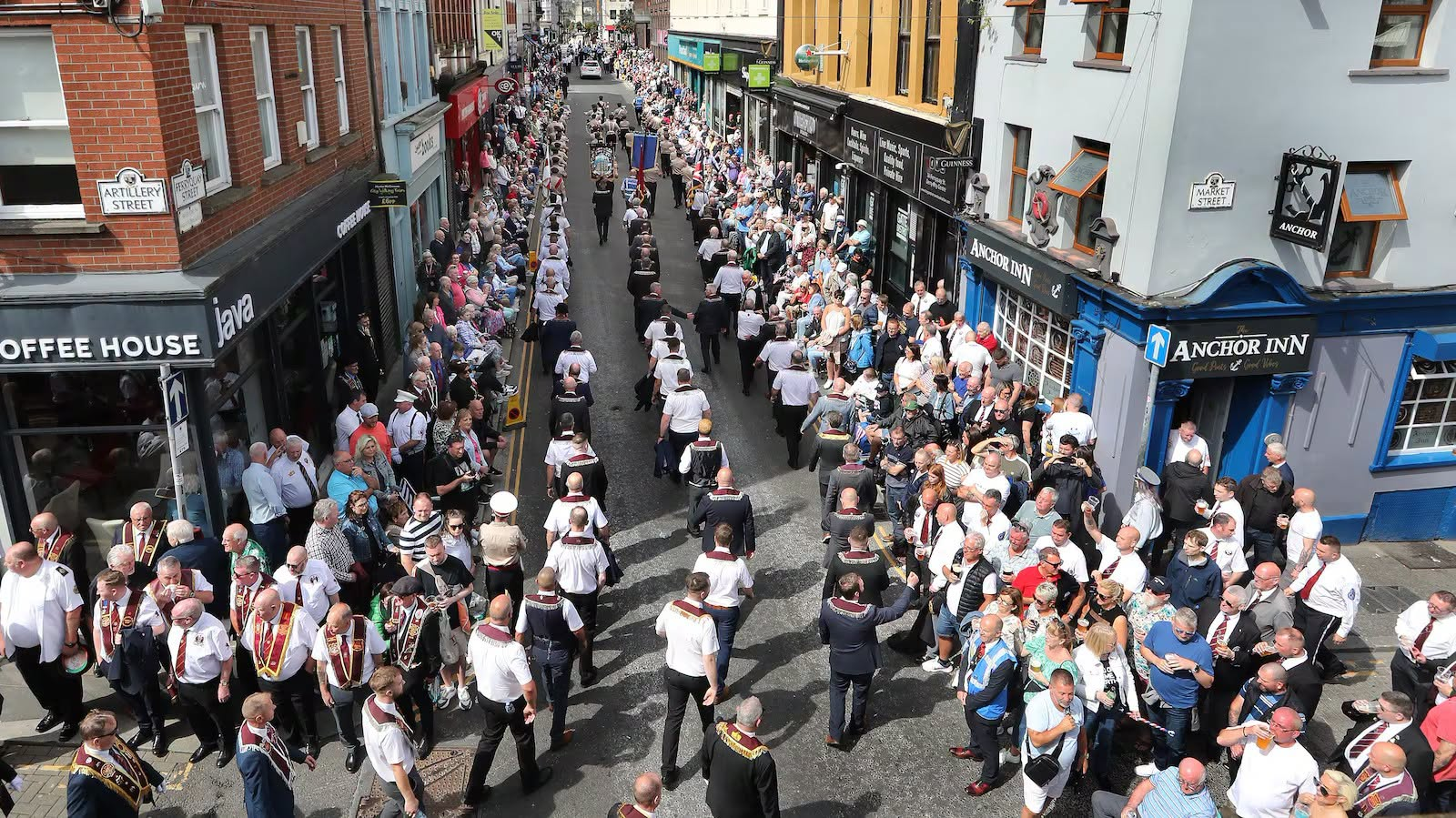
Thousands of Apprentice Boys of Derry marched through the city on Saturday to commemorate the Relief Of Derry in 1689.
By Connla Young, Crime and Security Correspondent
August 11, 2026 at 6:00am BST
The Apprentice Boys have been urged to ‘show respect’ after members were heard muttering anti-Catholic slurs during a parade in Derry at the weekend.
Thousands of loyal order members travelled to the mainly nationalist city for their annual ‘Relief of Derry’ parade on Saturday.
Around 124 bands and prominent unionist politicians, attended the annual parade, which marks the ending of the siege of Derry in 1689.
Footage circulated on social media reveals that several Apprentice Boys were heard making anti-Catholic remarks as they made their way along the city’s historic walls.
In one offensive clip, dozens of Apprentice Boys, wearing their traditional collarettes, can be seen marching past a well-known Derry entertainment venue in the Market Street area.
One marcher can then be heard saying, “Is that a Catholic Church?” to which another responds, “Does it breed many Catholics?”
During the same clip, Apprentice Boys can be heard saying “ah f**k ‘em” and “they’re just b**tards”.
Footage has also been circulated along with claims bands played sectarian tunes during Saturday’s event.
SDLP assembly member Mark H Durkan said that every year “Derry welcomes the Apprentice Boys and other similar parades in a spirit of respect and tolerance, recognising that while we may have different cultures and traditions, there is room for everyone in our city and on this island.
“However, respect is a two-way street, and it is disappointing that over the past few years a small minority have caused issues, whether through singing songs, making comments or showing a lack of regard for local businesses and the public,” he said.
Mr Durkan added that his party has “engaged directly with the Apprentice Boys to try to address these issues and we welcome their ongoing efforts to resolve them.
“Derry has long been an example of how events like this can take place in a respectful way and it would be very disappointing to see that undermined by the actions of a small number of people” he said.