Despite the acquittal of Soldier F, campaigners are as determined as ever to get justice for the 14 people who died.
EAMONN MCCANN
When the crack-crack of the rifles came from the bottom of Rossville Street, my first reaction was not of fear or panic but bewilderment.
What? Why were they firing?
We had been here before and thought we knew the drill. Bricks and petrol bombs versus baton rounds and CS gas. Occasionally a nasty injury or arrest. But not this.
As the gunfire continued, we flung ourselves down. I hauled myself along the gutter on my knees and elbows. Craning my head to look around, I saw a man — only 17, as it turned out — running pellmell, trying to hurdle a low barricade, then stiffening and crumpling.
By the morning, the Bogside was silent. People gathered at corners and in doorways, asking each other: “Did you hear one of them was that young fellow Kelly from Creggan Heights?”
By now, everybody knew the names of the 13 people who had been killed. Another would die four months later from gunshot injuries.
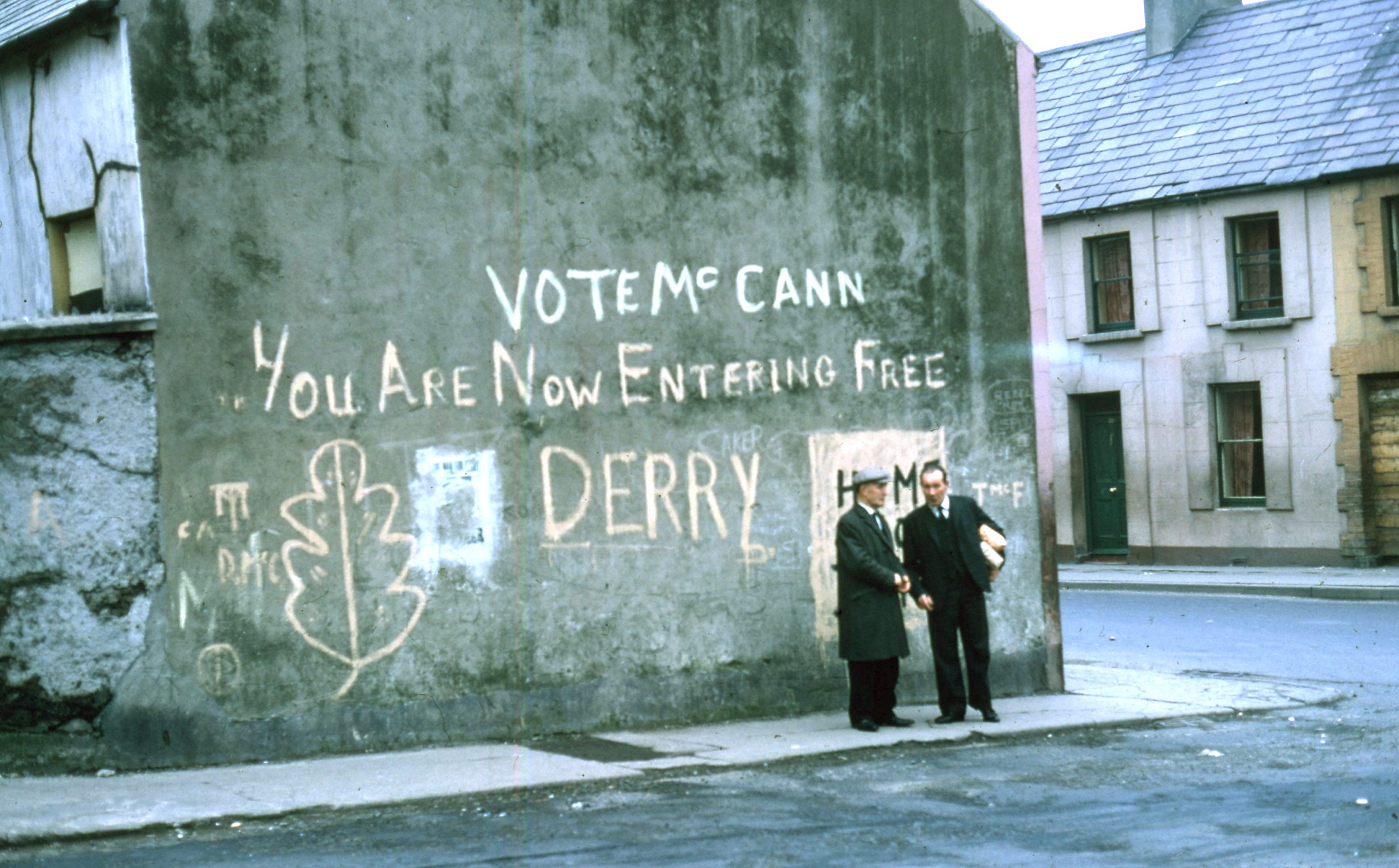
Last week, Soldier F, the only one of the Bloody Sunday shooters who was still under indictment, walked free from court. It did not come as a surprise. On Friday, a crowd of a couple of hundred stood at Free Derry Wall, carrying black flags and telling one another that, no matter what anybody thought, we were going to keep on.
This persistence is the aspect of Bloody Sunday that sometimes still confuses and frustrates well-meaning people with good hearts who wish nothing but comfort and ease for the families of the victims.
But again, why Bloody Sunday? There were more people killed in the Birmingham pub bombings of 1974. More in the Dublin-Monaghan bombings of 1975. More in the explosion in McGurk’s Bar on the New Lodge Road in Belfast the month before Bloody Sunday. And so on.
Bloody Sunday — January 30, 1972 — was very different. It didn’t happen on a lonely road at the dead of night or in the sudden eruption of death into a pub. It happened in broad daylight, watched at close quarters by thousands of people who had gathered at the end of a civil rights march.
Before the gunsmoke had dispersed from the area, we knew the truth.
In the aftermath, a tidal wave of solidarity with the Bogside swamped the South. Protests against the massacre packed every city centre. Shops, factories, offices and schools emptied. Gatherings of all sorts were cancelled. Buses and trains came to a standstill. Dublin, Cork and Shannon airports closed.
On February 2, the British embassy on Merrion Square was burned down in what one newspaper described as “the biggest demonstration the Republic has seen in a generation”.
A deluge of dignitaries descended on Derry for the funerals. These included 14 members of the government, President Éamon de Valera’s personal representative, 32 backbench TDs, 17 senators, the mayors of Dublin, Cork, Limerick, Waterford, Kilkenny, Galway, Sligo, Clonmel and Wexford, the general secretary of the Irish Congress of Trade Unions, the president of the GAA, archbishops, bishops, serried ranks of priests and other notables of one sort or another.
Many relatives of the dead couldn’t get into the Creggan church.
“Let this wee girl in, her father is one of them,” I remember hearing.
But in the Dáil debate the next day, the emphasis was not on a need to hold Britain to account, but to deflect the anger that the British army’s actions had given rise to.
Taoiseach Jack Lynch, referring to the embassy fire, spoke of “men who, under the cloak of patriotism, sought to overthrow the institutions of the State… The institutions of this state will be upheld without fear or favour. The laws will continue to be enforced. Those who seek to usurp the functions of government will meet with no toleration”.
Bloody Sunday didn’t fit into the approved narrative of Catholics and Protestants at daggers-drawn while the British authorities strove to keep the peace. Getting the slaughter in Derry off the agenda was a high priority for both the Dublin and London governments.
The UK’s Saville Inquiry was to be another means of delivering the goods. Thousands gathered in Derry’s Guildhall Square to watch the live feed from the House of Commons on a giant screen as the inquiry’s findings were delivered in June 2011. David Cameron’s phrase “unjustified and unjustifiable” triggered a thunderclap of joy. The square was transformed into a sea of shining faces.
But the then British prime minister couldn’t have used that phrase if those indicted by Saville for involvement in the killings had included, for example, Michael Jackson, second-in-command of the paratroopers on the day, who had since risen through the ranks to become boss of the Parachute Regiment, commander of the British army on the Rhine, Nato chief in Kosovo, then chief of the general staff — Britain’s top soldier.
Jackson had been on Rossville Street throughout the 17 minutes of shooting. Testifying to Saville in April, 2003, he claimed not to have seen any of the shooting. Nor did he mention having compiled the list of the shots that had been fired, which was to be used by British political and military spokespersons around the world to explain the slaughter.
If Saville had gone where the evidence ought to have led him and reported that the man then at the apex of Britain’s armed forces had concocted lies to cover up unjustified and unjustifiable killing and then perjured himself, the political impact in Derry and elsewhere would have been very different.
Cameron would not have been able to denounce the shooters while maintaining that the reputation of the British army itself remained unsullied.
The fact so many politicians and commentators in Ireland swallowed Saville’s version of events testifies to their anxiety to put Bloody Sunday behind them and get on with “reconciliation” with the British ruling class and avoiding awkward truths.
It was squaddies who were put in the frame for the massacre. But nobody who matters to people who matter suffered any discomfort. Saville didn’t tell the full truth.
Council presses Stormont on law to remove flags after Parachute Regiment colours flown following Bloody Sunday trial
Parachute Regiment flag
Tanya Fowles, Local Democracy Reporter
Today at 09:45
Fermanagh and Omagh District Council has unanimously agreed to write to the Stormont ministers, after Parachute Regiment flags were erected in Tamlaght following the Bloody Sunday verdict.
The former paratrooper known as Soldier F was found not guilty of committing two murders and five attempted murders on Bloody Sunday in Londonderry in 1972.
Soldier F had been accused of the murders of James Wray and William McKinney on Bloody Sunday, when 13 people were killed when members of the Parachute Regiment opened fire on a civil rights demonstration.
Judge Patrick Lynch at Belfast Crown Court said last month that the “evidence presented by the Crown falls well short” of being “convincing and manifestly reliable” enough to secure a conviction.
Raising the matter at the latest council meeting, SDLP councillor Adam Gannon told members: “These flags were erected maliciously with only one goal – to cause hurt and further division.
“It was effectively a disgusting attempt at gloating in the face of great pain. It’s nothing but sectarian hatred.”
He added the issue “highlights the ongoing problems with flags in our communities, which come up again and again and again. The Executive needs to get serious on flags.”
Mr Gannon proposed writing to the Ministers of the relevant Departments of Infrastructure, Communities and Justice, bringing this matter to their attention, setting out the hurt it caused and asking for action in proving “meaningful legislation which will remove flags when required”.
This was seconded by Councillor Ruaídhrí Lyttle of Sinn Féin and agreed unanimously across the chamber.
The Coalition of Irish Immigration Centers has Launched “Irish in Motion,” described as a “National Campaign to Support Irish Immigrants in an Evolving U.S. Immigration Landscape.”
Irish in Motion is being heralded as a “first-of-its-kind national communications and outreach campaign designed to support Irish immigrants navigating the rapidly shifting U.S. immigration system. “
Stated a release:”Against a backdrop of increasing scrutiny at ports of entry, complex visa regulations, and rising misinformation, Irish in Motion provides Irish immigrants with trusted, accurate, and timely information, alongside access to legal expertise and community-based support”
“This is more than communications,” said Celine Kennelly, chair of the Coalition.
“It’s a public education effort rooted in care. Above all, it is a commitment to the Irish immigrant community, ensuring they are never alone when facing immigration challenges.”
Continued the release: “At the heart of this initiative is the Coalition’s belief in ‘Connecting Irish communities with care, insight, and support.’
“The campaign is being shared with the public and amplified nationwide through CIIC’s network of local Irish centers, ensuring information reaches people where they are, at festivals, community events, cultural gatherings, and directly in neighborhoods across the U.S.
“Resources are available both in centers and online, including a dedicated microsite offering up-to-date immigration information, downloadable Know Your Rights guides, and preparedness tools. A national social media and press campaign will further extend the reach, helping ensure these resources find those who need them most.”
“For decades, Irish centers have been safe harbors,” said Siobhan Dennehy, CIIC Board Member.
“This campaign ensures that, no matter where someone lands or how long they’ve been here, they are equipped with the truth, dignity, and resources to thrive.”
Added the release: “Irish in Motion is both a call to action and a promise: staying safe and informed, wherever your journey takes you. Community members are encouraged to visit IrishInMotion.org to find their local center, get connected, and take the next steps with access to trusted information, legal navigation, and community support.
“This effort has been made possible with the generous support of the Government of Ireland’s Emigrant Support Programme, which helps ensure these critical messages reach Irish communities nationwide.”
The Coalition of Irish Immigration Centers (CIIC) is a national network of Irish immigrant support organizations across the United States.
For nearly three decades, CIIC and its member centers have provided trusted guidance, resources, and community to Irish immigrants navigating life in America. Through advocacy, education, and connection, the Coalition ensures that every Irish person, whether newly arrived or long settled, has access to the information, support, and care they need to thrive. More at www.ciic-usa.org.
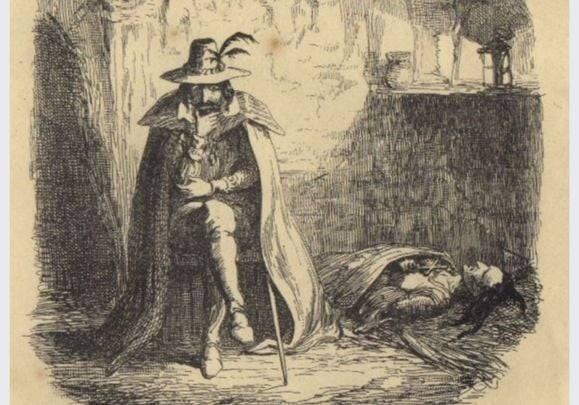
Guy Fawkes – English conspirator in the gunpowder plot to destroy the Houses of Parliament. . George Washington called Guy Fawkes Day a grave insult to America’s Catholics. After the Revolution, America stopped celebrating it. Today, millions of British will celebrate it with “Bonfire Night.”
As the famous English folk verse “The Fifth of November” goes:
Remember, remember the Fifth of November, The Gunpowder Treason and Plot, I know of no reason Why the Gunpowder Treason Should ever be forgot.
Guy Fawkes, Guy Fawkes, ’twas his intent To blow up the King and Parli’ment. Three-score barrels of powder below To prove old England’s overthrow; By God’s mercy he was catch’d With a dark lantern and burning match. Hulloa boys, Hulloa boys, let the bells ring. Hulloa boys, hulloa boys, God save the King!
Guy Fawkes (April 13, 1570 – January 31, 1606) died trying to restore a Catholic to the throne of England. The Guy Fawkes gunpowder plot of 1605 has been famous ever since.
Fawkes was born and educated in York. His father died when Fawkes was eight years old, after which his mother married a Catholic.
Fawkes later converted to Catholicism and left for the continent, where he fought in the Eighty Years’ War on the side of Catholic Spain against Protestant Dutch reformers. He traveled to Spain to seek support for a Catholic rebellion in England but was unsuccessful. He later met Thomas Wintour, with whom he returned to England.
Wintour introduced Fawkes to Robert Catesby, who planned to assassinate King James I and restore a Catholic monarch to the throne. The plotters secured the lease to an undercroft beneath the House of Lords, and Fawkes was placed in charge of the gunpowder they stockpiled there.
Prompted by the receipt of an anonymous letter, the authorities searched Westminster Palace during the early hours of November 5, 1605, and found Fawkes guarding the explosives. Over the next few days, he was questioned and tortured, and eventually, he broke. Immediately before his execution on January 31, Fawkes jumped from the scaffold where he was to be hanged and broke his neck, thus avoiding the agony of the mutilation that followed.
Fawkes became synonymous with the Gunpowder Plot, the failure of which has been commemorated in England since November 5, 1605. His effigy is often burned on a bonfire, commonly accompanied by a firework display.