Thank you, Irish Echo and Dan Dennehy for sharing.
Posted by Jim on June 12, 2022

AOH Home of the Brooklyn Irish
Baile na nGael
Saturday, August 29, 2026
Posted by Jim on June 10, 2022

 A Letter from Ireland A Letter from IrelandBoris the Builder, a Chara, Two things have weighed heavy on my mind this week. I’m planning some renovation work at the same time the British Government is threatening to break international law on Brexit and deepen the political crisis in the North.On the house front, I am drawing up plans for work that needs to be done and negotiating with a contractor. I hope to sign a contract shortly.This got me thinking about what Boris Johnson and his British Government are up to on Brexit and the Irish Protocol. Basically, their negotiations were done, the plan agreed upon, and the price set. The work is essential to avoid a hard border across Ireland.Boris Johnson is way behind in the work. The EU has been patient and is open to amending the plan due to unforeseen circumstances.The British are now demanding that the price be altered, and the plan scrapped. Threatening that all the work will not be done, the work they are refusing to do will leave structural damage. Boris says he is open to dialogue, but if the EU doesn’t agree to his demands, he will do as he pleases. The EU has the contract in their back pocket knowing this could end up in court.That is what is at play this week. The British Government agreed to the Protocol and immediately fell behind in its implementation. They are now set on introducing legislation that they believe will give them the power to unilaterally change the agreement at any time. This is of course highly illegal and a breach of international law.This dispute is not without a cost. Business that has adjusted to the Protocol will now face years of uncertainty at a time of economic crisis. The actions of the British Government undermine our agreements, the rule of law, and the primacy of politics.In a further turn of events, Boris Johnson faced a vote of confidence this week from his own party MP’s. The result was that 41% of his own party colleagues voted ‘no confidence’ in his leadership. I am now in the rare position of agreeing with 2 in 5 Tory MP’s. I am on the lookout for a reputable contractor, and I will not be calling Boris the Builder any time soon.Have a great weekend. Is mise,CiaránCiarán Quinn is the Sinn Féin Representative to North America Confronting Sectarianism – Inclusion and Reconciliation In A New Ireland By Gerry AdamsThe posting online of a vile video showing members of the Orange Order mocking the murder of Michaela McAreavey has been widely condemned. Last week in another video Pastor Barrie Halliday appeared on social media describing Catholics as ‘rats that need to be murdered with rifles and grenades.’Both of these actions are evidence of an existing underlying sectarianism within northern society that has its roots in English colonialism and in the deliberate fostering by the British state in Ireland of division between Catholics and Protestants. The Loyal Orders have long played a prominent role in promulgating this. That sectarianism still exists is not surprising. Unionist political leaders and their British allies often play the Orange Card as they seek to maximise their electoral vote or secure an advantage in a negotiation.Since partition there are few Catholic families in the North that have not had direct experience of sectarianism, of discrimination in employment or housing, of collusion involving unionist death squads, the B Specials, the UDR, RUC and British Army or of pogroms. Orange marches with their ‘kick the Pope bands’ and sectarian songs – like The Famine Song; their posters of nationalist politicians or of religious statues on bonfires and their desire to parade triumphantly through or past nationalist areas have long been part of the nationalist experience.The dignity and grace of Michaela‘s family is an example to us all…CONTINUE READING.This article first appeared in the most recent edition of Unity News.Read the full Inclusion & Reconciliation In A New Ireland report here. Human Rights Commission Condemns British Government ProposalsThe British Government has introduced legislation that will continue their policy of coverup for crimes committed by their agents and their military during the conflict in Ireland.This unilateral action by the government of Boris Johnson is opposed by victim groups, all political parties, and the Irish Government. The proposals run contrary to the unanimous position of Congress and undermine the Good Friday AgreementGiving evidence today in Westminster, Alyson Kilpatrick, Northern Ireland Human Rights Commissioner, condemned the British Government’s latest proposals as undermining the rule of law and breaching Human Rights.Summing up the proposals the Chief Commissioner said, “Police will be prevented from investigating, the courts will be prevented from the ruling, prosecutions will be prevented … that is a very substantial interference with the rule of law and with everything the UK has signed up to,”She added, “We have gone through this Bill in real detail, piece by piece and also as a whole to see whether there is anything redeeming in it that could be made compatible or could save this Bill from being found to be incompatible.“It’s clearly in breach of the Human Rights Act.”Winning At All Costs: Los Angeles vs San Francisco Last week in response to our newsletter we got this great story and photos sent to us by Maura Mahon. It was too good not to share. Thank you Maura Mahon. “I hope Ciarán enjoys his time at “the high altar of the GAA” this weekend. I am reminded of a story a friend of my father’s, Will Gartland, told at a memorial for Dad (John Mahon). In the 1950s Will attended a game of Irish Football between the Los Angeles GAA and the San Francisco GAA which was played during the half time of a Ram’s (L.A. Professional US Football team at the time) game at the L.A. Coliseum. Evidently, the San Francisco team arrived one man short and Dad who played for L.A., asked Will if he could step in and fill the void. Will had never played the game but he hesitantly agreed and asked why couldn’t he could play for Los Angeles with players he knew and one of the L.A. team members play for San Francisco. Dad said, “Because we want to win”. Will was given a uniform of sorts and shoes two sizes too big. I forget the position Will attempted to play, but the L.A. team was victorious that day. |
Posted by Jim on June 9, 2022
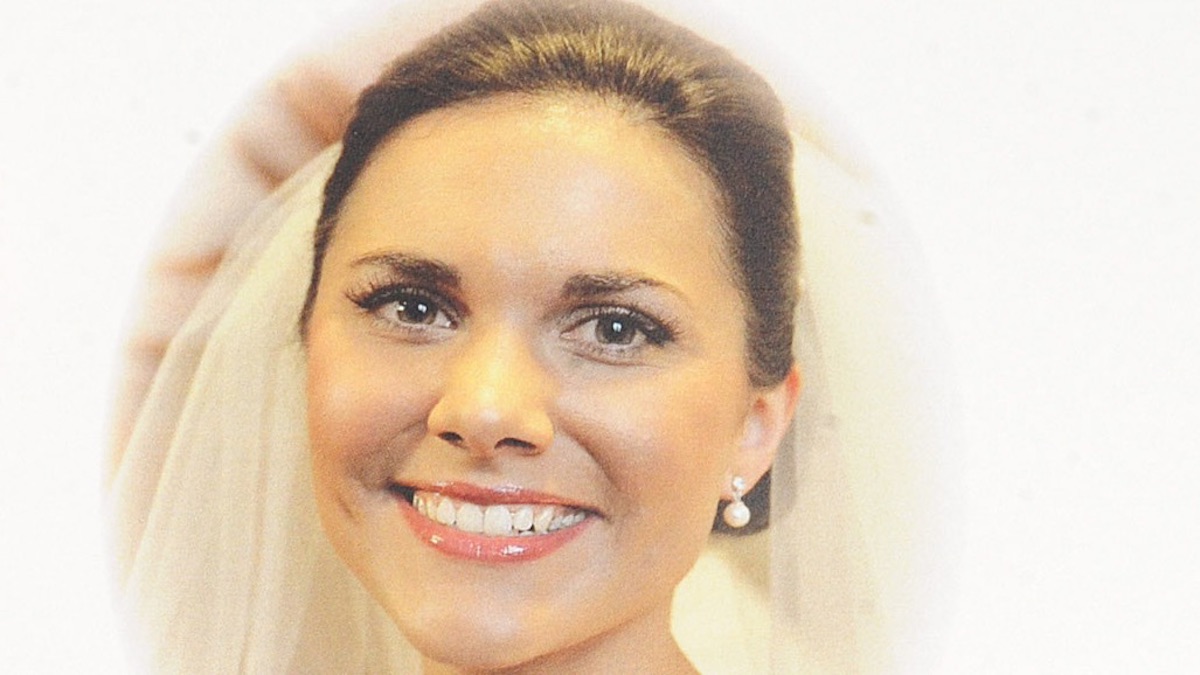
By Suzanne Breen (for the Irish Independent)
Sectarianism met misogyny on the outskirts of an east Belfast Orange hall last weekend, and what unfolded far surpassed the worst stereotype some regularly complain their opponents foist upon them.
A group of loyalists decided that a fitting way to celebrate Northern Ireland’s centenary was to glorify the strangulation of a young Catholic woman.
There was nothing about Michaela McAreavey or her murder which could in any way even begin to explain, let alone mitigate, this.
She was not a public or political figure. Nothing she ever said or did was controversial.
She was never hateful or unkind towards any individual or community. She was everything that those who sang about her clearly are not.
She did not even die in Northern Ireland. She was killed in Mauritius when she disturbed intruders who had broken into her hotel room.
That some loyalist reckoned this was good material for a song, and then penned one, is beyond me. That others learned the words and sang them with glee and gusto is almost incomprehensible.
There is clapping and cheering, fist pumping and table banging as the words are sung. Indeed, some bang so vehemently that the beer cans bounce on the tables.
This is not a bonfire on the Eleventh Night with people coming and going in the dark streets where it’s all a bit of a jumble.
This is a brightly lit hall in Dundonald with tables and chairs.
There are Orange Order banners leaning against the walls. Many of those present are wearing shirts and ties.
There has been unreserved condemnation from unionist politicians across the board. They cannot be faulted in their response.
Linfield Football Club has also taken swift action, removing John Bell as a coach.
The Grand Orange Lodge of Ireland has branded the video “utterly abhorrent”.
It said the behaviour of those involved has “no place in our society and certainly do not reflect the ethos of our organisation”.
Launching an inquiry into the incident, it said that if any members were involved they would be disciplined.
But there are key questions for the institution to publicly answer. Nobody in the room is seen to intervene during the singing.
Did anybody speak to the men about their behaviour afterwards and reprimand them? Were they asked to leave the premises? If not, why not?
Surely those belonging to an organisation committed to temperance, scriptural studiousness and brotherly love would step in when they witnessed the way the event was progressing?
Two of the men involved, Andrew McDade and John Bell, issued a statement on Friday apologising for their “offensive, vile and wholly abhorrent chant” after the video went viral.
They spoke of their “deep shame and regret”.
The nouns and adjectives used were the right ones, but for me it was all self-serving bull***t.
“This incident is not reflective of who we are as people,” they said.
That’s odd because McDade’s Facebook bio read: “What you see is what you get”.
Days after the video was recorded, there was no sign of any shame, sorrow or regret when the men wrote about the event on social media.
McDade was furious, but it wasn’t with himself.
“Pure bouncing at UTV 18:00 news, not even a mention about the Centenary Parade on Saturday at Stormont, pure tramps,” he posted.
In their statement, the men said the Facebook live video “was not streamed with the intention of broadcasting any offensive chants whatsoever, rather it was generally broadcasting from the room”.
That sounded to me, first and foremost, as a carefully worded defence against potential legal action.
Their letter of apology to the Harte and McAreavey families isn’t worth the paper it’s written on.
After a mask-slipping event, this is a face-saving exercise.
Of course, nobody is perfect. People make all sorts of mistakes in life. But this wasn’t somebody shouting, ‘F**k the Queen’ or ‘F**k the Pope’; yelling ‘Up the Ra’ or ‘Up the UVF’; or singing a republican or loyalist song.
It was middle-aged men mocking the murder by other men of a young, honeymooning bride who never harmed a soul in her life.
The barrel was well and truly scraped by the misogynistic, sectarian cretins who danced on a young woman’s grave last weekend as they celebrated the foundation of the state.
Posted by Jim on June 2, 2022
BY WILLIAM BUTLER YEATS
I have met them at close of day
Coming with vivid faces
From counter or desk among grey
Eighteenth-century houses.
I have passed with a nod of the head
Or polite meaningless words,
Or have lingered awhile and said
Polite meaningless words,
And thought before I had done
Of a mocking tale or a gibe
To please a companion
Around the fire at the club,
Being certain that they and I
But lived where motley is worn:
All changed, changed utterly:
A terrible beauty is born.
That woman’s days were spent
In ignorant good-will,
Her nights in argument
Until her voice grew shrill.
What voice more sweet than hers
When, young and beautiful,
She rode to harriers?
This man had kept a school
And rode our wingèd horse;
This other his helper and friend
Was coming into his force;
He might have won fame in the end,
So sensitive his nature seemed,
So daring and sweet his thought.
This other man I had dreamed
A drunken, vainglorious lout.
He had done most bitter wrong
To some who are near my heart,
Yet I number him in the song;
He, too, has resigned his part
In the casual comedy;
He, too, has been changed in his turn,
Transformed utterly:
A terrible beauty is born.
Hearts with one purpose alone
Through summer and winter seem
Enchanted to a stone
To trouble the living stream.
The horse that comes from the road,
The rider, the birds that range
From cloud to tumbling cloud,
Minute by minute they change;
A shadow of cloud on the stream
Changes minute by minute;
A horse-hoof slides on the brim,
And a horse plashes within it;
The long-legged moor-hens dive,
And hens to moor-cocks call;
Minute by minute they live:
The stone’s in the midst of all.
Too long a sacrifice
Can make a stone of the heart.
O when may it suffice?
That is Heaven’s part, our part
To murmur name upon name,
As a mother names her child
When sleep at last has come
On limbs that had run wild.
What is it but nightfall?
No, no, not night but death;
Was it needless death after all?
For England may keep faith
For all that is done and said.
We know their dream; enough
To know they dreamed and are dead;
And what if excess of love
Bewildered them till they died?
I write it out in a verse—
MacDonagh and MacBride
And Connolly and Pearse
Now and in time to be,
Wherever green is worn,
Are changed, changed utterly:
A terrible beauty is born.