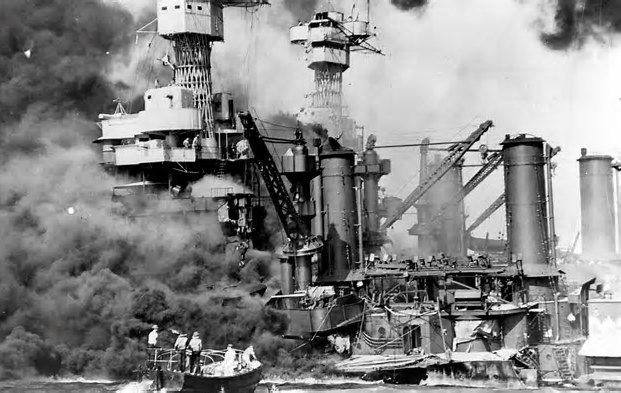
Pearl Harbor attack was met with shock, tears and disbelief
Dec. 7, 2025, 5:02 a.m. ET
In the early morning of Dec. 7, 1941, the Pensacola News Journal arrived on front porches around the sleeping city. Headlines announced President Franklin Roosevelt’s efforts to avert war with Japan and the forecast called for a chilly day by Northwest Florida standards with the temperature dropping to 38 degrees. With Christmas just weeks away, advertisements filled the pages. Gulf Power called its Frigidaire Electric range a “Gift for the Whole Family,” Brackin’s Jewelers at 40 South Palafox St. was selling a “Sweetheart Set” of rings and a watch for $29.75 and Pensacola Hardware had Daisy Air Rifles available to place under the tree.
That day, a ceremony inducting the newest members of the Knights of Columbus was scheduled for St. Stephen’s Catholic Church and a photo in the paper showed the results of a toy drive in front of the Saenger Theatre. A “This Week in History” column appeared in Section 3 on that Sunday, Dec. 7, 1941, which by the late afternoon hours assumed its place as one of the most historic days in human history.
For those in Pensacola, the first news of the Japanese attack against U.S. naval installations in and around Pearl Harbor came over the airwaves as news bulletins interrupted radio programming and word of the attack spread by word of mouth.
“There was shocked silence and for several minutes the only sound was the announcer’s voice bringing us the tragic news,” Aviation Cadet William Prescott wrote his parents from NAS Pensacola. “Tears were in the eyes of some. How had it happened?”
Events moved quickly. Pensacola Mayor L.C. Hagler declared a state of emergency.
“I know all Pensacolians join with me in this move to ensure wholehearted participation in the defense of the United States,” he proclaimed.
Part of that defense included Fort Barrancas, NAS Pensacola and surrounding airfields immediately shifting to a wartime footing with added sentries and the setting up of an air raid alarm system for the city.
Frank Emond: Pearl Harbor survivor and Pensacola Civic Band conductor dies at 104 years old
In the days after the attack, recruiting stations in the post office building reported that “corridors to their offices were swelled with men eager to sign up for battle.” Worries about those in the Pacific war zone prompted many to telephone the newspaper, the names of those with ties to Pensacola, many as part of Navy families, listed on its pages.
This was quickly followed by the first casualty lists from Pearl Harbor, the years to come bringing the war home to a number of families in Pensacola with word of the loss of loved ones, including Private Jaques W. Eubanks, a Marine killed in action on Palau, and Ship’s Cook First Class Sterling Skipper, who died in captivity while a prisoner of war.
“The faces of my friends were very changed,” Prescott continued in his letter home, capturing the momentous events of the Day of Infamy. “I realized then what this strenuous training we had undergone was meaning to them now. They were older faces, lined and tired, but deadly serious, each realizing the situation in all of its aspects.”
A city that had awakened to a peaceful Sunday morning was now at war.
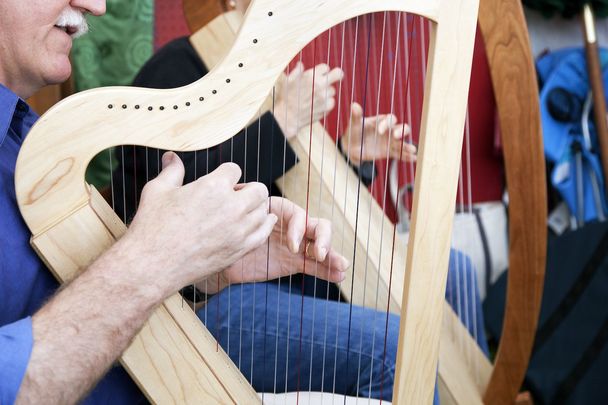
The Irish harp: These archaeological finds highlight Ireland’s long and rich history of music. Getty Images
Ireland is well-known for its rich musical heritage and its vast collection of ancient musical instruments spanning more than 3000 years from the Late Stone Age through to the Early Medieval Period (4200BC – 1000AD).
Many of the earliest Irish legends contain references to instruments and music, and the significant number of surviving Irish metal horns (40 percent of the world total, according to AncientMusicIreland.com) indicates the importance of music in ancient Ireland.
Colm Moriarty, who runs the excellent blog Irish Archaeology, highlighted five of the most important ancient musical artifacts. These instruments reflect the changes that evolved in Irish culture and civilization over thousands of years.
Sign up to IrishCentral’s newsletter to stay up-to-date with everything Irish!Subscribe to IrishCentral
The Wicklow Pipes, c. 2200-2000
Discovered in 2003 during an archaeological excavation by Bernice Molly at Greystones, Co. Wicklow, these six hand-carved cylindrical pipes, fashioned from yew wood, are the world’s oldest surviving wooden musical instruments.
Ranging in size from 2.8″ to 11.4″ long, the pipes were found lying side by side in descending order in a waterlogged trough belonging to an Early Bronze Age burnt mound (c. 2120-2085 BC).
The pipes had been hollowed out internally, but there was no evidence of finger holes. Instead, the ends of some of the pipes had been worked to a stepped taper, suggesting that the pipes were to form part of a composite wind instrument, such as a bag-fed organ or a pan-pipe-like device.
Two Late Bronze Age Horns from Co. Antrim, 900-600 BC
Two main types of horns existed in Ireland during the Late Bronze Age. One is blown from the end, usually found in the southwest of the country, and one from a side mouthpiece, which is evenly distributed throughout Ireland.
These instruments seem to have been extremely popular, and over 122 horns have been discovered in Ireland to date. It is believed they may have played a significant role in artistic and/or spiritual practices.
Two Late Bronze Age horns were discovered in Co. Antrim at bogs located in Drumbest and Drunkendult and are now housed at the National Museum of Ireland. Made from bronze but cast initially in clay molds, these horns are an example of sophisticated early metalworking.
Crotals/Rattles from Dowris, Co. Offaly, 900-600BC
These hollow-cast, pear-shaped pendants would contain a loose piece of bronze or stone inside that would rattle when the instruments were shaken.
Known as crotals, a Gaelic word derived from the Latin crotalum, meaning “rattle,” the pendants have a loop at one end, suggesting they were probably suspended. A total of forty of these instruments survive from the late Bronze Age.
The Dowris Crotals, now housed at the British Museum, were part of a massive Late Bronze Age hoard uncovered in Co. Offaly in the mid-19th century.
Crotals are distinctly Irish and have not been found outside the island.
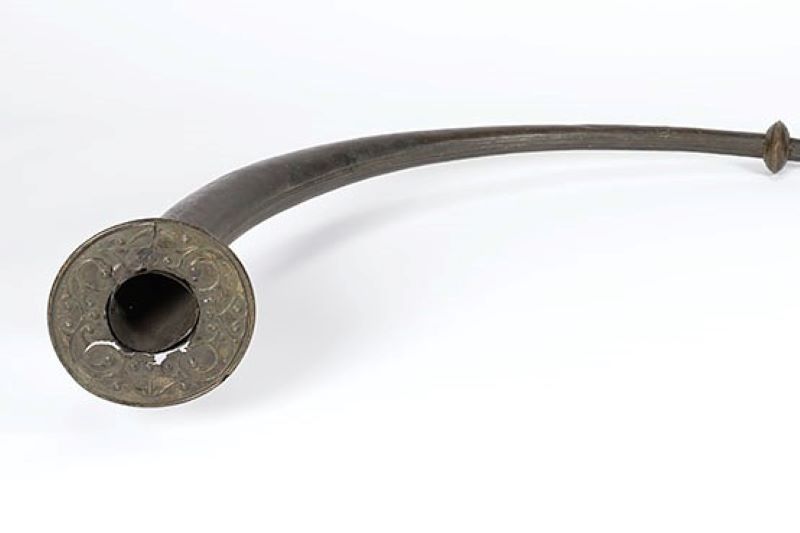
The Loughnashade Trumpet, Co. Armagh, c. 100 BC
3
The Loughnashade Trumpet (Museum.ie)
Loughnashade trumpet was discovered during drainage works at the site of a former lake (Loughnashade) in Co. Armagh, along with three other horns, since lost. A collection of human skulls and bones was also discovered at the site, suggesting some ritual deposition, according to IrishArchaeology.ie.
Measuring six feet in length and made from curved and riveted sheets of bronze, the instrument is one of the finest surviving horns of the European Iron Age. The decorative flange at the end of the horn has an abstract floral design.
It is believed the trumpet may have been a war-horn or used during special ceremonies.
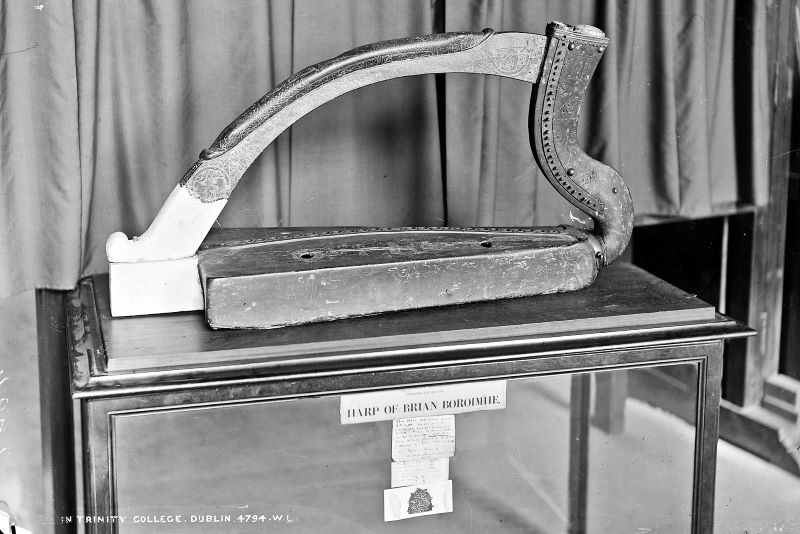
The Brian Boru Harp, c. 15th century AD
3
The Brian Boru Harp prior to its 1960s restoration (National Library of Ireland)
The harp is one of Ireland’s national symbols, used on Irish coinage and state insignia.
Although the 18th-century antiquarian Charles Vallancey believed Brian Boru once owned this harp, giving the instrument its name, it is now thought that this is highly unlikely. Probably dating back to the 15th century, the instrument is intricately carved and bears the O’Neill coat of arms.
David McCann is an Irish News columnist and commentator on politics and elections.
Prime Minister Sir Keir Starmer speaks with (left to right) Deputy First Minister Emma Little-Pengelly, First Minister Michelle O’Neill, Wales’ First Minister Eluned Morgan, Scotland’s First Minister John Swinney and Britain’s Chancellor of the Duchy of Lancaster, Pat McFadden (Andy Buchanan/PA)
In 2026, much of the political focus will be on elections in Scotland and Wales, where there could be a surge in support for Reform in both jurisdictions, and, in Wales, a change in government for the first time since devolution was established in 1999.
The hammering that Labour are expected to take is set to raise questions again about whether Keir Starmer can survive as prime minister and whether this Labour government will be the first one-term wonder since 1974.
However, whilst the future of Starmer will dominate the headlines, another symbolic, but important, change that could result from the devolved elections is the question of who will lead the Scottish and Welsh governments.
Following May 7 2026, the governments of Wales, Scotland and Northern Ireland could all have nationalist first ministers.
Emma Little-Pengelly, as Deputy First Minister here, would be the last unionist standing.
Looking at the polls, it is clear that Reform is on track for significant gains in Wales and Scotland. They have a real opportunity to become the main centre-right force in Cardiff Bay and Holyrood. They might even be the official opposition in Wales if their polling surge continues.
Nonetheless, the Welsh Labour government is not just under threat from the rise of Reform; another party is on the move in Wales, Plaid Cymru.
Plaid Cymru leader Rhun ap Iorwerth is riding high in the polls (Andrew Matthews/PA)
Hitting highs of 30% in some polls, Plaid has a real shot at replacing Labour as the largest party in the Senedd and having the numbers to cobble together a new government.
For the first time, Wales could be led by a party that wants independence.
In Scotland, Labour’s political dynamics are not much better.
Before the general election, under Anas Sawar and Keir Starmer, the party looked like it was making a return to its former strength. Labour decimated the SNP in July 2024 and looked set to take power in Holyrood in May 2026.
Now that the UK Labour government has faltered, the SNP are back leading in every poll since August 2024.
The question most often asked is not whether John Swinney will be returned as First Minister, but who he will form a government with.
The fact that we are discussing yet another SNP win, 19 years after they first formed government, is a testament to how much Labour have dropped the ball.
The picture of three first ministers who hold the view that the United Kingdom should not exist would provide a symbolic boost for the nationalist forces.
Moreover, suppose the rise of Reform is now seen in actual votes rather than just polling numbers. In that case, it will also add fuel to the argument that a Nigel Farage premiership is coming in 2029 and the desire for constitutional change could grow in the years ahead.
Reform UK leader Nigel Farage (Stefan Rousseau/PA)
The upcoming devolved elections have the potential not just to reshape the UK government, but the entire UK itself.
Having all three devolved legislatures with pro-independence parties as the leading forces will become one of the symbols of how disaffected sections of the public feel toward the current UK government.
It will also add fuel to those who are seeking referenda in the future on constitutional change. The anti-establishment feeling is not just being expressed in support for Reform.
Do three nationalist first ministers make the demise of the UK a certainty? No. Only a fool would argue that this is inevitable. The UK has withstood many challenges and evolved to meet the moment.
However, as with southern Ireland’s departure in 1922, we could be reaching a moment when irreconcilable political differences come to the fore, and the demand for a referendum to resolve them becomes unavoidable.
The next set of devolved elections in May 2026 will, without a doubt, be an important test for the UK political system.
If a Reform electoral tsunami is on the horizon, it will begin to surface in these elections.
If, alongside this, there is also either a holding in support or an increase for pro-independence parties, it will pose a major political conundrum for the rest of the Labour government’s term, whoever leads it as prime minister.
If you have an opinion on the issues raised in this article and would like to submit a Letter to the Editor to be considered for publication
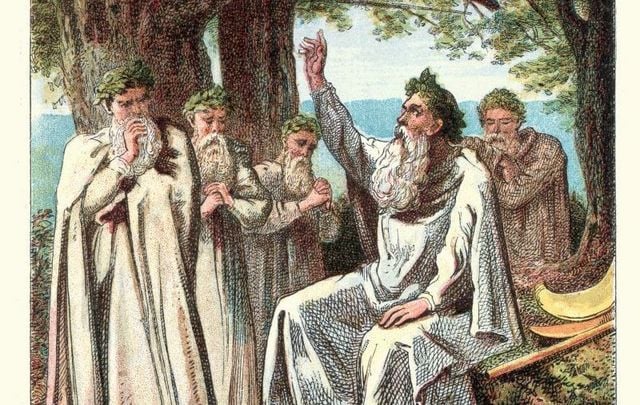
Our modern understanding of Irish and Celtic Druids is derived from four major periods of history. Getty Images
Who were the Druids? Their legacy is the most enduring and mysterious.
Today, the word “druid” conjures images of magic, wizardry, and spiritualism, but in ancient times, the term had a much broader definition.
During the Iron Age, the Druids comprised the highest educated tier of Celtic society, including poets, doctors, and spiritual leaders. The legacy of this last group is the most enduring and the most mysterious.
25,000-year history of rebirth
The earliest evidence of the Druid spiritual tradition dates back 25,000 years and is found in caves in Europe, such as the Chauvet, Lascaux, and Altamira caves in France and Derbyshire, England, which feature paintings of wild animals on their walls.
Sign up to IrishCentral’s newsletter to stay up-to-date with everything Irish!Subscribe to IrishCentral
Candidates for initiation would crawl into the caves to be reborn in the light of day. This theme of death and rebirth remains a continuing thread in the spiritual practice of Druidry throughout the centuries.
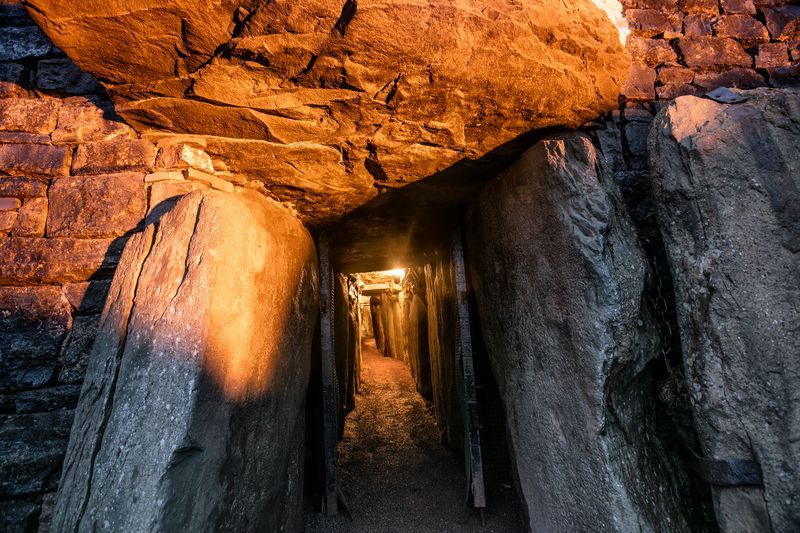
This practice of seeking rebirth within the Earth can be seen around 3000 BC, when great mounds were built in which initiates would sit in darkness, waiting to be “reborn” into the light. One example is Ireland’s Newgrange in Co Meath, where a shaft is oriented to the winter solstice sunrise, filling the chamber with light at dawn.
4
Inside Newgrange (Ireland’s Content Pool)
This spiritual tradition continued for four and a half thousand years, into the sixteenth century, when Christian clerics transcribed the key text of Druid spirituality from oral tradition. The text speaks of “the spiritual and magical training of a Druid, in which a Goddess eats him, enters her belly, and is reborn as the greatest poet in the land.”
Origins of the term “druid”
The word “Druid” derives from the Latin “druidae” and from Gaulish “druides”. It is also thought to stem from a Celtic compound, “dru-wid” – “dru” (tree) and “wid” (to know) – which reflects the importance of trees in Celtic spirituality and symbolism. The Old Irish form was “drui”, and in Modern Irish and Gaelic the word is “draoi” or “druadh” (magician, sorcerer).
Educated ancient leaders
Druidry.org marks four significant periods of history that relate to Celtic and Druid spirituality:
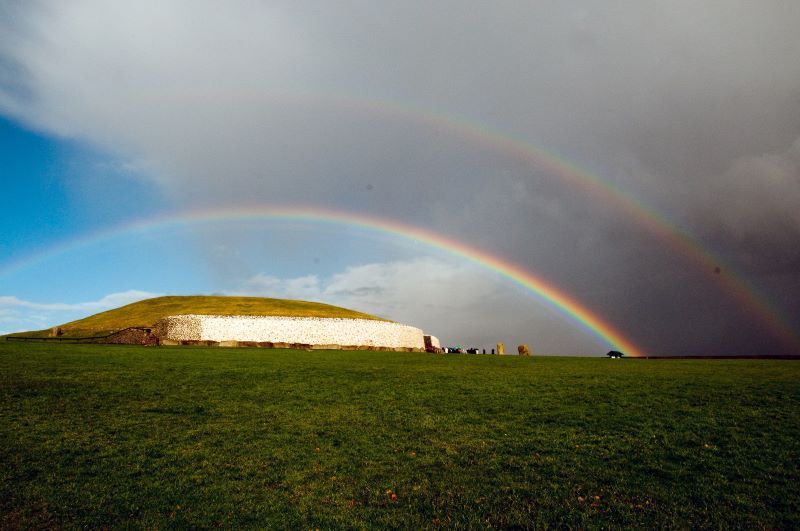
The prehistoric period saw tribes from Europe moving westwards towards Britain and Ireland as the Ice Age retreated. These people had considerable knowledge of astronomy and mathematics, as well as excellent engineering skills. The megalithic building culture developed at this time, and this period saw the rise of great mounds like Newgrange and stone circles like Stonehenge.
4
Newgrange (Getty Images)
Next came the period of documented history, when classical writers left behind written works about the Celts and Druids. The Celts had “a highly sophisticated religious system, with three types of Druids: the Bards, who knew the songs and stories of the tribe, the Ovates, who were the healers and seers, and the Druids, who were the philosophers, judges, and teachers.”
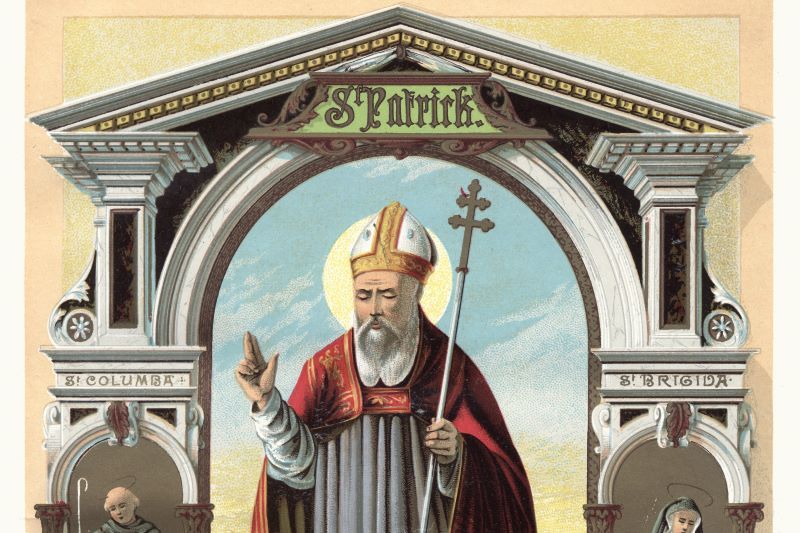
The third period, which lasted for a thousand years, began with the coming of Christianity. During this time, Celtic and Druid spirituality was preserved by the Christian clerics who recorded many of the old stories and myths conveyed by the Druids, who mostly converted to Christianity. St Patrick also recorded all of the old Druid laws of Ireland, thereby preserving information on the ethics and social structure of the pre-Christian Celtic culture.
4
Saint Patrick (Getty Images)
The fourth and final period began in the sixteenth century with the “rediscovery” of the Druids and their Celtic heritage by European scholars. Along with the translation and printing of classical Druid texts, scholars discovered their ancestors were far from the savages the Church made them out to be. During this period of “Druid Revival,” groups and societies were established to study Druidry and Celticism, and cultural festivals celebrating their languages and traditions sprang up throughout Europe. This period of revival has grown into a renaissance that continues to this day.
* Originally published in 2014 and updated in Dec 2025.