Séamus McElwain remembered
Posted by Jim on April 30, 2026
IRISH REPUBLICAN NEWS:
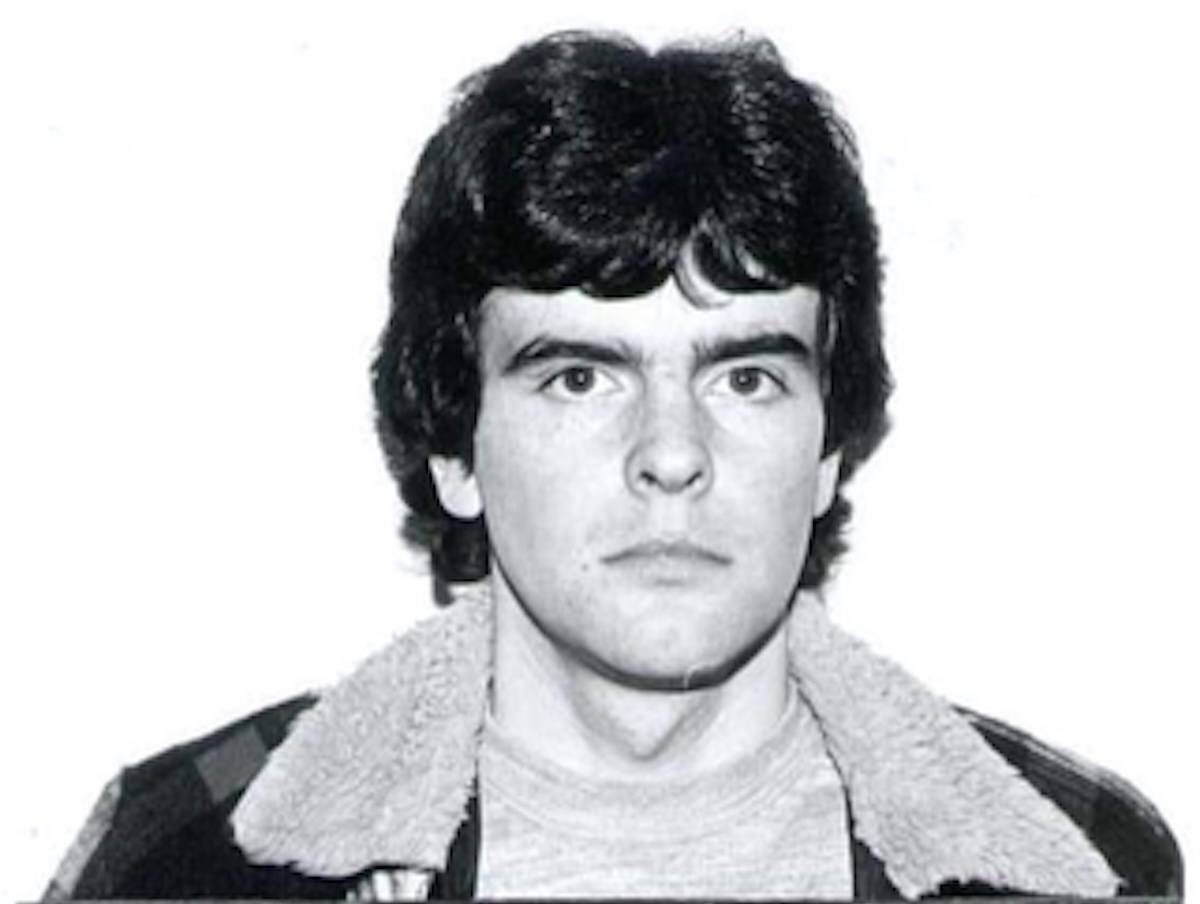
Several hundred people turned out at a Sinn Féin event in Scotstown in County Monaghan last Sunday to mark the 40th anniversary of the death of IRA legend, Óglach Séamus McElwain. The event celebrated a life dedicated to his community and to the achievement of a free, independent, and united Ireland. The following is a biography of his life, by Jim Doyle.
Séamus was born on April 1st 1960, the oldest of eight children in the townland of Knockacullion, beside the hamlet and townland of Knockatallon, near the village of Scotstown in the north of County Monaghan.
At the age of 14, he took his first steps towards becoming involved in Republicanism when he joined Na Fianna Éireann. Two years later, he turned down an opportunity to study in the United States and joined the Irish Republican Army (IRA), stating, “no one will ever be able to accuse me of running away.”
He became Officer Commanding of the IRA in County Fermanagh by the age of 19.
On February 5th 1980, off-duty Ulster Defence Regiment (UDR) corporal Aubrey Abercrombieb was killed as he drove a tractor in the townland of Drumacabranagher, near Florencecourt.
Later that year, on September 23, off-duty Royal Ulster Constabulary (RUC) Reserve Constable Ernest Johnston was killed outside his home in Rosslea.
On March 14th 1981, a detachment of the British Army surrounded a farmhouse near Roslea, containing Séamus and three other IRA members. Despite being armed with four rifles, including an Armalite, the IRA members surrendered and were arrested.
While on remand in Crumlin Road, he stood as a Republican candidate in the 1982 Free State General Election for the Cavan/Monaghan constituency, contesting a seat which had formerly been held by hunger strike martyr Kieran Doherty.
He was not elected but received 3,974 votes (6.84% of the vote).
In May 1982, he was convicted of murdering the RUC and UDR members, with the judge recommending he spend at least 30 years in prison.
On September 25th 1983, Séamus was involved in the Maze Prison escape, the largest break-out of prisoners in Europe since World War II and in British prison history.
Thirty-eight Republican prisoners, armed with six handguns, hijacked a prison meals lorry and smashed their way out of the prison.
After the escape, Seamus joined an IRA Active Service Unit operating in the border area between Counties Monaghan and Fermanagh.
The unit targeted police and military patrols with gun and bomb attacks while sleeping rough in barns and outhouses to avoid capture.
Séamus held a meeting with Pádraig McKearney and Jim Lynagh, members of the Provisional IRA East Tyrone Brigade, in which they discussed forming a flying column aimed at destroying police stations to create IRA-controlled zones within the six counties.
This plan had been used to great effect during the War of Independence, especially in Cork with Tom Barry’s Flying Column.
However, this plan never materialised.
McKearney and Lynagh were later themselves killed in the Loughgall ambush.
On April 26, 1986, Séamus and another IRA member, Seán Lynch, were preparing to ambush a British Army patrol near Rosslea, County Fermanagh when they were ambushed themselves by a detachment from the Special Air Service Regiment. Both were wounded, but Lynch managed to crawl away.
A January 1993 inquest jury returned a verdict that Séamus had been unlawfully killed. The jury ruled that the soldiers had opened fire without giving him a chance to surrender, and that he was shot dead five minutes after being wounded.
The Director of Public Prosecutions requested a full report on the inquest from the RUC, but no one was prosecuted for Séamus’s death.
Séamus McElwain was buried in Scotstown, with his funeral attended by an estimated 3,000 people.