Civil War Mystery
Posted by Jim on June 8, 2023
AOH Home of the Brooklyn Irish
Baile na nGael
Monday, August 31, 2026
Posted by Jim on

“By its appointment of former Chief Justice Declan Morgan to head its new legacy commission, the British government is clearly signaling its intention to move ahead with the Northern Ireland Troubles (Legacy and Reconciliation) Bill, despite overwhelming opposition by victims’ relatives, human rights campaigners, the Irish government and all major six county political parties. With British Prime Minister Rishi Sunak arriving in Washington, victims’ relatives are making an emergency appeal for American help, as their best hope to stop a bill designed to cut off legal channels for justice. Congressman Brian Fitzpatrick, will join victims’ relative Patsy Kelly, civil rights lawyer Niall Murphy, and justice campaigner Andree Murphy in a live webinar broadcast, hosted by the Ancient Order of Hibernians, (AOH) this Saturday, June 10th, at 10 AM Eastern Time, 3 PM Irish time.
“The British amnesty bill, aims to discard Britain’s Stormont House Agreement on legacy mechanisms with the Irish government, and end criminal cases, Historical Investigations, Inquests, civil suits or Ombudsman investigations which could give the truth in hundreds cases including British crown force or collusion killings. Instead the British want to set-up an Independent Commission for Reconciliation and Information Recovery (ICRIR) which victims’ relatives fear will bury the truth along with the victims. Although the amnesty bill has not yet been passed at Westminster, the British have already announced the appointment of retired Chief Judge Declan Morgan to head the Commission.
Zoom: https://aoh.com/WebinarRegistration
YouTube: https://aoh.com/LegacyJusticeLive
or https://youtube.com/live/XAkIy-7DRmI
PANELISTS
“Republican Congressman Brian Fitzpatrick, has been one of the leading Washington voices on Irish issues and a driving force on a series of Congressional initiatives, House Resolutions and Briefings on legacy justice. Most recently he co-signed a strongly worded letter to British Secretary Chris Heaton Harris, expressing deep disappointment at the moves to push ahead with an amnesty bill despite the opposition of nationalist and unionist victims.
“Patsy Kelly Jr., is the son of Independent Councillor Patsy Kelly who was abducted from work in County Tyrone and murdered in July 1974. The family has always believed the murder was carried out by members of the British Army’s Ulster Defense Regiment and a recent Ombudsman Investigation ruled that there had been collusive behavior by the Royal Ulster Constabulary. Now the Kelly family’s 50 year fight for justice is threatened by the proposed British amnesty bill.
“Civil rights lawyer, Niall Murphy will explain the legal implications of the amnesty law and how badly the law will effect families who have waited decades for truth and would be compelled to begin a long legal battle to the European Court of Human Rights.
“Andree Murphy, the Deputy Chair of Relatives for Justice, will discuss the importance of American help in the continuing political and legal battle for legacy justice.
Posted by Jim on
They told me how Connolly was shot in his chair,
His wounds from the fighting all bloody and bare.
His fine body twisted, all battered and lame
They soon made me part of the patriot game.
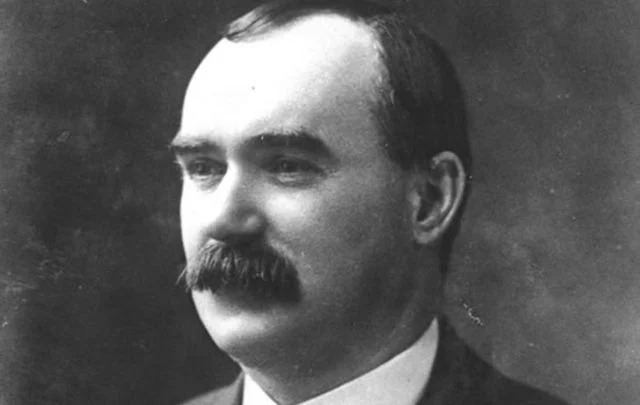
James Connolly, the Edinburgh man calling the military shots from the GPO during Ireland’s 1916 Easter Rising, was born on this day in 1868.
James Connolly, the Edinburgh man calling the military shots from the GPO, was the “heart” of the rebellion James Connolly, the Edinburgh man calling the military shots from the GPO, was the “heart” of the rebellion THE IRISH LABOUR PARTY / FLICKR
James Connolly was born on June 5, 1868, in Edinburgh to Irish parents.
“The Irish people will only be free, when they own everything from the plough to the stars.”
“If Pearse was the soul of the Rising,” wrote Joe Good in ‘Enchanted by Dreams,’ “James Connolly was its heart.”
Connolly was born in Edinburgh on June 5, 1868, to Irish parents. He grew up in the slums and his hardscrabble beginnings turned him into a fervent socialist.
After working in Scotland and a stint in the British Army, in 1896 he came to Dublin to work for the Dublin Socialist Society. It was his first time in Dublin and he was immediately dismayed that the Dublin working class did not have the same fire in their bellies that he had. So, as he had a family to support, he moved to America in 1903.
Seven years later he returned to Ireland to head up the Irish Transport and General Workers Union in Belfast. After the disastrous general strike of 1913 and Jim Larkin’s departure for America, Connolly came to Dublin to head up the local ITGWU—and its Citizen Army.
The Citizen Army became his obsession. Although only 220 in strength, he drilled them until they became, in his words, “a real revolutionary army.”
The boys at the Irish Volunteers kept a wary eye on Connolly and his army. They were drawing up plans for a Rising and were afraid that Connolly might preempt them. In January 1916 they decided to “kidnap” him. For three days he was briefed by members of the Military Council of the IRB—men like Clarke, MacDiarmada, and Plunkett. At first, Connolly was very angry, but as details of the planned Rising were made known to him he became an enthusiastic supporter.
On Easter Monday, he was named Vice-President of the Provisional Government and Commandant-General in the Army of the Irish Republic. He marched at the head of his Citizen Army to the GPO and, finding his inner-Teddy Roosevelt at San Juan Hill, commanded his troops: “Left turn. CHARGE!” After Pearse read the Proclamation Connolly exclaimed, “Thanks be to God, Pearse, that we have lived to see this day.”
Pearse may have been the titular “Commander-in-Chief,” but Connolly was calling the military shots from the GPO. He was fearless, venturing out into the streets to direct his men. It was on one of these sorties to Liffey Street, far away from the GPO near the Ha’penny Bridge, that he was seriously wounded in the leg. He made his way back to the GPO and helped plan the evacuation to Moore Street. After the surrender, he was removed to Dublin Castle for treatment for his wound which had developed gangrene.
His condition was such that his trial was held at Dublin Castle. After he was found guilty and condemned to death he made this statement: “We went out to break the connection between this country and the British Empire and to establish the Irish Republic. We believe that the call we thus issued to the people of Ireland was a nobler call in a holier cause that [sic] any call issued to them during this war having any connection with the war. We succeeded in proving that Irishmen are ready to die endeavoring to win for Ireland their national rights which the British Government has been asking them to die to win for Belgium.”
“As long as that remains the case the cause of Irish freedom is safe. Believing that the British Government has no right in Ireland, never had any right in Ireland, and never can have any right in Ireland, the presence in any one generation of even a respectable minority of Ireland ready to die to affirm that truth make sure Government forever a usurpation and a crime against human progress. I personally thank God that I have lived to see the day when thousands of Irishmen and boys, and hundreds of Irish women and girls, were equally ready to affirm that truth and seal it with their lives if necessary.”
His last hours were spent with his wife Lillie and daughter Nora. “My mother and I . . . were driven to Dublin Castle,” Nora said. “On entering we were directed to a flight of stairs. At the top of the stairs were six soldiers with fixed bayonets, and on the floor, about a dozen more were lying on mattresses.
“We passed through the soldiers and entered an enclave where there were two soldiers with fixed bayonets. They stood aside to let us enter the door. When we entered my father was lying in the bed with his head turned to the door.”
“Well,” said Connolly to his wife, “I suppose you know what this means.”
Lillie responded, “Not that James, not that.”
Nora continued: “My father said, ‘Yes, for the first time I dropped off to sleep. And they wakened me to tell me that I was to be shot at dawn.’ ”
Lillie said, “Your life, James, your beautiful life.”
“Well, Lillie,” he answered, “hasn’t it been a full life, and isn’t this a good end?”
Nora informed him of the executions of Pearse, MacDonagh, and the others. “He was silent for a while. I think he thought that he was the first to be executed. Then he said, ‘Well, I am glad that I am going with them.’ ”
He was removed to Kilmainham. There, Father Aloysius asked him to forgive the men of the firing squad. “I do, Father,” said Connolly. “I respect every man who does his duty.”
It is at this time that Connolly went from martyr to legend. Because his wounds were so severe he could not stand, so they tied him to the chair. Dominic Behan (brother of Brendan and nephew of Peadar Kearney, who wrote the Irish National Anthem, “Amhrán na bhFiann”) remembered Connolly in his popular ballad, “The Patriot Game.”
They told me how Connolly was shot in his chair,
His wounds from the fighting all bloody and bare.
His fine body twisted, all battered and lame
They soon made me part of the patriot game.
But it may have been much more gruesome than that. The Sacristan to the Parish of St. James had this description of the execution: “In giving a description of James Connolly’s execution Father McCarthy told me that the prisoner, who was in a bad condition, elected to stand like the rest but failed. He was then tied to a chair but slumped so much that he overbalanced. Finally, he was strapped to a stretcher and placed in a reclining position against the wall…The sight left an indelible impression on Father McCarthy.”
Perhaps the greatest tribute to Connolly came from one of his officers in the GPO during Easter Week, a young Cork rebel named Michael Collins: “Of Pearse and Connolly I admire the latter the most. Connolly was a realist, Pearse the direct opposite. There was an air of earthy directness from Connolly. It impressed me. I would have followed him through hell had such action been necessary.”
* Dermot McEvoy is the author of “The 13th Apostle: A Novel of a Dublin Family, Michael Collins, and the Irish Uprising and Irish Miscellany” (Skyhorse Publishing). He may be reached at dermotmcevoy50@gmail.com. You can check out his website here or follow The 13th Apostle on Facebook.
Posted by Jim on June 3, 2023
June 03, 2023 10:07
INFLUENCE: An IRA sign on Belfast’s Falls Road in 2018
UNIONISTS are more likely than nationalists to believe that paramilitaries have a controlling influence in their respective communities, a new report has found. The report also found that fewer people in West Belfast believe that paramilitaries have an influence in their area compared to their counterparts living in Ardoyne and the New Lodge.
The Mitchel Institute at Queen’s University Belfast, supported by Co-operation Ireland, undertook research in each Communities in Transition area last year. The project focuses on areas with a history of paramilitary activity.
The authors of the report state that when respondents in nationalist and republican area were questioned about paramilitaries the term was often contested. Participants often answered: “We don’t have paramilitaries, we just have organised crime gangs.”
In Belfast the areas surveyed were West Belfast, Ardoyne, New Lodge, East Belfast and Shankill. Other areas featured were Carrickfergus, Derry, Larne, Lurgan and North Down.
While many of the findings were similar in all the areas, attitudes also differed significantly in the various Communities in Transition that were surveyed.
62% of those surveyed agreed or strongly agreed that there was a strong sense of community throughout West Belfast. The average response across all the CIT sites was 66%.
72% agreed or strongly agreed that they felt connected to their local area. The average response across all the CIT sites was 68%. 6% of participants indicated they were involved with a Local Church. 11% were associated with a Sports Club. 5% were involved in a Local School. 1% participated in Neighbourhood Associations.
65% of respondents indicated that they would know who to contact if they had a problem associated with their community. The average response across all the CIT sites was 84%.
30% agreed or strongly agreed that they had the skills to help change their area for the better. The average response across all the CIT sites was 50%.
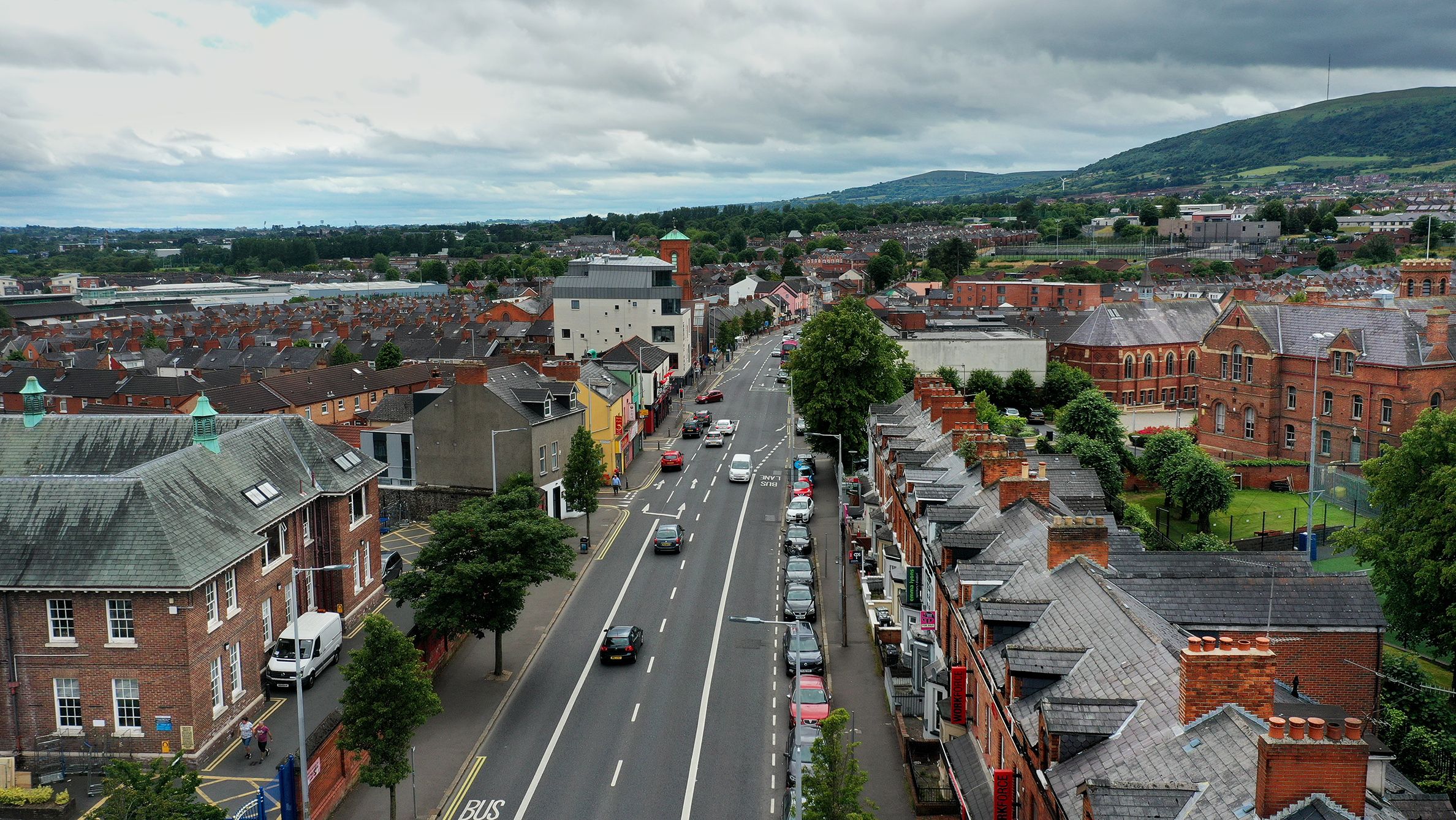
17% of respondents felt the area would be in better condition in five years time. The average response across all the CIT sites was 29%.
34% of respondents agreed or strongly agreed that they had an influence over decisions that are made about their area. The average response across all the CIT sites was 27%.
83% of participants indicated that in five years time, the area would be either in the same condition or worse. The average response across all the CIT sites was 71%.
38% of respondents felt that local residents abided by the rule of law. The average response across all the CIT sites was 61%.
36% felt that improved lighting and alleygating would make them feel safer, while 30% said improved relationships with the PSNI would also help. The average response across all the CIT sites was 60% & 59%.
66% felt anti-social behaviour was a problem in the area. The average response across all the CIT sites was 55%.
78% believed that drug related crime was also a problem in the area. The average response across all the CIT sites was 57%.
18% of respondents felt that young people living throughout West Belfast were under too much influence from paramilitary groups. The average response across all the CIT sites was 32%.
20% felt that paramilitary groups create fear and intimidation in the area. The average response across all the CIT sites was 34%.
15% felt that paramilitary groups had a controlling influence in their area. The average response across all the CIT sites was 27%.
67% of those surveyed agreed or strongly agreed that there was a strong sense of community throughout Ardoyne. On average, across all the other CIT sites, 66% agreed or strongly agreed that there was a strong sense of community throughout their respective area.
74% agreed or strongly agreed that they felt connected to their local area. The average response across all the other CIT sites was 68%.
27% of participants indicated they were involved with a Local Church. 18% were associated with a Sports Club. 16% were involved in a Local School. 8% participated in Neighbourhood Associations.
82% of respondents indicated that they would know who to contact if they had a problem associated with their community. The average across all the CIT sites was 84%
67% agreed or strongly agreed that they had the skills to help change their area for the better. The average across all the CIT sites was 50%.
37% of respondents felt the area would be in better condition in five years time. The average across all the CIT sites was 29%.
Only 15% of respondents agreed or strongly agreed that they had an influence over decisions that are made about their area. The average across all the CIT sites was 27%.
63% of participants indicated that in five years time, the area would be either in the same condition or worse. The average across the CIT sites was 71%.
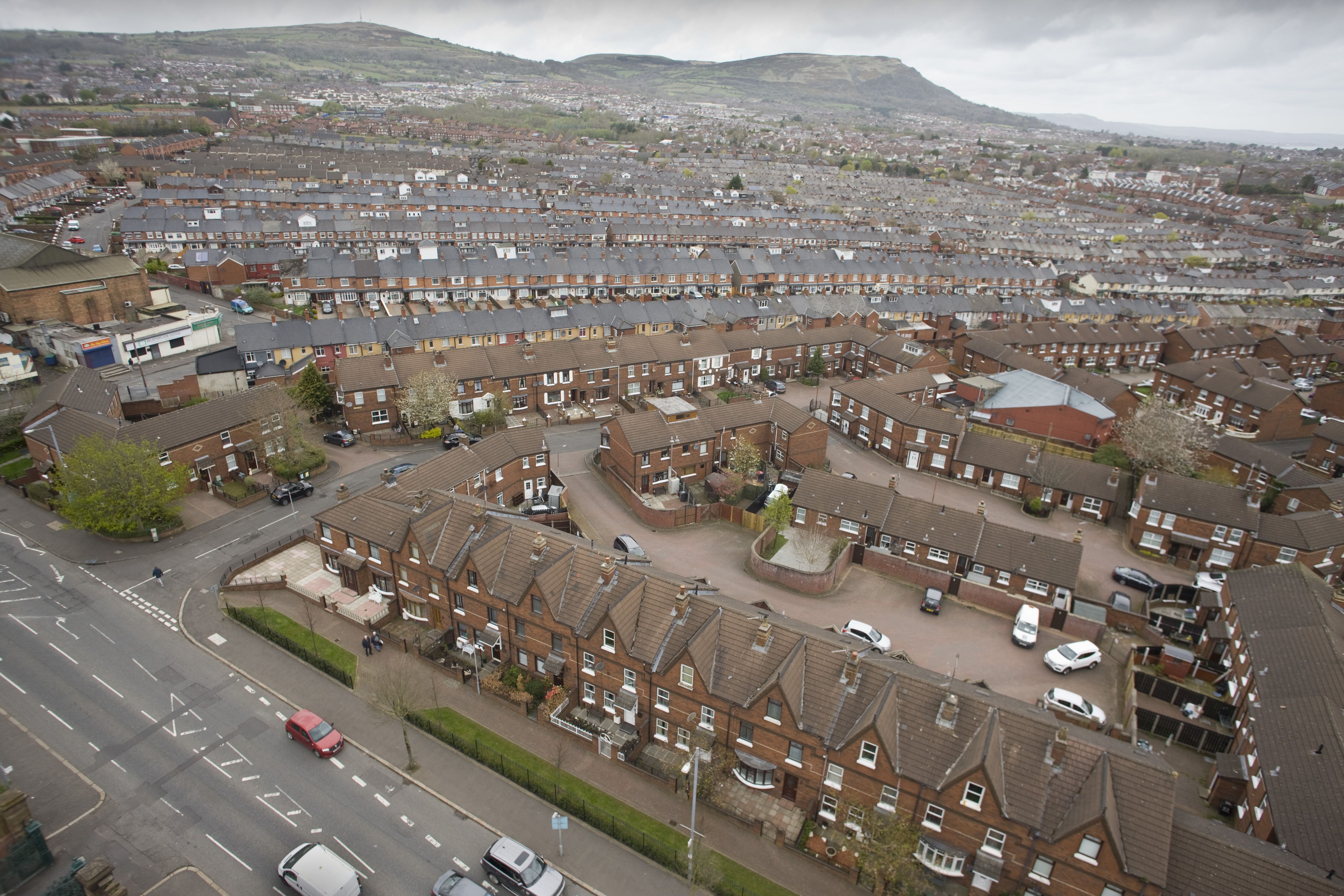
67% of respondents felt that local residents abided by the rule of law. The average across all the CIT sites was 61%.
76% felt that improved lighting and alleygating would make them feel safer, while 55% said improved relationships with the PSNI would also help. The average across all the CIT sites was 60% & 59%.
72% felt anti-social behaviour was a problem in the area. The average across all the CIT sites was 55%.
76% believed that drug related crime was also a problem in the area. The average across all the CIT sites was 57%.
24% of respondents felt that young people living throughout Ardoyne were under too much influence from paramilitary groups. The average across all the CIT areas was 32%.
40% felt that paramilitary groups create fear and intimidation in the area. The average across all the CIT areas was 34%.
26% felt that paramilitary groups had a controlling influence in their area.
67% of those surveyed agreed or strongly agreed that there was a strong sense of community throughout New Lodge. The average response across all the CIT sties was 66%.
66% agreed or strongly agreed that they felt connected to their local area. The average response across all the CIT sites was 68%.
22% of participants indicated they were involved with a Local Church. 15% were associated with a Sports Club. 12% were involved in a Local School. 2% participated in Neighbourhood Associations.
90% of respondents indicated that they would know who to contact if they had a problem associated with their community. The average response across all the CIT sites was 84%.
70% agreed or strongly agreed that they had the skills to help change their area for the better. The average response across all the CIT sites was 50%.
32% of respondents felt the area would be in better condition in five years time. The average response across all the CIT sites was 29%.
Only 11% of respondents agreed or strongly agreed that they had an influence over decisions that are made about their area. The average response across all the CIT sites was 27%.
68% of participants indicated that in five years time, the area would be either in the same condition or worse. The average response across all the CIT sites was 71%.
67% of respondents felt that local residents abided by the rule of law. The average response across all the CIT sites was 61%.
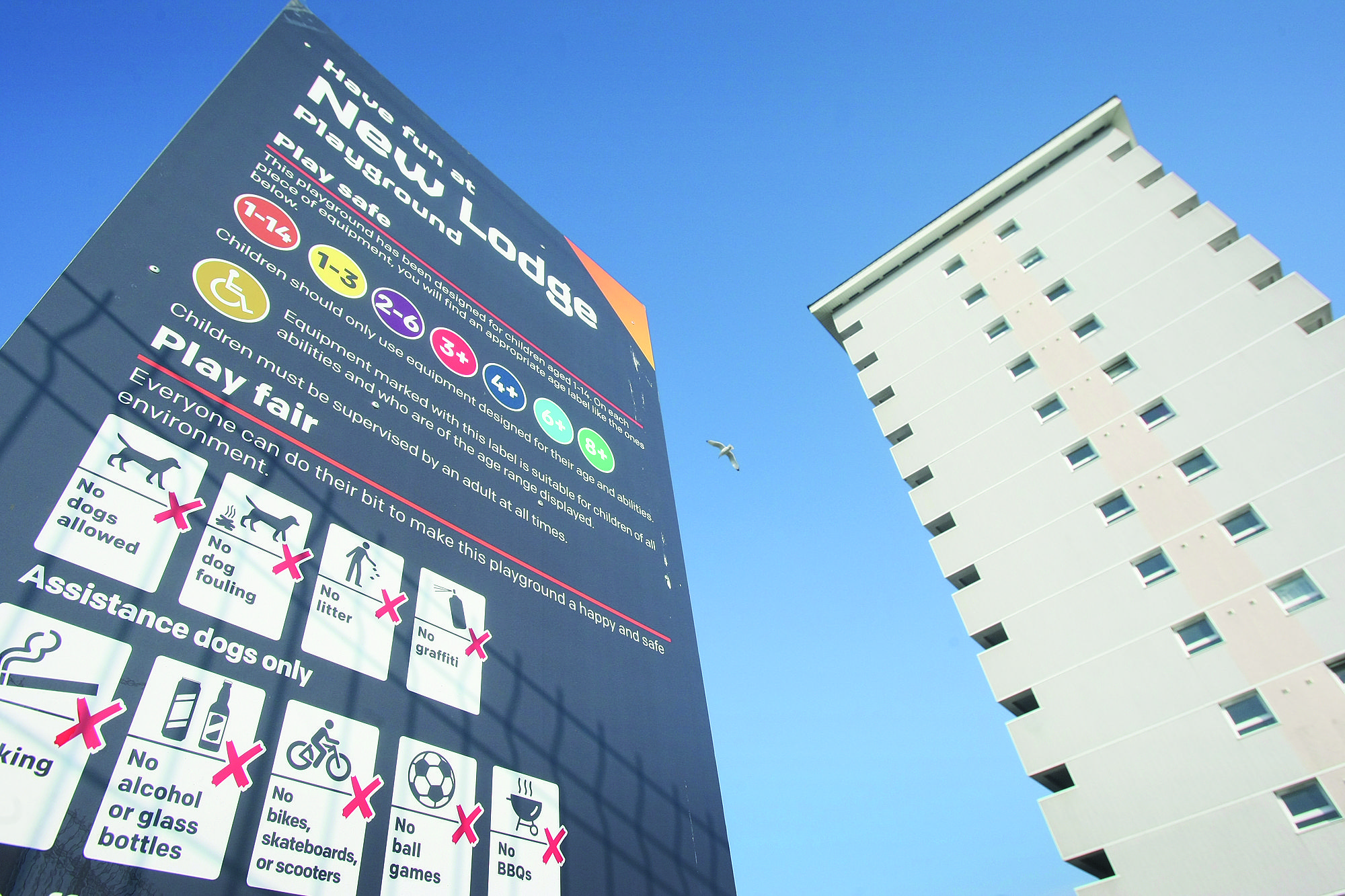
76% felt that improved lighting and alley-gating would make them feel safer, while 55% said improved relationships with the PSNI would also help. The average response across all the CIT sites was 60% & 59%
72% felt anti-social behaviour was a problem in the area. The average response across all the CIT sites was 55%.
76% believed that drug related crime was also a problem in the area. The average response across all the CIT sites was 57%.
24% of respondents felt that young people living throughout the New Lodge were under too much influence from paramilitary groups. The average response across all the CIT sites was 32%.
34% felt that paramilitary groups contribute to crime, drug dealing and ASB in the area. The average response across all the CIT sites was 34%.
40% felt that paramilitary groups create fear and intimidation in the area. The average response across all the CIT sites was 27%.
26% felt that paramilitary groups had a controlling influence in their area.
The figures for paramilitary influence in unionist areas of Belfast was higher than in nationalist areas.
In East Belfast the report found:
50% of respondents felt that young people living throughout East Belfast were under too much influence from paramilitary groups. The average response across all the CIT sites was 32%
57% felt that paramilitary groups contribute to crime, drug dealing and ASB in the area. The average response across all the CIT sites was 34%
49% felt that paramilitary groups create fear and intimidation in the area. The average response across all the CIT sites was 27%
45% felt that paramilitary groups had a controlling influence in their area.
In the Shankill the report found:
51% of respondents felt that young people living throughout the Shankill were under too much influence from paramilitary groups. The average response across all the CIT sites was 32%.
46% felt that paramilitary groups create fear and intimidation in the area. The average response across all the CIT sites was 34%.
46% felt that paramilitary groups had a controlling influence in their area. The average response across all the CIT sites was 27%.
