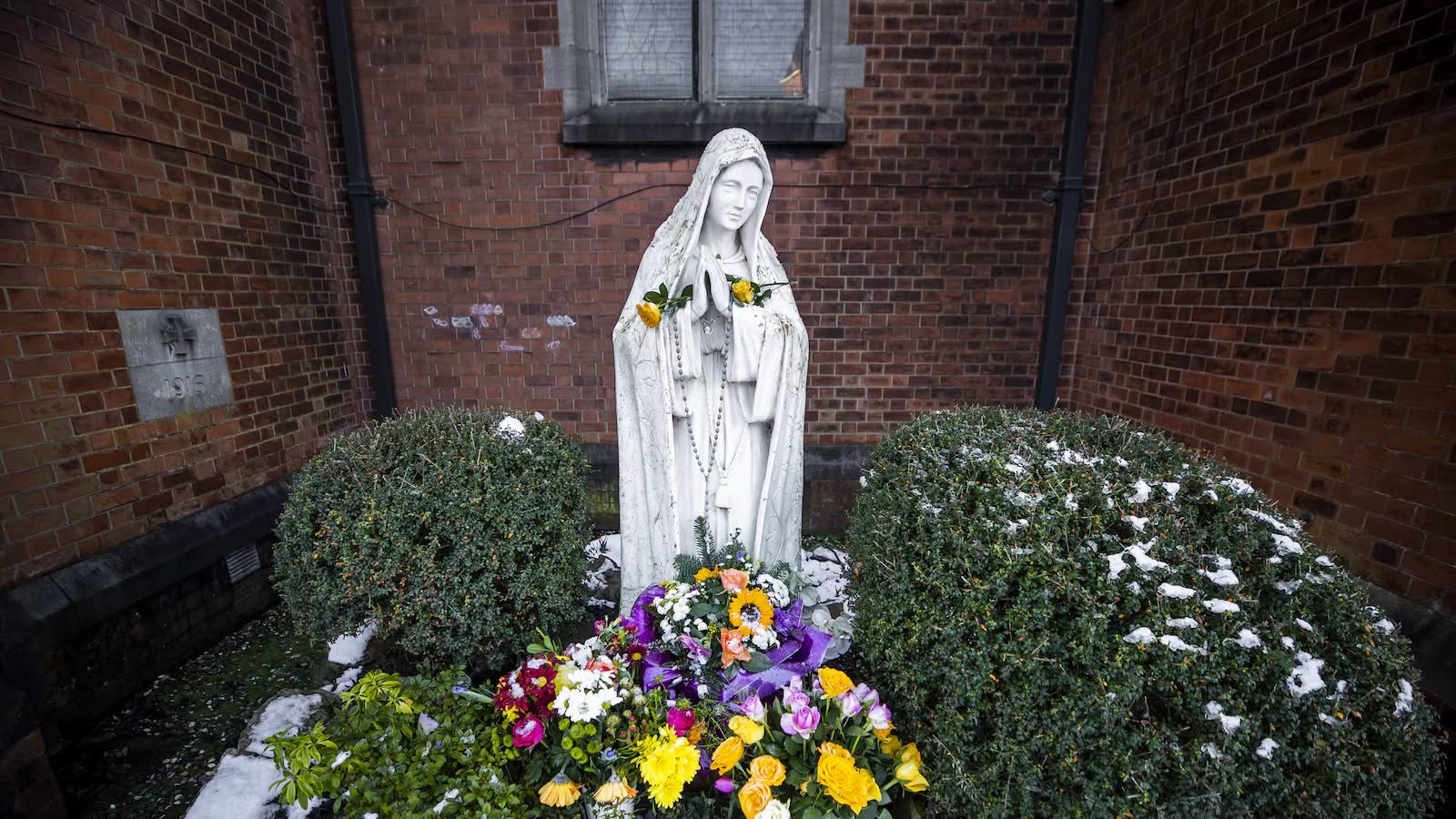
We have had many previous major inquiries into clerical child abuse, which helped to establish the full appalling scale of the issue, but the latest report released earlier this week is among the most harrowing to date.
It is absolutely essential that the document called Investigation Into Experiences of Victims and Survivors of Historical Clerical Child Abuse, written by Prof Tim Chapman, helps to ensure that the appalling errors of judgment made by a range of institutions in the past can never be repeated.
The initiative was based on the oral accounts of 37 survivors – 24 men and 13 women – with 25 of them linked to the Catholic Church, ten from a Protestant background and two with no present religious affiliation.
It noted that, while public awareness of the wider scandal had been predominantly within Catholicism, the research confirmed that clerical abuse was an institutional issue across most religious denominations.
Some profoundly shocking individual accounts were detailed, including the case of one woman who was subjected to serious sexual and physical abuse by a Protestant pastor who was described as having a particular interest in young girls.
He was said to be associated with “demon culture”, told her she had the “spirit of Jezebel”, and beat her so badly when she resisted his advances that she feared she had suffered broken ribs.
A Catholic woman was subjected to years of grooming by a priest, with the perpetrator offering to support her therapeutically, as part of an overall experience she regarded as “soul murder”.
The authors of a related report on safeguarding measures said progress had been made through the development of policies for faith-based organisations, but some “notable challenges and inconsistencies” still remained.
It is positive that first minister Michelle O’Neill and deputy first minister Emma Little-Pengelly have spoken of their commitment to engaging with victims and survivors, and strengthening safeguarding protections in faith settings, but much more needs to be done.
The Northern Ireland Survivor Council has specifically said that it is calling for a new era of safeguarding reform, “built on collaboration, accountability, and shared responsibility”.
Attention will now switch to the prospect of a public inquiry, an option which will plainly need to be urgently considered by the Executive Office in the coming months.
Similar previous exercises have not always delivered credible and comprehensive outcomes, but the victims and survivors have clearly indicated that this is the direction in which they want the authorities to go.
In all the circumstances, there will be an expectation that a public inquiry, with firm and appropriate terms of reference, will be confirmed with the minimum of delay.
Amhrán Na bhFiann was officially adopted as Ireland’s national anthem 100 years ago this week. Aontú councillor Peter O’Donoghue calls for the song to be made a compulsory element of the school curriculum.
This is the 100th anniversary of the official adoption of Amhrán Na bhFiann as our national anthem, and it is fitting that we do all in our power to ensure it is taught in primary and secondary schools.
It is a fabulous anthem and gained major traction as a marching song during the 1916 Rising and the War of Independence, not least here in Cork, where the mountains reverberated with the sound of it as brave men and women sang it passionately.
A national anthem is a patriotic musical composition symbolising a country’s history, culture, and values. It fosters unity, instils national pride, and serves as an official sonic representation of a state. National Anthems are sung with pride in countries throughout the world.
Living in Alberta, Canada, and working with a construction company which was contracted to do maintenance work for public buildings in the province, I often worked on jobs in schools which were open and operating as schools as maintenance works were carried out. When working in these schools, the first thing that would happen every Monday morning was that the National Anthem of Canada was sung by all the pupils. It was a very powerful experience.
I spoke to cousins of mine in New Zealand, and they told me that they sang the New Zealand National Anthem every Friday in school.
A friend of mine living in Kenya, Derry Desmond from Watergrasshill, who operates the Charity, Le Cheile Africa, sent me a message this morning of a picture of 400 Kenyan children singing their national anthem this morning. They sing it every Monday and Friday morning. Fantastic to see.
Many other countries across the world make it mandatory for students to sing their countries’ National Anthem every week, including The United States, Mexico and India, to name a few.
As a result of students having to sing their national anthem every week, the people in all these countries, from young students to the elderly, know their national anthem off by heart and as a result sing it with pride and gusto.
Unfortunately, we cannot say the same here in Ireland. Many Irish people don’t actually know their own national anthem and therefore don’t understand the significance or meaning of it and unfortunately can’t sing it.
The Irish state is actually failing by not ensuring that every Irish citizen is taught Ireland’s national anthem, Amhrán na bhFiann, in Irish classrooms. This has to change!
In the future, all children who attend primary and secondary school in Ireland should be taught our national anthem, Amhrán Na bhFiann. The best way to do this, in my opinion, is for every student to sing it at least once a week in school, and the best year to make this a compulsory part of our schools’ weekly education programme is this year, 2026, the 100-year anniversary of our official adaptation of Amhran na BhFiann as our national anthem.
HISTORY
‘The Soldier’s Song’ was first published in the Irish Freedom newspaper in 1912. It gained more popularity when it was sung by the Volunteers in the GPO in 1916. Following the Easter Rising, it replaced “God Save Ireland” which had been the unofficial anthem of Irish nationalists.
The English lyrics were written by Peadar Kearney. He was a brother of Kathleen Behan and an uncle to renowned Irish writers Brendan Behan, Dominic Behan and Brian Behan. He was a co-founder of the Irish Volunteers and took part in the Howth and Kilcoole gun runnings in 1914. During the Easter Rising, he fought at Jacob’s biscuit factory under Thomas MacDonagh, one of the seven signatories of the Irish proclamation.
Patrick Heeney composed the melody for The Soldier’s Song on a melodeon as he was unable to write music. He died in 1911 aged just 29 years of age. He is buried in Drumcondra Cemetery, where a plaque on the wall honours him.
Liam Ó Rinn translated the song into Irish as ‘Amhrán na bhFiann’ . He took part in the Easter Rising and the War of Independence and was interned in Frongoch in Wales. He was an accomplished linguist; he had a command of Russian, French, Spanish, Welsh and German and translated works from several European writers.
Only the chorus of the Irish language version is used as the Irish national anthem.
The following is the full text of Amhrán Na bhFiann, in both English and in Irish:
English version:
I We’ll sing a song, a soldier’s song With cheering rousing chorus As round our blazing fires we throng The starry heavens o’er us Impatient for the coming fight And as we await the morning’s light Here in the silence of the night We’ll chant a soldier’s song
[Chorus] Soldiers are we Whose lives are pledged to Ireland Some have come From a land beyond the wave Sworn to be free No more our ancient sireland Shall shelter the despot or the slave Tonight we man the maw of danger In Erin’s cause, come woe or weal ‘Mid cannons’ roar and rifles’ peal We’ll chant a soldier’s song
II In valley green, on towering crag Our fathers fought before us And conquered ‘neath the same old flag That’s proudly floating o’er us We’re children of a fighting race That never yet has known disgrace And as we march, the foe to face We’ll chant a soldier’s song
[Chorus] Soldiers are we Whose lives are pledged to Ireland Some have come From a land beyond the wave Sworn to be free No more our ancient sireland Shall shelter the despot or the slave Tonight we man the maw of danger In Erin’s cause, come woe or weal ‘Mid cannons’ roar and rifles’ peal We’ll chant a soldier’s song
III Sons of the Gael! Men of the Pale! The long-watched day is breaking The serried ranks of Inisfail Shall set the tyrant quaking Our camp fires now are burning low See in the east a silv’ry glow Out yonder waits the Saxon foe So chant a soldier’s song
[Chorus] Soldiers are we Whose lives are pledged to Ireland Some have come From a land beyond the wave Sworn to be free No more our ancient sireland Shall shelter the despot or the slave Tonight we man the maw of danger In Erin’s cause, come woe or weal ‘Mid cannons’ roar and rifles’ peal We’ll chant a soldier’s song
Leagan Gaeilge:
I Seo díbh a chairde duan Óglaigh, Caithréimeach bríomhar ceolmhar, Ár dtinte cnámh go buacach táid, ‘S an spéir go mín réaltógach Is fonnmhar faobhrach sinn chun gleo ‘S go tiúnmhar glé roimh thíocht don ló Faoi chiúnas chaomh na hoíche ar seol: Seo libh canaigí Amhrán na bhFiann.
[Curfá] Sinne Fianna Fáil Atá faoi gheall ag Éirinn, Buíon dár slua Thar toinn do ráinig chugainn. Faoi mhóid bheith saor, Seantír ár sinsir feasta Ní fhágfar faoin tíorán ná faoin tráil Anocht a théim sa bhearna baoil, Le gean ar Ghaeil chun báis nó saoil Le gunna-scréach faoi lámhach na bpiléar Seo libh canaigí Amhrán na bhFiann.
II Cois bánta réidh, ar arda sléibhe, Ba bhuach ár sinsir romhainn, Ag lámhach go tréan faoin sárbhrat séin Tá thuas sa ghaoth go seolta Ba dhúchas riamh dár gcine cháidh Gan iompáil siar ó imirt áir, ‘S ag siúl mar iad i gcoinne namhad Seo libh, canaigí Amhrán na bhFiann.
[Curfá] Sinne Fianna Fáil Atá faoi gheall ag Éirinn, Buíon dár slua Thar toinn do ráinig chugainn. Faoi mhóid bheith saor, Seantír ár sinsir feasta Ní fhágfar faoin tíorán ná faoin tráil Anocht a théim sa bhearna baoil, Le gean ar Ghaeil chun báis nó saoil Le gunna-scréach faoi lámhach na bpiléar Seo libh canaigí Amhrán na bhFiann.
III A bhuíon nach fann d’fhuil Ghaeil is Gall, Sin breacadh lae na saoirse, Ta sceimhle ‘s scanradh i gcroithe namhad, Roimh ranna laochra ár dtíre. Ár dtinte is tréith gan spréach anois, Sin luisne ghlé san spéir anoir, ‘S an bíobha i raon na bpiléar agaibh: Seo libh, canaigí Amhrán na bhFiann.
[Curfá] Sinne Fianna Fáil Atá faoi gheall ag Éirinn, Buíon dár slua Thar toinn do ráinig chugainn. Faoi mhóid bheith saor, Seantír ár sinsir feasta Ní fhágfar faoin tíorán ná faoin tráil Anocht a théim sa bhearna baoil, Le gean ar Ghaeil chun báis nó saoil Le gunna-scréach faoi lámhach na bpiléar Seo libh canaigí Amhrán na bhFiann.
‘I’ll come back and marry you’: The legacy of Project Children which took thousands of Northern Ireland kids away from the Troubles.
Two-time Nobel Peace Prize nominee Denis Mulcahy and the success of Project Children are explored in a new documentary
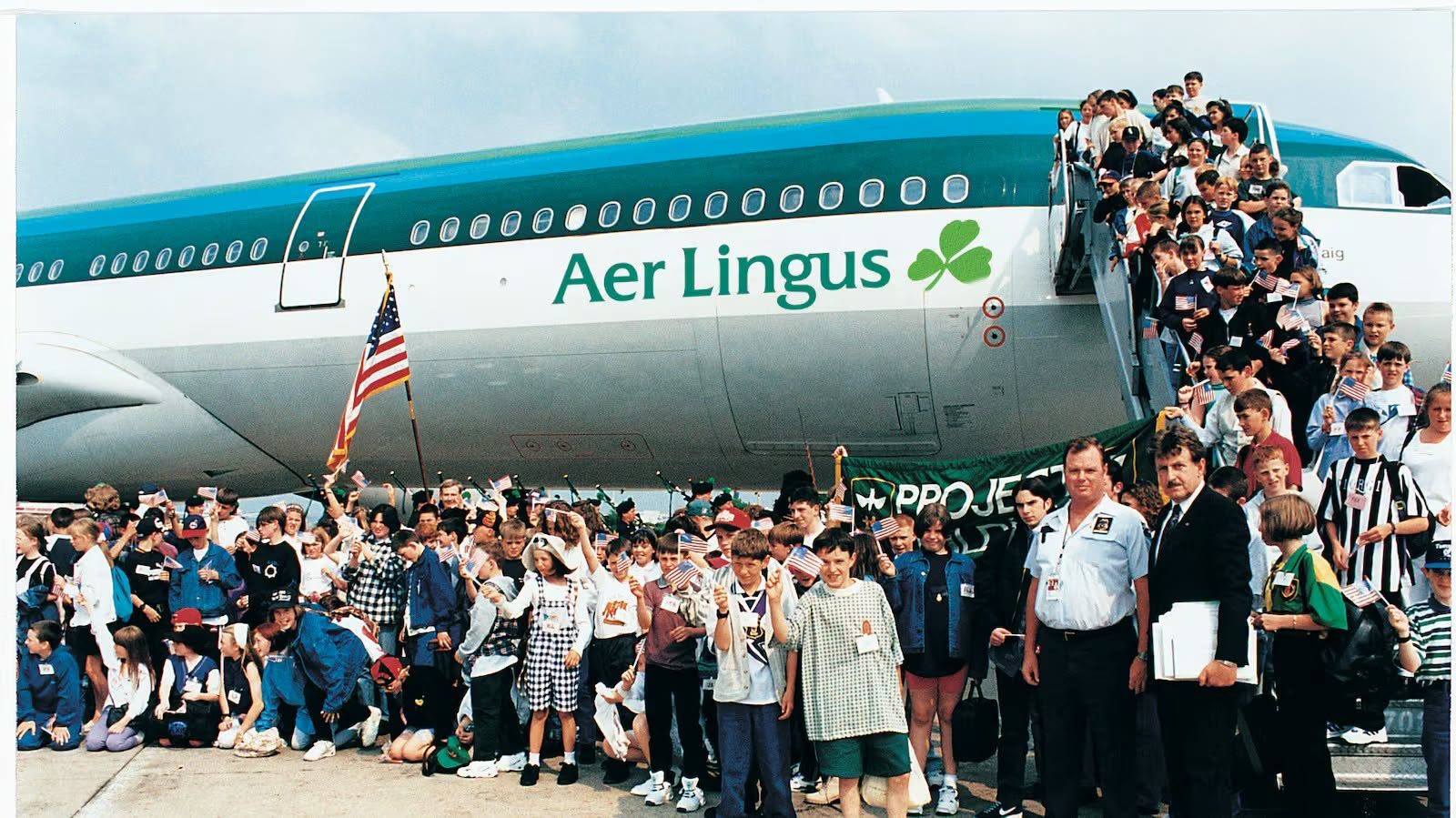
Arrival day and kids on tarmac at JFK. The lasting legacy of Nobel Peace Prize nominee Denis Mulcahy’s peace mission revealed in new documentary.
By Amy Donohoe
July 21, 2026 at 6:00am BST
As an 11-year-old leaving his American host family at the end of a summer away from the Troubles, one Northern Irish boy turned to their daughter and said: “I know I’m going to come back and marry you.”
Years later, he did. Today, they have three children – a living legacy of a programme that began with just six children in 1975.
Two-time Nobel Peace Prize nominee Denis Mulcahy, a native of Rockchapel, County Cork, emigrated to the United States in 1962. He is responsible for changing the lives of many children of the north.
He joined the New York City Police Department in 1969 where he served with the Tactical Patrol Force, Street Crime Unit, and the 28th Precinct Detective Squad before joining the elite Bomb Squad in 1983. He retired in 2002 as a First Grade Detective after 33 years of dedicated service to the NYPD.
He also spent a lifetime proving that peace can begin with something as simple as opening a family home, helping thousands of children from Troubles-hit communities spend their summers in safety across America.
“Back in 1975, every time you put on the television here, the news was all about Northern Ireland,” Mr Mulcahy told the Irish News.
“It’d show the kids on the street, throwing bricks at the security people and the army, them shooting plastic bullets and kids getting killed. It really did get a huge amount of coverage here. It was non-stop.
“There are so many Irish and second-generation Irish here, so it was really big news at the time.
“It was a hopeless kind of situation because you ask yourself, ‘what can I do to help?’ And to be quite honest, there was very little you could do.”
But Project Children, a summer programme started by Mr Mulcahy, helped thousands of children escape the Troubles and build friendships across sectarian divides.
“We came up with this idea that maybe during the summer, during the marching seasons, we would just bring the kids out here for their safety. That’s when all the kids were getting hurt,” he added.
“It really was so small at the start, we brought six kids the first year and of course a big decision had to be made also, whether we did Catholic or Protestant. A lot of people felt there was a greater need to bring Catholic kids out of there but when you do something like that, you have to be fair and do it 50-50.
“I think it was a very good decision to have made because as time went on, a lot of Protestant kids came out of tough, poor areas too.
“There was a need to bring both. That was back in 1975. Any monies we raised went on airfare and insurance. Everybody volunteered their time and host families weren’t reimbursed in any way, they took the kids in for six weeks, they treated them like their own kids, they covered whatever expenses they had.”
Project Children continued to grow throughout the years, it went from six children, then onto 21, then 54 and eventually it was close to 1000 kids each summer.
“It was amazing for the kids who came from poor backgrounds. They tended to stay in their neighbourhoods, get married at a young age and repeat what their parents and grandparents had done. They were on welfare and there was really no future.
“One thing American families brought across to them was without a good education, you’re not going anywhere, so you have to stay in school. A lot of Americans brought kids back to go to school, not that the schools weren’t as good in Ireland but there was a better opportunity for them here.
“When you think about it, you say how could a mother have put a 10 year old child on a plane to travel 3000 miles for the summer. The reason they did it was their safety.
“People always said at least we knew they were safe for the six weeks so we didn’t hesitate to do it. A lot of credit has to go to the mothers. A lot of the fathers were in prison and the person raising their family was the mother. Really, an awful lot of credit has to go to the mothers of Northern Ireland.
“The word spread and we were able to book 468 seats on a 747 plane and we eventually did two 747s, so we were bringing close to a thousand kids a year. You couldn’t do it today, they were different times.”
Even though there’s not a need for the project to continue on such a large-scale, the story of Project Children continues.
“I had a call recently from a young lady, she’s doing her college paper on the programme – so I asked how she knew about it and she said that granny was out several years ago.
“We have generations of kids who keep passing on the positive stories.”
He adds: “There was a young guy years ago that I sent up to the Syracuse area. When he was leaving, he was about 11 years old, he turned to the host’s family’s daughter and said ‘I know I’m going to come back and marry you,’ and he did – now they’ve got three beautiful kids living in Upstate New York in an old mansion that he remodelled.”
Mulcahy never believed the Troubles would be solved in his lifetime, but he pays thanks to many people, including his good friend Bill Clinton. Today, a lot of the people who were in Project Children, have gone on to do great things.
“I would say, what a hopeless situation and this is not going to be solved in my lifetime but little did I know. A lot of the credit has to go on to my good friend Bill Clinton who I travelled to Ireland with on two of his visits. He did a lot at that time for Ireland because he issued the visas, he helped the kids get out of the situation.
“Once they were out of it they realised that we’re all the same. We would bring the kids, put them into neighbourhoods, they would meet each other and as soon as they heard that accent, they knew they’d a friend from home. It would be weeks later that they’d realise ‘oh that kid was Protestant or that kid was Catholic.’ It didn’t make any difference, they did have a lot in common, they had the same language, same accents, same ages.
“It’s different times now and it’s great because it’ll never go back to the way it was. However, there is still work to be done. People have to realise they have to live together. We have again come a long way along.”
The documentary How to Defuse a Bomb: The Project Children Story shows how the Project Children charity worked to bring Irish children to live in the US for a six-week summer respite from the everyday violence and strife of The Troubles.
Over the next 40 years, Project Children would go on to impact the lives of over 23,000 catholic and protestant children, showing them that a non-violent life was possible and how tolerance, understanding and communication can lead to life-long friendships.
“The documentary is very powerful and it’s all put together with local people, there’s no acting in it, it’s all factual,” Denis added.
Now in partnership with the Monaghan County Council, the Peace Campus has 50 years’ worth of contents from the programme – ranging from Mulcahy’s bomb squad suit and more.
“Heather Humphreys got the funding for that peace center and it’s amazing. The timing, everything is perfect. I couldn’t think of a better location to have it than right there on the border.”
Monaghan Cathaoirleach, Aidan Campbell, will also be in attendance at the documentary screening in both Washington and Boston.
“It’s important to us because Monaghan County Council started to travel over to the US a number of years ago. We started engaging and as a result of that, they were put in touch with Project Children and the Mulcahy family.
“Project Children was 50 years old last year so they were looking for a home for all the archives. Monaghan County Council and Project Children came together with the Peace Campus. Monaghan has been the home for it all.
“Monaghan is right on the border and we were close to the Troubles. Monaghan is an example of how different communities get on together, all cross-party, cross-religion and cross culture, we all get.
“That’s where the genesis of Project Children comes from, Protestants and Catholics working together and making a better life. The Peace Campus in Monaghan is a symbol of peace and it’s a fantastic building, it just complements Project Children what it’s all about.
“The exhibition was opened last year. The response to the story has been very strong from all generations, particularly people who experience first-hand the troubles, the dark times and our recent history in the north.
“Since the exhibition opened, there have been over 25,000 visitors through the museum.”
The PSNI has failed to exercise newly granted powers against unionist paramilitary displays over the Twelfth, instead demonstrating a continuing bias against nationalists.
Throughout the marching season, unionist flags and banners once again dominated public spaces across the North, raising fundamental questions about the PSNI’s credibility and its priorities.
In the days leading up to the unionist bonfires of Eleventh Night, flags, banners and paramilitary insignia linked to the UVF, UDA, UFF and LVF appeared across Antrim, Belfast, Derry and Dungannon. These overtly threatening assertions of paramilitary territory were erected in full public view, often on public infrastructure, and in some cases beside PSNI members who chose not to intervene.
All of this is unfolding despite recent legislation which explicitly empowers the PSNI to remove materials supporting paramilitary organisations without the need to link them to any criminal investigation.
Last week at Ballyduff in Newtownabbey, a towering bonfire built on a publicly funded platform was transformed into a showcase of unionist paramilitarism. UVF banners depicting masked gunmen and insignia linked to the organisation and its youth wing dominated the structure. A Parachute Regiment flag – invoking the British Army regiment responsible for the killing of 14 unarmed civilians on Bloody Sunday, and other massacres – was hoisted nearby.
Yet the PSNI response has been conspicuously muted. Asked whether it would act, a spokesperson said only: “The (PSNI) considers each incident on a case-by-case basis, and the individual circumstances will determine what specific action police take.”
Sinn Féin councillor Michael Goodman said the Ballyduff displays highlighted the need for wider reform. He said: “These scenes once again reinforce the need for regulation of all bonfires to end the illegality and hate-fuelled behaviour associated with them. These illegal anti-community bonfires threaten the local communities and infrastructure.
“Action is needed to end illegality, sectarianism and hate crimes these dangerous bonfires fuel. Regulation is needed and all political representatives must step up and speak out against these illegal displays.”
The pattern was repeated elsewhere. In Dungannon, a flag commemorating Billy Wright—whose name is synonymous with large-scale sectarian killings and pro-British murder—has recently been erected on a city lamppost. The PSNI position has been to “acknowledge” the display while maintaining that “under current legislation it is not deemed to constitute a criminal offence.”
Sinn Féin’s Colm Gildernew said: “The appearance of a flag featuring a picture of the UVF and LVF leader Billy Wright in Dungannon has caused hurt and offence to many in the area.
“This has been done deliberately to be hurtful, provocative and offensive. They should not have been put up in the first place and should now be removed.”
SDLP councillor Karol McQuade added: “Billy Wright was a sectarian murderer and there can be no place for glorifying or celebrating him. The PSNI should investigate the display of these banners and take appropriate action. They should also be unequivocally condemned by everyone, regardless of their background or community. These displays do not represent Dungannon or the overwhelming majority of people who live here.”
In Derry, footage showing PSNI members looking on as a UFF (UDA) flag was erected has intensified accusations of double standards.
Sinn Féin councillor Emma McGinley said it is “deeply concerning” and called for the PSNI to “carry out a full investigation into the circumstances surrounding this incident and to explain why no action was taken.
“Incidents such as this do nothing to build public confidence in policing. Communities are entitled to expect that the law will be applied fairly and consistently, without fear or favour.”
In south Belfast, the situation has escalated further with threats being issued. Alongside UDA flags at the Roden Street bonfire, a banner was also erected carrying explicitly racist messaging and accompanied by a warning that anyone attempting its removal should “think long and hard of what the outcome will be”.
That perception of the PSNI’s refusing to act against unionist paramilitarism has been reinforced by a recent controversy in which a young nationalist was arrested in Derry for wearing a shirt honouring 1981 hunger striker Patsy O’Hara (pictured).
The case was highlighted by the Republican Socialist Youth Movement, which stated: “Honouring his memory is not a crime, it is a basic act of respect for the dead and our community’s history. No local kid should be arrested for wearing a top that commemorates a Derry hero.
“We also witnessed the stark contrast of the PSNI officers present while a UFF flag was erected, with no enforcement action taken. To make matters worse, we have a picture showing a leading loyalist commander from Larne standing side by side with the PSNI. This is not impartial policing. It is one sided political policing that aggressively targets republicans for simple commemoration while accommodating loyalist displays. The people of Derry have had enough. We demand immediate answers.”
In addition to the reduction in overall flying, Aer Lingus said up to 500 employees could be leaving the airline.
Jul 17, 2026
Aer Lingus is set to discontinue three Dublin – US routes, and change another Dublin – US route to summertime operation only, as part of “network and organization changes.”
The Aer Lingus Dublin – Denver route is set to be discontinued after September 28, the Dublin – Minneapolis route is set to be discontinued after October 24, and the Dublin – Las Vegas route is set to be discontinued after December 3.
Additionally, the Dublin – Seattle route will only operate in the summer after October 26.
Meanwhile, the Aer Lingus route from Dublin to Split is set to be discontinued after September 29, while the routes from Dublin to Frankfurt, Hamburg, and Malta will only operate in the summer after November.
All customers impacted by the network changes are being contacted directly and provided with reaccommodation or refund options, Aer Lingus said on Thursday.
The network changes will see overall flying reduced by 6%, Aer Lingus said.
The airline noted that, linked to these network changes, there will be a reduction in the use of two A330 aircraft and four A320 aircraft for peak summer 2027.
Sign up to IrishCentral’s newsletter to stay up-to-date with everything Irish!Subscribe to IrishCentral
The network adjustments are part of wider changes Aer Lingus is implementing “to support required improvement in its operating margin, which is needed to underpin future investment.”
Aer Lingus said on Thursday that it aims to “achieve and sustain a 12% – 15% operating margin to attract investment over the medium term.”
With the aim of growing revenues, Aer Lingus said it “will invest strategically to improve customer experience.” The airline noted it has recently commenced the installation of high-speed Starlink Wi-Fi across its fleet and that next year, it will retrofit ten Airbus A330 aircraft cabins and introduce Premium Economy to deliver an “elevated inflight experience” for customers.
However, the airline said that in addition to continued investment in customer experience, “reduced costs and improved efficiency are required in the context of a number of wider challenges,” including:
Aer Lingus said that to address these challenges, it has focused on reducing supplier costs and has reduced senior management roles by approximately 25%. In the next stage, the airline proposes to reduce wider employee costs in Head Office functions by approximately 25% and make network changes to remove lower-margin flying.
Aer Lingus said it will consult with employees and their representatives regarding the Head Office function changes and the network changes, which could see up to 500 employees leaving the airline.
Aer Lingus said it will also engage with employees and their representatives on cost efficiency and productivity so that the airline “can be an investment case within the IAG group.”
“The more cost efficient and productive the airline is, the more it will be able to fulfil its network and growth ambition,” Aer Lingus said.
“The consultation and engagement process will focus on reducing redundancies and potential future redundancies and on what needs to be done to secure future investment in the business.”
Commenting on the changes, Lynne Embleton, Chief Executive, Aer Lingus, said on Thursday: “Our accelerated transformation aims to set Aer Lingus up for the future; to ensure the airline is a strong investment case and able to weather the turbulence in our industry.
“An efficient cost base, coupled with investment in our customer experience, will enable Aer Lingus to fulfil its ambition to be the airline of choice connecting Europe with North America, support future growth and continue to provide connectivity and significant economic contribution to Ireland.”