An anti-Irish campaigner behind a car leaflet campaign says he “despises” the language and plans more protests.
The head of Protestants Against Gaelic Language (PAGL) wants to protest against the use of Gaelic right across the island, as English is the “ancestral language of most Irish people”.
The group is preparing to increase its efforts against the use of Irish in the Republic with the upcoming launch of its new website, and in Northern Ireland where a revival of the language is gaining momentum following the Identity and Language Act 2022.
A number of attendees of the class at The Points bar on Belfast’s Dublin Road in December emerged to find the leaflets on their windshields.
The text on the leaflet opened with “Why 87% of Irish people should hate the Irish language” and warned the tongue “was always used to discriminate against non-nationalists”.
One attendee of the class said they felt the leaflets were “low-level intimidation” when speaking with the BBC.
The PSNI initially said they were investigating and treating it as a “hate incident”, but a spokesperson confirmed on Friday: “Police carried out a number of enquiries and determined that no offences had been committed.”
Although the leaflets featured the initialism “P.A.I.L” – understood to stand for Protestants Against Irish Language – the wording is the same as a leaflet produced by the PAGL group.
Mr Sinnott, who is 62 and from Co Dublin, says he “despises” the Irish language.
Despite insisting PAGL was not behind the leaflets in the Dublin Road area, he says his group has placed leaflets opposing Irish on vehicles in both Belfast city centre and at Belfast International Airport in November.
He said he has previously been interviewed by police over letters written to Irish language campaigner Linda Ervine and her colleagues at the Turas project in east Belfast.
Mr Sinnott said his group – which he claims includes around 30 members – has emailed the PAGL leaflet to elected members of the DUP, UUP, TUV and Alliance in the north in a bid to gain support for the campaign.
“I feel that religion is being targeted, and if it is, then the Irish language should be targeted, but not in a way that intimidates or causes anyone to feel it is a hate campaign” he told the Irish News.
“Our members are based in the Republic, where of course there has been a huge push for the use of the Irish language, but the language movement is very active in the north now.”
Mr Sinnott said historic moves by the British to oppose Gaelic, including bans on its use, was “just so they could make it that we would all speak the same language”.
His group’s leaflet states “Ireland’s Christianity is a more important part of Ireland’s heritage than the language ever was” and the government in Dublin “would do much more for the Irish people if they taught Latin in our schools instead of Gaelic”.
It adds the government has used “compulsion, bribes, grants and of course jobbery” to “force” people to speak Gaelic, but said Irish people have “resisted and refused” these attempts.
According to Census figures from 2022, almost 40% of people in the Republic said they had some ability to speak Irish.
In the north, around 4% say they can speak Irish according to the 2021 Census, while 12.4% say they have some ability with it.
Mr Sinnott said his group plans to hand out more leaflets in schools and colleges in the Republic.
However, Linda Ervine said there is a “great love” of the Irish language in the Republic, along with its rise in use north of the border.
“If you somehow removed Irish from its position in the south, there would be a terrible outcry,” she said.
“Because it is so accessible there, there can be sometimes be a lack of appreciation, but as the saying goes, ‘you don’t miss the water until the well runs dry’. As for Northern Ireland, in the work that I do, I see Irish as a medium of reconciliation that brings people together for the love of the language.”
And that’s not just the view of hardliners, but fact most people in the Republic are unlikely to budge over the issue is yet another barrier to change
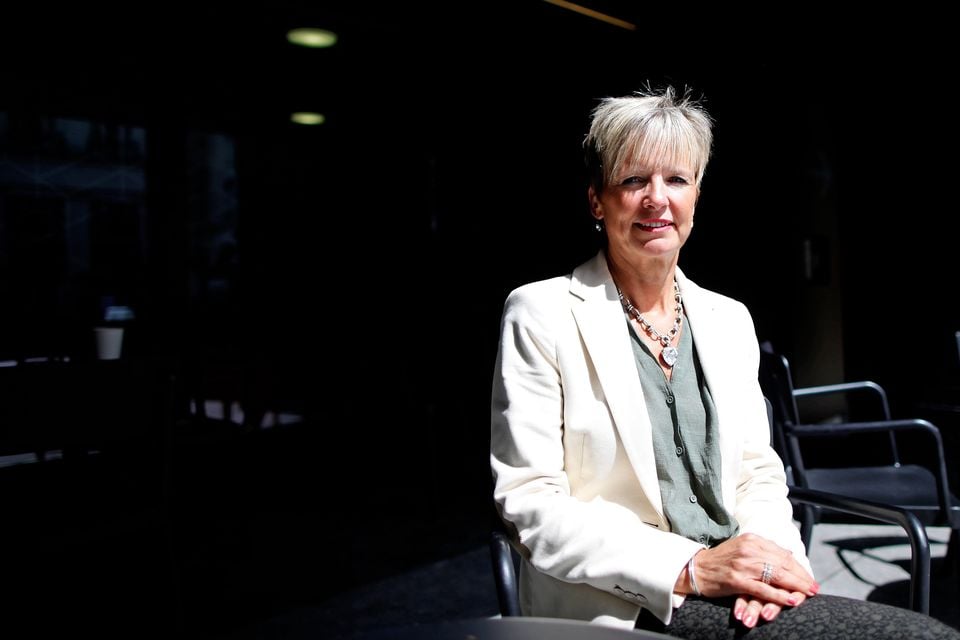
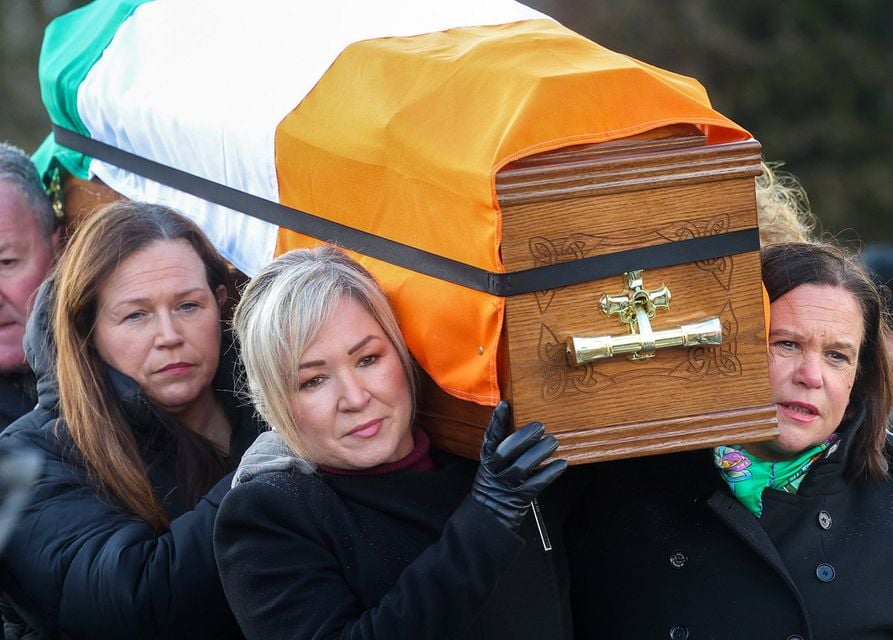
Judith Gillespie is a former PSNI Deputy Chief ConstableThe Irish TricolourSinn Fein’s Michelle O’Neill and Mary Lou McDonald carry Ted Howell’s coffin
Sam McBride
Today at 02:38
“You can’t eat a flag” is one of the most brilliantly succinct summations of a political philosophy — and if John Hume’s telling was correct, it was a piece of instinctive fatherly advice rather than the product of spin doctors or focus groups.
Those five words convey a simple truth: neither tribalism nor patriotism put food on anyone’s table. And yet rarely is the truth quite as simple as a slogan suggests.
Flags — or rather, what they represent — feed many people. Armies which fight beneath flags enable conquest or defence from conquest, the grabbing of far-off riches, the protection of trade routes, and ultimately much of the food which ends up on tables in countries where we can philosophically debate (or write newspaper columns about) this in peace.
There are few people for whom the sight of their nation’s flag evokes no emotion whatsoever. Most people feel at least some sense of pride or belonging when seeing their flag; if not when seeing it emblazoned on a T-shirt, then certainly when seeing it on a national hero’s coffin or waved jubilantly at some sporting triumph.
Flags symbolise nations. They encapsulate identity. They are designed to include the native by excluding the foreigner. In doing so, a shared flag builds a sense of unity among those who live beneath it. These strips of coloured cloth can be powerful motifs for far deeper realities.
Gillespie spent five years as PSNI Deputy Chief Constable until retiring in 2014 and then became a founding member of the Policing Authority, which oversees An Garda Síochána. Recently she told the Royal Irish Academy that on her first day in the job saw a Tricolour in the corner of the room “and I had this almost visceral reaction in my stomach”.
She said it was an “in the pit of my stomach reaction — not something I actively thought about… I wish I could explain it; I don’t know why it happened”.
Asked to elaborate, she said it was “something I had no control over”. She grew up on the Catholic side of a sectarian interface in north Belfast as the daughter of a Protestant cleric known for his peace-building work.
Gillespie said: “My family didn’t tell me that the Tricolour stood for something negative; it’s just that in my upbringing the Union Flag was seen as the flag of the country that I grew up in. My parents would have watched Last Night Of The Proms, the Remembrance Service from the Royal Albert Hall, we would have watched the Queen’s Speech…but there was never anything negative instilled in me about the Irish Tricolour.”
Yet, just seeing the flag led to “an almost physical reaction”. Gillespie said the rational part of her brain quickly kicked in, telling her to “wise up” and “get over yourself” — this is the flag of the Republic whose government had appointed her to a role in which she was to serve the community by utilising her skills.
This is a rare and revelatory glimpse into the deepest reaches of what many unionists in Northern Ireland think. There are plenty of unionists who will openly express derision for the Tricolour, seeing it as the flag of the IRA, and some who will unrepentantly burn it on Eleventh Night bonfires. But, almost invariably, those are hardliners.
Gillespie couldn’t be further removed from their worldview. She espouses moderate political views. She embraced the change of the RUC to the PSNI, even to the extent of learning the Irish language. She worked with Sinn Féin on the Policing Board and was the target of smears from some loyalists for doing so.
If someone with that background, who is demonstrably neither small minded nor a bigot, reacts thus to the Tricolour, it demonstrates the impossibility of persuading almost any Northern Irish unionist this flag could ever be theirs in a united Ireland.
Many unionists will show respect for the Tricolour as the emblem of a foreign nation with whom they have good relations.
But such politeness shouldn’t be misinterpreted as seeing themselves in a flag designed to unite Orange and Green.
Just as the Union Flag was meant to unite all four nations of the United Kingdom, with Ireland present in St Patrick’s Cross, such gestures of compromise only work if they are accepted by those to whom the compromise is addressed.
Outside of support for the Union itself, few issues unite unionists as much as a rejection of ever being represented by the Tricolour.
Even if they could live with some form of Irish unity, they couldn’t live with the flag.
Yet polling consistently shows southerners’ deep attachment to the flag. This illustrates how misleading high polling support for Irish unity in the south is.
There is no way the creation of a new country could be achieved without drastic compromises, many of which would be far more tangible than symbolic.
Three years ago a poll found that only one in four southerners would give up the Tricolour and one in three would give up the National Anthem. A separate survey of TDs found just 36% of them would be open to changing flag or anthem. A year later research found 30% of southerners aren’t even open to a discussion about the flag and anthem — even where any change would have to be ratified by a referendum (in which there would be a massive nationalist majority).
Last year a poll found that northern Protestants’ overwhelmingly negative views of the Tricolour remain unaltered regardless of whether a symbol of reconciliation or republicanism.
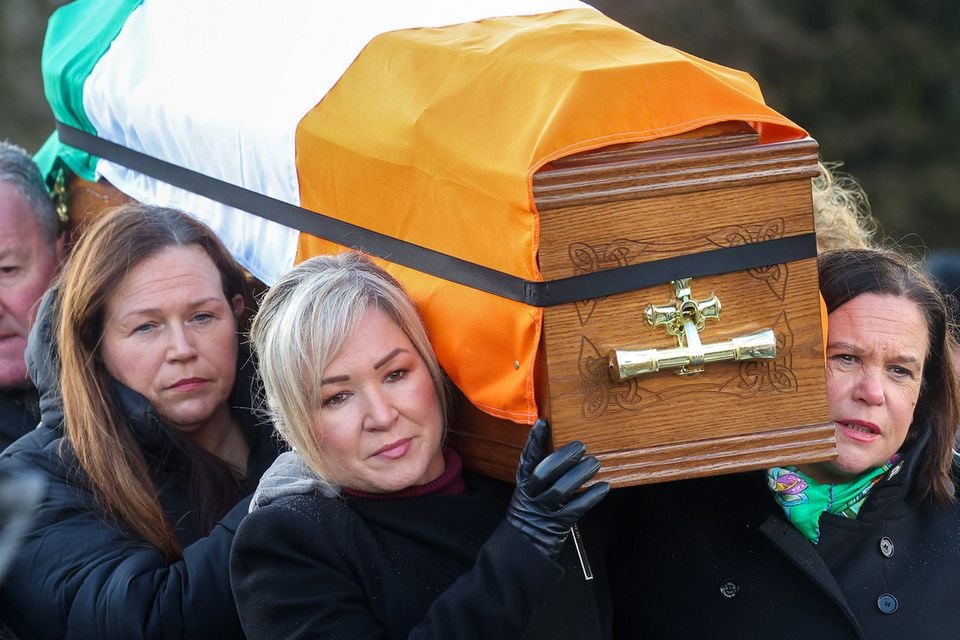
Sinn Fein’s Michelle O’Neill and Mary Lou McDonald carry Ted Howell’s coffin
In some ways, these are wholly symbolic decisions which would have no practical impact on the lives of a single person. Yet they matter deeply to many people on either side of the debate — more deeply for some than questions of how much Irish unity might cost.
Clare Crockett, 33, was killed in an earthquake in Ecuador in April 2016.
Sister Clare Crockett died in 2016 (Home of the Mother order/PA)
By Cillian Sherlock, PA
January 12, 2025 at 9:56am GMT
A nun from Northern Ireland will be a step closer to sainthood on Sunday following a special ceremony in Spain.
Clare Crockett, 33, from Derry, was killed in an earthquake in Ecuador in April 2016. The building where she had been teaching music collapsed.
Ms Crockett, from Brandywell in Derry, was a larger-than-life character who had been an actor before choosing the religious life. She turned down a chance to present on children’s TV channel Nickelodeon to become a nun.
She said friends were in disbelief when she declared she was going to be a nun while holding a “beer in one hand and a cigarette in the other”.
Each year, we select a new history project during the winter months (a great season in Minnesota for indoor research!) and I prepare a talk for CJAC’s annual Irish Arts Week event in April. We follow with an on-site, audio-visual exhibit at Irish Fair of Minnesota in August that then moves to our exhibit hall outside the McKiernan Library reading room. Finally, I write an article for the Samhain issue of our online Celtic Junction Arts Review.
This year, we have told the story of Irish music and dance that came to Minnesota with itinerant laboring men in the late 1800s. In the logging boom years, Irish songs, tunes and steps entertained in bunkhouses, barrooms and riverbanks in the woods and small towns of outstate Minnesota. Direct imports from Ireland mixed with New World compositions, often based on Irish forms, to define a “woods music” culture that was later documented by folklorists throughout the white pine belt of North America.
This topic is personal to me. I grew up in Bemidji, a historic logging town in northern Minnesota, and fell in love with Irish music as a teenager thanks to the Winnipeg Folk Festival and the Green Linnet catalog. Naturally, links between Irish music and the north woods have long fascinated me. This led to years of enjoyable and fruitful research that predated my time at the McKiernan Library. In my blog, as a speaker and with my duo The Lost Forty (with Randy Gosa) I have spoken about this history and sang songs at over 100 venues in the Upper Midwest.
The author sings here “Kettle River,” a lumber camp song from Minnesota.
I combined my years of research with new findings for the McKiernan Library’s 2024 history piece in the CJAC Arts Review which Irish Echo readers can access online. It is titled “Into the Woods: Irish Music and Dance in Logging Era Minnesota.”
The story begins with a pre-Famine wave of Irish immigration to Canadian ports. Of the over 750,000 Irish that sailed for the New World between 1828 and 1844, New Brunswick and Quebec welcomed about 55% of all arrivals. Many Irish immigrants arriving in Canada continued on to urban centers in the United States but plenty remained closer to their port of entry (on both sides of the border) and fell into more rural patterns of life. Men took outdoor seasonal laboring jobs digging canals, building railroads or working in the lumber woods.
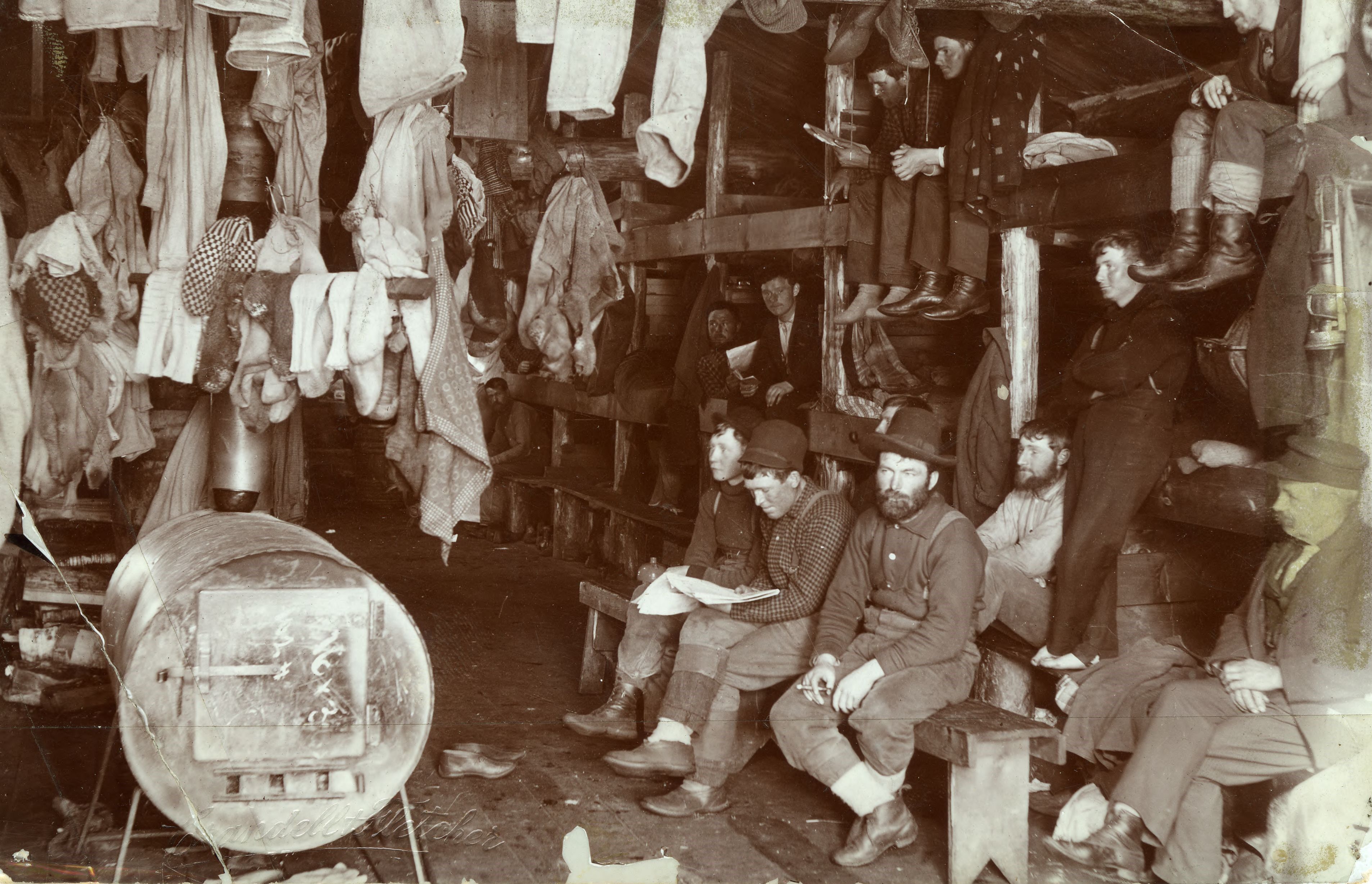
In lumber camp bunkhouses, music from the old country helped pass the time and ease loneliness on some evenings. Men sang or played the camp fiddle on the “deacon seat” that circled the stove at the base of the bunks. Soon, a distinct musical tradition evolved among laboring men in the pine woods. Sons born into north woods communities took their first job in a lumber camp at age 14 or 15 and this new generation carried lifeways and songs westward across Michigan, Wisconsin and into Minnesota.
This year’s article includes vivid stories from the lives of several second-generation loggers who came to Minnesota as well as first-hand accounts of Irish music in the Minnesota woods. I have been writing and speaking about some of these people for years but in preparation for this year’s project, some fascinating new characters came to life.
Thomas Welsh was born to Irish immigrant parents in the Upper Peninsula of Michigan in 1870. He followed logging work to northern Minnesota in 1891 and settled eventually in Walker just south of where I grew up. Welsh’s daughter Mary, an accomplished journalist, became Mary Hemingway in 1946 as the fourth and final wife of famed novelist Ernest Hemingway. Thanks to this association, Thomas Welsh’s memoir went to the JFK Library along with the Earnest and Mary Hemingway papers.
Welsh describes his early days in Minnesota where he marveled at the Irish songs and stories he heard. He remembered singers who went from camp to camp selling “hospital tickets,” an early form of workingman’s health insurance. North of Deer River, Minnesota, Welsh met Charley Melaney and Big Jack Morgan who “had fine voices and had a long list of songs and Irish ballads.” He wrote at length about another hospital ticket salesman named Jerry McCarthy:
He seemed to have in his mind all of the “Ancient Celtic Romances,” some very beautiful and thrilling, others uncanny, the most weird and ghostly stories and songs of witchcraft that were ever written. Some were spoken in his deep rich Irish brogue and you could almost see the Irish horsemen and their horses ride up from the bogs and fields, where they were slaughtered by the enemy and with long swords and voices that thundered they pursued and killed the last man of them. Many of the legends were partly spoken and partly sung, a custom that prevails in Ireland up to this day when old Irish women attend the wake of a friend.
This account from Welsh shows the breadth of Irish cultural expression present in some of these isolated logging camps beyond just songs and tunes.
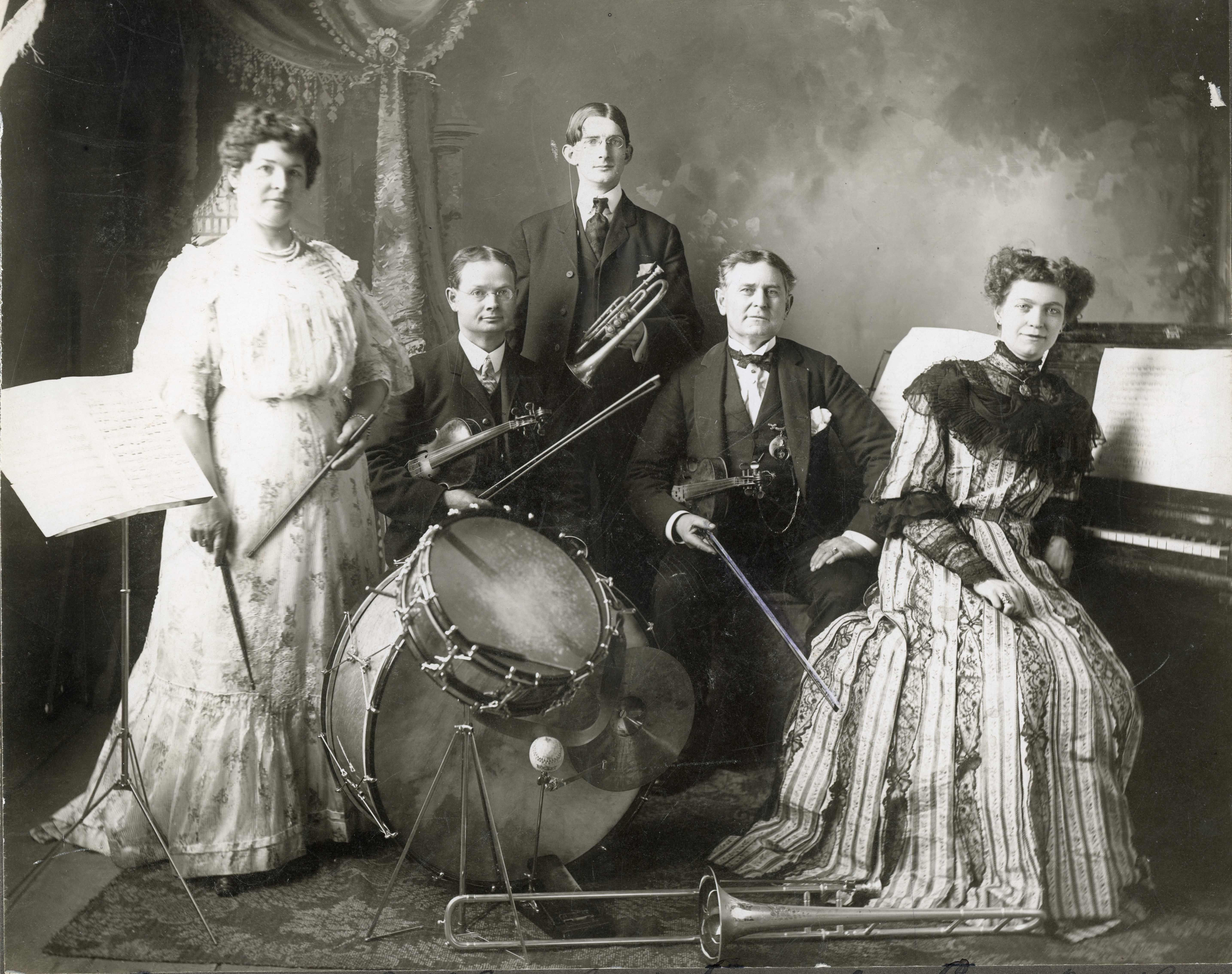
The “Into the Woods” article also covers how singing traditions moved naturally from lumber camp bunkhouses to barrooms as communities like my own hometown sprung up around the state. It explores the influence of Irish music hall hits on the north woods repertoire including a profile of a touring vaudeville group called McGinley’s Comedy Company that helped spread around the latest stage songs penned by Irish-American songsmiths like Edward Harrigan and Pat Rooney.
McGinley’s Comedy Company, c. 1906: Eva McGinley, John Shafer, Claude Woods, Robert McGinley, Miss Lizette Hoskins. (Nevada Historical Society)
Like other McKiernan Library history articles, “Into the Woods” includes striking historical photos and sound clips of songs. I encourage anyone interested in Irish-American history to have a look at this and other historical projects the McKiernan Library has pulled together over the past several years.