It also reveals an Ireland that has fortunately gone, where politicians lined up to kiss the ring of visiting prelates, and sub-contracted public morality to the Catholic Church and the country’s censorship board.
Her first novel, “The Country Girls”, with its frank portrayal of female sexuality, would swiftly join the 1,600 other books banned by the state.
The book was denounced as a “slur on Irish womanhood” and described by that beacon of Catholic values, Charlie Haughey, as “filth” that had no place in any decent home.
O’Brien had earlier run away with her older lover, Ernest Gebler, which led to a farcical and ultimately unsuccessful attempt to bring her home from her hiding place on the Isle of Man by a posse that included her father, brother and a Co Clare priest.
The pair married, but he became jealous of her literary success and his overbearing misogyny is shocking to a modern audience.
Not only did he cash the cheques she earned from her books, doling her out “housekeeping” money, he also wrote notes in her personal diary, contradicting her observations.
He also claimed to have written her early novels himself, though she seemed to manage very well at the writing once she had left him.
The notoriety of her early work – copies of which were publicly burned by the parish priest – cast her in the public eye as a glamorous libertine, a scarlet woman, revelling in the attention of the rich and famous who gathered at her parties in London.
A full ‘who’s who’, from Jackie Onassis to Robert Mitchum, dropped in and out of her life, with Marlon Brando calling by and Richard Burton puzzled that he failed to seduce her.
Her later interest in the north was unusual for a writer from the south. But her novel “House of Splendid Isolation”, which engaged with the Troubles, northern republicans and the north/south divide, was criticised for romanticising the IRA.
One critic derided her as “the Barbara Cartland of long-distance republicanism”. Another Irish writer publicly shouted across a restaurant that she was “sleeping with the Provos”.
But O’Brien understood that the conflict in the north was a matter for the whole island, and understood the north’s feeling of abandonment by her fellow countrymen.
Edna O’Brien was a novelist, short-story writer, memoirist, poet and playwright
The aggrieved gunman in the novel, loosely based on Dominic McGlinchey, laments: “The south forgot us.”
The author commented: “For many in the south, the IRA were increasingly mindless hooligans, who brought shame on their fellow Catholics and a stain on the altar of the nation.”
Her subsequent interview for The New York Times with Gerry Adams, “Ulster’s Man of the Dark”, was also criticised for being too sympathetic, because she believed he was someone who could help achieve peace.
“Some spoke to me with absolute disbelief that I would show sympathy toward such people and such a cause, while others were openly intemperate, and an MP at a gathering told me he would bring back hanging for the likes of me.”
It was at a time when sections of the Dublin media were equally intemperate in their attacks on SDLP leader John Hume because of his negotiations with Gerry Adams.
In the film, O’Brien rejects charges that she condoned republican violence, but was at pains to point out that the IRA weren’t the only ones involved in the dirty war.
Anyone who doubts this should look at the campaign by the family of GAA man Sean Brown, still fighting to get an inquiry into his murder nearly 27 years later, facing the obduracy of the British state, still intent on covering up that its agents were actively involved in the killing.
By David Bell on 20 January 2025The Cost of Political AppointmentsThe recent conviction of Sinn Féin press officer Michael McMonagle for serious child sex offences has highlighted systemic flaws in Northern Ireland’s approach to political appointments. While McMonagle was briefly employed under First Minister Michelle O’Neill’s staffing allowance, subsequent revelations—including a party colleague providing an employment reference—have raised considerable concerns about vetting and accountability.This case exemplifies broader issues—opaque appointment processes, inadequate oversight, and blurred lines between party and public interests—that persist across Stormont and public bodies generally. Reforming these practices is vital to restoring public trust and ensuring adherence to the Nolan Principles of public life.The Accounting Officer for the NI Assembly Commission has now completed a review following expressions of concern about these appointments. Sinn Féin chief whip Sinéad Ennis responded that it was “essential that the use of public money is fully accountable, properly scrutinised and that processes in relation to the use of public funds are open and transparent”. SDLP chief whip Colin McGrath stated that “this situation has undermined public trust and raised questions around the use of public funds.” While the report states that “effective oversight of the use of public money does not start from an assumption of bad faith…”, the behaviour of certain individuals in public office can stretch this assumption to its limits.The scale of public money involved is significant. Between April 2021 and March 2022, MLAs claimed almost £8 million in staff expenses, and allowances for political members of public bodies can start at almost £16,000 per annum.Learning from HistoryThe UK Parliamentary Expenses Scandal of 2009 stemmed from investigations into several MPs’ claims for second homes and childcare expenses. On 27 May 2007, the Sunday Times revealed that Conservative MP Derek Conway had employed his son as a part-time research assistant in his parliamentary office from 2004 to 2007, with an annual salary of £10,000, even though he was a full-time undergraduate student at Newcastle University. Closer to home, the Sunday Telegraph reported on 10 May 2009 that five Sinn Féin MPs collectively claimed nearly £500,000 in second home allowances despite not taking their seats at Westminster because of the party’s abstentionist policy.The expenses scandal finally exposed the “gravy train” related to the employment by MPs of family members. A review by the Independent Parliamentary Standards Authority (IPSA) in 2017 noted that the practice “can be perceived as providing personal gain to MPs and their families at taxpayers’ expense.” While this was prohibited for all new MPs from that point onward, those ‘connected parties’ employed before 2017 were permitted to keep their positions. For instance, Fiona Paisley served as an administration manager for her husband, Ian Paisley, the DUP MP for North Antrim, from 2015 until he lost his seat in May 2024. In 2022, she made headlines when she received a pay rise of approximately £20,000 from parliamentary expenses for her part-time role.Current Practices and ProblemsThe current framework for political appointments attempts to balance party interests with public accountability, but significant gaps remain. In addition to ‘connected parties’ (usually family members), MLAs must declare when they hire ‘associated persons’—including party members, former elected representatives, and relatives or former employees of other MLAs. However, this information is not routinely made public through disclosure on MLAs’ register of interests. Nevertheless, a Freedom of Information Request in 2023 revealed that following the 2022 Assembly elections, more than 60% of constituency office staff recruited by MLAs were party members. All 24 new Sinn Féin staff appointees were party members, while 22 of 35 Alliance Party appointees were party-connected individuals. The DUP declared 15 associated persons out of 34 new appointments.While the case against appointing ‘connected parties’ is relatively straightforward, the issues related to employing ‘associated persons’ are more complex. The McMonagle review highlighted a fundamental challenge in oversight: the difficulty in distinguishing between constituency work, legislative work, and party-political activities. This inherent overlap between party and public service roles presents structural challenges for effective oversight. Exemptions from the provisions of Fair Employment laws present an additional complexity.Fair Employment legislation in NI exempts elected representatives when appointing staff “where the essential nature of the job requires it to be done by a person holding, or not holding, a particular political opinion”. A similar exception exists for clergymen or ministers of a religious denomination and, until recently, also held for teachers.Beyond Stormont: Public Body AppointmentsThe McMonagle case highlights issues around patronage and oversight that go beyond staffing appointments within the Assembly. In early 2021, a controversy over Sinn Féin’s appointment of an individual with serious criminal convictions to the Education Authority (EA) illustrated how political parties’ power to nominate representatives to NI’s public bodies raises similar concerns about accountability. This appointment prompted the introduction of the Political Appointments Bill, which sought, in vain, to establish new restrictions around such nominations. However, this failed to address what appear to be serious deficiencies in the rules governing the appointment of political members to the EA’s board.The Bill directly compares individuals nominated as political members of the NI Policing Board and the EA, overlooking at least one highly significant difference. Unlike the Policing Board, and indeed any other public body in NI, political members of the EA board are not required to be elected Local Government members, which has been described as a ‘democratic deficit’. Furthermore, the Bill highlights a serious deficiency common to all public body appointments made by our political parties.Accountability GapThe Minister is ultimately responsible for any appointment within their department and will always point out that these “have been made in accordance with the principles and practices of the Code of Practice of the Commissioner for Public Appointments.” This requires that all stages of the appointment process be transparent, fair, and based on merit. These values are reiterated in the Seven Principles of Public Life (also known as the Nolan Principles), which apply to anyone who holds public office. However, the Political Appointments Bill states that political members of public bodies are nominated by the nominating officers of political parties. This process is, at best, opaque and may or may not adhere to any code of conduct.ConclusionThe McMonagle case exemplifies fundamental weaknesses in managing political appointments across our institutions. At the most basic level, it exposed gaps in the vetting and oversight of constituency office staff. More broadly, it highlighted how the current system of political patronage—from staffing allowances to public body appointments—relies too heavily on the integrity of nominating officers and political parties. While the unsuccessful Political Appointments Bill sought to address issues related to criminal convictions, it failed to confront more systemic challenges regarding transparency and accountability.The issues revealed by this case persist across our institutions. If we are to uphold the Nolan Principles in public life, particularly those related to openness and accountability, we need stronger safeguards and greater transparency in how political appointments are made—whether to constituency offices or public bodies. Ministers of Government Departments must accept responsibility for ensuring that transparency, fairness, and merit are paramount at every stage of public appointments. All public officeholders must “actively promote and robustly support” these principles “and challenge poor behaviour wherever it occurs.”
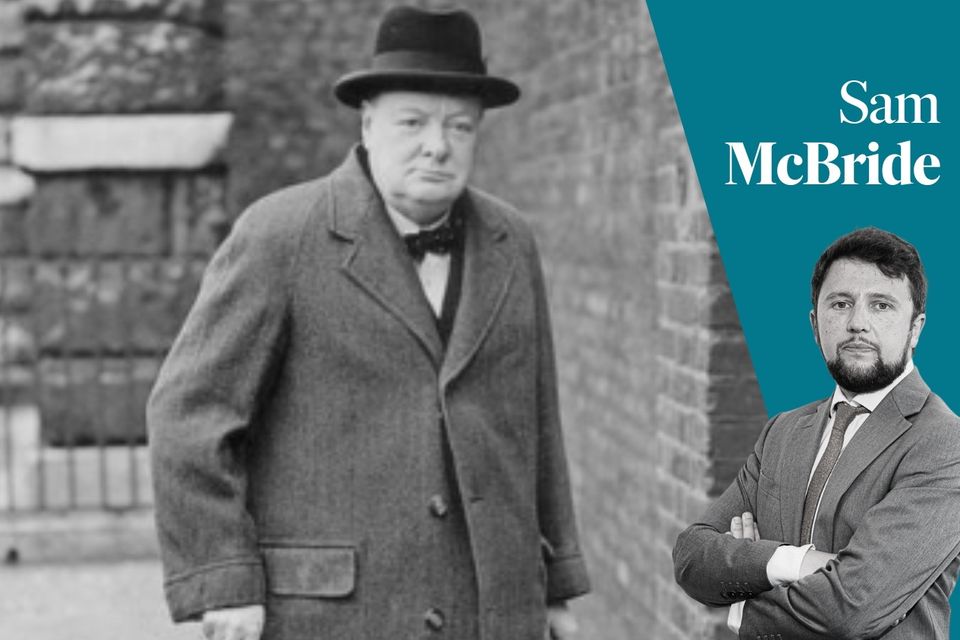
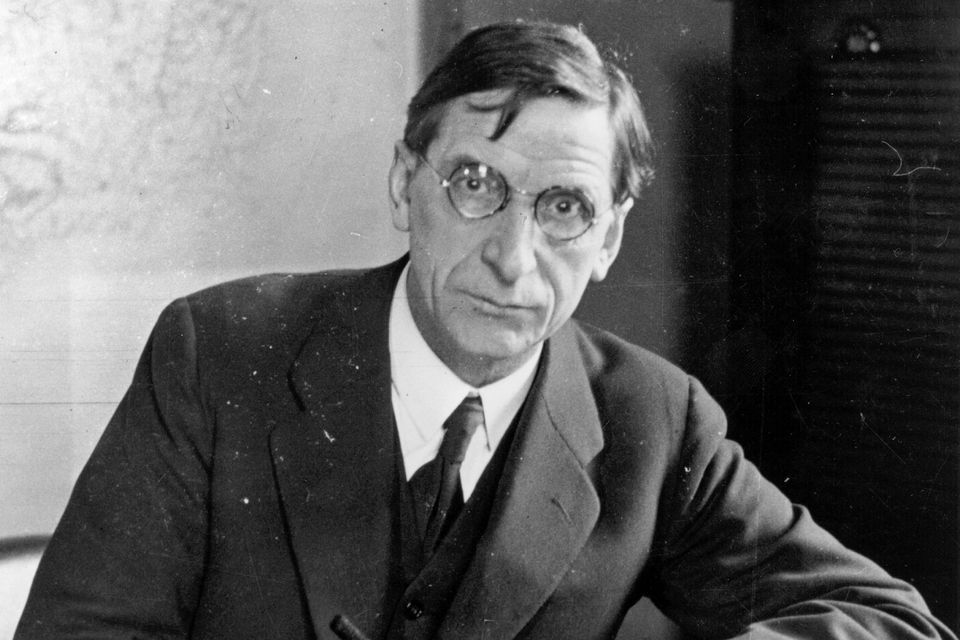
Churchill was, at times, critical of Éamon de Valera. Photo: GettyWinston Churchill. Photo: David Savill/Topical Press Agency/Getty
Sam McBride
Today at 07:17
As the quintessential embodiment of British defiance, Winston Churchill may be an unlikely inspiration for Irish nationalists. His support for Home Rule notwithstanding, Britain’s wartime leader — who died 60 years ago this week — was the antithesis of many of the values espoused by those seeking Irish self-determination.
Yet this imperialist and militarist, so uncompromising in his exterior and at times ferociously critical of Éamon de Valera’s fledgling new state, repeatedly gave advice which, if Irish nationalists had followed it, would have made Irish unity far more likely.
The crux of that advice — to kill unionists with kindness rather than threatening them — is now official Irish Government policy as expressed in the Shared Island Unit which is throwing cash at projects in Northern Ireland to build reconciliation, the Republic’s constitutional claim on the six counties now long in the past.
Indeed, so gentle is the Shared Island Unit’s approach that a critical aspect of its decision-making on projects is whether they would make sense even if the Border is never removed.
As with so many of the great political questions of his era, Churchill’s view of Ireland was open to alteration
For those who want to see both sides of the island flourish, regardless of the constitutional arrangements which pertain, this is eminently sensible. But it wasn’t always seen as common sense to lavish warmth on what were seen as recalcitrant northern unionists.
As with so many of the great political questions of his era, Churchill’s view of Ireland was open to alteration.
Writing in 1896 as a 21-year-old, the future prime minister privately said he would “never consent” to home rule for Ireland. Yet, just over a decade later he was spearheading that policy.
He would be involved not only in negotiating the Anglo-Irish Treaty but in attempting to build social relationships between James Craig and Michael Collins away from the talks.
Churchill’s ability to bombastically argue both sides of most debates provides ample material for dispute between those who say he was lacking in political principle and those who view him as someone who would abandon past positions out of sincere belief that circumstances had changed rather than out of a craven desire for personal advancement.
What is strikingly consistent, however, across shifting decades and circumstances, was Churchill’s sadness that partition had endured and his desire to see the eventual removal of the Border.
For someone who not only espoused Empire but had taken part in some of its wars, he was clear-eyed about British sins in Ireland. Writing in 1896 to his American friend Bourke Cockran — a Sligo-born lawyer to whom he later attributed his oratorical skill — he acknowledged past atrocities, saying: “I consider it unjust to arraign the deeds of earlier times before modern tribunals and to judge by modern standards. No one denies — no one has ever attempted to deny — that England has treated Ireland disgracefully in the past.
“Those were hard times; death was the punishment of every crime and the treatment of the Irish by the stronger power was in harmony with the treatment of the French peasantry, the Russian serfs and the Hugenots.”
However, by 1912 when he famously enraged Ulster unionists by coming to Belfast to defend home rule, he told an audience in Celtic Park: “History and poetry, justice and good sense alike demand that this race — gifted, virtuous and brave, which has lived so long and endured so much should not, in view of her passionate desire, be shut out of the family of nations and should not be lost forever among indiscriminate multitudes of men.”
Churchill was, at times, critical of Éamon de Valera. Photo: Getty
Although De Valera’s covert assistance to the allies is now far better understood, Irish neutrality during World War II enraged Churchill. In a 1945 victory address to the nation, he raged against “the action of Mr de Valera, so much at variance with the temper and instinct of thousands of southern Irishmen, who hastened to the battlefront to prove their ancient valour”, saying “if it had not been for the loyalty and friendship of Northern Ireland we should have been forced to come to close quarters with Mr de Valera or perish forever from the earth”.
Yet just after that flash of anger came a very different sentiment: “When I think of these days I think also of other episodes and personalities. I do not forget Lieutenant-Commander Esmonde, VC, DSO, Lance-Corporal Kenneally, VC, Captain Fegen, VC, and other Irish heroes that I could easily recite, and all bitterness by Britain for the Irish race dies in my heart. I can only pray that in years which I shall not see the shame will be forgotten and the glories will endure, and that the peoples of the British Isles and of the British Commonwealth of Nations will walk together in mutual comprehension and forgiveness.”
Three years later, he said: “It seemed to me that the passage of time might lead to the unity of Ireland itself in the only way in which that unity can be achieved, namely, by a union of Irish hearts. There can, of course, be no question of coercing Ulster, but if she were wooed and won of her own free will and consent I, personally, would regard such an event as a blessing for the whole of the British Empire and also for the civilised world.”
Yet the remarkable element of Churchill’s view about how unity might come about wasn’t that it was especially inventive or insightful but that it was so obvious
Richard Pim, an Ulsterman who was on Churchill’s personal staff as head of his map room during the war, recalled a 1942 lunch between Lloyd George, Stormont prime minister JM Andrews and Churchill in which the trio proceeded “with the assistance of wine glasses, salt and pepperpots, to discuss in detail the Irish question in 1900”. He recalled Churchill and Lloyd George said they wouldn’t under any circumstances “permit the coercion of Ulster in the future. At the same time, both made it very clear that they still entertained the hope that in the future some statesman would rise in Ulster who would feel justified in making a move towards closer harmony with the south.”
They hoped for a correspondingly farsighted southern interlocutor who could smooth “harmony with Northern Ireland”. But their reasons weren’t wholly selfless: “They believed that if such a change of heart was to be found in the North and in the south, then the North, because of the history of its ancestors, would automatically become the real controller of the new Ireland, which she would bring again fully within the folds of the British Empire.”
There are elements of this which were delusional as the Empire was fading away. Yet the remarkable element of Churchill’s view about how unity might come about wasn’t that it was especially inventive or insightful but that it was so obvious — yet so alien to the time.
By Frank Schnittger on 19 January 2025One of my former managers had a catchphrase to the effect that one of the qualities that characterised your potential to rise to senior management was the ability to tolerate ambiguity. The greater one’s responsibilities became, the less black and white the choices become. You have to be able to tolerate situations where there are many competing points of view and no right answers. The solutions are at best messy compromises which may have to be tweaked from time to time as circumstances change.He rose to the top of the management tree, so he should know.But I also felt there could be virtue in arguing the merits of a particular point of view and having the courage to stick to it through thick and thin. George Bernard Shaw noted that “The reasonable man adapts himself to the world: the unreasonable one persists in trying to adapt the world to himself. Therefore, all progress depends on the unreasonable man.”That may be so, but it can also be career limiting. I had a persistent habit of being right at the wrong time. The art of politics (and management) is often as much about timing as having the right policies. I knew I had messed up when another top manager once said to me “weren’t you very brave to have made that suggestion at that meeting!”When he made that same suggestion at another meeting some time later it was greeted with thunderous applause compared to the silence that had greeted my proposal. He had prepared the ground by speaking one to one with the key stakeholders and potential blockers beforehand.The Alliance Party of Northern Ireland (APNI) has made a virtue of being ambiguous on the constitutional question, preferring to focus on more mundane day to day bread and butter issues instead. It enables them to draw support from people of various political backgrounds who might have very different constitutional views but are prepared to cooperate with one another on other issues of more immediate concern. It has worked for them electorally, up to a point. So why change now?Over the past 50 years the APNI’s vote share has fluctuated between 5 and 15%, some of it due to tactical voting by supporters of other parties voting to “keep the other lot out”. But contrary to much wishful thinking, it has never really challenged the leading Nationalist or Unionist parties for leadership of Northern Ireland as a whole. It remains a fringe party, even if it can sometimes combine the fringes of both nationalist and unionist leaning voters. The “radical centre” has been very conservative in practice, focusing on making the status quo more bearable. That also means it hasn’t been much of a player in Westminster or Irish politics, being regarded as a mostly domestically focused local government party in Northern Ireland.These thoughts came to mind when I read Andy Pollack’s excellent OP on a speech and interview APNI leader Naomi Long gave to ARINS ((Analysing and Researching Ireland North and South) recently. He concluded his piece as follows:During question time, Long returned to the issue of the Border poll. She accepted that Alliance was largely ignored in the Republic, although she believed this was part of the larger weariness with the North by Southern politicians, the media and the public as they dealt with more immediate problems like the Covid pandemic and the housing crisis. “We’re not relevant to them these days – we’re a place apart.”However, she went on: “Actually, we are the group of people they should be interested in. Because if there’s ever a Border poll, we’re the group who will make the key decision. Nationalists will vote nationalist, and Unionists will vote unionist, and it will be the people who haven’t made up their minds yet who will decide what actually happens. So we’re the group of people who they should be most interested in because we’re going to be the ones who will be the deciding factor.”All well and good, but precisely what are the factors that would induce APNI voters to vote one way or the other? And why would most southern voters take a huge interest in the APNI when it is exclusively focused on domestic NI issues and has shown no interest in registering as a political party in the south or competing for votes or attention here. The lack of interest has been reciprocal.Alliance has made much play of its support for the GFA and its provisions for “parity of esteem” for those of either a nationalist or unionist persuasion. But what about those in the south who are neither nationalist nor unionist in narrow political terms, but who believe that the future prosperity of all on this island is best served by both north and south working much more closely together in the short term, and greater infrastructural, economic, and political integration in the longer term?As the economic well being of Northern Ireland gradually declines relative to both southern Ireland and England, does the APNI not owe it to its own supporters to map out alternative futures for Northern Ireland and what those might look like under either Irish or British Sovereignty? You can’t deliver on the domestic bread and butter issues if Northern Ireland’s finances continue to deteriorate under British sovereignty but any Irish alternative badly needs to be spelled out in much more detail for voters to be able to judge its merits.If Naomi wants to spur much more southern interest in APNI supporters, one way she could do so is to start the process of mapping out precisely what it would take to make Irish sovereignty look much more attractive to them. Precisely what would they require to even consider voting for a United Ireland?Helpful soul that I am, and with my usual lack of good timing (I was a latecomer to the party), I made the following proposal in the comments to Andy’s piece:“Given that Alliance claims to be agnostic and pragmatic on the issue of a border poll, and that its focus is on practical standard of living, public services issues etc. , would it not be helpful if Alliance laid out the criteria under which it would judge any proposed decision on a border poll?E.g., Would Alliance support a yes vote in a border poll if the Irish/British governments promised the following:1. No reduction in the NI standard of living.2. Civil servants given a choice of continuing to work in NI under Irish sovereignty or transferring to Britain to work under British sovereignty with the same terms and conditions and pension rights3. Improved funding for infrastructural development and public health and education services4. Full freedom of religion and freedom to express a British cultural identity5. Reduced corporate taxation, so NI could attract FDI on the same basis as the south, with the IDA as the lead agency.6. Full rights to British citizenship, participation in Commonwealth events, and common travel area with Britain to be maintained7. A new British Irish treaty to be concluded providing for security cooperation and maritime and airspace security much as is now provided on an informal basis.8. A gradual harmonization of current NI and Irish tax rates and social welfare benefits with a guarantee that current taxpayers/social welfare recipients would not be disadvantaged by that process.9. Irish government to fund major sports stadium and sports complex in Belfast and a full university in Derry10. Irish language will not be compulsory in schools and all state funded schools to be governed by a board elected by the parents.The above is just a top of the head list, but you get the idea. Precisely what would it take to get Alliance off the fence in the event of a border poll?If Alliance can’t specify what it sees as its minimum requirement to support a UI, can its claim to constitutional agnosticism be accepted as being in good faith, or is it just a unionist party with a small u?Just for balance, Alliance could compile a similar list of demands to the British government for it to support a No vote in a border poll – and see would the British government support those demands.How can Alliance claim to be focused on the betterment of the people of Northern Ireland if it can’t specify what would constitute a better future under either jurisdiction?”David Ocado helpfully responded to my proposal as follows:“A great try Frank, but Alliance will never abandon constitutional ambiguity until it has to.The simple truth is in places like N Down, Ards, E Antrim (Greater Belfast in general) Alliance voters are 80%+ soft Unionists, they want nothing to do with the OO or loyalism in general, they want to live in peace and comfort and are generally very happy, they live happily in prosperous neighbourhoods with their equally soft Nationalist neighbours, their kids go to great schools, many have comfortable public sector jobs, their lives are good as it is, they are like the middle class anywhere, why rock the boat? Why risk so much for perhaps a slight improvement in their lives?I’m the first to recognise what a stellar job the South has done economically and socially, it has outdone the North by a long, long way but as long as the Brits keep on sending £10-15bn a year Alliance voters will not be greening any time soon.Sometimes I think Nationalists would be better focusing their efforts on the ‘Protestant working class’ as they would probably gain more from a UI than I would”.And our part of the discussion then continued:Frank Schnittger:All fair enough, and as I would expect, but then why is Naomi bemoaning the lack of interest in the Alliance Party in the south? Why is she bemoaning the lack of influence of the Alliance party anywhere?I want to call her bluff. I get it that Alliance wants to maintain their constitutional ambiguity for as long as possible so as not to upset their oh so nice neighbours, but you can’t have it both ways.Either you are committed to exploring all avenues that might lead to better outcomes for NI people as objectively as possible, or you are not.If you are right, then nationalist criticisms of the Alliance Party on this thread are justified. They are just in it for themselves and will never amount to more than a marginal regional lobby group looking to have somebody else pay for having their potholes fixed….”David Ocado replied:“I think there is a disconnect between the Alliance voters and their members, the latter being greener but knowing where the unspoken boundaries are, and you are of course correct that they are trying to have it both ways for as long as possible”.So, there you have it. The APNI is a conservative small “u” unionist party more than happy with the status quo so long as the €10-15 Billion subvention is maintained, and the good times (for them) continue to roll. If that means they are trying to have it both ways, lecturing others for their lack of vision, moderation, and interest in their affairs while having little interest in the concerns of others, then so be it.They are happy to maintain good relations with the south, but really not too interested in anything other beyond good manners and good neighbourliness. The odd academic seminar or church reconciliation service will suffice, thank you very much. Anyone seeking to move beyond that (like myself) is wasting their time.They possibly have even less time for Orange Order marches, fundamentalist protestant proselytising and for loyalist paramilitarism but are relatively insulated from the worst of that. It is an embarrassment, but not a deal breaker so long as law and order in their neighbourhoods is maintained.Those who believe that politics is also about leadership, having a vision for the future, and preparing for worst case scenarios are dreamers and idealists compared to the pragmatic concerns of good schools, roads, jobs, and pensions. Why risk any of that for an uncertain future?David Ocado goes on to argue that nationalists might have more success persuading unionist working class people of the merits of their cause, as they might have, objectively, more to gain from a change of dispensation, but it seems to me that the less people are gaining from their British affiliation, the more fiercely they are attached to it. Political allegiances, like religious fanaticism, are often more a product of birth and upbringing than rational choices based on objective criteria.But I have one question for APNI supporters (of whom David is not necessarily one). What happens if the Barnett subvention is dramatically reduced, and the good times no longer roll? What happens when the infrastructural and public services deficits in Northern Ireland begin to affect even the comfortable middle classes? Wouldn’t it be a wise move to have a plan for all eventualities, and crucially, to have an input into what the future shape of Irish sovereignty might be? Shouldn’t they at least find out what the best offers of the Irish and British governments might be?Because if a border poll is “lost” by unionism, virtually all their bargaining power will have gone. The default position is that Down will become part of a United Ireland in the same way as Donegal or Louth are now. If you want something different, the time to argue your case is now. Why not put it up to both the British and Irish governments to define what their best offers for the future will be, and perhaps play off one against the other while you still can?But I have to admit my sense of timing was never great. Aren’t I the brave man to be making that suggestion to deafening silence now? If you want to get ahead in business or politics, tolerance of ambiguity is a marker of having senior managerial or political potential, and aren’t APNI supporters doing just fine at the moment?If your ambition extends no further than maintaining the status quo, tolerance of ambiguity will do just fine. Only unreasonable people would want to put the current dispensation at risk, or perhaps those not doing quite so well out of it. APNI supporters must be praying their numbers do not increase too much.Either way, if you have nothing much to say, don’t be surprised if people north or south aren’t too fascinated by or interested in you or your supporters. And in fairness, you are in good company. Perhaps a majority on this island are primarily interested in what benefits mé féin in the here and now. Looking at possible future scenarios and eventualities is for nationalist ideologues, academics and dreamers.But shush!… don’t ask the English what they are getting from this arrangement, or the reply might consist of expletives.


 By David Bell on 20 January 2025The Cost of Political AppointmentsThe recent conviction of Sinn Féin press officer Michael McMonagle for serious child sex offences has highlighted systemic flaws in Northern Ireland’s approach to political appointments. While McMonagle was briefly employed under First Minister Michelle O’Neill’s staffing allowance, subsequent revelations—including a party colleague providing an employment reference—have raised considerable concerns about vetting and accountability.This case exemplifies broader issues—opaque appointment processes, inadequate oversight, and blurred lines between party and public interests—that persist across Stormont and public bodies generally. Reforming these practices is vital to restoring public trust and ensuring adherence to the Nolan Principles of public life.The Accounting Officer for the NI Assembly Commission has now completed a review following expressions of concern about these appointments. Sinn Féin chief whip Sinéad Ennis responded that it was “essential that the use of public money is fully accountable, properly scrutinised and that processes in relation to the use of public funds are open and transparent”. SDLP chief whip Colin McGrath stated that “this situation has undermined public trust and raised questions around the use of public funds.” While the report states that “effective oversight of the use of public money does not start from an assumption of bad faith…”, the behaviour of certain individuals in public office can stretch this assumption to its limits.The scale of public money involved is significant. Between April 2021 and March 2022, MLAs claimed almost £8 million in staff expenses, and allowances for political members of public bodies can start at almost £16,000 per annum.Learning from HistoryThe UK Parliamentary Expenses Scandal of 2009 stemmed from investigations into several MPs’ claims for second homes and childcare expenses. On 27 May 2007, the Sunday Times revealed that Conservative MP Derek Conway had employed his son as a part-time research assistant in his parliamentary office from 2004 to 2007, with an annual salary of £10,000, even though he was a full-time undergraduate student at Newcastle University. Closer to home, the Sunday Telegraph reported on 10 May 2009 that five Sinn Féin MPs collectively claimed nearly £500,000 in second home allowances despite not taking their seats at Westminster because of the party’s abstentionist policy.The expenses scandal finally exposed the “gravy train” related to the employment by MPs of family members. A review by the Independent Parliamentary Standards Authority (IPSA) in 2017 noted that the practice “can be perceived as providing personal gain to MPs and their families at taxpayers’ expense.” While this was prohibited for all new MPs from that point onward, those ‘connected parties’ employed before 2017 were permitted to keep their positions. For instance, Fiona Paisley served as an administration manager for her husband, Ian Paisley, the DUP MP for North Antrim, from 2015 until he lost his seat in May 2024. In 2022, she made headlines when she received a pay rise of approximately £20,000 from parliamentary expenses for her part-time role.Current Practices and ProblemsThe current framework for political appointments attempts to balance party interests with public accountability, but significant gaps remain. In addition to ‘connected parties’ (usually family members), MLAs must declare when they hire ‘associated persons’—including party members, former elected representatives, and relatives or former employees of other MLAs. However, this information is not routinely made public through disclosure on MLAs’ register of interests. Nevertheless, a Freedom of Information Request in 2023 revealed that following the 2022 Assembly elections, more than 60% of constituency office staff recruited by MLAs were party members. All 24 new Sinn Féin staff appointees were party members, while 22 of 35 Alliance Party appointees were party-connected individuals. The DUP declared 15 associated persons out of 34 new appointments.While the case against appointing ‘connected parties’ is relatively straightforward, the issues related to employing ‘associated persons’ are more complex. The McMonagle review highlighted a fundamental challenge in oversight: the difficulty in distinguishing between constituency work, legislative work, and party-political activities. This inherent overlap between party and public service roles presents structural challenges for effective oversight. Exemptions from the provisions of Fair Employment laws present an additional complexity.Fair Employment legislation in NI exempts elected representatives when appointing staff “where the essential nature of the job requires it to be done by a person holding, or not holding, a particular political opinion”. A similar exception exists for clergymen or ministers of a religious denomination and, until recently, also held for teachers.Beyond Stormont: Public Body AppointmentsThe McMonagle case highlights issues around patronage and oversight that go beyond staffing appointments within the Assembly. In early 2021, a controversy over Sinn Féin’s appointment of an individual with serious criminal convictions to the Education Authority (EA) illustrated how political parties’ power to nominate representatives to NI’s public bodies raises similar concerns about accountability. This appointment prompted the introduction of the Political Appointments Bill, which sought, in vain, to establish new restrictions around such nominations. However, this failed to address what appear to be serious deficiencies in the rules governing the appointment of political members to the EA’s board.The Bill directly compares individuals nominated as political members of the NI Policing Board and the EA, overlooking at least one highly significant difference. Unlike the Policing Board, and indeed any other public body in NI, political members of the EA board are not required to be elected Local Government members, which has been described as a ‘democratic deficit’. Furthermore, the Bill highlights a serious deficiency common to all public body appointments made by our political parties.Accountability GapThe Minister is ultimately responsible for any appointment within their department and will always point out that these “have been made in accordance with the principles and practices of the Code of Practice of the Commissioner for Public Appointments.”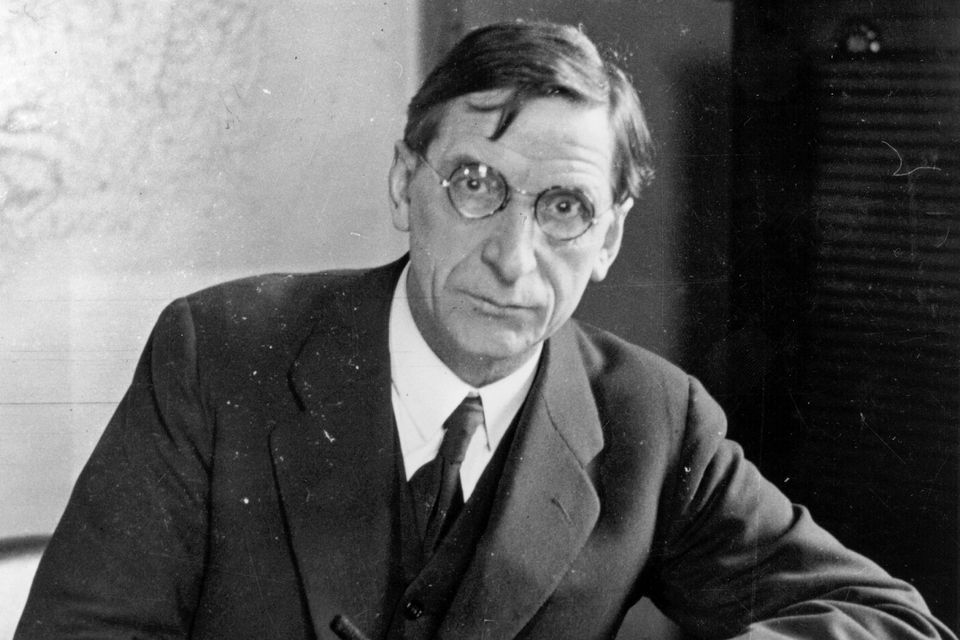
 By Frank Schnittger on 19 January 2025One of my former managers had a catchphrase to the effect that one of the qualities that characterised your potential to rise to senior management was the ability to tolerate ambiguity. The greater one’s responsibilities became, the less black and white the choices become. You have to be able to tolerate situations where there are many competing points of view and no right answers. The solutions are at best messy compromises which may have to be tweaked from time to time as circumstances change.He rose to the top of the management tree, so he should know.But I also felt there could be virtue in arguing the merits of a particular point of view and having the courage to stick to it through thick and thin. George Bernard Shaw noted that “The reasonable man adapts himself to the world: the unreasonable one persists in trying to adapt the world to himself. Therefore, all progress depends on the unreasonable man.”That may be so, but it can also be career limiting. I had a persistent habit of being right at the wrong time. The art of politics (and management) is often as much about timing as having the right policies. I knew I had messed up when another top manager once said to me “weren’t you very brave to have made that suggestion at that meeting!”When he made that same suggestion at another meeting some time later it was greeted with thunderous applause compared to the silence that had greeted my proposal. He had prepared the ground by speaking one to one with the key stakeholders and potential blockers beforehand.The Alliance Party of Northern Ireland (APNI) has made a virtue of being ambiguous on the constitutional question, preferring to focus on more mundane day to day bread and butter issues instead. It enables them to draw support from people of various political backgrounds who might have very different constitutional views but are prepared to cooperate with one another on other issues of more immediate concern. It has worked for them electorally, up to a point. So why change now?Over the past 50 years the APNI’s vote share has fluctuated between 5 and 15%, some of it due to tactical voting by supporters of other parties voting to “keep the other lot out”. But contrary to much wishful thinking, it has never really challenged the leading Nationalist or Unionist parties for leadership of Northern Ireland as a whole. It remains a fringe party, even if it can sometimes combine the fringes of both nationalist and unionist leaning voters. The “radical centre” has been very conservative in practice, focusing on making the status quo more bearable. That also means it hasn’t been much of a player in Westminster or Irish politics, being regarded as a mostly domestically focused local government party in Northern Ireland.These thoughts came to mind when I read