Posted by Jim on October 26, 2017
Jim Gibney. Irish News. Belfast. Wednesday , October 25, 2017
HOW do you spot sectarianism, I asked myself as I read Sinn Féin’s One Community document which the party will debate at its Ard Fheis in a few weeks’ time and its campaign literature on the same theme #SUAS (Stand Up Against Sectarianism), which it launched a few weeks ago?
I remember a few years ago coming out of the lift on the top floor of the assembly and bumping into the north’s deputy first minster, Martin McGuinness, who was red in the face and clearly in a reflective and rushed mood.
I asked him how he was. He said it is difficult when you are dealing with bigots as he disappeared into the lift. He had just left a meeting with the DUP.
I stood beneath the large chimney pot towering over the yard of ‘C’ and ‘D’ wings in Crumlin Road jail. It was the spring of 1977.
I watched lads in their late teens and early twenties ‘bouling round the yard’, chattering away and animated, as young men are when they are together. You would think they were on a social outing.
In fact, many were walking a tightrope: balancing very grave matters indeed. Many of them would spend the best years of their young lives in jail – on the basis of forced statements usually composed by their RUC assailants.
Judges, educated in some of Ireland and Britain’s most prestigious universities, with trained minds to spot police brutality and injustice, dished out cruel justice that ruined lives.
I was 16. I was in competition with another 16-year-old for a plum job as an apprentice electrician. It was touch and go.
I was asked what school I went to. The other lad, a Protestant, got the job.
In the mid-1970s the Workers’ Party ran a poster campaign: ‘Sectarianism Kills Workers’.
In May 1975 I stood in Richard ‘Oatesy’ McErlean’s parlour in Thompson Street in Belfast’s Short Strand/Ballymacarrett area.
Two of his sons, John and Thomas, lay in the parlour side-by-side in their coffins. They had been killed by the UVF as they played cards in the loyalist Mount Vernon estate having been lured to their death by a work colleague.
In a rally of thousands in the mid-1990s outside Belfast City Hall, organised by trade unionists, I shouted with scores of others, at the platform party for failing to mention the sectarian killing of Catholics by loyalists.
The march was against sectarianism.
The northern State was set up on the basis of a crude sectarian head-count. How many Protestants were needed to keep Catholics and their united Ireland aspiration at bay?
Historically the English administration fostered political sectarianism using Protestant colonists from Scotland and England to hold Ireland for the Crown.
You can usually see racism based on skin colour. You can see homophobia and misogyny because specific groups – gays and women – are the target.
Sectarianism in the north is insidious because it was a cornerstone of the state. It was state practised and all classes played their part in ‘keeping Catholics in their place’.
State-sponsored sectarianism is visible and invisible, crude, sophisticated and divisive.
It dictated employment, education, housing and voting rights. It demeans, demoralises and disempowers its victims.
That is why in Sinn Féin’s One Community document it argues for it to be defined legally as a ‘hate crime’.
Opposition to it is driven by the principles of equality and parity of esteem – the bedrock of the Good Friday Agreement (GFA).
This is the only acceptable basis on which the north’s administration can exist in the all-Ireland framework of the GFA.
The document argues for the all-Ireland institutions of the GFA and the councils to drive opposition to sectarianism and for sectarian awareness training for the police, trade unions, public sector workers and for children to be educated about it also.
It calls on the GAA, rugby, soccer and boxing organisations to promote anti- sectarianism similar to the high-profile campaigns they ran against racism and homophobia.
Important anti-sectarian work is ongoing in local communities, civic organisations, education, business, sport and faith groups and with foreign nationals.
Sectarianism not only kills, it poisons the mind and the society that tolerates it or pretends it does not exist.
It does exist but there is no acceptable level of sectarianism permissible.
Posted by Jim on October 25, 2017
 One armed man cannot resist a multitude, nor one army conquer countless legions; but not all the armies of all the empires of earth can crush the spirit of one true man. And that one man will prevail. — Terence MacSwiney
Probably no man outside of Michael Collins was as responsible for getting England to agree to peace talks in 1921 as Terence MacSwiney, and he accomplished this without an act of violence. MacSwiney, like Ghandi some twenty years later, helped bring English rule in his country to an end by passive resistance; he refused to submit to English law, and by that simple act he brought the harsh glare of a worldwide spotlight to the injustice of England’s colonial regime.
MacSwiney was born in Cork city in 1879, he died on Oct. 25, 1920. He got a degree in philosophy from Royal University in 1907. As time went by, MacSwiney became more and more involved with the Republican movement, helping to form the Cork unit of the Irish Volunteers in 1913 and publishing a weekly paper called, Fianna Fáil (soldiers of destiny) in 1914. The paper was suppressed by the English after only eleven issues.
In Jan. 1916 he was jailed for making a seditious speech; he was jailed again later in that year and again in 1917. He was elected to the first Dáil Éireann in 1919 as the representative of Mid-Cork while his friend Tomás MacCurtain was elected Lord Mayor of Cork. On March 20, 1920, MacCurtain was murdered in his home by several disguised members of the Royal Irish Constabulary, one of whom was later shot dead by the IRA. MacSwiney was then elected Lord Mayor of Cork. Through all this time he had continued his work with the Irish Republican Brotherhood and was, in fact, commander of the Cork No. 1 Brigade of the IRA.
On August 12, 1920, MacSwiney and four other Cork IRA leaders, including Cork No. 2 commander, Liam Lynch, were captured by British. Incredibly, not recognizing the others they had captured, the English soon released them, but held on to MacSwiney. On the 16th, MacSwiney was court-martialed and sentenced to two years in prison. But MacSwiney had no intention of submitting to a legal system he believed had no standing in his country. When he was asked if he wished to address the court, he said, “I have decided that I shall be free alive or dead within the month, as I will take no food or drink for the period of my sentence.” Thus began the series of events that would burn the name of Terence MacSwiney deep into the heart of his native land, and contribute so much to the freeing of 26 of her counties. MacSwiney was wrong about one thing though, a month would not be long enough to decide the outcome of his hunger strike; it would continue for an inconceivable 74 days.
The British whisked MacSwiney away to Brixton prison in London, perhaps thinking that they could better control the publicity his hunger strike would generate if he was out of Ireland; they were sadly mistaken. He weakened quickly but hung on, day after day, with the story getting more and more coverage in newspapers around the world. British Prime Minister Lloyd George could ended it by releasing MacSwiney, but he refused; a decision that was fatal to both MacSwiney and England’s hopes of maintaining its stranglehold on all 32 counties in Ireland.
As more and more time went by, with MacSwiney somehow remaining alive, some in England began to speculate that Father Dominic, who was attending MacSwiney, must be smuggling food into him in his voluminous black beard. The government even had the contents of the basin MacSwiney used to clean his teeth sent to a lab for analysis. Prayers must have been offered by many in the English government that MacSwiney either die or end his hunger strike, but, please God, soon. He did neither, however, and soon longshoremen were threatening to strike in protest in New York, French and German papers were hailing his courage, and 30,000 Brazilians were demanding Papal intervention.
 |
| James Daly, Connaught Rangers, who was executed for his part in the “India Mutiny.” |
MacSwiney lapsed into unconsciousness on the same day as the start of the trial of Kevin Barry, a young man whose name would become historically entwined in tragedy with MacSwiney. Barry, only 18, stood accused of murder in the death of a British soldier during an ambush in Dublin. Meanwhile, in India, Irishmen in England’s 88th Regiment of Foot, the Connaught Rangers, had mutinied, protesting the persecution of their families in Ireland by the very government they were serving; fourteen had been sentenced to death.
As the year of 1920 rolled toward its end, events and their own pigheaded intransigence were conspiring against British rule in Ireland . The tactics that had worked so well for them for so many centuries in Ireland and their other colonies — stripping the native population of all rights, intimidating the people of those lands by demonstrating the absolute power of life and death that they could wield over them with impunity — were no longer as effective. The increased scrutiny of the press was shining the light of truth on them and removing that impunity. Terence MacSwiney’s hunger strike drew continued and ever-growing focus on British oppression and brutality in Ireland.
At 5:40 A.M, Oct. 25, Terence MacSwiney’s body finally gave out and he died. His last words to a priest by his side were, “I want you to bear witness that I die as a soldier of the Irish Republic.” MacSwiney was hailed by people all over the world, even in the land of his oppressors. The Daily Telegraph in London wrote, “The Lord Mayor of Cork condemned himself to death for the sake of a cause in which he passionately believed, and it is impossible for men of decent instincts to think of such an act unmoved.” Irish Volunteers, wearing uniforms which were prohibited by English law, escorted his casket through London as thousands of Irish exiles lined the streets. They attempted to land MacSwiney’s body in Dublin and take it overland to Cork for burial, but British General Macready, fearing the certain outpouring of emotion along the route, sent the police and a force of Black and Tans to meet the boat and, after a scuffle on the docks, with MacSwiney’s sister, Annie, clinging to the coffin, the body was snatched away and loaded back onto the boat. MacSwiney was buried in Cork on the 29th.
 |
Courtesy of Kilmainham Jail Museum
Young Kevin Barry, whose execution followed close on the heels of MacSwiney’s death. |
Most observers, even in England, felt that after the outrage of the world at MacSwiney’s death, the government would never execute Kevin Barry. On Nov. 1, Barry was hung. The next day, in India, a Connaught Ranger, James Daly, was lined up and shot by a firing squad composed of fellow British soldiers. The English government had learned nothing from their actions in 1916, when they executed the leaders of the failed Easter Uprising and created martyrs that inspired future generations of Irish nationalists. With the deaths of Daly, Barry and MacSwiney, British officials had demonstrated to the world that the English government had only one answer to their colonial subjects who yearned for freedom — the same answer they had always given: brutal repression and executions.
The IRA had no hope of mobilizing an army large or well equipped enough to defeat one of the strongest armies in the world. Ireland’s only hope lay in making the world, especially America, see the justice of their cause and make it impossible for England to continue to tyrannize them. As hard and long as they fought, as much as they sacrificed, those in the IRA could not accomplish this. One man, Terence MacSwiney, with extraordinary determination and the moral courage of a man who knew he was right, accomplished more than the thousands carrying guns. – Joe Gannon
Posted by Jim on
Allison Morris. Irish News. Belfast. Thursday, October19, 2017
The collapse of the Gary Haggarty ‘supergrass’ trial was a depressing end to a process that cost millions of pounds and caused an immeasurable amount of pain and suffering to the families of those murdered and targeted by the loyalist and his cohorts.
The inability to deal with the past is one of the great failings of the peace process and the Haggarty case a glaring example of that failing.
The de facto amnesty that ran for the early years after the signing of the peace accord made it appear as though the past was an easy issue to manage.
So relieved were we all that there was no sustained violence on the streets that for many years those families who never received any help, justice or recognition were forgotten about in the initial warm glow of peace.
They suffered quietly, silently and with great dignity. Many have since died of old age or broken hearts.
The emotional battering, the long-term, generational trauma victims’ families have endured should shame all those in authority.
Promising people justice when it’s impossible to deliver heaps trauma upon trauma. Leaving victims without answers, using them as a political negotiating tool and making them feel like a financial burden is an immoral way to end any conflict.
Haggarty was never going to be the answer to getting justice for the victims of the Mount Vernon UVF.
A low-life, murdering criminal of the worst possible character he was a dud witness. However, what the case did do was lay bare the activities of that particular group of loyalists and in turn the police officers that recruited them.
The 200 charges he pleaded guilty to, including five murders, and the 300 further offences taken into consideration paint a picture of a man who was involved in weekly and at times daily criminality.
And all while [ Haggarty was] working as an RUC Special Branch informer alongside Mark Haddock, another agent who led the ragtag gang of murderers, almost all of whom were in the pay of the State.
To use people like Haggarty as a prosecution witness is madness. Any defense barrister worth his wages would have torn his evidence apart.
Investigating murders during the Troubles was no easy job and the RUC detectives tasked with that worked in unique and dangerous circumstances.
But when the killer was sitting in the passenger side of a police officer’s car with his hand out waiting for a brown envelope of cash, well that would have made the job considerably easier and that is what the Haggarty case revealed.
Every murder carried out by the Mount Vernon UVF was arguably preventable given how infiltrated they were and completely solvable given how much information was available.
This week The Irish News carried an interview with the Victims Commissioner Judith Thompson, a woman who gets what is needed and who understands the issues and – like those who have lost – is frustrated by how little has been done to help those in need.
The people she deals with come from all walks of life, from those killed by members of the security forces in disputed circumstances to the widows of soldiers and police officers, murdered during the conflict.
Almost all – and this is important to emphasis in the current misreporting of the past – have been failed and denied justice.
The reality is few have any hope of their day in court. Evidence was not retained and as the Haggarty case demonstrated the only witnesses available are often those who were involved.
What Ms. Thompson did say is the victims she deals with want and need the truth and recognition of hurt, and that doesn’t need to take place in a courtroom.
And they deserve that. Whether their loved one was shot dead by loyalists or blown up by the IRA, murdered by a soldier or police officer or executed by a State informer, they all deserve to be given what information is available and apologized to for being failed.
Haggarty may have been an appalling witness but he did give thousands of pages of testimony during his time in custody. That testimony could give answers to his victims’ relatives. They deserve to see it and they deserve an apology for this shameful time in our history.
Posted by Jim on October 24, 2017
Patrick Murphy. Irish News. Belfast. Saturday, October 21, 2017
If there is no deal on the return of Stormont, there would appear to be no political future for Arlene Foster.
Predicting politicians’ prospects is not an exact science, but it is difficult to see her surviving as DUP leader, unless she returns her party to a fully functioning executive.
It will make little difference to Michelle O’Neill whether Stormont returns or not because, for Sinn Féin, Stormont is an option. For the DUP it is a necessity, despite its influence in Westminster. So the outcome of the current talks will also significantly determine the political fortunes of the party and thus the future direction of Unionism.
So what does the future hold for Arlene, the DUP and Unionism in general? All three face a number of political challenges, but there does not appear to be a clear strategy to address them. While the Unionist bus has loads of passengers, no-one appears to be driving it.
Arlene Foster’s current problems come from two sources: history and her own behavior. History shows that post-partition Unionism is largely founded on a siege mentality, so a Unionist leader can easily be undermined by suggesting that he/she is conceding too much to a real or imaginary enemy.
It was a tactic first exploited by Ian Paisley, who drove Terence O’Neill from office in 1969 and ensured that every future Unionist leader became a prisoner of his/her own right wing. (That wing includes those who oppose Irish language legislation but sing in Irish on July 12: Lile ba léir é, ba linn an lá, meaning that the lily was theirs and they won the day.)
This siege mentality arose because in defending a self-invented politico-religious purity, Unionism failed to develop a broader political base beyond the issue of the State’s existence, particularly from 1922 to 1967. Arlene Foster is now a prisoner of that history.
But she has also contributed to her own problems. Although the DUP gained two extra Westminster seats in June, she presided over the loss of Stormont’s unionist majority in March. Her ill-judged “crocodiles” remark boosted Sinn Féin’s vote.
(She then attempted to defuse Nationalist concerns by visiting a convent school, a tactic also used by Terence O’Neill. But, like him, she merely antagonised her own supporters in yet another re-run of Unionist history.)
More damaging than her electoral performance has been her party’s record in ethics and probity in government. At least some of the RHI scandal appears to have been her responsibility and her failure to discipline Stormont speaker Robin Newton is disturbing, particularly since he is receiving £87,000 a year for a non-existent job.
Then there are the apparent links between some in her party and loyalist paramilitaries, an untenable position while loyalists are driving Catholics from their homes in Cantrell Close.
Political leaders need two skills: leadership and a sense of politics. Mrs. Foster has not impressed in either and she now faces a choice of two career evils. She can agree to a stand-alone Irish language act and lose the support of her party, or she can witness Stormont’s cold storage and lose the support her party.
A year ago this column confidently asserted that she was the most secure Unionist leader since Lord Brookeborough. She was, but she confused personal ability with political arrogance and lost the plot.
(That same column wondered why SF was not challenging Robin Newtown for failing to reveal his links to Charter NI, while using his position as speaker to prevent the SDLP from raising questions about it. How the fortunes of Sinn Féin and the DUP have changed since then.)
Only Sinn Féin can rescue Arlene now. Martin McGuinness might have, but Gerry Adams is unlikely to. Her only hope is that Sinn Féin might want Stormont’s return to influence the Brexit deal on The North, but there is little sign of that happening.
Unionism’s problem is that, for 100 years, its leaders failed to move its electorate away from the ‘not-an-inch’ philosophy. Mike Nesbitt tried and his party suffered the consequences. Arlene Foster did not try and may be about to personally suffer those same consequences.
It is too late for her to change now, but if her successor is not to repeat her same mistakes, he/she must re-position Unionism as outward looking and inclusive rather than defensive and divisive.
Sadly, there does not appear to be anyone in the DUP’s ranks who has suggested such a move and without a return to Stormont, the party is destined to curse the darkness rather than light a candle.
The DUP may be in the darkness for a while.
Posted by Jim on
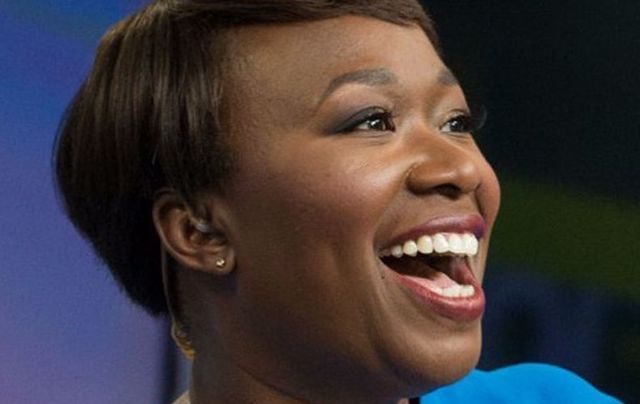
America’s largest Irish group, the Ancient Order of Hibernians, has slammed black MSNBC host Joy Reid for what they say were her racist comments about Irish Americans.Twitter
The Ancient Order of Hibernians claim that all Irish Americans are owed an apology.
America’s largest Irish group, the Ancient Order of Hibernians, has slammed black MSNBC host Joy Reid for what they say were her racist comments about Irish Americans.
Reid wrote on Twitter: “Kelly grew up in segregated Boston, in an Irish Catholic neighborhood where women were bullied, not honored, and blacks scorned & rejected.”
Reid made the comments about the Boston Irish after Boston native and White House Chief of Staff General John Kelly had criticized African American congresswoman Frederica S. Wilson, who claimed President Trump had insulted the wife of a soldier killed in Niger during what was supposed to be a consoling phone call. Kelly strongly defended the president.
Neil Cosgrave, the chairman of the AOH anti-defamation committee, slammed Reid and MSNBC saying, “It is hard to imagine that the scurrilous generalization of ‘Irish Catholic neighborhood(s)where women were bullied, not honored’ would not draw the outrage of MSNBC if the subject was any other than Irish Catholics and the commentator other than MSNBC’s own Joy Reid.
General John Kelly. Image: Public Domain.
“We note with grim irony that in years past the Hibernians have drawn to the attention of MSNBC multiple instances of unambiguous bigotry for which no reference to a dictionary is required, merchandise with phrases such as ‘Everyone Loves a Drunk Irish Slut.’
“We wonder if Ms. Reid made such a sweeping disparaging generality replacing ‘Irish Catholic’ with any other ethnicity/religion would she not be immediately taken to task and denounced by MSNBC management.
“Racism is a serious charge, it should not be cheapened or use flippantly as a mere rhetorical device as has been done by Congresswoman Wilson without risk of blunting its inherent evilness. As to the hypocrisy of MSNBC backing up claims of racism while engaging in their own brand of bigotry, they owe all Irish Americans, and specifically those from Boston, an apology.”