Stephen Siller Tunnel to Towers 5K Run In Memoriam Banner Holders
The annual Stephen Siller Tunnel to Towers Foundation 5K Run will be held on Sunday, September 29, 2019.
As participants exit the Brooklyn Battery Tunnel, the Foundation is planning to display banners in honor of the 343 fallen FDNY members that made the supreme sacrifice on 9/11/01, as well as the thousands of military members who have given their lives for our country since 9/11/01. In order for this to be possible, the help of volunteers is needed on the morning of the 5K.
Any FDNY member (does NOT have to be a military member) that would like to volunteer for participation in the fallen 343 FDNY display should contact Rob Vogt at 917-359-4252 or vogt4403@gmail.com.
Any active military members or veterans (does NOT have to be FDNY) that are interested in volunteering for participation in the 7,000+ fallen U.S. military display should contact Gavin Naples at gavin.naples@tunnel2towers.org or 718-987-1931.
“In Memoriam Banner Holders” Itinerary Volunteers should report in Class A uniforms
Rallying Point Location: Esplanade Plaza, New York, NY 10281 (exact location TBD)
Report Time: 6:45 – 7:00 A.M. Line-Up: 8:00 – 8:20 A.M. First Wave of Runners Exiting Battery Tunnel: 8:30 A.M. Final Wave of Runners Finish: 11:00 – 11:30 A.M.
Available Positions for FDNY Retireesat Quality Fire Protection Consultants Quality Fire Protection Consultants Inc. is looking to hire FDNY Retirees for conducting drills for both Fire and Non-Fire Emergencies in commercial office buildings and hotels. The company is made up of retired FDNY Officers, Firefighters and NYPD Officers and Police Officers. Quality Fire Protection Consultants is located at 14 Penn Plaza (34th Street between 7th & 8th Avenues) New York, NY. For more information about the company, please visit www.qfpcinc.com. If interested, please contact their office at (212) 695-0890 to set up an interview.
Following on from the Peoples Democracy march of 1st January 1969 from Belfast to Derry and the subsequent rioting in the Bogside and other towns in Northern Ireland, the Northern Ireland Civil Rights Association and its supporters were openly condemned by the Government of Northern Ireland as being manipulated by communists, republicans and socialists.
The sectarian police force
The government openly supported the so-called loyal institutions when they demanded the right to parade through towns and villages where the population was overwhelmingly Catholic whilst at the same time it ordered the Royal Ulster Constabulary to robustly put an end to demonstrations for civil rights and social reform. This sectarian police force needed no prompting and in April of 1969, some of its members entered the home of Derry man Sammy Devenny, trashing it and savagely beating Devenny and his daughters so badly that Devenny never recovered from his injuries and died on 17th July.
Again in July, the Orange Order decided to walk through the Catholic village of Dungiven and during the inevitable rioting the RUC brutally beat Francis McCloskey, a 67-year-old Catholic resident of the village so badly that he too died of his injuries. Francis would become the first Catholic civilian killed in Northern Ireland’s troubles. The people of Derry had had enough. They were not only in a different camp from the government; they also despised the local city council which was controlled by the unionists due to the worst case of gerrymandering of electoral wards ever experienced in the northern statelet.
The stand against sectarianism
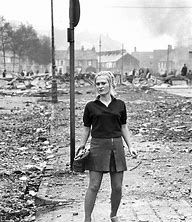
A youth armed with Molotov cocktails keeps guard on top of a highrise flat in Derry.
The nationalist people were well aware of the fact that on 12th August, the Apprentice Boys of Derry, a loyal order, would demand and receive permission to walk through the city. Part of their route would take them along the western wall of the city directly overlooking the Catholic Bogside.
In anticipation of a confrontation taking place, local republicans decided to form the Derry Citizens Defence Association (DCDA) with the intention of maintaining peace and defending the Catholic areas of the city, particularly the Bogside which was the usual target of the RUC.
Many people and activist groups immediately joined the new association. The inevitable did happen when loyalists and nationalist youths exchanged insults and then stones at Waterloo Place. The RUC advanced with many loyalists coming behind them, pushing nationalists up William Street towards the Bogside. However, this time things were different.
The people of the Bogside, with their brothers and sisters from the rest of the city, and further afield, were there to stop them. The Catholics were armed with stones and petrol bombs, they raised barricades, the rooftops of the “high flats” were commandeered by the Bogside youths and from this advantage point, they rained petrol bombs and missiles upon the RUC invaders.
The poorly equipped police force
For their part, the RUC were using CS gas canisters which they used to flood the district but a soft wind would blow the gas back towards them. The police were poorly equipped with shields that were much too small and their uniforms were not flameproof causing many of them to suffer severe burns from the Molotov cocktails.
Police reinforcements were sent in from all over the north but to no avail. The ‘bogsiders’ would not yield an inch and fought them to exhaustion, all the time broadcasting to the world at large on Radio Free Derry.
Response from the Irish Republic
On the 13th of August, the Taoiseach of the Republic of Ireland, Jack Lynch sent Irish troops to the border areas to help provide medical aid and shelter for the wounded. This caused the nationalists to hope for, and the Unionists to fear, an incursion into the Bogside by Irish troops.
Response from the British North
The northern government next decided to bring in the notorious B-Specials to replenish the RUC. This was an act of pouring petrol on the fire. This force was hated by the nationalists of all hues. At the same time, the RUC had opened fire on a crowd of nationalists standing guard over St. Eugene’s Cathedral. Two men were wounded.
The violence spreads
By the 14th of August fighting was beginning to break out in other parts of the north as young nationalists tried to divert RUC reinforcements away from Derry. In Belfast, Orange pogromists attacked the Catholic Bombay Street district burning homes and displacing over 1,500 people. On the 14th August, James Chichester Clarke, the Northern Irish Prime Minister was forced to request the British Prime Minister to send in the British Army. Within hours a company of the Prince of Wales Own Regiment entered the city separating the warring sides. On the main, they were welcomed by the nationalists.
It is reckoned that approximately 350 RUC men were wounded to some extent during the riots, of the residents there are no figures as many went over the border for treatment.
In the rest of the 6 counties, Belfast suffered the most with many having lost their homes and 5 Catholics and 2 Protestants were killed. In the aftermath of the battle of the Bogside, the nationalist people would see the despised corporation fall, they would also take pride in themselves knowing that they had stood up against discrimination and deprivation.
Without doubt Boris Johnson holds the political initiative. Despite all their lambasting and lamentations, the opposition parties show no sign of getting an act to together to prevent No Deal or even save the Union. Rather the reverse.
Labour is insistent that any alternative government must have Mr Corbyn as its leader. There is no conceivable parliamentary majority for installing him at Number 10, even on a temporary basis. There are other things MPs can do if they have the will and the numbers, though none is easy and some would be political dynamite. They could take control of parliament’s agenda in order to declare a revocation of article 50. They could rush through changes to the relevant laws to ensure that an election happened before 31 October.
All possible solutions depend on there being sufficient Conservative MPs capable of remembering that Britain’s democratic fabric relies not so much on laws as assumptions that people will behave properly.
The word unprecedented is overused, but not in this case. If Britain crashes out of the EU in the middle of an election campaign deliberately delayed by a prime minister with no mandate, it won’t just be the constitution that will be plunged into the darkest crisis of our modern history.
He turns the anti Johnson case on its head. Rather than leading a minority of English nationalists that a parliamentary majority should easily defeat, McTernan sees the prime minister positioning himself to exploit the internal splits within Conservative and Labour and occupy the vacuum on the left and right created by years of broad consensus over austerity – the centre ground newly gone militant, if you like and ready for Boris . This is a recipe for political success.
The de Gaulle parallel ( a pretty tenuous one admittedly) comes in because the aloof Frenchman managed to appeal for national unity over the heads of a multiparty system that couldn’t form stable governments at a time when a military revolt was threatened over their inability to decide whether to pull out of Algeria or fight the rebels to the death. To win power, de Gaulle sounded the patriotic note but outraged the Right by promptly betraying them, going for independence and using his unique authority gained in second world war to face the coup attempt down.
The parallel then is not so close. And by the way Boris is no de Gaulle. He sees himself as Churchill. But is the Union Boris’s Algeria? Which will be betray; the Union or withdrawal, “no if, no buts?” McTernan warms to his provocative theme.
The most foolish of the Labour party’s attacks on Mr Johnson has been that he is a rabid rightwinger. The problem is that the new prime minister is not the narrow nationalist depicted by the Corbynites, he is a globalist.
A referendum smashes and then remakes political allegiances, uprooting old loyalties and making millions of voters available. Not just swing voters, but switchers too. Political flux creates opportunities but it needs new approaches. The failures, in the end, of Mr Johnson’s predecessor Theresa May and Jeremy Corbyn, the Labour leader, are almost identical — both saw the current political conjuncture as a chance to move their respective parties to the left and right poles.
Traditionally, this would have created a gap in the centre, but the failure of any new “centrist” party is telling. Times of unprecedented change can only be answered by unprecedented politics. Step forward, Mr Johnson.
Good politicians accumulate political capital, great ones spend it as well. Michael Gove is the best recent model. His unchallenged reputation as a rightwinger enabled him to be the most liberal justice secretary since the post was created. Mr Johnson has learnt well from this example and has placed Mr Gove at his right-hand side as chancellor of the Duchy of Lancaster — that opaquely named post which is really “secretary of state for the centre of government
By delivering Brexit, Mr Johnson will have the largest amount of political capital that a Tory leader has had with their right since Thatcher won the miners’ strike. This will give him almost total freedom. Already he has established message discipline, and the political discourse has shifted from “people’s vote vs Brexit”, where the government struggled, to “no deal vs no Brexit”, where the Tories are the champions of the voice of the people. The prime minister will use his freedom to marshal new constituencies. Not just the northern working class, but all patriots who worry about Mr Corbyn’s uncritical approach to Russian president Vladimir Putin. Expect a large increase in defence spending. The work of Mr Gove to “green” the image of the Conservatives will continue, with legislation on animal rights and agricultural subsidies for carbon-neutral means of production.
And don’t be surprised if the legalisation of cannabis moves closer — young people need a reason to vote Tory too. Intervention. Infrastructure. Optimism. Patriotism. A renewal of politics to rescue the nation. Soon we will hear the prime minister’s clarion call: “Anglaises, Anglais, aidez-moi!”
(De Gaulle in an dramatic TV address had appealed “ Francaises, Francais, aidez moi”, to bring out the masses on to the streets of Paris even as some rebel paratroops from Algiers were landing in France. We’re not quite there yet).
However concern over the Union is reaching panic stations. Scottish Independence fervour is massively boosted by English No Deal militancy. It’s a bad sign when the economics are almost entirely ignored. What strikes reasonable unionists is how so many don’t seem to care if the Union survives or not. This is at the heart of Gordon Brown’s theme below, and the commentator Alex Massie’s. He sees the unionist case going by default in both main UK parties.
Lord Ashcroft’s most recent poll found 52% of Scots favour independence now. Revealingly, just 30% of those Scots polled thought unionism would prevail in a second referendum if, or when, such a vote was held.
From which one thing seems obvious: unionism can only win this game by not playing this game. Ruth Davidson understands this. It’s a misfortune for unionism that the Labour Party does not. Just as the Tories are prepared to sacrifice the stability of the union on the altar of a no-deal Brexit, so Labour appears ready to offer the SNP a second independence referendum if that’s what it takes to put Corbyn into Downing Street.
As a result, viewed from Scotland, neither the English Conservative nor the English Labour Party can sensibly be considered unionist organisations.
Given the conviction in some parts of the left that Scotland was England’s first “colony” — a conviction both ignorant and depressing — it’s little surprise that the likes of McDonnell are so relaxed about Scottish independence. Yet it’s still startling to think that the people leading the Labour Party are so intensely relaxed about the dismemberment of the country they seek to lead. This is not the Labour Party of John Smith and nor is it that of Gordon Brown. That party no longer exists.
So these are lonely times for Scottish unionists. They peer south and do not much care for what they see. A Britain in which the choice lies between Boris Johnson and Jeremy Corbyn is not a cheerful place. No wonder they view the future with foreboding.
If their paranoia does not yet match that of their Ulster brethren, they still have an inkling that, should it be deemed necessary, they too will be sold out. That is one obvious interpretation of the recent polling, which reveals that, in England, “leave” voters think the break-up of the UK is a price worth paying for Brexit. And it is the obvious conclusion to be drawn from McDonnell’s decision to offer a referendum to the SNP too.
So these are lonely times for Scottish unionists. They peer south and do not much care for what they see. A Britain in which the choice lies between Boris Johnson and Jeremy Corbyn is not a cheerful place. No wonder they view the future with foreboding.
If their paranoia does not yet match that of their Ulster brethren, they still have an inkling that, should it be deemed necessary, they too will be sold out. That is one obvious interpretation of the recent polling, which reveals that, in England, “leave” voters think the break-up of the UK is a price worth paying for Brexit. And it is the obvious conclusion to be drawn from McDonnell’s decision to offer a referendum to the SNP too.
The first step to solving a problem is to see it clearly. And if we are to understand why we are facing not only our most serious constitutional crisis since the 17th century but an unprecedented economic calamity precipitated by a no-deal exit from the EU, we must recognise that nationalism is now driving British politics…
Johnson’s flying visits to all corners of the UK have done nothing to dispel the impression that under him the world’s most successful multinational state is devoid of a unifying purpose powerful enough to hold it together and to keep four nationalisms – Scottish, Irish, English and also a rising Welsh nationalism – at bay….
What is most worrying is not just that so many think the union will end but how at least for now so few appear to care. Only 30% of British Conservatives (and only 14% of Brexit party voters) would oppose Brexit if it meant the break-up of the union: 56% of Tories (and 78% of Brexit party voters) – in total 70% of Leavers – would go ahead regardless, even if the union collapsed….
Unionist parties in Northern Ireland should have been persuaded that their stated objectives – the integrity of the UK and an open border with the Irish Republic – could be best secured by continued membership of the customs union and single market…
As the Second World War ended, George Orwell made a distinction between patriots who instinctively love their country and the opposite, a political nationalism that he defined as “power hunger tempered by self-deception”. He noted its defining features: unreality about the country’s prospects; introversion bordering on the xenophobic; and hate-filled obsessiveness that treats people solely in terms of their loyalty and utility. Orwell argued passionately that the descent into a narrow, chauvinistic nationalism could be halted only by what he called “moral effort”.
In our times, this means we must rediscover the age-old virtues of empathy, solidarity across borders, reciprocity between nations and co-operation rather than conflict. These precious ideals – and a tolerant, inclusive and outward-looking Britishness – could not survive the divisiveness and chaos of a no-deal Brexit. To prevent the rise of dysfunctional nationalism, the first step is to stop no deal in its tracks.
But Gordon, how is this to be done? We’ve heard the lament before What’s the strategy?
August 10, 1969: San Clemente, California—President Richard Nixon accused his predecessor Lyndon Baines Johnson of complicity in the assassination of President John F. Kennedy. Speaking with reporters on the first day of a 10-day stay at his Pacific Ocean vacation home …
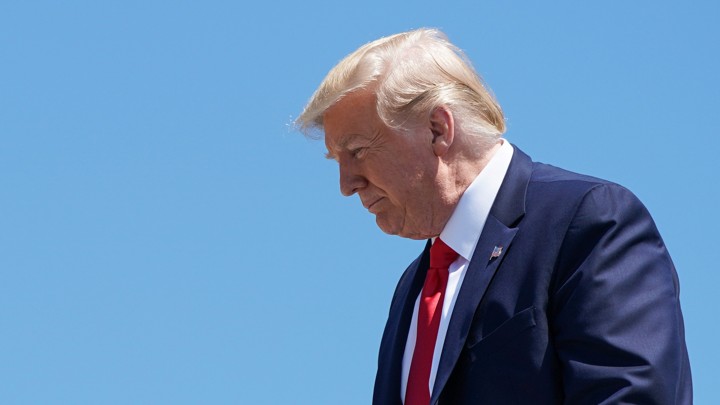
Of course, that never happened. Obviously. How could it; how dare it? But had it happened, such an accusation—by a president, against a former president—would have convulsed the United States and the world. Today, President Donald Trump accused his predecessor, Bill Clinton—or possibly his 2016 campaign opponent, the former first lady and Secretary of State Hillary Clinton—of complicity in the death of the accused sex trafficker Jeffrey Epstein.
Many seem to have responded with a startled shrug. What do you expect? It’s just Trump letting off steam on Twitter.
Reactions to actions by Trump are always filtered through the prism of the ever more widely accepted view—within his administration, within Congress, within the United States, and around the world—that the 45th president is a reckless buffoon; a conspiratorial, racist moron, whose weird comments should be disregarded by sensible people.
By now, Trump’s party in Congress, the members of his Cabinet, and even his White House entourage all tacitly agree that Trump’s occupancy of the office held by Washington, Lincoln, FDR, and Eisenhower must be a bizarre cosmic joke, not to be taken seriously. CNN’s Jake Tapper on August 2 quoted a “senior national security official” as saying: “Everyone at this point ignores what the president says and just does their job. The American people should take some measure of confidence in that.”
Everybody at this point ignores what the president says.
So even though Trump just retweeted the comedian Terrence K. Williams accusing the Clinton family of murder, the people who work for Trump may ignore that, too. They know that the president punching the retweet button like an addled retiree playing the slots through a fog of painkillers means nothing. The days of “taking Trump seriously, not literally” have long since passed. By this point, Trump is taken neither seriously nor literally. His words are as worthless as Trump Organization IOUs.
But cosmic joke or no cosmic joke, Donald Trump is the president of the United States. You may not like it. I don’t like it. Mike Pompeo doesn’t like it. Mitch McConnell doesn’t like it. Kevin McCarthy doesn’t like it. But it’s still a fact, and each succeeding outrage makes it no less a fact. Grinning and flashing a thumbs-up over an orphaned baby? Yes, still president. Tweeting that a third-tier dictator has threatened him with more missile tests unless he halts military exercises with a U.S. ally——and that he has surrendered to that blackmail? Shamefully, still president. Accusing a former U.S. president of murder? It’s incredible, it’s appalling, it’s humiliating … but, yes, he is the president all the same.
Trump’s circle probably expects the world to sputter for a while and then be distracted by some new despicable statement or act. That is how it has gone for nearly three years, and that is how it is likely still to go. Trump is steering the U.S. and the world into a trade war, and perhaps a financial crisis and recession along with it. He is wrecking the structure of U.S. alliances in Asia, and his rhetoric is inciting shooting rampages against minorities. Compared with that, mere slurs and insults perhaps weigh lighter in the crushing Dumpster-load of Trump’s output of unfitness for the office he holds.
But it shouldn’t be forgotten, either, in the onrush of events. The certainty that Trump will descend ever deeper into subbasements of “new lows” after this new low should not numb us to its newness and lowness.
Neither the practical impediments to impeachment and the Twenty-Fifth Amendment process, nor the foibles and failings of the candidates running to replace him, efface the fact that this presidency shames and disgraces the office every minute of every hour of every day. And even when it ends, however it ends, the shame will stain it still.