Prepare to get cozy with covid, Gram-Gram, mom, dad and teachers! President Trump assures us that kids are practically immune. Plus, it will probably just disappear by then. Good times!
Posted by Jim on August 6, 2020

AOH Home of the Brooklyn Irish
Baile na nGael
Monday, July 27, 2026
Posted by Jim on August 6, 2020

Posted by Jim on August 5, 2020
by Cameron Hilditch Aug. 4, 2020
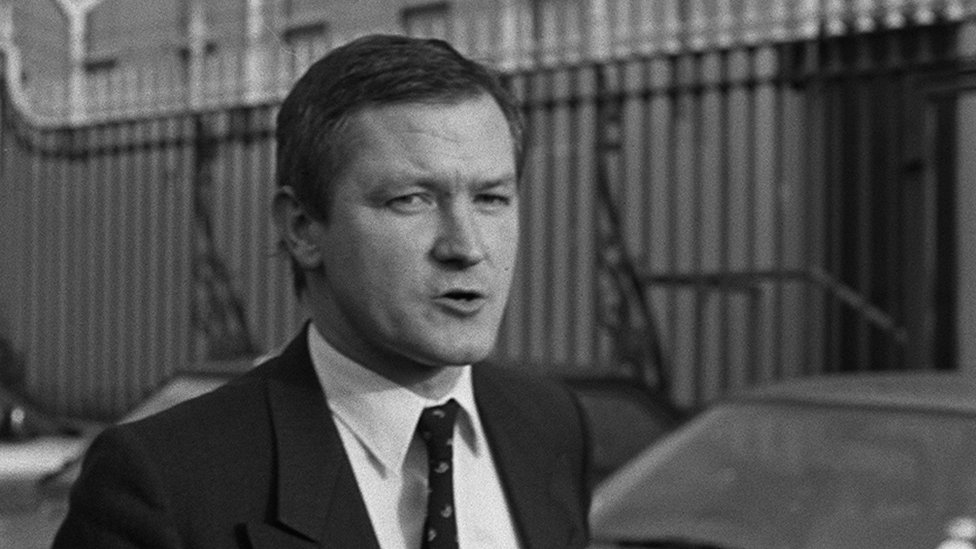
SDLP leader John Hume walks towards Dublin’s Government Buildings before meeting the Irish Prime Minister Bertie Ahern on December 4, 2000. (FP/CLH/Reuters)
A few years ago, at a dinner party in Oxford, I was approached by a young English academic who overheard my accent.
“Are you from Northern Ireland?,” he asked nervously
Once I had confirmed his suspicions, he began to open up to me about the time his grandfather spent in my homeland as a British soldier during the Troubles, a half-century long nightmare of civil conflict in Ulster involving Protestant unionists, Catholic secessionists, and Her Majesty’s Armed Forces.
“He served in Iraq and in Afghanistan, but he always said that neither was even close to being as bad as Belfast was in the ’70s. Hell on Earth.”
It might surprise Americans to hear a seasoned soldier compare a country in Western Europe unfavorably with the Middle East in the context of security and civil strife, but the Northern Ireland conflict can give any global conflict in the last 50 years a run for its money when it comes to sheer and unremitting exhibitions of human depravity. Throughout the Troubles, the murder of pregnant women was often celebrated by the perpetrators as a two-for-one deal in the market of ethnic extermination, disabled children were executed as “collaborators” by paramilitary groups, and unhinged soldiers occasionally fired upon defenseless civilians for simply walking the streets of their own neighborhood.
John Hume, who died yesterday at the age of 83, is receiving praise and plaudits from around the world for the central role he played in the Northern Ireland “peace process” of the 1990s, for which he was jointly awarded the Nobel Peace Prize. In order to understand the life of Mr. Hume, one has to first appreciate the fact that the political landscape in Northern Ireland is dominated by four political groups. The Democratic Unionist Party is a socially conservative, ethnically Protestant party that espouses a blood-and-soil commitment to Northern Ireland’s historic status as a state within the United Kingdom dominated by Protestant power and interests. It was founded as a cult of personality around the firebrand quasi-fascist preacher Ian Paisley and has historically had loose ties to violent paramilitary groups. The Ulster Unionist Party is the friendlier face of Unionism, committed to protecting Northern Ireland’s position in the U.K. through peaceful and civil methods. Secessionist politics is dominated by Sinn Fein, the political wing of the Irish Republican Army terrorist group and the most prolific mass murderers of the entire conflict, and by the Social Democratic Labour Party, which pursues Irish unity through non-violent constitutional means. 3
John Hume was the leader of the last of these four movements during the most important period in Northern Ireland’s history — the mid-to-late ’90s. He worked with all parties to secure the Belfast Agreement of 1998, which put an end to the Troubles and established the peace that I, as someone born in ’98, have lived under for my entire life. His resolute commitment to the peaceful pursuit of his political aims within the procedural constructs of the British constitution at a time when Ulster Catholics had many legitimate grievances against the British state is testimony enough to the man’s moral fiber. In that respect, he can serve as an exemplar of citizenship for Americans in the context of our own national conflicts, which do not even approach the scale of what was happening in Northern Ireland during the politically active years of John Hume’s life. His life and his example shame looters on the left and militias on the right in equal measure. His role in persuading Irish Americans to stop bankrolling Sinn Fein’s murder spree also singles him out as one of those rare politicians unwilling to take ethical short-cuts to reach ideological goals.
It would be nice to end this post here, and most obituaries of Hume so far have done just that, celebrating his life in terms of uncomplicated admiration. When writing about the death of someone so clearly possessed of inordinate moral courage, it’s indeed tempting to wrap their life up in a neat and tidy bow of warm words and leave it at that. However, I would be remiss in my duties as a journalist and as an author of the “first draft of history” if I did not record here the biggest and most fatal mistake of John Hume’s entire career, which was his decision to bring Sinn Fein into the mainstream of Irish politics and to make them into a “partner in peace.” At the beginning of the 1990s, when the momentum for peace was building, the two dominant political parties in Northern Ireland were the non-violent moderate ones: David Trimble’s Ulster Unionists and John Hume’s SDLP. British and Irish intelligence agencies had furthermore infiltrated the IRA to the extent that its ability to effectively carry out a prolonged campaign of guerrilla warfare was on life support. At a time when IRA Sinn Fein had been all but comprehensively defeated by the joint efforts of Westminster and the Daíl Eireann in Dublin, Hume chose to tie himself and the fortunes of Northern Ireland to the success of the most depraved political group in the Western World — an organization with a higher murder rate of its captives than ISIS. As a result of Hume’s association with Sinn Fein, which bequeathed to them an altogether undeserved respectability, political defeat was snatched from the jaws of military victory in the intelligence war against the IRA. The set of political institutions established in 1998 naturally reflects the interests of the unionist and secessionist radicals whose approval was made the condition of political progress in Northern Ireland by Hume and other weak-willed moderates. As a result, the Northern Ireland in which I now live is jointly governed by IRA Sinn Fein and the Democratic Unionist Party after the peaceful parties that orchestrated the peace of ’98 negotiated moderate politics out of existence in a fatal, flawed, and darkly ironic fit of misjudgment. The final verdict on the life of John Hume must then be that he was a gifted leader marked by extraordinary moral courage whose public life was tainted in the end by a tragic error in judgement that legitimized the violence he abhorred and ensconced it firmly in the heart of government.
Posted by Jim on August 4, 2020

its a very sad day for the hume family, derry and ireland.
thinking of the wonderful Pat and his children and grandchildren.
he is a man for whom history will not have to be rewritten. he may have been ‘irelands greatest’ but he was also a husband, father, grandfather, brother and beloved uncle. surprisingly for someone so well known he was the quietest of the hume men.
while his political achievements are many the lessons i will take forward are not about politics. the values i will take are the importance of education and the value of community.
when i was a child one of my strongest memories of him is that he always asked about school (as lots of adults do) the difference was john followed up with lots of questions.. ‘why that subject?’ ‘how did you hope to you use it?’ .. it was only in later years hearing him give an empassioned speech at daddys retirement that i started to realise that it was not just idle chat. as the first of his family to go to secondary school he truely believed education was the key to transforming your opportunities. and education is not just about school, its about life long learning. about talking, and listening with an open heart. john believed in valuing difference….perhaps if we talked to each other about race, gender, sexuality, religion etc and truely listened to each other to educate ourselves we would be less likely to carry hate or hurt in our hearts.
john loved derry and the people of derry. community was everything. he was able to see the power in connection and used it to wonderful effect. he saw poverty in derry and while individually people had little, together they had enough to support each other and the credit union was born. he had much the same idea around housing etc. he truely believed politics is irrelevant if you cant feed your family or keep a roof over your head.
good bye john, you truely were one of a kind and your loss will be felt sorely. we will carry on your message
‘we shall overcome’
Posted by Jim on August 2, 2020
| Retired Firefighter James P. Dahl Ladder Company 59 UFA Retiree Liaison |
| WAKE Tuesday, August 4, 2020 2:00 PM – 8:00 PM James Romanelli-Stephen Funeral Home 89-01 Rockaway Boulevard Ozone Park, NY 11416 FUNERAL Wednesday, August 5, 2020 11:00 AM St. Thomas More Church 204-25 Rockaway Point Boulevard Breezy Point, NY 11697 |
Posted by Jim on July 28, 2020
Patrick Concannon on July 28, 2020, 7:43 am

The violence which engulfed Northern Ireland in 1922 was possibly the most intense the region has ever seen. The massacre at Altnaveigh has become synonymous with the sectarian violence which occurred particularly in the first half of 1922. It has also become a symbol of Republican aggression in the border regions, for Unionists living along that area particularly.
Altnaveigh elicits comparisons with the abhorrent Kingsmill massacre when ten Protestant workmen were taken from their bus by Republican paramilitaries and murdered in cold blood by the side of the road (1). The Altnaveigh Massacre would be committed by the Fourth Northern Division which comprised South Armagh, Louth parts of Down and Monaghan.
The Division was led by Frank Aiken and was the best armed and most active division along the border region. Indeed when the IRA gained the upper hand amongst the Nationalist community in Northern Ireland, after the Anglo-Irish Treaty, Aiken’s unit would be second only to the Belfast Brigade as the most active. (2)
This action however led to a volatile and extremely violent confrontation between two foes, the IRA and the Ulster Special Constabulary. It would be this tit for tat escalation between the two that would lead to a massacre of Protestant civilians at Altnaveigh.
Background
The War of Independence is generally depicted as breaking out on 21st January 1919 when Dan Breen, Seamus Robinson, Sean Hogan, Sean Treacey and others ambushed and killed a patrol of two RIC men transporting gelignite near Soloheadbeg, County Tipperary.
By 1920 the IRA was beginning to escalate their attacks on rural RIC barracks which were vulnerable. To this end the Newry Brigade of the IRA under the leadership of Frank Aiken, with around 200 men under his command, mounted an attack on Newtonhamilton RIC post on the night of May 11th 1920.
All roads leading into the area were blocked as the IRA attacked the post calling on the six RIC men inside to surrender. They refused as the IRA blew holes in the walls and used a potato sprayer to douse the barracks in paraffin and set it alight. The RIC men bravely held out until 5am in an outbuilding. (3)
A similar attempt was made to burn Camlough Barracks but again was unsuccessful. The RIC managed to disable, with bullets the potato sprayer attempting to douse their barracks and also managed to signal for help by firing flares.
The IRA under Aiken attempted to attack the reinforcements arriving but a grenade exploded prematurely killing three of their men and forcing the rest to retreat. The Ulster Special Constabulary burned down Aiken’s home along with ten of his relatives in the Camlough area in retaliation. They also shot dead two suspected Republicans at Belleek (4)
Adavoyle Train Ambush
At 10am on 24th June 1921 a train carrying 113 men of the 10th Hussars was crossing the border close to Newry when a mine exploded derailing the carriages and hurtling them down a thirty foot emabankment.
This attack was carried out by Frank Aiken’s Fourth Northern Division (Aiken had been promoted to OC of the 4th Northern in April 1921) and resulted in the deaths of three soldiers and two civilians. Around 70 horses were also killed or so badly injured they had to be destroyed afterwards.
The train attack had an air of symbolism as it was carrying a troop which had been part of the Royal Escort during the King’s trip to Belfast on opening the Belfast Parliament.
The attack showed both the capability and the ruthlessness of the IRA in the area. The train had actually been late in arriving near Adavoyle as it had been delayed at Portadown. The mine exploded under the train’s last carriage due to this hold up (5)
Two weeks later the USC took four IRA men from their homes and summarily executed them by the roadside.
Violence on the Border
An illustration of the tit for tat nature of violence in South Armagh can be found in a series of events one year previous to the Altnaveigh Massacre.
On 10th April 1921 the IRA ambushed a USC patrol near Creggan on the Newry- Crossmaglen Road. One USC Constable was killed in this attack and in revenge the USC descended upon Killylea in Armagh and began to burn down Nationalist homes; they also shot and wounded two civilians.
The IRA took revenge by burning some Unionist houses in the area and an Orange Hall. This type of tit for tat violence became commonplace during 1921 and 1922.
It is however intriguing that Frank Aiken was initially against such retaliation early in the conflict as John Connolly explained to the Bureau of Military History:
“Sometime within the next four weeks General O’Duffy, who had been out of his own area organising in Co. Tyrone, returned to our area. In discussing the happenings in Roslea he expressed the opinion that an Orange house should be burned for each Catholic house burned as a reprisal….. There were various expressions of opinion from some of the officers present as to the advisability of the postponed burnings and also as to the number of Unionist houses which should be burned.”
“During the course of the meeting the door of the room in which the meeting was held was suddenly opened and a stranger stepped into the room. This created a feeling of shocked surprise to many of us, especially when the stranger said to General O’Duffy: “I have got you at last”. It was lucky that General O’Duffy recognised the stranger as Frank Aiken, or he might have been shot. After Aiken’s arrival, O’Duffy and he started. a discussion on the Roslea business. Frank Aiken did not at first approve of the burnings, as he thought that the B.men would retaliate by burning double the number of nationalist houses. O’Duffy struck the table and said: “When you hit them hard they will not strike again”.. Aiken then said: “Well, burn them and their houses”. (6)
And so it was over one year later on 13th June 1922 two local Catholic men from Derrymore where dragged from their beds by a party of B-Specials dressed in civilian clothing. Neither Patrick Creggan nor Thomas Crowley were members of the IRA although Creggan’s brother was an active local Volunteer.
These men were shot dead by the USC men and their bodies purposely left on landmine holes which had been dug by the IRA four miles outside Camlough. (7) That same night a party of A-Specials from Forkhill Barracks carried out a raid on the pub of prominent local Republican James McGuill. McGuill was a personal friend of Frank Aiken.
It seems as though the A-Specials were intent on killing McGuill and were thus enraged when they realised their quarry was not there. They proceeded to smash up the pub and loot some of the alcohol. Some of the women present, one of whom was McGuill’s heavily pregnant wife protested and attempted to stop them.
McGuill’s wife it was alleged was pulled into an upstairs bedroom by three Specials who subsequently sexually assaulted her. A servant girl was also allegedly beaten savagely whilst another threw herself out of a bedroom window to avoid such an ordeal. (8)
The IRA Attack
The IRA and Frank Aiken’s response to this was savage. Aiken had met McGuill’s wife the next day when he saw her in a ‘most frightful state’. Aiken would swear revenge against those responsible and laid an ambush at McGuill’s pub a few days later in order to attack a patrol of Specials from Forkhill Barracks.
One special was killed and another severely wounded. (9) However the IRA was not finished with its retribution. Interestingly recently released Military Pension Records from the 1930’s suggest what was to come at Altnaveigh was retaliation for USC killings of Crowley and Creggan and the summary executions a year before of four IRA men in the area rather than the sexual assaults. (10) A personal motive however can’t be completely ruled out.
According to Patrick Casey speaking to the BMH in 1957 this attack was planned and authorised by Frank Aiken. (11) Whether Aiken personally led the attack remains an open question. From the documentation available it seems it was led by local Commander Michael Fearon although this is not definitive. (12)
On 17th June IRA volunteers from the Fourth Northern Division who had been occupying Dundalk Barracks since the start of April made their way across the border, some dressed in Police uniforms. In total it is believed around 30 men would descend upon Altnaveigh in the early hours of that Saturday morning.
According to James Marron, a local IRA Volunteer their instructions were simple:
“ We were given, each of us a service rifle, 250 rounds .303, a service revolver and grenades. We had to walk from Ravensdale in Co. Louth to the nearest point of attack which was Altnaveigh, overlooking Newry. It was a stronghold of the B Force murder gang. Our orders were to burn every house and shoot every male we could get”. (13)
The Victims
The first victims of the gang were Thomas Crozier and his wife Elizabeth. Thomas was 67 years old and shot in the chest as he answered the door. As his wife was comforting him she was murdered to. It is believed she may have recognised one of the gunmen. James Marron claimed however she had been shot by mistake:
“At Altnaveigh we shot 8 of the B-men and burned 12 houses. But the unfortunate part of it all was, we shot dead a woman (accidentally), the head of a large family”.
The party of gunmen then proceeded to the home of John Heaslip. Heaslip and his son Robert aged 19 were caught running out the back of the house, taken a short distance away and shot dead.
James Lockhart was murdered in front of his mother and three sisters as their home was burned to the ground and Joseph Gray, a local Orangeman was dragged from his bed and shot.
He died the next day. Gray’s mother asked why the attack was being carried out. She was told by one of the attackers it was, ‘in reprisal for the murder of Catholics in Belfast’. (14)
The IRA gang burned all the properties of those whom they killed. They also moved on to Derrymore and Ballymacdermot where petrol bombs were thrown into houses whilst other houses were burnt down and bombs rigged to doors to prevent escape although these failed to explode. By the end of the night six Protestants were dead, one a woman and dozens of properties had been destroyed.
The savage violence left the Unionist community in absolute fear of future violence but they were not alone. Nationalists also feared reprisals from the USC and members of both communities took to the fields to sleep at night for fear of what may come. (15)

Frank Aiken and the Perpetrators
Many of those involved in the Altnaveigh Massacre had to leave their homesteads and some left Ireland altogether for fear of reprisals. Some like Marron and Fearon however still lived close by. Marron stated:
“He (Michael Fearon) still lived near Altnaveigh and so did I. I knew the people and saw them every day, we were however well disguised on the job and are not as yet known to be on it. (16)
Others left for England, America and Canada. Thomas Pentony left for America in December 1922 citing fears, “for my wife and children which compelled me to sail for the USA”. (17) James McAnerney left for Canada around the same time.
Frank Aiken would be referred to as ‘The Butcher of Altnaveigh’ by Unionists but would go on to have a hugely successful career as a Politician. He was instrumental in the rise of Fianna Fail in the early 1930’s and his respect as an IRA commander meant his links were influencial in reconciling the IRA to the Fianna Fail Government.
He was appointed Minister of Defence and remained as a Minister in subsequent Governments. During World War Two he was a staunch upholder of Irish neutrality famously driving President Roosevelt into a rage when Aiken was entertained in Washington. Aiken had refused to Roosevelt’s pleas for Ireland to join the war or openly help.
Interestingly after World War Two Aiken was appointed Minister of Finance and was involved in conflict with the banking sector and in particular Lord Glenavy, head of the Irish Banks Standing Committee. In need of loans for infrastructure projects Glenavy refused leaving Aiken furious.
In 1951 he became Minister of Foreign Affairs and went on to acquire a reputation as a man passionate about de-colonisation in Africa and Asia. He also talked of the UN recognising ‘Red China’, although was supportive of Tibet’s resistance against Chinese Annexation.
Aiken was appointed Tánaiste and Minister of External Affairs in 1965 and was supportive of Sean Lemass meetings with his Northern counterpart, Terence O’Neil.
He also went on to hold a moderate stance during the outbreak of violence in Northern Ireland and subsequently backed Jack Lynch action over the Arms Crisis in 1970, despite Aiken’s lifelong abhorrence of partition. Indeed when Charles Haughey was declared a Fianna Fail candidate in 1973 Aiken became disillusioned with Politics and retired to his farm. He died 10 years later in 1983. (18)
Conclusion
The violence in the 4th Northern Division area was some of the most savage and sectarian that took place during the period 1920-1922. It culminated eventually in the attack on Altnaveigh.
The IRA had claimed the attack was revenge on what it believed to be an ‘Orange area’ which had heavy recruitment into the USC, at a time when republicans believed that, due to the pervasiveness of the Specials, there were in the words of one, no longer any unionist civilians. (19)
The Altnaveigh Massacre however was one of the most infamous attacks during the conflict. The fact that the attackers had been totally indiscriminate in their actions against a vulnerable and isolated target left many Protestants extremely fearful, particularly along the border.
The attack was so sudden and so savage that it was a turning point in the conflict. It would be the last large scale attack by any party in the 4th Northern Division area. Patrick Casey speaking 35 years after the event remembered the sense of shame over what had happened. He told the Bureau of Military History that:
Nothing could justify this holocaust of unfortunate Protestants’. (20)
And a holocaust it certainly was for the victims involved in what must rank as one of Ireland’s most vicious sectarian attacks.
References: