When You Are Old
Posted by Jim on December 26, 2020

AOH Home of the Brooklyn Irish
Baile na nGael
Thursday, September 3, 2026
Posted by Jim on December 18, 2020
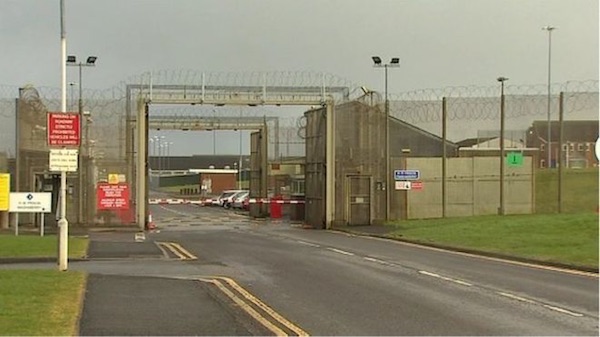
Throughout December, events have been taking place across Ireland in support of republican political prisoners. The following statement was issued by IRPWA-supported prisoners at Maghaberry.We the Republican Prisoners of Roe 3 & 4 Maghaberry Gaol send Christmas greetings to all our imprisoned comrades in Hydebank, Dóchas Centre and E3 & E4 Portlaoise Gaols.
We also send greetings to all revolutionary POW’s incarcerated throughout the world in their struggle for freedom; we salute each and everyone of you.
We also take this opportunity to thank our families for their continued support to us throughout the year, no matter what obstacles you faced. You are the unsung heroes of this struggle and we commend you for your resilience while we are held captive.
It’s been nine months since family visits were halted due to the Covid virus, this another burden to our families on top of everything else.
We thank all our comrades in the IRPWA and Saoradh, and we send seasons greetings to all of you. All throughout the year you worked tiresomely for us while facing continued harassment by Crown Force and Free State lackeys, but still you never let this derail your activism.
We also want to thank our friends and supporters across the world who write and send cards, to those who make donations through raffles or buy prison craft. We urge you all to keep up the good work, it doesn’t go unnoticed by us.
This year has seen Republicans face an onslaught by British Crown Forces as they embarked on legitimate political activism. In the gaols an MI5 led prison regime has tried to quash Republican Prisoners through forced strip searches, controlled movement and isolation.
Earlier this year our Palestinian comrade, Dr Issam Hijjawi, found himself the victim of isolation. This led Issam to take action and he embarked on a hunger strike which resulted in over 50 Irish Republican Prisoners across Ireland taking part. It was the first time in gaol history that this has happened. Our unified approach in our hunger strike sent a strong message to our enemies. We will not bow down to your brutal regime, nor will we be found wanton in the face of it. We will be to the forefront of struggle and resistance in Maghaberry Gaol.
We have, time and again, stood up to the British occupation of Ireland whether in gaol or not.
We remain unbowed and unbroken.
Tiocfaidh ár lá
Victory to the Republican Prisoners!
Posted by Jim on
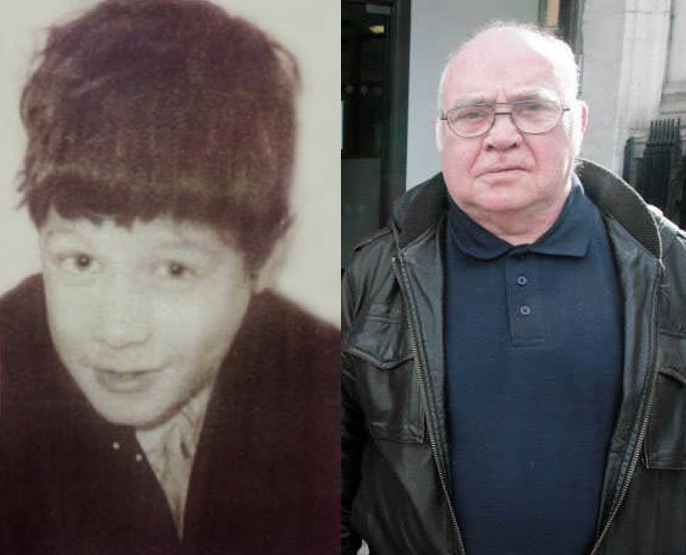
An attempt to stop the prosecution of a former British soldier for the murder of a child in Derry 48 years ago has been rejected.The anonymous ‘Soldier B’ had claimed the decision to charge him over the killing of Daniel Hegarty put him at heightened risk of sudden death due to ill health.
Fifteen-year-old Daniel (left) was shot twice in the head during an British Army operation in Creggan in July 1972.
In April 2019, it was announced that ‘Soldier B’ was to be charged with his murder, and of intentionally wounding Daniel’s cousin Christopher Hegarty, then aged 17, in the same incident.
The shootings happened during Operation Motorman, when British troops were deployed in Derry at the height of the conflict to impose British rule in liberated areas.
In 2011, an inquest jury unanimously found Daniel posed no risk and had been shot without warning.
A decision was taken not to prosecute Soldier B in 2016. But, in May 2018, the High Court quashed that determination following legal action by the Hegarty family.
Bloody Sunday campaigner John Kelly said the attempt to evade prosecution was “sickening” and said he looked forward to seeing justice for the Hegarty family.
DEATH OF HUGH JORDAN
Meanwhile, tributes have been paid following the death of Hugh Jordan (right), father of shoot-to-kill victim Pearse Jordan, who was shot dead by the RUC in 1992.
For the last 28 years the Jordan family have been tireless campaigners for the truth of what happened.
West Belfast MP Paul Maskey said that “like so many relatives seeking truth, Hugh has passed away without answers about his son’s death because of continuing attempts by the British government to block access to the truth about its role in the conflict.
“My thoughts and condolences are with Theresa and the Jordan family at this difficult time and we will continue to support them in their campaign for truth.”
Mark Thompson from victims’ group Relatives For Justice (RFJ) said Hugh Jordan spent “every single day” from the shooting of Pearse challenging the RUC and their version of events.
“He knew Pearse was unarmed and he knew that the RUC lied about killing him,” he said. “He brought that challenge from Belfast to Europe. Despite many setbacks he never faltered. He always believed the truth would out.
“Despite continual and vicious harassment by the RUC after Pearse’s death he and his wife Theresa never gave up. They had that inner strength that said they were right.”
Mr Thompson said that Hugh and Theresa were the backbone of social activities from the day RFJ opened its Falls Road office in 1999.
“Our hearts are heavy and sore. We can only express our heartfelt sympathy to Theresa agus clan. This has been a cruel year. And never was it ever truer said of anyone – ní bheidh a leithéid ann arís.”
Posted by Jim on December 13, 2020
Saturday, 12th December 2020
The DUP refused to believe warnings that Boris Johnson was planning to betray them and instead cosied up to English nationalists
While claiming failure is in fact success provokes derision, leaders appreciate that admitting mistakes reveals their judgement to have been flawed – and they know that in the tribal world of politics their most vociferous supporters will back them almost regardless of their actions.
And so, the default for most politicians is to defend the indefensible until, or often past, the point where that becomes preposterous.
Having backed Brexit for tactical reasons while blind to the strategic risk it was taking, this week the DUP leadership confirmed that it is wholly unrepentant even as one of its ministers suffers the humiliation of seeing the Irish Sea Border posts being constructed by the civil servants to whom he gives orders. by Taboola Sponsored Links 10 Foods Nutritionists Never BuyNutrition Explained27 Signs Of Depressionhttps://alldelish.com/
In multiple interviews this week by senior DUP figures there was not a scintilla of regret, not an ounce of self-reflection. From a party which once boasted of its unprecedented power over the government, where there might have been humility, there was pride; in place of embarrassment, there was chutzpah.
The confirmation this week that the Irish Sea Border will start in just 20 days extinguished any lingering hope from those who believed that a year ago Boris Johnson somehow stumbled into signing an agreement which he misunderstood, rather than having betrayed the DUP in a ruthlessly calculated fashion.Read MoreSam McBride: Farcically, Boris Johnson’s government is denying there will be an …
While the UK-EU deal this week reduces that border’s burden, and a possible trade deal would further soften the new border, the fact remains that it is nonetheless a new internal UK trade frontier.
Northern Ireland is still a part of the United Kingdom and in a constitutional sense the Union endures. But what Brexit has wrought raises the question of what defines a country. Article VI of the Act of Union more than three centuries ago put in place a trade union alongside political union, stating that the King’s subjects in Ireland and Great Britain were to “be entitled to the same privileges, and be on the same footing…in all ports and places in the united kingdom and its dependencies”.https://5ad69703e70ab7386f66a3e1fff46e0d.safeframe.googlesyndication.com/safeframe/1-0-37/html/container.html
Internal free trade is one of the defining characteristics of a country, yet here it will be constrained. A situation looms in which, as things stand, it will be unlawful for some British food to be sold in Northern Ireland.
While Parliament and the Crown are nominally still sovereign in Northern Ireland, the de facto position is very different. What is sovereignty if another country – or in this case 27 other countries – can rewrite the laws by which we are bound?
The fact that EU officials will be in Larne and Belfast to enforce the border, as agreed this week, is only a visual manifestation of an unspinnable reality – even without their presence, it would be EU rules over which we will have no democratic say which would be enforced on the EU’s behalf.
Having backed Brexit as something which would lead to a land of milk and honey, the DUP is now reduced not to selling the gains of leaving the EU but attempting to argue that it has helped to mitigate some of the most damaging possibilities.
Senior DUP figures must bitterly regret having not only backed Brexit, but having done so with such zeal that it accepted the then greatest political donation in the history of Northern Irish politics so that it could campaign for Brexit in Great Britain, and then aligned themselves with an ERG suffused with English nationalism.
On Thursday an audibly frustrated Nigel Dodds – who sat on the board of Vote Leave – used an interview with Good Morning Ulster to insist that in backing Brexit “our political strategy has not failed” and criticise the BBC’s questions.
Yet if Lord Dodds had heeded what the BBC was accurately reporting just over a year ago, he may have been able to avoid a move which made it easier for Mr Johnson to get the deal which creates the new border. Last September, Newsnight reported that Mr Johnson was planning for Northern Ireland to be treated very differently to the rest of the UK. But Lord Dodds told Newsnight that he was “quite relaxed about the way things are going” and “I think Boris Johnson knows what he is about” – even though Mr Johnson had openly betrayed the DUP just months earlier.
Two weeks after Newsnight’s revelation, Mr Johnson published his proposed deal for an Irish Sea regulatory border. It spelt out that agri-food goods crossing the Irish Sea from GB would have to go through a “Border Inspection Post…as required by EU law” and “be subject to identity and documentary checks and physical examination”. Similar arrangements would apply to goods due to the province aligning with “all relevant EU rules” in that area.
Given Arlene Foster’s repeated insistence that an Irish Sea border was her “blood red line”, to the surprise of many observers she immediately welcomed the development, saying that “we believe it’s something that works for Northern Ireland”.
What really went on inside the DUP at that point has never been publicly revealed, but it appears that the party believed it was being clever. Mr Johnson’s proposal involved a Stormont vote on the arrangements and the DUP knew – as did the PM – that it had a Stormont veto. But even that logic seemed reckless at the time because devolution was not functioning and it seemed inconceivable that Sinn Féin, which had its own veto on restoring devolution, would have agreed to do so if the DUP was to immediately use that to crush the deal with the EU.
Within three weeks, Mr Johnson had struck his withdrawal deal with the EU and betrayed the DUP. The deal effectively removed the DUP’s veto, instead putting in place a simple majority vote in the Assembly.
In the days after that whirlwind of U-turn and betrayal, Theresa May’s former special adviser on Europe, Raoul Ruparel, told MPs that the DUP support for Mr Johnson’s offer to the EU was “a significant change” from their past opposition to any regulatory divergence and something which crucially “gave the government more leeway to negotiate”. He said that “maybe wasn’t the right choice for them [the DUP]”.https://5ad69703e70ab7386f66a3e1fff46e0d.safeframe.googlesyndication.com/safeframe/1-0-37/html/container.html
Myriad dangers for unionism, many of them still unknown, stem from how Brexit has unfolded.
If, as now seems likely, the UK decides to maintain EU standards in order to soften the new border, that has the potential to anger Brexiteers and others with an interest in altering those standards. Wasn’t Brexit about taking back control, after all?
If Northern Ireland, rather than Brussels, is now the impediment to that control being exercised, the anger once directed at continental bureaucrats could be channelled towards Northern Ireland.
On Wednesday, a fence-sitting DUP statement said: “We will want to ensure that regardless of wider circumstances there continues to be full-unfettered access for our businesses to the lucrative GB marketplace.” Yet participating in a market involves trade in two directions. Even the supposedly “unfettered” ability for Northern Ireland firms to sell to GB is more complex than it first appears.https://5ad69703e70ab7386f66a3e1fff46e0d.safeframe.googlesyndication.com/safeframe/1-0-37/html/container.html
This week a senior freight industry figure explained how local manufacturers benefit significantly from lorries coming into Northern Ireland with goods from GB, because they are returning anyway. Disrupting one route necessarily disturbs the other.
Borders are complex but in Northern Ireland it might have been expected that politicians would have an intuitive understanding of their significance.
Instead, eight months after the vote for Brexit the then DUP MLA Nelson McCausland told the Nolan Show during a discussion about border arrangements: “I wouldn’t care what sort of situation I face as long as I’m out of Europe.”
That glib comment summed up the constitutional flippancy of some senior DUP figures who were wallowing in simplistic nationalistic fervour, while ignorant of the complexity of the changes they were proposing and the fragility of the Union with which they were tampering.https://5ad69703e70ab7386f66a3e1fff46e0d.safeframe.googlesyndication.com/safeframe/1-0-37/html/container.html
The DUP now likes to point to the absurdity of Mr Johnson’s position but its own refusal to accept its multiple mistakes is as unconvincing as the prime minister’s denial that there will even be an Irish Sea Border.
Posted by Jim on December 11, 2020
BREXIT may not produce the free trade agreement with the US many euroskeptics hoped for as the Irish lobby in Washington pressures Joe Biden to come down hard on Boris Johnson.
By Charlie Bradley, Express. London. Thursday, December 10, 2020
Joe Biden’s election victory in November will undoubtedly change the landscape of world politics as he replaces outgoing President Donald Trump. As Brexit trade talks reach a tense conclusion, it appears even UK-EU negotiations will also be shaped by the result across the Atlantic. The President-elect has long been vocal about his strong connection to Ireland, a country where his ancestors originated. The Democrat piled pressure on Prime Minister Boris Johnson during Brexit talks after he tried to modify his withdrawal agreement with the EU.But Mr. Johnson’s Internal Market Bill sparked anger in Washington, with Mr. Biden warning that the Good Friday Agreement must not be a “casualty of Brexit”.However, the Prime Minister also angered one of the US Congress’ most influential lobby groups – the Friends of Ireland – leaving the UK’s hopes of a US trade deal post-Brexit in disarray.Congressman Richard Neal, chair of the powerful Ways and Means Committee and member of the Friends of Ireland caucus, released a statement in September condemning Mr. Johnson’s efforts to change the protocol.He said: “Earlier this year, the European Union and the United Kingdom approved a withdrawal agreement that established the terms of the United Kingdom’s orderly exit from the EU. “I urge both sides to uphold the terms of this joint agreement, particularly with respect to the treatment of Northern Ireland, in accordance with international law. “The UK’s departure from the EU at the end of this year and any US-UK trade agreement must preserve the Good Friday Agreement, which has maintained peace and prosperity for British and European peoples since 1998.”Every political party on the island opposes a return of a hard border. I sincerely hope the British government upholds the rule of law and delivers on the commitments it made during Brexit negotiations, particularly in regard to the Irish border protocols.” The group was reported to have as many as 54 members by The Guardian in 2019, outlining the key influence it could have over a US-UK free trade agreement. The Irish National Caucus website still lists 36 senators and representatives who were infuriated by Mr. Johnson’s Internal Market Bill.It would appear, however, that the UK Government has realized the potential damage changes to the Northern Ireland protocol could have. This week, Cabinet Office minister Michael Gove announced plans to ditch some of the controversial clauses in the Internal Market Bill while looking for a last-minute deal with the EU. He added that he was “delighted” to have reached an agreement, including on post-Brexit arrangements for the Irish border, following talks with European Commission Vice President Maros Sefcovic. While this will be a step in the right direction as far as Washington is concerned, a former UK ambassador to the US warned there could still be ill-feeling between Mr. Johnson and Mr. Biden. Sir Kim Darroch, made the claim in October, saying that Mr Johnson’s comments about Barack Obama in 2016 have had a lasting impact.Mr. Johnson accused Mr. Obama of having an “ancestral dislike of the British Empire”, referring to his “part-Kenyan” ancestry.The comments were branded “idiotic” and “deeply offensive”. Sir Kim Darroch said: “I hesitate to say this, but there will be some Obama people in a Biden administration and they remember some of the things that the current Prime Minister said about Obama whether as a newspaper columnist or whether it was Mayor of London. “I promise you there is still some resentment and unhappiness over that. I’m not sure there will be, you know, quite the warm, welcoming embrace from Mr. Biden as it would from Mr. Trump.”