A Letter from Ireland
Posted by Jim on December 24, 2022

Ciarán Quinn is the Sinn Féin Representative to North America
AOH Home of the Brooklyn Irish
Baile na nGael
Friday, August 28, 2026
Posted by Jim on December 24, 2022
Ciarán Quinn is the Sinn Féin Representative to North America
Posted by Jim on December 23, 2022
Posted by Jim on December 20, 2022

John Manley
20 December, 2022 02:00

SDLP councillor Carl Whtye
SINISTER posters of Leo Varadkar that have appeared in loyalist areas across the north over recent days are “designed to incite violence and threaten”, it has been claimed.
The posters of the newly-appointed taoiseach warning that ‘the possibility of a return to violence is very real’ appear against the background of an image of the Dublin/Monaghan bombs.
The 1974 attacks were carried out by the UVF and claimed the lives of 33 people and injured more than 300.
Hundreds of the posters, which coincide with the weekend handover of the taoiseach’s role from Fianna Fáil to Fine Gael, have appeared in loyalist areas.

Ian Knox 20/12/2022
Unionist leaders have continually criticised the Fine Gael leader since 2018 when during the Brexit negotiations between the UK and EU he used historical newspaper articles about bombed customs posts to emphasise the importance of the border issue.
Last year, the then taoiseach Micheál Martin told The Irish News that the claim by unionists that Mr Varadkar had been raising the threat of violence had been “overplayed”.
SDLP councillor Carl Whyte condemned the posters, which had appeared along Belfast’s Shore Road.
“These posters are a vile attempt to incite people to violence using the most appalling imagery of a horrific attack on Talbot Street in Dublin which killed 14 people – it has no place in any community in north Belfast and those responsible have nothing to offer,” he said.
“I understand the concerns that people have about the implementation of the Withdrawal Agreement and the Northern Ireland Protocol but we all need to be clear – there is no cause that is worth the horrific price that these images invoke.”
Mr Whyte said he contacted the PSNI, as well as Translink and Belfast City Council with a view to having the posters removed.
Meanwhile, DUP leader Sir Jeffrey Donaldson has suggested the new taoiseach “take a leaf from Micheál Martin’s book”.
The Lagan Valley MP said that during his tenure as taoiseach, the Fianna Fáil leader “sought to understand why unionism was wholly opposed to the Northern Ireland Protocol”.
He urged Mr Varadkar to follow his predecessor’s “example in managing north-south relationships”.
“Whilst many unionists will struggle to forget the new taoiseach waving news reports from the 1970s of a bombed border customs post which gave the threat of violence a seat at the EU negotiating table and demoted the power of democracy and politics, we are prepared to work with him if he is willing to address unionist concerns,” Sir Jeffrey said.
Sir Jeffrey again reiterated his desire to see the protocol “replaced with arrangements that restore Northern Ireland’s place in the UK internal market”.
Posted by Jim on December 19, 2022

Hanukkah is a Jewish festival commemorating the recovery of Jerusalem and subsequent rededication of the Second Temple at the beginning of the Maccabean Revolt against the Seleucid Empire in the 2nd century B.C.
Posted by Jim on
By Niall Glynn
BBC News NI
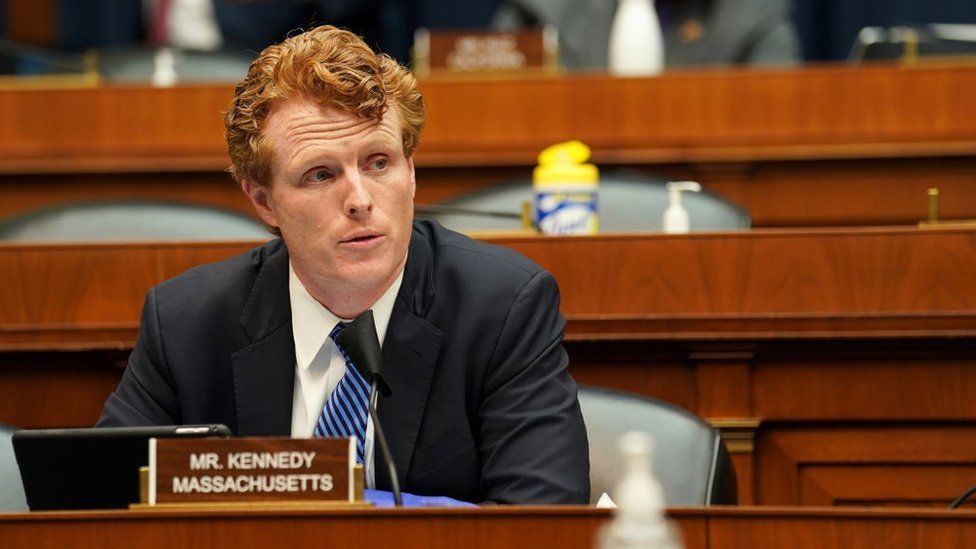
Joe Kennedy III has been confirmed as the new United States special envoy to Northern Ireland.
Mr Kennedy will focus on economic development and closer ties and not political issues such as Brexit or the Northern Ireland Protocol.
The US State Department said he would concentrate on “advancing economic development and investment opportunities in Northern Ireland”.
Mr Kennedy tweeted that the appointment was “an incredible honour”.
“Look forward to working with the Biden administration to reaffirm US commitment to Northern Ireland and to promote economic prosperity and opportunity for all its people,” he added.
Northern Ireland Secretary of State Chris Heaton-Harris said he looked forward to welcoming Mr Kennedy to Belfast in the near future.
Mr Kennedy, 42, is part of one of the most famous families in American politics, being the grandson of assassinated presidential candidate Robert Kennedy and great nephew of US President John F Kennedy.
The special envoy role has been vacant since Mick Mulvaney quit in January 2021 having served less than a year during the Trump administration.
The news comes before new rules are introduced in January which require special envoy appointments to be approved by the US Senate.
Welcoming the appointment, Sinn Féin deputy leader Michelle O’Neill said: “This appointment puts renewed emphasis on the economic development of the north, and the benefits we can yield through dual access to both the EU single market and British market which uniquely positions our economy.
“Joe Kennedy has a strong record in promoting the interests of the north and I look forward to working with him in the time ahead.”
Democratic Unionist Party (DUP) leader Sir Jeffrey Donaldson said the new US special envoy to Northern Ireland needed to take the views and concerns of unionists on board.
“While his role is economic matters, one can’t avoid the [Northern Ireland] protocol and the harm it is doing to our economy,” he said.
“It will be important for the United States to gain a better understanding of the real concerns that unionists have about the protocol.”
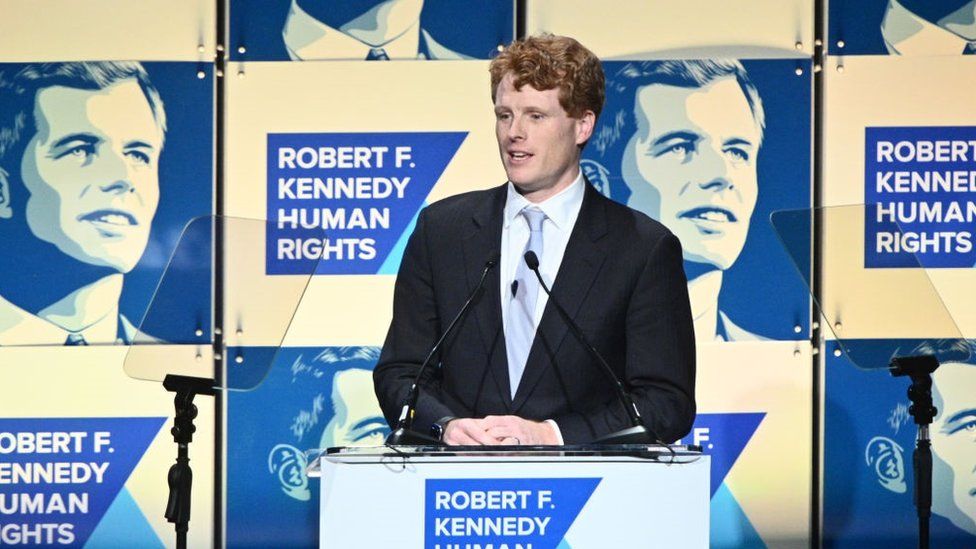
Before attending Harvard Law School, Mr Kennedy served in the Peace Corps in the Dominican Republic for two years.
He then became a district attorney before setting his eyes on the US House of Representatives.
Mr Kennedy served as the US representative for Massachusetts’s 4th congressional district from 2013 to 2021.

Alliance Party leader Naomi Long said: “Northern Ireland has always benefited significantly from the engagement of successive US administrations, from involvement in the peace process to development of the economy and support of endeavours such as integrated education.
“I hope Mr Kennedy is able to continue that good work in this role and give Northern Ireland a high profile on the international agenda.”
Ulster Unionist Party leader Doug Beattie said: “Unionism has suffered from not engaging fully with the USA and this has been something my party has been keen to rebalance in recent years.
“I will be making the positive case for Northern Ireland to Mr Kennedy when I speak to him, and I wish him well in his new role.”
SDLP leader and Foyle MP Colum Eastwood described it as “a serious appointment from a US president who is serious about his enduring commitment to people here”.
Mr Eastwood tweeted that he was looking forward to working with Mr Kennedy to “deliver more opportunities for communities which have yet to experience the sizeable dividend of peace and prosperity”.

Some US special envoys to Northern Ireland last longer in the memory than others.
After all, it was one of them, George Mitchell, who helped lay the path for the Good Friday Agreement.
Despite the agreement’s 25th anniversary looming in April, and with power-sharing government still suspended, Joe Kennedy’s remit will be nothing like some of his predecessors.
His priority, we’re told, will be long-term economic plans for Northern Ireland. In other words, spreading the word to US investors about Northern Ireland businesses, say those close to the matter.
The US has taken a great interest in the Northern Ireland Protocol dispute in recent months but the Biden administration is not using this particular appointment to pile on political pressure.
That said when Mr Kennedy makes his first trip to Northern Ireland, expected some time early in the new year, no doubt he will have plenty to say about the politics of a place he represents on a transatlantic platform.

Mr Kennedy’s appointment comes during a fractious political era in Northern Ireland.
There has been no power-sharing government since February, when the DUP walked out of the first minister post in protest over the Northern Ireland Protocol.
Unionists argue the post-Brexit trading arrangement undermines Northern Ireland’s position in the UK as it keeps the nation aligned with some EU trade rules to ensure goods can move freely across the Irish land border.
Since May’s Northern Ireland Assembly election, when Sinn Féin won the largest number of seats for the first time, there have been five attempts to restore the executive.
But these have all failed as the DUP has refused to vote for a new speaker, a position that must receive support from unionists and nationalists before any other business can be heard.
The DUP argues it has a mandate from voters not to return to the executive until the protocol is “significantly changed”.
Meanwhile, the UK and the EU continue to hold talks over the protocol and, while a resolution does not appear imminent, both sides agree a window of opportunity exists for a deal.
While it is understood that Mr Kennedy’s role will not focus on political issues, leaders in the US have previously made their stance on the protocol clear.
The former House of Representatives Speaker Nancy Pelosi last year warned there would be “absolutely no chance” of a US-UK trade agreement if Brexit undermines the Good Friday Agreement.
In September, President Joe Biden repeated that call, saying that dismantling the protocol would “not create a conducive environment” for trade talks.