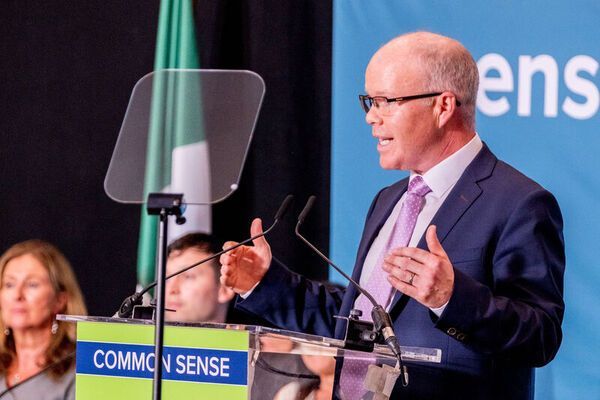
Aontú Leader and Meath West TD Peadar Tóibín is the U.S. this week visiting Washington, D.C. and New York where he will attend the inaugural gathering of a new group, Friends of Aontú.
Aontú, according to a release from the party, “is the fastest-growing political party in Ireland, having had the largest growth in votes in the last general election, is spiking in the polls and has had a huge influx of new members from across the 32 counties. Aontú is a party of common sense, Irish Unity and Economic justice.”
Deputy Tóibín is visiting Washington, D.C. on Thursday and Friday to hold a number of events and meet with members of the Irish-American community before travelling to New York to hold the first meeting of the Friends of Aontú in on Saturday the 24th.
Added the release: This event will focus on bringing together supporters, outlining the work Aontú has been undertaking across the 32 counties of Ireland in the recent past, and outlining our strategy going forward to safeguard life, promote and secure Irish unity and ingrain economic justice for families and workers across the country.
“Deputy Tóibín’s visit to Washington D.C. will include attendance at the March for Life, meetings with the Ancient Order of Hibernians and meetings with Senators, Congressmen and Congresswomen.
“Deputy Tóibín will update U.S. politicians on political events in Ireland, focusing on the issues of Irish Unity, the impact of British legacy legislation, the right to life in Ireland and the economic situation in Ireland and the EU.”
The release concluded: “At this critical juncture for the future of Irish unity and America’s enduring legacy as a peacebuilder in Ireland, this initiative by Aontú seeks to build upon its own role in the Oireachtas and in communities across the island, and our diaspora.”
The Grateful Dead guitarist had the nature of a well-meaning cowboy, and a lasting capacity to access wonder and deep engagement.
By Alec Wilkinson
January 17, 2026
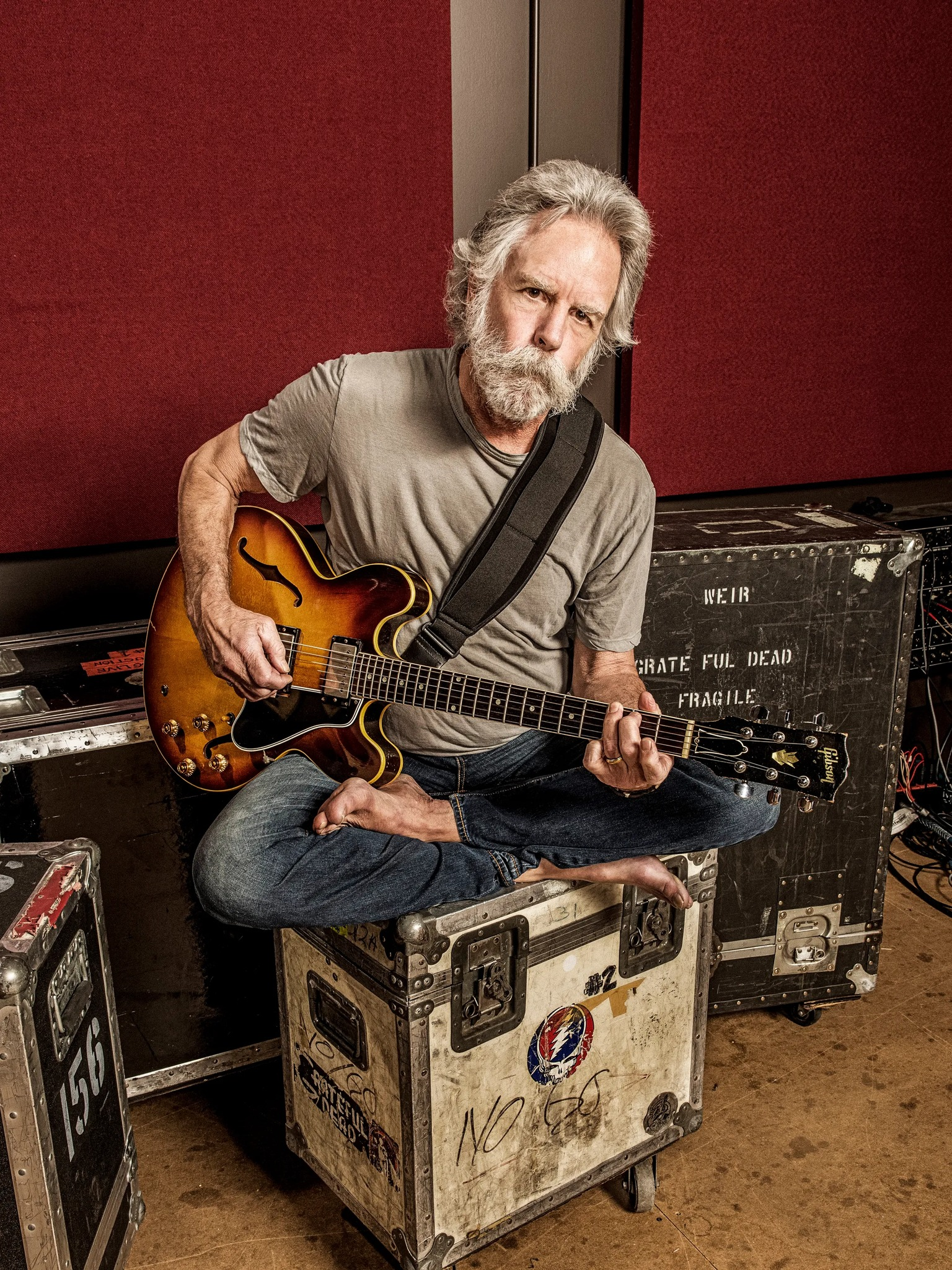
Bob Weir with a guitar sitting cross-legged
Bob Weir died on January 10th, at seventy-eight, even though I thought he was immortal. I saw him for the first time in 1969, when the Grateful Dead played at the Fillmore East, and I was an impressionable schoolboy. I remember that he moved in a lurching, twitchy way, like a marionette, as though tension that had built up in his body was being abruptly shed. The studious manner in which he addressed his guitar suggested that it had been given to him only moments before he went onstage, and he was fascinated by it. Each chord, each passing tone, each cluster of notes, each pointed remark seemed like the confirmation of an abstruse mathematical assertion happened upon by chance in the midst of chaos. Clearly he was surprised and delighted by his discoveries; sometimes he shook his head as if in awe. He was also beautiful. Later in life, he grew a white mustache and beard, which made him look like a prospector or a sea captain, but when he was young he had an androgynous allure. He had the nature of a polite and well-meaning cowboy, and a shy and understated charisma and grace. More than once, over the years, it occurred to me that he was the holy fool of the Grateful Dead.
I met Weir thirty-five years ago, when I was writing a story for Talk of the Town about a children’s book that he and his sister, Wendy, had written. The story never ran, but I wrote a long piece about him for another magazine. After it was published, Weir called to say that he liked the piece, and thanked me for writing it. In my entire life as a writer, no one else has ever done that. The principles of being a gentleman, Weir told me, had been instilled by his father, Frederick, an engineer.
After that, I saw Weir fairly often when he came to New York. Everyone wanted to party with him at night, it seemed, but his days were often free, and we would take walks in Central Park, or go to the Met, or have lunch. For a time, we worked on a project for which he raised some money and gave me a share, and I would go to California and stay with him and his wife, Natascha Muenter; their daughters, Chloe and Monet, were away at school. Weir lived in Mill Valley, but mostly we would stay at a house he had in Stinson Beach, about ten or twelve miles away. The narrow blacktop road over the hills and through the woods to the ocean is full of sharp turns, with steep drops on one side, and I felt like I hadn’t lived until I’d travelled it with Weir passing cars on blind curves.
Weir was one of the loveliest, most unaffected, open-hearted people that I’d ever encountered. So far as I can tell from other tributes I’ve read, this was a common impression among those who met or knew him. He was also incorrigibly mischievous. Early on in the Grateful Dead, his nickname was Mr. Bob Weir Trouble. I think he was given it after he pulled a cap pistol at an airline counter while playing cowboys and Indians with other members of the band. The gesture got the Grateful Dead banned from the airline. Or, he might have got the name after throwing a water balloon at a cop from the upper floor of the band’s house in San Francisco. Weir couldn’t be drafted for the Vietnam War because he had been arrested for marijuana, but he knew that his draft board had to retain any correspondence from a citizen, so he occasionally sent it anything he could fit into a mailbox, usually rocks and bricks and sticks.
Although Weir was a serious person it was easy to make him laugh. He made you feel when you were with him that he had no other place to be, that things had worked out to bring the two of you together, and that he meant to enjoy this gift from life. He could also be unreachable when a dark mood was upon him, but it always seemed a sort of neurological unreachability, a matter of his wiring, rather than an emotional one. Sometimes we would talk about my son, who is autistic, and Weir would say, “I’m autistic, too.” He might have been, mildly; it’s hard to know. His friend John Barlow, with whom Weir wrote a number of songs, once told me, “Bob marches to the beat of a different drummer, and it might not be a drummer at all.”
He had insomnia, and he struggled plenty with drinking and with sleeping pills, and did stints in rehab. Sometimes when I was with him he would be abstaining from alcohol, and other times he would drink. When he drank, he was mostly solemn and silent.
The first time I met Weir, I didn’t think he was very smart. I’d expected to meet someone who had a life of the mind and found the same pleasure in reading that I do. Weir eventually explained that he was severely dyslexic, to the point that even trees on a hillside sometimes switched places in his mind’s eye. Over time, I realized that he had an original and penetrating mind, one developed from what he heard, what he saw, what came to him in his imagination.
He loved football. I can remember the pleasure of hearing him say, about playing the sport in high school, “I was flipped out about football.” He was a scrawny kid, but he was fast and totally fearless and would do anything the coach told him to. I realized that sports had been an essential model for him as a musician. It had given him a way of finding a place in the Grateful Dead—enacting a role as a member of a crew. For the rest of us, the Grateful Dead was a band, but I think for Weir it was a team. He was a permanent teen-ager, but of a rarified kind—not so much stuck fast in a period as still capable of visiting the sanctified territory of wonder and deep engagement. He had maintained a connection to the place where big dreams come from.
There was a raised-by-wolves quality about him, a kind of loopy, feral radiance. He had been brought up by prosperous adoptive parents, but he’d found his biological father later in life. One night in Stinson Beach, seven or eight years ago, after we had gone to dinner and come back to the house, I asked about Weir’s childhood, and he answered at some length. “As a matter of record, I was born Steven Lee Sternia in San Francisco, in 1947,” he said. “Sternia—‘of the stars’—was an assumed name, an alias basically, and didn’t belong either to my mother or father, who weren’t married to each other, or married at all. They had been living in Tucson, where they were students at the University of Arizona—my mother was studying drama. My father had been in the Air Force, and he was going to school on the G.I. Bill. I heard he’d been the youngest bomber pilot in the Air Corps, having flown, I think, a Martin B-26 Marauder in the war. The B-26 was mainly for troop support, and it wasn’t all that maneuverable. It was slow and heavily armored, and it had stubby wings, and because it flew low, it took a lot of ground fire. It was known as the Widow-maker.
“The deception about my name was because my being born, my existing at all, was meant to have been kept a tidy secret from my mother’s family. She already had a daughter, born a few years earlier, somewhere between Ohio and Arizona. She believed that if her family found out about me, they would think that she was reckless and unfit as a mother and take the daughter from her, although I’m not even sure she exactly still had the daughter. Or maybe they already thought she was reckless and unfit, and she didn’t want to give them the satisfaction of being proved right. According to my birth certificate, her first name was Phyllis. When I tried to find her years later, with a private detective, he told me that she had covered her tracks. Anyway, I was adopted at birth by Eleanor Claire Cramer and Frederick Utter Weir.
“My first memory was probably a dream, but I remember being in my crib and being really painfully, painfully bored and looking across the room to a window and then a round, bald-headed figure peeping over the window into my room. I was two and a half, maybe three.
“My first major formative memory, and first in any detail— my guess is I was maybe three—I was asleep and dreaming. I think I might have been in Alaska or somewhere on the Northwest Coast, although it could even have been the California Sierras. I was in the yard of an abandoned mine of some sort. There were old, weathered ramps and chutes where conveyor belts used to run, but there was no one around. It was a beautiful, sunny day. I don’t know what I was doing there, it didn’t matter, I was just wandering around. I looked up one of those chutes, and there was an enormous dark-gray wolf at the top. He was looking at me, and his eyes had me pinned, and I could see he was about to pounce. Suddenly I was in mortal fear. I said, ‘Don’t do that,’ but he did. Everything went black, and I woke up screaming. Since that dream, I’ve always had more than just a fascination for wolves, and there have been important times in my life when some sort of spectral wolf has appeared in one form or another and made its presence known.” Then he said, “By the time I was fifteen, I was already the person I am now.”
The Society of the Friendly Sons and Daughters of St. Patrick, in conjunction with the Villanova University Center for Irish Studies, is formally launching “Irish America 250,” a national initiative recognizing 250 years of Irish contributions to the United States.
The launch is what is described as “a public 2026 kick-off event” on Wednesday, January 14
at the John and Joan Mullen Center for the Performing Arts at Villanova University.
The event, said a release, marks the beginning of a year-long series of programs aligned with America 250, the nationwide commemoration of the 250th anniversary of the United States.
“The kick-off will honor General Stephen Moylan, an Irish-born patriot, aide-de-camp to General George Washington, and the first president of the Society. Moylan is widely credited as the first person to use the phrase ‘United States of America’ in a written communication, in a January 2, 1776 letter during the Revolutionary War.”
The program will feature a historical presentation by Pádraig Higgins, PhD, and a fireside chat examining
Moylan’s legacy and the broader role of Irish immigrants and Irish Americans in the nation’s founding.
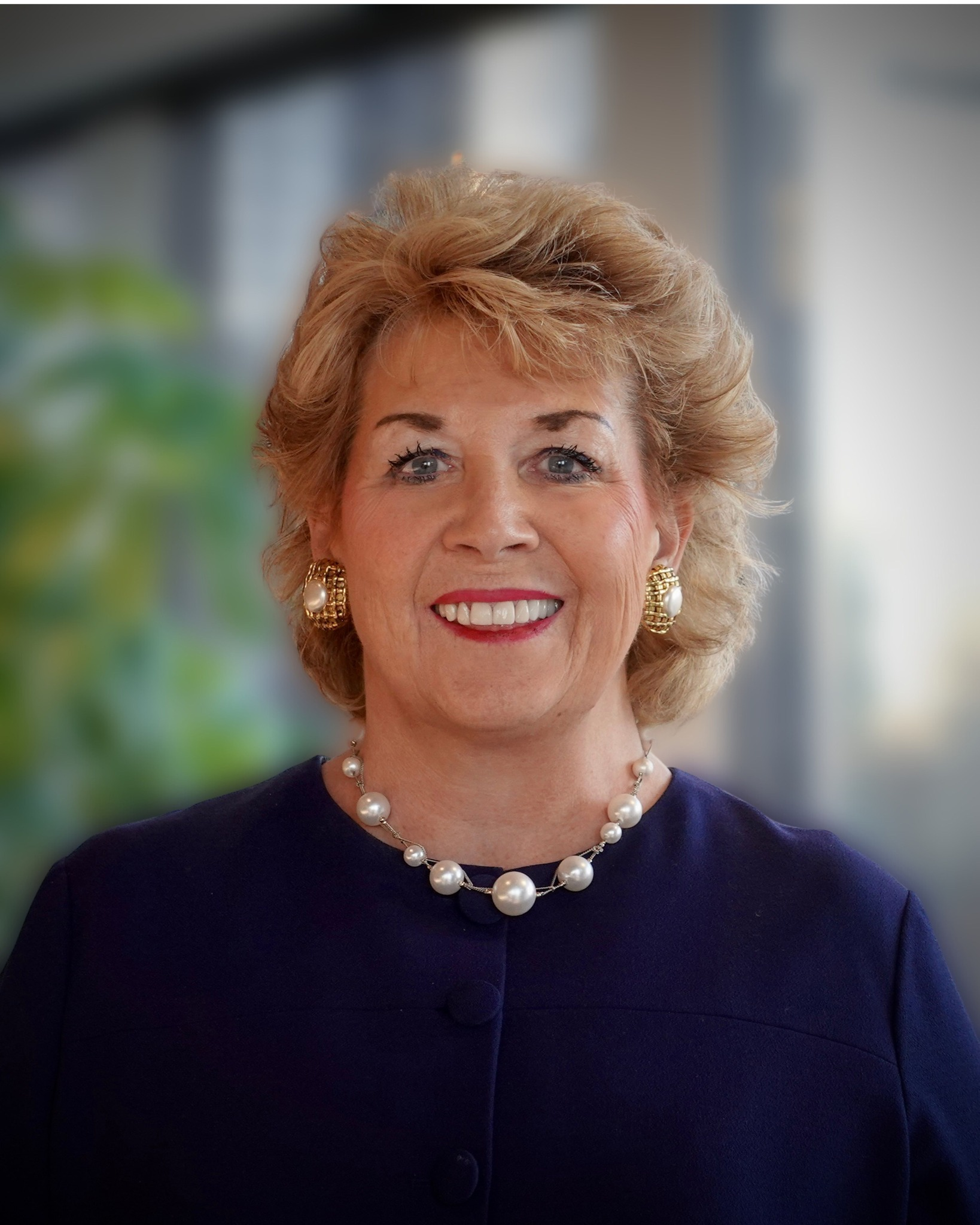
Guests at the event will include Irish Ambassador to the United States Geraldine Byrne Nason,
Rev. Peter M. Donohue, OSA, PhD, President of Villanova University, and Kieran Moylan from
Cork, Kevin Meara, and Tom Lloyd, all descendants of General Stephen Moylan.
“Irish MAGA”? – Steve Bannon working “behind the scenes on the Irish situation”.
Steve Bannon insists Ireland is “going to have an Irish MAGA,” despite recent voting trends in Ireland indicating otherwise.
Kerry O’Shea
Dec 31, 2025
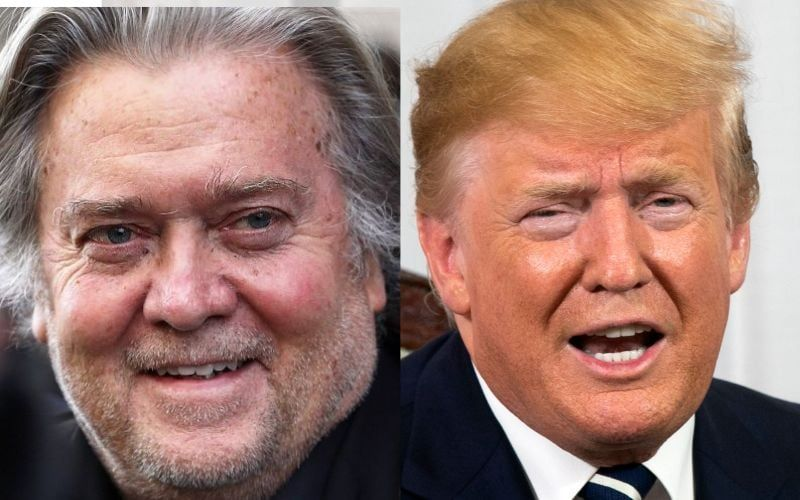
Steve Bannon, who served as the White House’s chief strategist during US President Donald Trump’s first term, says he is “working behind the scenes” to form a nationalist party in Ireland.
Bannon, 73, mentioned Ireland while discussing the recently published National Security Strategy of the United States of America in an interview with Politico.
The strategy, signed by Trump, claims in part: “The larger issues facing Europe include activities of the European Union and other transnational bodies that undermine political liberty and sovereignty, migration policies that are transforming the continent and creating strife, censorship of free speech and suppression of political opposition, cratering birthrates, and loss of national identities and self-confidence.”
It adds: “We want Europe to remain European, to regain its civilizational self-confidence, and to abandon its failed focus on regulatory suffocation.”
It later states: “America is, understandably, sentimentally attached to the European continent— and, of course, to Britain and Ireland. The character of these countries is also strategically important because we count upon creative, capable, confident, democratic allies to establish conditions of stability and security. We want to work with aligned countries that want to restore their former greatness.”
According to Politico, the strategy “prompted gasps of horror from European capitals,” though Bannon is “clearly gleeful” and is “clearly relishing upcoming opportunities to amplify the radical populist message across Europe.”
Bannon told Politico: “I think MAGA will be much more aggressive in Europe because President Trump has given a green light with the national security memo, which is very powerful.”
According to Politico, Ireland is first up in Bannon’s “schemes to smash the [European] bloc’s liberal hegemony and augment the Trump administration’s efforts.”
Bannon, who is of Irish and German descent, told Politico: “I’m spending a ton of time behind the scenes on the Irish situation to help form an Irish national party.”
He claimed: “They’re going to have an Irish MAGA, and we’re going to have an Irish Trump. That’s all going to come together, no doubt. That country is right on the edge thanks to mass migration.”
In 2020, Bannon and three others were indicted by the US Attorney’s Office for the Southern District of New York in connection with an alleged conspiracy to defraud donors to a crowdfunding campaign called “We Build the Wall.” However, on January 20, 2021 – the final day of Trump’s first term in office – Bannon received a presidential pardon on the federal matter; his co-defendants received no pardon.
In September 2022, Bannon was charged in a New York State Supreme Court indictment with two counts of Money Laundering in the Second Degree, two counts of Conspiracy in the Fourth Degree, one count of Scheme to Defraud in the First Degree, and one count of Conspiracy in the Fifth Degree.
In October 2022, Bannon was sentenced to four months in prison after being convicted on two counts of contempt of Congress stemming from his failure to comply with a subpoena issued by the House Select Committee investigating the January 6, 2021, breach of the US Capitol.
Earlier this year, as part of a plea deal for the September 2022 charges in New York, Bannon pleaded guilty to one count of scheme to defraud. He received a three-year conditional discharge and is barred from fundraising for or serving as “an officer, director, or in any other fiduciary position” for any charitable organization with assets in New York state.
In October, Bannon told The Economist that “there is a plan, and President Trump will be the President in ’28,” despite the US Constitution’s 22nd Amendment dictating that “No person shall be elected to the office of the President more than twice.”
While there are MAGA supporters in Ireland, recent voting trends are not indicative of a widespread shift toward the right, raising doubts about Bannon’s claims that there will be an “Irish MAGA.”
In Ireland’s most recent general election in November 2024, Fianna Fáil emerged as the largest party, followed by Fine Gael and Sinn Féin. Both Fianna Fáil and Fine Gael are considered centre or centre-right – certainly not as far right as MAGA – while Sinn Féin is considered left to centre-left.
More recently, Ireland elected Catherine Connolly to become the country’s tenth President, succeeding Michael D Higgins. The left-wing Independent soundly defeated Fine Gael’s Heather Humphreys and Fianna Fáil’s Jim Gavin, though Gavin had announced before election day that he was abandoning his run.
Notably, Irish sports star Conor McGregor, who met with US President Donald Trump in the White House on St. Patrick’s Day this year, attempted to get on the ballot for this year’s Presidential election after being found liable for sexual assault in 2024. Despite earning the backing of Elon Musk, a major Trump 2024 donor, McGregor was ultimately not able to garner enough support to get on the ballot.
Tom Kelly: Steve Bannon should butt out of Ireland with his toxic brand of politics.
The MAGA movement wants to extend its toxicity into Europe. It wants to destroy the EU and mold Europe in its image.
Former Trump adviser Steve Bannon has said he is working on a nationalist party in Ireland.
By Tom Kelly
January 05, 2026 at 6:34am GMT
THE recent passing of two SDLP veterans, Joe Byrne and Mary Bradley, served as a timely reminder that people who took part in peaceful political activism during the worst of times in Northern Ireland did so at great personal risk and sacrifice.
But they also did so without bitterness, rancor, or animosity towards those who were politically opposed to them.
It’s a quality so often missing from the toxicity of modern-day politics.
Politics isn’t for the faint of heart. It’s very much a blood sport.
I have witnessed the best of politics and the worst. The best is inspiring and galvanizing. The worst is depressing and demoralizing.
Joe Byrne and Mary Bradley were of a generational movement which rejected violence, promoted peace, and stood courageously on the front line, armed with nothing but their resilience and resolve.
They demonstrated bravery by owning their actions. They didn’t shy away from the difficult tasks or questions. They needed neither an armalite nor balaclava.
The SDLP had no monopoly on people like Mary or Joe – other parties had them too.
Jim and Joe Hendron (Alliance and SDLP respectively); Michelle Gildernew and Mitchel McLaughlin of Sinn Féin; the UUP’s Reg Empey and Sylvia Hermon; Sean Neeson and Eileen Bell of Alliance; or Robin Newton and Willie Hay in the DUP. The list is extensive.
The recent decision of Mike Nesbitt to stand down as leader of the Ulster Unionist Party (a move anticipated two weeks ago in this column) is further proof that being nice in politics takes its toll.
Those with the hide of a rhinoceros tend to fare better in longevity.
Nesbitt took charge of a party which was impossible to manage and gave it his all.
Politics — not just the UUP — will be poorer without him.
But deep rancour has seeped into our politics, and it’s imported.
The MAGA movement wants to extend its toxicity into Europe. It wants to destroy the EU and mould Europe in its image.
Ironically, the so-called British and Irish patriots who bang on about nationalism, purism, and sovereignty actually want to dissolve British and Irish sovereignty to become subsumed as satellites of the MAGA movement and Trumpism.
They want hand power to powerful financial elites and oligarchs who will profit from taking in the gullible.
Imperialist/Soviet expansionism or fervent nationalism has cost Europe dearly.
Over centuries there have been literally hundreds of wars over disputed borders and territories.
The Great War, the Second World War, and the Cold War nearly ruined Europe.
The EEC, now the EU, was a model for cooperation and lasting peace. It worked.
The Irish peace process itself, as articulated by the late John Hume, was a European model.
Last week, the rather reprehensible and offensive Steve Bannon — one of the architects of MAGA — said he is working to create a ‘national’ party in Ireland.
The last time that happened, it manifested in the Mussolini-light Blueshirts under Eoin O’Duffy.
Those patriots who now want to introduce a form of modern-day para-fascism in Ireland are deluded.
But they are being duped by wealthier, seemingly-respectable arch-conservatives and aging, cantankerous contrarians who are out to feather their own nests or re-create some kind of mythical neo-Catholic state — which even de Valera couldn’t fully achieve.
Bannon should butt out of Irish affairs. The MAGA movement under Trump and his cabinet zealots are out to subvert the Irish economic model and impoverish the nation.
Tom Kelly: Amid all the madness, Pope Leo can keep my glass half full for 2026Opens in new window
Just because the British Brexiters were daft enough to vote to leave the EU and stunt their countries’ economic growth, doesn’t mean Irish people should ape this and, lemming-like, jump off the cliff edge.
The Irish Government has said it will use its presidency influence in the EU to rein in social media excesses by banning anonymous online accounts.
This is overdue. Those who wish to have an opinion can still have it by owning it and not cowardly trolling behind false profiles.
Free speech comes with responsibilities.
If you have an opinion on the issues raised in this article and would like to submit a Letter to the Editor to be considered for publication