Posted by Jim on April 22, 2017
By Kathryn Gaw (for the Guardian)
The general election couldn’t come at a worse time for Northern Ireland.
As Brexit looms without any clarification on the border issue, Stormont
is without a working government, and the Northern Irish people are
facing direct rule from Westminster politicians who have no presence in
the province, meaning that the future of Northern Ireland is likely to
be decided by voters in England and Wales.
This will be Northern Ireland’s fourth election in two years, not
including the EU referendum, and it comes with incredibly high stakes.
Yet residents will have no say in the result, even as they are set to be
the most affected by it.
Excluding the SNP, the UK’s three main political parties are currently
Labour, the Liberal Democrats and the Conservatives, none of which have
a functional base in Northern Ireland. Instead, the Labour vote is split
across three tiny parties: Labour Alternative, the Cross-Community
Labour Alternative and the newly created Northern Ireland Labour
Representation Committee party, which together won just 0.8% of the
total vote in the last assembly election.
The recently rebranded NI Conservatives has a stronger presence in the
province, but a bad habit of standing young party members who are based
in London and who choose not to campaign in Northern Ireland. In last
month’s election, they scraped just 0.3% of the popular vote.
The Liberal Democrats have no presence whatsoever in Northern Ireland,
although the party has aligned itself with Alliance in the past.
Alliance has won just one Westminster seat since it was founded in 1970.
In total, Northern Ireland has 18 MPs in Westminster, although four of
these seats are currently held by Sinn Fein representatives, who
maintain a policy of abstentionism. Since the Brexit vote, support for
Sinn Fein has been at an all-time high, with the party increasing its
minority in Stormont after campaigning on a pro-EU platform. Early polls
suggest that the party is likely to win at least one more (empty) seat
in the general election.
Of the remaining 14 Northern Irish MPs, there are eight from the DUP
party, three SDLP, two Ulster Unionist and one Independent. These
numbers are so small, and in such conflict with each other, that their
votes are almost never in alignment. In fact, of the 13 MPs who voted
against the general election in Wednesday’s parliament, one was the SDLP
representative Alasdair McDonnell, and another was the NI Independent
Sylvia Hermon.
In the event of direct rule, Northern Ireland is relying on a fractured
minority of politicians to stand up to a Tory government that has given
no indication of having a post-Brexit plan for the province.
In last year’s referendum, 56% of Northern Irish residents voted to
remain in the EU, and almost a year later there is still overwhelming
uncertainty on the border issue, despite tepid reassurance from prime
minister, Theresa May, that any Irish border would be “frictionless”.
However, just a few months ago, the Irish government began actively
scouting locations for border patrols between the north and the south,
with up to 250 possible locations being discussed.
Sinn Fein has seized upon the general anxiety of the province by raising
the possibility of a border poll to gauge interest in a united Ireland.
While this would have been unthinkable just a few years ago, the idea is
gaining momentum. A 50% support threshold among Stormont politicians is
all that is needed to force Northern Ireland secretary of state James
Brokenshire to call a border poll, and Sinn Fein currently holds 30% of
the seats. But before any of this could happen, there needs to be an
actual Assembly.
Just days before Theresa May’s election announcement, Brokenshire
extended the Assembly talks for another month, but with parties
deadlocked on emotive issues regarding culture and identity, a
resolution looks unlikely. Brokenshire has previously ruled out a second
Assembly election, so direct rule from Westminster is practically a
foregone conclusion.
Northern Irish residents know this, but when they step into the ballot
box on 8 June, they will have no opportunity to vote for any member of
the next government.
Amid all the political turmoil at both local and national level, all we
know for sure is that Northern Ireland does not want Brexit. Yet Brexit
is being forced upon it – by a Westminster government with no vested
interest in its future.
Posted by Jim on
Anne Cadwallader tells the story of the Hooded Men, internees subjected
to fine-tuned methods of torture, that left little physical evidence, in
various imperial theatres of war – from Malaya to Kenya – imported by
Britain to Ireland in 1971. (For Morning Star)
“I prayed for death. I believed I was going to die anyway because they
would never let us live to tell the world what they had done to us. So I
just wanted to die quickly and stop the pain.”
The speaker is not a prisoner in Abu Ghraib or Guantanamo. He is a Irish
man who was detained without trial in 1971 — one of the 14 internees
known ever since as the “Hooded Men.”
But don’t look for outraged articles in the British mainstream press
about him or others like him. Save yourself the bother.
This is despite evidence being produced in a Belfast court last month
that ministers of the crown had authorised criminal acts and presided
over the premature death of at least one detainee.
And despite the fact that we now know that at least five people were
“waterboarded” during the 1970s in Northern Ireland — decades before
Guantanamo.
Such claims would normally prompt solemn editorials in some British
newspapers — and screaming, hostile headlines in others.
But the victims were, after all, just “a few Irish people” and the
injustice and suffering seem to be not nearly as shocking and outrageous
in Britain as those inflicted more recently on Iraqis and Afghans.
The story of the Hooded Men begins when, having fine-tuned methods of
torture (without leaving too much physical evidence) in various imperial
theatres of war — from Malaya to Kenya to Brunei to Yemen — Britain
imported them to Ireland in 1971.
A lieutenant colonel was brought to Belfast to teach what have since
been called, euphemistically, the “Five Techniques” to the local
constabulary — the RUC.
But the cops weren’t stupid. Even they knew this amounted to something
that seemed uncommonly like torture and they sought — and were granted
— immunity from any future prosecution.
So when the internees were rounded up, the police had clear orders.
First, they picked out people at random, based purely on their
geographical status (one from Co Tyrone, one from Co Derry, a couple
from Belfast etc) and then they went to work.
The pool from which they selected their victims was almost entirely
Catholic (the Pat Finucane Centre has found a declassified document
baldly entitled “Arrest Policy for Protestants” which details what
amounts to a non-arrest policy).
The “Five Techniques” involved forcing men to bear their entire body
weight on their toes and fingers, or face savage beatings. Deprived of
food, drink and sleep, they were hooded and then subjected to “white
noise.”
It drove several of them nearly crazy.
Certainly the psychological consequences are felt right to the present
day. One man says he frequently wakes in cold sweats and, on one
occasion, found himself cowering inside a wardrobe.
The physical pain suffered was indescribable. Then there was the
psychological sadism.
Some of the internees were put, hooded, into helicopters and flown into
the air. Believing they were miles above the countryside, they were then
kicked out — to hit the ground seconds later.
Aside from nightmares, depression, and the other ills that flesh is heir
to after intense suffering, one family whose loved one was subjected to
the “Five Techniques” lost their father, not just psychologically but
entirely.
Sean McKenna, a school caretaker from Newry, Co Down, was arrested and
— it was decided — should be tortured on purely geographical grounds,
like the others, despite the fact he suffered from angina and should
therefore have been deemed unsuitable for “deep interrogation.”
Beaten and terrorised, McKenna’s hair turned white in a week and he was
released into immediate psychiatric care. Four years later, McKenna died
from complications arising from the original cardiac diagnosis.
However you duck and dive to avoid such a conclusion, that death looks
suspiciously like official murder.
“My father died a broken man. He was never the same. We saw him shaking,
crying, suicidal, hallucinating. Aside from the torture, they had set
dogs on him. He was forced to drink from the dogs’ dishes, he was
smashed into concrete posts,” says his daughter Mary.
Dogs were also used in Yemen and elsewhere. The present author has heard
evidence that British soldiers dug pits where they threw, first, dogs
and, second, prisoners to be horribly bitten.
Last month, Mary McKenna and her sisters joined the surviving members of
the original 14 “Hooded Men” in the Royal Courts of Justice in Belfast
for a four-day judicial review.
Their lawyers argued that there had never been an independent or
effective investigation into the episode, despite various official
commissions and reports, because so much information has been withheld
over the years.
The Irish government, for example, had taken a case to the European
Court of Human Rights arguing the “Five Techniques” amounted to torture
(the one crime that is never legally justified, no matter what the
circumstances).
Although the European Commission of Human Rights found in 1976 that the
men were tortured, the court disagreed, finding in 1978 only they had
been subjected to “inhuman and degrading treatment.”
Since then, however, the Pat Finucane Centre in Derry has discovered
papers showing that London had misled the court on the location where
the “deep interrogation” had taken place (not Holywood outside Belfast
but Ballykelly outside Derry). What other lies were told?
The Irish state broadcaster RTE also discovered that what has become
known as the “Rees memo” in which the word “torture” is used and in
which the then Labour government makes clear that “ministers” — in
particular the previous government’s minister of defence Lord Carrington
— had ordered the torture.
North of the border, the Police Service of Northern Ireland’s only
response to date has been to call into question the second document’s
authenticity — by contracting a researcher to review two official files
— thus implying RTE had manufactured evidence.
RTE has managed to demolish this challenge by cross-referencing the
document its researcher found in Galway with an official file kept in
the National Archives in Kew. There was no mystery about it, said RTE
producer Rita O’Reilly.
The Irish government, in contrast, has — uniquely — referred its
original case back to the European Court, which has yet to decide
whether to order a rehearing.
Meanwhile, back in Belfast a High Court judge has heard the evidence and
retired to consider his ruling on whether there should be an
independent, effective investigation or whether there has already been
one.
He has to decide whether the “Five Techniques” amounted to torture,
whether British government ministers ordered it, whether any deadlines
for legal action have been crossed and whether a new investigation is
justified.
Hugh Southey QC, for the “Hooded Men,” asked if it was right that a
government can withhold evidence for so long that a deadline passes for
taking action based on that evidence? There was, he said, a deliberate
attempt to disguise the level of government liability.
No attention seems to have been paid, he said, to questioning the two
witnesses still living who might be able to shed light on the “Five
Techniques” — the noble lords Carrington and Balneil; the latter said
in court to have witnessed RUC men being trained for the torture.
Karen Quinliven QC for Sean McKenna’s family said the crown case was
“preposterous.” The RUC had realised the “Five Techniques” were illegal,
she said, and since 1975, the state knew McKenna had died as a result of
the torture, yet no investigation was carried out.
Her description of McKenna’s condition remains long in the memory.
Confused, suicidal, broken, suffering from constant headaches, unable to
look after himself, he died in St John of God’s Hospital in Dublin.
His son, also Sean, who had been interned alongside his father in 1971,
later took part in the 1980 hunger strike that preceded Bobby Sands’s
fast to the death. Sean Jnr, who also never recovered, took his own life
in 2008.
Posted by Jim on
Unionists have expressed outrage at a gravestone erected for former
deputy First Minister Martin McGuinness as republicans gathered to
remember him a month after his passing.
The first line on the dedication on Mr McGuinness’s recently unveiled
Celtic cross gravestone in Derry reads ‘Oglach [Volunteer] Martin
McGuinness, Oglaigh na h-Eireann [IRA]. Below this is a line reading
“MP, MLA, Minister”, referring to his political positions at Stormont
and Westminster.
Mr McGuinness died last month from a rare systemic disease at the age of
66.
As the memorial was unveiled by Sinn Fein deputy leader Mary Lou
McDonald last weekend, she described him as “one of the greatest
republican leaders Ireland has ever seen”.
Mr McGuinness’s sons Emmett and Fiachra and daughters Fionnuala and
Grainne were present at the ceremony, which took place at the Sinn Fein
Easter commemoration in Derry City Cemetery.
Mary Lou McDonald was the main speaker at the event.
“Our great leader and friend lies here now,” she said. “Martin
McGuinness, whose heart came alive and kept faith with the Bogside.
“Martin McGuinness, a faithful son of Ireland. Martin McGuinness who
fought, who made peace and who will never be forgotten. Martin led from
the front, he took risks for freedom and risks to build the peace.
“We are stronger because of him, braver because of him, closer to
reconciliation and freedom.”
But Ulster Unionist Doug Beattie said those who believed Mr McGuinness
had “undergone a transformation” had been “duped” and that his headstone
reflected that he “hadn’t moved on from his IRA past”.
“I am not surprised. Martin McGuinness may well have become a statesman,
he may well have become a politician in the eyes of many, but the
reality was that he was, until the day he died, an IRA volunteer,” he
said.
“What they have put on his headstone trumps everything that people think
about this man. Martin McGuinness didn’t move on from his IRA
background, he remained linked to the IRA until the day he died and the
headstone clearly reflects that past.”
There were also negative comments on the gravestone by hardline
republicans who were angered by the reference to Mr McGuinness’s role as
a British minister on his grave, which lies within the heart of the
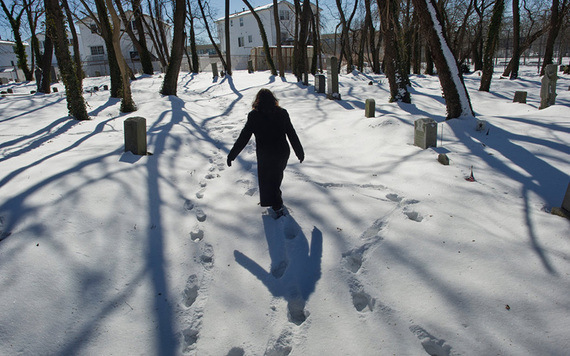
cemetery’s republican plot.
And a controversy has also continued over the manner of his funeral,
which bore none of the traditional IRA symbolism, expect for an Irish
tricolour flag which was draped over his coffin.
The absence of traditional elements such as a beret and gloves was seen
as proof by some that Mr McGuinness had moved away from IRA activity,
while others claimed they had been left out so that international
political dignitaries could attend without being embarrassed.
However, even the presence of the Irish flag on the coffin provoked a
controversy. The Catholic Church in Derry, which has long banned the
traditions of IRA funerals in its ceremonies, was forced to explain why
it allowed an apparent exception to their rule by allowing the Irish
tricolour to cover the coffin of Mr McGuinness throughout the funeral.
Bishop Donal McKeown said that Mr McGuinness was treated similarly to a
president or taoiseach, “in recognition, not of an individual, but of a
position that they held in public life,” he said.
“The diocese was thus following the practice that has been standard and
custom in Ireland for almost a century.”
East Derry DUP MP Gregory Campbell insisted that “what happened at the
funeral was just a day and a moment in time”, but that the headstone
conveyed the real truth.
“Given the lengths that people went to at the actual funeral to try and
elevate Martin McGuinness and try to allot him the status of a
statesman, I think that most people will now see what the real and
lasting tribute really is,” he added.
BACK TO BIGOTRY
Meanwhile, one of the DUP figures who was lauded for his kind words for
Mr McGuinness following his passing, has returned to form.
Ian Paisley Jr MP provoked anger when he said at the Westminster
parliament that those involved in a ‘shoot-to-kill’ ambush of an unarmed
IRA Volunteer should be given medals, rather than investigated. He was
echoing calls by fellow DUP MP Jim Shannon who described IRA hero Colum
Marks as “odious, filthy, scum”.
Sinn Fein MP Mickey Brady has branded the comments of the MPs as
“disgraceful”
“Not only do such crass and disgusting comments add to the hurt of the
Marks family, they are also an insult to all those who knew Colum and
hold him in high regard,” he said.
“No one can be above or beyond the law. This is a further indication of
the DUP’s attempts to whitewash the past and it is symptomatic of their
abject failure to deal with the legacy of the conflict.”
* The month’s mind Mass for former deputy first minister Martin
McGuinness will take place next week. The Mass will be celebrated at St
Columba’s Church, Long Tower in Derry at 7.30pm on Wednesday April 26.
Sinn Fein supporters will also gather in St Patrick’s Cathedral, New
York on Monday April 24th at 6:30pm for a commemorative mass. A eulogy
will be delivered by former US Senator George Mitchell.