Welcoming the closure of internment without trial, the paper condemns the years of arbitrary detention, psychological torment and injustice suffered by Long Kesh detainees since 1971
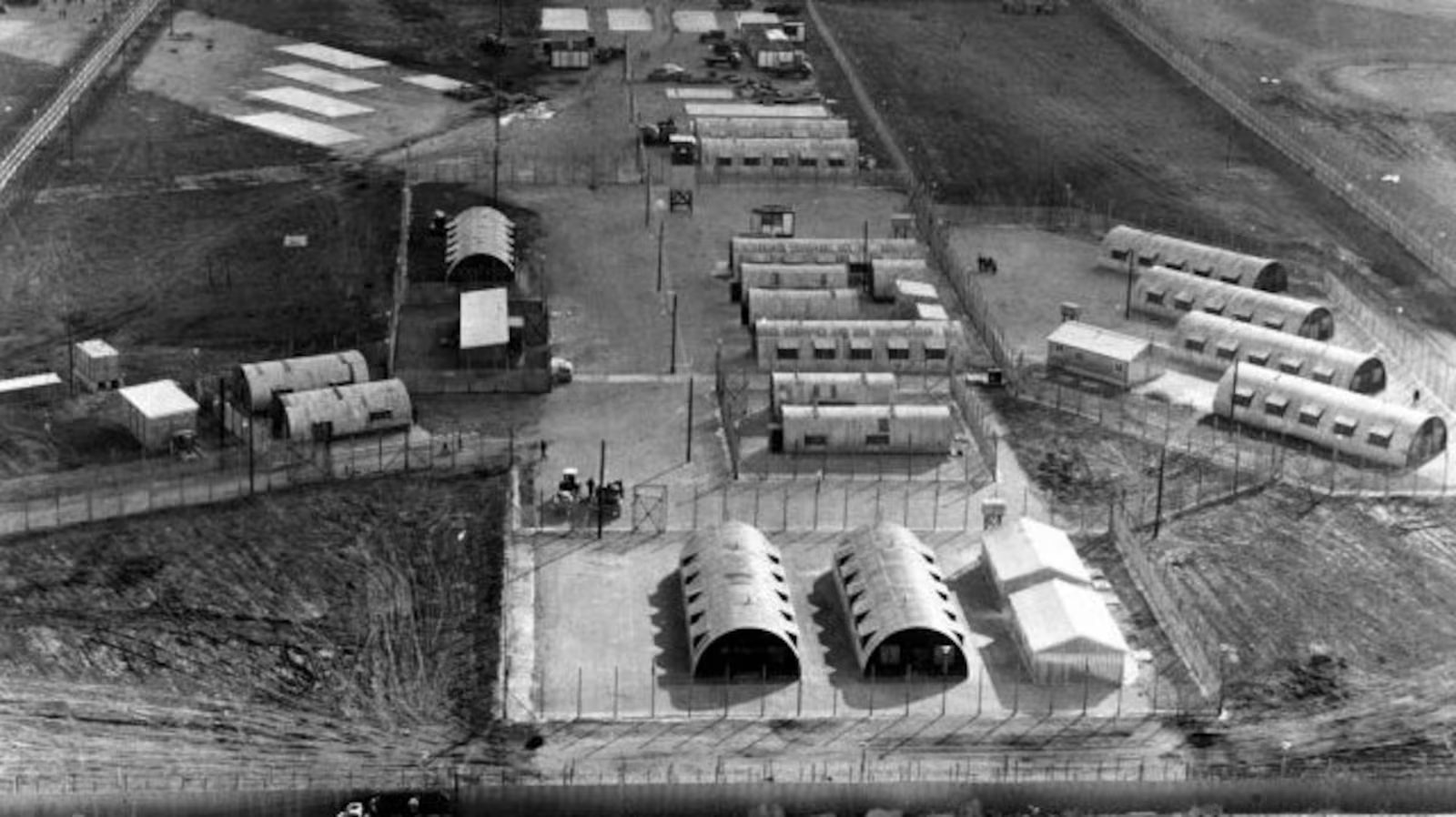
The Long Kesh internment camp
By Cormac Moore
December 06, 2025 at 6:00am GMT
December 6 1975
Doubtless heading the dictates of prudence (because Britain is believed to have been found guilty by the European Human Rights Commission of torture or internees as well as the discriminatory use of internment) if not of charity towards the internees in Long Kesh, Mr [Merlyn] Rees has finally laid to rest this evil which has provoked so much hostility and caused so much human suffering.
Yesterday’s decision will be widely welcomed. It is a long overdue move which could push us a little nearer to normality.
Internment without trial has been the great abomination in the eyes of those whose menfolk were its victims because it was exercised in so arbitrary a fashion. It has aroused disgust and protest on all sides. Anger over it has constantly provoked more than verbal protest.
It is now generally agreed that internment (or the less abrasive “detention”) has been counter-productive and that we should not move forward until it was ended.
There has always been uneasiness about the mental anguish of men arrested and detained without trial, and the demoralising effects of inactivity in a place providing few physical or mental facilities; over the herding together in compounds and the cheek-by-jowl existence of men and youths of varying social and intellectual capacities.
However Mr [Brian] Faulkner may have argued for it at the time of its introduction, internment without trial remains an essentially and hopelessly immoral exercise and those interned the victims of a wanton and unjustifiable act of aggression against their liberty.
Its history since 1971 and the subsequent arrival of British ministers, has been marred by a reluctance to face up to its realities except when protest became disturbing. Only then did Mr [William] Whitelaw make an effort to disengage from the Faulkner policy by ordering the release of several hundred men who had been so unjustifiably interned.
Even a subsequent system of enquiry by commissioners did not appear to operate in the best traditions of British justice and in too many cases Long Kesh inmates had to submit to the charade of hearing “evidence” from unseen “informers” before knowing whether they would be released or continue to be interned.
Long Kesh was opened in 1971 to provide for Mr Faulkner’s self-confessed “detestable instrument” of internment. Despite efforts to improve conditions there it has remained a squalid place harbouring men without hope.
Irish News editorial, while welcoming the ending of internment, condemned the policy in the first place and the more than four years of its enforcement.
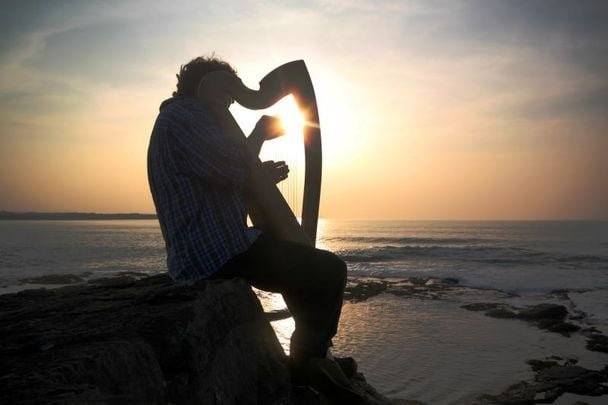
The ancient race who ruled Ireland and their magic harp.
Before humans ruled the earth, the Tuatha Dé held the power of the Uaithne, a precious weapon.
Sean Reid
@bostoncrabthe
Dec 05, 2025
Before humans ruled the earth the Tuatha Dé held the power of the Uaithne, a precious weapon.Before humans ruled the earth the Tuatha Dé held the power of the Uaithne, a precious weapon. Getty
According to our folklore, Ireland wasn’t always ruled by humans. Many different races were said to call Ireland once their home. Easily, one of the most important of these is a group known as the Tuatha Dé Danann.
While human in their appearance, many stories tell of their fantastic powers and the epic battles that raged while they were in control of Ireland. To talk about them in great detail would take up half of this website’s memory, so I thought I’d share a tale about one particularly important member of the Tuatha Dé, known as The Dagda.
The Dagda was the high priest of the Tuatha Dé. He was very powerful and fought many battles, ensuring that the Tuatha Dé emerged victorious against their enemies. He could also control the four seasons using a magic harp called Uaithne. When he wished, he would play a particular chord on this harp, and the season would change from one to the next.
It was made of oak and was a visually powerful tool, helping to make the harp such a well-known image around Ireland. He would also bring Uaithne out to battle with him, as its chords would bring guidance and strength to The Dagda’s men and ensure victory would come to them.
Of course, this power was not a secret, and the mortal enemies of The Tuatha Dé Danann, The Formor, began to make plans to steal Uaithne away from The Dagda. They would learn its secrets and bring it out to battle themselves, hoping to defeat the Tuatha Dé and rule Ireland themselves. They launched an attack against The Dagda, and during the battle, they broke into his lair and stole Uaithne away from him.
When the Fomorians got the harp back to their home, they had great difficulty getting the harp to play any music. Any time they rang their fingers against its strings, nothing was to be heard except for silence. They wasted their time trying to work out the problem, as The Dagda and Uaithne were linked, with The Dagda able to call it back to himself at any time and prevent others from playing it.
When he noticed it missing, he gathered a group of men, and they made their way to the Fomorians. The Fomor spotted them but didn’t have much time to react. The Dagda called out to Uaithne, and it sprang to life and flew through the air towards The Dagda, killing nine Fomorians. He grabbed Uaithne and played three chords. The first made all the Fomorians burst into tears and collapse in despair. The second made them erupt into laughter and toss their weapons aside. The final chord sent them all into a slumber, allowing The Dagda and his men to escape unharmed.
The harp is one of our most well-known national symbols, and it is stories such as these that ensure that its legacy stays strong in Irelan
Celtic Woman’s New York 2026 tickets available now!
A thrilling new chapter in the iconic group’s 21-year journey brings “Celtic Woman – A New Era” to the United Palace in NYC for one night only.
IrishCentral Staff
@IrishCentral
Dec 03, 2025
Grammy-nominated Celtic Woman will perform at United Palace in New York City on Friday, March 20, 2026.Grammy-nominated Celtic Woman will perform at United Palace in New York City on Friday, March 20, 2026.
Grammy-nominated Celtic Woman will perform at United Palace in New York City on Friday, March 20, 2026. Tickets are now available.
The new production, “Celtic Woman – A New Era,” features Mairéad Carlin, Muirgen O Mahony, Ciara Ní Mhurchú, and newcomer Caitríona Sherlock performing a program that blends the ensemble’s signature harmonies with fresh orchestrations and contemporary staging.
Audiences should expect Irish dancers, a full ensemble, and traditional instruments, including bagpipes, bodhran, whistles, and Uilleann pipes, brought to life through modern storytelling and energetic arrangements.
“Celtic Woman – A New Era” will traverse a repertoire from Irish classics and contemporary favorites to classical pieces and original songs that reflect the vibrancy of modern Ireland while honoring centuries of musical heritage. The show is described as a spellbinding tribute to the enduring power of Irish music and the extraordinary talents of the performers, and promises memorable vocal performances and instrumental virtuosity.
Celtic Woman
Since their debut in 2004, Celtic Woman has become the most successful all-female Irish group in history, with more than three billion global streams, 5.3 million US sales, and 12.5 million global equivalent sales. The group draws nearly one million monthly listeners on Spotify and has amassed 900 million US streams to date, making them a familiar presence for Irish American audiences across the country.
Mairéad Carlin hails from Derry and is a Grammy-nominated singer who has appeared with the New York Philharmonic and Boston Pops. She first joined Celtic Woman in 2013.
Muirgen O Mahony is a classically trained vocalist from County Cork with education from the Cork School of Music and the Royal Academy of Music in London, and experience performing at venues such as the Royal Albert Hall.
Ciara Ní Mhurchú is a Dublin-born dancer and musician who has toured with Riverdance and Lord of the Dance and is a two-time All-Ireland Fleadh gold medalist.
Caitríona Sherlock comes from County Monaghan and is a multiple All-Ireland Fleadh Cheoil champion who has performed at Carnegie Hall and Croke Park, and has toured internationally.
United Palace
United Palace opened in 1930 as one of Loew’s Wonder Theatres and is known for its outrageously ornate architecture, designed by Thomas Lamb, and its decorative work by Harold Rambusch. The venue seats nearly 3,400 people and is Manhattan’s fourth-largest theater, hosting concerts, TV and film shoots, movie premieres, and a range of cultural events while blending historic opulence with state-of-the-art production facilities.
Irish president greets Volodymyr Zelensky as he begins official visit to Dublin.
The Irish Government has announced 100 million euro in non-lethal aid for Ukraine.
Ukrainian President Volodymyr Zelensky and his wife Olena Zelenska were welcomed by Irish President Catherine Connolly at Aras an Uachtarain.
By Gráinne Ní Aodha, Rebecca Black and Bairbre Holmes, Press Association
December 02, 2025 at 12:22pm GMT
Volodymyr Zelensky was greeted by Ireland’s president in Dublin as the Irish Government announced 100 million euro in non-lethal aid for Ukraine.
The additional funding brings to 200 million euro the total non-lethal military aid given to Ukraine this year.
The funding is part of a new Ireland-Ukraine partnership to be signed by Mr Zelensky and Irish premier Micheal Martin on Tuesday afternoon, which builds on an agreement signed in Kyiv last year.
The 2030 Roadmap on Ukraine-Ireland Partnership sets out Ireland’s immediate commitments to Ukraine, including 25 million euro to support the restoration and protection of Ukrainian energy infrastructure and a scheme to support training and other efforts as part of Ukraine’s path to EU accession.
Mr Zelensky’s visit is the first official visit of a Ukrainian president to Ireland.
He began the Dublin trip with a courtesy call to Ireland’s newly inaugurated president Catherine Connolly.
Mr Zelensky and First Lady Olena Zelenska arrived at Aras An Uachtarain, the official residence of the president, where Ms Connolly warmly welcomed them at a red carpet laid at the front door.
He is to hold a bilateral meeting with Mr Martin at Government Buildings, where a guard of honour will be held for him with flags dipped in military salute.
He will also give an address to parliamentarians at Leinster House after being introduced by the Ceann Comhairle, or Irish speaker of the house, Verona Murphy.
Mr Zelensky is also due to attend the inauguration of the Ireland-Ukraine Economic Forum with Irish deputy premier Simon Harris and Foreign Affairs Minister Helen McEntee.
Ms McEntee and Ukrainian Foreign Minister Andrii Sybiha are due to hold the first meeting of the Ukraine–Ireland Strategic Dialogue, which will also be established as part of the roadmap.
The visit comes a day after the Ukrainian president met French counterpart Emmanuel Macron in Paris as part of discussions on ending the largest armed conflict in Europe since the Second World War.
Mr Martin said he looks forward to “reiterating Ireland’s unswerving commitment to standing with the people of Ukraine for as long as it takes” as part of the visit.
The Taoiseach greeted Mr Zelensky on the tarmac after his plane landed in Dublin on Monday night.
In April 2022, Mr Zelensky made a historic address to the Irish Parliament by video link, in which he said Ireland had not been neutral to the “disaster” Russia had brought to Ukraine.
Welcoming the visit, Mr. Martin said Mr Zelensky’s arrival in Dublin comes at a “critical time” for Ukraine.
He said Zelensky’s “immense bravery” and the resilience of the Ukrainian people “are examples to us all”.
Ukrainian and US officials have worked to revise the proposed US-authored peace plan, which was developed in negotiations between Washington and Moscow but criticized as being too weighted towards Russian demands.
Mr. Zelensky said in Paris on Monday that the peace plan “looks better” but the issue of Ukraine’s control over its territories is “the most complicated” topic being discussed.
Michael Scanlon writes of the Irish New York neighborhoods of old and how Irish immigrants have passed them on to immigrants of other nationalities.
Mike Scanlon
@IrishCentral
Dec. 01, 2025
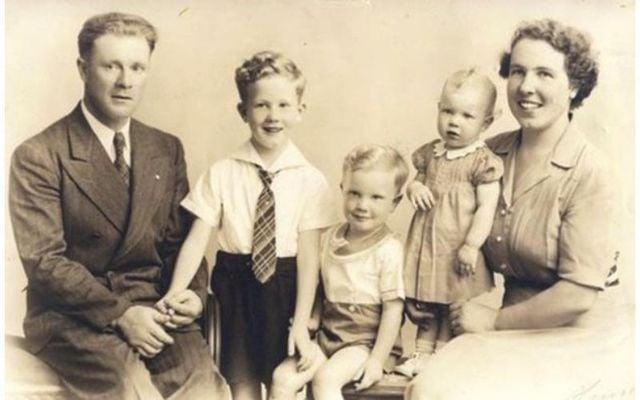
The Scanlon Family, 1943: Remembering the old times, weekends on the Irish Riviera of the Rockaways.The Scanlon Family, 1943: Remembering the old times, weekends on the Irish Riviera of the Rockaways. Michael Scanlon.
An extract from Michael Scanlon’s book on his life growing up in Irish America, “Rolling Up the Rug: An American Irish Story.”
“They were ever so happy, they were ever so sad,
To grow old in a new world, through good times and bad.
All the parties and weddings, the Ceilis and Wakes,
When New York was Irish, full of joy and heartbreaks.”
~ Terence Winch
A bright summer’s afternoon in 1948. Our Irish parents took us kids to the Feis – the Gaelic dance and music festival – at Fordham University in the Bronx. As we followed the lilting sound of Irish music to a stage filled with step dancers, a group of distinguished men passed by.
A well-built man in a tan suit walked in the middle of the group. My father called out to him with gusto, “How’re doin’ Bill?” The man, not recognizing my father, gave a little wave and a smile and continued on his way.
“Who was that, Dad?” I asked.
“That was the Mayor of New York City, Bill O’Dwyer!” my father beamed. “He’s from the west of Ireland just like me. God bless him!”
William O’Dwyer, the 100th mayor of the New York City, born in Bohola, County Mayo, had immigrated to the United States in 1910 after abandoning studies for the priesthood. He worked as a laborer, a New York City police officer, Brooklyn District Attorney, and in 1941 he joined the United States Army and achieved the rank of brigadier general. O’Dwyer was elected Mayor in 1945 and at his inauguration, he celebrated with the song, “It’s a Great Day for the Irish!”
His victory was emblematic of Irish power in New York City at that time. Nobody doubted it was Irish voters in parishes all over the city who handed O’Dwyer his rousing victory.
My family lived in one of those parishes in the Bronx. Our neighborhood, Highbridge, was named after a footbridge high over the Harlem River. Built in 1848, it is the oldest bridge in New York City and was considered a wonder of the world at the time. Modeled after ancient Roman aqueducts, it carried water from the upstate Croton reservoir to the people of the city. The men who built it were mostly Irish immigrants, many of whom settled nearby and were the first to give the neighborhood its Irish character.
I recall many a summer’s afternoons standing on that bridge and looking down the river into the hazy distance where skyscrapers rose in Manhattan. At such a sight it was easy enough to believe what our Irish parents never ceased to tell us: “We live in the greatest city in the world.”
Highbridge was set high on a bluff with streets called Summit and Woodycrest reflecting its elevated location. Our neighborhood was friendly and working class in those days, with Irish and Jewish families and a sprinkling of Italian and German Americans. Men like my father went off to work in the transit, called the “railroad,” while others worked in the construction trades, the garment district or as policemen and firemen.
Most families lived in five- or six-story apartment houses built in the 1930s teeming with children of all ages. Catholic children attended Sacred Heart School – the boys educated by the De La Salle Brothers and the girls by the Sisters of Mercy. We were a thriving school in a thriving parish. “Red and white, Fight! Fight! Fight!” was our rallying cry at basketball games and at track meets that we won more often than not.
Catholic school was free in those days because the prosperous parish supported the school. On Sundays, Sacred Heart Church fairly burst at the seams with hourly Masses beginning at 6 a.m. and not ending until the early afternoon. The hard-working men and women who filled these Sunday Masses felt pride in their parish and gave generously with their dimes, quarters and dollars which poured into the collection baskets every week.
Sacred Heart Church was a mighty fortress with its large blue, red, and green stained glass windows, the shining golden altar, and two side altars dedicated to the Blessed Mother and to St. Joseph. A huge, wooden crucifix hung from the high ceiling with Jesus, his hands nailed to the cross, a crown of thorns piercing his head.
Our flourishing parish became the envy of neighboring pastors who referred to Sacred Heart Church as “Humphrey’s Hilton” – after the grand hotel and our elderly and sometimes testy pastor, Monsignor William Humphrey, a convert to Catholicism.
In those days we identified ourselves by the parish we lived in. When meeting a new Catholic boy or girl we never asked, “Where do you live?” But rather, “What parish are you from?” St. Nicholas of Tolentine? Incarnation? Good Shepherd? Christ the King? Ascension? St. Jerome’s? Holy Name? Our Lady of Perpetual Help? This was probably no different than when our Irish parents met another Irish person for the first time and asked, “And what county in Ireland are you from?”
When I grew up in the1940s and 50s, Highbridge was a safe and predictable neighborhood where daily life held few surprises. The path awaiting a child as he entered Sacred Heart School was well-trodden by older brothers, sisters, cousins or neighbors who all blazed the trail showing us the way.
Our teachers declared that the United States of America was a Protestant country, but the only Protestants I knew was just one family of Glaswegian Presbyterians. In cosmopolitan New York we lived in our own separate Catholic world with Catholic men’s lodges such as The Holy Name Society and The Knights of Columbus.
Every summer my father got a few weeks vacation from the IRT and we took the Long Island railroad from the old Penn Station to “The Irish Riviera” –Rockaway Beach. Like many other Irish-American families from the neighborhoods of Inwood or Washington Heights in Manhattan, or Woodside and Sunnyside in Queens, or Bay Ridge in Brooklyn, the Scanlon family trekked down from the Bronx to spend a couple of weeks at Frain’s boarding house at Beach 113th street.
At that time the most rollicking and lively block in Rockaway was Beach 103rd Street called “Irish Town.” One Irish bar after another lined this sprawling street. Fiddle and accordion music – with a mixture of America’s top hits – spilled out from the bars onto the cheery and carefree streets. Men and women, freshly sunburned from the day at the beach, strolled from one bar to the other with drinks in hand. It reminded me of the Wild West saloons I saw in movies. I most vividly recall The Sligo House and The Leitrim Hotel, the two home counties of my parents which faced one another across the street.
One sweltering evening in the late 1940s Mom and Pop took me along with them as we entered a big noisy pub with a huge circular bar with a stage inside it, “Ah, look at them, Gus!” my mother smiled as she poked my father, “Up on the stage, it’s the McNulty family!” And here was Mrs.McNulty, an older woman all powdery and shining, sitting on a chair playing the accordion, while her grown daughter and son in top hats and tails sang and tap danced to the song:
Johnny get up from the fire, get up
and give the man a seat
Don’t you see it’s Mr. McGuire and
he’s courtin’ your sister Kate
You know very well he owns a farm a
wee bit out of the town
So get up out of there and be takin’ the
air and let Mr. McGuire sit down!
Irish Town provided a great and enjoyable summer refuge from the hot apartments of pre-air-conditioned New York City. And if spending nights taking in the sights and sounds of Irish town wasn’t enough, Playland was nearby on 98th street, an amusement park like Coney Island with the sweet smell of cotton candy, hot dogs with relish, the penny arcade, a shooting gallery, a roller coaster, and most especially the bumper cars.
As teenagers, we rode the ocean waves, played “dog ball” on the beach. Some afternoons we stopped by Beach 108th street playground to watch local Rockaway boys, the brothers Dick and Al McGuire – both players for the New York Knicks – play basketball. At night we went to Mamey’s ice cream parlor, which was straight out of a Norman Rockwell painting and a far cry from the tiny candy stores we had back in the Bronx.
We held parties among the boys and girls. For a boy educated in classrooms filled only with boys, it was a great treat to meet girls my age. And so it happened in the summer of 1955 that I became utterly smitten and hopelessly besotted with one Patty Cassidy – a golden blond, freckled-faced, pony-tailed Bronx Irish Catholic goddess.
At the ripe old age of 15, I wanted nothing more than to marry her. I listened endlessly to the popular song at the time, “They tried to tell us we’re too young, too young to really fall in love …”
Over twenty years would pass before we happened to meet again after that golden summer. By that time, we had each come to live in different worlds. As Patty walked away after our brief encounter that day, I reflected on how much we both had changed, and how little we had to say to one another beyond the pleasantries.
It called to mind the old saying, “The only thing constant about life is change.” That truth was brought home most dramatically when I visited my old neighborhood of Highbridge twenty years after I left, and I came away with a heavy heart. The sense of village had vanished. Apartment houses on Woodycrest Avenue that used to sing with the life of bustling Irish families had become burnt-out tombs. The library on Shakespeare Avenue was sealed over like a war-torn bunker with protective fences. And, although our church of Sacred Heart still stood like a mighty fortress in faded white splendor, it was now locked shut after the morning Mass.
Most of the sons and daughters of the Irish who settled in Highbridge before and after World War II had abandoned the neighborhood by the 1970s. We Highbridge kids recognized — even as early as first grade when reading about “Dick and Jane” with their cozy little homes with a green lawn and picket fence, a car, and a big, fluffy dog — that a better world awaited us beyond the borders of the Bronx. As we grew older, the urge to move out and move up followed. In 1962, at age 23, I left to become an officer in the United States Navy and never came back.
As the Irish departed, the new immigrants from the Dominican Republic, Puerto Rico, Africa, the West Indies, and Blacks from the South came seeking the same passage to America that our parents sought a generation before. By the late 1960s, an epidemic of drugs took root and infested neighborhoods all over the city. Highbridge was hit especially hard by the scourge of heroin and crack.
As dismaying as this was, the old neighborhood still owned a part of me I could not fully explain. An urge to somehow reclaim my early years stirred quietly within me. And so – after a 35-year absence – I did come back. I became an English teacher at Bronx Community College on the old New York University campus, blocks away from where I once had lived.
I left the community as a son of immigrants and came full circle to return as an older teacher to the new immigrants. Along the way, I discovered the hard truth of the adage: You can never really go home again. But I also learned that in spite of the passage of time, some things did remain the same.
On a visit to Sacred Heart Grammar School, I found it as clean and orderly as the day I left. It had survived as a community sanctuary – the single shining example of constancy and stability amid the blight and decay of the surrounding neighborhood. Inside, the walls were unmarked, the brightly-colored classrooms as organized as I remembered them. The smiling, alert boys and girls were dressed in neat maroon and white uniforms. Many of these young students were not Catholic, most of them Hispanic or African American, and yet I saw myself in them.
New York had changed greatly from the days of my youth when “the boy from Bohola” Bill O’Dwyer ruled City Hall. But during the ten years I taught at Bronx Community College I also came to realize that my little corner of the Bronx was just another example of the long and changing and ever-unfolding story of America itself.
Leocadia Rodriguez, a student of mine, age 28, lives on the same block where I was born and raised. She writes an essay about the day she arrived alone in America from the Dominican Republic, a 16-year-old girl, hopeful one day to become a nurse but fearful about her prospects. As I read this, I see my own mother who left her home in County Leitrim Ireland in 1927 at age 16, never to see her parents again. Mom arrived in New York with the same hope of becoming a nurse in America. During the depression, she struggled just to survive and sent whatever meager money she made back home to Ireland to help bring over her brother and sister to join her. In the years to come, she went on to live a long and triumphant life in New York City. She never did finish those courses to become a nurse.