The 17th century dawned in Ireland during the 9 years war of the northern Chieftains against the Crown. By 1602 that conflict was over; Red Hugh O’Donnell had been poisoned, the Irish had capitulated, and Queen Elizabeth was dead. Against the treachery that threatened their heirs and families, the noblest Chieftains of the north The O’Neill, the O’Donnell, and the Maguire left Ireland forever in what became known as the Flight of the Earls.
The Irish were leaderless, the Clan system had been broken, the great Gaelic Houses destroyed, and a foreign power had been established in possession of the land. The conquest of Ireland was finally complete; or so it appeared. Beneath it all, the Bards kept the heritage alive. Outlawed poets started hedge schools; Priests said Mass at stone altars in the hills and glens; the music, the language, and the learning survived – but the British were determined to stop even that limited bit of Celtic culture. After the flight of the earls, James I of England, declared that the recently departed northern Chieftains had been conspiring to rebel, and their estates were forfeit to the Crown.
Four million acres of Ulster were given to men called Undertakers – loyal Englishman who agreed to undertake the dispossession of the Irish. Soldiers, drapers, fishmongers, vintners, haberdashers and anyone seeking free land became the new owners of Ulster. A contemporary writer named Stewart, son of a Presbyterian minister, wrote that they were “for the most part the scum of both nations, who from debt or fleeing justice came hither hoping to be without fear of man’s laws.” They hunted the Irish like animals, drove them into the woods, mountains, and moors where thousands perished of starvation within sight of lands that their clans had owned from time immemorial. Before their eyes, an alien nation was planted on the fair face of Irelands proudest province.
But the Irish would not starve and die in their own fertile land. Their rage grew daily until an uprising was planned by Rory O’ Moore, Phelim O’ Neill and his brother Turlough, The Maguires of Fermanagh, the Magennis, O’ Reilly and the MacMahons. O’Moore had patiently worked for years among the leading Irish families, Irish Generals in the Continental armies, and other Irish exiles to oust the British. Then, on the night of October 21, 1641, the remnants of the northern clans burst forth sweeping the terrified Undertakers before them. Descendants of the old Clans O’Neill, Magennis, O’Hanlon, O’Hagan, MacMahon, Maguire, O’Quinn, O’Farrell, and O’Reilly burst forth from the hills and, in a few hours, made Ulster their own again. A few days later, Phelim O’Neill was proclaimed head of an Ulster army, and by early 1642, Leinster and Munster joined the fight for freedom; still later, Connaught joined. The Crown, poured men and arms into Ireland to fight the rebels. The Irish gentry formed the Confederation of Kilkenny to direct the resistance, and, believing that the new King, Catholic born Charles I, was a friend of Ireland, they confirmed their stand for ‘faith, country, and King’. The Irish Chieftains yielded for the sake of unity.
In England, a struggle between King Charles and his Puritan Parliament developed into a civil war. As his situation grew worse, King Charles began to court the Confederation. Futile negotiations frustrated the fighting spirit of the Irish, and they began to suffer defeat after defeat until, in despair, they considered coming to terms with the English. Suddenly, from the Boyne to the sea, Ulster shook with the news: Owen Roe has come!
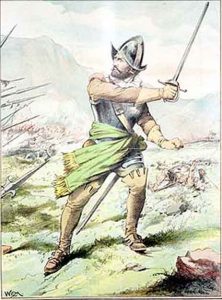
On July 6, 1642, with 100 officers in his company, Owen Roe O’Neill, landed in Donegal. A mere boy when he had left Ireland with his uncle, Hugh O’Neill, during the Flight of the Earls, he had won distinction as a military commander in the Irish Brigade of the Spanish Army. A trained soldier and military leader, he had returned to lead the fight for Ireland’s freedom. He was given command of the northern army which he rebuilt and began to challenge the English on the field of battle. In short order, he regained all that had been lost due to the procrastination of the Confederation, but jealous of his growing power, they hampered his efforts at every turn.
Then, on June 5, 1646, England sent their best field commander, General Monroe, against Owen Roe. This would silence the young upstart forever. Monroe had 6,000 men and a full compliment of field artillery. O’Neill had only 5,000 men and no artillery. The two armies met at the junction of the river Oonah and the Blackwater adjacent to the village of Benburb – a place that would live forever on the lips of the storytellers, for it was here, in one masterful battle, that Owen Roe proved his superiority and that of his army. Monroe’s men were fresh and he set them up so that he would have the advantage of the sun at his back. O’Neill kept Monroe’s nerves and the nerves of his men on edge for several hours in that hot sun while his men harassed them with hit and run skirmishing raids. Finally, when the sun had shifted to behind his back, O’Neill gave the word “Sancta Maria,” and launched a whirlwind attack. His cavalry captured Monroe’s guns, and his infantry overwhelmed the English legions driving them into the river. In one short hour, O’Neill had wiped out the pride of the British army. 32 standards were taken; Lord Ardes and 32 officers were captured; cannon, baggage, and 2-months provisions were taken; and 1,500 horses were now in Irish possession. 3,300 of Monroe’s army lay dead on the field, while Owen Roe lost but 70. Ulster had been won by Owen Roe O’Neill. The Confederation fearing his growing power, would eventually turn on O’Neill, and everything would be lost in the end. But for a brief while, all of Ireland was talking about Owen Roe O’Neill, and the Battle of Benburb on June 5, 1646.
Since the DUP endorsed Brexit it has been something of slippery slope for them, despite them telling us otherwise.
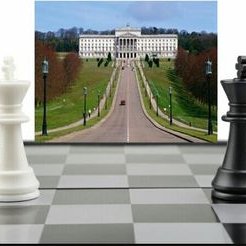
The DUP have successfully ensured that the limelight is fully on them in Britain. They done this by locking down a supply and demand deal with the Conservative Party, a deal they have said will bring untold fortune to Northern Ireland.
The British Government have committed an extra £1bn to NI, over a two-year period, and have also said that they will give the Executive a bigger say on £500m is allocated; all in exchange for he DUPs 10 MPs voting with the government on a “case by case” basis.
The deal between the DUP and Conservatives is one that opposition parties don’t support on the basis that Ms May would rather pay to stay in power than help a fledging NHS and schools:
While our schools are crumbling and our NHS is in crisis, Theresa May chooses to throw cash at 10 MPs in an attempt to keep her place in Number 10 – Tim Farron, Liberal Democrat Leader.
The former permanent secretary to the Treasury, Nick Macpherson ttweeted: “DUP will be back for more … again and again. They have previous in such matters.”
The Labour first minister of Wales, Carwyn Jones, called the agreement outrageous, describing it as a “straight bung to keep a weak prime minister and a faltering government in office”.
The SNP leader, Nicola Sturgeon, expressed anger that the money was being paid outside the Barnett formula, which is designed to distribute funds fairly between devolved nations:
In concluding this grubby, shameless deal the Tories have shown that they will stop at nothing to hold on to power – even sacrificing the very basic principles of devolution.
This £1bn is currently with the Treasury and Parliament haven’t voted on its allocation, so this raises the question for many: When will this money be timetabled for allocation and will it be released during PM Mays tenure? A question the DUP cannot answer, but they continually echo deputy leader Nigel Dodds MP, when he says that outrage at the deal was “hypocrisy of the highest order”, saying the deal would deliver for all the people of the Northern Ireland – and the United Kingdom.
The argument continues that the Conservative government has found a way of making sure the payment to the DUP isn’t ‘Barnettable’ – as described by Gina Miller.
Even before the extra cash given to Northern Ireland, the province was already benefiting from £11,000 public spending per head of population, compared to just £8,800 for England – how is this fair? A question I posed to the DUP via email, but haven’t received a reply.
The questions for the DUP don’t end with their supply and demand deal, the most prevalent at home at present is their views on abortion and the pressure the vote in the Republic of Ireland when the public voted to repeal the Eighth Amendment of the Constitution Act 1983 amended the Constitution of Ireland by inserting a subsection recognising the equal right to life of the pregnant woman and the unborn.
Abortion in Northern Ireland is being blocked by Theresa May’s deal with the DUP, Sinn Féin’s leader, Michelle O’Neill, claims, blaming the party’s confidence deal with the Conservatives for holding back women’s rights.
After meeting the Northern Ireland secretary, Karen Bradley, Ms O’Neill said she was convinced the government was unwilling to move on the issue because of the deal with the Democratic Unionists, whose MPs support May’s minority government.
Ms O’Neill’s comments come as the supreme court narrowly dismissed a legal challenge to Northern Ireland’s tough abortion laws, saying there was no jurisdiction to consider the latest case because there was no actual or potential victim of an unlawful act involved in it.
A majority of judges, however, added that Northern Ireland’s abortion law was incompatible with the right to respect for private and family life as guaranteed by the European convention on human rights.
Many argue that he DUP are increasingly at odds with society on issues such as abortion and their opposition to same sex marriage. These arguments are not coming from opponents, but editors of newspapers such as The Newsletters Editor, Ben Lowry.
Mr Lowry argues that the DUP is out of step with the electorate for two reasons:
1 – DUP vote is more varied than it ever was (debateable)
2 – Society is becoming more liberal than the DUP can keep up with
DUP have also had its elected members, Jim Wells, refer to woman who get abortions as Nazis on the BBC Nolan Show. Sammy Wilson commenting in the HoC that outrageous claim that, without abortion laws, these children would have been: “Discarded and put in a bin before they were ever born” – PR disasters, a continuing theme for the DUP when it comes to societal issues, it seems.
Theresa May has praised “the Irish people” for the success of the Repeal the Eighth campaign, yet the Prime Minister is currently in a difficult situation as she strategically needs to maintain the DUP’s support.
Any speculation that the Republic’s victory would lead to a reconsideration of values by Northern Ireland was dispelled in another speech by Arlene Foster after the constitutional amendment, in which she condemned campaigners taking to the streets in celebration. Foster declared:
The DUP is a pro-life party and we will continue to articulate our position. Abortion is an extremely sensitive issue, and not one that should have people taking to the streets in celebration.
A change from Ms Fosters view in when in the UUP when she stated that Ireland’s stance on abortion as “downright insulting” to women, calling the country’s constitution “an archaic crutch to the Roman Catholic church.” No more “Home Rule is Rome Rule”
Sinn Fein’s leaders held up a sign at Dublin Castle reading ‘The North Is Next’, while in London, female ministers put pressure on Theresa May to demonstrate her feminist credentials by backing reform.
The party now finds itself in familiar hypocritical territory: threatening to self-implode if it doesn’t get the same Brexit treatment as the rest of Britain, while simultaneously relishing its divergence on basic rights like same sex marriage and abortion.
The DUP have also another elephant in the room; working class Loyalism and their failure to work in their favour, despite promising them the moon and the stars during the last election.
It has been argued that the DUP have used jingoism to retain their position of power, but used the working class to ensure that their (slim) lead is retained, but this is now being challenged more and more on social media and within working groups.
Currently there is a vein of Loyalism who want to move break the stereotype that exists when working class loyalism is referred to. At present he Mitchell Peace Institute a Queens University are facilitating discussions that are allowing Republicanism and Loyalism discuss what the working a working class voice needs and how representation can be facilitated regarding social issues; at the core of some thinking is that he DUP need to earn their vote from Loyalism, not just assume that it will be given. Loyalism is asking the mature question: “What’s in it for our community?”
Then we come to Brexit. The DUP have issued all sorts of warnings over Brexit, but have failed to give any assurances on the ongoing issue.
Most recently Arlene Foster has reiterated her red-line that:
No Prime Minister could ever agree to any arrangement which would threaten the economic and constitutional integrity of the United Kingdom.
Michel Barnier responded:
it would not be feasible to extend the European Commission’s backstop plan – under which Northern Ireland would remain part of the EU customs union after Brexit – to include the whole of the United Kingdom.
Without labouring the point, DUP have only one position on Brexit; They don’t want a hard border, but are unsure on how to express their position, without alienating themselves with the British public. Again. They have jumped inboard the May Ship and have total disregard for NI and the impact a Brexit will have on its people and ultimately, the Union.
We then come to the situation of Irish reunification. The DUP leader has said she will leave the country if there is a united Ireland. In other words, she wouldn’t accept democracy via a border poll, which her predecessor Peter Robinson is in favour of (despite wanting to change he goalposts of the GFA to a “majority of one”), much to the dismay of many unionists.
The DUP have helped keep the deepening conversation of Irish reunification alive by pushing their closed agenda in Britain and in turn exposing their fault lines and what they oppose and why. One journalist on Twitter questioned why the treasury wont publish the exact money given to NI and wouldn’t this money be better divided between “the entire UK”
DUP must take heed of census figures in 2011 showing a narrowing gap between the two main religions in NI, putting the Protestant population at 48%, just 3% ahead of the Catholic one (45%).
Figures from 2016 show that among those of working age, 44% are now Catholic and 40% Protestant.
The difference is even more marked among schoolchildren, with 51% Catholic and 37% Protestant.
Only among the over-60s is there a majority of Protestants, with 57% compared to Catholics on 35%.
Ironically, three years from now we will end up on the centenary of the NI state, where we actually have a state that has a Catholic majority; Will the SoS call for a border poll in 2021 if the majority want it?
Overall, societal questions exist for the DUP to answer on Brexit, working class Loyalism, the supply and demand timetable and issues such as same sex marriage and abortion issues and a border poll; These questions aren’t going away, and as society moves on, will the DUP continue to annex itself from us or give us answers?
Brian Horner has a background in the education sector and is now retired in the Portstewart area.
A-False claims raise Legacy Consultation concerns- British Prime Minister Theresa May’s patently untrue claims that British crown forces were the only ones being investigated for legacy killings, sparked charges that she misled Parliament, and raised concerns about legacy bad faith. Statistically investigations of British killings amounted to less than a third. Unlike Republicans such as Gerry McGeough and Seamus Kearney, no British trooper has been jailed. May’s appointee Karen Bradley published a consultation paper for hundreds of legacy killings, outlining four devices: (1) Historical Investigations Unit-(HIU),taking over investigations done by the Ombudsman and Historical Enquiries Team;(2) Independent Commission on Information Retrieval (ICIR)for private requests by family members about the deaths of loved ones;(3)Oral History Archive (OHA) collecting research and new and existing oral history on the Troubles; (4)Implementation and Reconciliation Group (IRG)to review implementation. Bradley took plans Britain agreed in the 2014 Stormont House Agreement and put them up for renegotiation, then offered 150 million pounds in legacy funding, set aside years ago but never released. Bradley echoed May’s false claims and said “that is why we needed a consultation”.
Nationalists and human rights groups reacted angrily. Relatives for Justice and the Pat Finucane Centre took out a half-page ad in the GUARDIAN NEWSPAPER publicly charging that May had misled Parliament. She was even refuted by former Justice Minister
David Ford, current Victims Commissioner Judith Thompson and PSNI constabulary statistics. May’s rhetoric raised questions about whether Britain intended the new legacy mechanisms to give truth to victims or cover to crown forces. A potential national security blanket, DUP veto, or quota on investigations of British killings which ignores collusion, provide opportunities for a state forces cover-up. Meanwhile the British have refused to stop veterans groups from instructing former troopers to ignore requests for cooperation by the Ballymurphy Massacre Inquest.
B-Foster wants military covenant as Stormont absence hits 500 days- Democratic Unionist Party head Arlene Foster wants the “military covenant” in the north as another concession to get talks restarted, 500 days since the collapse of the Stormont Assembly. The military covenant would give preference to former British troopers and Ulster Defense Regiment members in housing, school placements, and medical waiting lists etc. Martin McGuinness resigned over Foster’s refusal to stand aside while her Renewable Heat Initiative, “money to burn” scandal was under investigation. Foster approved a plan which pays a profit to burn fuel, costing 500 million pounds. She blames her advisors. Talks had ended in a Valentine’s Day breakup after a compromise that would have allowed an Irish language act with Ulster Scots and an overriding Respecting Languages Bill. That compromise dropped objections to Foster, despite the continuing inquiry. Now Foster wants more concessions.
C-Corbin neutrality not enough for Unionists- Jeremy Corbin, of the British Labour Party made his first visit to the north since becoming leader of the opposition. He was slammed by unionists for saying he would be neutral in any border poll under the terms of the Good Friday agreement and that he regretted all deaths in the conflict, without one-sided condemnation of the IRA. Corbin, who had visited the north and Sinn Fein during the conflict, took pains to state that he was not advocating a border poll and that he was against all violence. He was merely saying he would abide by the agreement. However this even-handedness brought angry reaction from Unionists, led by Gregory Campbell of the DUP who wanted a special meeting with relatives of those killed by Republicans. Campbell is one of ten DUP MPs propping up Theresa May as Prime Minister.
D-RUC partied in the back of Loughgall death van-A former member of the Royal Ulster Constabulary bragged about holding parties in the bullet-ridden van where IRA Volunteers were killed by the SAS in a May 1987 ambush. The revelation was posted on a Facebook page administered by former SAS members. It appeared alongside photographs of the van and slain Volunteers. Eight IRA members and a civilian were killed in the incident now due for a legacy inquest. Some members of this feared IRA Unit were believed shot after capture. The van was hit by 125 bullets. The post boasted that RUC members held parties in the van during continuity training in 1988, while a former SAS member posted underneath “it was one of the best nights of my career”. Relatives of the dead were shocked and hurt. A sister of one of those killed, Mairead Kelly said it was “depraved” and “no one with common decency would make fun of the dead”. Brian Arthurs said his brother Declan “gave his life in a struggle for the freedom of his country.” Meanwhile, the DUP continues to condemn dignified commemorations for slain IRA members.
REMEMBERING PATRIOTS WITH PRIDE
Special congratulations to George McLaughlin, Seamus Boyle and all of those who helped dedicate headstones for Thomas Darragh and Robert Cranston, two of the six Fenians rescued in a great escape from imprisonment in Australia and brought safely back to America on the Catalpa. The ceremony took place on May 5,2018 in Philadelphia.
Congratulations also to all those in Suffolk County who were responsible for the Thomas Clarke-Kathleen Daly Clarke and who were honored by the Tyrone AOH in Thomas Clarke’s hometown of Dungannon. A full account of the ceremony is posted on the New York State web site and am arranging to deliver their plaque from Ireland.
On July 22,2018 the anniversary of Robert Emmet’s rebellion, there will be a special rededication and unveiling of a monument to the Emmet family in Beechwood Cemetery ,New Rochelle at 3pm.
The family plot includes the graves of Thomas Addis Emmet, a United Irishman leader, among other family members who were patriots of Ireland as well as the United States. There will be a reception afterwards at the Heritage on McLean Avenue. For information call-718-877-0345.
YOUR FFAI EFFORTS ARE MAKING A DIFFERENCE!
Having just returned from Ireland ,I was deeply moved by how much our AOH FFAI work has meant to victims of British rule. At a meeting with Mark Thompson in Dungannon about a dozen families turned up. Each of them mentioned how important Mark’s Emergency Tour in January, the Congressional letter, and Congressional hearing were to them. They feel they have been told lies and stonewalled by the British for decades, when they ask for the truth about the murders of their loved ones. These families think that the British will use the DUP to cancel out any pressure for justice in the north, but that American pressure can make a difference.
These families who have suffered so much, are grateful for our AOH FFAI help and are counting on us to continue. Mark is willing to return and also to enlist speakers from families of campaigns like the Ballymurphy Massacre which will be making headlines as the inquest begins this fall.
Every County who hosted an event last year had a tremendous success. I would like to host more tours and need your help for venues so I can propose something for our State President’s approval.
Looking forward to the National Convention, meeting FFAI leaders from around the Country and sharing some of the ideas that have worked for us in New York with other states!
I wonder how it feels to be a unionist these days. There was a time
when, at the mention of a united Ireland, unionists (and a considerable
swathe of ‘nationalists’) recoiled in horror or dissolved in laughter.
There were even ‘nationalist’ politicians in the south who called on
Sinn Fein and others to get real, focus on the bread-and-batter issues,
scrap irrelevant talk of a united Ireland. But what was once seen as a
binary choice – bread and butter versus a united Ireland – has quite
suddenly become one and the same thing. And this has happened,
compliments of our new friend Mr Brexit.
As I write this I’m listening to Alex Kane and Alison Morris on The
Nolan Show, discussing the latest ballistic missile to hit the DUP. This
time it comes from Paddy Ashdown, former leader of the Lib Dems and
former British army officer. He says that if he was living here, he’d be
looking seriously at what a united Ireland has to offer. What was once
the unthinkable has now become the everyday topic for discussion.
The introduction of abortion and before that gay marriage in the south
are sending reverberations well beyond southern society. We didn’t need
a piece of cardboard with the statement/threat ‘The North is next’ to
tell us that it is becoming more and more out of step
with… well, everybody. You mightn’t approve of all the game-changing
matters, but that doesn’t stop them being game-changers. The British
were just digesting the thranness of their life-support tube, the DUP,
when wham/bang, things happen which make the DUP look even more out of
touch. We know they’re out of touch with the rest of the North’s
population on Brexit — you can’t argue with a 56% – 44% vote — but now
they look out of touch on social matters as well. They’re certainly out
of touch with the young people who voted in huge numbers for gay
marriage and abortion. And you may be sure that, like it or not, young
northerners will largely take a similar view. So that’s Brexit and
social matters the DUP look very right-wing and antiquated on. Add the
changing demographic picture in the north and it’s beginning to look
more a case of when a united Ireland will come rather than if.
We may sometimes not like what History delivers, but being on the wrong
side of history can be painful. Instead of finding ways to be on its
right side, the DUP prefer to mock opponents, pat themselves on the back
for having got the role of king-maker at Westminster, and whistle ‘The
Sash’ while dusting off their bowler hats for the Twelfth. A wind of
change is rattling around the DUP ears and they are so insulated, they
hear nothing.
What is that in your hand?
— It is a branch
Of What?
— Of the Tree of Liberty
Where did it first grow?
— In America
Where does it bloom?
— In France
Where did the seed fall?
— In Ireland
When will the moon be full?
— When the four quarters meet
A doctrine of the United Irishmen from the Cloyne are of County Cork in
December 1797.
1798 Rebellion
The immediate origins of the 1798 Rebellion in Ireland can be traced to
the setting up of the Society of United Irishmen in Belfast in October
1791. Inspired by the French Revolution, and with great admiration for
the new democracy of the United States, the United Irishmen were led by
Theobald Wolfe Tone, Thomas Russell, Henry Joy McCracken and William
Drennan. They came together to secure a reform of the Irish parliament;
and they sought to achieve this goal by uniting Protestant, Catholic and
Dissenter in Ireland into a single movement.
From the beginning, Dublin Castle, the seat of British government in
Ireland, viewed the new organisation with the gravest suspicion, and
with the outbreak of war between Britain and France in February 1793,
suspicion hardened to naked hostility. The unabashed admiration of the
United Irishmen for the French seemed akin to treason. The discovery of
negotiations between certain United Irishmen, notably Theobald Wolfe
Tone, and the French government confirmed suspicions and led to the
suppression of the society in May 1794.
Driven underground, the Society re-constituted itself as a secret,
oath-bound, organisation, dedicated to the pursuit of republican
government in a separate and independent Ireland. This was to be
achieved primarily by direct French military intervention. The plan came
closest to success following the arrival of a French invasion fleet,
carrying some 14,000 soldiers, off the southern coast of Ireland in
December 1796. Adverse weather conditions, however, prevented the French
from landing, and the fleet was forced to make its way back to France.
From this date on, Dublin Castle stepped up its war against the United
Irishmen, infiltrating their ranks with spies and informers, invoking
draconian legislation against ‘subversives’, turning a blind eye to
military excesses, and to those of the resolutely loyalist Orange Order,
and building up its defence forces lest the French should return in
strength.
By the spring of 1798, it appeared that Dublin Castle had been
successful in its determined efforts to destroy the Society’s capacity
for insurrection: many of its leaders were in prison, its organisation
was in disarray, and there seemed no possibility of French assistance.
Despite these difficulties, on the night of the 23rd/24th May, as
planned, the mail coaches leaving Dublin were seized – as a signal to
those United Irishmen outside the capital that the time of the uprising
had arrived.
However, as a result of the failure of Dublin to rise, the Rebellion
when it came was distinguished everywhere by a lack of concert and by a
lack of focus. The uprisings outside the capital had been intended by
the United Irishmen as supporting acts to the main event in Dublin, but
as Dublin did not perform as planned, rebels in outlying areas now found
themselves promoted to centre-stage. The lack of co-ordination between
the rebel theatres of war became key to the survival of Dublin Castle
and British rule in Ireland.
Rebellion
The initial outbreak of the rebellion was confined to a ring of counties
surrounding Dublin. The fighting in Kildare, Carlow, Wicklow and Meath
had been largely suppressed by government forces, and the capital
secured, when news arrived of a major rebel success in County Wexford.
On 29 May 1798 a terse communique was issued from Dublin Castle
confirming the rumours that had swept the city a day earlier. For the
first time in the rebellion, a detachment of soldiers – in this case
over 100 men of the North Cork Militia – had been killed in an open
engagement at Oulart, County Wexford. Wexford was ablaze.
The eruption of Wexford was an unexpected and unwelcome development for
Dublin Castle for the county had, by and large, escaped British scrutiny
in the months and years before the rebellion. The Castle had had very
few informers in Wexford and it had clearly considered this lack of
information as pointing towards a general obedience among the people
there. As a result, the garrison in that county numbered only a few
hundred men.
Two developments pitched Wexford over the edge and into full-scale
rebellion. The first of these was the campaign of British terror
unleashed – particularly to the north of the county from mid-May 1798
onwards. Reports of half-hangings, floggings, pitch-cappings and
house-burnings conducted principally by the North Cork Militia, under
the direction of loyalist magistrates, inflamed that part of County
Wexford that bordered on Wicklow, and induced panic everywhere. On 26th
May came stunning news of the summary execution of some 34 suspected
United Irishmen at Dunlavin, in south Wicklow; and there was a further
report that at Carnew, across the border in Wexford, 35 prisoners had
been summarily executed. There were fears of genocide. In terror, the
people – United Irishmen or not – prepared to resist.
Irish breakthrough
The second precipitating factor was the rebel victory at Oulart. This
victory in an open engagement, the first such for the rebels anywhere,
electrified the county, tempting many to join in who might otherwise
have hung back. It also had the effect of re-igniting the rebellion in
those areas near Dublin which had shown every sign of petering out; and
news of the rebels’ success at Oulart sparked off renewed efforts to
raise the hitherto quiescent north-east of Ireland, principally counties
Antrim and Down.
On 29th May, under the command of Father Murphy of Boolavogue, a priest
who had been in dispute with his bishop and who had reluctantly stepped
forward as leader, the Wexford insurgents, gaining strength as they
advanced, stormed Enniscorthy. The defences of the town were swept aside
by means of a stampede of cattle, and behind the terrified animals came
the rebels. The next day the rebel army, by now possibly 15,000 strong,
turned its attention to Wexford town. Plans to defend the county capital
were given up on news of the destruction of the approaching relief
column, and the town was abandoned by its defenders. The fall of Wexford
was the highpoint of the rebellion in the south-east: thereafter, the
rebels’ campaign met with defeats at New Ross, Arklow and Newtownbarry
and these had the effect of corralling them within the county.
Demoralised, and having suffered thousands of casualties, the rebels
fell back to re-group on Vinegar Hill, outside Enniscorthy.
Ulster rising
While rebellion had been raging in the south-east, the north generally
had been quiet. On receipt of news of the fighting in Leinster, there
had been a stormy meeting of the Ulster Provincial Council of the United
Irishmen on 29th May, at which there were loud protests at the failure
to rise in support. The existing leadership was accused of having
‘completely betrayed the people both of Leinster and Ulster’ and it was
promptly deposed. New men, Henry Joy McCracken among them, were now
appointed and plans were hurriedly made for a rising.
On 7th June a large number of rebels assembled in different parts of
County Antrim. In Ballymena, the green flag was raised over the market
house, and there were attacks on Larne, Glenarm, Carrickfergus,
Toomebridge and Ballymoney. The rebels, almost entirely Presbyterian,
captured Antrim town for a few hours but were then driven out ‘with
great slaughter’ by government artillery fire. An attempted mobilisation
in County Derry had come to nothing, and by the evening of 8th June, the
Antrim rebels had also lost heart and had begun drifting home. Some
weeks later McCracken was captured and executed.
As the rising in County Antrim, and elsewhere was petering out, on 10th
June (known thereafter as ‘Pike Sunday’) the United Irishmen in the
adjacent County Down began to assemble their forces. This was under the
command of Henry Monro, a shopkeeper from Newtownards and, ironically, a
direct descendant of General Robert Monro who had commanded the Scottish
force in Ulster in the wars of the 1640s. At Ballynahinch, some 12 miles
from Belfast, the rebels were routed on 12th-13th June, suffering
several hundred casualties. Military losses were three dead and some
thirty wounded. ‘General’ Monro was captured and, a few days later,
hanged outside his front door. The rebellion in the north-east was over.
Vinegar Hill
With the rebels scattered in the north, attention shifted once again to
those still ‘out’ in Wexford, and the British Army laid plans to attack
their camp at Vinegar Hill. On 21st June, General Gerard Lake attempted
to surround Vinegar Hill with some 20,000 men, in four columns of
soldiers, in order to prevent a rebel breakout. Battle was joined. It
lasted about two hours: the rebels were mercilessly shelled, and
artillery carried the day. ‘The rebels made a tolerable good fight of
it’ wrote Lake, and then pronounced the ‘carnage … dreadful’ among
them; hundreds of men may have fallen on the field of battle, though
numbers managed to escape. Although a ‘little war’ continued in the
Wicklow mountains for some time afterwards, in effect, after Vinegar
Hill, the rebellion in the south-east was over.
In defeat, rebel discipline collapsed in some places. After the defeat
at New Ross, about 100 loyalists had been killed at a barn in
Scullabogue; and now, following the disaster at Vinegar Hill, about 70
prisoners were piked to death on the bridge at Wexford town. The British
Army repaid these atrocities with interest: the mopping-up operations
after Vinegar Hill were little other than rape, plunder and murder.
Retribution for the rebel leaders was swift and uncompromising. Bagenal
Harvey, Cornelius Grogan, Mathew Keogh, and Anthony Perry – all Wexford
commanders – were executed; their heads were cut off and stuck on spikes
outside the courthouse in Wexford town. Father John Murphy, the hero of
Oulart and Enniscorthy (or a latter-day mixture of Attila, Genghis Khan
and Tamerlane, as loyalists viewed him), was captured in Tullow, County
Carlow. He was stripped, flogged, hanged, and beheaded: his corpse was
burned in a barrel. With an eye for detail, the local Yeomanry spiked
his head on a building directly opposite the local Catholic church, and
with great glee, they forced the Catholics of Tullow to open their
windows to admit the ‘holy smoke’ from his funeral pyre.
For a brief period in late August, there appeared a prospect that the
rebellion would rise up again. On 22nd August, a French force of some
1,100 men, under the command of General Humbert, came ashore at
Kilcummin Strand, near Killala, County Mayo. Humbert scored a striking
victory at Castlebar, but then his campaign ran out of steam. It soon
became clear that the apparent signal victory at Castlebar was an empty
triumph. On 8th September at Ballinamuck, County Longford, the French
force, vastly outnumbered, laid down its arms. The French were treated
as honoured prisoners of war, but those Irish auxiliaries who had
recklessly joined them were promptly massacred. The rebellion was
finally over: between 10,000 and 25,000 Irish (including a high
proportion of non-combatants), and around 600 British soldiers had died,
and large areas of the country had been effectively laid waste.
Legacy
The 1798 rebellion, and its aftermath, evoked memories of the bloody
rebellion of 1641. The very fact that a rebellion had occurred at all
called into question the future of the Irish political structure.
Marquis Cornwallis had been charged in June 1798 not only with crushing
the rebellion, but also with seizing the opportunity the crisis offered
to put through a legislative union between Ireland and England. The
Union was represented as the perfect means to crush the Irish who had
sought to gain their freedom.
The founding of the United Irishmen, with its aims for an international
brotherhood and for the inauguration of an Irish fellowship of freedom,
continues to be valuable, some 220 years on. The memory of 1798 is a
proud inspiration, and the commemoration of the rebellion in historical
writing, popular literature, and ballads continues to fascinate and to
inspire.