Irish language TV station, TG4’s show “Iniúchadh” examines falling enrolment, shrinking GAA numbers and the growing strain on remote communities across rural Ireland.
Irish Central Staff
Mar 25, 2026
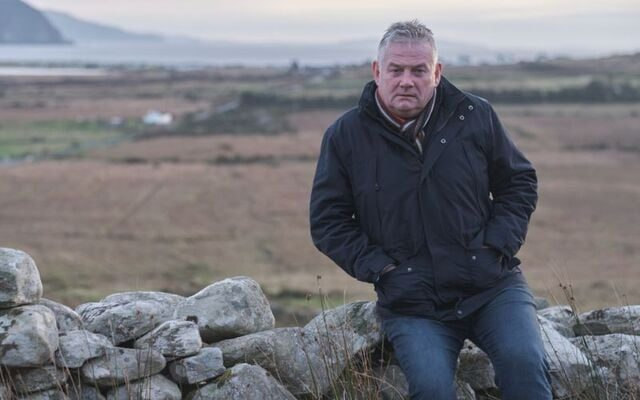
Investigative journalist Kevin Magee
A new investigation by Kevin Magee examines how rural decline is reshaping daily life, with the Irish National Teachers’ Organisation warning that more than 70 primary schools could face pressure if current trends continue. The program also hears from GAA leaders and rural development experts who say Ireland’s overall population growth is masking sharp losses in its most remote areas.
More than 70 rural primary schools are at risk of closure if the current trend of rural depopulation continues, according to Ireland’s largest teachers’ union, the Irish National Teachers’ Organization (INTO).
The prediction is made by the General Secretary of the INTO, John Boyle, in an edition of TG4’s flagship current affairs program “Iniúchadh” TG4, which examines the impact of rural decline in remote parts of Ireland.
The documentary “Bánú na Tuaithe” (“Rural Depopulation”) presented by the award-winning investigative journalist, Kevin Magee, and airing on Wednesday, March 25 at 9.30 pm, explores the pressing question: Is rural Ireland really dying?
According to the latest data from the Department of Education and Youth, the number of children enrolling in primary schools across the country fell by 6,470 in 2025.
Eleven primary schools have closed permanently since June 2025 due to falling rolls, with others now facing an uncertain future. According to the INTO, the problem is getting worse.
Speaking in Irish, Mr Boyle said: “If things continue the way they are, more than 70 schools will come under pressure. These small schools are located at the heart of the area, at the heart of the community, and if they close them, like the post office and other places, there will be no heart left in these communities. It is therefore extremely important to the Irish National Teachers’ Organization that the government properly supports small schools.”
One obvious solution is to decrease the teacher-pupil ratio in specific schools that are under threat, according to Mr. Boyle.
“They have to support small schools, and they can do that by reducing the number of children in classes. The class sizes in this country are larger than anywhere else in Europe,” he said.
In addition to its impact on schools, the documentary examines how rural depopulation is affecting cultural and sporting life in parts of Ireland, following what the GAA termed “the decimation and erosion of rural life.”
South Kerry GAA board carried out an analysis of the decline in school enrolment numbers in its area. It was calculated that there has been a 41 per cent fall in the combined primary school population at 13 national schools in the 28-year period from 1993 to 2021. The board has predicted that certain clubs “will have major difficulty fielding underage teams” in the future.
South Kerry GAA board chair Joseph McCrohan said: “If you want to measure a GAA club and you want to measure what’s going to happen to a GAA club in the next number of years, take a look at the primary school. If you’ve kids in primary school, you’ll have football teams, hurling teams. If you don’t, you’re in trouble. ”
This year, five south Kerry clubs, Reenard, Waterville, Dromid, Cahersiveen and Valentia had to join together to field an under -14 boys’ team.
GAA footballer Caoimhín Ó Fearghail from Cashel GAA in Newtowncashel in County Longford told the programme that seven players or 30 per cent of the team that won the Longford County Intermediate Championship in 2009 are now living abroad.
“Lots of the lads have gone to Australia, America and Canada. Every rural club is struggling for numbers, and the club is worried about that — that people will want out or that they will emigrate,” he said
According to the latest 2022 census figures, the population of Ireland was 5.149 million, up 8% on the previous 2016 figure.
Sustainable rural development expert Professor Mary O’Shaughnessy from Cork University’s Business School says overall population growth figures can mask the extent of population decline in some rural areas.
“The population in Ireland is at its highest since the 1850s and when we look at the population distribution, we can see that there’s been population growth in both urban and rural areas. But when we look at it more closely , what we do find is that the rural areas that appear to have grown are those that are closest to urban centers or closest to our cities.
“But there continues to be a decline in the numbers of population in rural regions that are more remote, that are more peripheral, that are particularly located along the western seaboard, and that are also in some parts of rural Midlands as well,” said Professor O’Shaughnessey.
Irish American org calls for protection of Christians after priest killed in Israeli strike.
The AOH has called upon the US Ambassador to Israel to officially condemn the killing of Father Pierre al-Rahi, a Catholic priest in southern Lebanon.
IrishCentral Staff
@IrishCentral
Mar 19, 2026
The Ancient Order of Hibernians (AOH), the oldest and largest Irish Catholic organization in the US, has written to US Ambassador to Israel Mike Huckabee, urging the US to address the killing of Father Pierre al-Rahi in Lebanon and reaffirm protections for Christian communities in the Middle East.
Neil F. Cosgrove, Political Education Chair of the Ancient Order of Hibernians, sent a formal letter to Ambassador Huckabee following the death of Father Pierre al-Rahi, the Maronite Catholic priest who was killed in Qlayaa, Lebanon, on March 9 after Israeli tank fire struck a residential building where civilians had taken shelter.
According to local officials, Father al-Rahi had rushed to assist parishioners whose home had been struck moments earlier.
Cosgrove noted in his letter that Father al-Rahi’s last words to the international community, spoken just a day before his death, serve as a testament to the tragedy of this killing: “None of us carries weapons. All of us carry peace and goodness and love.”
Cosgrove said: “Father al-Rahi died doing what priests have done for centuries—running toward danger to minister to those in need.
“When clergy and civilians of any faith are killed, the international community has a duty not only to speak, but to ensure these acts are neither ignored nor repeated.”
In his letter, Cosgrove noted that the death of Father al-Rahi follows several other incidents involving Christian communities in the region, including the December 2023 killing of Nahida and Samar Anton within the Holy Family Parish compound in Gaza, and the July 2025 Israeli tank strike on that same church that injured parish priest Father Gabriel Romanelli and killed three elderly civilians. In October 2024, the Melkite Catholic Church of St. George in Derdghaya, Lebanon, was destroyed in a missile strike that claimed multiple lives.
Cosgrove wrote: “The Christian community of the Middle East are currently being attacked on two fronts and find themselves in a precarious position from which they cannot flee.
“In southern Lebanon, faithful Christians like Father al-Rahi have refused evacuation orders because of a justified fear that if they abandon their ancestral lands, they will be seized by other parties—specifically Hezbollah militants who seek to take over Christian homes for military use.
“Similarly, in the West Bank, Christian communities like Taybeh are besieged by extremist settler groups who have already torched churches and cemeteries in a blatant attempt to purge the land of its non-Jewish residents.”
Cosgrove continued: “The Hibernians believe that the United States has a special and solemn duty to protect these vulnerable and innocent communities, who serve as essential mediators and providers of social services for all in the region.
“The current silence from our government regarding the martyrdom of a priest serves only to embolden those who believe that Christian lives and holy sites are mere ‘collateral damage.’ There have been frankly too many apologies when Christians have been killed and no sign of remediation.
“As a non-partisan organization dedicated to the defense of the Church and freedom of religion, we ask that you use your office to officially condemn the killing of Father al-Rahi and demand concrete guarantees for the safety of Christian villages and institutions.
“History will judge us not only by the wars we fight but by the ancient communities we allowed to vanish under our watch.”
A civil case in London seeking to hold Gerry Adams personally responsible for three IRA attacks in England has ended in victory for the former Sinn Féin President.
The case, in which Mr Adams was sued for ‘vindicatory’ damages of £1, had become highly politicised and had taken on the character of a failed witch-hunt. He described its conclusion as “emphatic” and said it “should never have been brought”.
The proceedings lasted two weeks. Today, lawyers for the claimants confirmed that the claim against the former Sinn Féin president had been discontinued.
Throughout the hearing, the judge repeatedly signalled that the case was likely to be dismissed due to the significant delay in bringing it, in one instance more than 50 years later. There were also attempts over the course of the trial to smear Mr Adams’s role and reinterpret aspects of the conflict’s history. The claimants relied solely on hearsay evidence in support of their argument that he had directed the IRA’s armed campaign in England.
On Thursday, Mr Adams’s legal team argued that the case amounted to an abuse of the court system. This was followed today by the announcement that the proceedings had been brought to a sudden end.
In a statement, Mr Adams said he attended the trial “out of respect” for the claimants and to defend himself “against the smears and false accusations being levelled against me”.
He said: “I asserted the legitimacy of the Republican cause and the right of the people of Ireland to freedom and self-determination. I do so again.
“During my two days of evidence, I categorically rejected all of the claims being made.
“I am glad to have been one of those who helped bring an end to the conflict.
“We now have, through the Good Friday Agreement, a peaceful and democratic route to a new Ireland.
“That needs a renewed focus, especially by the Irish government.
“An Ireland that is respectful of all of its people and that is based on equality, tolerance and respect.
“I want to thank all of those who have expressed their solidarity with me and the Sinn Féin team which worked closely with me.
“I especially want to thank Colette and our family.
“Buiochas mór to my legal team for their exemplary work.”
‘Ireland was seen as a bit like heaven on earth’ – The hidden link between St Patrick’s Purgatory and a pioneering medieval French writer.
Marie de France’s translation of the legend behind the pilgrimage site in Co Donegal is considered one of the most famous and complete versions of the tale.
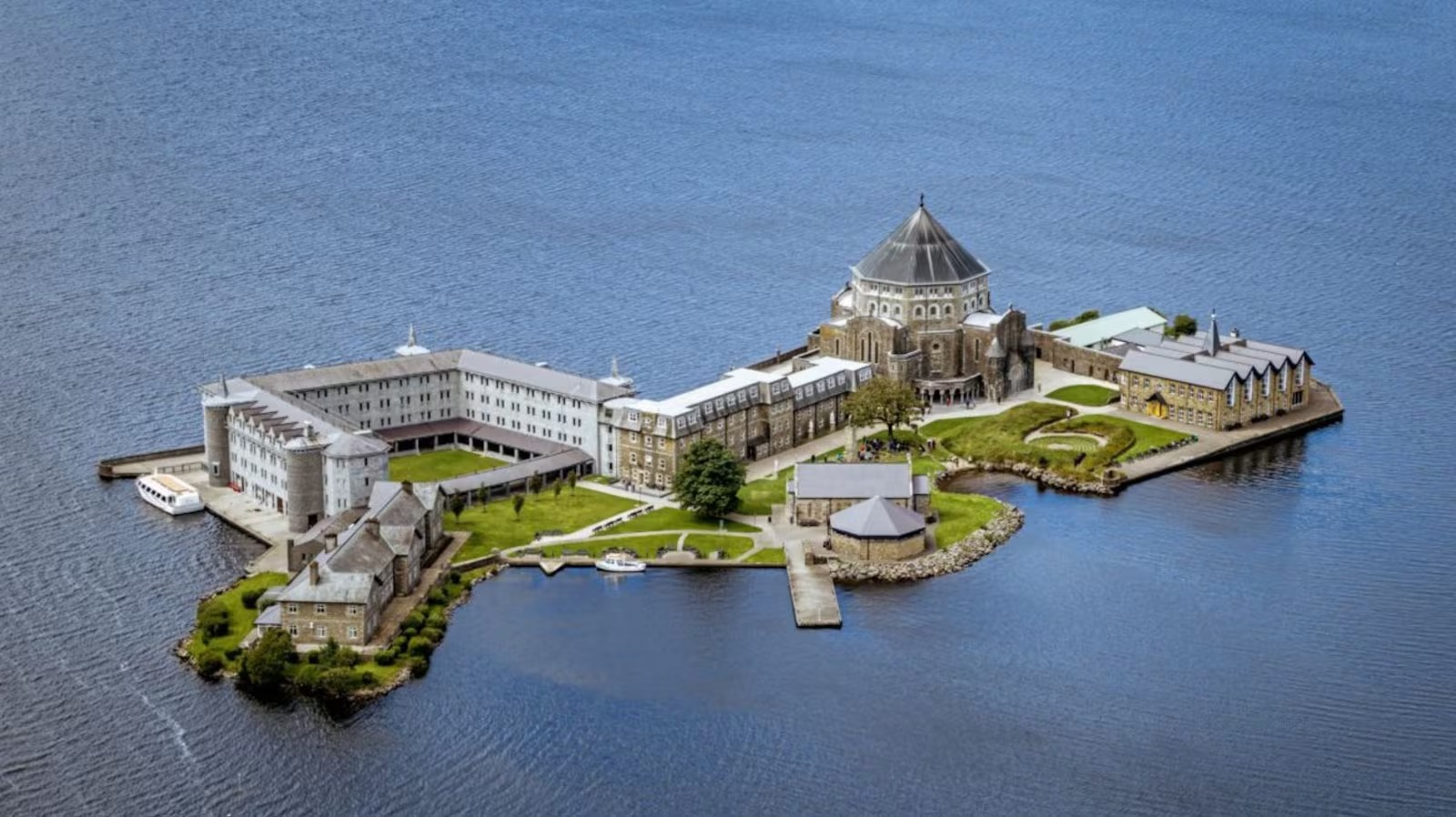
St Patrick’s Purgatory in Co Donegal has been a pilgrimage site since the fifth century, and the legend behind it was a popular tale across medieval Europe.
By Mark Robinson
March 15, 2026 at 6:00am GMT
An academic has told of the hidden link between the Purgatory of St Patrick in Co Donegal and one of France’s foremost medieval writers.
The ancient pilgrimage site on Lough Derg has long been associated with Ireland’s patron saint, where it is said that an entrance to purgatory was revealed as a means to help him evangelize the local people.
In the 12th century, the legend would feature in a Latin text written by a monk and was widely circulated across Europe.
It centers on the story of an Irish knight who travels to the site seeking penance. After entering purgatory, he is faced with a number of torments, which he overcomes, and tells other about upon his return.
Speaking to The Irish News, Myriam White-Le Goff, a medieval literature lecturer at the University of Artois in northern France, said that the legend circulating came at a time when Ireland was viewed as being more advanced than the rest of the continent.
“At the start of the Middle Ages, Ireland is a place that continental Europe strongly admired,” she said.
“It was the area of Europe that was considered the most refined, both artistically and intellectually.
“It’s true that continental Europe was far behind; we held a bit of a golden image of Ireland. It was a bit like heaven on earth.”
She added that Ireland was sometimes synonymous with “the other world” and that the idea that a door to another world existed inside a cave would not have been “completely crazy” to people in the Middle Ages.
“It’s a land which is as much geographic as it is symbolic. Saying ‘Ireland’ doesn’t necessarily mean that the people thought of Ireland the place. It can mean ‘elsewhere’; this exotic place,” she said.
As the legend of St Patrick’s Purgatory spread around Europe, she said that one of the most notable translations is believed to have been written by Marie de France – one of the Francophone world’s most prominent medieval writers.
“She was one of the first to re-write it,” she said.
“It is often said that she is the first female writer to have written in French,” she said.
“It’s possible that there are others who wrote before her and we don’t have any records of it. But in any case, that’s what a lot of literary historians would say.
“Even if we don’t know who she was or where exactly she came from, we do know that she is someone important who left her mark on history.”
Ms. White Le-Goff noted that, as in her other works, the author tells her audience that she is writing in order to preserve the story, at a time where oral tales were common and, in this instance, so that more people can read it.
However, she also makes some key changes, including the insinuation that even if the reader isn’t religious, they can get to heaven. She noted that this was important at a time when there was much “anxiety” surrounding salvation.
“She places value on the fact that the hero, Owein, is a knight, and that he can save himself and enter salvation, even though he is not religious,” she said.
“In the Latin legend, when he returns to the world of men, he asks the king, ‘What should I do? Should I continue being a knight? Or should I become a monk? Do I need to become religious in order to enter salvation?’.
“The king doesn’t respond. We don’t know his response and so every reader comes to their own conclusion.
“Marie de France makes the king respond. And the king says, ‘No, you can remain a knight because you can enter salvation as a knight’.
“That’s interesting in terms of the validation of the non-religious and it’s also important in the political and literary context of the time.”
Have a bit of a laugh with our selection of funny and ridiculous Irish jokes!
Go on! Have a laugh These silly jokes are guaranteed to make you laugh…against all your better judgement. Go on! Have a laugh These silly jokes are guaranteed to make you laugh…against all your better judgement.
We all know the magical powers behind having a laugh, so we take a look at the best Irish jokes to make you giggle, a sampling of the famous Irish wit and wisdom.
Get ready to embrace the craic and let out some belly laughs with a collection of hilarious Irish jokes! The Irish are renowned for their wit and humor, and their jokes have traveled far and wide, spreading joy and laughter wherever they go. So sit back, grab a pint of Guinness (optional), and prepare to be tickled by these side-splitting, silly Irish jokes that will leave you grinning like a leprechaun!
Enjoy!
Six Irish men were playing poker when one of them played a bad hand and died…
The rest drew straws to see who would tell his wife. One man draws the shortest straw and goes to his friend’s house to tell the wife.
The man says to her, “Your husband lost some money in the poker game and is afraid to come home.”
The wife says, “Tell him to drop dead!” The man responds, “I’ll go tell him.”
What’s the difference between God and Bono?
God doesn’t wander around Dublin thinking he’s Bono.
There are only three kinds of men who don’t understand women…
Young men, old men, and middle-aged men.
Never iron a four-leaf clover…
You don’t want to press your luck.
The Irish gave the bagpipes to the Scots as a joke…
But the Scots haven’t got the joke yet.
The Irish way…
Now don’t be talking about yourself while you’re here. We’ll surely be doing that after you leave.
There you have it, a barrel full of laughs with these silly Irish jokes that are sure to brighten your day! The Irish have an incredible ability to find humor in everyday situations, and their jokes never fail to bring a smile to people’s faces. So go ahead, share these jokes with your friends, family, and colleagues, and spread the Irish spirit of laughter far and wide.
Remember, a good joke is like a pot of gold—it’s worth sharing with everyone!