New insights into family’s long pursuit of justice
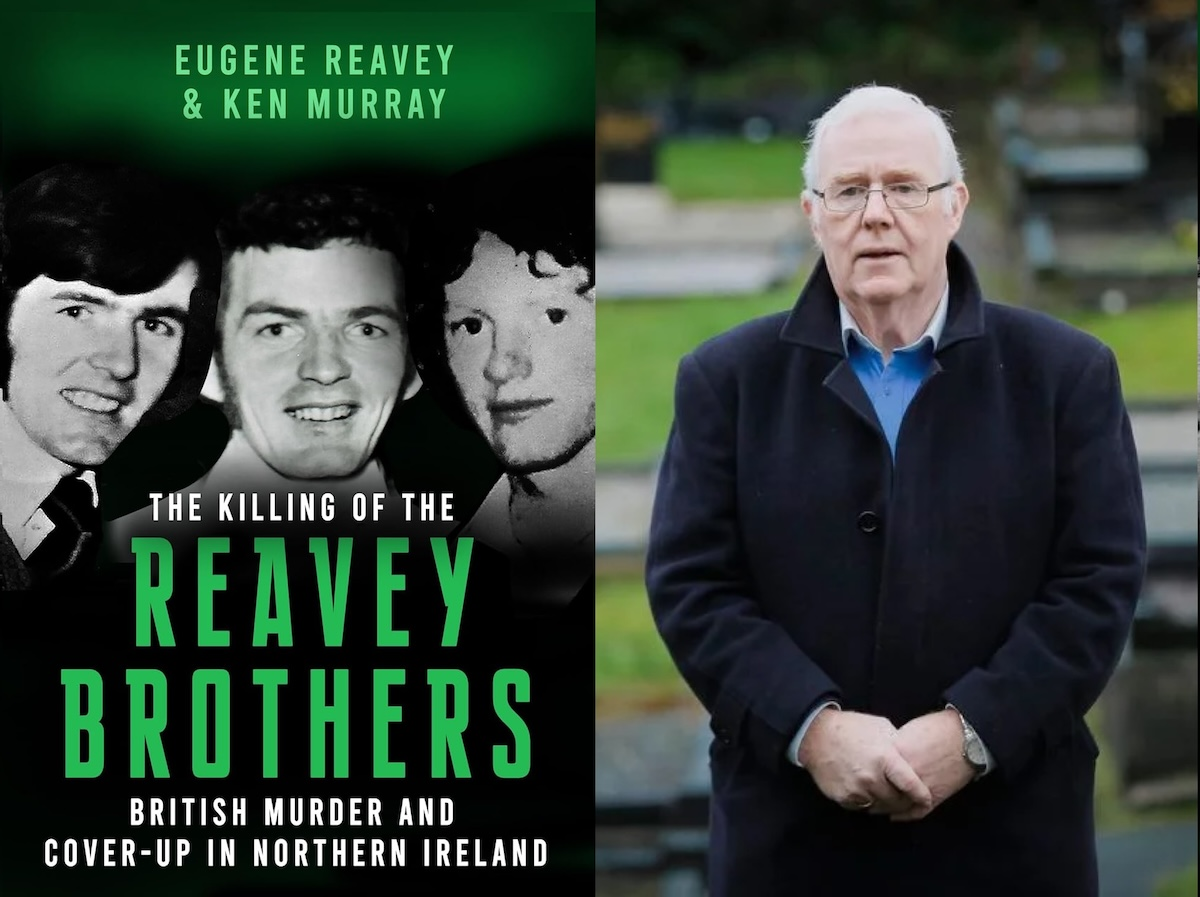
The brutal murder of three innocent Catholic brothers in south Armagh in 1976 remains one of the darkest chapters in a conflict scarred by British state collusion with loyalist paramilitaries. Nearly 50 years later, Eugene Reavey—whose three brothers were gunned down in their home—has published a powerful new book that names many of those allegedly involved in the Glenanne Gang, a sectarian death squad composed of members of the RUC, UDR, UVF, and other British-backed units.
Titled ‘The Killing of the Reavey Brothers: British Murder and Cover Up in Northern Ireland’, the book lays bare the depth of the British state’s involvement in loyalist terrorism. Drawing on decades of personal investigation and state-submitted evidence, Reavey names 35 suspects, with 23 confirmed as members of British Crown forces – specifically, the RUC, UDR, and Territorial Army – responsible for a reign of sectarian terror that claimed around 120 lives.
Among the names featured is Robin “The Jackal” Jackson, a notorious UVF commander widely believed to have been a British agent, as well as UDR member Bertie Frazer, who was killed by the IRA in 1975. In an extraordinary revelation, the book also claims that Frazer’s son, Willie Frazer, later a high-profile loyalist activist, acted as a getaway driver during the murder of the Reavey brothers, John Martin (24), Brian (22), and Anthony (17).
According to Mr Reavey, Protestant locals later told his family that Frazer had boasted about being the getaway driver.
“At the time we didn’t know whether to believe this or not as Willie was a notorious liar and fantasist,” Reavey writes. “He was also 15 at the time.” However, new evidence uncovered in documentation linked to the Hillcrest Bar bombing has since reinforced the claim, stating that “a Mr Frazer” was involved in the Reavey murders.
The Glenanne Gang’s atrocities formed a key part of Britain’s covert war against the nationalist community. Just minutes after the Reavey brothers were murdered in their home in Whitecross, the same gang struck again, slaughtering three members of the O’Dowd family in Ballydougan. The following day, the sectarian Kingsmill massacre took place, a likely retaliation for the previous night’s killings. Ian Paisley, then leader of the DUP, attempted to smear Eugene as driving one of the attackers to the scene of Kingsmill.
Eugene Reavey wrote: “The same allegation was repeated verbatim by Willie’s friend, Ian Paisley senior, in the House of Commons, which left us in no doubt about its source.”
These attempts to smear the Reavey family underline the extent to which the British establishment shielded their loyalist proxies while seeking to delegitimise nationalist victims and campaigners.
The unchecked collusion and corruption that defined loyalist operations didn’t end with the Glenanne Gang. Reavey’s book also exposes how he and his family’s construction firm were extorted by UDA godfather James Craig during the 1980s, forced to pay £1.35 million in “protection money.”
Craig – who was later shot dead by his own organisation – ensured UDA control over state-funded Housing Executive contracts and even arranged for Reavey to meet his republican counterpart to negotiate extortion terms on Belfast sites.
“Here was a prominent member of the UDA offering to introduce me to a member of the republican movement who he worked closely with,” Reavey writes. This chilling anecdote illustrates the cynical criminal enterprise that underpinned the Troubles for many within loyalism—propped up and enabled by the British intelligence services.
One of the book’s most shocking revelations relates to the murder of Protestant teenager Adam Lambert in 1987. It had long been claimed that the UDA gunned down the 19-year-old in retaliation for the IRA’s Enniskillen bombing. However, Reavey reveals that Lambert was murdered because two UDA thugs had been humiliated and ejected from a building site by a south Armagh worker. Mistaking Lambert for a Catholic because of where he was working, they shot him dead.
“Thinking he was a Catholic the two young UDA upstarts looking for a ‘Taig’ shot Adam Lambert dead having wrongly assumed he worked for Reavey Brothers,” the book says.
The killing was yet another example of how sectarian bloodlust, often facilitated by British forces, destroyed innocent lives—Catholic and Protestant alike.
John Stevens’ investigation later found the murder of Adam Lambert, along with that of defence lawyer Pat Finucane, could have been prevented, and confirmed there had been collusion in both. William Stobie, a UDA man who acted as the driver in Lambert’s murder and later an RUC Special Branch agent, was himself killed by his own organisation.
In this powerful and deeply personal book, Eugene Reavey once again makes clear what the nationalist and republican community have long known: that the British state was not a neutral player in the North’s conflict, but an active participant in the campaign of terror waged against the Catholic population. His unflinching account challenges the official narrative of the conflict and demands accountability, truth, and justice—not just for his brothers, but for all those whose lives were torn apart by the British state’s dirty war in Ireland.
* ‘The Killing of the Reavey Brothers: British Murder and Cover Up in Northern Ireland’, by Eugene Reavey with Ken Murray and published by Mercier Press, is available now.
Marian Price issues formal legal proceedings over ‘Say Nothing’ Jean McConville murder claims
Disney series depicts Price sister firing shot which killed mother-of-ten
Marian Price
By Connla Young, Crime and Security Correspondent
July 03, 2025 at 12:51pm BST
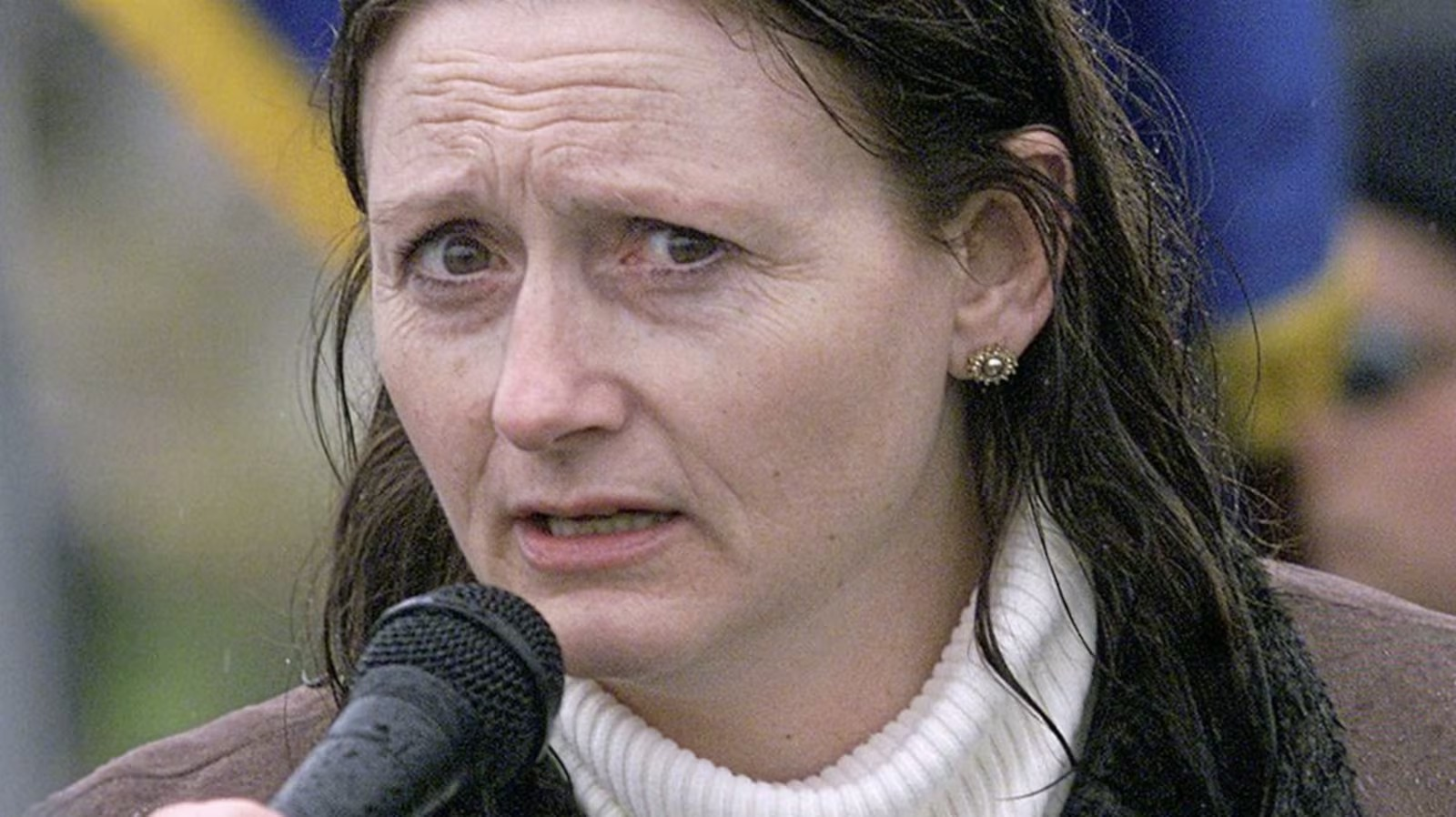
Veteran republican Marian Price has issued formal legal proceedings against Walt Disney and a production company for defamation after she was depicted killing mother-of-10 Jean McConville more than 50 years ago.
Ms Price, who is also known as Marian McGlinchey, has previously denied firing the shots that killed the widowed mother more than 50 years ago.
Ms Price was accused of the murder in a nine-part Disney+ series, Say Nothing, which focuses on the life of her sister Dolours Price.
The pair were convicted for their part in the IRA car-bomb attack on London’s Old Bailey in 1973.
Mrs McConville was abducted, shot dead and secretly buried by the IRA in 1972.
Her remains were discovered buried on a Co Louth beach in 2000.
Solicitors for Ms Price say they have launched proceedings against Walt Disney and Minim Productions.
Victoria Haddock, of Phoenix Law, said he client “should not be placed in the position of having to take formal legal action to vindicate her reputation”.
“Despite multiple opportunities to address the defamatory content of the “Say Nothing” series, Disney and Minim Productions have failed to take any step to do so.
“There is no justification for making abhorrent accusations under the guise of entertainment and we will be seeking to hold all responsible parties to account.”
Man who was face of IRA in US on escaping arrest from RUC, ‘traitor’ Denis Donaldson and why he had to ‘stand aside’
Ahead of a new RTE documentary, the Belfast Telegraph looks at the role played by Irish Americans during the Troubles
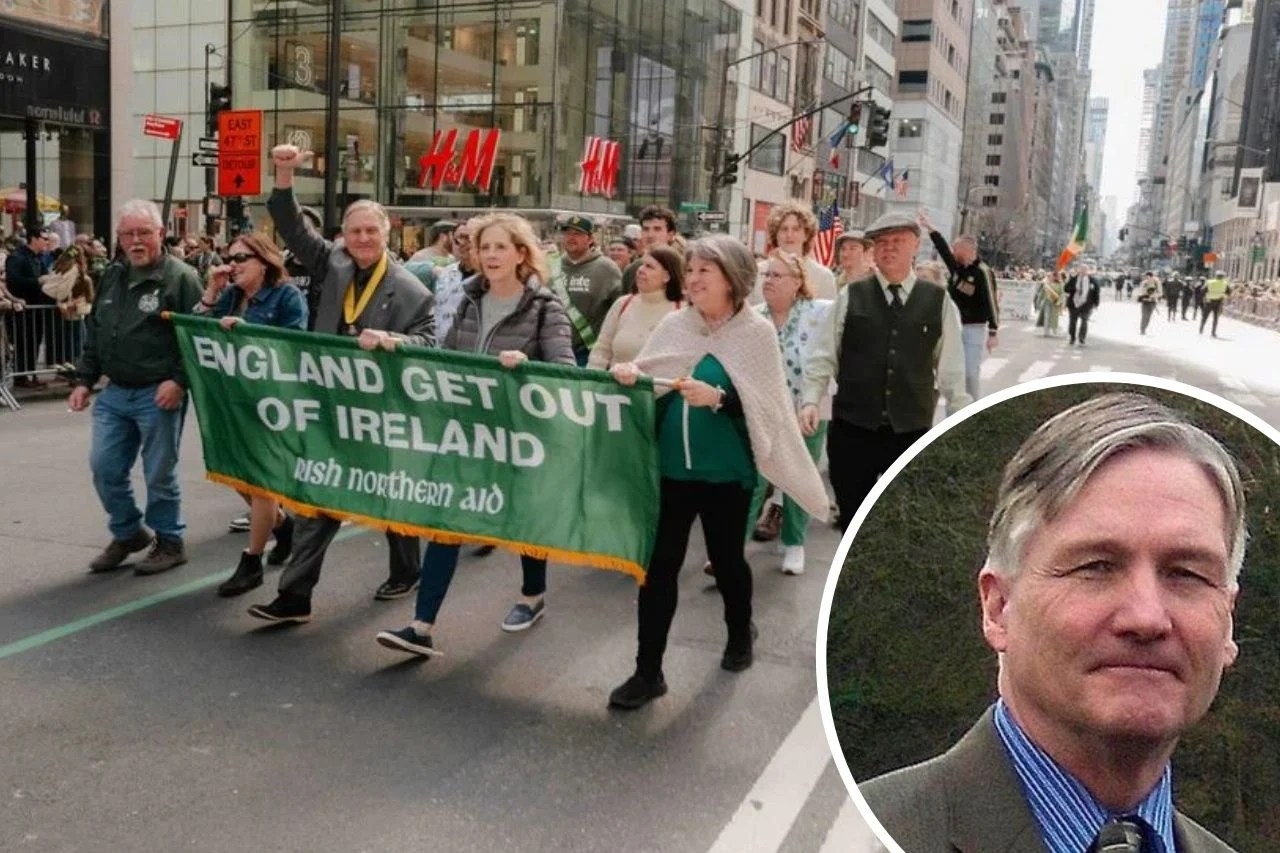
Martin Galvin, the former director of Noraid, which is believed to have provided millions in funding to Sinn Fein over the course of the Troubles
Martin Galvin (arm raised and in inset) takes part in a St Patrick’s Day parade in the US.
Suzanne Breen
Today at 01:21
For almost two decades, he was the public face of the IRA in the US. New York lawyer Martin Galvin was regarded as so dangerous by the authorities here that he was prohibited from entering the UK.
In August 1984 he defied the ban to appear at an anti-internment rally in west Belfast.
“I was brought across the Donegal-Derry border by republicans,” he says. “We walked miles through woodland. It was summer, but it was a cold, rainy night.”
Galvin never got to address the thousands gathered outside Connolly House in Andersonstown.
Gerry Adams introduced him on stage. As the lawyer took the microphone, the RUC moved forward, firing plastic bullets, in an attempt to arrest him. Twenty-two-year-old Sean Downes was killed. Galvin jumped off the platform.
As the RUC entered Connolly House, he was able to escape. “I’d a black coat on underneath the white one I was wearing. I put on a cap and glasses that were in my pockets,” he recalls.
“A young woman grabbed my hand and took me to a nearby house. It was only when in the attic there that I’d time to be afraid.”
Martin Galvin, the former director of Noraid, which is believed to have provided millions in funding to Sinn Fein over the course of the Troubles
Galvin is speaking to the Belfast Telegraph ahead of a two-part RTE documentary, Noraid: Irish America and the IRA. It tells the story of the US citizens who raised millions of dollars for the republican movement.
The lawyer, who was Noraid’s publicity director, knew he’d have to escape after addressing the rally, but nobody had anticipated the RUC would forcefully storm the crowd, he says.
He claims that just one republican present didn’t seem surprised at the turn of events. “The only person who didn’t look stunned was Denis Donaldson,” Galvin says. “He was chief steward at the rally. He was present for discussions leading up to my appearance. I’m convinced he’d told his handlers everything.”
In 2005 Donaldson admitted to being a British agent since the 1980s. A few years after the anti-internment rally the republican movement sent him to work in New York. He hated Galvin. “I’d clear evidence he was a traitor,” the lawyer says.
“I presented it and expected him to be investigated. However, I was told that his credentials were impeccable, that he was beyond reproach and had the full confidence of the Sinn Fein leadership.”
The RTE documentary interviews Noraid members in their homes and workplaces. They give their account of involvement in an organisation which was loathed by the British and Irish governments, and the White House.
In his yellow cab, taxi driver John McDonagh says: “New York City has always been the cockpit of Irish republicanism, and it was a great honour when they read the Proclamation at the GPO. It said ‘the exiled children in America’ — and you’re looking at them.
“Irish Americans have been part of the conflict from the 1800s. With the split of 1969, New York went with the Provisionals.”
Galvin says Sinn Fein knew Noraid members were “their friends in America — the people they could count on”.
Millions of dollars went to Ireland. Every American visitor could legally take over up to $10,000. The money would be brought to the Dublin office of IRA prisoners’ support group An Cumann Cabrach.
Noraid held fundraisers across the US. Limerick-born priest Fr Patrick Moloney, who worked with underprivileged youth in New York, sold raffle tickets at dinner dances.
In the documentary he jokes about wearing a big sleeved robe. If someone bought two tickets and handed him $50, he’d say “I won’t insult you by giving change.” A painting of the Last Supper by republican prisoners in Portlaoise hangs in his home.
During the 1981 hunger strike Noraid held daily protests in New York. Children banged bin lids on the streets, and effigies of Margaret Thatcher were burned.
Michael Shanley grew up at protests: “There was never a card-carrying membership. You showed up, you went to meetings, you participated.”
He sold pro-IRA bumper stickers, posters and badges. “We couldn’t sell that stuff fast enough,” he explains.
Noraid’s Irish People newspaper, which Galvin edited, had subscriptions “in every state of the Union with the exception of Hawaii”, Shanley recalls. Brigid Brannigan says activists “changed careers to be sure they’d enough time to give to the cause”.
Galvin, whose grandfather came from Co Offaly, visited Ireland as a law student. He joined Noraid in 1976.
“Queen Elizabeth visited as the US celebrated 200 years of independence. I saw the hypocrisy of that as Ireland was denied freedom,” he says.
“I was an assistant district attorney. I was doing really well. I won a lot of cases. At some point I was hoping to become a criminal court judge. Becoming involved in Irish Northern Aid put a halt to that.”
Galvin flew to Ireland regularly to discuss political and media strategies with Adams and other senior republicans.
Former Sinn Fein national publicity director Danny Morrison tells the documentary that Galvin once sent over a journalist from Playboy to interview republicans. “A lot of women in the movement weren’t pleased, but it got massive publicity,” he explains.
Galvin defends his decision. “It got the Irish republican message to people far beyond the traditional audience. Playboy had a huge reach,” he says.
“It wasn’t regarded as badly then as it is now. It did VIP interviews including ones with President Carter, Yasser Arafat and Lech Walesa.”
In 1983 McDonagh rented illuminated billboards in Times Square to send Christmas messages to IRA prisoners, which flashed across the screens every 12 minutes.
He tells the documentary he’d said he was a member of an Irish Catholic charity when booking the advertising. “They never asked me what type of charity,” he recalls. “I said I wanted to send season’s greetings to the Irish people. They never asked what type of Irish people. I didn’t offer what type.”
The messages ended with UTP — Up The Provos. The company had thought it meant Up The Pope.
Hours after Bobby Sands died on hunger strike in 1981, Noraid had organised a march with demonstrators carrying a coffin from the British consulate to UN headquarters. Weeks later a protest was held at the Metropolitan Opera House as Prince Charles attended a gala performance of the Royal Ballet’s Sleeping Beauty.
Four hunger strikers’ families addressed the rally. New York Mayor Ed Koch batted off complaints about the protest.
Complaints about NYPD officers’ support for republicans similarly fell on deaf ears. Chris Byrne joined the force in 1983 and played in its pipe band, which visited Ireland the following year.
When playing at the Rose of Tralee contest in Kerry, the band decided to also join a Sinn Fein hunger strike commemoration in Bundoran. Byrne recalls his bosses and Mayor Koch paying no heed to gardai complaints.
The band’s participation challenged the negative stereotype of US-born Irish republican supporters, he argues. “Next thing you have a contingent of Kojaks coming down the road, it was very hard to write that off,” he says.
The Rev Ian Paisley’s claim that there was “an active service unit in the NYPD” was “preposterous”, the former policeman says. He views the band’s Bundoran visit as “a great moment altogether” and perhaps its “proudest”.
Noraid always rejected claims the money it raised really went to the IRA. Former Provisionals interviewed in the documentary support that denial. Gabriel Megahey was jailed for arms smuggling. “The FBI said I was the officer commanding US and Canada,” he says.
“We didn’t need Irish Northern Aid money. There were people here, contractors. If I needed money I’d go to them and get it.”
Megahey discloses how IRA members took weapons over on the QE2. “You’d be walking out the dock gate and the next thing the seams of your trousers would be busted (with) the barrels sticking out. How we got away with it,” he adds.
John Crawley, a US Marine from Chicago who joined the IRA, says going near Noraid would have been “suicide” as its open membership meant undercover FBI agents could join.
Yet some members of the organisation were involved in gun smuggling. Its founder, 79-year-old Michael Flannery, was charged with arms offences with four other men in 1982. They were found not guilty.
Bernadette Devlin, who appeared as a defence witness, tells the documentary “nobody in the courtroom wanted to convict this geriatric mob sitting in front of them”.
Byrne recalls the acquittal celebrations that night at a Woodside ballroom. “A couple of jurors came up on the stage and were saluted by the crowd. They were pumping their fists in the air, and we were all together,” he says.
From 1983 Noraid organised “fact-finding” tours to Northern Ireland. People were “billeted” with local families. Kathleen Savage was on one trip. She was delighted to have her picture taken with Adams.
The documentary shows footage of Sinn Fein’s Tom Hartley warning the visitors the RUC could arrest and hold them for up to seven days.
“If they ask you for the name of a solicitor, you must ask for Pat Finucane,” he says. “Having suitably frightened you all, I’ll tell you about the torture too!” Hartley quips.
A masked IRA man can be seen boarding one of the Noraid buses to cheers. Savage recalls that at Derry’s Rossville Flats “the lads were in full gear. I asked them could I take a photo. They said: ‘Oh sure, snap away’”.
Morrison describes the Noraid visitors as “more principled about what was happening (here) than successive Irish governments”.
He argues that Irish America generally played a significant role. “They were the sons and daughters, or grandsons and granddaughters, of people who had suffered as a result of British policy in Ireland,” he says.
“Those people send money back, some of those people sent weapons back. It was a case of chickens coming home to roost.”
Before the 1992 New York Democratic presidential primary, Galvin quizzed Bill Clinton about a visa for Adams. Clinton pledged to support granting one — which he did when president — and Adams flew over in 1994.
The party’s direct access to the US spelt the beginning of the end for Noraid. Friends of Sinn Fein was set up in Washington with “business people and human rights lawyers” brought in who had no connection with the past struggle.
The party could reach into “a whole new set of money” with $10,000-a-head dinner tables in corporate America.
Galvin says: “I was told I had the wrong image. They saw me as too closely associated with support for the IRA. They wanted to change their image. They wanted to leave Irish Northern Aid behind. I had to just accept it and stand aside.”
Megahey tells the documentary: “I always stayed friends with Martin. Martin defended me many times. He was always there. He was always at my back. I think he was treated disgracefully.”
Morrison believes Noraid had “a fundamentalist point of view”, and Sinn Fein was moving into a “pragmatic phase” which “not everybody was suited to… not everybody agreed with”. He adds: “It can’t be a position of the tail wagging the dog.”
McDonagh says there was “no big bang moment”, the organisation “just fizzled out… we moved on with our lives”.
Galvin remains active in Irish American politics. He is now Freedom for All-Ireland chair in the Ancient Order of Hibernians.
But how does he feel about his Noraid past and the group’s decommissioning? He says: “I’m an Irish republican hardliner, I’m proud of that. I’ve no regrets, except that we haven’t achieved a united Ireland.”
Noraid: Irish America and the IRA, RTÉ One, July 9 and 16 at 9.35pm
By Eugene Reid on 1 July 2025Matthew Syed’s writes in The Sunday Times this week and it got me thinking. He argues that the problem facing many Western democracies isn’t that politicians have stopped delivering—it’s that voters have stopped wanting reality. We demand high-quality public services but revolt at the suggestion of paying for them. We rage against deficits, but punish anyone who dares to propose a cut. In this environment, leaders survive not by solving problems, but by dressing them up in ever shinier illusions.It’s a sharp, insightful piece. And yet, reading it from Northern Ireland, I find myself asking: is that all we’re dealing with here?Because while Britain, France and the US are undoubtedly struggling under the weight of short-termism, contradiction, and electoral fantasy, Northern Ireland faces an additional—and arguably more dangerous—challenge: a political system that doesn’t function at all.It’s become fashionable to describe Stormont as dysfunctional. But that word is starting to lose its impact. The truth is starker. Dysfunction implies a system that works badly. Ours often, nay, let’s admit it, doesn’t work at all.While Westminster engages in unconvincing fiscal gymnastics and the Élysée fends off protest, Stormont is more likely to be suspended, or just “going through the motions” Civil servants—unelected, unaccountable—are left holding the reins, during the suspensions and when the institutions are up and running, the system does not function as a proper government in any way, shape or form!Budgets go unsigned. Major infrastructure projects stall, or run over budget, time and more often than not. are unfit for purpose! (Think RVH Maternity Hospital)Reform plans gather dust. The public grows more disillusioned by the day. And no manifesto pledge, no matter how fanciful, can be delivered by an Assembly that is hamstrung by the structures that were developed to ensure its very existence!Syed argues that modern voters want to be told comforting lies. He’s not wrong. But here in Northern Ireland, the crisis is more existential. When voters go to the polls, they increasingly suspect that no matter who they elect, nothing will change. That the institutions designed to serve them will be paralysed by veto, collapsed by walkout, or sunk by competing mandates before any programme for government even gets off the ground.Just this week, a friend said to me—with admirable honesty—that “we don’t do real politics here.” He explained that he would continue voting for Sinn Féin until we achieved a united Ireland, and only then, he said, would we start debating education, health, and the economy “like normal countries do.”I understood the strength of his conviction—but I was staggered by the logic. Because a united Ireland, even for those who believe in and strive for it, including yours truly, is years—likely decades—away. Oh, and by the way, it will become reality via a slow, gradual process, not with a “big bang” moment, as many seem to think!Can we really afford to wait that long to fix a health service on the verge of collapse? To rescue an education system buckling under budget pressures? To rebuild public infrastructure, address housing shortages, or tackle chronic underinvestment, and endemic public sector mismanagement!!The idea that politics can pause while we await constitutional resolution is, frankly, intolerable. The damage being done to public services right now is real, urgent, and accelerating. We cannot keep asking citizens to live in a holding pattern while our political system remains stuck in neutral.So yes, the failure of delivery is now a feature of modern democracies. But in Northern Ireland, it’s more than that. It’s a feature of our constitutionally constructed gridlock. Our politics isn’t just infected by populism or paralysed by complexity—it is shackled by a design that too often prioritises equilibrium over progress.We are not immune to the global wave of political illusionism. But we’ve added a local twist: an apparatus incapable of managing disagreement, incapable of adapting, and incapable—too often—of governing at all.We need to be honest. Voters everywhere must accept that hard choices are coming, and that grown-up government requires compromise. But in Northern Ireland, that conversation can only begin once we restore a system capable of having it.Otherwise, we risk not just poor delivery—but democratic decay of a deeper kind
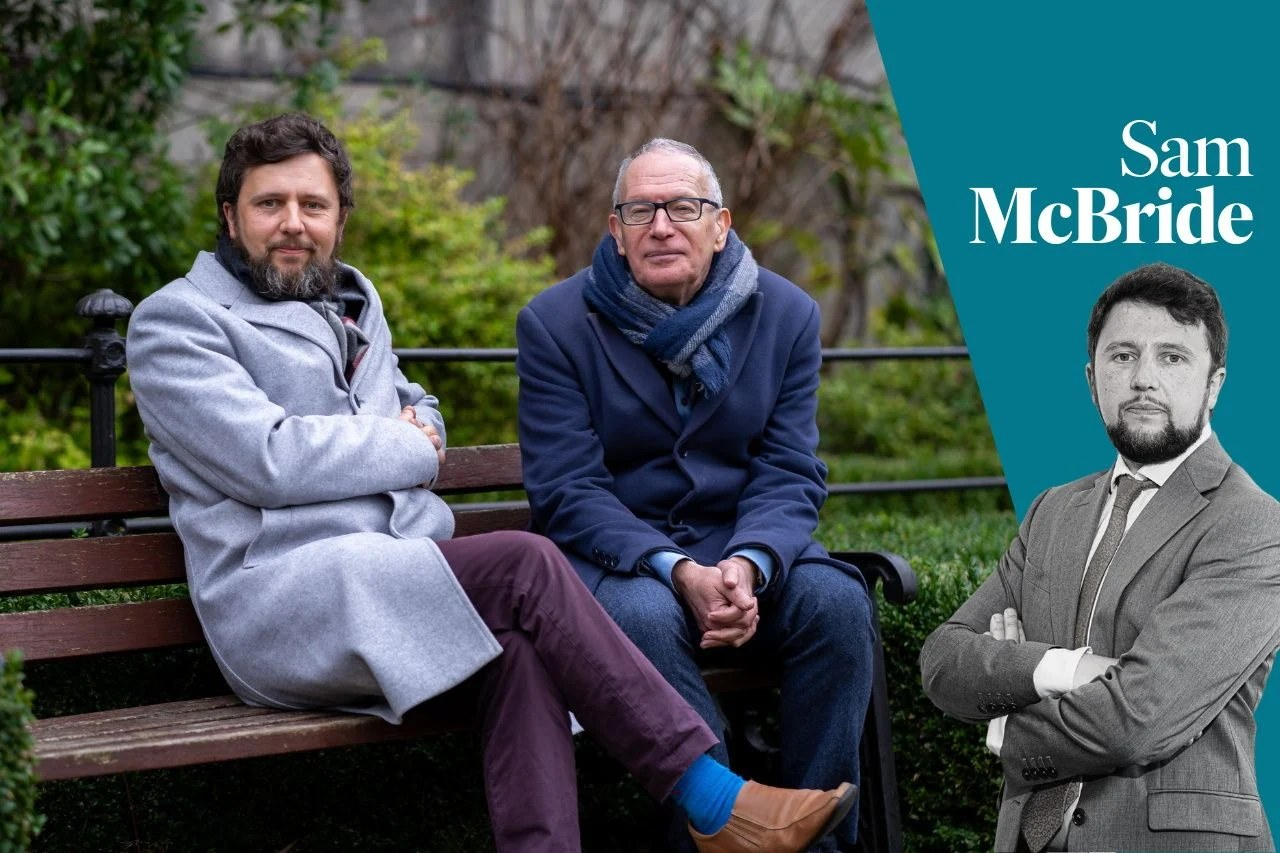
Unity or the Union? Both sides have a good argument, but rarely is it made in a sensible way.
Either case should be based on facts, not tribal thinking… our future depends on it.
The two authors each argue for, and then against, removing the Irish border
The two authors each argue for, and then against, removing the Irish border
Sam McBride
Today at 01:30
Ireland has many divides. The border might be the most controversial, but there are divisions which predated partition and have the potential to outlast it even if the border was to be removed.
Yet beyond differences of religion, of constitutional preference, of class — and even newer points of difference such as ethnicity and language — lies what is now perhaps the most important division: the split between those who want to win a border poll at all costs, and those whose respect for their neighbours outweighs their desire to get everything they want.
There is a fragility in all things. What we now have — booming prosperity (in both global and historical terms, even if we don’t think we’re rich), settled peace, and warm relations across the island and with Britain — is not normal.
Even after the turmoil of the post-Brexit years, we exist in an unusually settled period. This is both a blessing and an opportunity.
It is a chance to consider the future of the island calmly and rationally.
There’s no ticking clock against which we’re racing to make up our minds.
There’s no pike or gun pointed in our faces. There’s no pressing urgency to overcome religious discrimination or intolerable conditions.
It wasn’t always thus. Many of our ancestors lived in periods of terror and squalor.
We don’t often think of our situation in this way. Taking a longer view back to the past and ahead to the future gives context to the present.
Last year, I was approached with an idea: The Royal Irish Academy wanted to publish a book which set out the best arguments for a united Ireland, and the best arguments against a united Ireland.
Initially, the idea was that there would be two complementary books — I would write the one on Northern Ireland, and Fintan O’Toole would write the one on the Republic.
Eventually, it was decided to combine both in a single edition on the basis that while someone in Cork might not think they need to consider the same issues as someone in Coleraine, this decision inevitably impacts both.
Fintan and I each set out with equal clarity the cases for and against unity. Neither section was difficult to write because there are many strong and reasonable arguments for both sides. Yet many of them are rarely made.
The Troubles — and more recently Brexit — demonstrated how major developments on one side of the border inevitably affect the other jurisdiction.
What attracted me to the idea was that it was resolutely nonpartisan. This isn’t an attempt to tell readers what to think about a united Ireland. Rather, it is an attempt to get them to think about it in a different way.
Fintan and I each set out with equal clarity the cases for and against unity. Neither section was difficult to write because there are many strong and reasonable arguments for both sides. Yet many of them are rarely made.
For an issue which defines Northern Ireland’s politics, it is remarkable that unionist and nationalist parties spend so little time espousing the practical benefits of their ideological preference.
I’ve never had any interest in journalism which proselytises for one or other side. Readers deserve the best possible version of the truth we can establish, not the inevitable suppression of some awkward discovery because it doesn’t suit a particular cause.
At various points in my career I’ve been shunned by the DUP, Sinn Féin, and Government ministers for asking questions or reporting truths they’d rather were concealed. Not once has this caused me the slightest concern.
If the price of access to power is silence on important issues, then that access is pointless.
I accepted the invitation to write this book in the knowledge that I’d inevitably be accused of bias and that inevitably those claims would, absurdly, come from both sides.
Seeking to assuage the prejudices of such zealots is impossible, but there are a great many fair-minded people who want to be better informed about this decision, and it is those people for whom this book has been written.
It’s also for my children who are smarter than me and of whom I am immensely proud. I rarely write about them because they have the right to privacy and to be judged for who they are, rather than on my behalf.
But yesterday my daughter had her final assembly in primary school where she and her classmates were exhorted to embrace the boundless possibility before them.
Her generation, and that of her brother, will be able to judge this question freed from some of the shackles of history. But they also need to know some of the pitfalls into which past generations fell so that they can avoid repeating our mistakes and those of our ancestors.
For and Against a United Ireland is published by an academic publisher, meaning it has gone through fact-checking and peer review. But it’s not an academic book. We are journalists writing in plain language for normal people.
The book is part of the Arins project — Analysing and Researching Ireland, North and South, a joint initiative between the Royal Irish Academy and the University of Notre Dame. However, this is far too important a debate to stay within the academy. The way in which this question is decided will impact our lives and the futures of generations still unborn.
It’s not a decision to be taken flippantly or arrogantly or based on sectarian tribalism. We’ve had enough of that, and we know where it got us.
It’s not stupid to desire Irish unity or the Union’s continuation. The UK and the Republic are among the most advanced countries in the history of humanity — places where we can live comfortable lives, where there’s good medical care, and where difference is respected.
This is not an equation where the facts can be entered into a computer which can tell us how to vote. Voters will prioritise different factors and have differing tolerance of risk.
For many people, their sense of belonging is more important than simply which outcome would make them richer.
Those whose core identity is Irish or British are not inherently tribal or sectarian. National identity is wholly legitimate, and often healthy.
But what this book allows the reader to do is to not only have their own preference reinforced, but to understand and appreciate the counter-argument.
It’s not stupid to desire Irish unity or the Union’s continuation. The UK and the Republic are among the most advanced countries in the history of humanity — places where we can live comfortable lives, where there’s good medical care, and where difference is respected.
The poet John Hewitt once wrote of “this mad island crammed with bloody ghosts/And moaning memories of forgotten coasts/Our fathers steered from”. But in the lines which precede those words, he wrote: “I derive/ Sufficient joy from being here alive…”
His satisfaction at living in Northern Ireland was in an age when life was much harder and more dangerous, when sectarianism was rawer, and when for many people the world of today was unimaginable.
Some old certainties relied upon by our ancestors are now outdated. If we are to take a decision which could reshape this island for centuries to come, we need to base that decision on robust analysis of facts, not flabby tribal thinking.
In an era of disinformation, of manipulative artificial intelligence, and deceitful algorithms, a border poll is laden with peril if it is bungled.
There will be efforts to distort and deceive, and there will be those seeking to stir up murderous wrath.
Whatever our view on how this question should be answered, and whatever our view on when this question should ever be put to voters, now is the time to calmly consider the future we want for ourselves, and for our offspring.

 By Eugene Reid on 1 July 2025Matthew Syed’s writes in The Sunday Times this week and it got me thinking. He argues that the problem facing many Western democracies isn’t that politicians have stopped delivering—it’s that voters have stopped wanting reality. We demand high-quality public services but revolt at the suggestion of paying for them. We rage against deficits, but punish anyone who dares to propose a cut. In this environment, leaders survive not by solving problems, but by dressing them up in ever shinier illusions.It’s a sharp, insightful piece. And yet, reading it from Northern Ireland, I find myself asking: is that all we’re dealing with here?Because while Britain, France and the US are undoubtedly struggling under the weight of short-termism, contradiction, and electoral fantasy, Northern Ireland faces an additional—and arguably more dangerous—challenge: a political system that doesn’t function at all.It’s become fashionable to describe Stormont as dysfunctional. But that word is starting to lose its impact. The truth is starker. Dysfunction implies a system that works badly. Ours often, nay, let’s admit it, doesn’t work at all.While Westminster engages in unconvincing fiscal gymnastics and the Élysée fends off protest, Stormont is more likely to be suspended, or just “going through the motions” Civil servants—unelected, unaccountable—are left holding the reins, during the suspensions and when the institutions are up and running, the system does not function as a proper government in any way, shape or form!Budgets go unsigned. Major infrastructure projects stall, or run over budget, time and more often than not. are unfit for purpose! (Think RVH Maternity Hospital)Reform plans gather dust. The public grows more disillusioned by the day. And no manifesto pledge, no matter how fanciful, can be delivered by an Assembly that is hamstrung by the structures that were developed to ensure its very existence!Syed argues that modern voters want to be told comforting lies. He’s not wrong. But here in Northern Ireland, the crisis is more existential. When voters go to the polls, they increasingly suspect that no matter who they elect, nothing will change. That the institutions designed to serve them will be paralysed by veto, collapsed by walkout, or sunk by competing mandates before any programme for government even gets off the ground.Just this week, a friend said to me—with admirable honesty—that “we don’t do real politics here.” He explained that he would continue voting for Sinn Féin until we achieved a united Ireland, and only then, he said, would we start debating education, health, and the economy “like normal countries do.”I understood the strength of his conviction—but I was staggered by the logic. Because a united Ireland, even for those who believe in and strive for it, including yours truly, is years—likely decades—away. Oh, and by the way, it will become reality via a slow, gradual process, not with a “big bang” moment, as many seem to think!Can we really afford to wait that long to fix a health service on the verge of collapse? To rescue an education system buckling under budget pressures? To rebuild public infrastructure, address housing shortages, or tackle chronic underinvestment, and endemic public sector mismanagement!!The idea that politics can pause while we await constitutional resolution is, frankly, intolerable. The damage being done to public services right now is real, urgent, and accelerating. We cannot keep asking citizens to live in a holding pattern while our political system remains stuck in neutral.So yes, the failure of delivery is now a feature of modern democracies. But in Northern Ireland, it’s more than that. It’s a feature of our constitutionally constructed gridlock. Our politics isn’t just infected by populism or paralysed by complexity—it is shackled by a design that too often prioritises equilibrium over progress.We are not immune to the global wave of political illusionism. But we’ve added a local twist: an apparatus incapable of managing disagreement, incapable of adapting, and incapable—too often—of governing at all.We need to be honest. Voters everywhere must accept that hard choices are coming, and that grown-up government requires compromise. But in Northern Ireland, that conversation can only begin once we restore a system capable of having it.Otherwise, we risk not just poor delivery—but democratic decay of a deeper kind