Live All-Ireland football final: Kerry v Donegal updates
Kerry 1-26 Donegal 0-19
Kerry claim 39th All-Ireland title
David Clifford top scorer with 0-09
17:40″We wanted to right wrongs,” Joe O’Connor says pitchside.David Clifford, joined by his son Ogie, is also alongside the panel”We’d be massively proud of how we came back after the Meath game,” the Fossa man says.”The first half we couldn’t have gone that much better…they got it back to four and put pressure on the kickouts…today probably was our best performance.”
Immigration protesters shoulder to shoulder with loyalist killer
Far-right activists accompanied Glen Kane to court hours before demonstration in Newtownabbey.
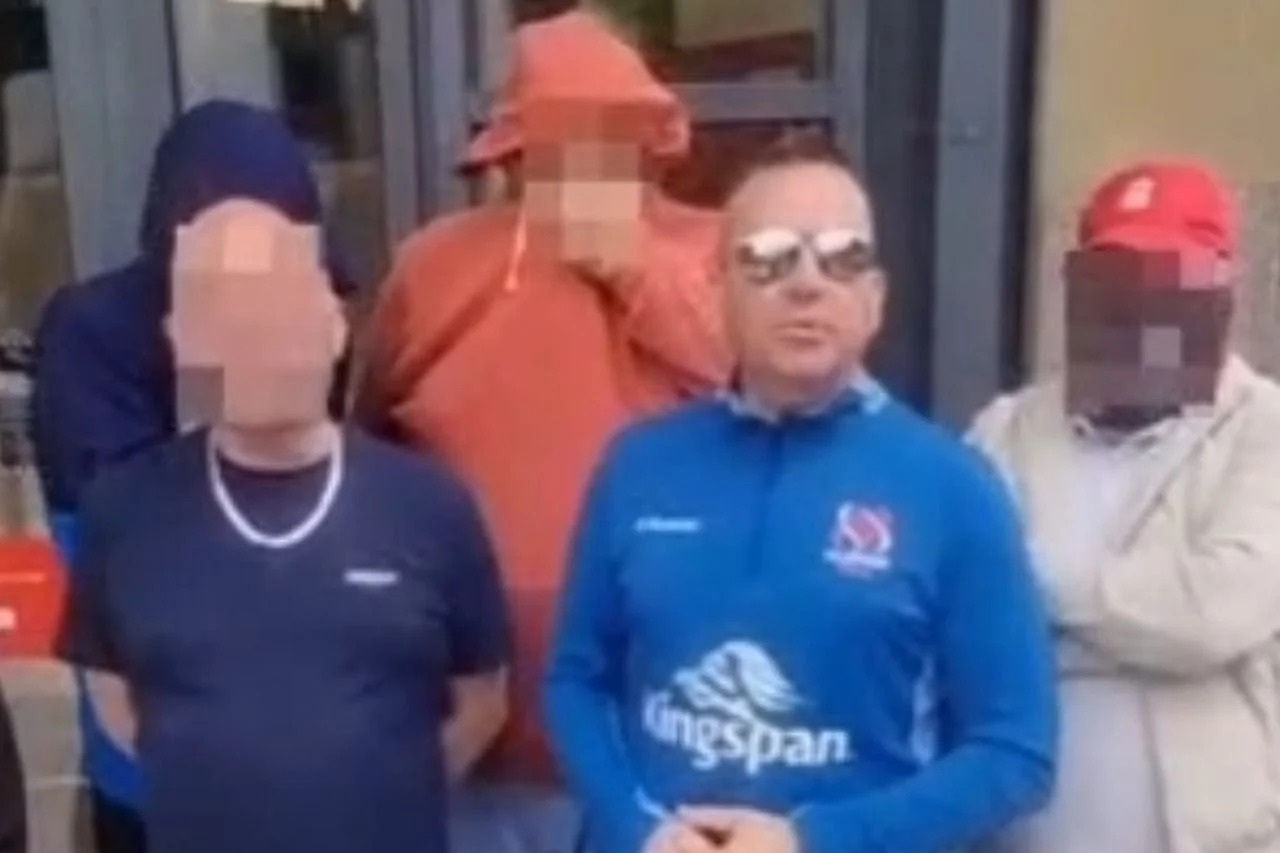
Glen Kane and his friends after his court appearance
John Toner
Today at 02:27
Far-right activists took part in an anti-immigration protest outside a Co Antrim hotel just hours after accompanying loyalist killer Glen Kane to court.
Among those involved in the demonstration at the Chimney Corner hotel in Newtownabbey was convicted armed robber Mark Sinclair, who goes by ‘Freedom Dad’ online, and conspiracy theorist Stephen Baker.
Kane, who was jailed for nine years for being part of a mob which kicked to death Catholic man Kieran Abram in 1992, posed for pictures with the group outside Laganside court complex in Belfast ahead of the protest.
Speaking in a short video circulated on social media, standing alongside masked men, he said: “That’s me up in court again today. There are ongoing enquiries into me and I’m back up on the 14th of August.”
Later that evening, Baker and Sinclair were prominent during the protest outside the Chimney Corner hotel in which several dozen people blocked the Antrim Road while waving placards and holding an anti-immigration banner.
Ex-UVF thug Mark Sinclair is the cousin of William Moore, a notorious murderer and member of the Shankill Butchers.
His pal Stephen Baker was a prominent anti-vaxxer and anti-lockdown protester during the Covid-19 pandemic and was convicted of breaching coronavirus regulations in 2021.
Baker, who is a gardener by trade, has now switched his attention to anti-immigration agitation.
Posting a video on a Facebook account called The Great Province-Wide Protest NI, he said: “Now folks I am calling for a protest at Chimney Corner, if yous want to keep them off your streets yous need to stand in front of their houses to stop them leaving.
“This is how we do it folks, we are quite within our right to go to this habitation of these dangerous men and petition against them being here. We want them gone and we want redress for our grievances.”
Earlier on Thursday, Glen Kane’s lawyer was warned that an argument to dismiss a charge of inciting racial hatred was “not likely to succeed”.
Kane, from Riga Street in Belfast, is on bail facing a charge of possessing material with intent to stir up racial hatred on August 10 last year.
With the case set to be heard in September, his defence team lodged an application for the case to be thrown out, citing an abuse of process.
However, District Judge Francis Rafferty told Kane’s solicitor: “For what it’s worth, from what information I have, (the abuse of process motion) is not likely to succeed.”
Kane’s lawyer Keith Gamble said the author of the written material had been interviewed by police and was likely to be prosecuted as well, adding: “It might seem strange.. we might want the author of the tract to come to court.”
Judge Rafferty adjourned the matter until September, saying: “It’s not for me to direct how the defence approach the case, but you may take your chance.”
The court previously heard police searched Kane’s home last August under a warrant and seized several items.
These included UVF badges, a Britain First key-tag, UVF and LVF flags, a UVF picture, a British National Party DVD, two Britain First hats, a UFF snood and about 100 copies of a publication.
The publication allegedly referenced the UK’s “immigration crisis”, but further details of its contents have not yet been aired in court.
Kane said during a recent YouTube interview: “I’m not far right, I’m not a racist.”
Some of the same far-right protesters involved in the Chimney Corner hotel demonstration also picketed a Coptic Christian church on Belfast’s Shankill Road last weekend.
Racist, anti-Islamic graffiti was daubed on the Berlin Street premises by thugs unaware Coptic Christians are not Muslims.
Hundreds expected at memorial parade for UVF man killed by own bomb in Miami Showband massacre.
Fifteen bands taking part in march for Harris Boyle in Portadown
Ciaran Barnes Today at 02:22
A huge parade to commemorate the life of a UVF Miami Showband killer will take place in Portadown on Saturday. Billed as the Harris Boyle 50th Anniversary Memorial parade, more than 400 people and 15 bands are expected to take part in the event, which will tour the Killicomaine estate.
Among those scheduled to march at the memorial is the Moygashel Sons of Ulster Flute Band, which regularly commemorates the life of fellow Miami Showband murderer Wesley Somerville.
Thirty bands marched through Moygashel in April in honour of the notorious paramilitary, who blew himself up along with accomplice Harris Boyle in July 1975.
Boyle and Somerville died in 1975 while attempting to plant a bomb on the Miami Showband tour bus.
The rest of their UVF gang then opened fire, murdering singer Fran O’Toole, guitarist Tony Geraghty and trumpeter Brian McCoy.
Bass player Stephen Travers and singer Des Lee were badly injured but remarkably survived.
The chart-topping band were targeted as they travelled from a gig in Banbridge to Newry.
Their minibus was stopped late at night on a rural road by UVF men posing as British Army soldiers.
The musicians were ordered to line up at the side of a verge while attempts were made to hide a bomb on their bus.
The intention was for it to explode a short time later and for the Miami Showband to be falsely accused of transporting a bomb for the IRA.
However, the device blew up prematurely as Somerville and Boyle were hiding it in the vehicle, killing both men instantly.
Miami Showband survivor Des Lee told Sunday Life last April that loyalists, even those who tried to kill him and had murdered his bandmates, have a right to commemorate their dead.
“I’m very careful about what I say. Even though I’m 79, I don’t like to get in arguments. People have a right to respect their dead, as far as I’m concerned. That’s how I look at it,” said the musician.
“I’ve very much for peace and reconciliation. It’s been 50 years. How long are we going to carry on like schoolkids?”
The Harris Boyle Memorial Parade will start at Levaghery Orange Hall at 6pm on August 2. The outward route from the Gilford Road will begin two hours later.
According to the Parades Commission website, 15 bands have registered their attendance, although “other bands may turn up on the night”.
As well as being a senior UVF figure Harris Boyle, who was from the Killicomaine estate in Portadown, was also in the UDR.
He was a suspect in the UVF 1974 Dublin/Monaghan bombs that killed 26 civilians and was involved in the notorious loyalist Glenanne gang which was responsible for dozens of sectarian murders.
I’ve no time for snobs who talk down to working class, but how mad does bonfire asbestos row make us look to rest of world?
Allison Morris
Today at 01:59
Who would have known that the buzzword from this year’s eleventh night bonfires would be “asbestos”.
Those running social media accounts that transferred their sectarianism to racism around the same time as the hate riots last August, are now seemingly experts on the dangerous building material found at the site of a pyre just off the Donegall Road in south Belfast.
Asbestos was once commonly used in insulation, roofing and flooring. It wouldn’t be until the late Nineties that it was banned after research showed its fibres led to serious health problems, including cancer.
I have been covering bonfires and parades for over 20 years and in that time I have pretty much seen it all — the good, the bad and the potentially life-threatening consequences of the fires which form part of the loyalist tradition.
I’ve written about dozens of contentious pyres, visited sites where the, mainly young men, would have welcomed us and shown the media around, proud of their handiwork.
And others, when I’ve been threatened with violence because I kick with the other foot.
When I was growing up we would have had a bonfire at the top of our street on August 8, the night before the anniversary of internment.
It wasn’t one of the enormous, gravity-defying jenga-style pallet structures loyalists build, but old doors, furniture, mattresses and tyres.
There wasn’t as much — in fact any — awareness at the time of the dangers of burning hazardous materials. After all, it was the Seventies in west Belfast and there were 100 other ways to potentially die young that didn’t involve burning a tractor tyre.
If you take a look through Lost Lives, the book that documents every man, woman and child murdered here during the Troubles, you’ll see a pattern in and around August 8 and 9 every year in the Seventies and early Eighties.
People were dying, being shot in street disorder and riots associated with that time.
We don’t have bonfires anymore. The Divis and New Lodge ones, magnets for drugs and antisocial behaviour, haven’t taken place in years, thank goodness.
There is a bonfire in Derry in August that often ends in rioting and the arrest of young people. It’s for the people of that city to call time on this.
In west Belfast the success of Feile an Phobail was a game changer — the young people will dance in Falls Park to DJs whose names I’m far too old to recognise on August 8, and long may that newish tradition continue.
It could be argued republicans were not as attached to bonfires as loyalists, who see it as part of a tradition to commemorate the Battle of the Boyne in 1690. And that’s fine, difference is a good thing.
The majority of the 300 fires lit on the eleventh night pass without incident, most of them small to medium-sized structures attended by families.
But there are always the predictable ones that cause issues every year.
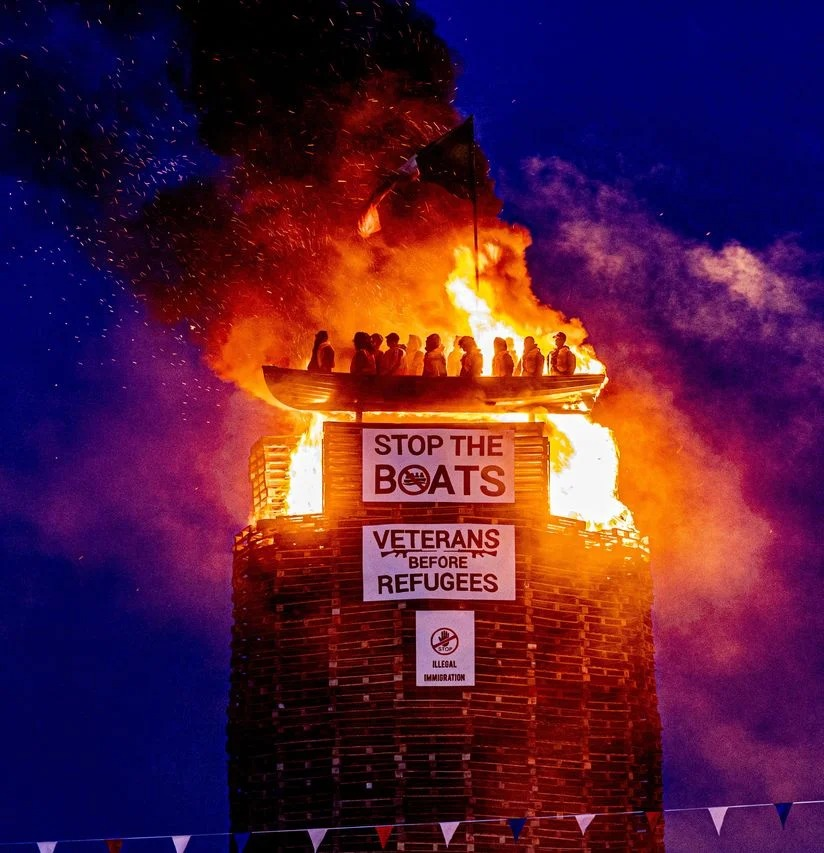
Moygashel, with that gruesome image of a boat full of brown-skinned mannequins dressed to look like migrants, has to the be the worst I’ve seen in my time. The ‘Irish patriots’ — the growing far right across the border — thought they’d found their kindred spirits among the Ulster loyalists.
The ‘Coolock says no’ squad’s night in the Royal Bar in Sandy Row last year led them to believe they were all ‘besties’, united in a joint cause of hating anyone who looks or sounds a bit foreign.
The boat of migrant effigies also included a large tricolour, just to remind the naive racists in the south that they may not be public enemy number one anymore, but they do come a close second.
Despite all the warnings, the south Belfast bonfire went ahead.
We won’t know how many people breathed in deadly asbestos fibres — it’ll be a wee surprise for them during a lung scan in 20 years’ time when the fun of the bonfire is long forgotten. What it does show is just how dysfunctional this place is, how insane we must look to outsiders.
I’m not a big fan of the snobby ‘school prefect’ types preaching to working-class communities about how they should act and behave.
I wouldn’t have taken kindly to them wafting in and out of my community 20 or 30 years ago, patronising the people.
But I do know that each generation should strive for better, should hope that the children who come behind them enjoy more opportunities and a better life than they did.
There are victories like your child winning a medal at sports day, scoring a goal, or being the first generation accepted to university, maybe even securing a good job and getting on the property ladder.
What isn’t a win, what isn’t a big victory for loyalism, is ignoring all the warnings to have a bonfire in a waste ground littered with asbestos.
Mary Lou McDonald says Northern Ireland ‘not economically viable’ as a territory as she calls for border poll on British TV
The Sinn Féin leader appeared on Good Morning Britain on Monday
Mary Lou McDonald said the children are being failed
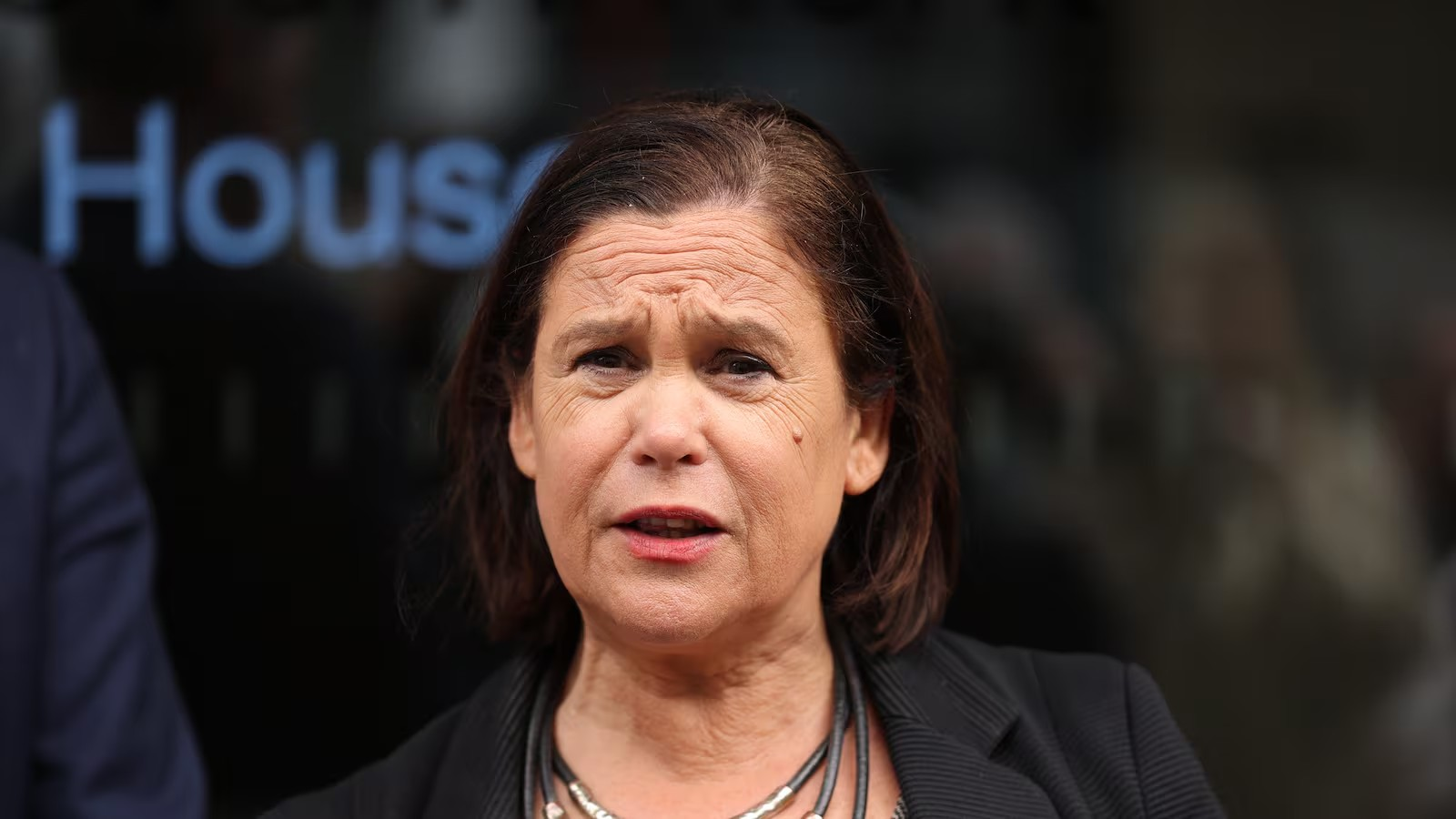
Mary Lou McDonald made the comments during an appearance on Good Morning Britain on Monday.
By Mark Robinson
July 14, 2025 at 10:44am BST
Sinn Féin President Mary Lou McDonald said that the north was “not economically viable” as a territory and put its financial struggles down to partition as she called for a border poll during an appearance on British TV.
Ms McDonald made the comments in an interview on ITV’s Good Morning Britain on Monday, where she made the case for a referendum in the next five years.
The TD for Dublin Central’s appearance on the show comes amid growing speculation that she is gearing up for a potential presidential run.
While initially ruling herself out of this year’s presidential election, last week she said that the party’s candidacy was “a moving picture”.
On Monday, presenter Richard Madeley asked the Sinn Féin leader why she was advocating for reunification when the north was economically “running at a loss”.
“Why do you want Northern Ireland still so badly? Because, economically, I think it’s fair to say it’s close to being a basket case at the moment,” he said.
“This country pays it a huge amount in terms of subsidies to Ulster – far more than we get back.”
Ms McDonald said that the reason for the north’s consistent economic difficulties was down to partition.
“It’s six counties of the historic nine-county province of Ulster, it’s cut off from its natural political, social and economic hinterland,” she responded.
“Since the peace agreement was signed in 1998, the value of the all-Ireland economy has multiplied six-fold.
“The natural economic activity for a small island like Ireland is the entire island – it makes no sense to partition.”
Ms McDonald added that it had been 27 years since the Good Friday Agreement and that reunification was the “next chapter”.
“I think we have made enormous strides, all of us, and I think Ireland and Britain and all the political leaders and the people deserve great credit for that,” she said.
“Now we’re at a point where we say, ‘What’s the next chapter?’.
“For us, logically, in economic terms, in social terms, in democratic terms, Irish unity makes sense.”