“ Reputed anti-Catholic and anti-Black bigots in Northern Ireland organize for Trump … The main organizer, Jolene Bunting, has distinguished herself by this statement:”I’m so sick of the poor Catholic bastards; they make me sick. I wish they would just go down to [southern] Ireland and then they can fly their flags and change the [Irish language] street sign down there.” She is also an alleged admirer of one of the many fanatical racist anti-Catholic haters in Northern Ireland—the late George Seawright (1951-1987) , whom she reputedly described as “a true Ulster loyalist.” Seawright distinguished himself by his infamous war-cry:”Burn all Catholics and their priests.”Will Trump repudiate such fanatical, bigoted support?—Fr. Sean Mc Manus
Bunting’s “Ulster-Scots for Trump” hits the road
Brendan Hughes. Irish News. Belfast. Saturday, October 10, 2020
A CONTROVERSIAL unionist ex-councilor’s trailer tour to support re-electing US president Donald Trump has hit the road.
Jolene Bunting had launched an online crowd-funder for her ‘Ulster-Scots for Trump’ campaign in which his supporters plan to tour Northern Ireland with a trailer.
The former Belfast councilor on Thursday evening posted an image on Twitter showing the “Trump trailer” in Carrickfergus.
The trailer displays an image of the US president on a large blue poster entitled ‘Ulster-Scots for Trump’.
It includes a list which reads: “Pro-life; pro-Brexit; pro-borders; pro-Christian; anti-globalist, anti-communist, anti-BLM [Black Lives Matter] and Antifa [short for “anti-fascist”, a loose affiliation of mostly far-left activists]; anti-climate and Covid alarmism.”
The poster concludes: “God bless Donald J Trump.”
Sharing the image, Ms. Bunting tweeted: “The ‘Trump trailer’ has hit the road!”
A video showing the construction of the trailer says supporters “will travel across Northern Ireland showing our support for President Trump”.
A crowdfunding page had included an email address for further enquiries under the name of Wayne Cummings, who is Ms. Bunting’s partner.
The Irish News contacted this email address for comment, but the reply read: “’Ulster-Scots for Trump’ has nothing to say to the lying mainstream media, you are FAKE-NEWS!!!”
Ms Bunting, who has previously caused controversy over her involvement with the far-right group Britain First, lost her seat on Belfast City Council in last year’s council elections.
In 2018, she received a four-month interim suspension from a council standards watchdog pending the outcome of an investigation into 14 complaints.
Her tweets in recent weeks have included a video promoting coronavirus conspiracy theories.
The US presidential election, in which the Republican Party’s Mr. Trump faces Democrat challenger Joe Biden, will take place on November 3.
A member of the notorious loyalist Glenanne Gang has been arrested on suspicion of making threats to kill the daughter of one of his victims.
Convicted killer Garfield Beattie was detained near Portadown in north Armagh on Saturday morning.
It is understood a number of electronic items were seized during a search of a property.
It emerged last night that the woman’s solicitor has now written to Secretary of State Brandon Lewis asking for Beattie’s licence to be revoked.
The Irish News understands the threat was received in the post early last week and police were then contacted.
Beattie was part of the Glenanne Gang, which included members of the RUC, UDR and UVF.
It was responsible for a sectarian murder campaign in the mid-1970s believed to have resulted in up to 120 deaths.
Former English police chief Jon Boutcher launched an investigation into the gang last year.
Beattie served 16 years behind bars for his part in three murders.
They included the killing of SDLP activist Denis Mullen (36) who was shot dead at his home near the Moy in September 1975.
He was also convicted for his part in the murder of Frederick McLoughlin (48) who died in June 1976 from injuries received after a gun attack at the Eagle Bar in Charlemont, near the Moy, the previous month.
The 48-year-old, from Benburb, was shot by a UVF murder squad as it made its escape following a no-warning bomb at another bar in the area, which claimed the lives of three people.
Another victim was Patrick McNeice (50) who was shot dead at his home in the Loughgall area of Co Armagh in July 1976.
It is understood Beattie, a former member of the Territorial Army Volunteer Reserve, is currently the subject of pending legal action taken by the daughter of one of his victims.
He recently wrote to the woman’s legal team and days later a threat was also received in the post at her home.
It is understood the threat was signed ‘East Tyrone Ulster Volunteer Force’.
The PSNI last night said that a 63-year-old man was arrested on Saturday on “suspicion of offences, including threats to kill”.
“The man was arrested in the wider Portadown area and has since been released to be reported to the Public Prosecution Service,” a spokesman said.
After his arrest in August 1976, he led police to an arms dump in north Armagh which included a sub machine gun, which had been stolen from a UDR base at Glenanne, in south Armagh, in 1971.
That gun was used in seven different gun attacks resulting in the deaths of 11 people, the first being Denis Mullen and the last Patrick McNeice.
He also led police to two other weapons and a quantity of ammunition.
Solicitor Peter Corrigan, of Phoenix Law, said his firm has written to Mr Lewis.
“We have written to the secretary of state to immediately ask for the revocation of Mr Beattie’s licence,” he said.
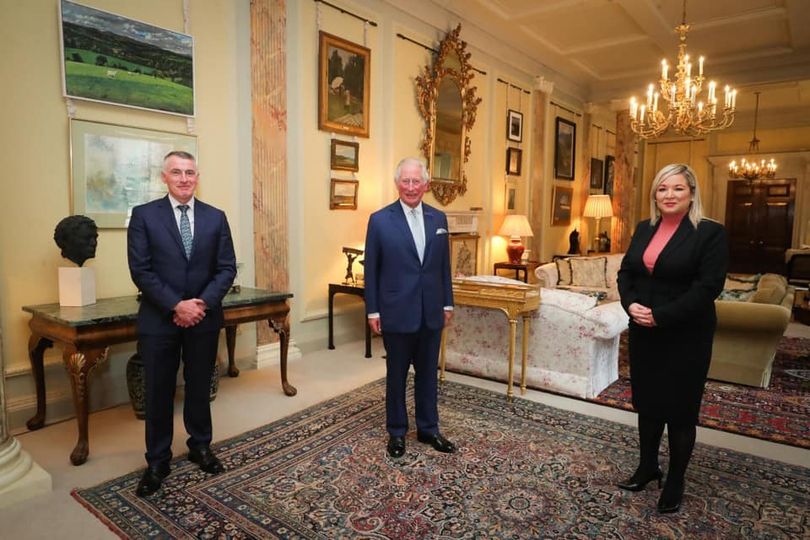
Yesterday at 6:37 AM · Press Statement By The Bloody Sunday March For Justice Committee. The fact that representatives of the biggest Nationalist party in the North travelled to Belfast to greet the commander in chief of the Parachute Regiment has come as a bomb-shell to many citizens of Derry — to members of the Bloody Sunday families in particular.It is astonishing that this should have happened within 24 hours of the families’ hopes of justice being dashed yet again. With just one exception, all of the members of Prince Charles’s regiment who took part in the Bloody Sunday massacre are to be let off the hook. At least, that’s the British establishment’s plan.What has happened is a demeaning betrayal. We march for the truth for 50 years, then the leader of the liars is made welcome in our midst!The Ballymurphy families will know what we mean.If the lies were over, if Prince Charles and other military commanders were at last to tell the truth and say sorry, he might be entitled to a little bit of respect. But he doesn’t have any respect for the people of Derry or for the Bloody Sunday dead.Prince Charles’ role in the Parachute Regiment isn’t ceremonial. The paras don’t do ceremony. There was nothing ceremonial about what happened around Rossville Street, Glenfada Park, Joseph’s Place, etc.Murder was done in the name of the State which Prince Charles is heir to. To shake his hand while the bereaved are still hurting is to bring shame on the city. The march towards truth and justice will continue for as long as it takes.
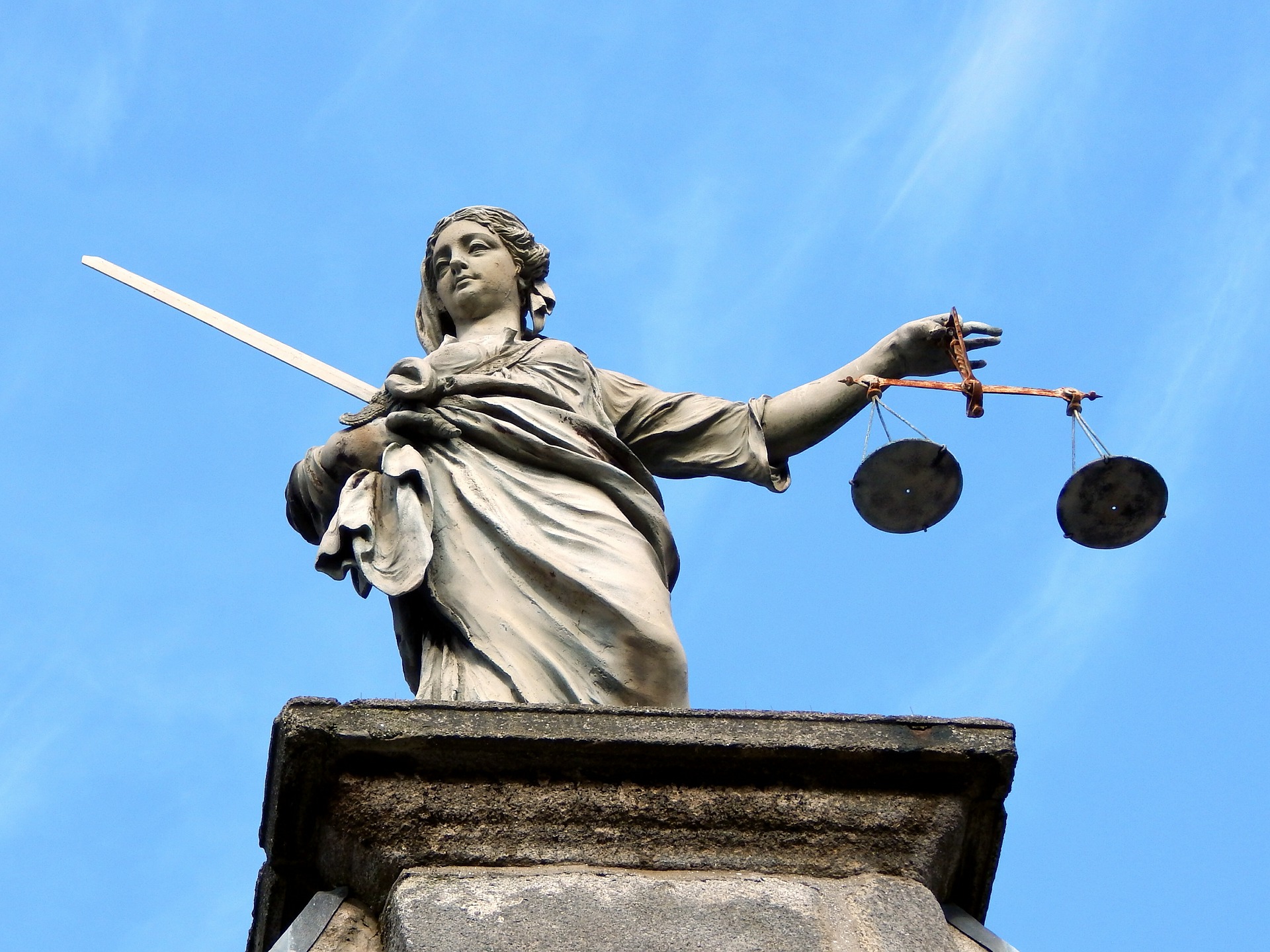
The Statue of Justice erected at Dublin Castle during British Imperial Rule. The decision not to prosecute Soldiers involved in Bloody Sunday confirms again that British justice in Ireland is to look to the sword and not the scales of fairness. (Image by Alberto Sanchez from Pixabay)
Ancient Order of Hibernians National Freedom for All Ireland Chair Martin Galvin has issued the following statement concerning the decision by the Northern Ireland’s Public Prosecution Service not to prosecute 15 British Soldiers accused of participating in the killings of Bloody Sunday in Derry in 1972.
“The refusal to charge British troopers for Bloody Sunday, seems to signal an undeclared amnesty or de facto immunity for these soldiers, and for others in British uniforms who carried out a shoot-to-kill policy or collusion murders for the crown, with impunity.
Thirteen people were shot dead by British troopers on Bloody Sunday. Fifteen more were wounded. A British Prime Minister, David Cameron, admitted these shootings were ‘both unjustified and unjustifiable.’ Unjustifiable killings would seem to be textbook definition of murder. The British troopers who opened fire on the peaceful civil rights marchers were known and identified. What explanation can there be for only one British trooper being charged for so many murders and attempted murders?
Moreover the crimes of Bloody Sunday did not end with these murders and attempted murders. There was a criminal cover-up that followed. British troopers gave sworn statements about non-existent gunmen and bombers to justify these murders and attempted murders to the Widgery Tribunal.
Years later these troopers gave more testimony under oath in London, before the Saville Inquiry, where nothing said could be used against them, if they at last told the truth. Each trooper had the opportunity, after 30 years of reflection, to express remorse or give the heroic Bloody Sunday families the truth those families deserve.
Instead these British troopers decided once again to blame their victims for getting in the way of the bullets. One Para after another swore to tell the truth then recited scripted cover stories of the sort whitewashed by the Widgery Tribunal’ . Saville himself noted that these troopers “had “knowingly put forward false accounts in order to justify their firing.” How can there be no perjury charges?
Next January 30th will mark the fiftieth anniversary of Bloody Sunday. It will mark fifty years that these families have been fighting for justice.
The AOH has marched with the Bloody Sunday families in Derry and in demonstrations across the United States. On September 19th, hundreds of AOH members heard a briefing from Bloody Sunday campaign leader John Kelly, the brother of Michael Kelly. We were also able to present a grant for the Bloody Sunday Trust and Museum of Free Derry. These families are determined to fight for justice for the Bloody Sunday victims no matter how many times justice is denied. The AOH is determined to stand behind them until they get it!”
The Ancient Order of Hibernians is angered by decision not to prosecute
By Irish Echo Staff
The Ancient Order of Hibernians has expressed its anger and frustration over a decision not to prosecute British soldiers involved in the Bloody Sunday killings.
AOH National Freedom for All Ireland Chair, Martin Galvin, in a statement, has reacted critically to the decision by the Northern Ireland’s Public Prosecution Service not to prosecute 15 British Soldiers accused of participating in the killings of Bloody Sunday in Derry in 1972.
“The refusal to charge British troopers for Bloody Sunday seems to signal an undeclared amnesty or de facto immunity for these soldiers, and for others in British uniforms who carried out a shoot-to-kill policy or collusion murders for the crown, with impunity,” said Galvin.
“Thirteen people were shot dead by British troopers on Bloody Sunday. Fifteen more were wounded. A British Prime Minister, David Cameron, admitted these shootings were ‘both unjustified and unjustifiable.’
“Unjustifiable killings would seem to be textbook definition of murder. The British troopers who opened fire on the peaceful civil rights marchers were known and identified. What explanation can there be for only one British trooper being charged for so many murders and attempted murders?
“Moreover the crimes of Bloody Sunday did not end with these murders and attempted murders. There was a criminal cover-up that followed. British troopers gave sworn statements about non-existent gunmen and bombers to justify these murders and attempted murders to the Widgery Tribunal.
“Years later these troopers gave more testimony under oath in London, before the Saville Inquiry, where nothing said could be used against them, if they at last told the truth. Each trooper had the opportunity, after 30 years of reflection, to express remorse or give the heroic Bloody Sunday families the truth those families deserve.
“Instead these British troopers decided once again to blame their victims for getting in the way of the bullets. One Para after another swore to tell the truth then recited scripted cover stories of the sort whitewashed by the Widgery Tribunal.’
Galvin said that Saville himself noted that the soldiers had “knowingly put forward false accounts in order to justify their firing.”
And he added: “How can there be no perjury charges? The AOH has marched with the Bloody Sunday families in Derry and in demonstrations across the United States. On September 19th, hundreds of AOH members heard a briefing from Bloody Sunday campaign leader John Kelly, the brother of Michael Kelly.
“We were also able to present a grant for the Bloody Sunday Trust and Museum of Free Derry. These families are determined to fight for justice for the Bloody Sunday victims no matter how many times justice is denied. The AOH is determined to stand behind them until they get it.”