It was quite refreshing to see a reasonable debate on a United Ireland on Claire Byrne Live on Monday. There were pivotal moments from the get-go with Mary Lou McDonald and Leo Varadkar seeming to build a cautious consensus together in regard to the Northern Ireland question and how to go about it. It certainly felt from the outside looking in, a true start to the conversation of seeking Irish unity in the South in the modern era.
For many people watching, especially in the South, it was a good experience to lay witness to the Unionist perspective of things. Judging by the reactions of some on social media, it was quite the eye-opening experience to see the likes of Gregory Campbell from the DUP in full-flow and well as Loyalist activist Jamie Bryson.
At one point Bryson saying “all of the economic benefits in the world wouldn’t change my unionism and wouldn’t want me to be part of a United Ireland” should demonstrate to people in Ireland the large task at hand of possibly having to accommodate people which such opinions into a future United Ireland. These are not people who will exactly be persuaded by the idea of a United Ireland by the Republic simply fixing it’s health service to bring it in line with the NHS among other things.
But it also showed the alarming position unionism finds itself in. When your response to the idea that a United Ireland could benefit everybody on the island is to throw your head in the sand, say no and not even try and suggest the benefits of Northern Ireland remaining part of the UK, it hardly sends a positive signals to viewers at home that unionism has this grand vision for a brighter future for Northern Ireland.
On the other hand you had people like Andrew Trimble, former Ireland Ulster Rugby player on the show. Trimble offered the most balanced view of the night and its voices like him we need to hear more from. Trimble highlighted the massive issue around the segregated school system in Northern Ireland and how young Catholics and Protestants weren’t meeting one another until college. The de-segregation of Northern Irish schools is an essential step that must be taken long before a border poll happens.
There too is a massive education exercise required in Ireland to bring people up to speed with the affairs of modern-day Northern Ireland. Education in the South in regard to events such as the Troubles and Good Friday Agreement is lacking. Speaking personally, I went through the whole secondary school cycle without being taught about the Troubles. Made worse by the fact I live in Louth, beside the border, meaning I was not taught about the history 10 minutes down the road.
Not only should history be a compulsory subject in schools, but Northern Ireland’s history also should be at the heart of it together with normal Irish history. An end should be brought to Catholic-patronage of our education system in the Republic. Our national broadcaster RTE should also begin reporting more heavily on Northern Ireland news. These are not factors that should be considered when a United Ireland comes about, these are actions that should be taken now.
Irish political leaders seemed united in believing the reunification of the country is more presentable than ever before. It is far too early to set a date for a border poll, but it is never too early to start building trust. It will involve having conversations between North and South to understand each other before setting a true vision for a shared united Ireland. That involves trying to sell the idea of a United Ireland to those in the middle ground and to moderate unionists.
One such method of not building that trust is with Joe Brolly, who came on the show and decided bashing the DUP was the best course of action. When will some nationalists and republicans learn you cannot guilt people into a United Ireland? Thankfully, Claire Byrne rightfully cut off Brolly in what was a rare blip in an otherwise engaging debate.
It is at least the start of a conversation. For the foreseeable future efforts and resources should be poured into making the Good Friday Agreement work. Time should be set aside to reach out to unionists and to the middle ground in Northern Ireland to get their views on how they would see re-unification happen and what steps could be taken to build a truly shared island first. Finally, begin the conversation in the Republic of Ireland about what the Irish people are willing to change such as symbols and titles within the political sphere, in order to accommodate those who are British becoming part of a United Ireland. It’s time to dream big, start small but most all, start.
Investigative journalists Barry McCaffrey and Trevor Birney received an unreserved apology in a Zoom call with the chief constable
23 March, 2021 01:00
PSNI Chief Constable Simon Byrne `reiterated his unreserved apology’
THE PSNI chief constable has apologised in a face-to-face meeting to two journalists arrested over material that appeared in a documentary on a Troubles massacre.
Over a “constructive” Zoom meeting, Simon Byrne repeated the “unreserved apology” he gave in writing to investigative journalists Barry McCaffrey and Trevor Birney last July after the Court of Appeal quashed a search warrant used to raid their homes and offices in August 2018.
They were detained over the alleged theft of a police watchdog document which appeared in their film `No Stone Unturned’, based on a notorious loyalist massacre in Loughinisland in 1994.
Mr McCaffrey and Mr Birney worked with Oscar-winning director, Alex Gibney on the film which focused on how the RUC handled the UVF murders of six Catholic men at a pub in the Co Down village.Subscribe to our Morning newsletter
A PSNI spokesperson told the investigative news website The Detail the meeting had been “constructive”, saying “the chief constable reiterated his unreserved apology for the distress and upset caused to both men and their families as a result of their arrest”.
The journalists said they recognised their arrests happened before to his appointment.
They also raised recent death threats against reporters working on Northern Ireland titles including Allison Morris, Patricia Devlin and others.
“Even if journalists are pursuing stories that police could view as uncomfortable, they should be respected for their vital role in a democratic society,” Mr Birney told The Detail.
Mr McCaffrey said the PSNI “chose to arrest journalists for simply exposing the truth” in a “disastrous and unforgivable decision which caused untold hurt and pain to the victims’ families”.
“Attacking the media and threatening press freedom is not good policing.”
Amnesty International and the National Union of Journalists have called on the Policing Board to investigate the full circumstances behind their arrest.
The Detail reported an investigation into the leaking of the documents has ceased.
A Michael Stone flag outside the Holy Cross Girls School in north Belfast with the words ‘Hands up if you’re going to be sectarian today’
A flag showing loyalist killer Michael Stone was put up near Holy Cross Girls’ School in north Belfast in a “deliberate attempt to provoke and intimidate”, Sinn Féin has said.
It is understood the flag, showing an image of Stone with his hands raised, was put up along with several Rangers flags around Ardoyne Road early yesterday morning.
The Stone flag, which included the slogan ‘Hands up if you’re going to be sectarian today’, was taken down several hours later.
Holy Cross Girls’ School was the focus of bitter loyalist protests in 2001 and 2002. The protests, which attempted to stop young girls from going to school, prompted headlines across the world.Subscribe to our Morning newsletter
Stone, a former UDA member who was convicted of three murders, was released under the Good Friday Agreement in 2000.
In 2006, he tried to storm Parliament Buildings and was later convicted of attempting to murder Sinn Féin’s Martin McGuinness and Gerry Adams.
He was released from prison on parole in January this year.
Sinn Féin North Belfast MLA Gerry Kelly said he was appalled by the flag.
“People will remember that this is the girls’ primary school that was blockaded by loyalists causing huge and lasting stress to children and the community,” he said.
“This is a deliberate attempt to provoke and intimidate local residents. This community has come through too much to be intimidated by these criminal elements and hate crimes.
“There is no place in society for this type of activity.”
Michael Jackson March 18, 2021 10:53Relatives for Justice CEO Mark Thompson
RELATIVES for Justice has welcomed a United States Senate resolution that calls for the full implementation of the Stormont House Agreement.
In an unprecedented bi-partisan resolution, 15 members of the Senate Senate have outlined “unresolved issues” set out in the Good Friday Agreement and subsequent political accords.
The resolution calls for progress on a Bill of Rights and “justice for all victims of violence, including state-sponsored violence.”https://platform.twitter.com/embed/Tweet.html?dnt=false&embedId=twitter-widget-0&frame=false&hideCard=false&hideThread=false&id=1371906523430055940&lang=en&origin=https%3A%2F%2Fbelfastmedia.com%2Frfj-welcomes-us-senate-resolution-on-stormont-house-agreement&theme=light&widgetsVersion=e1ffbdb%3A1614796141937&width=550px
Welcoming the resolution, Relatives for Justice CEO, Mark Thompson, stated: “For many years Relatives for Justice and families have been received with support and encouragement in Irish America, particularly from the Ancient Order of Hibernians. This has been of immense importance as families continue to face British government intransigence and bad faith on legacy.
“This resolution now speaks to the political support that families have in the United States and we are encouraged that the entire resolution is framed in international human rights law and the peace process. Victims and resolution of their rights to truth and justice are central to the peace process and international human rights law is the key to unlocking the obstacles families face. The inclusive acknowledgement of all victims, with specific reference to those affected by state and state sponsored violence, is particularly welcome given their experience of marginalisation and isolation.
“This resolution now speaks to the political support that families have in the United States and we are encouraged that the entire resolution is framed in international human rights law and the peace process. Victims and resolution of their rights to truth and justice are central to the peace process and international human rights law is the key to unlocking the obstacles families face. The inclusive acknowledgement of all victims, with specific reference to those affected by state and state sponsored violence, is particularly welcome given their experience of marginalisation and isolation.
“That the resolution recognises this on the eve of the 1st anniversary of the British government reneging on their obligations to the Stormont House Agreement, and the week that the European Committee of Ministers call time on British Government continued violation of victims’ rights also calling for the full implementation of Stormont House Agreement investigation mechanisms, means it could not come at a better time for victims. We sincerely thank all of those involved in securing this unprecedented resolution.”
For St Patrick’s Day, the Irish Church Leaders released a joint statement which deals directly with how the churches have been implicated in the island’s troubled past. The Church Leaders Group consists of the Catholic and Church of Ireland Archbishops of Armagh, the Presbyterian Moderator, the Methodist President, and the President of the Irish Council of Churches.
The statement references 2021 as a year of important (and divisive) centenaries, then goes on to articulate what is in my judgement the churches’ most comprehensive confession ever for their historic contributions to division and violence:
We have an opportunity, in marking these events from our past, to be intentional in creating the spaces for encounter with those who are different from us, and those who may feel marginalised in the narratives that have shaped our community identity. This will require us to face difficult truths about failings in our own leadership in the work of peace and reconciliation. As Christian churches we acknowledge and lament the times that we failed to bring to a fearful and divided society that message of the deeper connection that binds us, despite our different identities, as children of God, made in His image and likeness. We have often been captive churches; not captive to the Word of God, but to the idols of state and nation.
I have long argued that the churches should publicly acknowledge their failures in peace and reconciliation, not only because it is the right thing to do but also because a failure to do so damages their current peace and reconciliation ministries.
You can read the full statement here, or watch a video of the Church Leaders reciting it:https://player.vimeo.com/video/524185127
The confession might have had more impact if it came earlier in the document (and the accompanying video): it is the sixth of nine paragraphs. Even so, it is important that the confession is there at all.
Of course, as the island secularizes, there are fewer people who expect the churches to contribute to public debates or bother to listen to Church Leaders’ statements. At the same time, the churches remain the island’s largest voluntary organizations, with potential for mobilization.
The Church Leaders frame their statement as an opportunity or invitation to help create spaces for encounter. It remains to be seen if their confession will facilitate this process. But at the very least, it is an important first step.
 Peter Farrelly on March 24, 2021, 4:09 pm


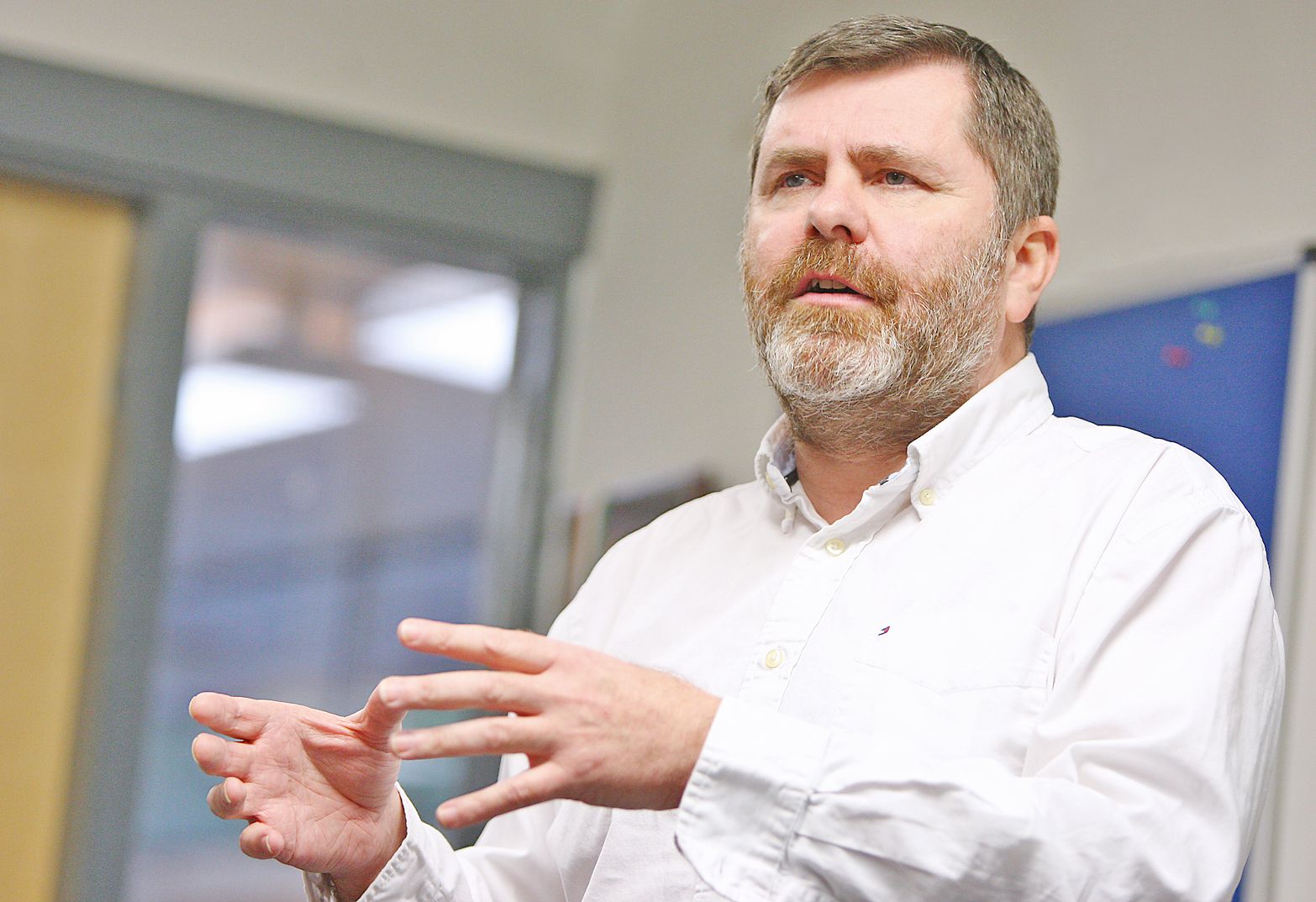 Relatives for Justice CEO Mark Thompson