The City Cried
Posted by Jim on January 29, 2022
AOH Home of the Brooklyn Irish
Baile na nGael
Saturday, August 29, 2026
Posted by Jim on
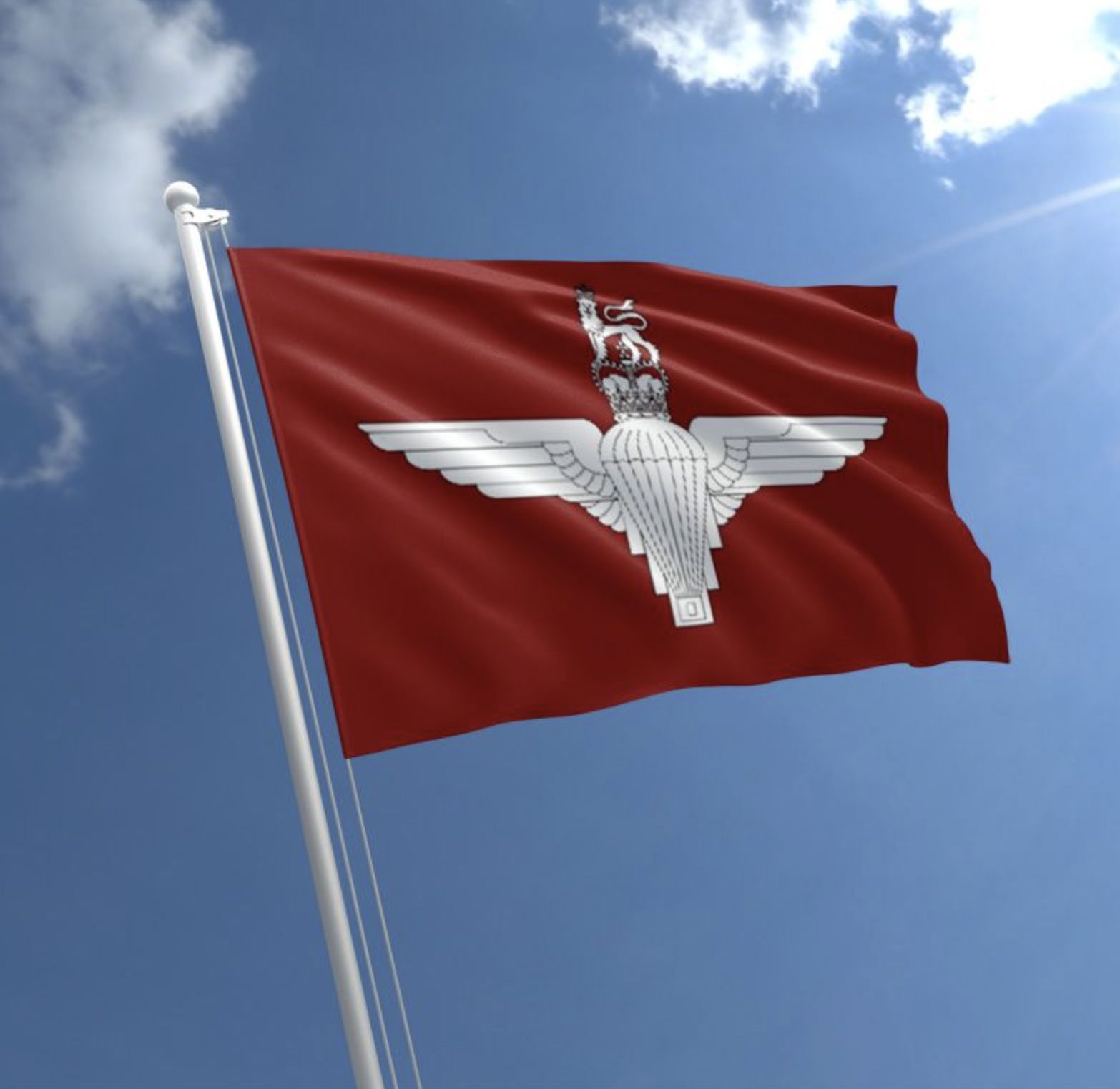
`PARACHUTE Regiment flags have gone up in the mainly loyalist villages of Newbuildings and Drumahoe in County Derry ahead of the looming 50th anniversary of Bloody Sunday.
It’s nothing new. Squinter’s wedding anniversary is in January and on the couple of occasions he and the missus have spent it in Derry Para flags have been on the lampposts at Drumahoe, which lies on the main route into Derry from Belfast, and at Newbuildings, which is just south of Derry on the road to Strabane.
Para flags taunting the families of the Bloody Sunday dead are one of the more depressing spectacles in a year marked by quite a number of depressing spectacles. And while Para flags in loyalist areas in Belfast are met pretty much with a shrug of the shoulders these days, they are immeasurably more problematic in Derry – and not just because the 1972 massacre of the innocents took place there.
Derry has for some time been an exemplar of how the marching season could look in Belfast if a modicum of mutual respect was observed and a sliver of dialogue was considered. The Apprentice Boys happily march round the city’s historic walls in August to commemorate the relief of Derry while people go quietly about their business and then the brethren get back on their buses and head home. And then they come back in December to mark the Closing of the Gates and another enjoyable day is had, this time with a pleasingly festive backdrop. Who gains if a small number of Derry loyalists poison that particular well?
Not for the first time, Squinter took to Twitter to comment on how “depressing” he found the Para flag displays in Derry. Loyal Ulster wasn’t long leaping to the defence of the Newbuildings lamppost jockeys and the Drumahoe boy soldiers.https://platform.twitter.com/embed/Tweet.html?dnt=false&embedId=twitter-widget-1&features=eyJ0ZndfZXhwZXJpbWVudHNfY29va2llX2V4cGlyYXRpb24iOnsiYnVja2V0IjoxMjA5NjAwLCJ2ZXJzaW9uIjpudWxsfSwidGZ3X2hvcml6b25fdHdlZXRfZW1iZWRfOTU1NSI6eyJidWNrZXQiOiJodGUiLCJ2ZXJzaW9uIjpudWxsfSwidGZ3X3NwYWNlX2NhcmQiOnsiYnVja2V0Ijoib2ZmIiwidmVyc2lvbiI6bnVsbH19&frame=false&hideCard=false&hideThread=false&id=1480657096731508736&lang=en&origin=https%3A%2F%2Fbelfastmedia.com%2Fpara-flags-flying-on-the-road-to-nowhere&sessionId=dde8b14285a24531adbcf59c7bc3051dac933e17&theme=light&widgetsVersion=75b3351%3A1642573356397&width=550px
‘Belfastonian’ chipped in: “As depressing as IRA apologists in government.”
‘British Ulster’ squared his shoulders, puffed out his chest, saluted the long way up and barked a short message: “Get used to it.”
‘Hotpaddy1981’ went right to the heart of the matter: “What we’re armed pira sf members Doing at a peaceful civil rights march???????”
‘Robert McAuley’ chipped in with a bit of sharp analysis: “Depressing that you don’t commemorate the three young RUC men slaughtered on the Saturday or the 78 in the previous three months or that you don’t recognise burning and rioting and McGuinness with his Thomson sub-machine gun.” https://platform.twitter.com/embed/Tweet.html?dnt=false&embedId=twitter-widget-2&features=eyJ0ZndfZXhwZXJpbWVudHNfY29va2llX2V4cGlyYXRpb24iOnsiYnVja2V0IjoxMjA5NjAwLCJ2ZXJzaW9uIjpudWxsfSwidGZ3X2hvcml6b25fdHdlZXRfZW1iZWRfOTU1NSI6eyJidWNrZXQiOiJodGUiLCJ2ZXJzaW9uIjpudWxsfSwidGZ3X3NwYWNlX2NhcmQiOnsiYnVja2V0Ijoib2ZmIiwidmVyc2lvbiI6bnVsbH19&frame=false&hideCard=false&hideThread=false&id=1485655282801946625&lang=en&origin=https%3A%2F%2Fbelfastmedia.com%2Fpara-flags-flying-on-the-road-to-nowhere&sessionId=dde8b14285a24531adbcf59c7bc3051dac933e17&theme=light&widgetsVersion=75b3351%3A1642573356397&width=550px
‘Dee’ injected a welcome dash of mathematics to proceedings: “The very same people who are offended also think Marty the Butcher was a hero. Even though he was responsible for more innocent Irish civilian deaths in Derry than the Paras.”
‘North Down Red’ wasn’t falling for Squinter’s act: “Republican faux outrage and fury… who’d have thunk it?” and went on “Unionists would be more amenable to your point of view if it wasn’t for the multitude of shrines, memorials and murals to the provos throughout Co. Londonderry and beyond. Republican hypocrisy knows no bounds.”
‘Fred Crawford’ replied: “And would you say the same of the OC of the Derry brigade of the PIRA being elected to government? What kind of an impact did that have on the isolated Unionist community in Londonderry?” Fred Crawford, of course, is the UVF gunrunner who lost the toss with Edward Carson for the statue at Stormont.
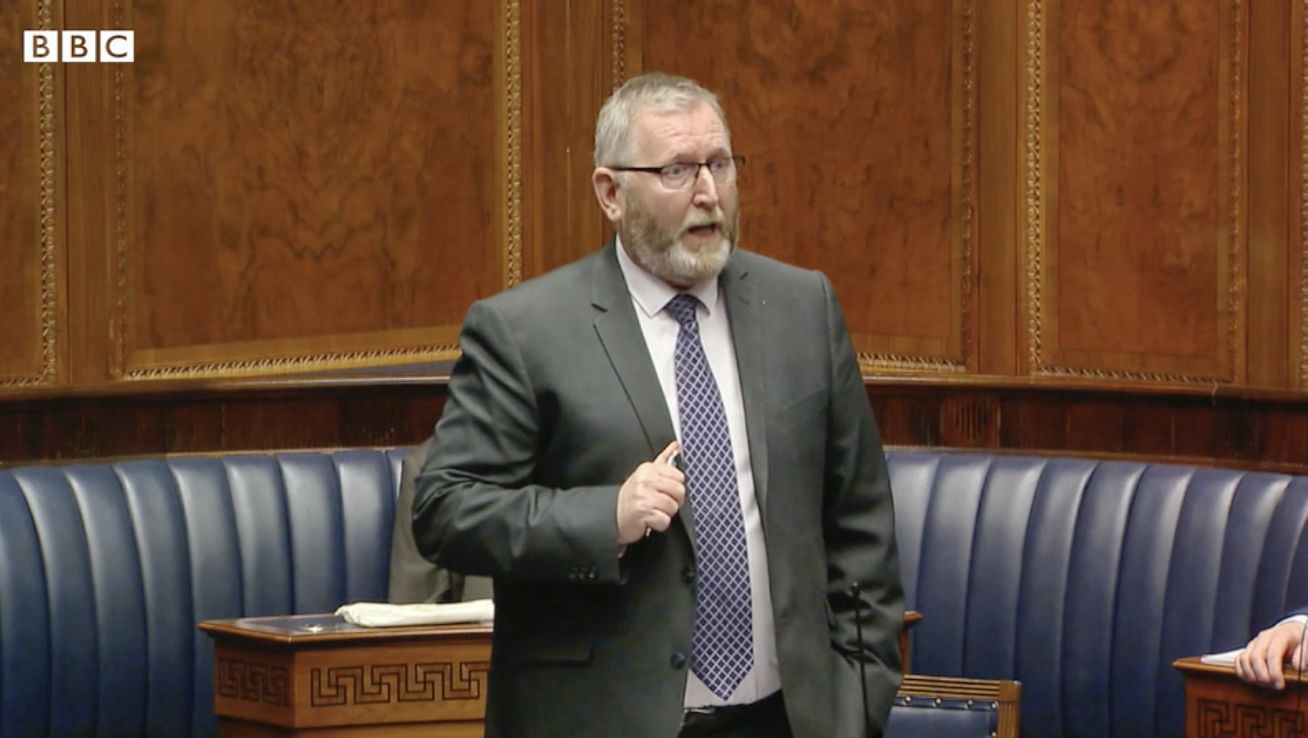
YOU kinda know it’s bad when a politician makes a mistake which can’t be published in a newspaper.
Doug Beattie was clearly in a relaxed mood on Saturday evening when he decided that it was time to make Twitter a more “human” place by posting a joke, or at least what he described as a joke. Squinter’s bound by the same rules of decency and taste that preclude other media outlets from publishing the details of the joke, so all that can be said without upsetting the horses is that the hilarious anecdote involved him and Edwin Poots and his wife, to whom no first no name was given. The punchline consists of a rather outré scenario involving Mrs Poots and the distinctive aroma of a brothel.
One of the attractions of Twitter is its agility and immediacy, and before you could say “Ooooh, matron!” Captain Doug was in a foxhole with mortars exploding all around him. At first he was content to lie on the ground with his hands over his ears, but when it became clear that offensive measures were required, he deleted the tweet that night.
The onslaught died down as the Twitter battalions bunked down and Doug spent a no doubt restless night with his helmet pulled down over his face. But in the morning the bombardment renewed and he was forced to launch a counter-attack. Captain Doug brought in air support in the form of an apology, but when the first strike missed the target, two more were ordered. With cries of “Incoming!” continuing to echo in his ears, Captain Doug launched an all-out infantry attack on the Assembly chamber and the radio studios, where he established strategic positions and proceeded to launch artillery barrages.
By 1500hrs on the Monday there were signs Captain Doug had regained control of the battlefield. While he’d suffered significant losses, the onslaught was weakening and troop morale on the rise. Then Twitter scored a direct hit on UUP HQ. https://platform.twitter.com/embed/Tweet.html?dnt=false&embedId=twitter-widget-3&features=eyJ0ZndfZXhwZXJpbWVudHNfY29va2llX2V4cGlyYXRpb24iOnsiYnVja2V0IjoxMjA5NjAwLCJ2ZXJzaW9uIjpudWxsfSwidGZ3X2hvcml6b25fdHdlZXRfZW1iZWRfOTU1NSI6eyJidWNrZXQiOiJodGUiLCJ2ZXJzaW9uIjpudWxsfSwidGZ3X3NwYWNlX2NhcmQiOnsiYnVja2V0Ijoib2ZmIiwidmVyc2lvbiI6bnVsbH19&frame=false&hideCard=false&hideThread=false&id=1486030832766787596&lang=en&origin=https%3A%2F%2Fbelfastmedia.com%2Fpara-flags-flying-on-the-road-to-nowhere&sessionId=dde8b14285a24531adbcf59c7bc3051dac933e17&theme=light&widgetsVersion=75b3351%3A1642573356397&width=550px
Unexploded tweets from 10 years ago detonated with devastating impact and suddenly Captain Doug was not only back in the foxhole – he had his trench shovel out and was trying to make it to Australia. If the Poots joke was unsuitable for print or broadcast, the new (or should that be old?) ones would be unsuitable for the top shelf in a newsagent’s shop. Social media winced audibly as they appeared one after the other.
A chastened Captain Doug was ordered by high command to face the men. “Since I made my unreserved apology in relation to a tweet at the weekend, I have been made aware of a number of historic (sic) tweets which I published. I am deeply ashamed and embarrassed by the content of these tweets. They are totally unacceptable. They do not reflect the opinions or values I hold today.”
Interesting how social media has twisted the meaning of the word ‘historic’ in relation to content (though Doug meant to say ‘historical). When Squinter was at school, the Famine or the Battle of Waterloo were historic. These days it seems historic means anything that took place before the Tiger King guy got locked up. Doug’s 56, he was 46 when he published the tweets and fresh from a 28-year career in the British Army – hardly a pimply cadet. He says the 2012 tweets do not reflect what he is today, but 10 years on and he’s still spending his down time tweeting off-colour jokes with women as the butt of the humour. Go figure.
As you were, Captain.
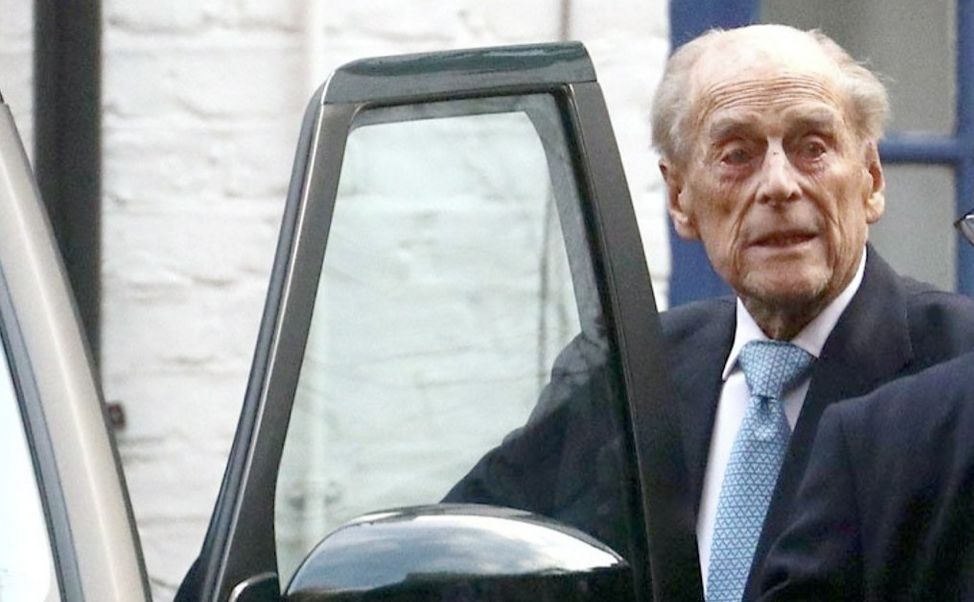
THERE’S a legal hearing coming up in London. It’s an odd one, so apologies if this gets a little involved.
The hearing is a legal challenge to a decision to exclude the media from a secret hearing. This secret hearing will decide whether the late Duke of Edinburgh’s will should be kept secret.
You still there? Good. As you can see, this is indeed fairly complicated, so perhaps a brief recap will help.
A hearing will decide whether a secret hearing can take place about a secret will or whether the secret hearing should not be secret. What’s that you say? That’s made things worse? Sorry about that.
The whole thing’s already a bit of a dog’s dinner, if entirely in keeping with the arcane and deliberately exclusive nature of British royalty. But when you then move on and consider what will be revealed in the will – whether it’s kept secret or not – then confusion fuses instantly with indignation. Because, quite simply, what the will will divvy out are the money and things given to him by ordinary sods who knocked their pans in day in and day out to enable him to fly round the world first class and stay in five-star accommodation to insult the locals. Otherwise known as us.
Keep that to yourself.
Posted by Jim on January 25, 2022

Bloody Sunday occurred on January 30, 1972, in the city of Derry when the parachute regiment of the British army opened fire on a Civil Rights march killing 13 people, another victim died later from his wounds.
By 1969 Northern Ireland was spiraling out of control and rioting became more fierce such as The Battle of Bogside. In response to the unrest, the British decided to deploy the British army onto the streets under Operation Banner. At first, Irish Nationalists welcomed the arrival of the new troops thinking their communities would be protected from Loyalist mobs and a sectarian police force. Their welcome was very short-lived.
The Northern Ireland Civil Rights Association (NICRA) organized a march to start at 3 PM from the Bishops Field area of the Creggan on Sunday 30 January 1972.
The authorities banned the rally but despite this their decision was ignored by thousands of protesters. Due to a previous Civil Rights march being attacked at Burntollet by police and Loyalist mobs the January 30 rally was expecting a similar occurrence.
The plan by NICRA was to have the march on Jan 30 start from the Creggan estate, make its way down to the Guildhall Square via William Street walk.
Sunday was just like any normal Sunday, people dressed for church and afterward sat down for family dinner. Once dinner was finished people made their way to the Bishops field in Creggan. Approximately 10,000 – 15,000 people joined the rally and stated by many everyone was in good spirits and it was a carnival-like event.
The British army, heavily armed and prepared, blocked the parade from making its way to the Guildhall Square. They blocked Williams Street with barbed wire and armored vehicles. The parade organizers decided to divert the rally from William Street and into the Bogside to the Free Derry Corner.
A number of youths broke away from the main march that was turning into Rossville Street. They hurled abuse at the British troops along with stones and in turn, the troops fired back with rubber bullets, tear gas and a water cannon. Skirmishes between the youth and army weren’t uncommon so nobody was surprised when they heard some stone-throwing at the army was taking place. The majority of the parade-goers ignored what was going on in William Street and continued to follow the rally towards Free Derry Corner.
The somewhat small riot in William Street was a typical affair often seen in various areas. The army would stand firm at their barricades and youths would throw stones and bricks at their lines. CS Gas was deployed and filled the air around William Streets.
The air in William street was full of C.S. gas, people made their way to the meeting point at Free Derry Corner to avoid the confrontation at the barricades but it was then they heard the distinctive sound of the armored Saracens.
Within a matter of minutes, the British Paratroop Regiment jumped from their Armored vehicles and opened fire into the fleeing crowds. They gunned down unarmed civilians, most of who had their back to the soldiers as they tried to run. Statements from witnesses described how the Paratroopers fired indiscriminately into the crowd.
One eyewitness statement was from Father Edward Daly, a highly respected priest who went onto become the Bishop of Derry.
“It was utterly disgraceful. They were firing lead bullets in all directions. There was nothing fired at them, I can say that with absolute certainty because I was there. The people were running in all directions. Most of them had their backs to them and they just opened fire.”
As Father Daly and 17 years old Jackie Duddy tried to flee from the violence Duddy was killed instantly after being shot from behind. A number of eyewitnesses state the Paratrooper took up firing position and shot Jackie from behind.
The iconic footage of Father Daly waving a blood-stained white handkerchief escorting one of the fatally injured past British troops reflected how bad the situation had become in Northern Ireland and would fuel anger for many generations.
When the shooting stopped 26 unarmed civilians were shot. 13 were killed instantly and John Johnston would later die from his injuries.
Bernard McGuigan (41)
Gerard V. Donaghy (17)
Hugh P. Gilmore (17)
John F. Duddy (17)
James Mc Kinney (34)
James J. Wray (22)
John P. Young (17)
Kevin McElhinney (17)
Michael G. Kelly (17)
Michael M. McDaid (20)
Patrick J. Doherty (31)
William A. McKinney (27)
William N. Nash (19)
John Johnston (59)
The events of that day had been caught on camera by the press who had witnessed the tragedy first hand. Images sent shock waves around the world and also seen the fall of the Northern Ireland parliament, Stormont. Direct rule from England was brought in after the events of Bloody Sunday and the British Government set-up the Widgery Tribunal to find out about the events of that day. The tribunal was quickly seen as a farce with many of the facts & statements being overlooked.
The people of Derry never accepted the Widgery Tribunal and every year since 1972 they marched the same route as those did on Bloody Sunday.
Each year pressure was put on the British Prime Minister for a new inquiry but was refused year after year. It wasn’t until 1998 that Tony Blair, the British Prime Minister at the time, agreed to an inquiry are facing pressure from John Hume and 29 January 1998 U.K Prime Minister Tony Blair made a statement to the House Of Commons
“that a Tribunal be established for inquiring into a definite matter of urgent public importance, namely the events on Sunday 30 January 1972 which led to loss of life in connection with the procession in Londonderry on that day, taking account of any new information relevant to events on that day.”
The Saville Inquiry was established and by 15 June 2010 they released their final report
The firing by soldiers of 1 PARA on Bloody Sunday caused the deaths of 13 people and injury to a similar number, none of whom was posing a threat of causing death or serious injury.
British soldiers had concocted lies in their attempt to hide their acts.
Civilians had not been warned by the British soldiers that they intended to shoot
No stones and no petrol bombs were thrown by civilians before British soldiers shot at them, and that the civilians were not posing any threat.
After the publishing on the report the new British Prime Minister, David Cameron, stated in the House of Commons
Mr Speaker, I am deeply patriotic. I never want to believe anything bad about our country. I never want to call into question the behavior of our soldiers and our army, who I believe to be the finest in the world. And I have seen for myself the very difficult and dangerous circumstances in which we ask our soldiers to serve. But the conclusions of this report are absolutely clear. There is no doubt, there is nothing equivocal, there are no ambiguities. What happened on Bloody Sunday was both unjustified and unjustifiable. It was wrong.
The events of Bloody Sunday is seen as one of the biggest political and military blunders the British ever made in Ireland. The result turned hundreds, if not thousands, of young men from all over Ireland to join the IRA. This would result in taking Northern Ireland into a bloody 30-year conflict.
Posted by Jim on December 12, 2021
A report last week said paramilitaries should be asked to ‘voluntarily wind up’ their profitable business. Can we afford such noble intentions?
A sign on a lamppost in the Rathcoole housing estate of Newtownabbey, County Antrim, Northern Ireland with a mural to the Red Hand Commando (RHC) a secretive Ulster loyalist paramilitary group (Liam McBurney/PA)
December 12 2021 09:03 AM
Eight months ago, I stood for hours in rain and smoke just off Belfast’s Shankill Road. As darkness fell and an orchestrated riot developed, a young adult trained children in the manufacture of petrol bombs.
The child ‘soldiers’ were instructed by loyalist men — some of whom wore balaclavas and surgical gloves — to attack the riot police who stood between them and a nationalist area. When the police surged forward, the inexperienced young rioters at the front were most vulnerable to arrest.
The profoundly depressing scene encapsulated the failure of the peace process to eradicate paramilitarism.
It was an unusually public demonstration of how children born not only after the Good Friday Agreement, but in some cases after Ian Paisley and Martin McGuinness’s rapprochement in 2007, are being pulled into gangsterism.
Ritual condemnation of that disorder flowed in, as it always does. But some of those doing the condemning — including the police and some politicians — have facilitated the embedding of paramilitarism in post-Troubles Northern Ireland.
For years, some senior police officers have maintained relationships with senior loyalist paramilitaries, while pretending that they are engaging with them as community leaders, or in some other guise disbelieved by the canny people of the areas from which they come.
But while that police engagement may be expedient in the short-term, providing a means of lowering tension at key points, it entrenches the power of the untouchable paramilitary bosses.
Local residents, who are urged in police and government advertising to report paramilitary activity, can see the Government is fully aware who controls the paramilitaries.
Once Mr Big has proved useful in ending a riot or assisting the Government in some other way, it must be very tempting — perhaps even morally justified — to think that it is better to deal with him, than with the younger militants who might take over if he were to be jailed. But such an approach perpetuates paramilitarism.
Boris Johnson’s Brexit minister, Lord Frost, met the loyalist paramilitaries’ umbrella group just a month after April’s rioting. That drew criticism — but in truth it was just a more public glimpse of a longstanding policy to allegedly illegal organisations.
British and Irish officials regularly interact with people they know to be paramilitaries — and do so because they are paramilitaries — as do many of Stormont’s parties.
Since April, the sort of unavoidable evidence of abnormality seen in a riot has faded away. In its place is what people in some of Northern Ireland’s most forlorn areas have suffered for years — paramilitary shootings, vicious beatings with crowbars or hammers, extortion, sexual assaults, drug-dealing, threats, loansharking, and the knowledge that certain individuals are untouchable.
The fact this is restricted to deprived areas at least partially explains why it has been tolerated for so long. Such behaviour on Belfast’s swanky Malone Road or Cherryvalley neighbourhood would face a radically different police response.
A UVF gunman fires a volley of shots in the air at a Twelfth bonfire. PA file picture by Paul Faith
In the four years between 2017 and 2021, a full 70pc of Northern Ireland’s electoral wards saw no paramilitary attacks. But where paramilitaries are strong, they are very strong. The UVF and UDA are believed by the security services to have about 12,500 members — more than ten times the membership of Northern Ireland’s biggest political party, the DUP.
Last week a highly significant report commissioned jointly by Stormont and the British and Irish governments involved an admission of defeat: that the security forces and the entirety of the government machine cannot defeat paramilitarism.
Instead, they suggested paramilitaries should be asked to voluntarily wind up their profitable business.
The report by the Independent Reporting Commission sets out a plan to effectively negotiate with paramilitary leaders. If history is a guide, that is likely to involve them being given influence over millions of pounds of public funding.
The “transition”, the report said, should involve “direct engagement with the paramilitary groups themselves” and involve “their co-operation”. Although written in code, the report applies to loyalists who at least claim to want to change, unlike dissident republicans.
But in justifying such a strategy, the commission alluded to its limitations, admitting that using the police alone “is not enough” to end paramilitarism.
They insisted that a police crackdown would continue. However, it is difficult to see how the police can arrest paramilitary leaders on a Monday and the government negotiate with them on a Tuesday.
Stormont’s parties have been kept informed of this proposal, and the paucity of objections suggests that it is being seriously considered.
Most of those backing the idea have the noblest of intentions, but even some of the commissioners behind the report acknowledged that there are major risks in their suggestions.
John McBurney, the commissioner closest to the DUP, evoked biblical imagery, telling the Sunday Independent that it would be like “Gideon’s fleece”, with a series of measures which the groups would have to pass to get to the next stage.
Just as Gideon had put out a fleece and asked God prove himself by making it wet and the ground around it dry, so it would be possible to test the sincerity of these groups, he said. But Gideon’s interlocutor was more reliable than the sort of people who deal drugs and shoot teenagers.
What does it really mean for a paramilitary organisation to disband?
The Provisional IRA claimed that it had done so around 2007. Yet six years ago the IRA was believed by police to have been involved in a murder in Belfast. The current security assessment says that the IRA still exists, that it retains access to weapons, and that it gathers intelligence. But because that is overwhelmingly geared towards politics, it is accepted.
Despite the rhetoric, some in government do not want the current paramilitary groups to disband, believing that more militant replacements could replace them.
Former Dublin justice minister Michael McDowell has said that it was never the intention of the British or Irish governments that the IRA disband, believing that “an inert, freeze-dried husk of the IRA was preferable to passing the ideological torch to the dissidents.”
Last year, MI5 told MPs that it did not believe that total suppression of terrorism in Northern Ireland was a realistic aim, saying “that looks to us to be an undeliverable goal”.
Having seen what happened to the IRA, loyalists are likely to conclude that they don’t actually need to disband — or even end all criminality — but instead make their activities less explicitly criminal, more secretive, and less violent.
If the Government openly admits that it knows who the paramilitaries are but is choosing not to arrest them, accepts that it cannot defeat them, and instead asks them nicely to go away, it will have inescapable consequences. Whether the policy succeeds or fails in the long run, its immediate impact will be to consolidate paramilitary power.
If the Government admits it cannot put them out of business, it would be a brave resident who would report a crime committed by a local paramilitary commander — who is sitting down with government officials.
In such a case, the children of Northern Ireland would see that it is the paramilitaries who really hold the power.
And thus the cycle is perpetuated.
Posted by Jim on December 8, 2021
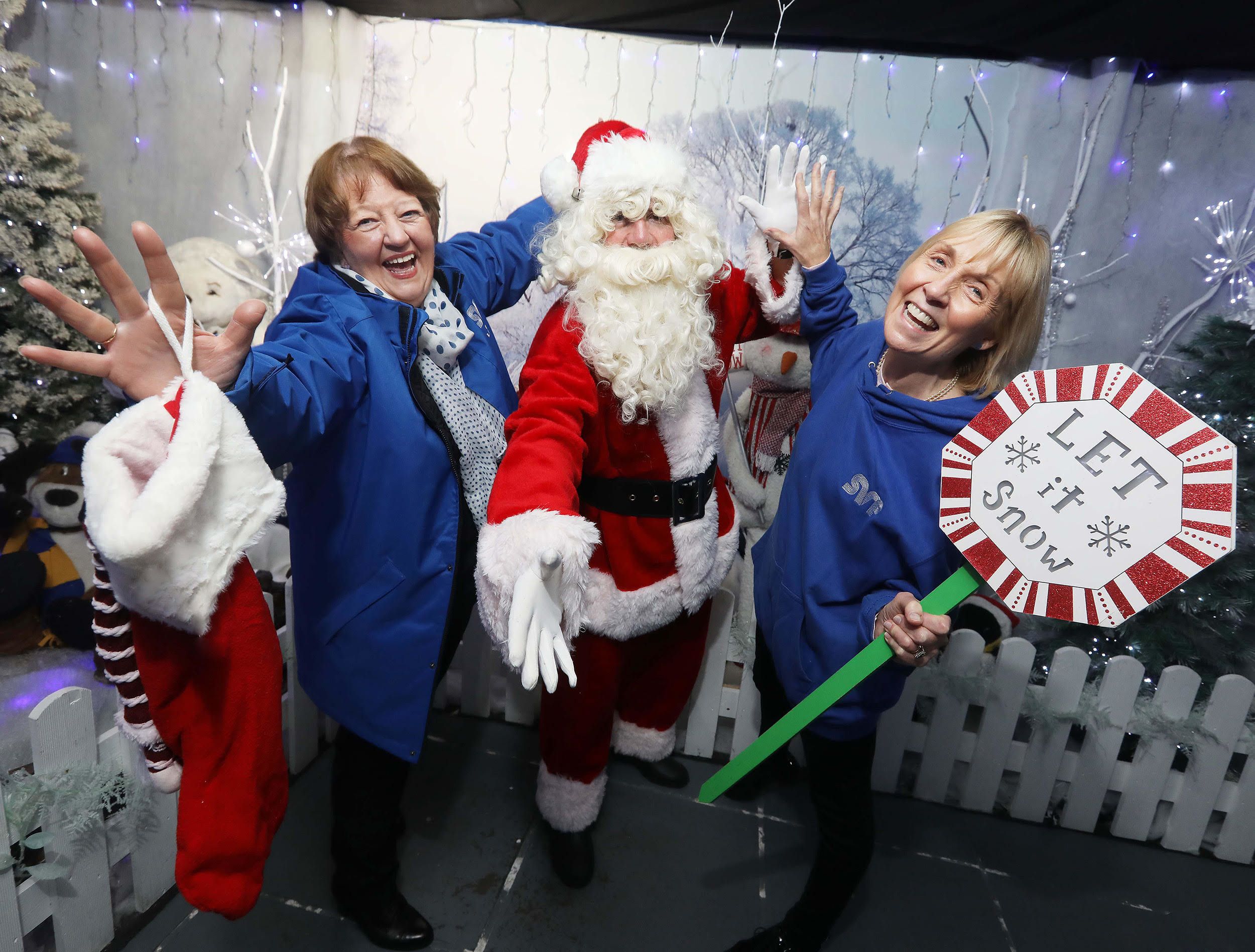
THE Society of St Vincent de Paul has launched its Annual Appeal and is expecting requests for help in the run-up to Christmas to be higher than any witnessed in recent years, as already calls for help have tripled on those received last year. In the first week of December, more than 1,000 calls were received by the Society’s Belfast office alone.
More people have been requesting help with food, fuel and white goods than last year and those faced with impossible choices, who are faced with financial difficulties every day of the year, will be in need of assistance for placing presents under the Christmas tree so their children do not wake up to an empty Christmas.
Speaking about the dire situation some families are finding themselves in, Mary Waide, Regional President of St Vincent de Paul, North Region, said: “We are receiving more calls than we have experienced in recent years and more requests via our website from people who would not normally speak out and seek help.
“As well as taking more than 1,000 calls in our Belfast office alone last week, people have also been contacting us by email, phoning our Derry office and calling our almost 100 helpline numbers in local communities across Northern Ireland.
“Some people are finding themselves being faced with the decision of whether to put food on the table, heat the home or buy presents for their children as Christmas approaches. While a third of children are living in poverty in Northern Ireland, we are not just being asked for help by people trying to make ends meet on low incomes, we are also receiving requests from people who have been plunged into poverty and are living in extreme pressure due to rising energy costs, an increase in the cost of living, the reduction in Universal Credit and the impact of the pandemic.”
Mary added: “At the time of year when we remember Christ’s birth and which should bring joy and create magical memories for children, parents are struggling and in the depths of despair. I would appeal to the generosity of our local people in communities across the province to make a donation to SVP to help their neighbours. We are accepting phone and online donations this year so SVP can provide families with vouchers, empowering them to prioritise what they choose to buy.”
Paying tribute to the dedication of SVP members, volunteers and staff for their incredible support, Mary said: “I would like to thank all those involved in ensuring that families receive the help they need. For the empathy they possess in ensuring that the needs of those requesting assistance from SVP are met with dignity.”
Every year SVP spends approximately £3 million to help those experiencing poverty in the North. Last year, SVP responded to tens of thousands of calls for assistance from members of the public.