THE IRISH NEWS:
Posted by Jim on August 11, 2026
The relief of the north: Belfast can take immense pride and lessons from Fleadh Cheoil na hÉireann.
Ryan McAleer looks at what Belfast got right for the Fleadh, with some suggestions for improvement in 2027.
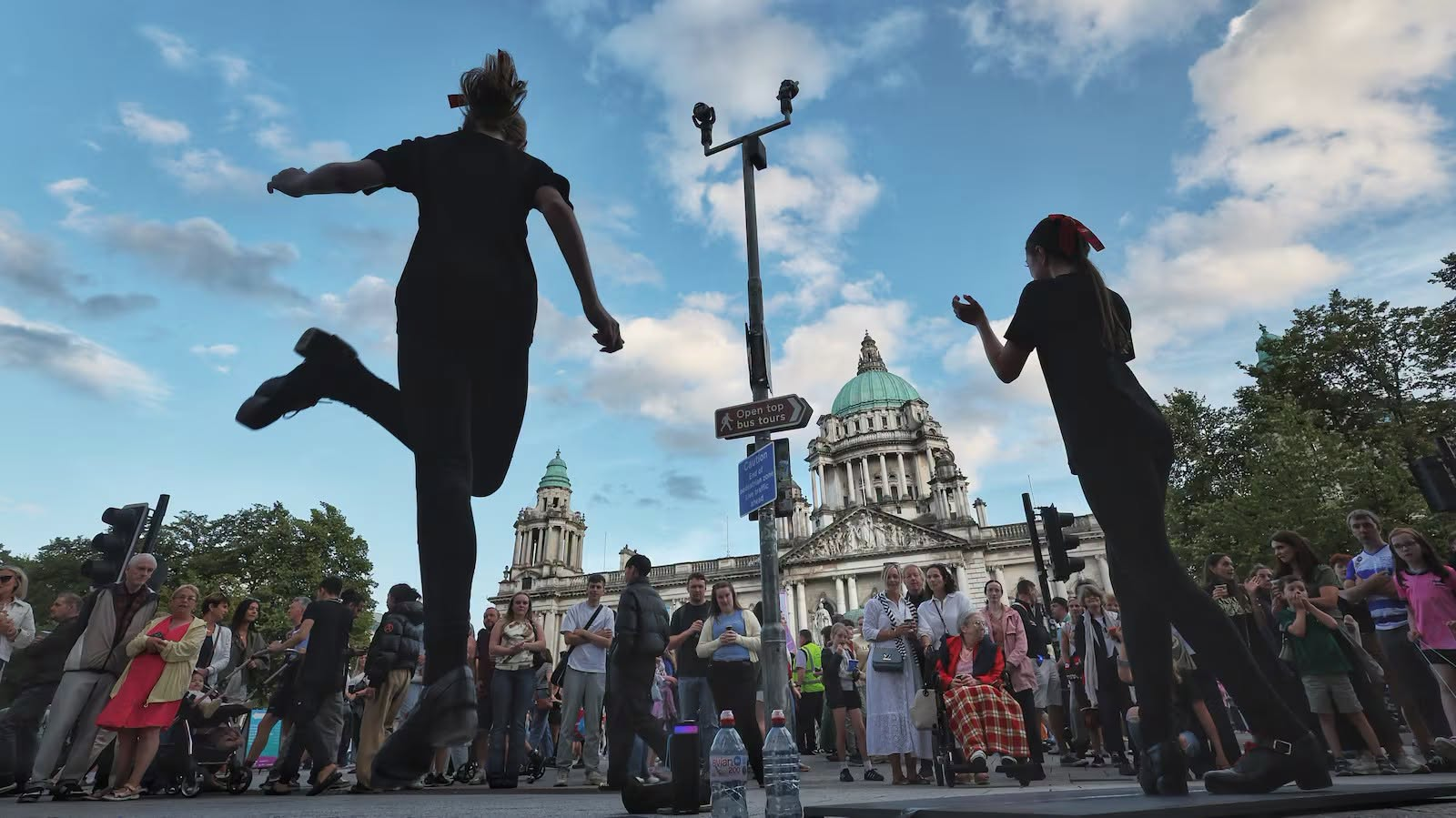
Irish dancers in front of Belfast City Hall as record numbers attend the Fleadh Cheoil na hÉireann 2026.
By Ryan McAleer
August 11, 2026 at 12:58pm BST
On the closing Sunday of Fleadh Cheoil na hÉireann in Wexford last August, I can still remember the slight feeling of apprehension among our northern delegation down there about the following summer.
Would the same numbers that turned out for Wexford come north for Belfast in August 2026?
Derry showed it could be done in 2013, but Belfast felt like a completely different prospect altogether.
Images of burning buses beamed across the world just two months before didn’t ease those fears.
Even in the days before the opening ceremony, there were conversations asking if Belfast had set itself up by throwing the number 800,000 around so casually for so many weeks and months.
Monday August 3rd brought a collective sigh of relief as the fear, tension and apprehension disappeared in a flood of positive stories and sheer joy.
Belfast had gone all in for the Fleadh on day one – not just for the traditional business-end of the festival, i.e. the final three days.
Businesses, the council, government departments, Translink, the PSNI… All seemed to pull together to make it work, and all with a smile on their faces.
By close of play on Tuesday August 4th, half a million people had made it into the newly pedestrianised city centre, traditionally the numbers that could be expected throughout the full eight days of the world’s biggest Irish cultural festival.
Even walking around early in the week, you could feel the positive energy humming on every street corner.
By the final Sunday, some 1.65 million had been captured on Belfast One BID’s cameras in the one square mile around the City Hall over the eight days, more than double the 800,000 forecast.
Stormont’s Department for the Economy had predicted an economic windfall of around £53 million based on 700,000 attending the Fleadh, with Visit Belfast suggesting a £60m benefit from around 800,000.
Back of the cigarette packet maths would suggest we’ve easily crossed into £100m territory.
But the Fleadh felt much more than an opportunity to turn a quick pound.
Despite investing significant sums in pop-up ventures for a week-long festival, most local hospitality operators didn’t take the hand with prices.
From Translink staff at Grand Central Station to the police on the beat, everybody seemed to have a smile on their face.
I heard tales of people from Limerick and Tipperary who had never crossed the border before sing the praises of the “friendly” people.
Northern friends who’ve played traditional music their whole lives and have travelled the length and breadth of the island for Fleadh Cheoil na hÉireann felt immense pride in what Belfast and Ards CCÉ had pulled off.
Key to the success was the combination of pedestrianisation; the decision to create a week-long itinerary of events; and businesses embracing the Fleadh for all eight days.
The hands-off approach – allowing people to walk the streets carrying plastic pint glasses – worked wonders.
The streets looked clean, the toilet provision was sufficient and there were plenty of food vendors to feed the masses.
So what can we learn for next year?
In Wexford’s first year of the Fleadh, some 650,000 people flowed through its streets. The positive stories from 2024 turned that into 800,000 the following year.
Given the incredible reach of positive stories and coverage of Belfast over the past week, it is not unrealistic for the city to prepare for two million Fleadh visitors in 2027.
That will bring added challenges for the organisers and Translink in particular.
While the park and ride facilities introduced for the Fleadh worked very well, the north’s public transport company was simply unable to cope with the numbers this year.
Whether rail, Goldliner or Metro, the capacity was not sufficient to meet the demand.
Resolving this with public resources under strain will require new thinking. Can Translink reallocate resources from elsewhere for one week, or could the private sector offer any solutions?
While Belfast City Council got so much right this year, they got the camping and caravan provision wrong.
Two sites for tents and offering a waste ground in the Titanic Quarter to families for their caravans was short-sighted.
Grass caravan sites will be needed in 2027. Most campers in Wexford last year spent the week on sports fields without any issue.
Given the number of public spaces and sports fields across Belfast, this should be an easy fix.
There are lessons for hospitality businesses as well. Scenes of hundreds of people dancing outdoors to music pumping through the streets looked incredible on social media.
But those businesses don’t need to pump that music out during the afternoon to drown out the magical young musicians looking to play outside their venue for free.
Less amplification and more sessions next year please.
More pedestrianisation will also needed, particularly in places like Dunbar Link.
For now, we can all bask in the success of Fleadh Cheoil na hÉireann 2026. Belfast feels like a city ripe for transformation.
Even if Belfast manages to secure a third year for the Fleadh, it has demonstrated the appetite for a city centre-wide cultural celebration of music and inclusivity.
Surely other towns and cities around the north will have taken note. I’m looking in your direction Newry!