DERRY WILL NEVER GIVE UP ON TRUTH ABOUT BLOODY SUNDAY
Posted by Jim on November 7, 2025
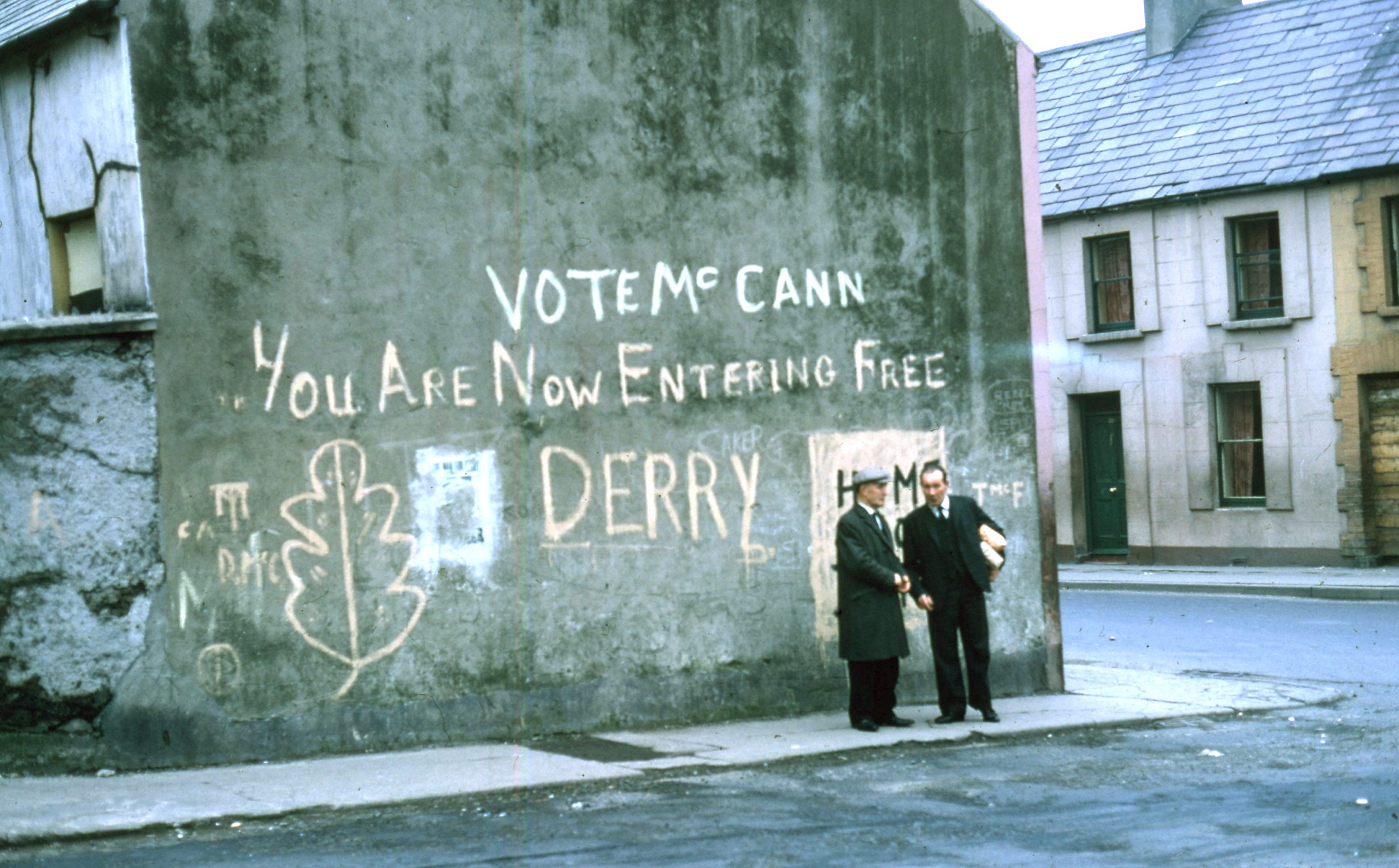
Despite the acquittal of Soldier F, campaigners are as determined as ever to get justice for the 14 people who died.
EAMONN MCCANN
When the crack-crack of the rifles came from the bottom of Rossville Street, my first reaction was not of fear or panic but bewilderment.
What? Why were they firing?
We had been here before and thought we knew the drill. Bricks and petrol bombs versus baton rounds and CS gas. Occasionally a nasty injury or arrest. But not this.
As the gunfire continued, we flung ourselves down. I hauled myself along the gutter on my knees and elbows. Craning my head to look around, I saw a man — only 17, as it turned out — running pellmell, trying to hurdle a low barricade, then stiffening and crumpling.
By the morning, the Bogside was silent. People gathered at corners and in doorways, asking each other: “Did you hear one of them was that young fellow Kelly from Creggan Heights?”
By now, everybody knew the names of the 13 people who had been killed. Another would die four months later from gunshot injuries.
Last week, Soldier F, the only one of the Bloody Sunday shooters who was still under indictment, walked free from court. It did not come as a surprise. On Friday, a crowd of a couple of hundred stood at Free Derry Wall, carrying black flags and telling one another that, no matter what anybody thought, we were going to keep on.
This persistence is the aspect of Bloody Sunday that sometimes still confuses and frustrates well-meaning people with good hearts who wish nothing but comfort and ease for the families of the victims.
But again, why Bloody Sunday? There were more people killed in the Birmingham pub bombings of 1974. More in the Dublin-Monaghan bombings of 1975. More in the explosion in McGurk’s Bar on the New Lodge Road in Belfast the month before Bloody Sunday. And so on.
Bloody Sunday — January 30, 1972 — was very different. It didn’t happen on a lonely road at the dead of night or in the sudden eruption of death into a pub. It happened in broad daylight, watched at close quarters by thousands of people who had gathered at the end of a civil rights march.
Before the gunsmoke had dispersed from the area, we knew the truth.
In the aftermath, a tidal wave of solidarity with the Bogside swamped the South. Protests against the massacre packed every city centre. Shops, factories, offices and schools emptied. Gatherings of all sorts were cancelled. Buses and trains came to a standstill. Dublin, Cork and Shannon airports closed.
On February 2, the British embassy on Merrion Square was burned down in what one newspaper described as “the biggest demonstration the Republic has seen in a generation”.
A deluge of dignitaries descended on Derry for the funerals. These included 14 members of the government, President Éamon de Valera’s personal representative, 32 backbench TDs, 17 senators, the mayors of Dublin, Cork, Limerick, Waterford, Kilkenny, Galway, Sligo, Clonmel and Wexford, the general secretary of the Irish Congress of Trade Unions, the president of the GAA, archbishops, bishops, serried ranks of priests and other notables of one sort or another.
Many relatives of the dead couldn’t get into the Creggan church.
“Let this wee girl in, her father is one of them,” I remember hearing.
But in the Dáil debate the next day, the emphasis was not on a need to hold Britain to account, but to deflect the anger that the British army’s actions had given rise to.
Taoiseach Jack Lynch, referring to the embassy fire, spoke of “men who, under the cloak of patriotism, sought to overthrow the institutions of the State… The institutions of this state will be upheld without fear or favour. The laws will continue to be enforced. Those who seek to usurp the functions of government will meet with no toleration”.
Bloody Sunday didn’t fit into the approved narrative of Catholics and Protestants at daggers-drawn while the British authorities strove to keep the peace. Getting the slaughter in Derry off the agenda was a high priority for both the Dublin and London governments.
The UK’s Saville Inquiry was to be another means of delivering the goods. Thousands gathered in Derry’s Guildhall Square to watch the live feed from the House of Commons on a giant screen as the inquiry’s findings were delivered in June 2011. David Cameron’s phrase “unjustified and unjustifiable” triggered a thunderclap of joy. The square was transformed into a sea of shining faces.
But the then British prime minister couldn’t have used that phrase if those indicted by Saville for involvement in the killings had included, for example, Michael Jackson, second-in-command of the paratroopers on the day, who had since risen through the ranks to become boss of the Parachute Regiment, commander of the British army on the Rhine, Nato chief in Kosovo, then chief of the general staff — Britain’s top soldier.
Jackson had been on Rossville Street throughout the 17 minutes of shooting. Testifying to Saville in April, 2003, he claimed not to have seen any of the shooting. Nor did he mention having compiled the list of the shots that had been fired, which was to be used by British political and military spokespersons around the world to explain the slaughter.
If Saville had gone where the evidence ought to have led him and reported that the man then at the apex of Britain’s armed forces had concocted lies to cover up unjustified and unjustifiable killing and then perjured himself, the political impact in Derry and elsewhere would have been very different.
Cameron would not have been able to denounce the shooters while maintaining that the reputation of the British army itself remained unsullied.
The fact so many politicians and commentators in Ireland swallowed Saville’s version of events testifies to their anxiety to put Bloody Sunday behind them and get on with “reconciliation” with the British ruling class and avoiding awkward truths.
It was squaddies who were put in the frame for the massacre. But nobody who matters to people who matter suffered any discomfort. Saville didn’t tell the full truth.