We will always be grateful to George Mitchell
Posted by Jim on July 8, 2025
THE IRISH NEWS:
Opinion
Noel Doran: We will always be grateful to George Mitchell
We arguably owe more to the former US Senator than any other American citizen
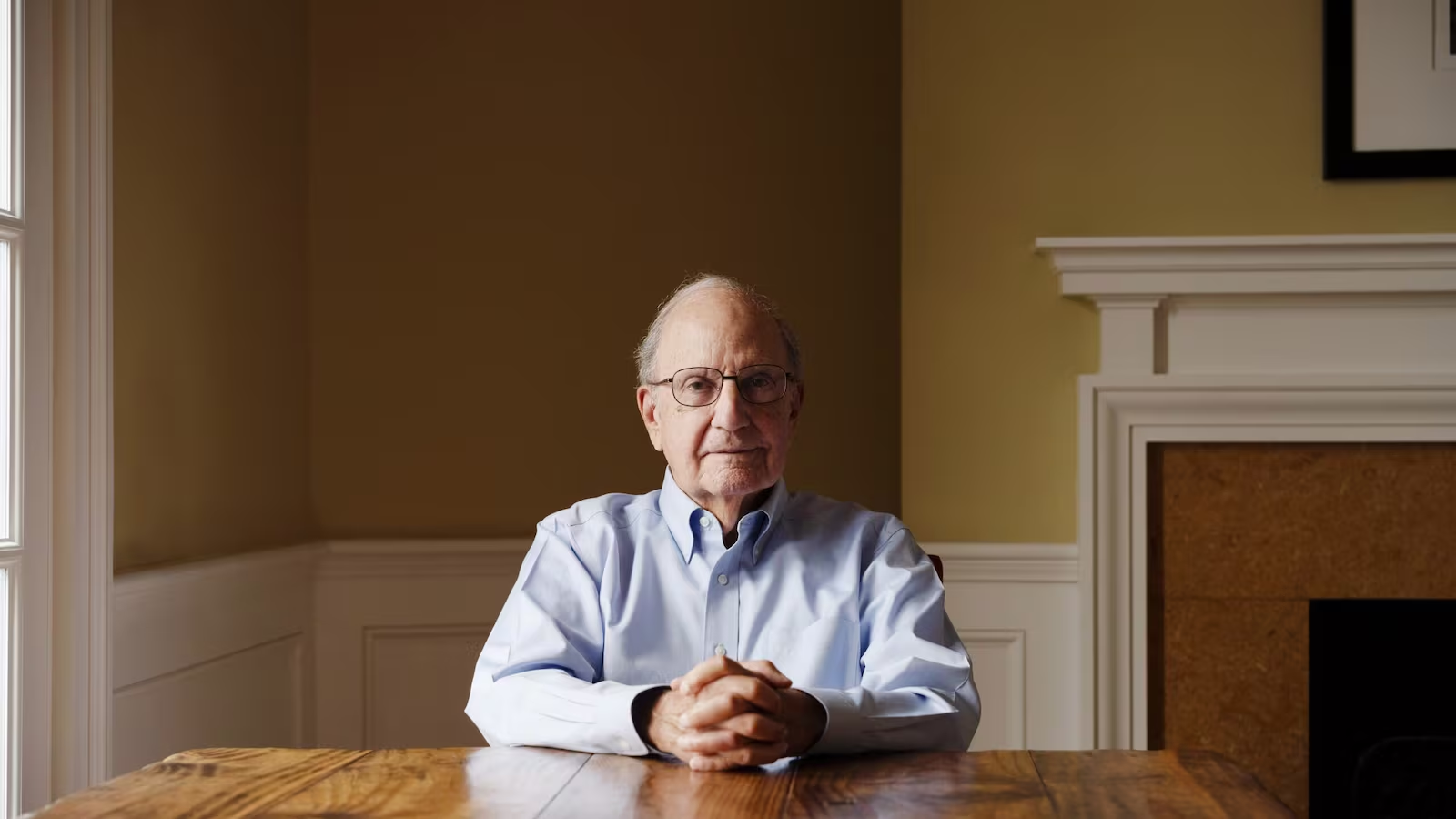
George Mitchell in a scene from The Negotiator
By Noel Doran
July 07, 2025 at 6:00am BST
We have become so used to crude and bellicose statements from Donald Trump on an almost daily basis that it would be easy to forget the very different contributions which have been made by US politicians over the years.
Both the Democratic and Republican parties produced major figures who took a strongly positive interest in Irish affairs in particular, and we arguably owe more to George Mitchell than any other American citizen.
Watching The Negotiator, Trevor Birney’s elegant and beautifully filmed portrayal of Mitchell’s life and times, at the Docs Ireland 2025 film festival in Belfast, brought home the full extent of his remarkable career long before he arrived at Stormont.
He was a distinguished lawyer, turning down Bill Clinton’s offer of a much-prized nomination to the US Supreme Court, as well as holding key posts in elected politics, before becoming Senate majority leader from 1989 to 1995.
However, his greatest gifts were probably as a diplomat, later criss-crossing the globe while working on the Arab/Israeli conflict over many years and serving with both the United Nations and the World Justice Project.
Only in Belfast could a CV like that be regarded with disdain, with the late Ian Paisley declaring in 1995 that the newly-appointed US Special Envoy for Northern Ireland was “a foreigner and a pro-Irish republican”.
Other unionists were also deeply suspicious of the fact that, while Mitchell was born in Maine, his father was Irish, and immediately began to check out his religious background, before establishing that, to their puzzlement, he was actually a member of the Maronite Church, reflecting his mother’s roots in the Lebanon.
Mitchell, as ever, remained calm as his early days at Stormont were marked by boycotts and walk-outs during a prolonged engagement which played out during a period of deep mutual hostility and appeared doomed to end in failure.
He stuck with it relentlessly, displaying endless resilience and patient diplomacy in the face of one setback after another, and was fortunate that he was able to rely on the endorsement of political leaders from both sides of the Atlantic.
Many of them are interviewed in The Negotiator, including Clinton, who never wavered in his support, and the double act of Bertie Ahern and Tony Blair, who first came to power within a month of each other as events started to move decisively in the right direction during 1997.
The reputations of all three have suffered since they left office, but it was striking to see the enthusiasm with which they looked back on their detailed personal involvement in the eventual signing of the Good Friday Agreement in 1998.
Mitchell was typically modest in his assessment of the peace accord in the documentary, saying that it may not have been perfect but it was the best that could be done in the circumstances.
My recollection, as a journalist closely observing the proceedings, was still that, while there was unquestionably an appetite across the board for a breakthrough, the central players were close to exhaustion by the closing stages and there was a prospect that everything could have fallen apart.
If the discussions had collapsed at the eleventh hour, the delicate balance of the paramilitary ceasefires might well have been lost and a return to full-blown violence was by no means out of the question.
We saw what happened in Omagh only four months after the confirmation of the agreement, with 29 people and two unborn children killed in an appalling bomb attack by the Real IRA, although, as the cross-community structures evolved at Stormont, the atrocity signalled that the campaign by militant republicans was close to an end, while many loyalists were more interested in drug dealing and wider criminality.
Mitchell’s role throughout the process was absolutely critical, as witnessed by the outpouring of affection from the audience during his onstage interview with Miriam O’Callaghan at the SSE Arena, which, at the age of 92, may realistically have been one of his last visits to Ireland.
He cannot be held responsible for the upheavals which have repeatedly undermined the credibility of successive Stormont administrations, although public scepticism about the performance of politicians stretches to many other jurisdictions.
Mitchell demonstrated the highest standards which can be achieved through politics and for that he will always deserve our gratitude.
:: The Negotiator will be shown at the Galway Film Festival on July 11 before a screening in George Mitchell’s home town of Waterville, Maine, the following week. It is due to go on general release across Ireland later in the year.